2025-07-25 11:11
Brent, WTI broadly steady EU says trade deal with US within reach US prepares to allow limited oil operations in Venezuela, sources say LONDON, July 25 (Reuters) - Oil prices were steady on Friday, as trade talk optimism supported the outlook for both the global economy and oil demand, balancing news of the potential for more oil supply from Venezuela. Brent crude futures were up 38 cents, or 0.55%, at $69.56 a barrel by 1207 GMT. U.S. West Texas Intermediate crude futures were up 36 cents, or 0.55%, at $66.39. Sign up here. Brent was heading for a 0.4% weekly gain at that level, while WTI was down around 1.4% from where it closed last week. Brent prices have been largely range-bound between $67 and $70 a barrel for the last month, since the sharp drop in prices in late June after de-escalation in the Iran-Israel conflict. Oil prices are "caught in largely a holding pattern brought about by inconclusive specific oil drivers", PVM analyst John Evans said. Oil, along with stock markets, gained support from the prospect of more deals between the United States and trading partners ahead of an August 1 deadline for new tariffs on goods from an array of countries. After the U.S. and Japan secured a trade deal this week, two European diplomats said the European Union was moving towards a deal involving a baseline U.S. tariff of 15% on EU imports, plus possible exemptions. "Trade talk optimism appears to be offsetting expectations for stronger Venezuelan supply," ING analysts wrote in a client note on Friday. The United States is preparing to allow partners of Venezuela's state-run PDVSA (PDVSA.UL), starting with U.S. oil major Chevron (CVX.N) , opens new tab, to operate with limitations in the sanctioned nation, sources said on Thursday. Venezuelan oil exports could consequently increase by a little more than 200,000 barrels per day, which would be welcome news for U.S. refiners, as it would ease tightness in the heavier crude market, ING analysts wrote. Prices were also supported this week by disruptions to Black Sea oil exports and Azeri BTC crude loading from the Turkish port of Ceyhan. "Delays in deliveries from the Russian terminal on the Black Sea and the Turkish port on the Mediterranean are likely to have contributed to the Brent oil price rising back towards $70. Now that exports are back to normal, support for prices is likely to ease," Commerzbank analyst Carsten Fritsch said. https://www.reuters.com/business/energy/oil-steady-investors-weigh-trade-optimism-against-potential-venezuelan-supply-2025-07-25/

2025-07-25 11:07
MILAN, July 25 (Reuters) - Italian energy storage firm Energy Dome said on Friday it had entered a commercial partnership with Google (GOOGL.O) , opens new tab to supply carbon-free energy to the grids that power the operations of the U.S. tech giant. As part of the agreement, Google has made a strategic investment in Milan-based Energy Dome, which has developed a CO2 battery technology to support the energy transition through long-duration energy storage solutions, the companies said in a joint statement. They did not disclose the financial details. Sign up here. Google joins other investors in the Italian energy storage firm such as Oman's sovereign wealth fund and global tank storage operator Vopak (VOPA.AS) , opens new tab. Google's first commercial long-duration energy storage deal is part of a growing number of advanced energy technologies the group needs to hit a goal to run its operations on 24/7 carbon-free energy by 2030. Energy Dome's CO2-based system stores energy by compressing and liquefying carbon dioxide, which is later expanded to generate electricity. The technology avoids the use of scarce raw materials such as lithium and copper, making it potentially attractive to European policymakers seeking to reduce reliance on critical minerals and bolster energy security. Energy Dome launched its first commercial-scale plant in Sardinia in 2022 with a view to completing it by the end of 2024, with a 24-hour cycle and a 20-megawatt capacity able to power 13,000-15,000 houses. https://www.reuters.com/sustainability/climate-energy/google-partners-with-italys-energy-dome-zero-emission-power-supply-2025-07-25/

2025-07-25 11:04
Close to a year's rain dumped in Baoding Over 19,000 people evacuated, bridge and road access affected Hebei sees higher-than-average annual rainfall in recent years Beijing to brace for heaviest rainfall in recent weeks Some trains in Inner Mongolia suspended for safety BEIJING, July 25 (Reuters) - Storms in northern China have poured nearly a year's rainfall on Baoding, an industrial city on the doorstep of capital Beijing, forcing over 19,000 people out of their homes as streets began to go under water and roads were cut off. As much as 448.7 mm (17.7 inches) of rain fell in Yi, an area in western Baoding, in the 24 hours to early Friday morning, triggering flash floods, causing power outages in some villages and damaging bridges and roads, according to state broadcaster CCTV. Sign up here. The rainfall set records at a number of weather stations in Hebei province, which Baoding is part of. Official records show annual rainfall in Baoding averages above 500 mm. There were no immediate reports of casualties, any people missing or damage in state media. Some 19,453 people from 6,171 households were evacuated, the China Meteorological Administration (CMA) said in a social media post. The forecaster did not mention where the residents were moved to, but shared a short clip showing two policemen in neon rain jackets boot-deep on a waterlogged street as rain poured down. The forecaster compared the amount of precipitation to the exceptional rainfall brought by a powerful typhoon in 2023, which inundated the capital Beijing with rains unseen since records began 140 years ago. Baoding's Zhuozhou, which suffered devastating floods in those rains two years ago, saw access to several bridges and roads cut off after the storms unleashed more than 190 mm of rain by Friday morning. Northern China has witnessed record-breaking rainfall in recent years, exposing densely populated cities including Beijing to flood risks. Some scientists link the higher rainfall in China's usually arid north to global warming. In response to flood disasters in Hebei and also in several places in the northwestern province of Shaanxi, the Chinese government on Friday allocated 23,000 items for disaster relief, including emergency kits and blankets, to support local authorities. Hebei province recorded 640.3 mm in annual rainfall last year, 26.6% more than its decades-long average, according to CMA's 2024 climate bulletin on the province. The report said Hebei has been recording consecutive above-average annual precipitation since 2020. Last summer, Baoding, together with neighbouring cities Zhangjiakou, Langfang, Xiongan and Cangzhou had 40% more than the usual seasonal precipitation, with some localised areas within Baoding recording 80% more rains, the report showed. The intensifying rainfall forms part of the broader pattern of extreme weather across China due to the East Asian monsoon, which has caused disruptions in the world's second-largest economy. Chinese authorities are watchful of extreme rainfall and severe flooding as they challenge China's ageing flood defences, threaten to displace millions and wreak havoc on a $2.8 trillion agricultural sector. Baoding maintained a red alert for heavy rains on Friday morning, while Hebei upgraded its emergency response preparedness. Beijing, which is about 160 km (100 miles) from Baoding, was not spared the impact. Rains were forecast to intensify, potentially accumulating to more than 50 mm over a six-hour period from Friday afternoon till Saturday morning in a number of districts, CCTV said. The capital is expected to see the heaviest rainfall since its flooding season began, potentially triggering debris rushing down mountains, landslides and other secondary disasters, CCTV reported. Beijing later on Friday issued flash flood alerts for four of its 16 districts, warning of a rapid rise in stormwater especially in the capital's mountainous north and west through Saturday morning. Elsewhere in the country's north, heavy rains disrupted railway service in Inner Mongolia as authorities suspended several passenger trains passing through high-risk areas from Friday to Tuesday. https://www.reuters.com/sustainability/climate-energy/storms-dump-year-rain-north-china-beijing-braces-floods-2025-07-25/

2025-07-25 11:00
LONDON, July 25 (Reuters) - What matters in U.S. and global markets today By Mike Dolan , opens new tab, Editor-At-Large, Finance and Markets Sign up here. A buoyant week for world markets driven by emerging U.S. trade deals with major economies has gone a bit flat into Friday, with the corporate earnings season throwing up a series of high profile disappointments. The interest rate backdrop also turned a shade darker, with the European Central Bank holding its 2% rate steady as expected but with some officials signalling that the bar was high for further easing. Federal Reserve rate cut expectations also continued to tick lower despite relentless political pressure, with futures markets now pricing in just 42 basis points of additional easing this year. * The S&P 500 and Nasdaq eked out marginal gains to new records on Thursday, with Alphabet leading the way after its earnings beat. But Tesla's troubles continued, as it dropped more than 8%. Meanwhile, IBM clocked an 8% earnings day drop, American Airlines fell 10% and Honeywell was off 6%. UnitedHealth lost 5% after a probe into its Medicare practises, and Intel lost 5% overnight on its update. Wall Street futures were flat ahead of Friday's bell. * The European earnings season was also pockmarked with some negative reactions to corporate updates, with shares in German sportswear maker Puma sliding 15% on Friday and French car parts maker Valeo down 9% as both cut full-year outlooks. European stock indexes were down about 0.5%. A rebound in British retail sales last month came in below forecasts too. * A packed diary next week includes the August 1 U.S. tariff deadline, Federal Reserve and Bank of Japan meetings, key U.S. labor market updates, megacap earnings and a heavy Treasury debt auction schedule. Treasury yields were steady to a bit higher on Friday and the dollar nudged up too. Market Minute * Investors cashed out of highly valued global stocks on Friday and the dollar headed for its biggest weekly drop in a month ahead of a crucial week for markets that includes Donald Trump's tariff deadline and key central bank meetings. * U.S. President Donald Trump's trade deal with Tokyo opens scope for the Bank of Japan to raise interest rates again this year, sources say, a prospect the central bank may start to telegraph by offering a less gloomy view on the economic outlook. * South Korea's Industry Minister Kim Jung-kwan met U.S. Commerce Secretary Howard Lutnick on Thursday and reaffirmed a commitment to reach a deal on tariffs by the August 1 deadline, South Korea's industry ministry said on Friday. * The optimism sweeping world stock markets following news of emerging and expected U.S. trade deals is undeniable and understandable. But, writes ROI markets columnist Jamie McGeever, it is also puzzling. * U.S. President Donald Trump sprang a double surprise on the copper market when he announced import tariffs of 50% effective next month. ROI metals columnist Andy Home notes that the market was betting on a different outcome. Weekend reads * GEN AI AND PRODUCTIVITY: The Generative AI boom shows encouraging signs of raising the productivity level , opens new tab of the wider economy, according to a Federal Reserve Board discussion paper. But the researchers conclude that GenAI's contribution to productivity growth will depend on the speed with which its benefits are obtained, and notes that historically it takes time for revolutionary technologies to be integrated into the economy. * SUBNATIONAL DEBTS: Debates about debt sustainability often only focus only on "sovereign" or central government balances and ignore a complex, growing role of subnational governments. , opens new tab In a piece on CEPR's VoxEU site, economists Sean Dougherty, Acaua Brochado and Pietrangelo de Biase point out how subnational government accounts for nearly 40% of public investment and more than a quarter of public spending. They argue these entities face tighter borrowing conditions, increasing investment responsibilities and market structures that often fail to price risk accurately. Left unaddressed, these dynamics could undermine both macro stability and government priorities. * DIGITAL SOVEREIGNTY: Europe's systemic dependency on Big Tech’s social-media , opens new tab platforms threatens the continent's digital sovereignty as policymakers argue there's little alternative. But, as developer Sebastian Vogelsang argues on Project Syndicate this week, this ignores the potential for building apps on open-source frameworks like the AT Protocol, the foundation for Bluesky. * 'SPY COCKROACHES'?: For Gundbert Scherf - the co-founder of Germany's Helsing, Europe's most valuable defence start-up - Russia's invasion of Ukraine changed everything. As Reuters' Supantha Mukherjee, Sarah Marsh and Christoph Steitz report, the Munich-based company more than doubled its valuation to $12 billion at a fundraising last month. Scherf - a former partner at McKinsey - says Europe may be on the cusp of a transformation in defence innovation akin to the Manhattan Project. * SYRIA'S ECONOMICS: A Reuters investigation found that Syria's new leadership is secretly restructuring an economy broken by corruption and years of sanctions against Assad’s government, under the auspices of a group of men whose identities have until now been concealed under pseudonyms. Away from public scrutiny, the committee obtained assets worth more than $1.6 billion. That tally is based on accounts of people familiar with its deals to acquire business stakes and cash seizures, including at least $1.5 billion in assets taken from three businessmen and firms in a conglomerate once controlled by Assad’s inner circle. Chart of the day With Fed policy under a microscope, attention switches to the labor market next week - culminating in the release of the national employment report on Friday. Economists polled by Reuters expect the economy added 102,000 non-farm payrolls this month - which would be the lowest monthly tally since February. However, the U.S. Labor Department on Thursday showed jobless claims last week fell to 217,000 - well below estimates - signaling continued resilience in the job market. Today's events to watch * U.S. June durable goods orders (8:30 AM EDT) * U.S. corporate earnings: Aon, HCA Healthcare, Charter Communications, Phillips 66, Centene * South Korea's Finance Minister Koo Yun-cheol and Minister for Trade Yeo Han-koo meet U.S. Treasury Secretary Scott Bessent and Trade Representative Jamieson Greer in Washington * U.S. President Donald Trump makes private visit to Scotland -- Want to receive the Morning Bid in your inbox every weekday morning? Sign up for the newsletter here. You can find ROI on the Reuters website, and you can follow us on LinkedIn Opinions expressed are those of the author. They do not reflect the views of Reuters News, which, under the Trust Principles , opens new tab, is committed to integrity, independence, and freedom from bias. https://www.reuters.com/business/finance/global-markets-view-usa-2025-07-25/

2025-07-25 10:50
BRUSSELS, July 25 (Reuters) - The European Union could hit the United States with counter-tariffs on 93 billion euros ($109 billion) worth of U.S. goods if the two sides fail to reach a trade deal by Washington's August 1 deadline for imposing import levies. The European Commission has prepared two sets of possible counter-tariffs, which would be combined into one and submitted for approval to EU members. They would not be imposed until August 7. Sign up here. For the full list of tariffs and items, please see here , opens new tab. BAN ON SCRAP METAL SALES * The EU would also ban direct and indirect sales of scrap aluminium and scrap ferrous waste, which includes steel and iron. * The ban would take effect from September 7. EU COUNTERMEASURES TO STEEL, ALUMINIUM TARIFFS * EU members agreed a first package in April, but the measures were immediately suspended. * The package hits imports of U.S. goods worth 21 billion euros and is designed as a response to U.S. tariffs on steel and aluminium. * The package sets a 25% tariff on most of the imports, but some goods like diamonds would be hit by a lower duty of 10%. * The products include a range of agricultural goods: poultry, beef, fruit, cereals such as wheat, barley and oats, vegetable oils, corn (maize), rice and orange juice. * Other goods include home appliances such as dishwashers and vacuum cleaners, sanitary products like toilet paper and dental floss, and larger items like motorcycles and motor boats. * Soybeans and almonds are on this list at 25%, but would not be impacted until December 1. EU COUNTERMEASURES TO BASELINE, CAR TARIFFS * The second package is designed to respond to so-called "reciprocal" baseline tariffs, which U.S. President Donald Trump has threatened to raise from 10% to 30%, as well as to tariffs on cars and car parts, currently set at 25%. * The proposal was reduced to additional import duties on 72 billion euros of U.S. goods from an initial 95 billion euros. * The tariff levels will mirror U.S. levels but the majority are set at 30%, including for aircraft. * The tariffs would come into effect in two phases on September 7 and February 7. * The package targets 6.4 billion euros of agri-food products and 65.8 billion euros of industrial goods. * Industrial items in the package include aircraft and aircraft parts, cars and car parts, machinery, chemicals and plastics, medical devices and electrical equipment. * Food items in the package include bourbon, other spirits, wine, farm animals, bees, tobacco and pet food. * 159 items were deleted from the initial list after a public consultation, according to a Reuters comparison of the two lists. * Industrial products removed include all gas turbines, most magnets, all laboratory reagents, some photographic film, musical instrument strings, and some equipment related to semiconductors and data storage. * Removed food products include soya bean seeds, pure-bred breeding horses and bovine semen. ($1 = 0.8530 euros) https://www.reuters.com/sustainability/boards-policy-regulation/whats-eus-countermeasures-us-tariffs-2025-07-23/
2025-07-25 10:39
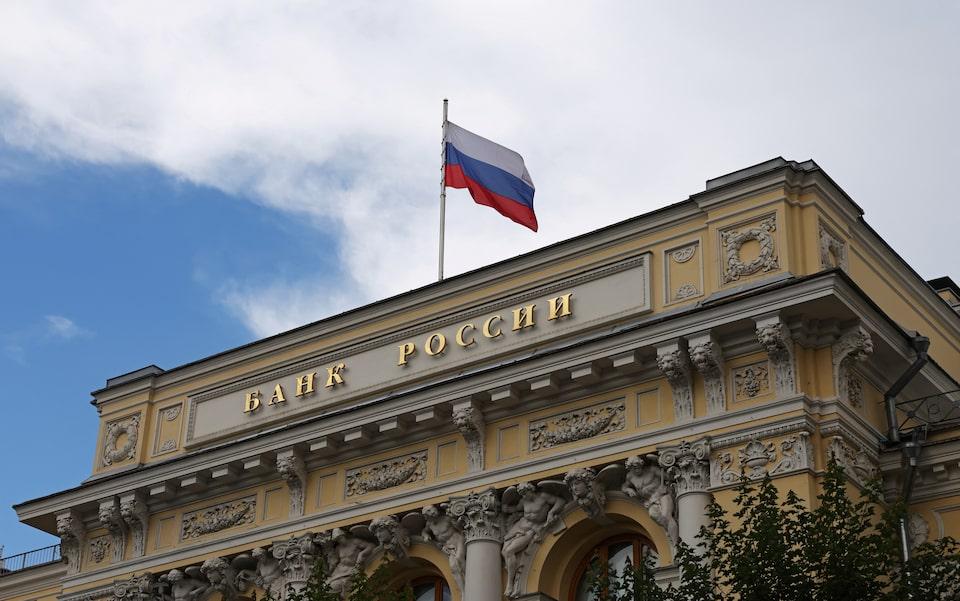
MOSCOW, July 25 (Reuters) - The Russian central bank cut its key interest rate by 200 basis points to 18% on Friday, as expected, and lowered its 2025 inflation forecast to between 6% and 7% from between 7% and 8%, as data showed that inflation was slowing down. The decision was in line with a Reuters poll of 27 economists. The cut is intended to revive lending and boost economic growth, which is expected to slow down sharply this year. Sign up here. "Current inflationary pressures, including underlying ones, are declining faster than previously forecast. Domestic demand growth is slowing. The economy continues to return to a balanced growth path," the central bank said in a statement. Russia's consumer price index fell by 0.05% in the latest week, marking weekly deflation for the first time since September 2024, which set the stage for the central bank's decision, although the regulator says it is looking at longer-term trends. The central bank maintained its gross domestic product growth forecast at between 1% and 2%. The economy grew by 4.3% in 2024. The decrease brought overall price growth this year to 4.56%, compared with 5.06% for the same period last year. Annualized inflation slowed to 9.17% from its peak of 10.3% in March. The regulator was under intense pressure from the business community to start easing after it hiked the key rate to the highest level since early 2000s last year. Business leaders complained that at such a rate, investment no longer made sense. Despite this pressure, President Vladimir Putin backed the central bank's policy, but warned it not to overcool the economy. The rouble, which rallied by 45% against the U.S. dollar earlier this year in part due to the high key rate, has begun to weaken ahead of the expected rate cut and touched the 80 mark against the dollar on Friday. https://www.reuters.com/markets/europe/russian-central-bank-cuts-key-rate-by-200-bps-inflation-subsides-2025-07-25/