2025-07-25 10:20
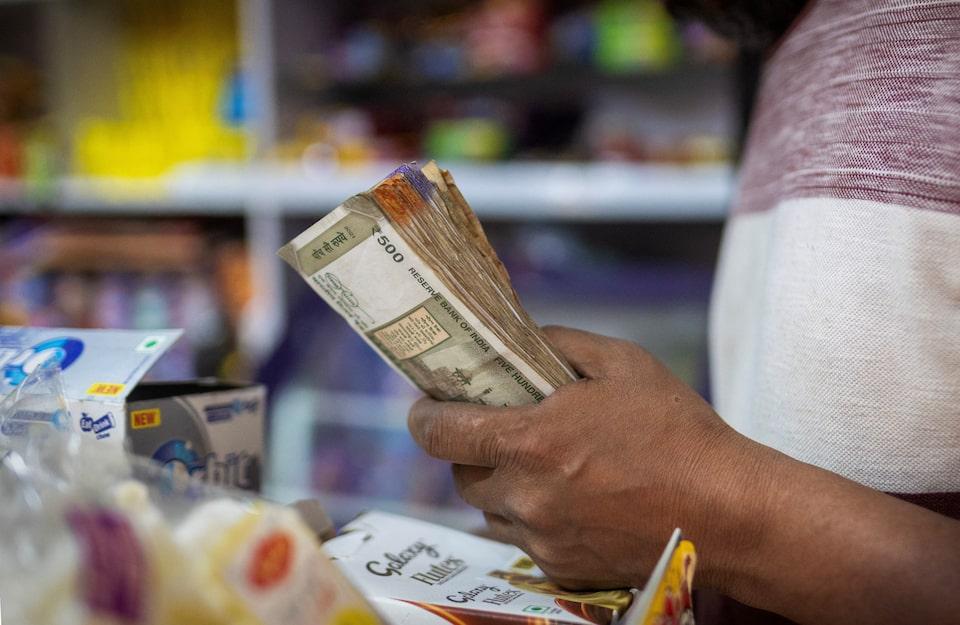
MUMBAI, July 25 (Reuters) - The Indian rupee fell to a one-month low on Friday, and logged its third straight weekly decline, pressured by outflows from local stocks and caution among investors ahead of a news-heavy week dominated by tariffs and central bank decisions. The rupee closed at 86.5150 against the U.S. dollar on Friday, down 0.4% on the week. The local currency hit a low of 86.6250 earlier in the session, its weakest level since June 23. Sign up here. India's benchmark equity indexes, the BSE Sensex (.BSESN) , opens new tab and Nifty 50 (.NSEI) , opens new tab, fell about 0.9% each, weighed down by a fall in global equities alongside worries over weak corporate earnings and a delayed U.S.-India trade deal. Dollar sales from local private banks, likely on behalf of exporter clients, helped limit the rupee's losses, a trader at a Mumbai-based bank said. The dollar index was up 0.2% at 97.7 while Asian currencies declined by as much as 0.7%. Next week is poised to be eventful, with trade talks between U.S. and China, monetary policy decisions from the U.S. Federal Reserve and Bank of Japan, the reciprocal tariff deadline, and key U.S. economic data expected to keep traders on their toes. The odds of a rate-cut by the Fed are near-zero but investors will keep an eye on commentary from the Fed Chair and whether the decision is unanimous. "We maintain our view that the impact of tariffs will be transitory and that it will be appropriate for the FOMC to resume cutting interest rates gradually in September (by 25bp) with another 25bp cut in December," ANZ said in a Friday note. The chances of a rate cut in September are currently around 60%, per CME's FedWatch tool. Evolving rate cut expectations will also be in focus locally as cooling inflation has prompted calls for at least one more interest rate cut this year. The RBI slashed rates by 100 bps over the first half of the year. https://www.reuters.com/world/india/rupee-slides-third-straight-week-tariff-deadline-fed-decision-near-2025-07-25/
2025-07-25 10:14
July 25 (Reuters) - Shares in Valeo (VLOF.PA) , opens new tab fell over 16% in early Friday trading, after the French car parts supplier cut its annual sales forecast by at least 1 billion euros ($1.2 billion), blaming a weaker dollar and shrinking global car sales volumes. The designer and producer of driving assistance systems said late on Thursday it expected sales of around 20.5 billion euros this year, down from the 21.5-22.5 billion euros it forecast previously. Sign up here. As U.S. tariffs on foreign auto imports threaten carmakers' margins and sales volumes, Valeo CEO Christophe Périllat told analysts that the company would reap the benefits of a cost reduction programme. On Friday, Volkswagen (VOWG.DE) , opens new tab, one of Valeo's largest customers, cut its full-year sales and profit margin forecasts in its first assessment of the damage from U.S. President Donald Trump's trade war. Volkswagen shares reversed early losses and were up over 2% by 0950 GMT, with a Metzler analyst pointing to CEO Oliver Blume's assessment that the performance of its Porsche and Audi brands could reach a low point this year and recover in 2026. Valeo shares had trimmed early losses to trade down 6.6% at the same time. Several European companies flagged currency risks in their quarterly reports, after Trump's April 2 tariff bombshell triggered market turmoil and sent the safe-haven dollar tumbling. ($1 = 0.8518 euros) https://www.reuters.com/business/autos-transportation/valeo-shares-slump-car-parts-supplier-cuts-sales-forecast-2025-07-25/

2025-07-25 10:05
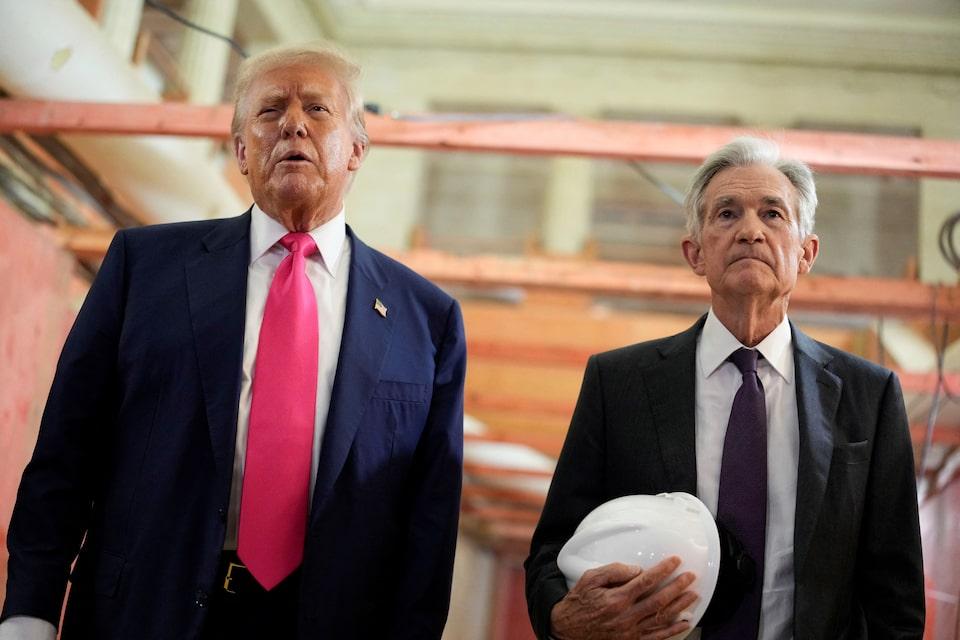
Political uncertainty surrounds Powell’s tenure amid Trump’s criticism Investors fear that firing Powell could undermine the Fed’s independence Powell's dismissal risks sparking volatility across asset classes A shadow Fed Chair could sow market confusion, but may be less disruptive for investors NEW YORK, July 25 (Reuters) - Uncertainty over Federal Reserve Chair Jerome Powell’s tenure is prompting investors to assess potential market reactions should there be an premature change in leadership at the U.S. central bank. President Donald Trump has repeatedly criticized Powell for not cutting U.S. rates quickly enough. He has frequently raised the possibility of ousting him before his term is up in ten months, while also saying that firing him would be "unlikely." Sign up here. Trump said on Thursday he had a "good meeting" with Powell after he visited the Federal Reserve's headquarters in Washington to tour the site of a $2.5 billion renovation of two historical buildings the White House criticizes as overly costly and ostentatious. He said it is not necessary to fire Powell. Investors have been considering various scenarios, including Trump dismissing Powell, the Fed chief stepping down, or a new nominee being named well before the scheduled end of Powell’s term. Forecasting how equities, the U.S. dollar, and Treasury yields would react to each outcome is difficult, market participants said. However, brief turbulence last week — when reports emerged that Trump was considering firing Powell — triggered a 0.7% decline in the S&P 500 and a 0.9% drop in the dollar, offering some clues to possible market reactions, they added. "Financial markets have sent clear warning signals about the consequences of political interference," Jack Ablin, chief investment officer at Cresset Capital, said. "YOU'RE FIRED" While deemed the most unlikely scenario, the biggest risk for markets is if Trump were to fire Powell. Such a move would be viewed as an assault on the independence of the Fed, something the market counts on, investors said. Based on the scale of gyrations markets recently experienced, strategists at Deutsche Bank estimate the dollar could tumble as much as 6%, potentially a record large drop. Deutsche Bank's strategists estimate the 10-year yield could jump up about 20 basis points while the 30-year yield could soar 45 basis points. On Thursday, the 10-year yield was at 4.413%, while the 30-year bond was at 4.942%. While equities might eventually find something to like in a new Fed Chair who might be more amenable to rate cuts, investors said stocks would likely initially sell off if Powell is shown the door. Cresset's Ablin said the drop in stocks would be more extreme than the less than 1% slide spurred by last week's reports on Powell's imminent firing. Ousting Powell would raise the risk that Trump would try to make an even bigger play to take over the Fed, David Seif, chief economist for developed markets at Nomura, said. "Loss of Fed independence would lead to a very big increase, I think, in inflation uncertainty, and that would lead investors to demand much more compensation for locking their money up for that long, leading to a much steeper yield curve," Seif said. Gold would be one asset that could benefit in the circumstance, Aaron Hill, chief analyst at broker FP Markets, said. The price of the safe haven metal, already near record highs set this year at around $3,400 an ounce, could leap higher, he said. Nor is the market going to draw much distinction between Powell being fired for cause or otherwise, investors said. "I QUIT" Should Powell resign, concerns about the Federal Reserve’s independence would linger, but markets may avoid a prolonged period of uncertainty that could arise from potential legal battles if Powell were dismissed. Powell has said he would refuse to leave office early even if Trump asked. While that might yield a slightly less volatile reaction in the near term, it will confirm apprehensions about the Federal Reserve straying from its dual mandate of maximum employment and stable prices, analysts said. The chair is only one of 12 voting members at the central bank's monetary policy meetings. Part of the role is to build consensus with a large group of policymakers. "I think that's telling you that Trump is willing to work that hard to break down the leader of the board ... that he's going to come after the rest of the board if they don't do what the new Fed chair basically does," Benjamin Ford, researcher at macro research and strategy firm Macro Hive said. "I think that almost cements Trump's view for interest rates." The dollar would be particularly vulnerable, hit with the double whammy of rate cuts and loss of investor confidence. "A politically compliant Federal Reserve could trigger severe and lasting market disruptions across multiple asset classes, fundamentally altering the global financial landscape," Cresset's Ablin said. SHADOW FED The most benign outcome for markets would be if Trump were to merely nominate a new chair and let Powell remain in place until his term expires in May. Treasury Secretary Scott Bessent said on Wednesday the Trump administration was not in a rush to nominate a new chair to replace Powell. The administration would likely announce a successor in December or January, he said. "I don't know that the equity market would necessarily view that negatively," Mark Hackett, chief market strategist at Nationwide, said. "You're obviously going to believe that the next person is going to be more dovish on average than Powell would be, but I think that assumption is there anyway," he said. An appointment who talks loudly about lowering interest rates could erode the value of the dollar, investors said. "It would probably weigh on the dollar more and more as we go through and towards the new Fed chair," Macro Hive's Ford said. While not as drastic as the other two scenarios, the presence of a shadow chair who offers potentially clashing views with the sitting central bank leader on monetary policy could sow confusion. Any choice deemed as being under Trump's thumb could do lasting damage to the public perception about the Fed's independence. "It's really hard to put the toothpaste back in the tube," Nationwide's Hackett said. https://www.reuters.com/world/us/investors-weigh-market-impact-possible-early-powell-exit-2025-07-25/
2025-07-25 09:54
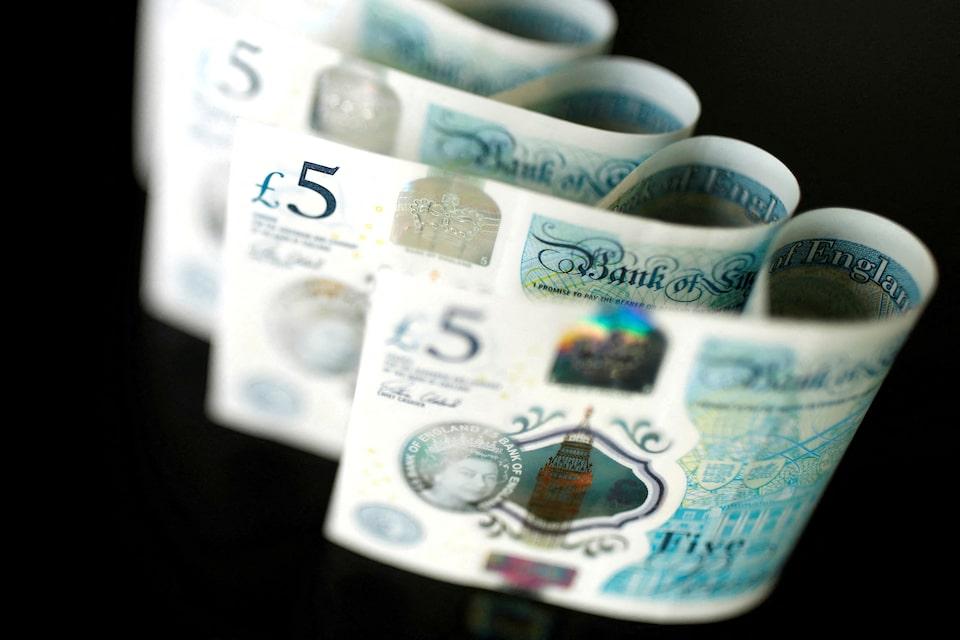
LONDON, July 25 (Reuters) - The pound dropped to its weakest level against the euro in four months on Friday as a weekly decline in gilt yields on soft British data contrasted with higher European yields on expectations the European Central Bank is done with rate cuts. The euro reached as high as 87.27 pence, up 0.24% and approaching its April 11 peak of 87.38 pence, hit at the height of tariff-induced market turmoil. A break past that would take the euro to its highest since late 2023. Sign up here. The pound was also down 0.4% against the dollar at $1.3456. Data on Friday showed British retail sales for June were slightly below analysts' expectations, albeit rebounding from a sharp drop in May. They followed figures on Thursday showing UK business activity grew only weakly in July and employers cut jobs at the fastest pace in five months. The jobs data is the most important aspect of this, said Derek Halpenny, head of research global markets EMEA at MUFG, as rate setters at the Bank of England are most focused on the labour market. As a result, yields on British government bonds, or gilts, are set for small weekly falls across the curve, in contrast with European government bond yields, which are up sharply on signs of a U.S.-EU trade deal and hints from the ECB that it is done with interest rate cuts. This "notable divergence" is sending euro/sterling higher, said Halpenny. The BoE has hitherto been much more cautious about rate cuts than the ECB and most other European developed market central banks due to stubbornly high British inflation. The ECB has cut by 200 basis points since last year, in contrast to just 100 bps from the BoE. However, while ECB could now be done with easing, markets continue to anticipate two further 25 bps BoE cuts this year, and see around an 80% chance of the first of those at its early August meeting. Analysts say should UK inflation slow, the pace of cuts could accelerate. Though with inflation hitting its highest in a year in June, they say the BoE has a difficult balancing act. https://www.reuters.com/world/uk/sterling-four-month-low-against-euro-uk-euro-zone-rates-diverge-2025-07-25/
2025-07-25 09:00
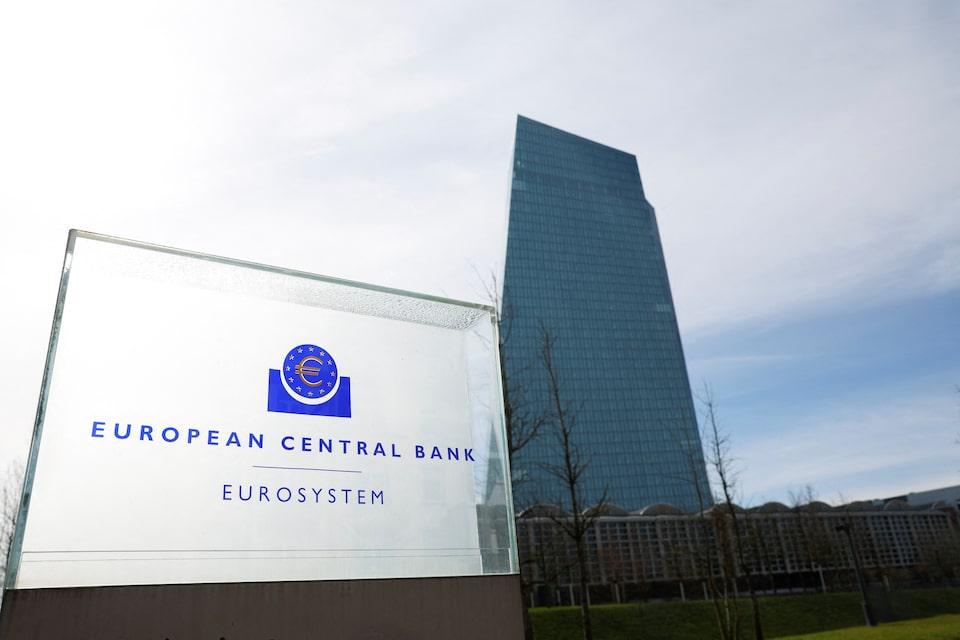
FRANKFURT, July 25 (Reuters) - The European Central Bank said on Friday it had picked Isabel Vansteenkiste as President Christine Lagarde's new top adviser, replacing Roland Straub who would take up a new role at the ECB. Vansteenkiste, currently director general for the ECB's international and European relations, rose to prominence during the debt crisis of 2010-12, when she represented the central bank in the so called troika of institutions that bailed out Portugal, among other countries. Sign up here. The Belgian economist would now become Lagarde's principal counsellor and the coordinator of the counsel to the ECB's Executive Board, a role that Straub had occupied since 2017. The German economist was now set to become the deputy director general of the ECB's market operations. Both appointments would become effective on 15 September, the ECB said. https://www.reuters.com/business/finance/ecb-picks-new-top-adviser-lagarde-2025-07-25/
2025-07-25 08:59
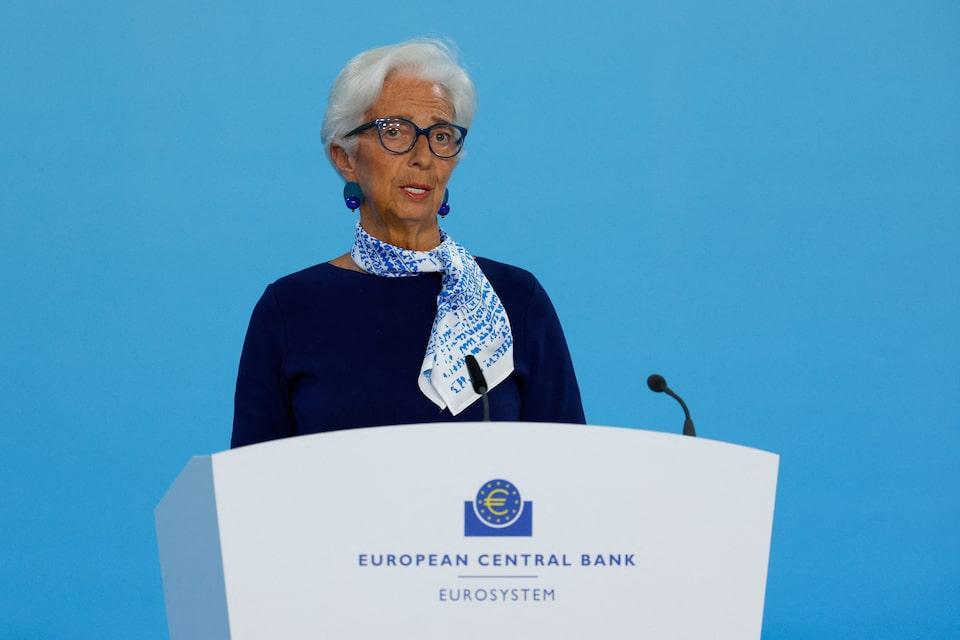
FRANKFURT, July 25 (Reuters) - Euro zone companies are facing a slowing economy and increased competition from China as U.S. tariffs dent confidence and force rivals to seek new markets, a European Central Bank poll showed on Friday. The ECB left interest rates unchanged on Thursday and offered a modestly upbeat assessment of the euro zone economy, raising doubts among investors about further policy easing even as U.S. tariff threats cloud the outlook. Sign up here. But an ECB survey of 72 large companies operating in the euro area pointed to a slowdown in the manufacturing and services sectors, resulting in a more subdued outlook for employment and prices. The ECB contacted the companies between June 23 and July 2. "Contacts reported a slowdown in activity in recent months as tariffs, geopolitical tensions and the resulting uncertainty dented business and consumer confidence," the ECB said. "The feedback from contacts was consistent with very modest growth in both the second and third quarters." The companies contacted by the ECB viewed U.S. tariffs - the extent of which is currently being negotiated - as a negative for growth and said competition from Chinese goods was playing an "increasing role". "The downward pressure on both activity and prices reflected reduced demand, in part caused by trade diversion from Asia (and China in particular) as exporters from the region sought alternatives to the U.S. market," the ECB said. This had mostly affected intermediate goods so far and had "little to no impact on final consumer prices," but it was expected to broaden in the coming months and quarters. "By contrast, contacts in the retail and consumer services sectors reported minimal, if any, impact on their activity or prices to date, and did not anticipate much impact in the near future," the ECB added. Wage growth was expected to slow from the 4.5% pace recorded last year, but by less than in the previous survey. Companies now forecast pay rising by 3.3% this year and by 2.8% in 2026. https://www.reuters.com/business/finance/euro-zone-companies-warn-slowing-economy-china-competition-ecb-poll-shows-2025-07-25/