2025-07-25 06:00
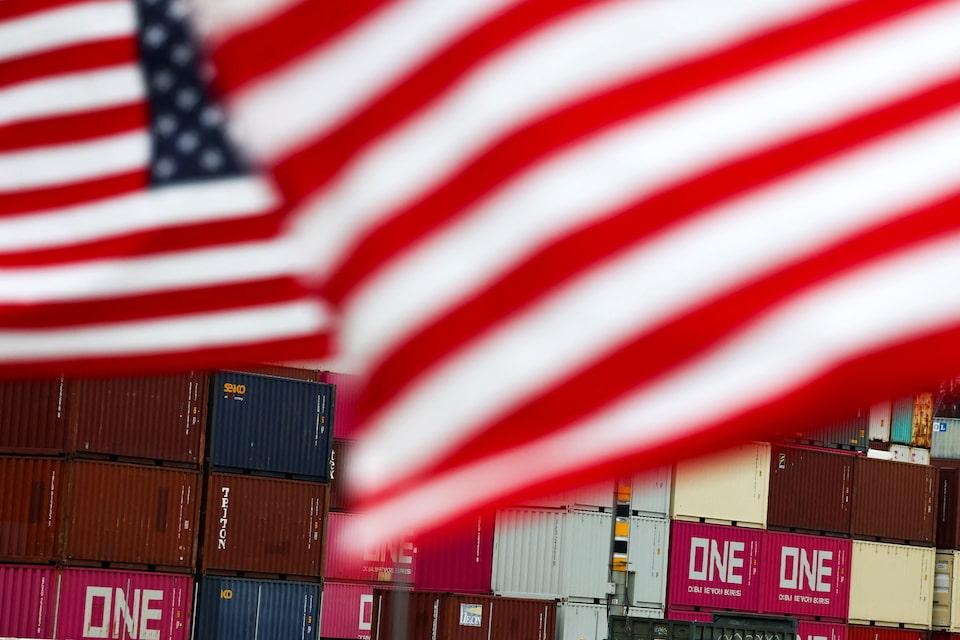
LONDON, July 24 (Reuters) - U.S. President Donald Trump sprang a double surprise on the copper market when he announced import tariffs of 50% effective next month. The market was betting that tariffs would be set lower and come with a longer lead-time. Sign up here. The futures market is rapidly readjusting, with the CME copper contract punching out record highs as it prices in the higher tariff differential with the London Metal Exchange (LME) contract. So too is the physical supply chain. The August 1 start date signals the end of the race to ship physical metal to the United States to capture the tariff arbitrage. A lucky few with cargoes already afloat may yet cross the finishing line in time, but the physical tariff trade is rapidly unwinding. That's already manifest in rising inventory and loosening time-spreads on the London market. BONANZA TRADE The tariff trade has been a bonanza for merchants and traders ever since the Trump administration announced the launch of a national security investigation into U.S. copper import dependency back in February. It's been such a money-spinner that they've stripped both the physical supply chain and markets of last resort, such as the LME and the Shanghai Futures Exchange (ShFE), for available copper. U.S. imports of refined copper surged to 541,600 metric tons between March and May, equivalent to 60% of imports over the whole of 2024. Flows from traditional sources such as Chile and Peru have accelerated, and they've been supplemented by arrivals of Australian, Asian and European brands of copper. CME inventory has more than doubled since the start of March and at 222,723 tons is now just shy of the 2018 peak. More copper is sitting in the off-market shadows. Analysts are pegging the excess at somewhere between 400,000 and 500,000 tons, which in the view of Citi would "negate U.S. copper import demand for the rest of 2025." Allowing for continued flows of metal under long-term supply contracts, it could take up to nine months to work off the mountain of metal, according to Macquarie Bank. HONG KONG ACCELERATOR It won't take that long for the global supply chain to adjust, judging by rising stocks and looser spreads on the London market. Indeed, the benchmark cash to three months period flipped from backwardation to contango almost immediately on the tariff confirmation, as 25,000 tons of copper earmarked for physical load-out were dumped back in the market. With the shipping window to the United States now closed, LME inventory has jumped by 33,525 tons this month, thanks in large part to shipments by Chinese producers. Chinese exports of refined copper have been accelerating since March in response to the U.S. drain on LME stocks and the resulting spread tightness. LME warehouses in Taiwan and South Korea have traditionally been the prime locations for receiving Chinese metal, but the opening of exchange warehouses in Hong Kong now allows for faster delivery. Exchange warehouses on the island have already received 5,975 tons of copper since opening for business on July 15. There may be more to come. The LME benchmark spread is now in a comfortable contango of $66 per ton, compared with a backwardation of more than $300 per ton at the end of June. WHO'S THE REAL DOCTOR COPPER? Trump's tariffs have split global copper pricing between the United States and the rest of the world. Copper bulls are cheering CME's rise to new historic highs, but this is a direct reaction to higher than expected import tariffs rather than a reflection of global market dynamics. The CME spot premium over the LME price has jumped from $1,233 per ton on July 7 to $3,095. In terms of the implied tariff impact on U.S. pricing, the CME price differential has widened from 13% to 31% since Trump pulled the tariff trigger. The LME three-month price , by contrast, remains locked in a sideways range just below $10,000 per ton, still a good way short of the record highs above $11,000 per ton seen in May 2024. Despite the mass relocation of global inventory towards the United States, total exchange stocks are little changed on the start of the year. Including both LME off-warrant stocks and copper registered with ShFE's international INE arm, global exchange inventory is currently down by just 18,000 tons on the start of January. The stable LME price, rather than the overheated U.S. price, captures that ambiguous reality. The devilish detail in the new tariffs is conspicuously lacking. Will copper product imports be included? Will there be restrictions on U.S. exports of copper scrap? Will there be exemptions for favoured suppliers? We don't yet know, but it's clear that global pricing has just fractured. Doctor Copper now has a transatlantic double, but the real reflector of global manufacturing activity is the one in London, not the U.S. doppelganger. The opinions expressed here are those of the author, a columnist for Reuters. https://www.reuters.com/markets/commodities/coppers-physical-tariff-trade-is-rapidly-unwinding-2025-07-24/

2025-07-25 05:33
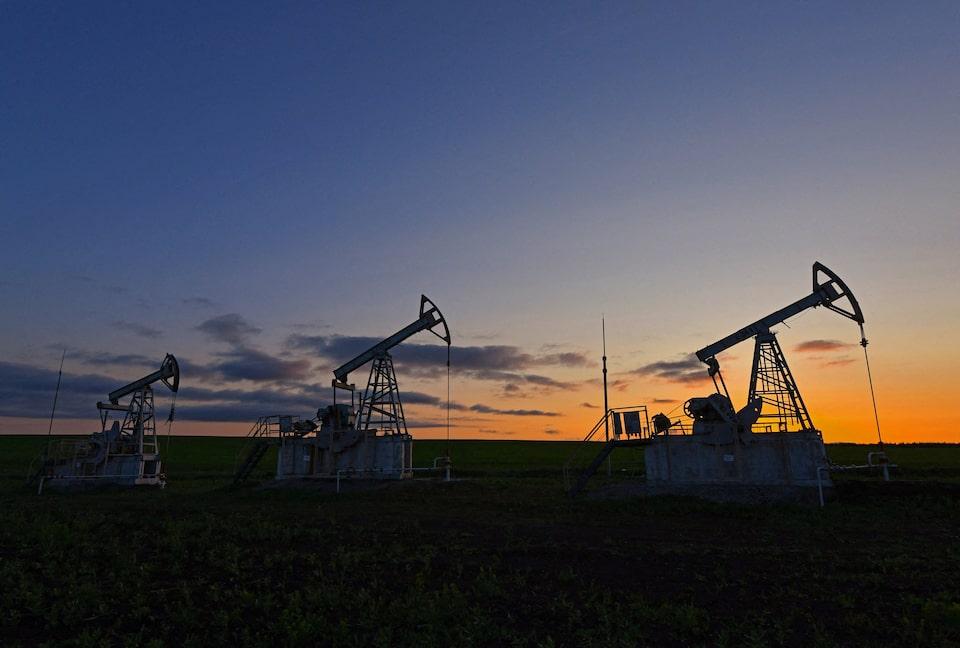
Brent, WTI up 0.3% after 1% gain in previous session EU says trade deal with US within reach US prepares to allow limited oil operations in Venezuela, sources say Investors brace for data week next SINGAPORE, July 25 (Reuters) - Oil prices rose on Friday as trade talk optimism supported the outlook for both the global economy and oil demand, outweighing news of the potential for more oil supply from Venezuela. Brent crude futures touched a one-week high and were up 20 cents, or 0.29%, at $69.38 a barrel by 0519 GMT. U.S. West Texas Intermediate crude futures climbed 20 cents, or 0.30%, to $66.23. Sign up here. Oil, along with stock markets, gained support from the prospect of more trade deals between the United States and trading partners ahead of an August 1 deadline for new tariffs on goods from an array of countries. After the United States and Japan unveiled a trade deal on Wednesday, two European diplomats said the European Union was moving toward a deal involving a baseline U.S. tariff of 15% on EU imports, plus possible exemptions. "Trade talk optimism appears to be offsetting expectations for stronger Venezuelan supply," ING analysts wrote in a client note on Friday. The United States is preparing to allow partners of Venezuela's state-run PDVSA (PDVSA.UL), starting with U.S. oil major Chevron (CVX.N) , opens new tab, to operate with limitations in the sanctioned nation, sources said on Thursday. Venezuelan oil exports could consequently increase by a little more than 200,000 barrels per day, which would be welcome news for U.S. refiners, as it would ease tightness in the heavier crude market, ING analysts wrote. So far this week, Brent has gained 0.4% and WTI has fallen 1.4%. Both contracts advanced about 1% on Thursday, driven by reports of cuts to Russian gasoline exports. This week there were brief disruptions in Kazakh Black Sea oil exports and Azeri BTC crude loading from the Turkish port of Ceyhan. Also supporting the market were U.S. crude inventory draws. U.S. Energy Information Administration data on Wednesday showed crude inventories fell last week by 3.2 million barrels to 419 million barrels, far more than the 1.6 million barrel draw estimated by analysts in a Reuters poll. "I am encouraged by the way crude oil held and bounced away from band this week, which keeps hopes intact of a rebound back towards $70," said IG analyst Tony Sycamore, adding that next week will bring data for traders to chew over. Economic data next week from the world's biggest economies and oil consumers include factory activity in China and U.S. inflation, jobs and inventories. https://www.reuters.com/business/energy/oil-gains-trade-talk-optimism-offsets-potential-higher-venezuelan-supply-2025-07-25/
2025-07-25 05:32
NEW DELHI, July 25 (Reuters) - At least four children were killed and 17 injured in India's western state of Rajasthan after the roof of a school building collapsed on Friday, local media reported, with dozens still feared trapped under the rubble. A local police officer, who declined to be named, told Reuters the school building was old and the roof might have fallen in as a result of heavy rainfall in the region. Sign up here. "There were 25-30 children in the room when the roof fell after the morning prayers," Rajasthan education minister, Madan Dilawar, told AajTak news channel. Visuals from news channels showed locals gathered around the site of the collapse. Distressed family members could be heard crying as authorities used a crane to remove the debris. Local media reported that 32 students had been pulled out safely, but rescue operations were ongoing. "Instructions have been given to the concerned authorities to ensure proper treatment for the injured children," Rajasthan Chief Minister Bhajanlal Sharma said on X. Some of the injured children were critical, local police officer Amit Kumar told the PTI news agency, according to the Economic Times newspaper. https://www.reuters.com/world/india/school-roof-collapse-indias-rajasthan-kills-4-children-media-reports-2025-07-25/

2025-07-25 05:03
Sentiment boosted by US-Japan deal this week Markets pauses ahead of Fed, BOJ policy meetings next week Eyes on US-EU trade deal negotiations Markets shrug off Trump's Fed visit SINGAPORE, July 25 (Reuters) - The dollar inched off two-week lows on Friday, but kept on track for its biggest weekly drop in a month, as investors contended with U.S. tariff negotiations before an August 1 deadline, while looking ahead to central bank meetings next week. Both the U.S. Federal Reserve and the Bank of Japan are expected to hold rates at next week's policy meetings, but traders are focusing on the subsequent comments to gauge the timing of the next move. Sign up here. "Next week’s BOJ policy meeting will be closely watched for hints on the timing of the next rate hike," said Carol Kong, currency strategist at Commonwealth Bank of Australia. The prospect of rate hikes by the BOJ had improved, she added, after a trade deal struck with the United States this week lowered tariffs to 15% on auto imports from Japan. But a near-term rate hike is hardly a done deal with the timing dependent on whether the economy can withstand the impact of U.S. tariffs, four sources familiar with the BOJ's thinking told Reuters. The yen stood at 147.20 to the dollar, on course for a weekly gain of nearly 1%, although the currency was weaker on the day as investors weighed monetary policy outlook and the fate of embattled Japanese Prime Minister Shigeru Ishiba. A majority of economists in a Reuters poll this week said they expect Japan's central bank to raise interest rates by 25 basis points this year. The dollar index , which measures the U.S. currency against six other units, was at 97.448, set for a drop of 1% this week, its weakest performance in a month. On Thursday, the European Central Bank left its policy rate at 2%, as expected, in a break from a year of policy easing, to await clarity over future U.S. trade ties after the European Commission said a negotiated solution was in reach ahead of the August 1 deadline. The euro was little changed at $1.174, but not far from $1.183, the near four-year high it touched at the start of the month. The euro is up 13.5% this year as tariff policies take the shine off the dollar. Progress on trade deals has also raised market hopes for talks with China, after U.S. Treasury Secretary Scott Bessent said officials of both countries would meet in Stockholm next week to discuss an extension of the deal negotiation deadline. The Australian dollar has been boosted by the rise in risk appetite after the trade deals and was last at $0.6593, hovering near an eight-month high touched on Thursday. TRUMP'S FED VISIT Donald Trump locked horns on Thursday with Fed Chair Jerome Powell during a rare presidential visit to the central bank, criticising the cost of renovating two historical buildings at its headquarters and pressing the case for lower interest rates. Markets mostly shrugged off the visit, however, having become accustomed to Trump's repeated tirades against Powell and the Fed. "Trump's Fed visit was spectacle over substance," said Prashant Newnaha, senior Asia-Pacific rates strategist at TD Securities. "The market's focus is firmly on next week's Fed meeting. We expect Powell to repeat a patient, data-dependent policy outlook with flexibility but (he) is unlikely to commit to cuts." At their two-day rate-setting meet, the central bank's 19 policymakers are widely expected to leave their benchmark interest rate in the range of 4.25% to 4.50%. Traders are pricing in 43 basis points of rate cuts by the end of 2025. ANZ strategists expect the Fed to cut rates by 25 basis points in September and again in December. "Were it not for tariff uncertainty, we judge that rate cuts would already have resumed," they said in a note. "The labour market is weakening, service price disinflation is well established, demand growth has slowed and there is no discernible evidence that higher tariffs are spilling into a broader inflation problem." In cryptocurrencies, bitcoin fell 2.6% to $115,644, while Ether was down 3.3% at $3,616. https://www.reuters.com/world/middle-east/dollar-steadies-focus-shifts-fed-boj-meetings-2025-07-25/
2025-07-25 04:56
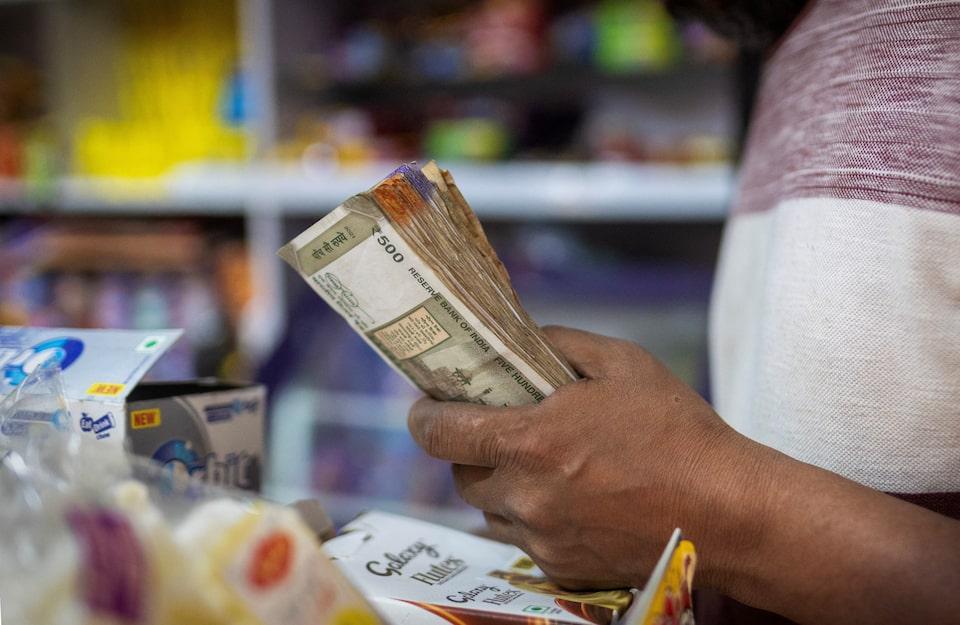
MUMBAI, July 25 (Reuters) - The Indian rupee declined to its weakest level in a month in early trading on Friday, pressured by a fall in local equities as well as investors cutting their very near-tenor bullish bets on the currency, traders said. The rupee fell to 86.5775, its lowest level since June 23, before paring losses to last quote at 86.51, down 0.1% on the day as of 10:10 a.m. IST. Sign up here. India's benchmark equity indexes, the BSE Sensex (.BSESN) , opens new tab and Nifty 50 (.NSEI) , opens new tab fell about 0.5% each, dragged by losses in Bajaj Finance due to asset quality concerns. Regional equities and currencies were mostly lower as well with the offshore Chinese yuan, a closely tracked peer of the rupee, down 0.2%. Interbank was holding onto modest long positions on the rupee overnight, which were cut in early trading, pushing the currency lower, a trader at a private bank said. In the near-term, expectations are that the rupee could go "another leg lower," to 86.80 before reversing course. Investors and traders are also hunkering down for a week likely to be dominated by news flow surrounding the August 1 U.S. tariff deadline, policy decisions by the Federal Reserve and the Bank of Japan, alongside key U.S. data prints. For the dollar, "what seemed like a new uptrend to start the month has nearly all but unwound. Lot of event risk next week, before the market switches into August-mode," BofA Global Research said in a note. The dollar index is on course to end the week down by about 1% after rising over the last two weeks and was last quoted at 97.6. Meanwhile, analysts polled by Reuters expect the Reserve Bank of India to keep policy rates unchanged in August but note that the central bank is likely to lower it again by year-end. Almost half of the polled analysts forecast that interest rates would be lower than previous forecasts at the year-end as falling inflation has prompted calls for at least one more rate cut this year. https://www.reuters.com/world/india/weak-local-stocks-positional-adjustments-push-rupee-one-month-low-2025-07-25/
2025-07-25 04:45
A look at the day ahead in European and global markets from Gregor Stuart Hunter Aaaaaand... breathe. After an enormous week of trade deals, a more hawkish ECB and a buyer's strike in the Japanese bond market, investors are taking a pause from a recent risk-on rally ahead of U.S. President Donald Trump's August 1 tariff deadline. Sign up here. Traders can be excused some profit-taking. On the docket next week are interest rate decisions from the U.S. Federal Reserve, the Bank of Japan and the Bank of Canada, plus U.S. non-farm payrolls data and earnings from Amazon (AMZN.O) , opens new tab, Apple (AAPL.O) , opens new tab, Meta (META.O) , opens new tab and Microsoft (MSFT.O) , opens new tab. Earnings season so far has laid bare the fact that businesses focused on artificial intelligence are raking it in. Those catering to actual people, less so. One more reason to relax: Following a rare - and tense - visit to the Fed on Thursday, Trump expressed displeasure with the cost of renovating the bank's headquarters but said he is not going to fire Chairman Jerome Powell. For now, anyway. "To do so is a big move and I just don't think it's necessary," Trump told reporters after the visit. Yields on Treasury bonds and the U.S. dollar index were little changed afterwards, again shrugging off Trump's attacks on Powell and the threat to the Fed's independence that such attacks imply. That said, Wall Street looked like it might extend record highs to the end of the week, with S&P 500 and Nasdaq futures both up around 0.2%. The past week saw trade agreements with Japan, Indonesia and the Philippines, while deal talks continued with the EU and South Korea. Trump has since said Australia has agreed to open its market to American beef in a post on Truth Social, and will next meet British Prime Minister Keir Starmer in Aberdeen, Scotland, to thrash out the details of a trade framework agreed in June. Still in the hot seat is BOJ Governor Kazuo Ueda after the core consumer price index for Tokyo rose 2.9% on year in July. The central bank is in a tough spot when it comes to managing inflation. Its hands are tied as pressure builds on the prime minister to step down after the weekend's election drubbing but with no clear candidate to replace him. The dollar strengthened 0.2% against the yen after the inflation data to 147.23. Still, the Japanese currency remains on course for a weekly gain of 1.1%. Key developments that could influence markets on Friday: Trying to keep up with the latest tariff news? Our new daily news digest offers a rundown of the top market-moving headlines impacting global trade. Sign up for Tariff Watch here. https://www.reuters.com/business/retail-consumer/global-markets-view-europe-2025-07-25/