2025-07-24 20:47
July 24 (Reuters) - Newmont (NEM.N) , opens new tab surpassed Wall Street expectations for second-quarter profit as the world's top gold miner benefited from a rally in bullion prices, sending its shares 4% higher in extended trading on Thursday. Prices of the precious metal have consistently set record highs over the past few quarters, as uncertainty over U.S. President Donald Trump's tariff plans and geopolitical concerns boosted gold's safe-haven appeal. Sign up here. In the second quarter, gold prices averaged at $3,220.58 per ounce, nearly 40% above levels seen a year earlier. Newmont's average realized price for gold was at $3,320 per ounce, compared with $2,347 a year ago. The bullion rally helped Newmont cushion an 8% fall in gold production to 1.48 million ounces in the second quarter. Meanwhile, all-in-sustaining costs for gold, an industry metric reflecting total expenses, rose nearly 2% to $1,593 per ounce. The decrease in output comes after Newmont began divesting non-core assets last year to reduce debt in the months following the completion of its $17.14 billion deal for Australian miner Newcrest. Since November 2024, Newmont has divested its Eleonore mine in Canada for about $795 million, the Musselwhite Gold Mine in Ontario in an $850 million deal, and its stake in Porcupine Operations in Ontario for $425 million. The firm left its annual outlook unchanged on Thursday but announced a new $3 billion share repurchase program, which J.P.Morgan analyst Al Harvey said would lend support to Newmont's earnings per share. On an adjusted basis, the miner posted a profit of $1.43 per share for the three months ended June 30, compared with analysts' average estimate of $1.18 per share, according to data compiled by LSEG. Earlier this week, the company said three workers were trapped underground at a western Canadian mine operated by Newmont, adding that operations had been temporarily suspended at the mine. It has deployed specialized drones to assess the geotechnical conditions underground and is focused on re-establishing communication with the trapped workers. https://www.reuters.com/business/gold-miner-newmonts-quarterly-profit-beats-estimates-bullion-rallies-2025-07-24/
2025-07-24 20:29
Trump to visit Federal Reserve headquarters UnitedHealth says it is cooperating with DOJ probe S&P 500 +0.07%, Nasdaq +0.18%, Dow -0.70% July 24 (Reuters) - The S&P 500 and the Nasdaq notched record high closes on Thursday as robust results from Google parent Alphabet fueled optimism about other heavyweight artificial intelligence stocks, while Tesla slumped after the electric vehicle maker's results disappointed investors. Alphabet (GOOGL.O) , opens new tab rose 1% as the search giant's results boosted confidence that heavy investment in a race to dominate AI technology is paying off. Sign up here. Shares of Microsoft (MSFT.O) , opens new tab, Nvidia (NVDA.O) , opens new tab and Amazon (AMZN.O) , opens new tab each climbed 1% or more. The U.S.-Japan trade deal and recent signs of progress in talks with the European Union also fueled Wall Street's gains. "Investors are feeling optimistic about trade negotiations, about the economy, the trend in inflation, as well as the better-than-expected Q2 earnings reports," said Sam Stovall, chief investment strategist at CFRA Research. Tesla (TSLA.O) , opens new tab tumbled 8.2% after CEO Elon Musk warned of a "few rough quarters" as the U.S. government cuts support for electric vehicle makers. The stock has fallen around 25% so far in 2025. UnitedHealth fell 4.8% after the insurer revealed it was cooperating with a Department of Justice probe into its Medicare practices, following reports of both criminal and civil investigations. IBM dropped almost 8% after its second-quarter results fell flat with investors, hampered by disappointing sales in its core software division. Honeywell fell 6.2% despite topping Wall Street's expectations and raising its annual outlook. The S&P 500 crept up 0.07% to end the session at 6,363.35 points. The Nasdaq gained 0.18% to 21,057.96 points, while the Dow Jones Industrial Average declined 0.70% to 44,693.91 points. Volume on U.S. exchanges was relatively heavy, with 19.9 billion shares traded, compared to an average of 17.8 billion shares over the previous 20 sessions. Eight of the 11 S&P 500 sector indexes declined, led lower by consumer discretionary (.SPLRCD) , opens new tab, down 1.23%, followed by a 0.75% loss in materials (.SPLRCM) , opens new tab. American Airlines (AAL.O) , opens new tab tumbled nearly 10% after the carrier forecast a big third-quarter loss, hurt by sluggish domestic travel demand. U.S. President Donald Trump's global trade war has created the biggest uncertainty for the airline industry since the COVID-19 pandemic. Markets were also monitoring Trump's planned visit to the Federal Reserve's headquarters on Thursday, following months of the president criticizing Fed Chair Jerome Powell for interest rates that Trump views as too high. With the Fed widely expected to hold rates steady at next week's meeting, traders see a 60% chance of a September rate cut, according to CME's FedWatch tool. A U.S. Labor Department report showed jobless claims last week fell to 217,000 - well below estimates - signaling continued resilience in the job market. U.S. business activity gained momentum in July, but companies hiked prices on goods and services, fueling economists’ predictions of faster inflation in the months ahead, largely driven by rising import tariffs. Declining stocks outnumbered rising ones within the S&P 500 (.AD.SPX) , opens new tab by a 1.3-to-one ratio. The S&P 500 posted 46 new highs and 6 new lows; the Nasdaq recorded 81 new highs and 44 new lows. https://www.reuters.com/business/sp-500-nasdaq-notch-record-closes-lifted-by-alphabet-2025-07-24/
2025-07-24 20:29
U.S. stocks mixed amid corporate earnings and tariff talks EU and U.S. nearing trade agreement, boosting market optimism Treasury yields rise as trade prospects improve MSCI world stocks index up for seventh session ECB pauses rate cutting cycle NEW YORK, July 24 (Reuters) - The S&P 500 and the Nasdaq gained ground on Thursday, and gold prices eased as investors digested a mixed batch of corporate earnings along with signs of progress in tariff negotiations between the U.S. and trading partners. The S&P 500 and the Nasdaq reached all-time closing highs, while the blue-chip Dow closed in negative territory. Benchmark Treasury yields built on Wednesday's gains and crude prices gained ground over economic optimism and tightening supply. Sign up here. Second-quarter reporting season has hit full stride, with nearly one-third of the companies in the S&P 500 having posted results. Of those, 80% have reported better-than-expected earnings, according to LSEG data. "Companies are beating expectations and there was some risk that they would not," said Rob Haworth, senior investment strategist at U.S. Bank Wealth Management in Seattle. "They are starting to provide some guidance and moving past the uncertainty of tariffs. Investors are taking it constructively." The European Union said that a negotiated trade agreement with the United States was within reach, with a view toward reaching a deal before President Trump's 30% tariffs scheduled to take effect on August 1. This follows a similar agreement with Japan. "The deals in Asia and hopes for a deal with Europe are taking risk off the table in world markets and here, domestically," Haworth added. "What we’re seeing is better performance out of Japan and Europe, as the news is 'less worse' than expected and the terms are not as onerous as people feared." U.S. President Donald Trump, a relentless critic of Federal Reserve Chair Jerome Powell, is due to pay a visit to the central bank on Thursday. This comes amid tensions between the administration and the Fed, which is expected to convene for its two-day monetary policy meeting next week, likely culminating in a decision to let key interest rates stand. The Dow Jones Industrial Average (.DJI) , opens new tab fell 316.20 points, or 0.70%, to 44,694.09, the S&P 500 (.SPX) , opens new tab rose 4.48 points, or 0.07%, to 6,363.39 and the Nasdaq Composite (.IXIC) , opens new tab rose 37.94 points, or 0.18%, to 21,057.96. European shares advanced and world stocks touched record highs amid reports that the European Union and Washington were close to clinching a tariff agreement, close on the heels of a similar deal with Japan. MSCI's gauge of stocks across the globe (.MIWD00000PUS) , opens new tab rose 1.67 points, or 0.18%, to 941.01. The pan-European STOXX 600 (.STOXX) , opens new tab index rose 0.24%, while Europe's broad FTSEurofirst 300 index (.FTEU3) , opens new tab rose 3.92 points, or 0.18%. Emerging market stocks (.MSCIEF) , opens new tab rose 1.19 points, or 0.09%, to 1,266.35. MSCI's broadest index of Asia-Pacific shares outside Japan (.MIAPJ0000PUS) , opens new tab closed higher by 0.13%, to 666.69, while Japan's Nikkei (.N225) , opens new tab rose 655.02 points, or 1.59%, to 41,826.34. U.S. Treasury yields climbed as brightening prospects for trade agreements reduced investor anxieties. The yield on benchmark U.S. 10-year notes rose 2 basis points to 4.408%, from 4.388% late on Wednesday. The 30-year bond yield rose 0.3 basis points to 4.9522% from 4.949% late on Wednesday. The 2-year note yield, which typically moves in step with interest rate expectations for the Federal Reserve, rose 3.4 basis points to 3.918%, from 3.884% late on Wednesday. The dollar traded sideways against the euro after the ECB let interest rates stand, but was mixed against the yen following the U.S.-Japan trade agreement and the result of Sunday's upper house election. The dollar index , which measures the greenback against a basket of currencies including the yen and the euro, rose 0.24% to 97.43, with the euro down 0.11% at $1.1757. Against the Japanese yen , the dollar strengthened 0.29% to 146.92. In cryptocurrencies, bitcoin gained 0.90% to $119,063.64. Ethereum rose 4.66% to $3,737.09. Oil prices rebounded, buoyed by expected cuts in Russian gasoline supply, optimism over trade talks, and a sharper-than-expected drop in U.S. inventories. U.S. crude rose 1.20% to settle at $66.03 a barrel, while Brent settled at $69.18 per barrel, up 0.98% on the day. Gold prices extended their losses as trade deal optimism continued to dampen demand for the safe-haven metal. Spot gold fell 0.51% to $3,370.26 an ounce. U.S. gold futures fell 0.8% to $3,367.00 an ounce. https://www.reuters.com/world/china/global-markets-update-7-graphic-2025-07-24/
2025-07-24 20:24
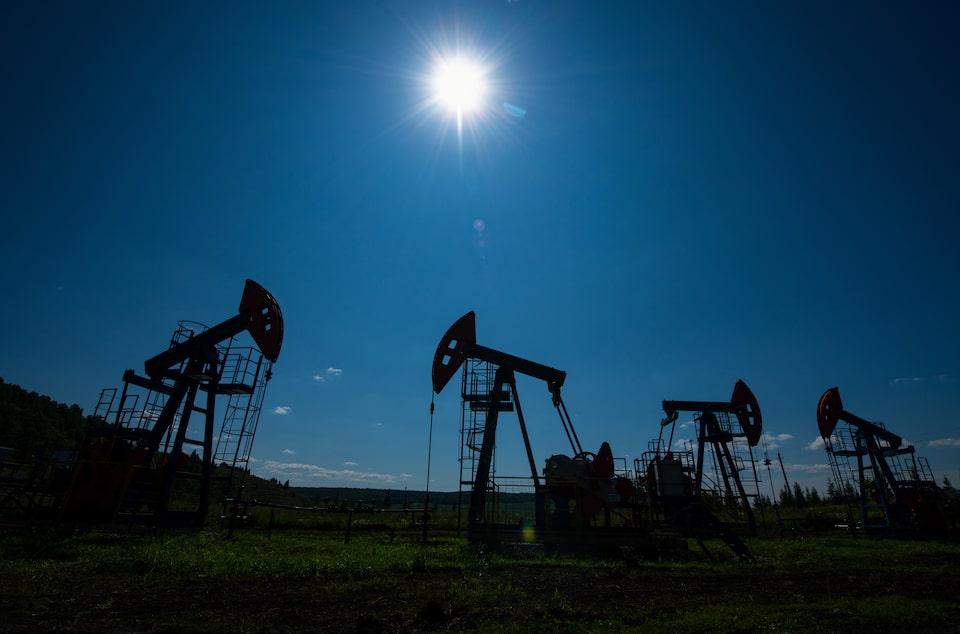
HOUSTON, July 24 (Reuters) - Oil prices rose 1% on Thursday as U.S. crude draws and expected cuts to Russian gasoline exports overwhelmed news that oil major Chevron (CVX.N) , opens new tab will gain U.S. approval to renew production in Venezuela. Brent crude futures settled at $69.18 a barrel, up 67 cents or 0.98%. U.S. West Texas Intermediate crude futures finished at $66.03 a barrel, up 78 cents, or 1.20%. Sign up here. Crude fell in early afternoon trade on news that U.S. President Donald Trump's administration was preparing to allow limited oil operations in sanctioned OPEC nation Venezuela. Earlier in the session, WTI had been up more than a dollar and Brent crude came near that level. "The news about Chevron being able to go back into Venezuela and get oil going again just took the knees out of the market," said John Kilduff, partner at Again Capital LLC. Even so, Kilduff said the market did not expect the Trump administration would open up Venezuela to other U.S. oil companies. "This is a unique one-off," he added. Oil rebounded late in the session on news Russia was planning to cut gasoline exports to all but a few allies and nations like Mongolia, with which it has supply agreements. "Russia looking to cut off gasoline exports gave the market a boost," said Phil Flynn, senior analyst with Price Futures Group. "The market was looking for a reason to go higher." Also lifting futures was the previous day's report of a U.S. crude inventory draw and hopes for a trade deal between the U.S. and the European Union that would lower tariffs. U.S. Energy Information Administration data showed crude inventories fell last week by 3.2 million barrels to 419 million barrels, far exceeding analysts' expectations in a Reuters poll for a 1.6 million-barrel draw. "The U.S. crude inventory draw and the trade efforts are adding some support to prices," said Janiv Shah, an analyst at Rystad. On Wednesday, two European diplomats said the EU and the U.S. were moving toward a trade deal that could include a 15% U.S. baseline tariff on EU imports and possible exemptions. That could pave the way for another major trade agreement following a deal with Japan. https://www.reuters.com/business/energy/crude-finishes-with-1-gain-supply-concerns-us-crude-draws-2025-07-24/
2025-07-24 20:16
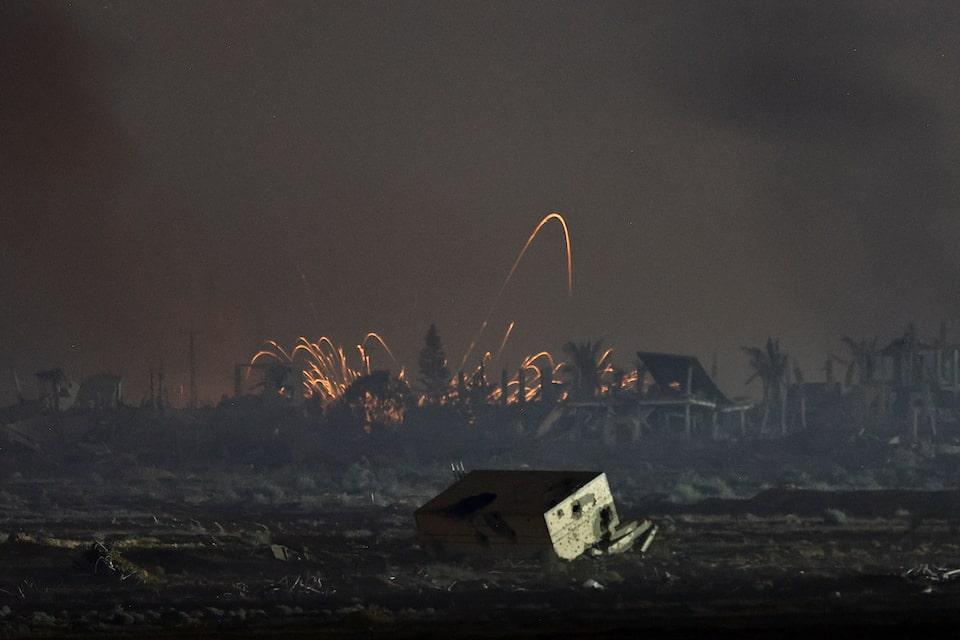
Israel looking at latest Hamas proposal for Gaza truce Conditions in Gaza deteriorating, hunger widespread Pressure on both Israel and Hamas to agree to ceasefire JERUSALEM/CAIRO, July 24 (Reuters) - Israel and the United States recalled their delegations from Gaza ceasefire talks for consultations on Thursday, with U.S. envoy Steve Witkoff accusing the Palestinian militant group Hamas of failing to act in good faith in the talks. It marked the latest setback in efforts to secure a deal that would bring a ceasefire to Gaza, secure the release of Israeli hostages held by Hamas, and bring respite to Palestinians suffering a sharply worsening humanitarian crisis. Sign up here. Witkoff said mediators had made a great effort but "Hamas does not appear to be coordinated or acting in good faith". "We will now consider alternative options to bring the hostages home and try to create a more stable environment for the people of Gaza," he wrote on X. Hamas said it was surprised by Witkoff's remarks, adding that the group's position had been welcomed by mediators and had opened the door to reaching a comprehensive agreement. "The movement affirms its keenness to continue negotiations and engage in them in a manner that helps overcome obstacles and leads to a permanent ceasefire agreement," Hamas added in a statement early on Friday. An Israeli official with knowledge of the talks said Hamas' response to the latest ceasefire proposal "does not allow for progress without a concession" by the group but that Israel intended to continue discussions. Both Israel and Hamas are facing pressure at home and abroad to reach a deal following almost two years of war, with the humanitarian situation inside Gaza deteriorating and Israelis worried about the conditions in which hostages are being held. Dozens of people have starved to death in Gaza the last few weeks as a wave of hunger crashes on the enclave, according to local health authorities. British Prime Minister Keir Starmer said the suffering and starvation in Gaza was an "unspeakable and indefensible" humanitarian catastrophe and called on Israel to urgently let in aid. "While the situation has been grave for some time, it has reached new depths and continues to worsen. We are witnessing a humanitarian catastrophe," Starmer said in a statement. He will hold an emergency call with French and German partners on Friday to discuss what could be done to "stop the killing and get people the food they desperately need," he said. The Gaza health ministry said two more people had died of malnutrition. The head of Shifa Hospital in Gaza City said the two were patients suffering from other illnesses who died after going without food for several days. Earlier in the day, there had been some apparent signs of progress in the mediation. A senior Hamas official told Reuters that there was still a chance of reaching a ceasefire deal but it would take a few days because of what he called Israeli stalling. A senior Israeli official had been quoted by local media as saying the new text was something Israel could work with. But, Israel's Channel 12 said a rapid deal was not within reach, with gaps remaining between the two sides, including over where the Israeli military should withdraw to during any truce. Witkoff's team did not immediately respond to a request to explain the Hamas demands that led to his withdrawal of the U.S. negotiators. The Hostages Families Forum, representing the family members of those held in Gaza, expressed concern at the recall of the Israeli team. "Each day that passes endangers the hostages’ chances of recovery and risks losing the ability to locate the fallen or gain vital intelligence about them," it said. PEPPER SPRAY FIRED AT AID SITE Women going to fetch aid for their families on Thursday said U.S. contractors organising distribution asked them to come to pick up goods and then fired tear gas and pepper spray at them. "The Americans said 'go, go', and then said no, get back. They sprayed us with pepper spray so we went away. Five minutes later they shot tear gas at us ... is this American humanitarian aid?" said Mervat al-Sakani. Asked for comment, a spokesperson for the aid organisation - the Gaza Humanitarian Foundation - said a limited amount of pepper spray was used “to prevent civilian injury due to overcrowding”, adding that GHF “didn’t want people to get hurt.” The spokesperson said women-only aid distribution had been "a major success" overall. GHF, a U.S.-and Israeli-backed organization, began distributing food packages in Gaza at the end of May. The U.N. has called the GHF’s model unsafe and a breach of humanitarian impartiality standards, which GHF denies. The U.N. rights office said on July 15 it had recorded at least 875 killings within the preceding six weeks in the vicinity of aid sites and food convoys in Gaza - the majority of them close to GHF distribution points. Most of those deaths were caused by gunfire that locals have blamed on the Israeli military. The military has acknowledged that civilians were harmed, saying that Israeli forces had been issued new instructions with "lessons learned". Israel, which cut off all supplies to Gaza from the start of March and reopened it with new restrictions in May, says it is committed to allowing in aid but must control it to prevent Hamas diverting it. Israel says it has let in enough food for Gazans, and blames the United Nations for being slow to deliver it; the U.N. says it is operating as effectively as possible under conditions imposed by Israel. The war began when Hamas killed some 1,200 people and took 251 hostages in its October 7 attacks on Israel, according to Israeli tallies. Israel has since killed nearly 60,000 Palestinians in Gaza, according to Gaza health authorities. https://www.reuters.com/business/energy/israel-us-recall-teams-gaza-truce-talks-us-says-hamas-not-showing-good-faith-2025-07-24/
2025-07-24 19:55
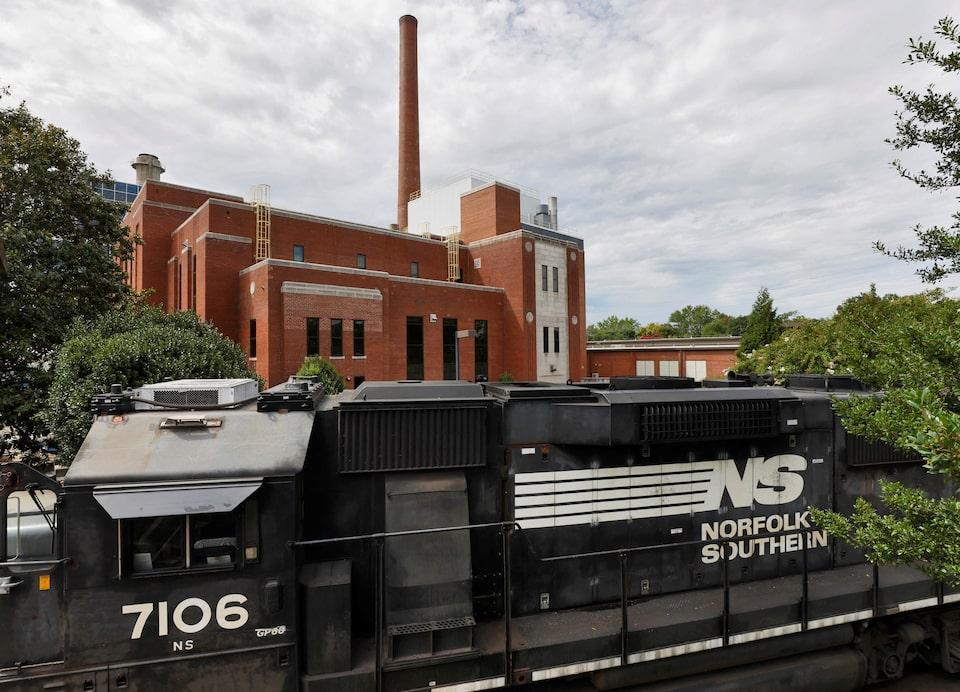
Megamerger would create the first coast-to-coast US railroad operator Discussions have prompted BNSF and CSX to explore deal options, sources say US regulator prepares to receive up to two megamerger proposals, source says July 24 (Reuters) - Union Pacific (UNP.N) , opens new tab, the largest U.S. railroad operator, said on Thursday it is in advanced talks with rival Norfolk Southern (NSC.N) , opens new tab, signaling that a deal to form a $200 billion coast-to-coast rail company could be close - and potentially trigger further consolidation among remaining freight rail giants. The combination, which would be the largest-ever buyout in the sector, would create the first modern West-to-East single-line freight railroad in the United States, significantly affecting how goods from grains to chemicals to autos move across the country. Sign up here. The talks have also prompted competitors BNSF, owned by Berkshire Hathaway (BRKa.N) , opens new tab, and CSX (CSX.O) , opens new tab to explore merger options, people familiar with the matter said. Agents at the U.S. Surface Transportation Board, the federal regulatory agency overseeing railroads, are already conducting preparatory work, anticipating they could soon receive not just one, but two megamerger proposals, a person close to the discussions said. If completed, the deal would combine Union Pacific’s dominant position in the western two-thirds of the U.S. with Norfolk Southern’s 19,500-mile network spanning 22 eastern states. Union Pacific said there were no assurances that an agreement would be reached. Critics warned that creating two railroad giants could drive up shipping rates. Union Pacific and BNSF dominate the West, while Norfolk and CSX control the East. Mike Steenhoek, executive director of the Soy Transportation Coalition, said many agricultural and other railroad shippers will be concerned about decreased competition. "This could result in increased rates and diminished service," he added. TRUMP EFFECT The fact that talks are advancing has surprised many in the rail industry and on Wall Street, who believed the highly concentrated market would not allow further consolidation. But the talks show how thinking around antitrust issues has shifted under President Donald Trump's administration. Such a merger was considered unlikely under former President Joe Biden's administration, which was more aggressive in antitrust enforcement. Executive orders issued by Trump to regulatory agencies aimed at removing anti-competitive barriers have opened the door to potential megamergers in the industry, sources said. Since early 2025, the STB has signaled a more industry-friendly approach to merger reviews. Chairman Patrick Fuchs, appointed to the post in January by Trump, has advocated for faster timelines for preliminary assessments, a greater focus on competitive balance rather than blocking consolidation, and a willingness to enforce conditions post-merger rather than deny deals preemptively. Even a more expedited review could take between 19 and 22 months, one person involved in the discussions said. Analysts say any merger would face scrutiny from multiple federal agencies and require support from labor unions, who have long opposed consolidation, warning that such deals threaten jobs and risk disrupting rail service. But a transcontinental railroad could also streamline freight movement across the U.S. by eliminating interline transfers at congested hubs like Chicago, said Barclays transportation analyst Brandon Oglenski. The merger risks being approved under conditions that could erode its strategic and financial value, such as forced divestitures, open access mandates, or new regulations on intermodal freight, said Anthony Hatch, an independent transportation analyst at ABH Consulting. "The impact on rates is not that straightforward," Hatch said. "Existing railroads already have significant pricing power and regulators have power to challenge prices." The U.S. freight rail system already functions as two regional duopolies by point of origin, he said, which limits shipper choice within each region as most freight originates and terminates within one of these two zones. Norfolk Southern shares edged lower in midday trading, while Union Pacific fell 4%. CHALLENGES The North American rail industry has faced challenges including volatile freight volumes, rising labor and fuel costs, and mounting pressure from shippers over service reliability. Union Pacific is valued at approximately $138 billion, according to LSEG data. The company has been grappling with sluggish automotive volumes and volatile coal shipments as power producers shift to natural gas, which is shipped by pipeline. Norfolk Southern, which is worth about $63 billion, is emerging from a turbulent period that included the ouster of its former CEO amid ethics investigations, a high-profile boardroom clash with activist investor Ancora, and a costly train derailment that set the company back about $1.4 billion. The last major consolidation in the industry was the $31 billion merger between Canadian Pacific (CP.TO) , opens new tab and Kansas City Southern, which created the first and only single-line rail network connecting Canada, the United States, and Mexico. https://www.reuters.com/world/us/union-pacific-talks-advance-regulator-readies-historic-rail-merger-review-2025-07-24/