2025-07-24 19:41
Little reaction in euro after ECB holds rates steady, as expected Expectations for higher rates support yen, but politics weigh Expected trade deal with Europe in line with expectations July 24 (Reuters) - The dollar traded sideways versus the euro on Thursday after the European Central Bank held rates steady, and was confined to a tight range against the yen as prospects for higher Japanese rates offset worries about political risk after Sunday's elections. The greenback showed fractional gains late in a subdued U.S. session, with investors girding for a busy news flow next week. Sign up here. The European Central Bank left its policy rate at 2%, as expected, on Thursday, taking a break after a year of policy easing to wait for clarity over Europe's future trade relations with the United States. "The view that the ECB is probably on hold here is probably gaining a bit more traction. We've trimmed expectations for the cuts in September to certainly less than 50/50," said Shaun Osborne, chief foreign exchange strategist at Scotiabank in Toronto. The Japanese central bank's deputy governor, Shinichi Uchida, said Tuesday's trade deal with Washington had reduced economic uncertainty, comments that fuelled optimism in the market about the potential resumption of interest rate hikes. Analysts believe the yen will face persistent headwinds after Sunday's upper house election, with the opposition considering a no-confidence motion. The European Union is nearing a deal that would impose a broad 15% tariff on EU goods, diplomats said. The rate, which could also extend to cars, would mirror the framework agreement the United States struck with Japan. "The ECB faces a challenge that is quantitatively different from the BoJ's," said Thierry Wizman, global forex and rates strategist at Macquarie Group. "The euro has appreciated by far more than the JPY so far in 2025, meaning that the disinflationary impulse from U.S. import tariffs may be greater in the EU than in Japan, or the ECB may suspect as much," he added. PMI data showed fragility in France following budget-cut proposals there, but also resilience in Germany and other parts of the euro zone. Data showed that German business activity continued to grow marginally in July. "As of now, there has been very little tariff impact on the hard data," said Mohit Kumar, economist at Jefferies. ECONOMIC FALLOUT Meanwhile, risk assets rallied as the trade deals eased fears over the economic fallout of a global trade war. Next week the Federal Open Market Committee meets and is expected to leave rates where they are as policy makers wait for the expected impact from tariffs on inflation and growth to show up. Traders are now pricing in a 60% chance of a quarter point September rate cut, according to CME's FedWatch tool. A number of U.S. employment releases next week culminate with Friday's big June payrolls report, while the July Personal Consumption Expenditures Price Index and the first revision to 2nd quarter Gross Domestic Product could also move markets. "A lot of event risk next week and not just from the Fed, we've got a lot of data next week as well, so that's probably going to shape expectations to some extent for September," Osborne said. The euro was last off 0.03% $1.1766, near the $1.1830 high from earlier this month, which marked its strongest level in more than three years. Against the yen , the dollar was 0.27% firmer at 146.88, having hit a two-week low earlier in the session at 145.86. Olivier Korber, forex strategist at Societe Generale, expects the yen to strengthen further, citing support from the trade deal and prospects for higher interest rates. Japanese Prime Minister Shigeru Ishiba denied on Wednesday he had decided to quit after a source and media reports said he planned to announce his resignation to take responsibility for a bruising upper house election defeat. Currencies mostly shrugged off news that U.S. President Donald Trump, a vocal critic of Federal Reserve Chair Jerome Powell, will visit the central bank on Thursday, a surprise move that escalates tensions between the administration and the Fed. The dollar index , which measures the greenback against a basket of six currencies including the euro and yen, rose 0.17% to 97.36. In cryptocurrencies, bitcoin rose 1.17% to $119,376.30. Ethereum rose 4.62% to $3,735.62. https://www.reuters.com/world/africa/subdued-dollar-firms-after-ecb-leaves-rates-alone-tariffs-fed-focus-2025-07-24/
2025-07-24 19:10
US policy shift from pressure strategy on Venezuela's oil sector Chevron's and a handful of US licenses revoked this year Some PDVSA partners could be allowed to pay contractors, make imports and swaps Conditions aimed to deny profits to Maduro's govt HOUSTON/WASHINGTON, July 24 (Reuters) - The United States is preparing to grant new authorizations to key partners of Venezuela's state-run PDVSA, starting with Chevron (CVX.N) , opens new tab, to allow them to operate with limitations in the sanctioned OPEC nation and swap oil, five sources close to the matter said on Thursday. If granted, the authorizations to the U.S. oil major, and possibly also to PDVSA's European partners, would mark a policy shift from a pressure strategy Washington adopted this year on Venezuela's energy industry, under U.S. sanctions since 2019. Sign up here. President Donald Trump's administration might now allow the energy companies to pay oilfield contractors and make necessary imports to secure operational continuity. Some imports could be swapped for Venezuelan oil, as authorized in previous licenses, three of the sources said. A senior State Department official said in a statement they could not speak about any specific licenses to PDVSA's partners, but added the United States would not allow President Nicolas Maduro's government to profit from the sale of oil. A source in touch with U.S. and Venezuelan officials said it was difficult to understand how Maduro's government would not benefit from cargoes Chevron can sell to the U.S., and later on Thursday Maduro hailed work done to keep Chevron in the country. "There are already working groups so that Chevron can re-incorporate its functions," Maduro told an interview with Telesur, adding that Chevron's top leadership had already been informed of licenses so it can keep operating in Venezuela. Chevron shares touched $155.93 on Thursday, their highest level since April 3, according to LSEG data. "Chevron conducts its business globally in compliance with laws and regulations applicable to its business, as well as the sanctions frameworks provided for by the U.S. government, including in Venezuela," a company spokesperson said. The move to ease some restrictions on Venezuela’s oil sector follows a prisoner swap this month in which Maduro released 10 American detainees while accepting the return of more than 200 Venezuelans who had been deported from the U.S. and held in an El Salvador prison. Relations between the two countries have been tense for years, and the Trump administration has publicly supported opposition leaders who say their candidate won last year's election, not Maduro. Trump in February announced the cancellation of a handful of energy licenses in Venezuela, including Chevron's, and gave until late May to wind down all transactions. The move left all operations in oil and gas joint ventures with Chevron and other partners in PDVSA's hands, but the companies were authorized to preserve their stakes and output remained almost unchanged. The U.S. State Department, which in May blocked a move by special presidential envoy Richard Grenell to extend the licenses, is this time imposing conditions on any authorization modifications, so that no cash reaches Maduro's coffers, the three sources said. In the past, U.S. officials have promised no money would reach Maduro from oil proceeds despite licenses. But it did because PDVSA demands tax and royalties to be paid before granting exports permits. Even if parties agree to oil swaps, those arrangements save PDVSA, and ultimately Maduro's government, millions of dollars per year in imports. Secretary of State Marco Rubio is not expected this time to ban the authorizations, but is negotiating their scope, they added. It was not immediately clear if the terms of the license that could be granted to Chevron would be reproduced for other foreign companies in Venezuela, including Italy's Eni (ENI.MI) , opens new tab and Spain's Repsol (REP.MC) , opens new tab, which have been asking the U.S. to allow them to swap fuel supplies for Venezuelan oil. The authorizations might remain private, one of the sources said. The U.S. Treasury Department's Office of Foreign Assets Control and PDVSA did not immediately respond to requests for comment. WHERE WILL THE OIL GO? Following the cancellation of Chevron's license earlier this year, Trump announced the imposition of secondary tariffs on buyers of Venezuelan oil. But the measure, expected to severely hit Venezuela's main crude buyer China, has not been enforced, allowing the South American country to divert to Asia crude grades that were previously sold to U.S. and European refiners through PDVSA's joint-venture partners. The reshuffle, which has maintained Venezuela's oil output and exports close to the levels they were at before the license cancellations, has been criticized by politicians in Washington and was discussed as part of talks for the new authorizations, the sources said. During former U.S. President Joe Biden's administration, targeted licenses to PDVSA's partners allowed Western refiners to regain access to Venezuelan supplies, but they also granted a stable source of cash to Maduro's administration as the companies were required by Venezuela to pay royalties and taxes. https://www.reuters.com/business/energy/us-prepares-allow-limited-oil-operations-venezuela-starting-with-chevron-sources-2025-07-24/
2025-07-24 19:00
Summary says EPA will seek to repeal all vehicle, engine emission standards Rescission of scientific finding open for public comment soon California suing US over state rule ending gasoline vehicle sales WASHINGTON, July 24 (Reuters) - The U.S. Environmental Protection Agency plans to repeal all greenhouse gas emission standards for light-duty, medium-duty, and heavy-duty vehicles and engines in the coming days after it removes the scientific finding that justified those rules, according to a summary of the proposal. In a draft of a summary of the forthcoming proposal, seen by Reuters, the agency is expected to say that the Clean Air Act does not authorize the EPA to impose emission standards to address global climate change concerns and will rescind the finding that GHG emissions from new motor vehicles and engines endanger public health or welfare. Sign up here. It is also expected to justify rescinding the endangerment finding by casting doubt on the scientific record used to make the finding. "We further propose, in the alternative, to rescind the Administrator's findings because the EPA unreasonably analyzed the scientific record and because developments cast significant doubt on the reliability of the findings," the summary says. The U.S. Supreme Court, in its landmark Massachusetts v. EPA case in 2007, said the EPA has authority under the Clean Air Act to regulate greenhouse gas emissions and required the agency to make a scientific finding on whether they endanger public health. In 2009, the EPA under former President Barack Obama issued a finding that emissions from new motor vehicles contribute to pollution and endanger public health and welfare. It was upheld in several legal challenges and underpinned subsequent greenhouse gas regulations. The summary also says that one of its rationales for repealing the vehicle standards is that the required technology to reduce emissions would risk greater harms to public health and welfare. Former President Joe Biden's administration said the standards would hike upfront vehicle prices but save consumers money in the long run after accounting for lower fuel costs. The agency is likely to announce the proposal in the coming days, according to a source familiar with the matter who asked not to be named. The EPA said it had sent its proposal to reconsider the endangerment finding to the White House for review on June 30. "The proposal will be published for public notice and comment once it has completed interagency review and been signed by the Administrator," the agency said. The agency did not comment on the tailpipe rules. The rescinding of all vehicle emission standards is the latest - and most extensive - attempt to put a quick end to EPA tailpipe rules that were forecast to cut greenhouse gas emissions by 49% by 2032 over 2026 levels. Some 29% of U.S. greenhouse gas emissions come from the transportation sector, according to EPA data. The EPA forecast that between 35% and 56% of all sales between 2030 and 2032 would be EVs to meet the requirements. The Trump administration has taken a multi-pronged approach to dismantling rules designed to improve vehicle efficiency, reduce fuel use and boost electric vehicles, including ending the $7,500 new EV tax credit and $4,000 used EV tax credit on Sept. 30 and has frozen billions of dollars in EV charging funding for states. Under legislation signed by President Donald Trump earlier this month, automakers face no fines for failures to meet fuel efficiency rules dating back to the 2022 model year. Last year, Chrysler-parent Stellantis paid $190.7 million in civil penalties for failing to meet U.S. fuel economy requirements for 2019 and 2020 after paying nearly $400 million for penalties from 2016 through 2019. GM previously paid $128.2 million in penalties for 2016 and 2017. In June, Trump signed three congressional resolutions barring California's electric vehicle sales mandates and diesel engine rules. Trump approved a resolution to bar California's landmark plan to end the sale of gasoline-only vehicles by 2035, which has been adopted by 11 other states and representing a third of the U.S. auto market. California has filed suit to overturn the repeal. https://www.reuters.com/legal/government/trump-epa-aims-repeal-vehicle-emission-rules-after-revoking-greenhouse-gas-2025-07-24/
2025-07-24 18:56
SAO PAULO, July 24 (Reuters) - Brazil's biggest conilon coffee cooperative, Cooabriel, is launching a cocoa pilot project in the country's Bahia state slated for September in collaboration with commodities powerhouse Cargill, it said in an interview this week. Cooabriel hopes the pilot, located in the south of Bahia, will produce around 10,000 60-kilogram bags of cocoa beans, working with farmers who are already producing conilon coffee, part of the same family as Robusta beans. Sign up here. The pilot project is another example of efforts in Brazil, once the world's second-biggest cocoa producer, to rebuild the country's standing in the global industry after its output was devastated by disease in the 1980s. "It's still somewhat of a timid project, but it is a promising project," Cooabriel's President Luiz Carlos Bastianello told Reuters in an interview. The majority of Cooabriel's coffee producers in Bahia are already producing cocoa and the cooperative wants to help them boost their productivity, while also possibly picking up some new farmers along the way, Bastianello said. Cargill is supporting the pilot project, which is financed by Cooabriel, as part of its aim to see major chocolate consumer Brazil become self-sufficient in cocoa production, Cargill's director of cocoa origination, Murilo da Silva Severo, said in an email. "This partnership with Cooabriel has the potential to bring Cargill an annual increase of 1,500 (metric) tons of beans," Severo said, adding the quantity could increase and Cargill has already suggested Cooabriel take the project to the neighboring state of Espirito Santo. Though similarities exist between conilon coffee farming and cocoa production, Cooabriel will have to contend with some challenges around market volatility and storing the cocoa beans, the cooperative's manager of new businesses, Alexandre Costa Ferreira, said. "If we work on this correctly, we have everything we need to gain a lot of volume, a lot of scale, and put Brazil on a different level," Ferreira said. https://www.reuters.com/world/americas/brazils-biggest-conilon-coffee-cooperative-launch-cocoa-pilot-project-bahia-2025-07-24/

2025-07-24 18:28
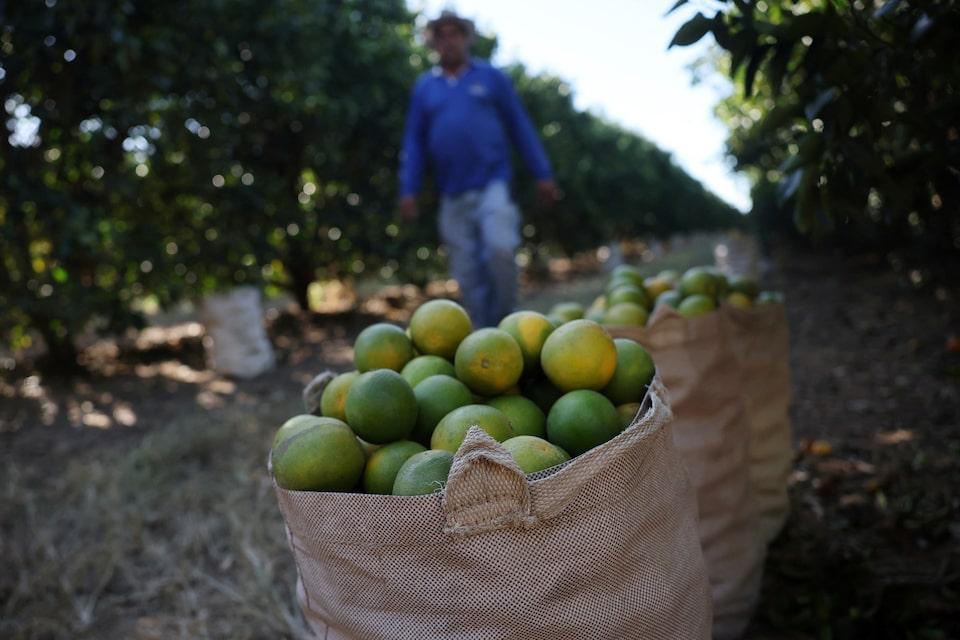
New levy could devastate Brazil's citrus industry, affecting farmers and production U.S. consumers face higher orange juice prices due to dependency on Brazil Brazilian exporters have limited options if new U.S. tariff is enforced SAO PAULO, July 24 (Reuters) - U.S. President Donald Trump's plan to impose a new 50% tariff on all Brazilian products from Aug. 1 could devastate the South American nation's citrus belt, as factories scale back production and orange farmers consider leaving fruit to rot amid a sharp drop in prices. "You are not going to spend money to harvest and not have anyone to sell to," said grower Fabricio Vidal, from his farm in Formoso, in the state of Minas Gerais. Sign up here. The new tariffs could make it impossible for his fruit to enter the United States, which buys 42% of the orange juice exported from Brazil, a trade worth around $1.31 billion in the season ending last June. This month, orange prices in Brazil dropped to 44 reais ($8) a box, almost half of what they were a year ago, according to the widely followed Cepea index from the University of Sao Paulo, illustrating how Trump's disruptive trade policies can sow chaos even before enacted. "As the day approaches in which tariffs will come into effect, anxiety increases about what might happen," Ibiapaba Netto, the head of orange juice exporter lobby CitrusBR, told Reuters in an interview. IMPACT ON CONSUMERS U.S. orange juice production dropped to its lowest level in half a century in the 2024/25 harvest, with output estimated at 108.3 million gallons, according to data from the United States Department of Agriculture cited by Cepea, which shows imports will represent 90% of U.S. supplies through September. U.S. consumers will bear the brunt along with Brazilian farmers. An astounding half of the orange juice Americans drink comes from Brazil under household brands such as Tropicana, Minute Maid and Simply Orange. Brazil, which produces 80% of the world's orange juice, will be hard to replace, too. The U.S. has become more dependent on orange juice imports in recent years due to the "citrus greening" crop disease, hurricanes and spells of freezing temperatures. But the new tariff on Brazilian imports represents a 533% increase over the $415 per ton duty levied on the country's juice now. Last Friday, Johanna Foods, a New Jersey-based producer and distributor of fruit juices, challenged in court the proposed tariffs on Brazilian orange juice, claiming they would cause "significant and direct financial harm" to the company and U.S. consumers. The tariffs may also spell trouble for Coca Cola (KO.N) , opens new tab and Pepsi (PEP.O) , opens new tab, which account for some 60% of the orange juice sold in the United States, Netto said. Neither company replied to requests for comment. NO EASY ANSWER Brazil won't find it easy to replace American consumers, some of the most avid orange juice drinkers in the world. Typically, higher-income countries import orange juice, limiting Brazil's potential reach into new markets. Brazilian orange juice is only sold to some 40 nations – representing about a third of the destinations that buy Brazilian meat, for example, according to trade data. CitrusBR's Netto noted that hefty duties in markets such as India and South Korea, as well as low household income in China, have hampered trade with Brazil. The European Union, in turn, already buys some 52% of Brazil's total exports, making it unlikely that countries there will make up for lost business with the U.S. Companies will be left with few options. One would be to export Brazilian orange juice through Costa Rica, which some companies already do to avoid the current duties, said Arlindo de Salvo, an independent orange consultant. But it is unclear whether exporters will be able to pull it off once the new levy starts being enforced. CitrusBR said such "triangulation" via Costa Rica is impossible under rules of the Organization for Economic Cooperation and Development (OECD). As companies struggle to find new paths to consumers, farmers in Formoso fear the worst. Prices have already dropped to about a third of what growers were paid at this time last year, farmers said, making the cost of picking oranges hardly worth the trouble. Grower Ederson Kogler said that the only solution would be to find other markets. But, he added, "these are things that don't happen overnight." https://www.reuters.com/world/americas/trump-tariffs-wreaking-havoc-brazils-citrus-belt-2025-07-24/
2025-07-24 18:16
Alphabet, SK Hynix, Infosys offer upbeat guidance Rosy forecasts come against backdrop of tariff uncertainty Governments scramble for tariff deals ahead of August 1 deadline Hyundai Motor expects tariffs to take bigger toll in Q3 Markets bolstered by strong tech results July 24 (Reuters) - Businesses focused on artificial intelligence are raking it in so far this earnings season. Those catering to actual people, less so. The AI spending surge is providing a big boost for semiconductor and software giants like Google parent Alphabet (GOOGL.O) , opens new tab, while companies from airlines to restaurants and food manufacturers are struggling to navigate an erratic U.S. trade policy which is boosting costs, upending supply chains and hurting consumer confidence. Sign up here. Along with Alphabet, SK Hynix and India's Infosys (INFY.NS) , opens new tab exceeded market forecasts on Thursday and predicted brighter days to come, with Alphabet and SK Hynix both flagging plans to boost spending. SK supplies the world's most valuable company Nvidia (NVDA.O) , opens new tab, the AI chipmaking giant that recently surpassed $4 trillion in market value. By contrast, executives at many consumer names were less enthusiastic, from luxury bellwether LVMH (LVMH.PA) , opens new tab, packaged food giant Nestle (NESN.S) , opens new tab, to toymakers Hasbro (HAS.O) , opens new tab and Mattel (MAT.O) , opens new tab and airlines Southwest (LUV.N) , opens new tab and American (AAL.O) , opens new tab. They, along with automakers and giants like Coca-Cola(KO.N) , opens new tab, have indicated that some segments of the buying public have pulled in their spending as prices and interest rates remain high. The dichotomy is evident in IBM's results. Sales in Big Blue's "AI book of business" grew 25 percent in its most recent quarter to $7.5 billion, while its software segment fell short of expectations and the company sounded cautious about how much its consulting segment might grow this year. The equity market has accentuated the positive. News that the U.S. had struck a trade deal with Japan and was closing in on a deal with the European Union ahead of an Aug 1. deadline boosted markets. The broad S&P 500 (.SPX) , opens new tab notched another record this week and the Eurostoxx (.STOXXE) , opens new tab was just a few points shy of that mark. "The market is getting friendly with a view that tariffs ending up higher than they have ever been for 100 years will not have a negative impact on economic growth, because we haven't seen any negative impact on economic growth so far," said Van Luu, head of solutions strategy, fixed income and foreign exchange at Russell Investments. Whether companies continue to absorb that hit remains to be seen. So far, companies have reported over July 16-22 a combined full-year loss of as much as $7.8 billion, with automotive, aerospace and pharmaceutical sectors hurt the most by tariffs, according to a Reuters tariff tracker. U.S. averages have been buoyed by the so-called Magnificent Seven, a group of tech giants that has benefited heavily from spending plans on artificial intelligence, and currently accounts for more than 30% of the value of the S&P. "AI is one of the strongest areas of growth for the economy, and the market mirrors the economy," said Adam Sarhan, chief executive of 50 Park Investments. To be sure, the market's reaction may be in part because a larger-than-normal percentage of companies are clearing a lowered bar for estimates. At the beginning of April, the market expected 10.2% year-over-year S&P earnings growth, but by July, that number had dropped to 5.8%, according to LSEG data. With about 30% of constituents reporting results, the blended earnings growth rate sits at 7.7%. TECH GOES FULL SPEED AHEAD AI-focused businesses continued to print money in the most recent quarter. Nvidia (NVDA.O) , opens new tab supplier SK Hynix posted record quarterly profit, boosted by demand for artificial intelligence chips and customers stockpiling ahead of potential U.S. tariffs. Indian IT services provider Infosys (INFY.NS) , opens new tab raised the floor of its annual revenue forecast range to 1% to 3%, from flat to 3%, matching analyst expectations. "The tech community is going ahead full speed ahead... and banks are in a very strong position now," said Bill George, former chairman and CEO of Medtronic and executive education fellow at Harvard Business School. "Other companies will struggle to get growth." UNCERTAIN CONSUMER Consumer companies have been less upbeat. Nestle, the world's biggest packaged food maker, reported softer demand as it struggled to win thrifty shoppers to its big brands. U.S. airlines Southwest and American Airlines warned that Americans are travelling less, the latest signal that U.S. consumers are remaining cautious about their spending. Toymakers Mattel and Hasbro both said uncertainties around tariffs are acting as a headwind. Carmakers are among firms dealing with the most difficulty. The auto giants are resisting raising prices, eating the cost of tariffs that may cost them millions or billions of dollars. Levies on metals, copper and auto parts made it harder to navigate changing tariff policies. South Korea's Hyundai Motor (005380.KS) , opens new tab on Thursday posted a 16% decline in second-quarter operating profit, saying U.S. tariffs cost it 828 billion won ($606.5 million) in the second quarter, with a bigger hit expected in the current quarter. General Motors (GM.N) , opens new tab still expects a $4 billion to $5 billion hit to its bottom line this year. On Wednesday, Tesla (TSLA.O) , opens new tab Chief Executive Elon Musk said U.S. government cuts in support for electric vehicle makers could lead to a "few rough quarters", as his firm reported its worst quarterly sales decline in over a decade. ($1 = 1,365 won) https://www.reuters.com/business/autos-transportation/earnings-season-its-ai-good-everything-else-not-so-much-2025-07-24/