2025-12-11 11:09
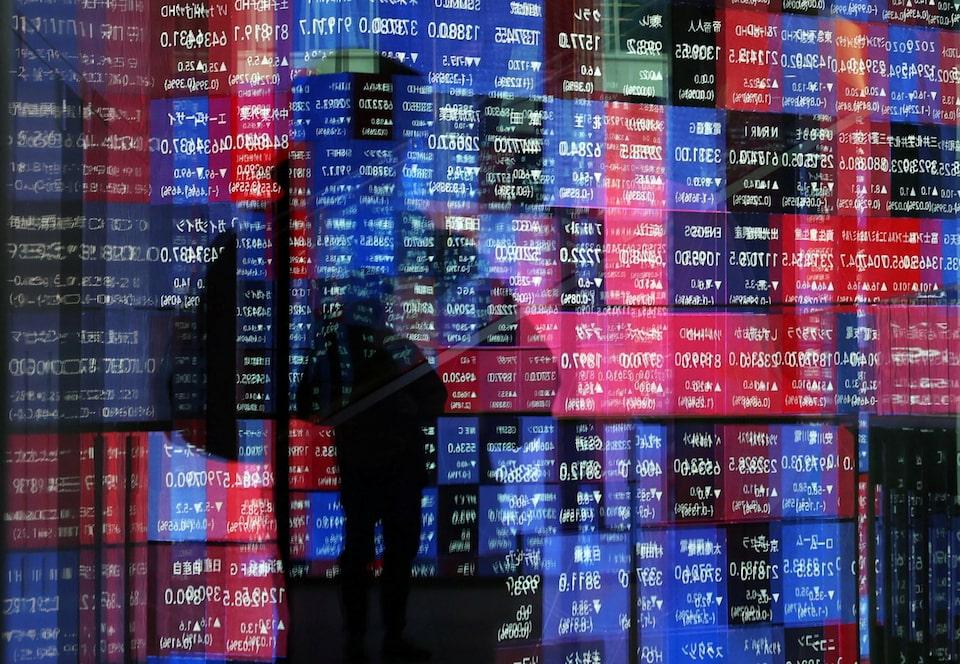
LONDON, Dec 11 - By Anna Szymanski, Editor in Charge, Reuters Open Interest What matters in U.S. and global markets today Sign up here. The Federal Reserve gave markets an early holiday gift yesterday, as the widely expected 25 basis point interest rate cut was accompanied by a less-hawkish-than-anticipated from Chair Jay Powell, positive soundings about U.S. productivity, and the announcement of a $40 billion per month Treasury bill buying binge. But Oracle could prove to be the Grinch that stole Wall Street futures this morning, as the cloud-computing giant's earnings miss and revelation of more massive spending plans touched a nerve with investors worried about AI capex excess. I’ll get into all the market news below. But first check out Mike Dolan’s latest column on why the Fed's latest policy move isn't the interest rate story you should be focusing on. And listen to the latest episode of the new Morning Bid daily podcast , opens new tab. Subscribe to hear Mike and other Reuters journalists discuss the biggest news in markets and finance seven days a week. Today's Market Minute * After three consecutive interest rate cuts, investors now confront an uncertain U.S. monetary policy outlook for the year ahead, clouded by persistent inflation, data gaps, and an impending leadership change at the Federal Reserve. * The U.S. has seized a sanctioned oil tanker off the coast of Venezuela, President Donald Trump said on Wednesday, as tensions escalate between Washington and Caracas. * Oracle forecast sales and profit that missed analyst estimates on Wednesday, while saying that spending would rise by $15 billion compared with earlier estimates. * Oil production in the Permian basin is poised to peak in December, yet drilling innovations mean output in America’s most prolific oil patch will hold steady for years to come, argues ROI Energy Columnist Ron Bousso. * India's crude oil imports from Russia are on track to climb to a six-month high in December as the world's third-biggest buyer defies U.S. sanctions on Moscow's oil producers, writes ROI Asia Commodities Columnist Clyde Russell. Oracle crashes Powell's party While the Fed trimmed interest rates on Wednesday, Chair Powell also indicated that borrowing costs are unlikely to drop further in the near term as policymakers await more official data on the health of a seemingly creaky U.S. job market and the trajectory of inflation that still "remains somewhat elevated." T he decision drew three dissents that, unusually, were calling for actions in opposite directions. Chicago Fed President Austan Goolsbee and Kansas City Fed President Jeffrey Schmid argued the policy rate should be left unchanged, while Fed Governor - and associate of President Donald Trump - Stephen Miran advocated for a 50 bps cut. The Fed also noted that it projects only one more 25 bps rate cut next year followed by another in 2027 - unchanged from its previous forecast - which would leave the fed funds rate in the range of 3.50%-3.75%. This contrasts with market expectations for two quarter point cuts in 2026. Nevertheless, Wall Street initially welcomed the Fed announcement, including news of a reserve management program that ROI market columnist Jamie McGeever flagged as a possibility earlier this week. The central bank said it will start buying short-dated government bills - starting at $40 billion per month - to help manage market liquidity levels . But then came news that Oracle, a bellwether firm in the AI boom, missed analyst estimates for while also announcing that spending in fiscal year 2026 would be $15 billion higher than the $35 billion forecast in September. These results feed into investors' worries that massive capital expenditures related to AI are not quickly turning into profits. Oracle's share price fell more than 11% after hours. The U.S. tech giant's stumble sent Asian stocks sliding on Thursday. Japan's Nikkei closed 0.9% lower, with SoftBank Group plummeting 7.69%. CEO Masayoshi Son's firm earlier this year joined Oracle and OpenAI in announcing plans to develop AI data centers in the U.S to build out their enormous Stargate project. In other news, the U.S. seized a sanctioned oil tanker off the coast of Venezuela yesterday, the first known action against a Venezuela-related tanker since President Trump ordered a significant military buildup in the region. While oil futures rose modestly on the news, they retreated fairly quickly, as market fundamentals, not headlines, continue to drive crude prices. Chart of the day The most recent official data on U.S. inflation shows that the Federal Reserve's preferred gauge of price rises nudged up to 2.8% in September from 2.7% the prior month, still above the central bank's 2% target. Inflation has risen steadily from 2.3% in April, partly because of the pass-through of President Donald Trump's tariffs, though Fed Chair Jay Powell indicated on Wednesday that tariffs should represent a one-off hit to inflation. Today's events to watch U.S. initial jobless claims (8:30 EST) U.S. September trade deficit (8:30 AM EST) Earnings at Costco, Broadcom and Lululemon Opinions expressed are those of the author. They do not reflect the views of Reuters News, which, under the Trust Principles , opens new tab, is committed to integrity, independence, and freedom from bias. Want to receive the Morning Bid in your inbox every weekday morning? Sign up for the newsletter here. https://www.reuters.com/business/finance/global-markets-view-usa-2025-12-11/

2025-12-11 11:07
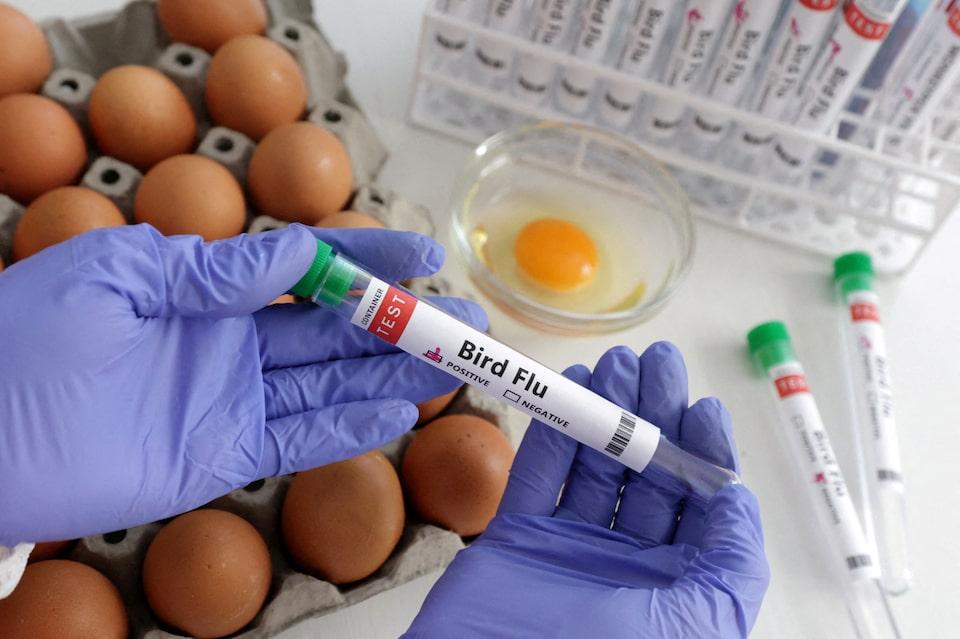
Senators tell USDA to prioritize science in bird flu vaccine development USDA pledged $100 million for bird flu vaccine research in March Poultry industry divided on vaccination due to trade concerns WASHINGTON, Dec 11 (Reuters) - A bipartisan group of U.S. senators this week urged the administration of President Donald Trump to finalize a science-based plan for developing a bird flu vaccine for livestock, according to a letter seen by Reuters. More than 180 million chickens, turkeys and other poultry have been killed due to an outbreak of bird flu that began in 2022. The U.S. Department of Agriculture said in June that it was developing a potential poultry vaccination plan, but has not released further details. Sign up here. The USDA should take "renewed action" to fight bird flu as infections rise during the winter months, said 23 U.S. senators in a letter sent on Wednesday to Agriculture Secretary Brooke Rollins and reported first by Reuters. "Any finalized vaccine strategy must take into account feedback from animal health stakeholders, industry experts, and be grounded in sound science," said the letter, led by Amy Klobuchar of Minnesota, the top Democrat on the Senate Agriculture Committee, and Republican U.S. Senator Mike Rounds of South Dakota. Other signatories to the letter include Senate Majority Leader John Thune of South Dakota and several Republican and Democratic members of the Senate Agriculture Committee. A USDA spokesperson said farmer biosecurity efforts are the most effective tool for mitigating the spread of bird flu and that the agency's response to the virus "is grounded in decades of scientifically validated epidemiological practices and biosecurity protocols." In March, the USDA pledged $100 million to research vaccines and therapeutics for egg-laying chickens as part of a broader strategy to fight bird flu, which had driven egg prices to record highs. The agency said in June it had received 417 proposals for the funds, but has not announced further details. The Trump administration in May canceled a $700 million contract with Moderna (MRNA.O) , opens new tab to develop a human bird flu vaccine. Health Secretary Robert F. Kennedy Jr., a longtime anti-vaccine activist, has cut other funding for vaccine research and scrapped long-held federal vaccine guidance. The poultry industry is divided on vaccination because of the potential to hurt exports. The senators urged Rollins in their letter to "work closely with trading partners and impacted producers to fully assess and manage any potential trade implications" of a vaccine plan. The USDA told Reuters in late November that the agency had not shared a plan for poultry vaccination with trading partners. https://www.reuters.com/business/healthcare-pharmaceuticals/us-senators-push-usda-urgent-action-bird-flu-vaccine-2025-12-11/
2025-12-11 11:00
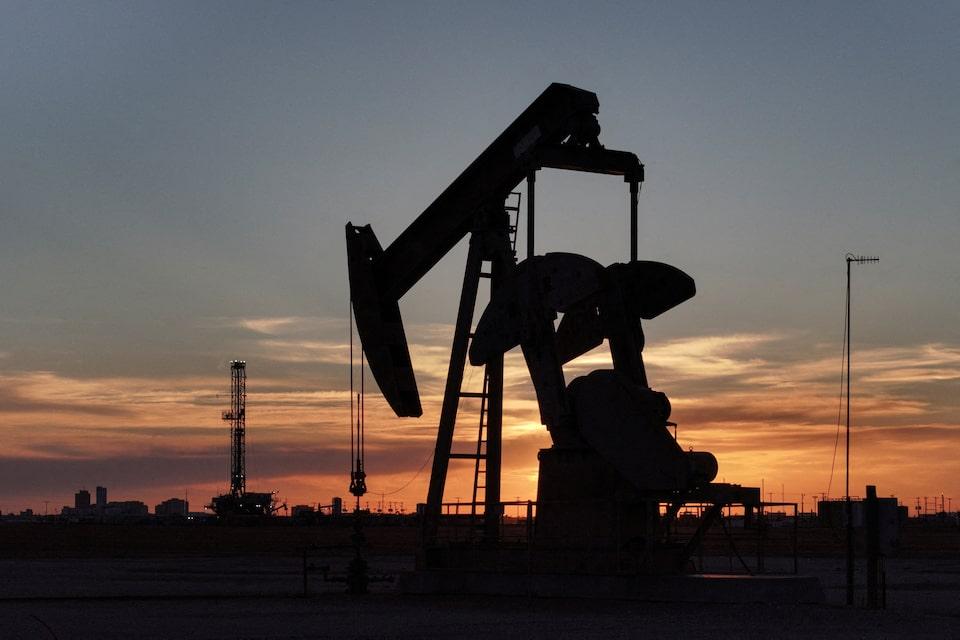
LONDON, Dec 11 (Reuters) - Oil production in the Permian basin is poised to peak in December, a watershed moment for the U.S. shale boom that upended the global energy market over the past 15 years. Yet drilling innovations mean output in America’s most prolific oil patch will hold steady for years to come. The Permian basin, which straddles West Texas and southeastern New Mexico, is set to produce a record-high 6.76 million barrels per day (bpd) of oil in December, only slightly higher than November's total, the U.S. Energy Information Administration said in its latest Short Term Energy Outlook. Sign up here. This monthly figure may never be topped, given that most of the Permian’s top-tier oil acreage has been tapped and sharply depleted after more than a decade of drilling. But improvements in drilling technology are enabling firms to explore new, often deeper formations. That means current production levels can likely be sustained for years, defying previous warnings that the shale boom would experience a precipitous decline. FAR FROM OVER The Permian has been the core of American shale oil since the industry took off around 2010, helping the U.S. become the world’s largest oil producer as of 2018. This basin accounted for nearly half of total U.S. production of 13.6 million bpd in 2025. Permian production rose by 400,000 bpd year-on-year in December, which is particularly eye-catching because U.S. oil prices dropped below $60 a barrel this year for the first time since early 2021. Prices at that level would have sent Permian production plummeting earlier this decade – but things have changed. What’s more, the number of active drilling rigs in the basin dropped by 15% in the third quarter from a year earlier even as production rose, according to the EIA. This highlights the industry’s efficiency gains and its resilience in a lower-price environment. Hammering home this point, the EIA expects Permian output to increase slightly next year, on an annual basis, to an average of 6.56 million bpd, while it also forecasts a sharp drop in global benchmark Brent oil prices from $69 a barrel on average in 2025 to $55 next year, a level where many producers have historically struggled to make a profit. BIG BOYS' PLAYGROUND This newfound resilience partly reflects how the players in the shale game have changed. Permian production – which was mostly the purview of smaller producers in the 2010s – is today concentrated in the hands of a small group of U.S. oil giants including Exxon Mobil (XOM.N) , opens new tab, Chevron (CVX.N) , opens new tab and ConocoPhillips (COP.N) , opens new tab. They have gobbled up smaller rivals in a string of multi-billion-dollar deals in recent years. This includes Exxon's $60 billion acquisition of Pioneer Natural Resources in 2024 and Conoco's $22.5 billion acquisition of Marathon Oil the same year. The consolidation has helped companies innovate and cut costs, leaving them better able to withstand oil price downturns. None more so than Exxon, which announced on Tuesday that it plans to double its Permian oil and gas output between 2024 and 2030 to 2.5 million barrels of oil equivalent per day (boepd), an upgrade of 200,000 boepd compared with last year’s production forecast. In a presentation on Tuesday, Exxon CEO Darren Woods said the company is using patented, lightweight proppant to improve hydraulic fractures and artificial intelligence software to better direct drilling paths, which can extend the range of lateral wells to up to 4 miles (6.4 km). Put together, such innovation will drive drilling costs down by around 40% while increasing oil recovery rates in wells by 50% between 2019 and 2030, Woods said. Chevron, which plans to keep Permian production stable at 1 million bpd through 2040, is now using a technique that allows it to fracture subterranean rock in three wells simultaneously, cutting drilling time and costs. Exxon and Chevron's Permian production costs have fallen to around $30-$40 per barrel, lower than the industry average of $62. So even though the Permian basin is unlikely to again record the stellar growth rates it enjoyed over the past decade, its production is set to plateau at a high level, meaning this region is likely to remain the bedrock of the U.S. oil industry for years to come. Want to receive my column in your inbox every Monday and Thursday, along with additional energy insights and links to trending stories? Sign up for my Power Up newsletter here. Enjoying this column? Check out Reuters Open Interest (ROI), , opens new tabyour essential new source for global financial commentary. ROI delivers thought-provoking, data-driven analysis. Markets are moving faster than ever. ROI , opens new tab can help you keep up. Follow ROI on LinkedIn , opens new tab and X. , opens new tab https://www.reuters.com/markets/commodities/energy/permian-retain-us-oil-crown-even-after-hitting-peak-2025-12-11/
2025-12-11 10:32
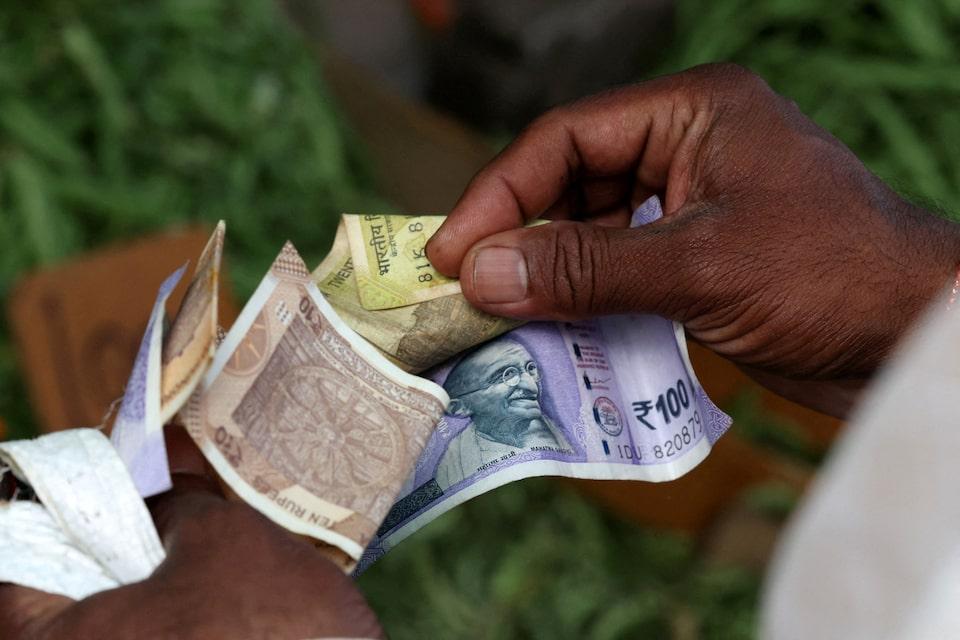
Rupee Asia's worst-performing major currency, down over 5% YTD US-India trade negotiations key overhang for local currency, stocks Foreign investors have sold $18 billion of Indian stocks in 2025 MUMBAI, Dec 11 (Reuters) - The Indian rupee declined to a record low on Thursday, deepening its fall past the 90-per-dollar mark as corporate dollar sales and the lack of tangible progress towards a trade deal with the U.S. hurt Asia's worst-performing currency. The rupee has fallen more than 5% against the dollar in 2025, as U.S. tariffs of up to 50% on Indian goods have hurt exports to the country's biggest market and have diminished the appeal of local equities. Sign up here. Foreign investors have pulled out nearly $18 billion from Indian stocks so far this year, making India one of the worst-hit markets in terms of portfolio outflows. The local currency fell to 90.4675 against the U.S. dollar on Thursday, eclipsing its previous record low of 90.42 hit on December 4. It closed at 90.3675, down 0.4% on the day. Many stop-losses were triggered on long rupee positions when it fell below 90.42, said Dilip Parmar, a foreign exchange research analyst at HDFC Securities. "The currency is likely to stay in a downtrend in the near-term. The next level to watch is 90.70," he said. CENTRAL BANK STEPS IN The Reserve Bank of India likely intervened to help avert steeper losses, five traders said. One trader characterised the intervention as mild and intended to slow the fall instead of holding the rupee at a specific level. The RBI will tolerate a weaker rupee as the country's external sector grapples with multiple headwinds, Reuters reported last week. "A record October goods trade deficit and muted capital inflows — amid uncertainty around the India-US trade deal — point to a further deterioration in the net Balance of Payments position in Q4," analysts at Goldman Sachs said in a note. "Reduced FX intervention by the RBI over the past 1-2 weeks has increased INR volatility," the note said. The rupee's 1-month realised volatility has risen to near 5.5%, its highest since July. US DEAL LIMBO Analysts say a breakthrough in the U.S.- India trade negotiations is key for a reversal in the rupee's fortunes. India's chief economic adviser said he expects the deal to be signed by March, according to Bloomberg News. Federal Commerce Secretary Rajesh Agrawal met U.S. Deputy Trade Representative Rick Switzer to discuss bilateral trade on Wednesday. Meanwhile, Mexico's decision to levy tariffs as high as 50% is expected to affect $1 billion of shipments from major car exporters from India. https://www.reuters.com/world/india/indian-rupee-hits-record-low-central-bank-likely-intervenes-limit-losses-2025-12-11/
2025-12-11 07:57
BEIJING, Dec 11 (Reuters) - China will start commercial operation of its homegrown small modular reactor (SMR), the Linglong One, in the first half of 2026, an official with the research arm of China National Nuclear Corporation (CNNC) said on Thursday. Also known as the APC100, the reactor was the first SMR to be approved by the International Atomic Energy Agency in 2016. CNNC's project on China's island province of Hainan, the first to use the Linglong One design, broke ground in 2021. Sign up here. The small reactors will mainly be used to meet electricity demand where the grid is weaker, such as on islands, Wang Zhenqing, president of the China Institute of Nuclear Industry Strategy, told an international energy gathering in Beijing. SMRs are smaller and quicker to build than traditional reactors and can be deployed in remote regions and on ships and aircraft. Backers say they also save costs because they can be built in factories, although questions remain whether the power provided is as cheap as larger reactors. No such small reactors are being built yet in the United States, but the energy department seeks to develop them by the 2030s. It unveiled funding of $800 million for their development by Tennessee Valley Authority and private company Holtec. In November, Britain also greenlit a project in North Wales to build mini-reactors and link them to the grid by the 2030s. https://www.reuters.com/business/energy/china-start-commercial-operation-first-small-modular-nuclear-reactor-2026-2025-12-11/

2025-12-11 07:55
Dec 11 (Reuters) - Asian equities witnessed their largest monthly foreign outflows in nearly six years in November, driven by a selloff in high-flying technology stocks as concerns over stretched valuations prompted investors to cut exposure. Foreigners sold a net $22.1 billion of shares in November across Taiwan, South Korea, India, Thailand, Indonesia, Vietnam and the Philippines, marking the heaviest monthly outflow since the $33.32 billion net sale in March 2020, LSEG data showed. Sign up here. Taiwan saw $12.04 billion in net foreign selling, while South Korea recorded $9.75 billion, its biggest monthly outflow since March 2020. Herald van der Linde, head of equity strategy for Asia Pacific at HSBC, said the moves reflected rising unease about how long the artificial intelligence (AI)-driven rally could last. "Investors in recent years built a very high level of concentration on a few AI-related trades, so even a minor deviation from sky-high expectations can cause significant market fluctuations," he said. India, Thailand and Vietnam also saw foreign withdrawals of $425 million, $388 million and $286 million, respectively. Bucking the trend, Indonesian and Philippine equities attracted $731 million and $59 million in foreign inflows. Sentiment has improved slightly in December, with Taiwan and South Korea drawing $2.58 billion and $1.84 billion in foreign inflows by Wednesday’s close. Heavy hyperscaler spending on AI infrastructure through 2026–27 is likely to keep chip supply tight, supporting earnings for Asian semiconductor firms and underpinning valuations even if an AI bubble eventually forms, Goldman Sachs said. The MSCI Asia-Pacific Index (.MIAP00000PUS) , opens new tab has risen 23.13% so far this year and is on track for its strongest annual performance in eight years. "Asia equities delivered a resilient performance in 2025, supported by policy measures, robust domestic demand, and AI-driven innovation across key markets," said Mike Shiao, chief investment officer for Asia ex-Japan at Invesco. "Looking ahead, we expect the U.S. dollar to remain on a weakening trajectory, a trend that has historically benefited Asia equities." https://www.reuters.com/world/asia-pacific/asian-equities-see-biggest-foreign-outflows-nearly-six-years-tech-valuation-2025-12-11/