2025-07-24 12:20
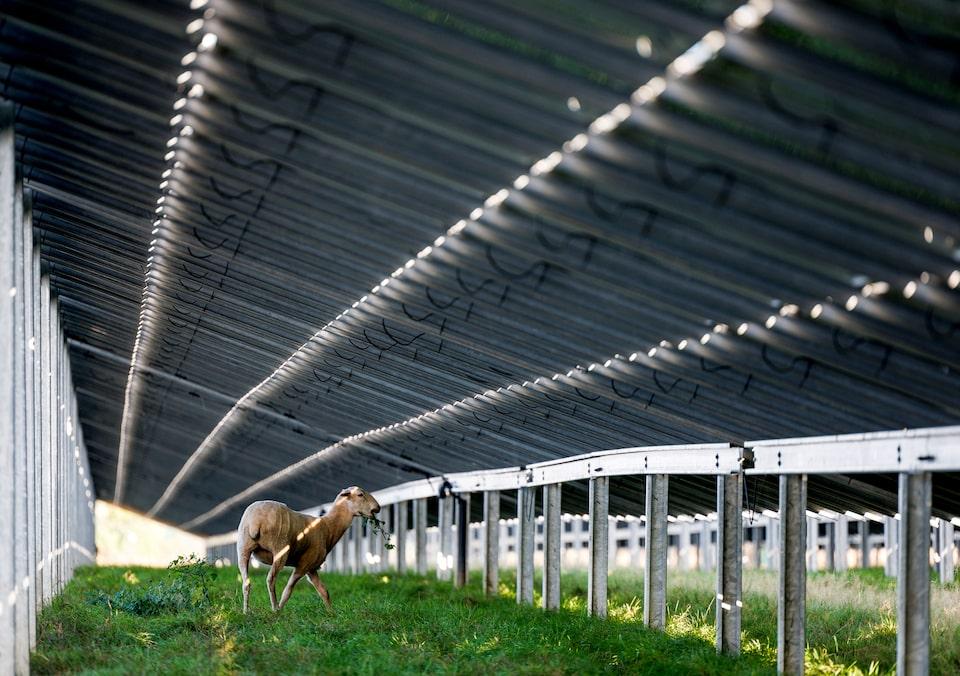
BRUSSELS, July 24 (Reuters) - The European Union's expansion of solar energy is on track for its first annual slowdown in more than a decade, industry data showed on Thursday, as some governments reduce subsidies for rooftop solar panels. The trend reflects shifting political priorities in Europe as some member countries have scaled back green measures or support for clean energy from budgets stretched by spending on defence and local industries. Sign up here. The EU is on track to install 64.2 gigawatts of new solar energy capacity in 2025, a 1.4% fall from the 65.1GW installed last year, industry association SolarPower Europe said. "There's a kind of paralysis. There's still interest, but people aren’t making decisions," said Peter Knuth, managing director of German photovoltaic systems installation company enerix. Early purchases in 2022 and 2023, along with rising interest rates, and economic uncertainty have contributed to the falling demand, not falling electricity prices, Knuth added. The year-on-year drop would mark the first time since 2015 that the growth of Europe's solar market has slowed - denting an area of fast progress in Europe's shift to clean energy. Solar capacity growth soared by 51% in 2023, although last year growth had already slowed to 3%. Last month, solar generated 22% of total EU electricity, making it the EU's largest single source of power generation that month. But current deployment rates now indicate the EU will fall short, by about 27GW, of the 750GW of solar capacity which SolarPower Europe said is needed by 2030 for the EU's climate targets and plans to phase out Russian energy. The main cause of the slowdown is fewer residential rooftop solar panel installations - a sector that is set to make up 15% of total new capacity this year, halving the roughly 30% share it held over 2020 to 2023. Germany and France are among the countries reducing their feed-in tariff payments for rooftop solar energy, while the Netherlands is also reducing support for households that export their excess solar power to the grid. Misleading communication regarding a law passed by the previous German government in February cancelling compensation for solar power grid during peak times along with changes to the renewable heating law had also hit demand, Knuth said. The new German government's plans to reassess the need for renewables and promises of an expansion of gas power plants are also not helping, he said. The German Economy Ministry was not immediately available to comment on the data. Asked what the German government could do to help the market, Knuth said: "Best to stay quiet. Honestly. The endless debate about renewable energy ... is counterproductive." https://www.reuters.com/sustainability/climate-energy/eu-solar-energy-rollout-slows-first-time-decade-subsidies-cut-2025-07-24/
2025-07-24 12:19
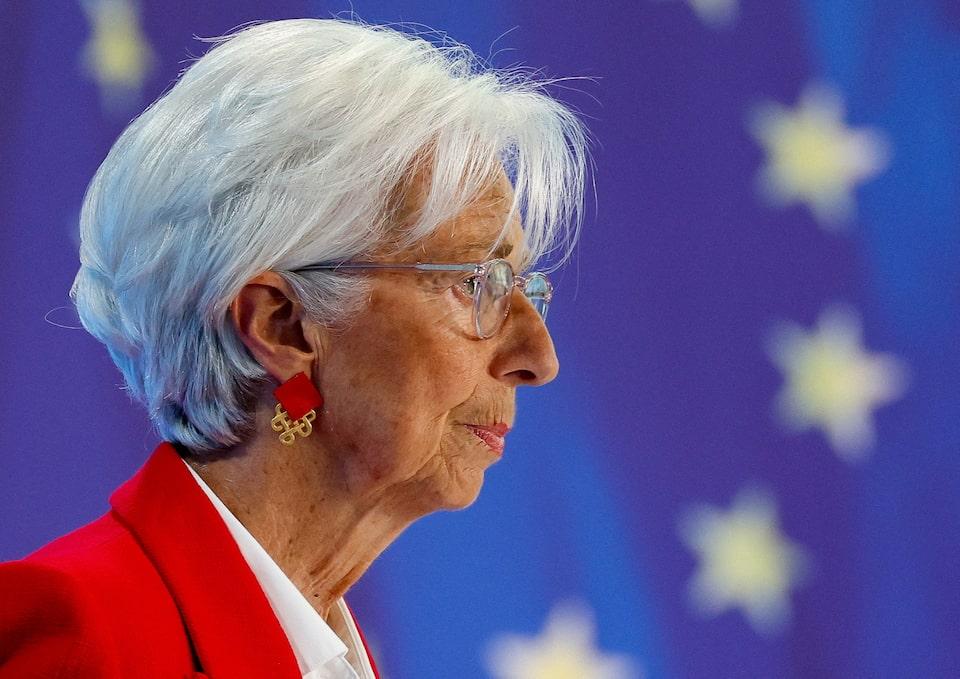
Deposit rate left at 2% ECB awaits outcome of US-EU trade talks Rumoured 15% tariff worse than ECB's baseline One further rate cut seen as likely FRANKFURT, July 24 (Reuters) - The European Central Bank left interest rates unchanged on Thursday after cutting eight times in a year, biding its time while Brussels and Washington negotiate over trade. The ECB cut its policy rate to 2% last month, halving it from 4% a year earlier, after taming a surge in prices that followed the end of the COVID-19 pandemic and Russia's full-scale invasion of Ukraine in 2022. Sign up here. With inflation now back at the ECB's 2% goal and expected to stay there, policymakers chose to stay put on Thursday, just as trade talks between the European Union and Donald Trump's U.S. administration appeared to be in their final stretch. The ECB's policy-making Governing Council painted a balanced picture of the economy, with near-term uncertainty over trade offset by public investment further down the road. "Partly reflecting the Governing Council’s past interest rate cuts, the economy has so far proven resilient overall in a challenging global environment," the ECB said. "At the same time, the environment remains exceptionally uncertain, especially because of trade disputes." As ECB President Christine Lagarde and her colleagues were in the middle of their meeting late on Wednesday, EU diplomats said the two sides were heading towards a deal that would result in a broad tariff of 15% on U.S. imports of European Union goods. This would be roughly halfway between the ECB's baseline and severe scenarios for the euro zone economy presented last month, but milder than Trump's threatened 30%. The ECB's estimate showed that higher U.S. tariffs would result in lower growth and, depending on the extent of EU retaliation, inflation in the euro zone over the medium term. "If the two sides indeed conclude such a deal, it would support our call that the euro zone economy can regain momentum from the fourth quarter onwards and that the ECB will not need to cut rates further," Berenberg economist Holger Schmieding said. In its statement the ECB said it would decide "meeting by meeting ... based on its assessment of the inflation outlook and the risks surrounding it". Money markets were still pricing in a further interest rate reduction, probably by March, as inflation was seen at risk of going too low. Even the ECB's baseline projection from June, which incorporates 10% tariffs from the United States, saw price growth below 2% over the next 18 months. "Even in the case of a benign outcome (i.e. U.S. tariffs around 10%) we still see scope for further easing as the disinflation process broadens," MUFG's Europe economist Henry Cook said. The euro zone economy is showing some tentative sign of acceleration but growth remains modest. Companies, while still optimistic about an upturn ahead, report starting to feel the pinch from tariffs on their profits. On the bright side, euro zone banks have seen rising loan demand and policy uncertainty has not yet translated into an economic or market downturn. After a short-lived selloff in April investors have taken the trade turmoil in their stride, with European equity indices close to new highs also thanks to Germany's newly found appetite for spending. In fact, erratic policy-making in the United States, including Trump's relentless criticism of the Federal Reserve, has lured foreign investors to euro zone assets. That briefly pushed the euro to its highest level against the dollar since September 2021 at $1.1829 earlier this month. ECB board member and outspoken hawk Isabel Schnabel even said the central bank should watch out for price hikes caused by tariffs and that the bar for further cuts was "very high". But the euro's appreciation has unnerved other policymakers, who fear a stronger currency would make European exports less competitive and contribute to pushing down inflation. "On that front, we would expect Christine Lagarde to strike a reassuring tone, reminding people that the ECB does not target exchange rates but that any resulting downward pressure on inflation will be addressed, if necessary," Julien Lafargue, chief market strategist at Barclays Private Bank, said. https://www.reuters.com/business/finance/ecb-keeps-rates-steady-it-awaits-clarity-over-trade-2025-07-23/
2025-07-24 12:08
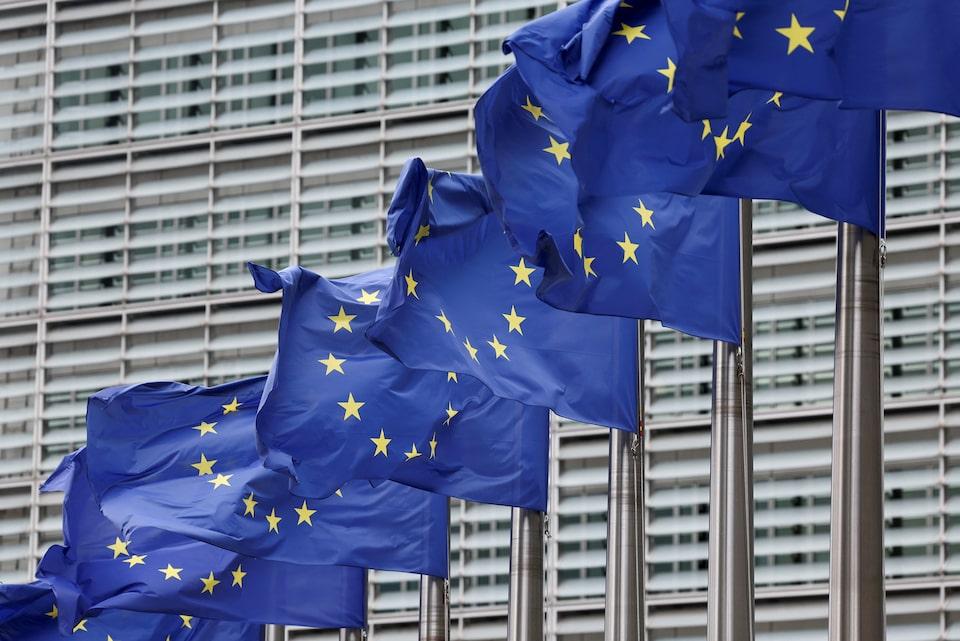
BRUSSELS, July 24 (Reuters) - The European Commission has started monitoring imports and exports of scrap metal including steel, aluminium and copper after stark industry warnings of shortages and the risk of smelter shutdowns, it said. EU smelters have been struggling for some time to secure supplies of scrap metal, a major input and an integral part of the EU's push to reduce carbon emissions. Much of the scrap is exported to Asia and Turkey. Sign up here. U.S. President Donald Trump's tariffs on primary steel and aluminium have exacerbated the problem as dealers have started selling scrap aluminium to U.S. smelters. "The EU is experiencing a decline in metal scrap availability ... The introduction of a 50% tariff by the United States on a wide range of steel and aluminium products (excluding scrap) may further worsen this issue," the Commission said in a statement on Wednesday. The Commission will decide what action to take by the end of September based on the data. Meanwhile, duties targeting exports to the U.S. could take effect sooner if the EU fails to reach a trade agreement with Trump and decides to retaliate with countermeasures. https://www.reuters.com/sustainability/climate-energy/eu-starts-surveillance-scrap-metal-trade-supplies-decline-2025-07-24/
2025-07-24 11:44
Expectations for higher rates support yen, but politics weigh Expected trade deal with Europe in line with expectations Markets watch for possible Lagarde comments on euro strength Australian dollar rises on risk asset rally July 24 (Reuters) - The dollar edged higher against the euro on Thursday following progress in U.S. trade talks with key partners, but was mixed versus the yen, which got a lift from expectations for higher rates while political risks weigh. The Japanese central bank's deputy governor, Shinichi Uchida, said a trade deal with Washington had reduced economic uncertainty, comments that fuelled optimism in the market about the potential resumption of interest rate hikes. Sign up here. Analysts believe the yen will face persistent headwinds after Sunday's upper house election, with the opposition considering a no-confidence motion. The European Union is nearing a deal that would impose a broad 15% tariff on EU goods, in line with economists' expectations, while markets await the European Central Bank policy meeting where President Christine Lagarde could comment on the recent strength of the single currency. "The ECB faces a challenge that is quantitatively different from the BoJ's," said Thierry Wizman, global forex and rates strategist at Macquarie Group. "The euro has appreciated by far more than the JPY so far in 2025, meaning that the disinflationary impulse from U.S. import tariffs may be greater in the EU than in Japan, or the ECB may suspect as much," he added. Expectations are for ECB policymakers to keep rates unchanged, though markets will look out for what they say about the outlook for monetary policy. Analysts expect the ECB to ease monetary policy if euro strength dampens economic growth and inflation by making imports cheaper and exports less competitive. PMI data showed fragility in France following budget cut proposals there, but also resilience in Germany and other parts of the euro zone. Data showed that German business activity continued to grow marginally in July. "As of now, there has been very little tariff impact on the hard data," said Mohit Kumar, economist at Jefferies. "But that does not mean it's not coming," he added, arguing it would take at least three months to see the fallout of trade duties on hard economic figures. ECONOMIC FALLOUT Meanwhile, risk assets rallied as the trade deals eased fears over the economic fallout of a global trade war. The risk-sensitive Australian dollar rose to an eight-month high of $0.6625 on Thursday. The euro fell 0.2% at $1.1749, not far from a high of $1.1830 it hit earlier this month, which marked its strongest level in more than three years. Against the yen , the dollar rose 0.05% to 146.55, snapping a three-day falling streak, after hitting a fresh 2-week low earlier in the session at 145.86. Olivier Korber, forex strategist at Societe Generale, expects the yen to strengthen further, citing support from the trade deal and prospects for higher interest rates. "The local press reported that he (Prime Minister Shigeru Ishiba) should decide if he will resign in late August and, if that were to happen, a new party leader would probably be selected in September," Korber said. "This would ensure a smoother political transition, thus limiting market uncertainty," Ishiba denied on Wednesday he had decided to quit after a source and media reports said he planned to announce his resignation to take responsibility for a bruising upper house election defeat. Currencies mostly shrugged off news that U.S. President Donald Trump, a vocal critic of Federal Reserve Chair Jerome Powell, will visit the central bank on Thursday, a surprise move that escalates tensions between the administration and the Fed. https://www.reuters.com/world/africa/dollar-rises-against-euro-mixed-versus-yen-trade-deal-progress-2025-07-24/
2025-07-24 11:43
USS IM manages $106 billion for higher-education staff CEO Pilcher says policy change crucial for faster action Corporates will change 'when it's sane for them to do that' LONDON, July 24 (Reuters) - Britain's biggest private sector pension scheme plans to step up lobbying of governments, regulators and standard-setters to push for faster action amid a worsening climate outlook, its investment chief told Reuters. The Universities Superannuation Scheme, which manages nearly 78 billion pounds ($105.67 billion), has reduced emissions linked to its own portfolio. But Simon Pilcher said there was only so much schemes could achieve through asset reallocation. Sign up here. "That's why the high-value engagement is with governments and regulators to create the environment where the low-carbon action happens. It is, I would say, 90% up to them and only 10% up to capital allocation," the chief executive of USS Investment Management said. The British government in May signed an accord with pension investors to try to scale up investment in UK infrastructure and green programmes to help the country reach its net-zero goal, which is enshrined in law. Pilcher said changing the rules to make it easier for companies and consumers to overhaul their climate-damaging practices was the most effective lever for change, and the scheme had decided to "turn the dial up" on its lobbying efforts. "Corporates will change their activity when it's sane for them to do that," Pilcher said. "There needs to be a strong financial interest for those businesses to do the sensible thing; no one is going to spend money if, bluntly, they're going to be wasting that money." While USS IM has no formal arrangements with other investors, it has good relationships with the UK's local government pension schemes, and investors such as Railpen and Nest, the country's biggest auto-enrolment scheme, making it an influential voice within the sector. In the UK, lobbying would include talking to the Department for Energy Security and Net Zero about its strategy and encouraging them to, for example, reform the planning process to make it easier to connect renewables to the electricity grid. The United Nations said last October the world was on course to hit more than 3 degrees Celsius of warming above the pre-industrial average by the end of the century, based on current emissions-reduction pledges by countries, way off the world's goal of capping warming at 1.5 C. ($1 = 0.7381 pounds) https://www.reuters.com/sustainability/cop/britains-biggest-pension-scheme-lobby-governments-more-climate-2025-07-24/

2025-07-24 11:38
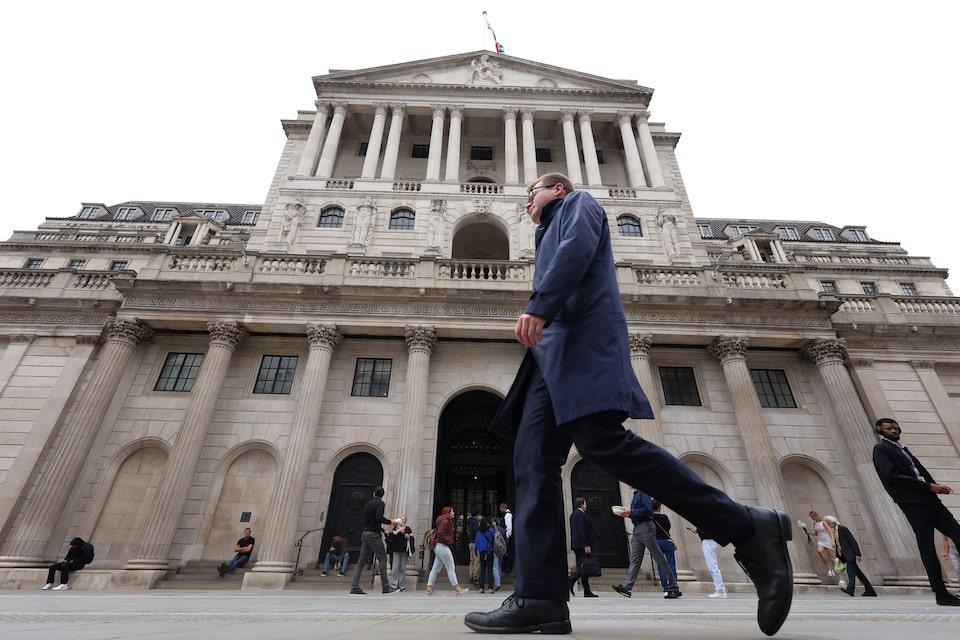
Preliminary headline PMI slows to 51 in July vs 52 in June CBI: manufacturing more stable but outlook weak Both surveys suggest further weakness in the jobs market Bank of England contending with slowdown and inflation LONDON, July 24 (Reuters) - British companies are struggling to grow and the job market continues to weaken, but inflation pressures are still lurking in the economy, according to surveys that are likely to keep the Bank of England on course for only gradual interest rate cuts. S&P Global's preliminary UK Composite Purchasing Managers' Index (PMI) slowed to 51.0 in July from 52.0 in June, not far above the 50.0 level that separates growth from contraction. A Reuters poll had forecast a smaller fall to 51.8. Sign up here. The survey's employment gauge dropped to its lowest since February, with businesses in part blaming the decision by finance minister Rachel Reeves to make them pay more in staff social security contributions from April. "Particularly worrying is the sustained impact of the budget measures on employment," Chris Williamson, chief business economist at S&P Global Market Intelligence, said. The impact of higher trade tariffs, launched by U.S. President Donald Trump, also weighed on firms. A separate survey by the Confederation of British Industry suggested Britain's manufacturing sector, which accounts for about 10% of the economy, had stabilised after a downturn. But the outlook remains fragile with factories cutting jobs again. The BoE is expected to reduce interest rates for the fifth time in 12 months on August 7 as it focuses on the slowdown in the jobs market, despite inflation rising further above the central bank's 2% target to 3.6% in June. Thursday's surveys underscored the BoE's dilemma with companies facing price pressures as well as weaker demand. The PMI showed prices charged by firms speeding up for the first time since April as suppliers sought to offset some of Reeves' tax increase and higher wage bills. "In our view, the Bank should be more concerned about the ominous state of the jobs market and what it implies for wage growth," James Smith, an economist with ING, said. However, another three-way split on the BoE's Monetary Policy Committee was possible in August similar to May's voting pattern, Smith said. At that meeting, two members voted for a big half-point rate cut due to their worries about the jobs market, while five backed a smaller quarter-point cut and two said borrowing costs should stay on hold because of inflation risks. Matt Swannell, chief economic advisor to the EY ITEM Club, a forecasting organisation, said it remained unlikely that the BoE would speed up its rate cuts after August's reduction. "We're yet to see the sort of deterioration in the official labour market or activity data that could prompt a pivot to faster rate cuts," Swannell said. S&P Global's Williamson said the PMI survey suggested Britain's economy was growing at a quarterly pace of just 0.1% with a risk that it could prove weaker. The PMI for the services sector slipped to 51.2 in July from June's 52.8. The manufacturing sector PMI rose for a fourth month in a row to 48.2 from 47.7 but remained in contraction territory for a 10th consecutive month. https://www.reuters.com/world/uk/uk-firms-struggle-price-pressures-likely-keep-bank-england-alert-2025-07-24/