2025-07-24 11:25
KYIV, July 24 (Reuters) - Ukraine's central bank on Thursday left its key interest rate steady at 15.5% for the third consecutive meeting as inflation is expected to continue to ease, but it said that wartime risks will constrain economic growth. In a statement, it said Ukraine's economic growth would slow to 2.1% this year compared with 2.9% in 2024. Sign up here. The central bank previously predicted 2025 economic growth at 3.1% but cut its forecast due to more intense Russian attacks in recent months. Governor Andriy Pyshnyi said that inflation had started to decline as expected in June and would continue to slow significantly by the end of the year. "Holding the key policy rate steady at 15.5% is an important prerequisite for a sustainable slowdown of inflation toward its 5% target," Pyshnyi told a news briefing. The central bank expects inflation to reach 9.7% at the end of this year and to slow to 6.6% in 2026 and to 5% in 2027. https://www.reuters.com/world/europe/ukraines-central-bank-keeps-rates-steady-sees-economy-slowing-2025-2025-07-24/

2025-07-24 11:16
July 24 (Reuters) - Refiner Valero Energy (VLO.N) , opens new tab beat Wall Street estimates for second-quarter profit on Thursday as a rebound in refining margins helped cushion the loss in its renewable diesel unit. Investors were expecting top U.S. refiners to report higher second-quarter profits, bouncing back from losses during the first three months of the year as unseasonably strong diesel margins boosted earnings. Sign up here. Valero, the first major refiner to post results this earnings season, said its refining margin per barrel of throughput was up at $12.35 in the reported quarter, compared with $11.14 from a year earlier. "We set a record for refining throughput rate in our U.S. Gulf Coast region in the second quarter," said CEO Lane Riggs. The company's total throughput volumes stood at 2.9 million barrels per day (bpd) in the quarter, compared with 3.0 million bpd a year earlier. The refining segment reported quarterly operating income of $1.3 billion, higher than last year's $1.2 billion. However, its renewable diesel segment, consisting of the Diamond Green Diesel joint venture, reported an operating loss of $79 million for the quarter, compared with a profit of $112 million a year ago. The company also said it was progressing with a fluid catalytic cracking unit optimization project that will enable the St. Charles Refinery to increase its high-value product yield. The project is estimated to cost $230 million and is expected to be completed in 2026. Valero reported a profit of $2.28 per share for the quarter ended June 30, compared with analysts' average estimate of $1.74 per share, according to data compiled by LSEG. https://www.reuters.com/business/energy/valero-energy-beats-q2-profit-estimates-refining-margins-improve-2025-07-24/
2025-07-24 11:13
July 24 (Reuters) - U.S. electric and gas utility CenterPoint Energy's (CNP.N) , opens new tab second-quarter profit was just shy of analysts' estimate on Thursday, weighed down by higher expenses. The country's electrical grids have been facing an onslaught of extreme weather and ballooning demand from electrification of industries and the technology sector's data center build out amid an artificial intelligence boom, prompting utilities to seek rate increases to upgrade and pay for power infrastructure. Sign up here. CenterPoint's operations and maintenance costs increased 5.5% to $715 million during the quarter ended June 30. The company provides electricity and natural gas to more than 7 million customers across Indiana, Louisiana, Minnesota, Mississippi, Ohio and Texas. It also raised its 10-year capital expenditure plan through 2030 by $500 million to $53 billion to cater to an anticipated surge in power demand from data centers. "This year alone we have increased our capital investment plan by $5.5 billion, including the $500 million increase," said CEO Jason Wells. Power demand from U.S. data centers is expected to nearly triple in the next three years and consume as much as 12% of the total electricity produced, according to a study by Lawrence Berkeley National Laboratory. CenterPoint's net income fell about 13% to $198 million. It posted an adjusted profit per share of 29 cents during the quarter, compared with analysts' average estimate of 30 cents, according to data compiled by LSEG. https://www.reuters.com/business/energy/centerpoint-energy-misses-profit-estimate-higher-costs-2025-07-24/

2025-07-24 11:07
July 24 (Reuters) - Dow Inc (DOW.N) , opens new tab halved its dividend and forecast third-quarter revenue below analysts' expectations as the chemicals maker navigates a prolonged downturn in the industry, sending its shares down nearly 10% in premarket trading. Global chemical companies are feeling the pressure of higher production costs in Europe, lackluster demand and stringent environmental regulations. Sign up here. Earlier this month, Dow said it would shut down three upstream plants in Europe and cut around 800 jobs in response to structural challenges in the region. It began a strategic review of some of its European assets in 2024. Quarterly net sales from the company's packaging and specialty plastics segment, its largest by revenue, fell 8.9% to $5.03 billion from a year earlier, weighed down by tariff uncertainties. The company had flagged in its first-quarter earnings call that it expects extended pressure due to uncertainty from U.S. President Donald Trump's shifting trade policies. Dow on Thursday declared a quarterly dividend of 35 cents per share. That compared with 70 cents per share announced in April. "With this adjustment, we are aligning the payout size to provide additional financial flexibility," CEO Jim Fitterling said in a statement. Dow expects third-quarter net sales of $10.2 billion, below analysts' average estimate of $10.6 billion, according to data compiled by LSEG. The Michigan-based company reported an adjusted loss of 42 cents per share for the second quarter ended June 30, compared with analysts' average estimate of a loss of 17 cents per share. https://www.reuters.com/business/dow-forecasts-sales-below-estimates-slashes-dividend-downturn-takes-toll-2025-07-24/
2025-07-24 11:00
Recent deals create overlap in Exxon, Chevron operations Growing volatility in energy transition to increase incentive to consolidate Exxon and Chevron share large oil and gas operations in U.S. and Guyana, Kazakhstan and more LONDON, July 24 (Reuters) - Exxon Mobil and Chevron's recent major acquisitions raise a provocative question: does the U.S. still need two energy titans, or might it be more efficient for the two to join forces? An $800 billion combination would certainly evoke memories of Standard Oil, the conglomerate John D. Rockefeller created in 1870 that dominated the American oil industry before the Supreme Court branded it an illegal monopoly in 1911, forcing it to break up into multiple companies from which Exxon and Chevron trace their roots. Sign up here. Concerns about a new behemoth monopolizing the U.S. energy industry are probably smaller today than in the early twentieth century, given the scale and diversification of the current sector. Nevertheless, a merger of such magnitude would face daunting legal and logistical complexities. But never say never. Growing volatility in energy prices amid the bumpy global transition away from fossil fuels, shifts in market leadership, heightened geopolitical tensions, and the related rise in resource nationalism could create a confluence of circumstances in the coming years that might make a ‘ChExxon’ merger more than a fantasy. WAVES OF CONSOLIDATION Over the decades, the oil and gas sector has gone through several waves of consolidation largely driven by the need to increase scale, improve efficiency and better enable companies to weather periods of weak commodity prices. The modern era’s first wave of consolidation followed the oil price crash of 1997, which sparked a cycle of mergers that formed today's so-called ‘Big Oil’ companies: Exxon Mobil (XOM.N) , opens new tab, Chevron (CVX.N) , opens new tab, Shell (SHEL.L) , opens new tab, TotalEnergies (TTEF.PA) , opens new tab and BP (BP.L) , opens new tab. The latest consolidation wave, which is centred in the United States, began in 2022 when companies gobbled up rivals to increase their access to high-quality resources as boards shifted their focus to shareholder returns, rather than output, following years of rapid expansion in shale basins. This included Exxon's acquisition of Pioneer Natural Resources for $60 billion, ConocoPhillips' $23 billion acquisition of Marathon Oil and Diamondback Energy's $26 billion acquisition of Endeavor Energy. One of the biggest deals in this period was Chevron's $60 billion acquisition of New York-listed Hess, which was first announced in October 2023 but completed only last week following a lengthy legal battle with Exxon over Hess' lucrative 30% stake in Guyana's giant Stabroek oilfield. The Hess deal and Chevron’s acquisition in May 2023 of shale producer PDC Energy for $7.6 billion have also given Chevron’s U.S. production a significant boost. GLOBAL OVERLAP Exxon and Chevron's buying spree solidified their position as the largest U.S. producers – and also highlighted how much of their portfolios overlap. Exxon today produces around 1.9 million barrels of oil equivalent per day (boed) in the United States, of which two-thirds come from the Permian basin, the heart of the shale boom. Exxon expects its Permian production to reach 2 million boed by 2027. Meanwhile, Chevron's U.S. production is currently around 1.8 million boed when including Hess and PDC. Nearly half of this total is in the Permian, where it aims to keep output steady at 1 million boed through 2040. Put together, the two companies account for over 10% of total U.S. oil and gas production and nearly 20% of oil and gas production in the Permian. Shale production requires constant new drilling just to keep output steady. And given that many of the most prolific shale structures are ageing and rapidly depleting, the need for further consolidation in the sector will likely intensify as companies try to improve productivity. In Guyana, where production has skyrocketed to 668,000 bpd as of March, Chevron and Exxon’s overlap is even more extreme. Despite their recent legal dispute, the two are now partners in the South American country. Exxon, which operates and owns 45% of Guyana’s enormous Stabroek block, expects its output there to nearly double to 1.3 million bpd by the end of 2027. Chevron now owns 30% of the block. Finally, Exxon and Chevron's upstream portfolios both include significant operations in Kazakhstan, Australia and West Africa – more potential opportunities for consolidation. DIFFERENCES REMAIN There are still significant differences between the two energy giants, of course. For one, Exxon has a larger global footprint than Chevron, including a significant presence in Qatar and the United Arab Emirates. There also may be a difference of culture, which Chevron CEO Mike Wirth said when speaking to Reuters. Exxon has a reputation for being hierarchical and increasingly litigious, while Chevron is often seen as more engaged with its workforce and partners. Such differences can be hard to quantify but can indeed complicate large mergers. THE NEXT WAVE The oil and gas sector appears poised to undergo another round of consolidation in the coming years due to the convergence of multiple trends. The energy transition will likely lead to greater volatility in energy prices, while increased competition among the oil majors for a shrinking pool of investors could also increase the incentive to streamline operations and cut costs through mergers. Finally, tensions between the United States and China, and the renewed interest in industrial policy more broadly, could also put pressure on American companies to consolidate ownership of vital natural resources. And the financial benefits of combining the two U.S. energy giants? It is hard to put a firm number on this given the sheer size of Exxon and Chevron, which have a combined value of $775 billion, but the savings from merging their U.S. headquarters and administrative functions in other countries where they both operate would almost certainly measure in the billions alone. Divestments of non-core assets would further boost the financial benefits. For context, consider that Exxon expects to achieve $3 billion in savings from its Pioneer acquisition, a company that was bought for a fifth of Chevron’s current value. This isn’t to argue that the merger is likely in the near future, but the idea shouldn’t be discounted entirely. And if the merger of the two largest U.S. energy companies were to occur, it would signal – like the breakup of Standard Oil in 1911 – that the industry was entering a new era. Enjoying this column? Check out Reuters Open Interest (ROI), opens new tab , opens new tab, your essential new source for global financial commentary. ROI delivers thought-provoking, data-driven analysis. Markets are moving faster than ever. ROI, opens new tab , opens new tab can help you keep up. Follow ROI on LinkedIn, opens new tab , opens new tab and X. , opens new tab https://www.reuters.com/business/energy/converging-exxon-chevron-operations-could-spur-next-mega-merger-2025-07-24/
2025-07-24 11:00
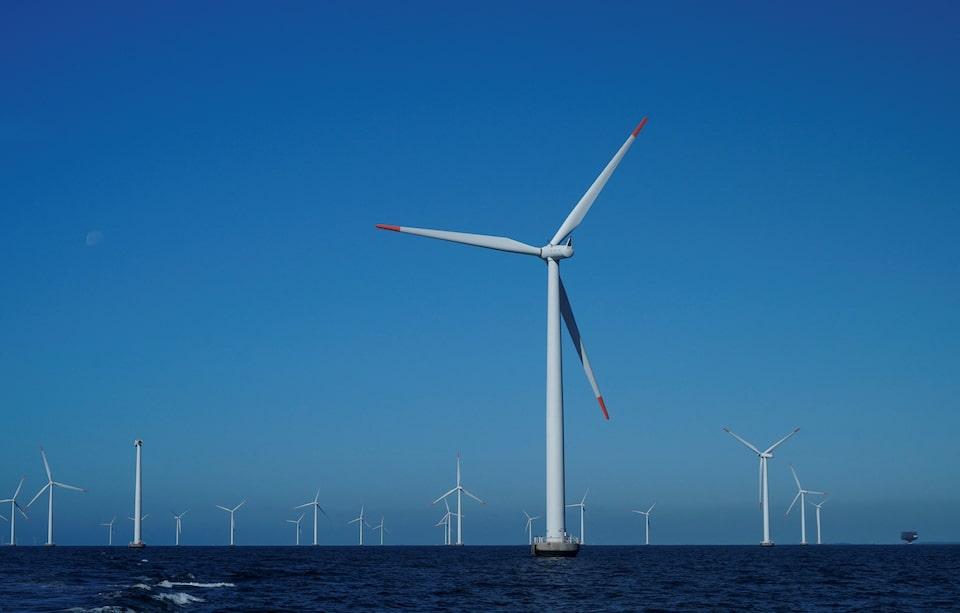
LITTLETON, Colorado, July 24 (Reuters) - Global utilities generated a record amount of clean electricity while cutting output from fossil fuels during the opening half of 2025, thereby maintaining the momentum of international efforts to cut back on fossil fuel use in energy production. However, energy transition progress was more varied at a regional level, as Europe and the United States both recorded rare increases in fossil fuel use while China widened its lead in clean electricity production. Sign up here. Below is a breakdown of the key global and regional electricity generation milestones recorded so far in 2025. CLEAN GROWTH Global utilities generated a record 6,405 terawatt hours (TWh) of electricity from clean power sources during January to June of 2025, data from energy think tank Ember showed. That output total was 6% more than during the same months in 2024, and means that worldwide clean electricity supply has increased every six months for the past three years. Clean power's share of global utility electricity supply was a record 43.2%, and compared to a 41.8% share during the first half of 2024. Hydro dams were the largest single source of clean electricity globally during January to June, accounting for 14% or 2,060 TWh of total electricity output. Wind and solar farms both generated around 9% of total electricity supply, which was a record for both power sources in terms of absolute electricity output and share of overall supply. Nuclear power stations have supplied an additional 9% of global electricity so far this year. Solar power output recorded the largest year-over-year increase of all power sources, jumping by 29% compared with the opening half of 2024 to 1,289 TWh. FOSSIL FLUX Globally, fossil fuel-powered electricity supply remained flat compared to a year earlier at 8,414 TWh for the first half of the year. Coal remained the largest source of fossil fuel power and has accounted for a third of global electricity production so far this year, generating around 4,909 TWh of electricity. However, the outright volume of global coal-fired generation was the smallest for a six-month window since the first half of 2023, and coal's share of the global generation mix was the smallest on record for a six-month span since at least 2019. Natural gas lost ground in terms of global electricity share so far this year, as a steep climb in gas prices in late 2024 and early 2025 sparked fuel switching to coal and other power sources in several key generation markets. Overall, natural gas plants supplied 21% of global electricity during the first half of 2025, down from a 22% share the year before and an average 23% share since 2019. GEOGRAPHIC HIGHLIGHTS Europe's electricity generation mix showed the largest year-over-year swings among major markets, due in part to sustained declines in wind and hydro power output which forced utilities to ramp up production from fossil fuels. Wind generation in Europe fell 8% from the opening half of 2024 while hydro output dropped 12%, resulting in a 3% contraction in total clean electricity supply in Europe during January to June compared to the same period in 2024. To compensate for the decline in clean power, gas-fired electricity output in Europe rose by 9% compared to the opening half of 2024, while coal-fired generated climbed 3%. In the United States, gas-fired generation fell 4% compared to January to June of 2024, while coal-fired output jumped by 17% as high gas prices sparked widespread fuel switching across U.S. power networks. In China, which is the top global electricity producer from fossil fuels, output from coal and gas plants both declined by 2% from the first half of 2024. A 14% increase in total clean electricity supply - to a record 2,007 TWh - alongside pockets of economic weakness has allowed Chinese utilities to trim power supply from fossil fuel plants so far this year. Elsewhere, clean electricity output rose 7% from the opening half of 2024 while fossil fuel generation held flat, indicating that a majority of economies continued to make energy transition progress even as Europe and the United States regressed. The opinions expressed here are those of the author, a columnist for Reuters. Enjoying this column? Check out Reuters Open Interest (ROI), your essential new source for global financial commentary. ROI delivers thought-provoking, data-driven analysis of everything from swap rates to soybeans. Markets are moving faster than ever. ROI can help you keep up. Follow ROI on LinkedIn , opens new tab and X , opens new tab. https://www.reuters.com/business/energy/mid-year-check-up-global-energy-transition-progress-2025-07-24/