2025-07-24 06:13
NICOSIA, July 24 (Reuters) - Two people were killed and hundreds evacuated as a massive wildfire tore through southern Cyprus, destroying homes and threatening communities amid an intense heatwave. At least 100 square kilometres (39 square miles) was razed to the ground in a wine-producing region north of the city of Limassol after the blaze broke out around midday on Wednesday, with several fronts still active on Thursday morning. Sign up here. Two people were found dead in a burned-out vehicle, trapped by the fire. At least 10 people were injured, two of them seriously, police said. As dawn broke, a red hue hung over Limassol, a sprawling coastal city where development in recent years has spilled over to its surrounding mountains. Firefighting aircraft were redeployed at first light after darkness forced a pause. Authorities said it was too early to give a precise account of damage, or what started the fire. "We are talking about very strong winds, with gusts, which were constantly interchanging," fire brigade spokesperson Andreas Kettis said. Temperatures on the island peaked at 43 degrees Celsius (109.4 Fahrenheit) on Wednesday, triggering an amber weather alert. A new amber warning was in place on Thursday, with highs forecast to hit 44 degrees Celsius - the hottest of the year so far. Cyprus has requested help through the European Union's civil protection mechanism, with Spain expected to send two aircraft on Thursday, government spokesperson Konstantinos Letymbiotis said. Jordan has also pledged assistance. Cyprus has struggled with a protracted drought, pushing scarce water resources to critically low levels. The affected area sits just north of Cyprus's Kouris reservoir, the island's largest. It was at just 15.5% of its capacity on Wednesday. https://www.reuters.com/business/environment/two-dead-homes-burn-massive-wildfire-cyprus-2025-07-24/

2025-07-24 06:09
July 24 (Reuters) - Canadian miner Teck Resources (TECKb.TO) , opens new tab beat second-quarter profit estimates on Thursday, helped by improved profitability at its Trail operations. Teck's Trail operations, located in British Columbia, is one of the world's largest fully integrated zinc and lead smelting and refining complexes, according to the company website. Sign up here. The company reported an adjusted profit of 38 Canadian cents per share for the quarter ended June 30, compared with analysts' average estimate of 27 Canadian cents per share, according to LSEG data. Teck said London Metal Exchange (LME) copper prices declined by 2% in the June quarter compared with a year earlier and averaged $4.32 per pound. The company produced 109,100 metric tons of copper in the reported quarter, and cut its full-year copper production guidance to 470,000 tons to 525,000 tons. Teck expects to produce 525,000 tons to 575,000 tons of zinc in the current year. The results come against the backdrop of U.S. President Donald Trump's threat to impose a 50% tariff on copper imports, starting August 1. Teck exports the vast majority of its copper to Asia and Europe. Trump's proposed 50% tariff on U.S. copper imports is unlikely to directly impact Teck, given its minimal exposure to the U.S. market. However, the tariff could tighten global supply and push prices higher, indirectly boosting Teck's revenue and margins. https://www.reuters.com/world/americas/canadas-teck-resources-beats-profit-estimates-second-quarter-2025-07-24/

2025-07-24 06:08
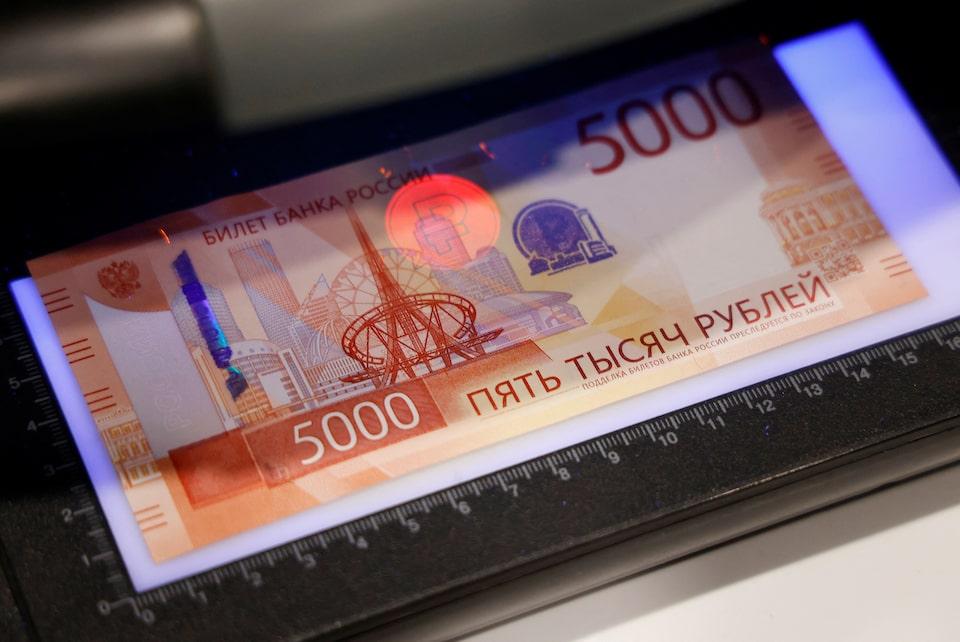
MOSCOW, July 24 (Reuters) - The Russian rouble's 45% rise against the U.S. dollar since the start of the year has made it one of the world's best performing currencies - but the sharp appreciation is proving to be a double-edged sword for the heavily sanctioned Russian economy. The strength of the rouble means that dollar-denominated energy revenues generate fewer roubles for the Russian budget. Russian businesses also argue it is making exports more expensive to buyers in dollars and other currencies. Sign up here. But President Vladimir Putin's central bank governor, Elvira Nabiullina, argues that a softer currency would be a sign of economic vulnerability. Nabiullina, who on Friday announces the latest interest rate decision, says the exchange rate is not just there to please exporters, stressing that the strong rouble is a product of the tight monetary policy needed to fight stubbornly high inflation. The following explains some of the factors behind the rouble's rise and its implications. WHY HAS THE ROUBLE RISEN SO MUCH AGAINST THE DOLLAR? The rouble has strengthened about 45% against the dollar this year. The rise is driven primarily by the central bank’s tight monetary policy and optimism after U.S.-Russia talks in February raised hopes for a peace settlement in Ukraine. Interest rates on rouble deposits have also soared above 20%, making the currency attractive to savers and as a speculative trade for its yield. At the same time, high borrowing costs have slowed imports, reducing demand for foreign currency. The weakness of the U.S. currency, whose index lost 6.6% since President Donald Trump's "Liberation Day" tariff announcement on April 2, has also helped the rouble. Although the central bank says there is a freely floating exchange rate, it has been selling the Chinese yuan, its only major intervention tool, to support the rouble. When the rouble strengthens against the yuan, its rate against the dollar strengthens as well to avoid arbitrage. The stronger rouble helps the regulator fight inflation by making imports cheaper. VTB’s First Deputy CEO Dmitry Pyanov alleged recently this is part of a deliberate strategy. The rouble is also supported by currency controls introduced after the start of the war in Ukraine to prevent capital flight but recently exporters have been repatriating more foreign currency revenues than they are obliged to. HOW IS THE ROUBLE TRADED? Since sanctions hit the Moscow Stock Exchange (MOEX) in 2024, the rouble trades over-the-counter against the dollar and euro. Banks report their quotes to the central bank, which uses them to set the official rate. This market is opaque since only the central bank sees full transaction data. Some smaller, mostly non-Russian banks report quotes to market data providers. The rouble trades against the yuan on MOEX. Dollar/rouble futures, which also trade on MOEX, provide some market guidance on exchange rate. There is no black market rate for foreign currency in Russia. The rouble is no longer a major internationally traded currency and many Western companies and banks have left Russia. But Russia remains a top oil and agriculture exporter and the world’s 11th largest economy. Russia's push to shift trade into non-Western currencies, especially the yuan, may have implications for the global dominance of the U.S. dollar in the long-term. Major developing economies like China and India are watching closely. WHY IS ROUBLE-YUAN THE BIGGEST PAIR? The yuan has overtaken the dollar as Russia’s most traded foreign currency. In 2024, 95% of Russia’s trade with China was settled in yuan and roubles. Yuan-rouble trading volumes on the Moscow Exchange reached 33 trillion roubles ($420 billion) in 2024. Russia’s total trade with China hit a record $245 billion. The rouble is up against the yuan by 25% this year. Energy firms repatriate yuan earnings, while importers use yuan to buy goods. Most analysts now focus on the rouble/yuan rate, not the dollar. WHAT DOES THE RUSSIAN GOVERNMENT SAY ABOUT THE ROUBLE? The government wants a weaker rouble to boost budget revenues. The 2025 budget assumes an average rate of 94.3 roubles per dollar, but the current rate is around 78. If the rouble stays strong, VTB analysts estimate the budget could lose 2.4% of its revenues this year. Exporters, from oil to metals to agriculture, are also hurting. A stronger rouble makes their revenues shrink. Many officials and business leaders say they would prefer a rate of 100 to the dollar. Putin has not spoken publicly about the rouble's strength in recent months. HOW DO ORDINARY RUSSIANS VALUE THE ROUBLE? The public still sees the dollar as the benchmark, even though yuan use is rising. Cash dollars and euros remain available in bank branches, though there are now far fewer exchange offices than in previous decades. Sanctions have made foreign travel and dollar and euro international transfers harder, reducing demand for cash dollars. In the first quarter of early 2025, Russians bought about 200 billion roubles’ worth of foreign currency, unchanged from a year earlier. High rouble interest rates have made foreign currency savings less attractive. WHAT LIES AHEAD FOR THE ROUBLE? Analysts have warned for months that the rouble is overvalued, but the currency has defied their forecasts so far. The central bank is widely expected to cut interest rates at its upcoming meeting. If it does, market rates will fall as well, prompting savers to pull money from rouble deposits. That could weaken the currency. A bigger test looms in early September, when a 50-day deadline set by U.S. President Donald Trump for Russia to show progress toward peace in Ukraine expires. If new U.S. sanctions targeting buyers of Russian oil follow, the rouble could come under renewed pressure. The last time the rouble weakened significantly was in November 2024, after Washington sanctioned Gazprombank, which had handled oil and gas payments. A source close to the central bank pointed to Reuters that when the regulator cut the key rate from 17% to 11% between February and July 2015, the rouble took several months to weaken gradually. This is the regulator's expectation this time. https://www.reuters.com/business/finance/why-russian-rouble-is-outperforming-what-it-means-2025-07-24/
2025-07-24 06:05
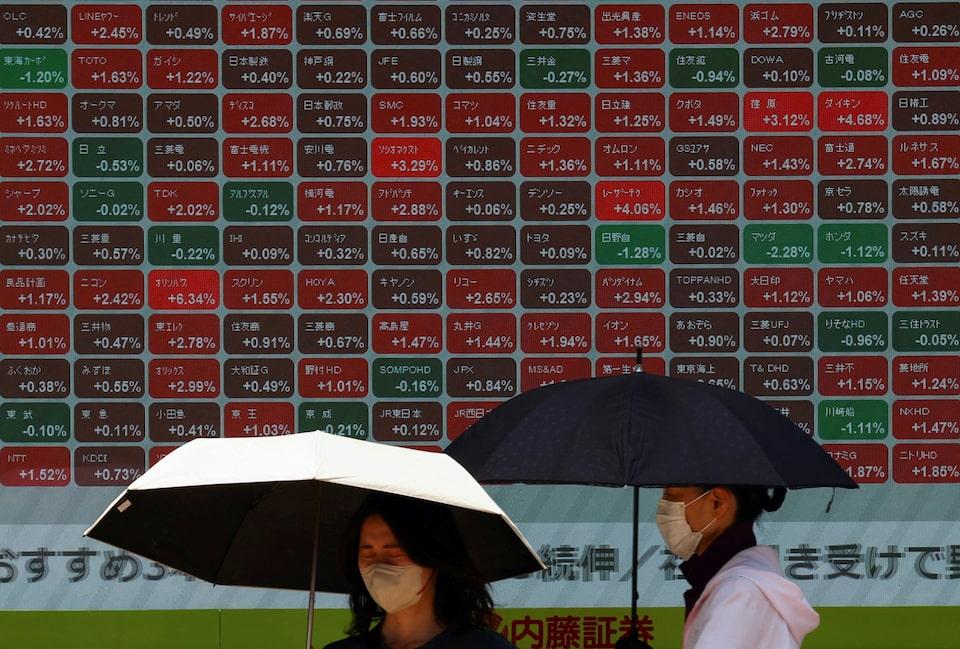
Asian shares rally on earnings optimism, trade deals Investors await Trump's visit to Federal Reserve ECB set to stand pat on rates U.S. and EU nearing trade deal with 15% tariffs on imports SINGAPORE, July 24 (Reuters) - Stocks in Asia extended gains on Thursday as optimism on Wall Street over trade deals and corporate earnings shored up investor confidence across the region, while the euro was steady ahead of European Central Bank policy meeting. MSCI's broadest index of Asia-Pacific shares outside Japan (.MIAPJ0000PUS) , opens new tab was up 0.4%, hitting a near four-year peak after U.S. stocks ended the previous session at a record high. Sign up here. The bullish mood is set to continue in Europe. The pan-European futures were up 1.17%, German DAX futures were up 1.15% and FTSE futures were up 0.39%. Tokyo's broad Topix gauge of shares (.TOPX) , opens new tab and Singapore's benchmark index (.STI) , opens new tab both crossed above previous highs, while the Nikkei 225 (.N225) , opens new tab extended Wednesday's gains to within reach of its record high hit last year. Traders are speculating that the U.S. may soon reach a trade agreement with the European Union, after the Trump administration struck deals with Japan, the Philippines and Indonesia earlier this week. "There's nothing like a trade deal with a big trading nation - and deals with the Philippines and Indonesia, and the prospect of a deal in the offing for Europe - for markets to throw away all their caution," NAB's senior market strategist Gavin Friend said on a podcast. "Yields are higher and everything seems rosy at the moment." Markets were relatively subdued after the White House said that U.S. President Donald Trump will visit the Federal Reserve on Thursday, a surprise move that escalates tension between the administration and Chair Jerome Powell. The Fed is expected to hold rates steady next week. "The purpose of Trump’s visit to the Fed is unclear but it may be a move to pressure Powell and the Fed to cut rates and it comes just a few days before the next Fed policy meeting at the end of this month," said Vasu Menon, managing director of investment strategy at OCBC. The yield on benchmark 10-year Treasury notes was steady at 4.3937%. The two-year yield , which rises with traders' expectations of higher Fed fund rates, touched 3.8908%. The dollar dropped 0.31% against the yen to 146.03 . It is still some distance from its low this year of 139.89 in April. The euro last fetched $1.1774, after hitting a more than two-week high earlier in the session. The dollar index , which tracks the greenback against a basket of currencies of other major trading partners, was down at 97.156. The gauge has dropped over 10% this year as investors scurry for alternatives in the wake of Trump's erratic trade policies. Second-quarter earnings are well underway, with 23% of the companies in the S&P 500 having reported. Of those, 85% have beaten Wall Street expectations, according to LSEG data. In Asia, South Korean chipmaker SK Hynix (000660.KS) , opens new tab and India's Infosys (INFY.NS) , opens new tab provided rosy outlooks in their latest earnings reports, shrugging off U.S. trade uncertainty. Investors will watch out for the policy decision from the ECB later on Thursday as trade talks between Washington and Brussels continue. The central bank is expected to keep interest rates on hold, pausing after seven straight cuts. Investors generally expect one more ECB rate cut by the end of the year, most likely in December. Trump has threatened to impose a 30% duty on EU goods but two diplomats said on Wednesday the EU and the U.S. were heading towards a deal that would result in a broad tariff of 15% applying to EU goods. Oil prices rose on speculation the trade deal would support global growth and after a sharper-than-expected decline in U.S. crude inventories. U.S. crude ticked up 0.52% to $65.59 a barrel. Gold was slightly lower as easing trade tensions dented demand for safe-haven assets, overshadowing support from a weaker dollar. Spot gold was traded at $3,382.79 per ounce. https://www.reuters.com/world/china/global-markets-wrapup-2-2025-07-24/
2025-07-24 05:39
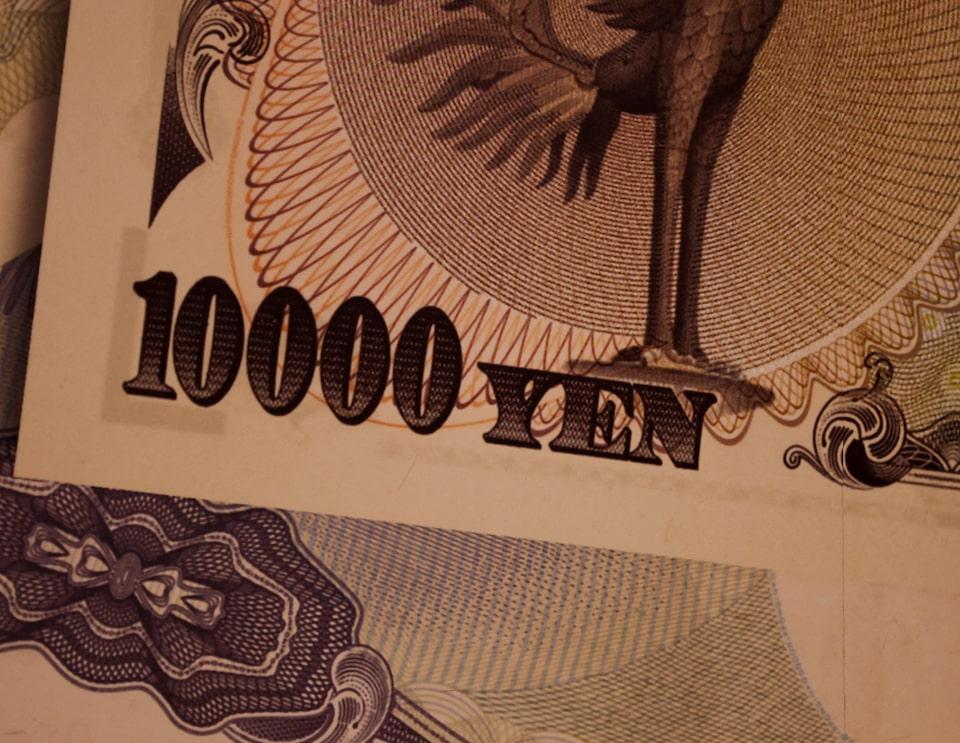
Trump to visit Federal Reserve on Thursday Market mood buoyant as more trade deals expected Euro steady, yen holds gains despite domestic political uncertainty Focus on ECB rate decision later in the day SINGAPORE, July 24 (Reuters) - The euro crept toward its highest level in nearly four years on Thursday while the yen held to gains following more progress on trade deals between the United States and its largest trading partners, which in turn lifted the broader market mood. Currencies mostly shrugged off news that U.S. President Donald Trump, a vocal critic of Federal Reserve Chair Jerome Powell, will visit the central bank on Thursday, a surprise move that escalates tensions between the administration and the Fed. Sign up here. It was not immediately clear whether Trump, who has lambasted Powell repeatedly for not cutting U.S. interest rates more aggressively, would be meeting with the Fed chief. Markets were paying close attention to various tariff negotiations. The European Union and the U.S. were moving towards a trade agreement that could include a 15% U.S. baseline tariff on EU goods and possible exemptions, two European diplomats said on Wednesday. That came on the heels of Washington's trade deal with Tokyo that lowered tariffs on auto imports and spared the latter from punishing new levies on other goods in exchange for a $550 billion package of U.S.-bound investment and loans. Global markets took to the latest developments positively, as risk assets rallied and investors sold the U.S. dollar. The risk-sensitive Australian dollar rose to an eight-month high of $0.6620 on Thursday. The euro steadied at $1.1773, hovering near a high of $1.1830 it hit earlier this month, which marked its strongest level in more than three years. "These trade frameworks agreed between the U.S. and the major economies are definitely positive for risk sentiment," said Carol Kong, a currency strategist at Commonwealth Bank of Australia. "We actually anticipated a risk of the U.S. and the European Union getting into retaliation mode...but that risk of a retaliation seems to have dissipated." Against the yen , the dollar fell 0.26% to 146.07, extending its fall against the Japanese currency to a fourth straight session. While news of Japan's trade deal has lit a fire under domestic stocks, gains in the yen have been capped by lingering political uncertainty at home. Japanese Prime Minister Shigeru Ishiba denied on Wednesday he had decided to quit after a source and media reports said he planned to announce his resignation to take responsibility for a bruising upper house election defeat. "In the near term, the yen will still face headwinds from ongoing political uncertainty. We still don't know what Prime Minister Ishiba will do...so I think there is still some uncertainty with regard to the fiscal outlook in Japan and Bank of Japan policy," Kong said. Elsewhere, sterling was firm at $1.3575, having gained 0.36% in the previous session. The dollar index eased slightly to 97.18, while the New Zealand dollar rose 0.08% to $0.6052. Trade negotiations aside, market focus is also on a rate decision from the European Central Bank later in the day. Expectations are for policymakers to stand pat on rates, though markets will look out for what they say about the outlook for monetary policy. Investors generally expect one more ECB rate cut by the end of the year, most likely in December. https://www.reuters.com/world/africa/euro-yen-upbeat-trade-progress-2025-07-24/
2025-07-24 05:00
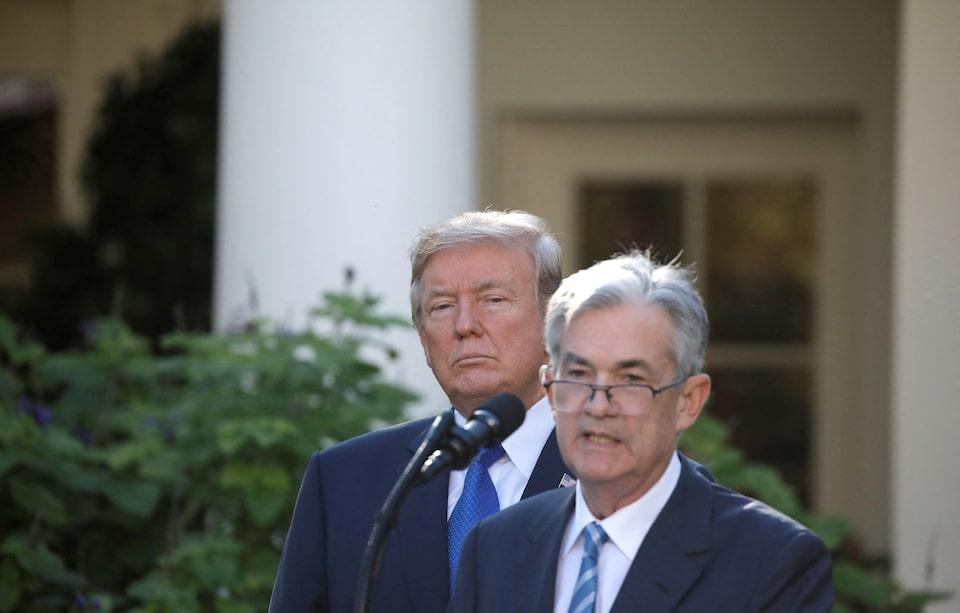
Trump has criticized Fed Chair Powell over interest rates White House accuses Fed of mismanaging building renovations Trump's actions challenge central bank independence norms July 23 (Reuters) - U.S. President Donald Trump, a robust critic of Federal Reserve Chair Jerome Powell, will visit the central bank on Thursday, the White House said, a surprise move that escalates tension between the administration and the Fed. Trump has lambasted Powell repeatedly for not cutting U.S. interest rates more aggressively, calling him a "numbskull" on Tuesday and musing publicly about firing him. Sign up here. The Republican president, during his first term, nominated Powell to lead the bank but has since soured on his pick over disagreements about interest rates and the economy. Between Trump's stints in office, Democratic President Joe Biden nominated Powell for a second term. Adding fuel to Trump's ire, White House officials have accused the Fed of mismanaging the renovation of two historic buildings in Washington, D.C., suggesting poor oversight and potential fraud. White House budget director Russell Vought has pegged the cost overrun at "$700 million and counting." White House deputy chief of staff James Blair said this week that administration officials would be visiting the Fed on Thursday but did not say the president would join. In a schedule released to the media on Wednesday night, the White House said Trump would visit the Fed at 4 p.m. (2000 GMT) on Thursday. It did not say whether Trump would meet with Powell. A Federal Reserve official did not respond to a request for comment. 'INTIMIDATION TACTIC' Initial market reaction to the news of Trump's visit was subdued, with the yield on benchmark 10-year Treasury bonds steady at 4.387% in Asian trading hours and the dollar weakening slightly. Trump's public criticism of Powell and flirtation with firing him have previously upset financial markets and threatened a key underpinning of the global financial system - that central banks are independent and free from political meddling. Treasury Secretary Scott Bessent said on Wednesday the Trump administration was not in a rush to nominate a new chair to replace Powell, whose term as head of the bank ends in May 2026. Bessent has said the administration would likely announce a successor in December or January. "A little excitement of Trump's visit may have been lost, given Bessent's claims that Trump has no intention of firing Powell," said Matt Simpson, a senior market analyst at City Index in Brisbane. "But that doesn't mean Powell is off the hook either. Trump announcing a personal visit to the Fed HQ just days after railing against Powell and the renovation feels less like a policy move and more like an intimidation tactic." Typically U.S. presidents refrain from commenting on Fed policy altogether in deference to the bank's autonomy, but Trump, whose governing style blasts through political norms, has not followed that example. Since returning to office in January, Trump has attacked institutions from law firms to universities to media organizations in an effort to reshape U.S. society in line with his vision. He has used the same verbal sledgehammer against the Fed, pressuring Powell to cut rates and knocking him for not stimulating the economy further. PRESSURE TO SLASH RATES The Supreme Court in a recent opinion appeared to signal that Trump could not fire Powell other than for cause. Since then, the cost overruns at the Fed's headquarters renovation project have become a focus for the administration in its pressure campaign on the Fed chair. Trump has said he would like the Fed to cut its benchmark interest rate to as low as 1% from the current 4.25%-4.50% target range to reduce government borrowing costs. This would allow the administration to finance rising deficits expected from his spending and tax-cut law. But a Fed policy rate that low is typically a sign of a country in economic trouble. None of the Fed's 19 policymakers sees interest rates falling as low as Trump would like. Their latest projections last month showed most expected the federal funds rate to fall no lower than a 3.25%-3.50% range by the end of next year. Even the most dovish policymakers forecast a fall to 2.25%-2.50% in the next two years. The Fed meets next week and is expected to keep rates in the current range. Investors expect the bank to resume cutting rates in September. As Trump increased pressure on Powell this week, the Fed chief's immediate predecessors, Ben Bernanke and Janet Yellen, said Trump's demands for "radical" interest rate cuts and threats to fire Powell "risk lasting and serious economic harm." In an opinion piece in the New York Times on Monday, they wrote, "The Fed’s credibility - its perceived willingness to make hard decisions based on data and nonpartisan analysis - is an important national asset. It is hard to acquire and easy to lose." https://www.reuters.com/world/us/trump-visit-fed-thursday-ramping-up-pressure-powell-2025-07-24/