2025-07-23 21:02
ORLANDO, Florida, July 23 (Reuters) - TRADING DAY Making sense of the forces driving global markets Sign up here. By Jamie McGeever, Markets Columnist A sense of euphoria washed over global stock markets on Wednesday as a U.S.-Japan trade deal and indications of a U.S.-Europe agreement lifted major indexes around the world, pushing the S&P 500 and MSCI All Country to new highs. More on that below. In my column today I look at why the U.S. bond market has been so calm lately despite swirling fears over tariffs, deficits and inflation. Foreign demand, especially from the private sector, appears to have returned with a bang. If you have more time to read, here are a few articles I recommend to help you make sense of what happened in markets today. Today's Key Market Moves Tracking trade - from gloom to boom The tariff pessimism that choked markets immediately following President Donald Trump's 'Liberation Day' in early April seems like an age ago. The U.S.-Japan deal and signs of progress on a U.S.-Europe accord injected buoyant stocks with a further dose of adrenaline on Wednesday. At first blush, the Japan deal looks to be much better than investors had expected, with the U.S. tariff on Japanese imports set at 15% instead of the previously threatened 25%. This includes autos too, the largest single component of the U.S. trade deficit with Japan. Investors appear to be cheering the 15% rate. If this is the level agreed upon in the U.S.-EU deal, as European diplomats suggest, it will be half the 30% levy Trump is currently threatening to impose. Relative to the worst-case expectations, that's also a huge relief for markets. At least that's how investors are trading it right now. It remains to be seen what the longer-term tariff impact on growth, inflation, consumer spending, and corporate profits will be. While the tariff relief dominated markets on Wednesday, equity investors also had the latest wave of U.S. earnings to digest - shares in Google's parent company Alphabet fell 2% in after-hours trading, and Tesla shares rose around 1%. In bonds, a $13 billion auction of 20-year Treasuries was met with strong demand, selling at nearly two basis points below the market at the bidding deadline. This helped limit the broad rise in yields underway on the back of the trade optimism. It was a different story in Japan, where the first sale of 40-year debt since Sunday's upper house election defeat for Prime Minister Shigeru Ishiba logged the weakest demand in almost 14 years. The 40-year yield climbed towards its recent 17-year high, and the 10-year yield hit its highest since 2008. Ishiba denied reports that he is about to resign. But uncertainty around his future, fiscal policy and the Bank of Japan's rate path is extremely high. Thursday's focus will turn to the European Central Bank, which is expected to pause after eight consecutive rate cuts and keep its deposit rate on hold at 2.00%. Foreign demand for U.S. Treasuries holds off bond vigilantes So much for the bond vigilantes. The U.S. bond market has been remarkably calm lately, despite fears that inflation, tariffs, eroding Fed independence, and Washington's ballooning debt load will push up Treasury yields. What explains the resilience? The above concerns remain valid, of course, as any one of them could eventually cast a long shadow over the world's largest and most important market. But that doesn't seem to be on the immediate horizon. The so-called bond vigilantes - those investors determined to bring profligate governments into line by forcing up their borrowing costs - might have been driving bond prices lower earlier this year, but they are taking a back seat now. The 10-year Treasury yield on Tuesday closed at 4.34%. That's below the year-to-date average of 4.40%, and less than 10 basis points above the one- and two-year averages. Perhaps even more surprising, implied Treasury market volatility is hovering at its lowest levels in three-and-a-half years, further evidence that investors have little fear of an imminent spike in borrowing costs. OVERSEAS DEMAND The obvious explanation is that demand for Treasuries has picked up, investors lured back into the market by attractive yields on 10-year bonds approaching 5% and even juicer returns on 30-year paper. Concern about an economic slowdown, and thus lower interest rates, is likely adding fuel to this trend. A lot of this demand has likely come from overseas, based on the latest release of Treasury International Capital flows data. Admittedly, these figures are released with a lag, but they are among the most reliable and closely tracked of all international flows information. The TIC data show that the foreign official and private sectors bought a net $146.3 billion of U.S. Treasury notes and bonds in May on a non valuation-adjusted basis. That's the second-highest monthly total ever. And if you include corporate debt, agency bonds and equities, total foreign purchases of U.S. securities in May were the highest on record. Private sector investors accounted for roughly 80% of that total. Their holdings of U.S. Treasuries began to outstrip official holdings a few years ago, and that trend seems to be accelerating. They now hold over $5 trillion, compared to the official sector's $4 trillion. Bank of America's U.S. rates strategy team notes that outsized foreign private demand has also been evident in more recent flows data, particularly from Japanese investors who have bought more than $60 billion in overseas bonds since the start of May. Demand from private sector buyers like pension funds is generally thought to be more price-sensitive than reserve managers and sovereign wealth funds, who are more inclined to buy and hold for the very long term. REGULATION, STABLECOINS Will the back end of the yield curve remain resilient? This will obviously depend in part on what happens in the U.S. economy. But there are a few exogenous factors that could boost demand moving forward, including potential regulatory changes to the U.S. banking system and the accelerated adoption of cryptocurrency stablecoins. First, the Fed has proposed revisions to the supplementary leverage ratio, which would free up capital for banks to hold more Treasuries. That could generate an estimated $1.1 trillion in extra buying capacity. Next, the increased use of stablecoins, digital tokens that are pegged 1:1 to highly liquid assets like T-bills, short-dated bonds or the U.S. dollar, could drive demand for shorter-dated Treasuries. The House of Representatives last week passed a bill to create a regulatory framework for stablecoins, and U.S. President Donald Trump is expected to sign it into law soon. HIBERNATING BEARS Despite all this, there are still plenty of bond bears out there with good reasons to be bearish, not least the $1 trillion flood of new debt issuance expected before this year is out. But what the market action in the first half of this year has shown – filled as it has been with heightened uncertainty around tariffs, geopolitics, deficits and the Fed – is that bond market selloffs aren't likely to last long. That's partly because of the lack of a true alternative. The near-$30 trillion Treasury market is bigger than the Chinese, Japanese, French, UK and Italian government bond markets combined. And it is more than ten times bigger than the German Bund market, the euro zone's premium safe-haven asset. Underlying demand is stronger than the vigilantes have bargained for. What could move markets tomorrow? Want to receive Trading Day in your inbox every weekday morning? Sign up for my newsletter here. Opinions expressed are those of the author. They do not reflect the views of Reuters News, which, under the Trust Principles , opens new tab, is committed to integrity, independence, and freedom from bias. https://www.reuters.com/world/china/global-markets-trading-day-2025-07-23/

2025-07-23 20:57
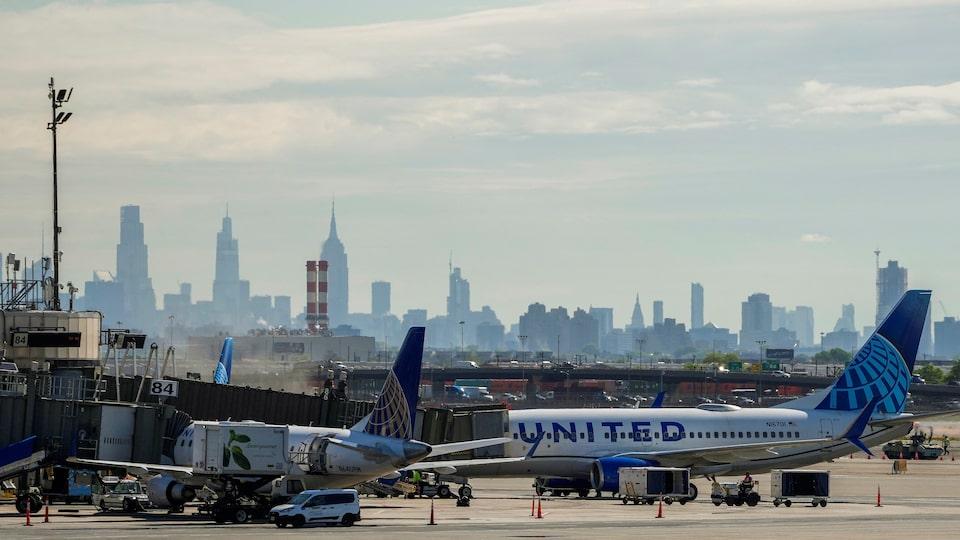
WASHINGTON, July 23 (Reuters) - The Federal Aviation Administration agreed on Wednesday to extend cuts to minimum flight requirements at congested New York City airports through October 2026, citing significant air traffic controller staffing shortages. Under minimum flight requirements, airlines can lose their takeoff and landing slots at congested airports if they do not use them at least 80% of the time. The FAA's waiver allows airlines to fly 10% fewer flights. The FAA has previously issued a series of waivers to address the staffing issues at JFK and LaGuardia for several years. Sign up here. The FAA said it does not anticipate issuing further broad slot waivers as it works on a "long-term solution to solve the chronic low levels of fully certified air traffic controllers" overseeing New York traffic. Airlines for America, a trade group representing American Airlines (AAL.O) , opens new tab, United Airlines (UAL.O) , opens new tab Delta Air Lines (DAL.N) , opens new tab Southwest Airlines (LUV.N) , opens new tab in April asked for an extension through October 2027 and also to cover flights at Newark. In May, the FAA ordered flight cuts at Newark, one of the main airports serving New York City following a series of major disruptions. The airlines said this year about 75% of all delays in the National Airspace System occur because of delays in the NYC Airspace. "Delays and cancellations in the NYC Airspace ripple across the entire NAS so it is critical to ensure this part of the system is healthy," the group said. The FAA is also extending flexibility for impacted flights operating between Ronald Reagan Washington National Airport and New York airports. The FAA is about 3,500 air traffic controllers short of targeted staffing levels and a series of near-miss incidents has raised concerns in recent years, but Congress approved $12.5 billion in recent weeks to boost hiring and overhaul the system. A persistent shortage of controllers has delayed flights and, at many facilities, controllers are working mandatory overtime and six-day weeks. A report last month found the FAA's air traffic workforce in 2024 logged 2.2 million hours of overtime, costing $200 million. https://www.reuters.com/world/us/us-extends-cuts-minimum-new-york-flight-requirements-through-late-2026-2025-07-23/
2025-07-23 20:47
July 23 (Reuters) - CSX (CSX.O) , opens new tab reported second-quarter profit above analysts' estimates on Wednesday, driven by improving intermodal volumes, sending its shares up more than 2% after the bell. Intermodal shipping, which involves two or more means of transportation for goods and accounted for 14% of its overall revenue in 2024, saw a 2% quarterly rise in volume. Sign up here. CSX chief executive Joe Hinrichs said on Wednesday that while uncertainty continues to impact select industrial markets, the company remained focused on completing two major infrastructure projects that will "strengthen our position to execute on many profitable growth opportunities ahead." "CSX performed better than expected as service improved and extra costs in the network came out much more quickly than anticipated 3 months ago," said Evercore ISI analyst Jonathan Chappell. "We welcome all opportunities that would allow us to deliver value for our shareholders, drive pro-growth and serve our customers better," Hinrichs said on a post-earnings call. The railroad operator is reportedly in discussions to appoint financial advisers as it explores strategic options amid growing speculation of a potential merger with its West Coast peer BNSF Railway, owned by Warren Buffett's Berkshire Hathaway (BRKa.N) , opens new tab. However, any merger would be subject to approval from the Surface Transportation Board, a regulatory body that oversees railroads. CSX maintains a fleet of more than 3,500 locomotives and about 51,000 freight cars, according to its website. Separately, CSX said that on July 10 the U.S. SEC had concluded its investigation into an accounting restatement and that it does not intend to recommend enforcement action. On an adjusted basis, it reported per-share profit of 44 cents, above the analysts' average estimate of 42 cents apiece, according to data compiled by LSEG. The company reported quarterly revenue of $3.57 billion, missing estimates of $3.58 billion. CSX's operating margin was 35.9% for the quarter, down by 320 basis points from last year. https://www.reuters.com/business/railroad-operator-csx-beats-quarterly-profit-estimates-higher-volumes-2025-07-23/

2025-07-23 20:39
July 23 (Reuters) - Puerto Rico is ending talks to negotiate a $20 billion liquefied natural gas contract with New Fortress Energy (NFE.O) , opens new tab, Bloomberg News reported on Wednesday, citing a negotiator. New Fortress was unwilling to discuss changes to the contract and missed a key deadline, the report said, citing Osvaldo Linares, president of Recoms Group, the island's third-party procurement office. Sign up here. Shares of New Fortress closed more than 6% lower. The stock has declined more than 74% in the past six months. The U.S. energy firm has been struggling to secure LNG for its power-generation operations on long-term agreements. The company is trying to raise cash and improve its finances by taking on partners for its primary businesses and selling some assets following its deferral of a shareholder dividend last year. Linares and New Fortress Energy did not immediately respond to Reuters requests for comment. Earlier this month, Bloomberg News reported Puerto Rico's financial watchdog had halted the supply deal over monopoly concerns. As a result of the talks ending, Puerto Rico's government is now in discussions with four other companies to provide LNG to the island under 30-day emergency contracts, Bloomberg's report said on Wednesday. Linares told Bloomberg his agency has sent a formal communication to Puerto Rico's oversight board saying negotiations had ended. A spokesperson for the Financial Oversight and Management Board of Puerto Rico confirmed the receipt of the letter. The letter was consistent with the watchdog's observations that neither the third-party procurement office nor the government was willing to defend the terms of the contract which had been initially submitted for review in June, the spokesperson added. https://www.reuters.com/business/energy/puerto-rico-ends-20-billion-lng-contract-talks-with-new-fortress-energy-2025-07-23/

2025-07-23 20:38
ICJ opinion could influence global climate litigation U.N. treaties should guide responsibilities, rich countries say South, small island states seek firm measures to curb emissions THE HAGUE, July 23 (Reuters) - The United Nations' highest court on Wednesday told wealthy countries they must comply with their international commitments to curb pollution or risk having to pay compensation to nations hard hit by climate change. In an opinion hailed by small island states and environmental groups as a legal stepping stone to make big polluters accountable, the International Court of Justice said countries must address the "urgent and existential threat" of climate change. Sign up here. "States must cooperate to achieve concrete emission reduction targets," Judge Yuji Iwasawa said, adding that failure by countries to comply with the "stringent obligations" placed on them by climate treaties was a breach of international law. The court said countries were also responsible for the actions of companies under their jurisdiction or control. Failure to rein in fossil fuel production and subsidies could result in "full reparations to injured states in the form of restitution, compensation and satisfaction provided that the general conditions of the law of state responsibility are met." "I didn't expect it to be this good," Vanuatu's Climate Minister Ralph Regenvanu told reporters after the unanimous opinion by the ICJ, also known as the World Court, was read out. Vishal Prasad, one of the law students that lobbied the government of Vanuatu in the South Pacific Ocean to bring the case to the ICJ, said: "This advisory opinion is a tool for climate justice. And boy, has the ICJ given us a strong tool to carry on the fight for climate justice." U.N. Secretary-General Antonio Guterres hailed the opinion and said it affirms that the Paris climate agreement goal needs to be the basis of all climate policies. "This is a victory for our planet, for climate justice, and for the power of young people to make a difference," he said. "The world must respond." HUMAN RIGHT TO CLEAN ENVIRONMENT Judge Iwasawa, who presided the panel of 15 judges, said that national climate plans must be of the highest ambition and collectively maintain standards to meet the aims of the 2015 Paris Agreement that include attempting to keep global warming below 1.5 degrees Celsius (2.7 Fahrenheit). Under international law, he said: "The human right to a clean, healthy and sustainable environment is essential for the enjoyment of other human rights." While the decision was stronger than most expected, its impact may be limited by the fact that the United States, the world's biggest historical greenhouse gas emitter, and second biggest current emitter behind China, has moved under President Donald Trump to undo all climate regulations. "As always, President Trump and the entire administration is committed to putting America first and prioritizing the interests of everyday Americans," White House spokeswoman Taylor Rogers told Reuters in response to the opinion. With scepticism over climate change spreading in the U.S. and elsewhere, Judge Iwasawa laid out the cause of the problem and the need for a collective response in his two-hour reading of the court's opinion. "Greenhouse gas emissions are unequivocally caused by human activities which are not territorially limited," he said. Historically, rich industrialised countries have been responsible for the most emissions. Iwasawa said these countries had to take the lead in addressing the problem. POLITICAL AND LEGAL WEIGHT The court's opinion is non-binding, but it carries legal and political weight and future climate cases would be unable to ignore it, legal experts say. "This is the start of a new era of climate accountability at a global level," said Danilo Garrido, legal counsel for Greenpeace. Harj Narulla, a barrister specialising in climate litigation and counsel for Solomon Islands in the case, said the ICJ laid out the possibility of big emitters being successfully sued. "These reparations involve restitution — such as rebuilding destroyed infrastructure and restoring ecosystems — and also monetary compensation," he said. TWO QUESTIONS Wednesday's opinion follows two weeks of hearings last December at the ICJ when the judges were asked by the U.N. General Assembly to consider two questions: what are countries’ obligations under international law to protect the climate from greenhouse gas emissions; and what are the legal consequences for countries that harm the climate system? Developing nations and small island states at greatest risk from rising sea levels had sought clarification from the court after the failure so far of the 2015 Paris Agreement to curb the growth of global greenhouse gas emissions. The U.N. says that current climate policies will result in global warming of more than 3 C (5.4 F) above pre-industrial levels by 2100. As campaigners seek to hold companies and governments to account, climate‑related litigation has intensified, with nearly 3,000 cases filed across almost 60 countries, according to June figures from London's Grantham Research Institute on Climate Change and the Environment. https://www.reuters.com/sustainability/cop/top-un-court-says-treaties-compel-wealthy-nations-curb-global-warming-2025-07-23/

2025-07-23 20:34
TSX ends up 0.2% at 27,416.41 Eclipses Thursday's record closing high Energy adds 1.1%, financials end up 0.6% Canadian National Railway falls 4.1% on revenue miss July 23 (Reuters) - Canada's main stock index posted a record high on Wednesday, helped by gains for energy and financial shares, as investors cheered signs that countries are reaching trade deals with the United States ahead of an August 1 deadline. The Toronto Stock Exchange's S&P/TSX composite index (.GSPTSE) , opens new tab ended up 51.98 points, or 0.2%, at 27,416.41, eclipsing Thursday's record closing high. Sign up here. "It looks like deals are getting done," said Allan Small, senior investment advisor of the Allan Small Financial Group with iA Private Wealth. "This fear of August 1 may not materialize." Wall Street also rose as the European Union and the U.S. appeared headed toward a trade deal similar to an agreement U.S. President Donald Trump struck with Japan. The energy sector (.SPTTEN) , opens new tab added 1.1% and heavily weighted financials (.SPTTFS) , opens new tab, which include bank stocks, were up 0.6%. "Banks are the bloodline of any economy," Small said, adding that they would benefit if trade certainty were to improve the economic outlook. Rogers Communications Inc (RCIb.TO) , opens new tab shares advanced 1.2% after the company raised its annual service revenue forecast, banking on a boost from its stake acquisition in Maple Leaf Sports. Not all sectors notched gains. The materials sector (.GSPTTMT) , opens new tab, which includes metal mining shares, fell 0.5% as the price of gold, a traditional safe haven, declined. Industrials also ended lower, losing 0.6%. Shares of Canadian National Railway Co (CNR.TO) , opens new tab dropped 4.1% after the company's second-quarter revenue missed expectations. https://www.reuters.com/markets/europe/tsx-climbs-record-high-global-trade-deal-optimism-2025-07-23/