2025-07-23 10:59
European gas storage remains below last year CEO eyes tighter market in autumn, winter Adjusted Q2 profit before tax drops to $6.54 billion Analysts had predicted a profit of $6.53 billion Maintains outlook for 4% output growth in 2025 OSLO, July 23 (Reuters) - Europe's gas market could tighten further ahead of the winter season as storage levels remain well below last year and the continent faces competition from Asia for LNG shipments, the CEO of Norway's Equinor (EQNR.OL) , opens new tab told Reuters on Wednesday. Europe's biggest gas producer said the prospect of a rebound in pipeline gas flows from rival supplier Russia had also diminished in recent months, citing political opposition in Germany and elsewhere. Sign up here. Equinor reported on Wednesday a 13% drop in second-quarter profits, as expected, as declining oil prices outweighed an increase in the price of gas in Europe and the United States. The Norwegian energy group's adjusted earnings before tax for April-June fell to $6.54 billion from $7.48 billion a year earlier, in line with the $6.53 billion predicted in a poll of 21 analysts compiled by the company. EU gas stores are currently 65.4% full, according to data from Gas Infrastructure Europe, down from around 83% at the same time last year. "This can create a more tight (gas) market during the autumn or during the winter," CEO Anders Opedal told Reuters on the sidelines of Equinor's earnings presentation. The supply situation remains dependent on factors such as the weather-related demand and production regularity, as well as imports from outside the region, he added. "In June, we saw 25% less LNG ships into Europe compared to before, meaning that the competition tightens a little bit," Opedal said. Equinor maintained a projection that its oil and gas output would increase by 4% this year compared to 2024 and kept its forecast for capital expenditure in 2025 of $13 billion. The company on Wednesday booked a $955 million writedown on an offshore wind project in the United States, citing U.S. tariffs and the uncertainty of the regulatory environment under President Donald Trump. In February, Equinor followed rivals such as Shell (SHEL.L) , opens new tab and BP (BP.L) , opens new tab in promising higher oil and gas output while scaling back investment in renewables, citing challenging market conditions for the green energy transition. Equinor in the second quarter pumped 2.1 million barrels of oil equivalent per day (boed), slightly ahead of expectations in the analyst poll for 2.06 million boed, and up from 2.05 million boed a year earlier. Equinor's share price was down 1% at 1145 GMT, lagging a 1.6% rise in the European energy stock index (.SXEP) , opens new tab. https://www.reuters.com/sustainability/climate-energy/equinor-eyes-tighter-gas-market-lower-oil-prices-hit-q2-profit-2025-07-23/
2025-07-23 10:55
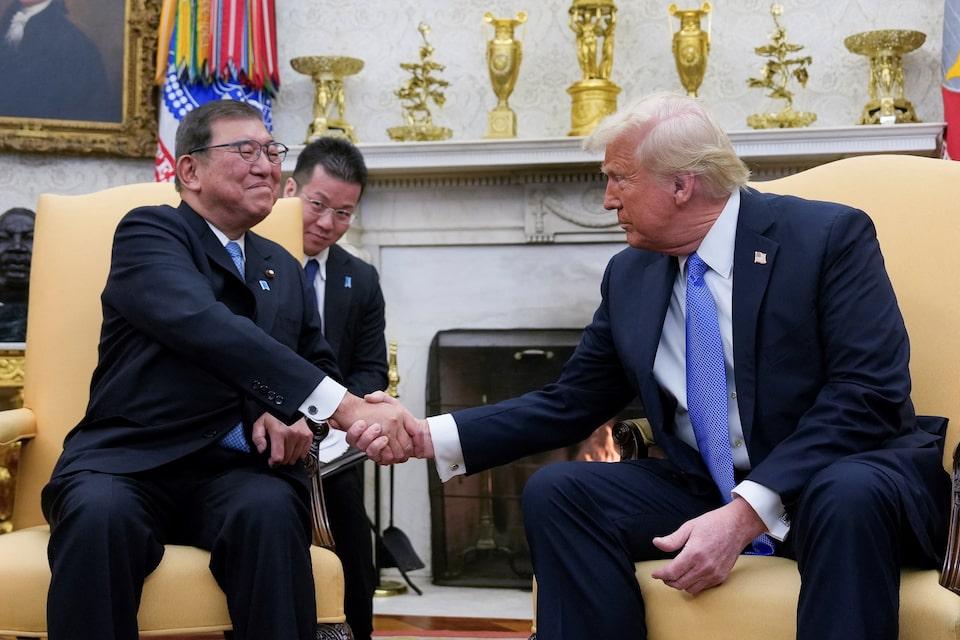
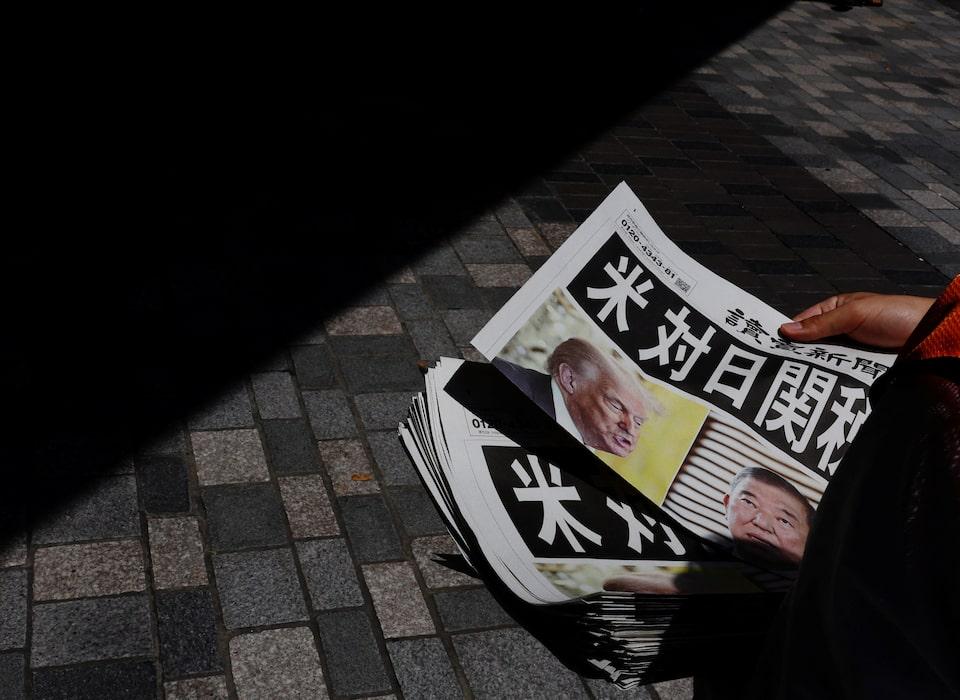
TOKYO, July 23 (Reuters) - U.S. President Donald Trump and Japanese Prime Minister Shigeru Ishiba on Wednesday said they had struck a trade deal that will include a 15% tariff on U.S. imports from Japan. Here's what we know so far. THE DEAL In a post on Truth Social, Trump said the deal would include $550 billion of Japanese investments in the United States and improved market access into Japan for American goods including automobiles, rice and other agricultural products. Sign up here. Japanese autos, which account for more than a quarter of all the country's exports to the U.S., will also be subject to a 15% tariff, down from a punishing 27.5%, Prime Minister Ishiba said. The U.S. has also agreed to not impose any caps on auto imports, he added. Japan will keep its existing tariffs on imports of U.S. agricultural products. The country will import more rice from the United States but within the existing tariff-free quota, Ishiba he said. The $550 billion of investment was the upper limit of loan investments and guarantees that Japanese government state banks and agencies would make available to promote Japanese corporate investment in the United States. The new "Japan Investment America Initiative" is aimed at boosting investment in economic security sectors including semiconductors, pharmaceuticals, steel, shipbuilding, critical minerals, energy, autos and AI technologies. Japan's top trade negotiator Ryosei Akazawa, who met with Trump at the White House to seal the deal on Tuesday, said steel and aluminium, subject to a separate 50% tariff, were not included in the deal. Akazawa said Tokyo will drop additional safety tests now imposed on imported U.S. cars and trucks, requirements that had long irked Trump who said they limited sales of American-made autos in Japan. TARIFF DEADLINE Akazawa has travelled to the U.S. eight times since April for trade talks with U.S. officials including Treasury Secretary Scott Bessent and Commerce Secretary Howard Lutnick. The latest visit came days before an August 1 deadline when the Trump Administration said it would impose a 25% tariff on all Japanese imports. The U.S. is Japan's biggest export market. Economists had warned that Trump's tariffs could push the world's fourth largest economy into recession. MARKET REACTION Following the announcement, Japanese automaker shares led the Nikkei share average (.N225) , opens new tab to a one-year high, closing up 3.5% on the day. Toyota Motor Corp's (7203.T) , opens new tab shares jumped by 14% with Honda Motor Co (7267.T) , opens new tab up more than 11%. https://www.reuters.com/business/autos-transportation/key-facts-us-japan-tariff-deal-2025-07-23/
2025-07-23 10:52
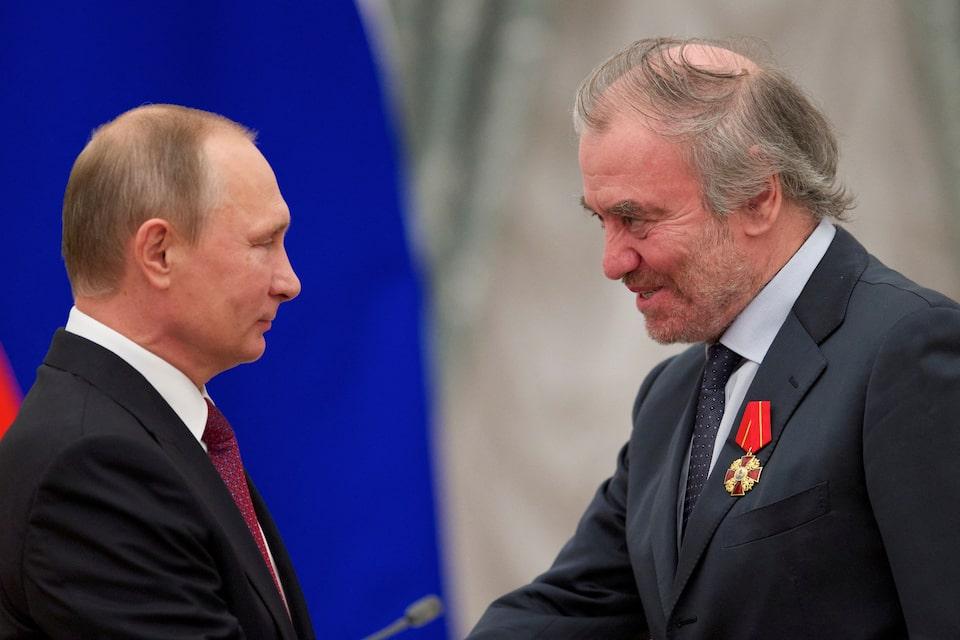
MOSCOW, July 23 (Reuters) - Russia's Foreign Ministry on Wednesday accused Italy of discrimination and said it had caved into anti-Russian lobbying after a planned classical music concert by high-profile Russian conductor Valery Gergiev was cancelled. Gergiev, who heads Moscow's Bolshoi Theatre and St Petersburg's Mariinsky Theatre, had been expected to lead an Italian orchestra and soloists from the Mariinsky at a concert near Naples on July 27. Sign up here. But some Italian politicians and Ukrainian and Russian anti-Kremlin activists, including the wife of late Russian opposition politician Alexei Navalny, objected to the concert because of Gergiev's open support for President Vladimir Putin and what they said was his refusal to condemn Russia's war in Ukraine. The Reggia di Caserta, the grand 18th-century palace which had been due to host the concert, said in a short statement on Monday that the event had been called off. It gave no reason. Maria Zakharova, a spokesperson for Russia's Foreign Ministry, said in a statement on Wednesday that the museum complex was under the jurisdiction of the central Italian authorities and that she was sorry Italian audiences would be deprived of the opportunity "to experience great Russian music performed by a renowned Russian conductor". "We strongly condemn such discriminatory attempts at ‘cancel culture’, carried out by the Italian authorities," she said, accusing Rome of giving in to pressure from Ukrainian nationalists. https://www.reuters.com/world/europe/russia-accuses-italy-discrimination-after-it-cancels-pro-putin-conductor-gergiev-2025-07-23/
2025-07-23 10:51
LONDON, July 23 (Reuters) - What matters in U.S. and global markets today By Mike Dolan , opens new tab, Editor-At-Large, Finance and Markets Sign up here. hat had been a quiet week in markets was electrified by a U.S.-Japan trade deal overnight, catapulting Japan's Nikkei stock index up more than 3% to its best level in a year, prodding Japanese 10-year yields to their highest point in almost 17 years by nudging the yen up. he deal - which cuts planned U.S. tariffs on Japanese goods to 15% from 25% in return for $550 billion of Japanese investments and loans in America – drove a spike in auto stocks worldwide , with Toyota's share price jumping 14%. Separately, local media reports said Japan's embattled Prime Minister Shigeru Ishiba may now resign after all following poor weekend election results. He later denied that . * The agreement with Japan spurred hopes for other major deals before next week's tariff deadline, lifting European bourses too. Meanwhile, futures on record high Wall Street stock indexes rose further, and the dollar (.DXY) , opens new tab weakened broadly. * With the focus on what other deals might happen before the August 1 tariff deadline, U.S. President Donald Trump said representatives from the European Union are due for trade negotiations with the United States on Wednesday and Treasury Secretary Scott Bessent said U.S. and Chinese officials will meet in Stockholm next week. * Wall Street now switches back to earnings season, with two of its so-called "Magnificent Seven" megacap firms - Alphabet and Tesla - reporting after the bell on Wednesday. The performance of the former, in particular, will test the durability of the artificial intelligence theme that's still having profound effects on the whole economy. oday I’ll take a look at just how the AI boom - and the data center and infrastructure boom around it - is still flattering U.S. GDP growth. Today's Market Minute * U.S. President Donald Trump struck a trade deal with Japan that lowers tariffs on auto imports and spares Tokyo from punishing new levies on other goods in exchange for a $550 billion package of U.S.-bound investment and loans. * European shares climbed on Wednesday, buoyed by hopes of a trade agreement between the European Union and United States after Trump’s deal with Japan sent Japanese stocks to a one-year high. * China has broken ground on what it says will be the world's largest hydropower project, a $170 billion feat capable of generating enough electricity each year to power Britain. * Wall Street's concentration in the red-hot tech sector is, by some measures, greater than it has ever been, eclipsing levels hit during the 1990s dotcom bubble. ROI markets columnist Jamie McGeever asks if this means history is bound to repeat itself. * The first half of 2025 featured a slew of U.S. electricity and power milestones, with generation, demand and retail prices all scaling records during January to June. Get the key data points from ROI columnist Gavin Maguire. Chart of the day In the trade deal announced late Tuesday, Japan's auto sector, which accounts for more than a quarter of its U.S. exports, will see existing tariffs cut to 15% from levies totaling 27.5% previously. Duties that were due to come into effect on other Japanese goods from August 1 will also be cut to 15% from 25%. Two-way trade between the two countries reached nearly $230 billion in 2024, with Japan running a trade surplus of nearly $70 billion. Japan is the fifth-largest U.S. trading partner in goods. Japan's side of the deal involves U.S. investments and includes loans and guarantees from Japanese government-affiliated institutions of up to $550 billion to enable Japanese firms "to build resilient supply chains in key sectors like pharmaceuticals and semiconductors," according to Prime Minister Ishiba. Japan is the largest foreign investor in the United States, with an investment position of $819 billion at the end of 2024. Japan will also increase purchases of agricultural products such as U.S. rice, a U.S. official said. Today's events to watch * U.S. June existing home sales (10:00 AM EDT); Canada June house price index (8:30 AMEDT ); euro zone July consumer confidence (10:00 AM EDT) * U.S. corporate earnings: Alphabet, Tesla, IBM, AT&T, General Dynamics, Boston Scientific, CSX, CME, Thermo Fisher Scientific, Hilton, Otis, Chipotle, Northern Trust, Moody's, Hasbro, Fiserv, Lamb Weston, Teledyne, O'Reilly Automotive, Globe Life, Crown Castle, NextEra, Las Vegas Sands, Packaging Corp of America, Rollins, Lennox, United Rentals, Molina Healthcare etc * U.S. Treasury sells $13 billion of 20-year bonds * German Chancellor Friedrich Merz hosts French President Emmanuel Macron for talks in Berlin * UK Prime Minister Keir Starmer and India's Prime Minister Narendra Modi meet in London Want to receive the Morning Bid in your inbox every weekday morning? Sign up for the newsletter here. You can find ROI on the Reuters website , opens new tab, and you can follow us on LinkedIn , opens new tab and X. , opens new tab Opinions expressed are those of the author. They do not reflect the views of Reuters News, which, under the Trust Principles , opens new tab, is committed to integrity, independence, and freedom from bias. https://www.reuters.com/business/finance/global-markets-view-usa-2025-07-23/
2025-07-23 10:42
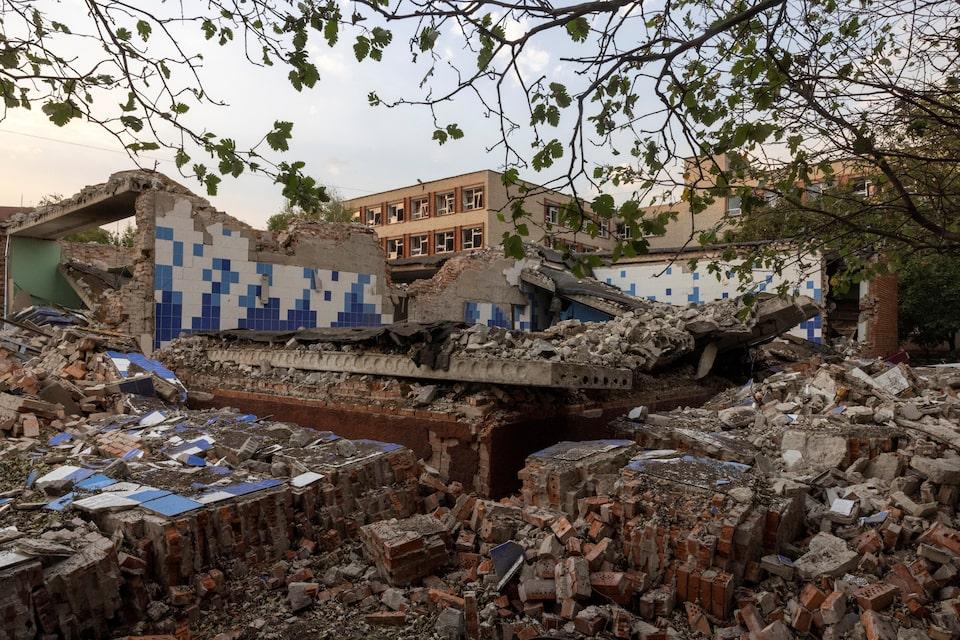
MOSCOW/KYIV, July 23 (Reuters) - Russian forces are pushing hard to encircle the strategically important eastern Ukrainian city of Pokrovsk after capturing a string of villages to its south and east, and over 100,000 soldiers are trying to advance in the area, Kyiv says. Following are key facts about Pokrovsk, which Russians call by its Soviet-era name of Krasnoarmeysk, and the long battle for its control which began in earnest last summer. Sign up here. WHAT IS POKROVSK? Pokrovsk is a road and rail hub in Ukraine's eastern Donetsk region which had a pre-war population of some 60,000 people. Most people have now fled, all children have been evacuated and, according to Serhii Dobriak, the head of the city's military administration, less than 1,500 residents remain. It lies on a key road which has been used by the Ukrainian military to supply other embattled eastern outposts, including the towns of Chasiv Yar, which has long been consumed by fierce fighting, and Kostiantynivka in the Donetsk region. Ukraine's only mine that produces coking coal - used in its once vast steel industry - is around six miles (10 km) west of Pokrovsk. Ukrainian steelmaker Metinvest said in mid-January it had suspended the mine's operations. Since 2014, Pokrovsk has been the site of a major technical university, the largest and oldest such institution in the wider region. The university, now abandoned, has been damaged by shelling. WHY DOES RUSSIA WANT POKROVSK? Moscow says it has annexed Ukraine's eastern Donetsk region and controls over 70% of the area's territory. Kyiv and most Western countries reject Russia's seizure of the territory as an illegal land grab. Capturing Pokrovsk, dubbed "the gateway to Donetsk" by Russian media, and Kostiantynivka to its northeast which Russian forces are also trying to envelop, would give Moscow a platform to drive north towards the two biggest remaining Ukrainian-controlled cities in Donetsk - Kramatorsk and Sloviansk. Control of Pokrovsk would allow Moscow to further disrupt Ukrainian supply lines along the eastern front and boost its long-running campaign to capture Chasiv Yar, which sits on higher ground offering potential control of a wider area. Its capture would also give Russia more options to attack Ukraine's Dnipropetrovsk region to the west, which is not one of the areas which Moscow has claimed but where it says it has already established a small foothold. WHAT IS UKRAINE DOING TO DEFEND POKROVSK? Ukraine's top military commander, Oleksandr Syrskyi - who said in May that Ukraine had stalled the long grinding Russian offensive on Pokrovsk and even pushed back in some areas - said on Friday that his forces were standing firm. Ukrainian officials say Russia has relentlessly pounded their forces with artillery, glide bombs, and drones and sent in small groups of fighters to try to gain ground rather than commit large groups of infantry or armoured vehicles. Russia has 111,000 soldiers in the Pokrovsk area, Syrskyi has estimated. President Volodymyr Zelenskiy has made various senior personnel changes in the army during the city's defence. Ukraine says Moscow has sustained huge losses after throwing everything it has at trying to break through. Moscow says Ukrainian forces are taking serious losses. Neither side discloses full casualty figures. EVACUATION Ukrainian authorities have worked hard to try to persuade the city's remaining and mostly elderly and sick residents to evacuate. Dobriak, the head of the military administration, said on Monday that evacuation vehicles could no longer reach many areas and that people had to leave on foot. He said it was increasingly hard to deliver food and that food stores would have to close in the coming days. One of the main roads in, which Ukrainian forces call "the road of life," is covered by anti-drone nets to try to protect vehicles from Russian drone strikes. WHAT DOES POKROVSK LOOK LIKE NOW? Even though the blue and yellow Ukrainian flag is still flying in Pokrovsk, the city is a shadow of its former self, with no electricity, gas, heating or piped water. Reuters footage published on May 21 showed the facades of apartment blocks badly damaged, deserted streets strewn with debris, and a few elderly residents and people on bicycles. Shellfire was audible and the roads were pockmarked with shell impacts and the wreckage of vehicles. https://www.reuters.com/world/europe/why-is-russia-trying-so-hard-capture-strategic-ukrainian-city-pokrovsk-2025-01-31/
2025-07-23 10:28
MUMBAI, July 23 (Reuters) - The Indian rupee ended marginally weaker on Wednesday with the strength in the Chinese yuan and exporter activity helping the currency hold above a psychologically important support level. The rupee closed at 86.4075 per U.S. dollar, down slightly from its close at 86.3675 in the previous session but managing to hold above the 86.50 support level. Sign up here. The offshore Chinese yuan rose to a near three-week high while the dollar index was a tad lower at 97.4. Dollar sales from a large private bank and exporter activity also helped the rupee contain its losses on the day, alongside positive regional cues, a trader at a state-run bank said. India's benchmark equity indexes, the BSE Sensex (.BSESN) , opens new tab and Nifty 50 (.NSEI) , opens new tab closed higher by about 0.6% each, tracking gains in global equities that were buoyed by hopes of easing trade tensions after a deal between the U.S. and Japan. "Equity markets globally are rallying on the view that deals reduce uncertainty," ING said in a note. U.S. President Donald Trump also announced a trade agreement with the Philippines, released terms of a previous deal with Indonesia on Tuesday and said that EU representatives were coming for trade negotiations on Wednesday. Officials from China and the U.S. are also expected to meet next week to discuss an extension to the deadline for negotiating a trade deal. For India, though, the prospects of a trade deal before the August 1 deadline have dimmed, with talks deadlocked over tariff cuts on key agricultural and dairy products. Foreign portfolio outflows and the lack of an outcome on trade negotiations have maintained pressure on the rupee, said Dilip Parmar, a foreign exchange research analyst at HDFC Securities. Parmar expects the rupee to decline towards 86.70 in the near-term. https://www.reuters.com/world/india/rupee-dips-firmer-yuan-exporter-dollar-sales-cushion-losses-2025-07-23/