2025-07-23 10:12
NEW YORK, July 23 (Reuters) - Tokenization has long been a buzzword for crypto enthusiasts, who have been arguing for years that blockchain-based assets will change the underlying infrastructure of financial markets. The technology is seen as rapidly increasing in coming years, especially in the U.S., helped by the passage of three new bills. President Donald Trump's administration has eased regulation of the broader crypto industry, paving the way for a boom in the valuation of companies in the sector and the rapid growth of crypto-related securities. Sign up here. However, the growth of the market for tokenized assets has been far slower than expected in recent years, with many projects still in their infancy or not yet live. HOW DOES TOKENIZATION WORK? The term "tokenization" is used in a variety of ways. But it generally refers to the process of turning financial assets - such as bank deposits, stocks, bonds, funds and even real estate - into crypto assets. This means creating a record on digital ledger blockchain that represents the original asset. These blockchain-based assets, or "tokens", can be held in crypto wallets and traded on blockchain, just like cryptocurrencies. WHERE DO STABLECOINS COME IN? Stablecoins can be seen as an example of tokenization. They are a type of cryptocurrency designed to maintain a constant value by being pegged to a real-world currency, typically the U.S. dollar. The issuer holds one U.S. dollar in reserve for every dollar-pegged crypto token it creates. Stablecoins are blockchain-based tokens acting as a proxy for an asset that already exists outside the blockchain. They allow people to move money across borders without interacting with the banking system. While critics say that this makes them useful for criminals who want to avoid banks' anti-money laundering checks, stablecoin issuers say that they are a lifeline for people in countries without a developed payments system. ARE TOKENIZED ASSETS TAKING OFF? Yes and no. Stablecoins have grown in recent years, with the market estimated to be worth about $256 billion, according to crypto data provider CoinMarketCap, and expected to touch $2 trillion by 2028, according to Standard Chartered. But banks have talked for years about creating tokenized versions of other types of assets, which they say will make trading more efficient, faster and cheaper, and those "tokens" have struggled to gain traction. While there have been individual issuances, there is not a liquid secondary market for these kinds of assets. One impediment to trading traditional assets via blockchain is that banks are working on their own private networks, making it difficult to trade across platforms. WHAT ARE THE PROS OF TOKENIZATION? Some proponents of the crypto industry have said tokenization can improve liquidity in the financial system. Illiquid assets like real estate could be traded more easily if they are broken up into small digital tokens. It is also expected to improve access to asset classes that are typically out of reach of smaller investors by creating a cheaper entry point. WHICH COMPANIES ARE INTERESTED IN TOKENIZATION? Some major global banks, including Bank of America and Citi have said they could explore launching tokenized assets, including stablecoins. Asset manager BlackRock is also doubling down on the tokenization boom, and has highlighted its ambition of becoming the largest cryptocurrency manager in the world by 2030. Coinbase, the largest U.S. crypto exchange, is seeking permission from the SEC to offer "tokenized equities" to its customers. HOW DOES NEW REGULATION HELP TOKENIZATION? Since stablecoins themselves are tokens and seen as one of the biggest drivers of the growth of tokenization, the new stablecoin law will end up boosting the proliferation of tokenization, experts say. The new market structure bill, known as the Clarity Act, is expected to establish a clear framework that could enable stablecoins and other crypto tokens to become more widely used. WHAT ARE THE RISKS? Some analysts say the hype around tokenization might be premature and caution that the rapidly growing crypto ecosystem could experience near-term turbulence due to the potential risks of a big decline in prices. European Central Bank President Christine Lagarde has warned stablecoins pose risks for monetary policy and financial stability. Some critics of the industry warn the frenzy around the new technology could introduce new systemic risks, especially in the absence of stringent regulation. They also say there is no reason why blockchain should be any more efficient than the electronic ledgers and trading systems already used in financial markets. Buyers of third-party tokens, which are issued by unaffiliated third parties - such as crypto exchange Kraken - that have custody of securities, could be exposed to counterparty risks, and regulators are sounding notes of caution. Earlier in July, Hester Peirce, a commissioner at the U.S. Securities and Exchange Commission who has frequently spoken positively about cryptocurrency, said tokenized securities would not be able to circumvent existing securities laws. More than half of the world's U.S. dollar stablecoins are issued by a single company, Tether, which says it manages $160 billion in reserves, but has not undergone a financial audit. https://www.reuters.com/business/finance/what-is-tokenization-is-it-cryptos-next-big-thing-2025-07-23/
2025-07-23 09:27
Japanese automakers' shares surge on US-Japan trade deal European, South Korean automakers gain on hopes for similar deals US remains crucial market for Japanese, South Korean automakers TOKYO/SEOUL, July 23 (Reuters) - Shares of Japanese, South Korean and European automakers surged on Wednesday after U.S. President Donald Trump agreed to a trade deal with Tokyo that included reducing tariffs on Japanese auto imports to 15%, a move that stoked optimism about a similar agreement for Seoul and Brussels. Shares of Toyota (7203.T) , opens new tab, the world's top automaker by sales, jumped more than 14% while rival Honda (7267.T) , opens new tab advanced more than 11%. The lower tariff - from as much as 27.5% previously - would ease the pain for Japan's most important industry in a crucial market. Sign up here. South Korean and European automakers gained on hopes Seoul and the European Union would be able to get a similar reprieve. Hyundai Motor (005380.KS) , opens new tab advanced more than 7% and Kia (000270.KS) , opens new tab rose more than 8%. In Europe, Volvo Car (VOLCARb.ST) , opens new tab jumped 14% to the highest since May, while Porsche (P911_p.DE) , opens new tab and Stellantis were up around 7% each. The agreement with Japan, the world's fourth-largest economy and a pivotal U.S. ally in Asia, is by far the most significant among several trade deals struck by the White House ahead of an August 1 deadline when higher levies are due to kick in. Autos account for more than a quarter of Japan's exports to the United States. Trump, who has long complained about trade imbalances with Japan, had introduced a 25% tariff on top of an already existing 2.5%, meaning autos would be hit with a total levy of 27.5%. The headline figure of 15% announced by Prime Minister Shigeru Ishiba appears to include the pre-existing 2.5%. The new rate "would allow Japan's beleaguered car makers to breathe a sigh of relief," said Stefan Angrick of Moody’s Analytics in a note to clients. In return, Japan has pledged $550 billion in U.S.-bound investment and loans. Japan will also further open up to U.S. imports of cars, rice and other goods. "Lowering or removing trade barriers against U.S. vehicles won't make them any easier to drive on Tokyo's cramped streets, even if it would theoretically move the needle on Japan's surplus with the U.S.," Angrick said. EASING THE PAIN The lower tariffs would likely offer "significant upside potential" for the earnings of Japan's seven main automakers, Goldman Sachs analysts Kota Yuzawa and Ken Kawamoto said in a note. They estimated the gross tariff impact for the seven companies - which include Subaru, Mitsubishi Motors, Suzuki and Mazda - would be reduced to 1.89 trillion yen ($12.9 billion) from 3.47 trillion yen previously. Citi analysts said it was notable the tariffs for a major auto exporting country were reduced without a cap on shipments, which could have implications for negotiations with the EU and South Korea. Still, it is unlikely to be all smooth sailing for Asian automakers. So far, tariffs from Canada and Mexico remain in place at 25%. Mexico in particular is a key production hub for European and Japanese automakers, including Nissan (7201.T) , opens new tab, and also home to a Kia (000270.KS) , opens new tab factory. Nissan shares were up 8%. Stellantis manufactures around 40% of its North American vehicles in Mexico and Canada. News of Japan's trade deal is also likely to pile pressure on Seoul to come up with its own agreement ahead of the August 1 deadline. Seoul is taking a close look at the U.S.-Japan deal, South Korea's industry minister said. South Korea is a major competitor of Japan in areas such as autos and steel. It heads into high-level trade talks with the United States on Friday. For both Japan and South Korea, the auto industry provides major exports, millions of manufacturing jobs and is a deep source of national pride. Even with tariffs, the U.S. remains by far the most important market for Toyota, Hyundai, Honda, Nissan and others. At Toyota and Hyundai alone, North America accounts for at least 40% of the revenue, filings show. The U.S. is Toyota's biggest market in terms of vehicles. It sold 2.3 million vehicles there in 2024, including its Lexus brand, accounting for more than a fifth of its global total. As a source of revenue, North America was second only to Japan in the last financial year. Meanwhile, Hyundai's North American revenue was the highest in almost a decade last year. It is also a key market for European automakers. Europe shipped nearly 758,000 cars worth 38.9 billion euros ($45.57 billion) to the U.S. in 2024, more than four times as many as in the other direction, according to data from European auto association ACEA. https://www.reuters.com/business/autos-transportation/shares-japanese-south-korean-european-automakers-surge-tokyo-trade-deal-2025-07-23/

2025-07-23 08:58
Japan to invest $550 billion in U.S., tariffs reduced to 15% Uncertainty over tariffs keeping forex market on edge Japanese PM Shigeru Ishiba denies reports he would quit Aussie dollar hits eight month high, euro weakens TOKYO/LONDON, July 23 (Reuters) - Currency traders focused on Wednesday on the yen, which see-sawed as they weighed speculation about the future of Japanese Prime Minister Shigeru Ishiba against U.S. President Donald Trump's announcement of a trade deal with Japan. The Japanese currency initially hit its strongest level since July 11 at 146.20 per dollar on the trade news but flipped to losses after reports Ishiba intends to step down next month following a bruising upper house election defeat. Sign up here. Ishiba said the reports he had already decided to resign were "completely unfounded", and the yen recovered to leave the dollar last down 0.23% at 146.33 yen. The trade deal - which lowers tariffs on auto imports and spares Tokyo from punishing new levies - affects the yen both because of what it means for the economy and also the Bank of Japan, which has been cautiously raising interest rates. "A trade deal does allow more potential for the Bank of Japan to hike interest rates this year," said Jane Foley, head of FX strategy at Rabobank. "That's a yen positive and clearly makes a move back to 150 (yen per dollar) harder." "When there was trade and political uncertainty, clearly they weren't going to do anything. Of course we haven't sidestepped all the political uncertainty, and that's going to stop the BOJ from making any hasty decisions, but no one was expecting anything hasty anyway." Moves in other currencies were muted due to the uncertainty around tariffs, as well as doubts about how currencies would react even if there were any greater certainty. The U.S. dollar had been one of the biggest losers since Trump announced sweeping tariffs on trading partners on April 2, weakness which continued as those duties were suspended to allow further negotiations, but which has steadied this month. The euro was last down 0.2% on the day at $1.1728, possibly helped by fading expectations of a collapse in global trade that would see flows out of the U.S. continue, but still near a four-year high it touched at the start of the month. In contrast to the euro, European equities rallied on hopes the trade deal with Japan could pave the way for more deals, including with Europe. Trump said negotiators from the European Union would be in Washington on Wednesday. The European Central Bank meets on Thursday, but is unlikely to have a dramatic effect on the currency and is expected to hold rates steady. Sterling was up a touch at $1.1354, and the improved sentiment towards the global economy from the trade deal, as well as higher metal prices, boosted the Australian dollar, last up 0.66% at $0.6599, its highest in eight months. https://www.reuters.com/world/africa/yen-wobbles-traders-process-trade-deal-political-uncertainty-2025-07-22/

2025-07-23 08:44
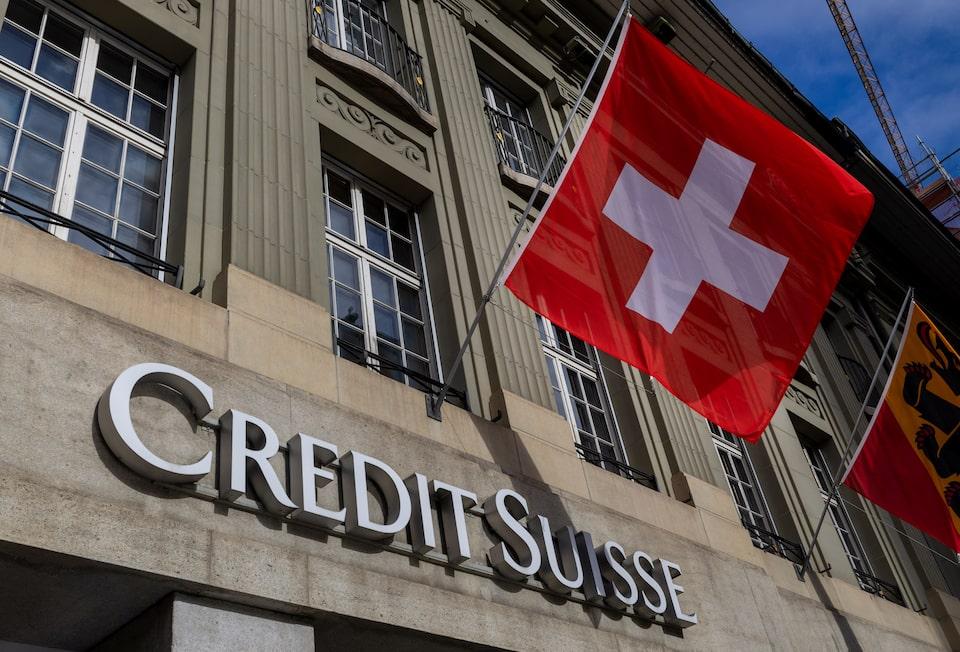
BRUSSELS, July 23 (Reuters) - The European Union's General Court substantially reduced a fine imposed on Credit Suisse to 28.9 million euros ($33.92 million) from 83.2 million euros on Wednesday, over its participation in a foreign exchange trading cartel. The court ruled that Credit Suisse had participated in the cartel, but the European Commission had not correctly determined the amount of the fine. Sign up here. "The applicants have rightly claimed that certain data used by the Commission in determining the proxy for the value of Credit Suisse's sales were less complete and reliable than those proposed for that purpose by Credit Suisse during the administrative procedure," the court said in a statement. UBS, which merged with Credit Suisse in 2024, declined to comment. The case stemmed from a professional online chatroom called "Sterling Lads" where certain traders exchanged sensitive information, allowing them to make decisions on buying and selling G10 currencies - the world's most liquid and traded currencies - and the timing of those trades. EU antitrust regulators fined Credit Suisse in 2021 over the cartel, as well as Barclays, HSBC and NatWest. Credit Suisse was at the time handed the second-largest fine, after HSBC. ($1 = 0.8519 euros) https://www.reuters.com/business/finance/eu-court-cuts-credit-suisse-fine-foreign-exchange-cartel-2025-07-23/
2025-07-23 08:02
Yuan undervaluation harms European firms, action urged -study China denies manipulation, cites managed floating exchange rate regime BERLIN, July 23 (Reuters) - European companies are facing increasing pressure due to China's alleged currency manipulation to keep its yuan weak, a study by the German Economic Institute showed, as EU leaders prepared for a summit in Beijing aimed at navigating trade disputes. The yuan-euro exchange rate has remained stable in recent years despite significant shifts in cost relations between Europe and China, suggesting likely currency manipulation by the central bank, said Juergen Matthes, author of the study by the Institute (IW), which was seen by Reuters. Sign up here. Extremely low prices mean more European companies are sourcing intermediate goods from China, contributing to deindustrialisation on the continent, he said, urging the EU to take action. "The artificially low costs in China, driven by yuan undervaluation, are simply too attractive," Matthes said. Those companies that did not source their intermediate goods from China would lose market share to rivals who "fully exploit China’s price advantages." The Chinese central bank did not immediately respond to a request for comment. EU leaders arrive in Beijing on Thursday for a top-level summit with China as both sides seek to navigate trade disputes amid broader global trade uncertainties. In response to allegations of currency manipulation, China has in the past said it was committed to implementing a managed floating exchange rate regime, based on market supply and demand. UNDER PRESSURE The study comes as European companies are under pressure from a surge in Chinese exports diverted from the United States and an appreciation of the euro against the dollar due to U.S. President Donald Trump's trade policies, economists say. Producer prices in Germany and the euro zone have surged since 2020 due to supply chain disruptions and the energy crisis, whereas prices in China have hardly increased. Yet, the exchange rate has barely moved, leading to a real appreciation of the euro against the yuan of over 40% between early 2020 and spring 2025, and deepening the euro zone trade deficit with China, the study shows. Normally, higher import purchases from the euro zone would boost the yuan as it drives up demand for the currency, but that has not been the case, said Matthes. President Trump labeled China a currency manipulator during his first term. The Treasury Department then dropped the designation in January 2020 as Chinese officials arrived in Washington to sign a trade deal with the U.S. Last month, the U.S. simply issued a stern warning to China, saying it stood out among key trading partners "in its lack of transparency around its exchange rate policies and practices." China said it upheld "multilateralism and respects multilateral consensus," was committed to keeping the renminbi exchange rate stable, and would not "engage in competitive currency devaluation." Matthes, however, said the Chinese central bank's behavior was "highly non-transparent." When adjusting the yuan exchange rate, which is only allowed to fluctuate within a narrow band, the dollar relationship plays a central role, as does a currency basket, he said. "But how this is done, exactly, no one outside China knows,” he said, and the euro is "collateral damage." https://www.reuters.com/world/china/chinas-yuan-undervaluation-fuels-euro-zone-trade-deficit-german-study-shows-2025-07-23/
2025-07-23 07:48
Empire Wind 1, South Brooklyn Marine Terminal face $763 million impairment Regulatory changes impact future US offshore wind projects Equinor halts Empire Wind 2 development plans OSLO, July 23 (Reuters) - Norway's Equinor (EQNR.OL) , opens new tab booked on Wednesday a $955 million impairment on an offshore wind project in the United States, citing U.S. tariffs and the uncertainty of the U.S. regulatory environment under President Donald Trump. Hopes the industry had harboured that projects in the United States would revive the sector were dashed on Trump's first day back in office in January when he suspended offshore wind leases. Sign up here. Then in April, Interior Secretary Doug Burgum shut down Equinor's Empire Wind development in New York state. He later lifted the stop-work order on the project. For Equinor, however, the damage has been done. On Wednesday, it reported its net operating income for the second quarter fell due to having to book a near-billion dollar impairment on its U.S. offshore wind projects. "This is impacted by an impairment of $955 million due to regulatory changes causing loss of synergies from future offshore wind projects and increased exposure to tariffs," Equinor said in a statement on Wednesday. "Of this, $763 million is related to Empire Wind 1/South Brooklyn Marine Terminal project and the remainder is related to the Empire Wind 2 lease." Equinor, majority-owned by the Norwegian state, had won a federal lease for Empire Wind in 2017 under Trump's first administration and secured approval for its investment plans in 2023 during former President Joe Biden's time in the White House. The global offshore wind market, once touted by governments as a cornerstone of efforts to cut carbon emissions, has faltered under escalating costs and logistical setbacks. Equinor CFO Torgrim Reitan said the U.S. administration changing its mind on developing offshore wind had affected the value of the group's large onshore terminal in South Brooklyn, built to serve offshore wind farm installations. "It is a result of changing regulations so there is very little probability for more offshore wind projects coming in the U.S. over the foreseeable future and that is impacting a project that we have related to staging facilities," he told Bloomberg TV. Equinor would not develop the second phase of the Empire Wind farm, as it had earlier planned, he added. "We don't intend to push it forward currently," Reitan said of Empire Wind 2. The total book value after the latest impairments was $2.3 billion, Equinor said on Wednesday. With a planned installed capacity of 810 megawatts, Empire Wind 1 could generate enough electricity to power half a million homes a year and was expected to begin operating in 2027. Equinor on Wednesday also reported a decline in core second-quarter results, as expected, due to lower oil prices. https://www.reuters.com/sustainability/climate-energy/blaming-trump-equinor-makes-955-million-us-offshore-wind-writedown-2025-07-23/