2025-07-22 12:38
MOSCOW, July 22 (Reuters) - Kazakhstan, one of fastest-growing oil producers in the world, plans to boost its fuel exports to China, India and Central Asia, pinning its hopes on growing demand in the regions, the energy ministry said on Tuesday. It said the government approved long-term strategy of oil refining industry's development for 2025 - 2040. The country currently has restrictions on exports of gasoline and diesel. Sign up here. The country has three large oil producing plants, in Pavlodar in the north, Shymkent in the south and Atyrau in the west with combined annual production reaching 17 million metric tons (350,000 barrels per day) following modernisation. The ministry said it expected domestic fuel demand to grow by up to 2% each year thanks to urbanisation and industrial development. It said it sought to boost fuel exports, targeting markets in China, India and the countries in Central Asia with a view of raising the share of exports in total output to 30% by 2040. It added that it may raise foreign investments to fund the implementation of the strategy given Kazakhstan's crude oil reserves of 30 billion barrels. https://www.reuters.com/business/energy/kazakhstan-targets-china-india-long-tern-fuel-production-strategy-2025-07-22/
2025-07-22 12:28
LONDON, July 22 (Reuters) - Oil prices declined for a third consecutive session on Tuesday on concerns the brewing trade war between major crude consumers the United States and the European Union will curb fuel demand growth by reducing economic activity. Brent crude futures were down 53 cents, or 0.8%, to $68.68 a barrel at 1219 GMT. U.S. West Texas Intermediate crude was at $66.57 a barrel, down 63 cents, or 0.9%. Sign up here. The August WTI contract expires on Tuesday and the more active September contract was down 52 cents, or 0.8%, to $65.43 a barrel. "Oil prices fell for a third straight session ... as urgency builds in trade negotiations between the U.S. and its partners," Soojin Kim, an analyst at bank MUFG, said in a note. The Trump administration has set an August 1 deadline for countries to secure trade deals or face steep tariffs. The EU is exploring a broader set of possible counter-measures against the United States as prospects for an acceptable trade agreement with Washington fade, according to EU diplomats. The U.S. has threatened to impose a 30% tariff on EU imports if a deal is not reached. A weaker dollar has limited some losses for crude as buyers using other currencies are paying relatively less. Prices have slipped "as trade war concerns offset the support by a softer (U.S. dollar)," IG market analyst Tony Sycamore wrote in a note. Stronger distillate profit margins due to low inventories are also supporting crude prices. "The move lower might have seen more momentum if it were not for the continued performance in distillates which continues to be aided by low stocks," PVM Oil analyst John Evans said in a note. Meanwhile, a Reuters poll of analysts showed U.S. crude oil inventories likely fell by about 600,000 barrels in the week to July 18. https://www.reuters.com/business/energy/oil-prices-fall-tariff-deadline-looms-2025-07-22/
2025-07-22 12:26
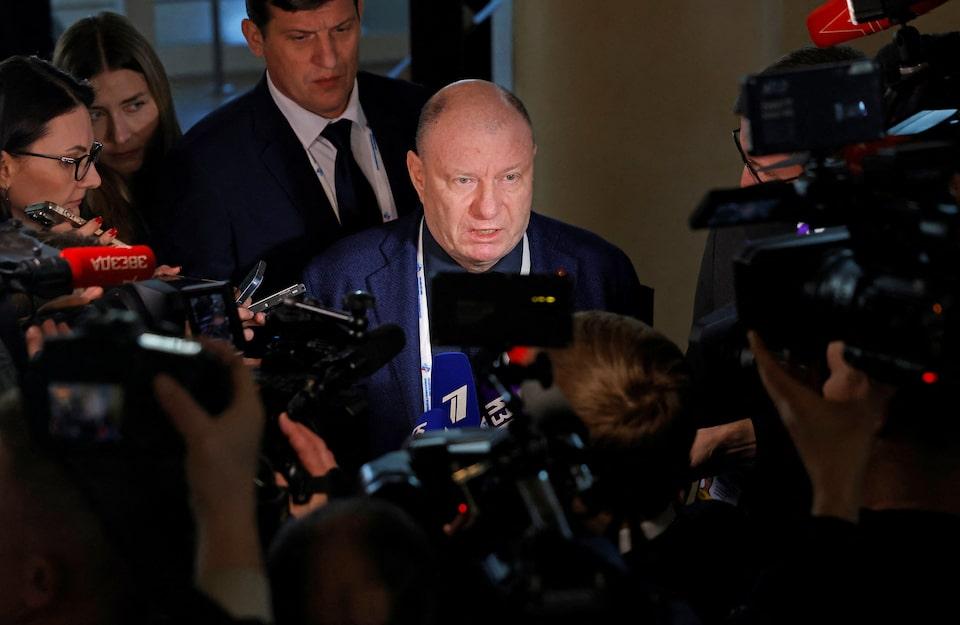
LONDON, July 22 (Reuters) - Russian oligarch Vladimir Potanin's ex-wife on Tuesday urged a London appeal court to let her pursue a multi-billion dollar share of his stake in Nornickel, in potentially one of the highest-value divorce cases ever brought. Potanin – CEO of Norilsk Nickel (GMKN.MM) , opens new tab, the world's largest palladium producer and a major producer of refined nickel – is facing the mammoth divorce claim from ex-wife Natalia Potanina. Sign up here. Potanina wants to bring a claim for financial relief following their formal divorce in 2014, which includes a claim for 50% of the value of her ex-husband's ultimate beneficial interest in shares in Nornickel. Potanin holds a roughly 39% stake in Nornickel through his Interros holding company, which is currently worth $9.4 billion, according to LSEG data. Potanina is also seeking 50% of any dividends paid to Potanin since 2014 and a high-end Russian property, on which the parties spent around $150 million. Her lawyers say she received only $41.5 million after their divorce, amounting to less than 1% of the couple's total assets, and is entitled to "a fair share of the assets built up during the marriage". Potanin, however, says his ex-wife received around $84 million and argues her claim should be rejected as the couple had no connection to Britain. His lawyer Edward Faulks said in court filings that Potanina's "first contact with England and Wales following the breakdown of her marriage was to contact English divorce lawyers". England and Wales has long been seen as a favourable jurisdiction by less wealthy partners, with courts regularly making awards running into the hundreds of millions of pounds. London's High Court rejected Potanina's bid to bring a claim in 2019, with a judge saying that if her claim was allowed to proceed "then there is effectively no limit to divorce tourism". The case has since been to the United Kingdom's Supreme Court, which sent it back to the Court of Appeal to decide whether Potanina's claim can proceed. https://www.reuters.com/markets/europe/russian-oligarch-potanins-ex-wife-asks-uk-court-clear-claim-nornickel-shares-2025-07-22/
2025-07-22 12:11
July 22 (Reuters) - Federal Reserve Vice Chair for Supervision Michelle Bowman on Tuesday said the central bank's ability to set monetary policy without political interference is "very important." "It's very important ... that we maintain our independence with respect to monetary policy," Bowman said in a CNBC interview ahead of a day-long conference she is hosting at the Fed on bank regulation. Sign up here. "But we also, as part of that independence, have an obligation for transparency and accountability as well. But we also have an obligation, in my view, as we have throughout my time on the board here since 2018, to listen to a broad range of voices to understand how others are viewing the economy and how that should influence our decisions in monetary policy making." The remarks from Bowman, appointed to the Fed Board of Governors by President Donald Trump in his first term and recently elevated by him to be the top banking regulator at the central bank, come as Trump has ramped up his criticism of the Fed and of its leader, Chair Jerome Powell, for not lowering interest rates as Trump wishes. https://www.reuters.com/sustainability/boards-policy-regulation/feds-bowman-fed-independence-is-very-important-with-respect-monetary-policy-cnbc-2025-07-22/
2025-07-22 12:03
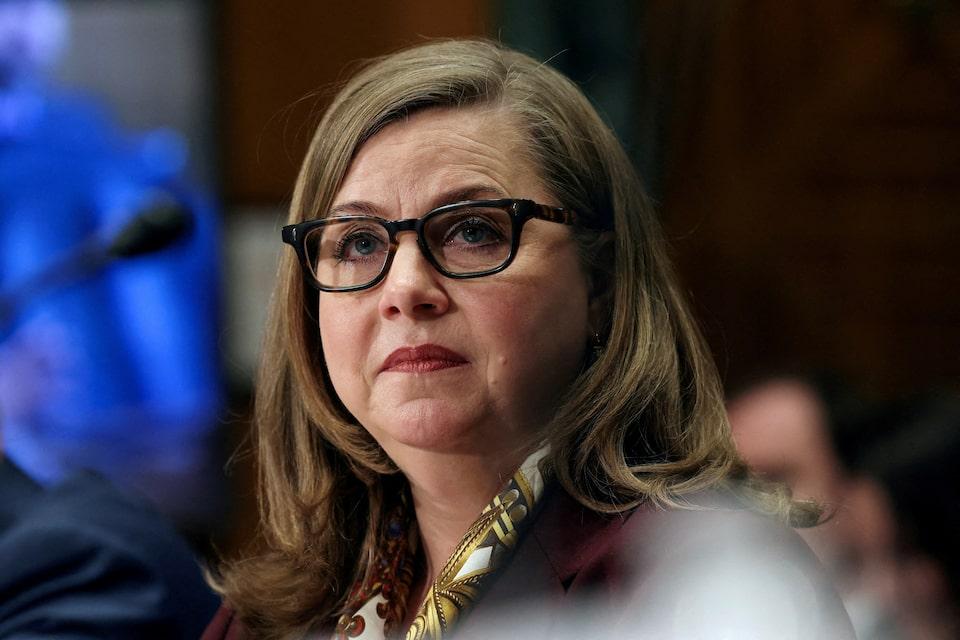
Jara has criticized right-wing policies on migration But she has taken a harder line on crime during campaign Polls indicate she will lose to far-right Jose Kast SANTIAGO, Dec 11 (Reuters) - Saddled with an unpopular incumbent president, Chile's left made a bold choice to contest a resurgent right in this year's presidential election - Jeannette Jara, a member of the Communist Party. Jara, the candidate for the ruling Unity for Chile coalition, has tried to win over skeptical voters by championing her track record of pushing through popular legislation on pensions and a reduced workweek under President Gabriel Boric. Sign up here. But Jara has faced an uphill battle. Although she narrowly won the November first round, opinion polls suggest her right-wing rival, Jose Antonio Kast, will triumph in Sunday's second round, picking up most of the votes from three other right-wing candidates who fell short. Jara has been encumbered by Boric's unpopularity and her own party affiliation in a country that remains haunted by the Augusto Pinochet dictatorship that followed the 1973 coup against democratically elected Marxist president Salvador Allende. "I think a lot of stories about the (Communist Party) stem from the Cold War and aren't representative of the current situation," Jara told Reuters in July. "In Chile we have a profound commitment to democracy and respect for institutional norms." Jara joined the party as a student leader in the 1990s and bounced between government and the private sector. Before serving as Boric's labor minister, Jara worked in several ministries under center-left former President Michelle Bachelet. CAMPAIGN FOCUS SHIFTS Jara's campaign kicked off by seeking to focus on her plans for stimulating sluggish economic growth and addressing long-running concerns over income inequality, which triggered widespread protests in 2019. "We can't keep having two Chiles in the same country, one for well-off sectors and the other for the vast majority," she said in July's interview. But, trying to gain ground on Kast, she has also increasingly said she would crack down on crime. While Chile remains one of the safest countries in Latin America, an influx of organized crime has led to a rising murder rate and hurt economic growth, with a recent spike in high-profile incidents like kidnappings and assassinations. "I will use all the tools that the rule of law gives us to safeguard public security," she said in the final televised debate with Kast on Tuesday evening, adding that she was prepared to declare a state of emergency if necessary. She has, however, criticized Kast and other right-wing candidates - who have blamed the rising crime on increasing numbers of migrants - for some of their more hardline policies, such as building a border wall. No matter Jara's policies, given the unpopularity of Boric, "even if she had been Bachelet in her prime" she would have struggled to win over voters, said Patricio Navia, a Chilean professor of liberal studies at New York University. "But furthermore, Jara is a communist, which makes it more difficult... Her campaign did not go well, she started off as very pacifist and then got really aggressive. So we never knew who Jara was." https://www.reuters.com/world/americas/jeannette-jara-is-coalition-communist-who-wants-be-chiles-next-president-2025-07-22/

2025-07-22 12:00
LAUNCESTON, Australia, July 22 (Reuters) - A key difference in crude oil demand forecasts between this year and 2024 is that both OPEC and the International Energy Agency (IEA) are being far more cautious in their growth expectations. While the Organization of the Petroleum Exporting Countries (OPEC) and the wider OPEC+ group publicly maintain that strong demand and a tight market justify increasing oil output, the numbers in their monthly report are more circumspect. Sign up here. It is largely the same for the IEA, which forecast in its July monthly report that global crude demand will grow by 700,000 barrels per day (bpd) in 2025, the slowest pace since 2009. OPEC's July report is slightly more bullish, forecasting oil demand will increase by 1.29 million bpd in 2025, with 1.16 million bpd coming from countries outside the developed economies of the Organisation for Economic Cooperation and Development (OECD). The forecasts from both the IEA and OPEC are now so cautious that they actually run the risk of being too pessimistic, especially in the top-importing region of Asia. This is in stark contrast to last year, when OPEC in particular was massively bullish in its demand forecasts even as Asia's crude oil imports were declining. There is, of course, a difference between demand forecasts and imports, but the level of seaborne imports is the key driver of crude prices, given it is this market, which accounts for about 40% of global daily oil demand, that sets the global prices. In its July 2024 monthly report OPEC forecast that Asia's non-OECD oil demand would rise by 1.34 million bpd in 2024, with China accounting for 760,000 bpd of this. However, Asia's crude imports actually declined in 2024, dropping by 370,000 bpd to 26.51 million bpd, according to data compiled by LSEG Oil Research. It was the first decline in Asia's oil imports since 2021, at a time when demand was hit by the lockdowns prompted by the COVID-19 pandemic. The gap between OPEC's bullish forecasts for much of 2024 and the reality of weak crude imports by Asia may have tempered the exporter group's forecasts for 2025. The question is whether they are now actually being too cautious. ASIA RECOVERY OPEC's July monthly report forecast that non-OECD Asia's oil demand will rise by 610,000 bpd in 2025, with China the main contributor at 210,000 and India, Asia's second-biggest crude importer, seeing an increase of 160,000 bpd. The IEA said in its July report that it expects China's total oil product demand to rise by 81,000 bpd in 2025, while India is expected to see a gain of 92,000 bpd. Total non-OECD Asia is forecast to see demand rise by 352,000 bpd. Both the OPEC and the IEA numbers seem modest, especially since Asia's crude imports actually saw relatively strong growth in the first half of 2025. Asia's imports in the first six months of the year were 27.25 million bpd, an increase of 510,000 bpd from the same period last year, according to calculations based on LSEG data. Imports increased in the second quarter, especially in China, as refiners took advantage of the weakening trend in oil prices that prevailed at the time cargoes were being arranged. It is likely that some of the increase in oil imports was used to build inventories, a process that may extend into the second half if oil prices remain soft as OPEC+ increases output amid the economic uncertainty created by U.S. President Donald Trump's ongoing global trade war. If there is one lesson to be learnt from the difference between this year's circumspect oil demand forecasts and last year's buoyant estimates, it is that price plays a far bigger role in demand, especially in Asia. Part of the reason Asia's crude imports fell short of forecasts in 2024 was because prices remained elevated for much of the year, reaching above $92 a barrel in April and only briefly dropping below $70 in September. This year, prices have been softer, with benchmark Brent futures peaking at just over $82 a barrel in January, and trading as low as $58.50 in May. Enjoying this column? Check out Reuters Open Interest (ROI), your essential new source for global financial commentary. ROI delivers thought-provoking, data-driven analysis of everything from swap rates to soybeans. Markets are moving faster than ever. ROI can help you keep up. Follow ROI on LinkedIn , opens new tab and X , opens new tab. The views expressed here are those of the author, a columnist for Reuters. https://www.reuters.com/markets/commodities/opec-iea-crude-oil-demand-forecasts-may-be-too-cautious-2025-07-22/