2025-12-01 11:35
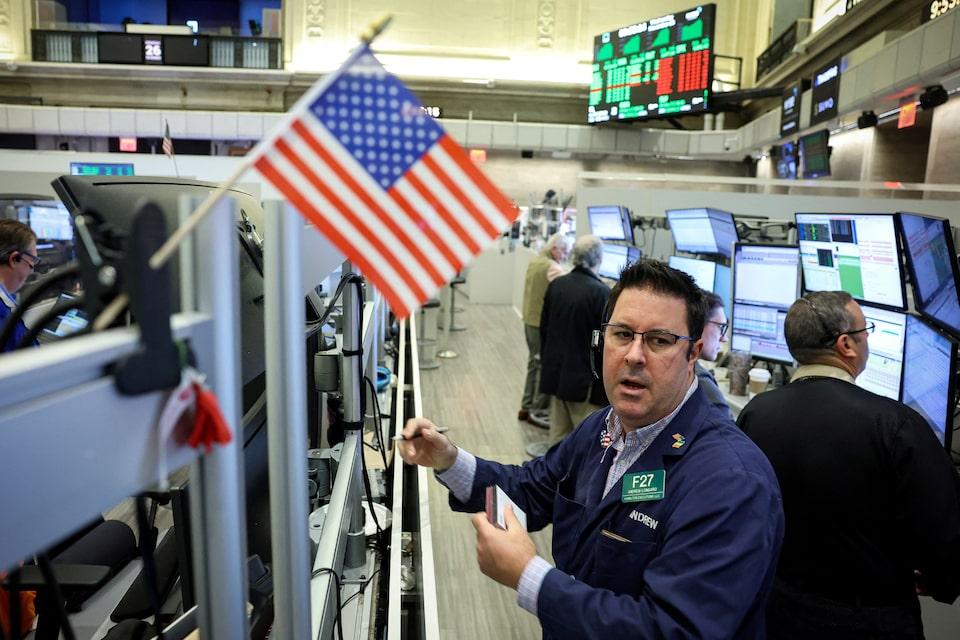
LONDON, Dec 1 (Reuters) - A look at the day ahead in U.S. and global markets by Dhara Ranasinghe, Editor, Financial Markets EMEA. What matters in U.S. and global markets today. Sign up here. Trade in the final month of a turbulent 2025 is underway and the readout from markets is that it's unlikely to be a quiet end to the year. Also, check out the latest episode of the new Morning Bid , opens new tab daily podcast. Subscribe to hear Reuters journalists discuss the biggest news in markets and finance seven days a week. For more from Mike Dolan, check out his column today on how White House adviser Kevin Hassett could become the Federal Reserve's "shadow chair" for five months. Today's Market Minute A far from quiet end to the year Everywhere you look the risks are stacking up hard and fast, but for now, let's stick to the immediate horizon. If bitcoin can be seen as a proxy for Wall Street, then Monday's 5% drop in the crypto currency back below $90,000 does not bode well. The currency is set for its biggest one-day fall in almost a month, fitting in with the risk off mode taking hold across world markets, with Asian and European shares (.STOXX) , opens new tab lower and U.S. equity futures pointing decidedly down . There doesn't appear to be a single catalyst for the risk-off mood, although for some the answer lies in the heaviest selling in Japanese government bonds in four months on the prospect of a Bank of Japan rate hike as early as this month. The BOJ will consider the "pros and cons" of raising rates at its next policy meeting, Governor Kazuo Ueda said on Monday, giving the strongest signal yet of a December hike. That's given a boost to the battered yen , while rate sensitive two-year bond yields rose to their highest since 2008 and the blue-chip Nikkei tumbled almost 2% (.N225) , opens new tab. Central bank direction also remains in focus on Wall Street as the December 10 Fed meeting looms, against a backdrop of flip-flopping from traders over whether rates will be cut. Adding to the uncertainty is an expectation that U.S. President Donald Trump could soon announce the next Fed chair, meaning markets could be caught between hanging on the words of current Fed chief Jerome Powell as well as his successor. Just before the Thanksgiving break, Treasury Secretary Scott Bessent indicated that Trump would likely announce the nominee before Christmas with White House aide Kevin Hassett seen as the front runner. Late on Sunday, Trump said he knows who he will pick as next Fed chair. Signs meanwhile that in progress in U.S. trade negotiations failed to translate into a significant recovery in orders among Asia's manufacturing powerhouses may also help explain caution across world stock markets. A raft of purchasing managers' indexes (PMIs) on Monday showed declines in activity in China, Japan, South Korea and Taiwan. In China, the world's largest manufacturer, factory activity slipped back into contraction, a , a day after Beijing's official measure showed activity falling for the albeit at a slower pace. Euro zone manufacturing activity also slipped back into contraction territory in November, Monday data showed. U.S. and Ukrainian officials meanwhile held what both sides called productive talks on Sunday about a Russia peace deal, with Secretary of State Marco Rubio expressing optimism about progress despite challenges to ending the more than three-year-long war. Chart of the day Bitcoin is back below $90,000, extending losses after its steepest monthly decline since the 2021 crypto crash, as renewed risk aversion drove investors out of stocks and digital assets. Today's events to watch - U.S. November ISM index - Treasury Bill auction Opinions expressed are those of the author. They do not reflect the views of Reuters News, which, under the Trust Principles , opens new tab, is committed to integrity, independence, and freedom from bias. Want to receive the Morning Bid in your inbox every weekday morning? Sign up for the newsletter here. https://www.reuters.com/business/finance/global-markets-view-usa-2025-12-01/
2025-12-01 11:29
DUBAI, Dec 1 (Reuters) - A new mechanism adopted by OPEC+ to assess members' maximum output capacity will ultimately help to stabilise markets and reward those who invest in production, Saudi Energy Minister Prince Abdulaziz bin Salman said on Monday. The OPEC+ group approved the mechanism to assess members' maximum production capacity to be used for setting baselines from 2027, against which their output targets are set, OPEC said on Sunday. Sign up here. Prince Abdulaziz said the mechanism was "fair and transparent" for determining production levels. "Now we have the most detailed, the most technical, transparent approach of how we can move forward in the future in managing the market and how to attend to production", he said. "Yesterday was probably one of the most successful days in my personal career and I am very grateful and thankful for the support of our friends in Russia," he said during the launch of a Saudi-Russian business forum in Riyadh. The meetings on Sunday of OPEC+, which groups the Organization of the Petroleum Exporting Countries and allies led by Russia, also agreed to leave oil output levels unchanged for the first quarter of 2026. The evaluation of members' maximum production capacity is scheduled to take place between January and September 2026, according to sources following the meetings, allowing for 2027 output quotas to be set. "It will also be a mechanism that will reward those who invest and those who believe there is growth, and would put us in the lead amongst the other producers," Prince Abdulaziz said. OPEC+ has been discussing the production capacity and quotas issue for years in talks that had proved difficult because some members such as the United Arab Emirates have increased capacity and want higher quotas. Other members such as African countries have seen declines in production capacity but are resisting quota cuts. Angola quit the group in 2024 over a disagreement about its production quotas. https://www.reuters.com/business/energy/opec-meetings-outcome-turning-point-saudi-energy-minister-says-2025-12-01/

2025-12-01 11:29
Tornqvist to step down, sell stake in management buyout Leadership change aims at reset amid scrutiny over Russia links Pedersen named CEO as Gunvor seeks stronger US ties, expansion LONDON, Dec 1 (Reuters) - Global commodity trading house Gunvor's (GGL.UL) CEO Torbjorn Tornqvist will step down and sell his full shareholding in a management buyout, weeks after the U.S. dubbed the firm the "Kremlin's puppet" over its past Russian links. The firm said on Monday that Americas head Gary Pedersen, hired by the company just last year, will assume the top role. Sign up here. "The buyout has been advanced at this time to establish a definitive reset and path forward for a company, for which misperceptions about its past have become an impossible distraction," Gunvor said in a statement. That was a reference to the U.S. Treasury last month calling Gunvor the "Kremlin's puppet" and sinking what would have been Gunvor's biggest ever deal to acquire U.S.-sanctioned Russian oil major Lukoil's (LKOH.MM) , opens new tab international assets. Gunvor said at the time that the Treasury's statement was "fundamentally misinformed and false" and it welcomed "the opportunity to ensure this clear misunderstanding is corrected." SWITCH AT THE HELM SPELLS END OF AN ERA The leadership transition marks the end of Tornqvist's 25-year leadership of Swiss-based Gunvor, in a deal that could be worth billions of dollars. Tornqvist's shareholding stood at 84.79% at the end of 2024, according to the group's results, when the company had an equity value of $6.5 billion. Tornqvist has already stepped down as CEO and will exit the company's board when the deal closes, Gunvor said. Gunvor did not specify the buyout value of Tornqvist's shares, or give a time frame for the buyout deal, which it said was first conceived in 2022. TORNQVIST CO-FOUNDED GUNVOR IN 2000 "I’m ready and the company is ready for this transition, which we have worked on for some time. For a trading house of Gunvor's size and complexity, a broad-based, inclusive partnership is the right model," Tornqvist said. Tornqvist, 72, co-founded Gunvor in 2000 with business partner Gennadiy Timchenko, and grew the company into the largest trader of Russian oil in the 2000s. Gunvor has since expanded into new markets, including in recent years moving into U.S. gas and power, amid a wider trend of top trading houses allocating their record earnings , opens new tab towards expansion in different geographies and commodities markets. GUNVOR EYES US EXPANSION Pedersen's promotion coincides with a push by Gunvor to smooth its ties with the U.S., which has seen the firm hold active talks to invest in U.S. oil and gas-producing assets in recent weeks. Pedersen joined Gunvor last year from hedge fund Millennium Management, where he was a senior portfolio manager for refined products since 2022. His appointment came as Tornqvist undertook a broader shake-up of Gunvor's senior leadership, and the company said he was hired "with the intention of eventually assuming global leadership." "The time is right for this transition. A generational shift has been well underway, and we have the financial strength, liquidity, and depth of leadership to continue to advance our global growth strategy," Pedersen said. Under Pedersen, Gunvor's Americas arm has sought to grow its investments in U.S. shale gas production, joining other trading firms in betting that more control of the North American supply chain will pay dividends if AI growth and LNG plant expansions boost demand over the coming years. Gunvor's U.S. portfolio currently has an enterprise value exceeding $4 billion and is a key growth area, a company spokesperson told Reuters recently. https://www.reuters.com/sustainability/boards-policy-regulation/gunvor-ceo-torbjorn-tornqvist-step-down-management-buyout-2025-12-01/

2025-12-01 11:26
LONDON, Dec 1 (Reuters) - The pound edged lower on Monday, as investors took some profits on November's modest gains ahead of a widely expected interest rate cut later this month. Sterling gained more than 1% last week, marking its largest weekly gain since early August, lifted by a relief rally after finance minister Rachel Reeves' long-awaited budget soothed some concern about Britain's long-term finances. Sign up here. The pound was last down 0.13% against the dollar at $1.3226, while dropping against the euro, which rose 0.3% to 87.89 pence . Seasonally, December tends to be a stronger month for sterling. On average, over the last 25 years, December tends to be the second-strongest month of the year for the pound, with a gain of 0.28%, behind top month April, when the pound has, on average gained 1%, according to LSEG data. Money markets show traders are placing a 90% chance of a cut from the Bank of England later in December that would take the base rate to 3.75%, where they expect it to remain for the coming few months. This erodes some of the pound's appeal for overseas investors, but by the end of the year, the UK would still boast some of the highest interest rates within the Group of 10 wealthiest nations, which offers sterling some support. "The removal of some policy and political uncertainty removes some of the headwinds to the UK pound. It has strengthened a little since Reeves’s speech. But we think it is likely to weaken a little over the coming months — especially against the euro — as policy rates and bond yields come lower," Graham Hook, head of EMEA government relations and public policy, and Benjamin Jones, global head of research at Invesco, said in a note late last week. Anecdotally, Simon Phillips, managing director of travel currency specialist No1 Currency, said the pound's performance in November had offered a boon to British consumers looking to go abroad, as what he called the "Rachel rally" lifted sterling last month against most of the currencies of popular tourist destinations, such as the Turkish lira and Icelandic crown. https://www.reuters.com/world/uk/sterling-dips-investors-take-profit-rachel-rally-2025-12-01/

2025-12-01 11:13
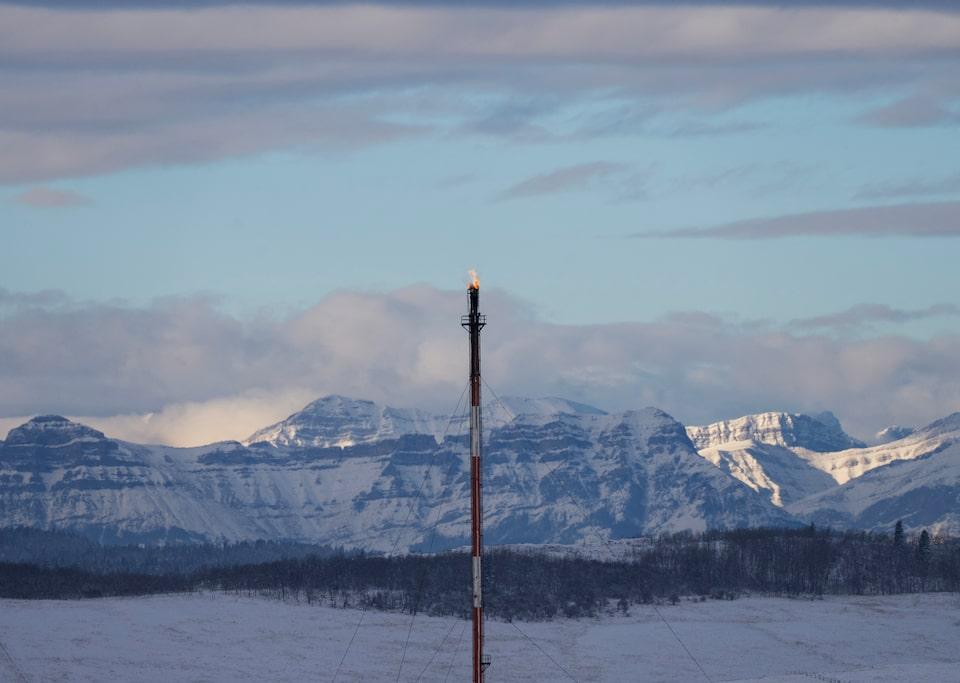
Alberta Energy Regulator did not enforce flaring limit exceedance Flaring limit removal highlights Canada's economic vs. environmental challenge Canada aims to end routine flaring by 2030, despite rising flaring in Alberta CALGARY, Dec 1 (Reuters) - The regulator in charge of environmental enforcement in Canada's main oil-producing province bent to pressure from the provincial government and oil companies to eliminate a limit on natural gas flaring as Canadian oil production increased, according to documents seen by Reuters. Alberta's dismantling of its 20-year-old flaring limit after companies blew through the limit two years in a row, with no objections from the federal government, is an example of the challenges Canada faces in reconciling its environmental commitments with a renewed focus on economic growth. Sign up here. The documents, obtained through access to information laws, show the Alberta Energy Regulator sent letters to 20 companies in the spring of 2024 threatening to enforce flaring limits — which could have resulted in curtailed oil production — if the operators did not prepare and implement plans for lowering their flaring volumes. But the plans that operators, including U.S.-based Murphy Oil (MUR.N) , opens new tab and Canada's Tamarack Valley Energy (TVE.TO) , opens new tab, submitted were unenforced. By June 2025, as first reported by Reuters, the regulator quietly did away with flaring limits in response to directives from Alberta government officials. 'HUMBLE AND COLLABORATIVE' APPROACH In the lead-up to that decision, the government urged the regulator to take a "softer" tone in its communication with offending companies, taking a "humble and collaborative" approach, previously unreported email records show. “It is desirable to work with our industry partners to address this issue," an Alberta Environment Department official wrote to the regulator. The regulator, described by the Alberta government as an arm's-length independent body, was urged to implement the change with "no proactive communications or announcements." The AER said in an email it did not follow through with enforcement because the flaring policy was under review and it had disclosed the end of the flaring limit in a regulatory filing on its website. Regulator and government staff gathered industry feedback together on the flaring policy's effectiveness, said Alberta Environment spokesperson Tom McMillan. "The comments in question were from staff-to-staff discussions about the tone of communication and engagement approach — not any compliance or enforcement action," McMillan said. FLARING LIMIT SEEN AS PRODUCTION CAP Flaring is the practice of burning off excess natural gas associated with oil production. Canada, the world's fourth-largest oil producer, achieved record-high oil production last year. Prime Minister Mark Carney, a former UN special envoy on climate action who is seeking to diversify the economy away from the U.S. and the uncertainties of U.S. President Donald Trump's tariffs, has said he wants Canada to become an "energy superpower." But Canada's energy sector has said many of the country's environmental rules get in the way of expanding oil output. The documents show the regulator faced pushback from companies about the flaring limit, which one industry group said could serve as a de facto production cap. Carney signed an agreement with Alberta on Thursday to drop its planned emissions cap on the oil and gas sector. CLIMATE IMPLICATIONS Companies sometimes flare gas when there are no pipelines nearby to transport the gas. From a climate change perspective, flaring can be preferable to venting, or releasing the excess gas directly into the atmosphere without burning it first. Venting produces large amounts of methane, an extremely potent greenhouse gas. Alberta has cut its methane emissions from the oil and gas sector in half over the past decade. A spokesperson for Canada's Environment Department said flaring can be a short-term solution for reducing methane emissions if companies that vent natural gas switch to flaring. However, she said Canada recognizes that flaring contributes to climate change by emitting carbon dioxide and other pollutants. INTERNATIONAL COMMITMENTS Canada is a signatory to a World Bank initiative that commits countries to ending routine flaring by 2030. Along with 10 other countries, Canada endorsed a statement at the recent COP30 summit recognizing the importance of ending routine venting and flaring by 2030. Other major oil producers such as the United States, Russia and Iran flare more gas than Canada. The European Union has stronger regulations than Canada, including an outright ban on routine flaring, which is done for reasons other than emergencies or safety. But regulatory data shows flaring has been rising in Alberta. Oil and gas producers in the province flared approximately 912.7 million cubic metres of natural gas in 2024, exceeding the annual provincial limit by 36%. AER data for the first nine months of 2025, first tallied by Reuters, show Alberta's oil producers are on track this year to again exceed the now-cancelled flaring limit. "There's a clear gap here between commitments and policy," said Amanda Bryant, senior analyst with the Pembina Institute, a clean energy think-tank. "Especially when there are plenty of viable alternatives to flaring." https://www.reuters.com/world/alberta-oil-regulator-stopped-enforcing-gas-flaring-limits-after-government-2025-12-01/
2025-12-01 11:09
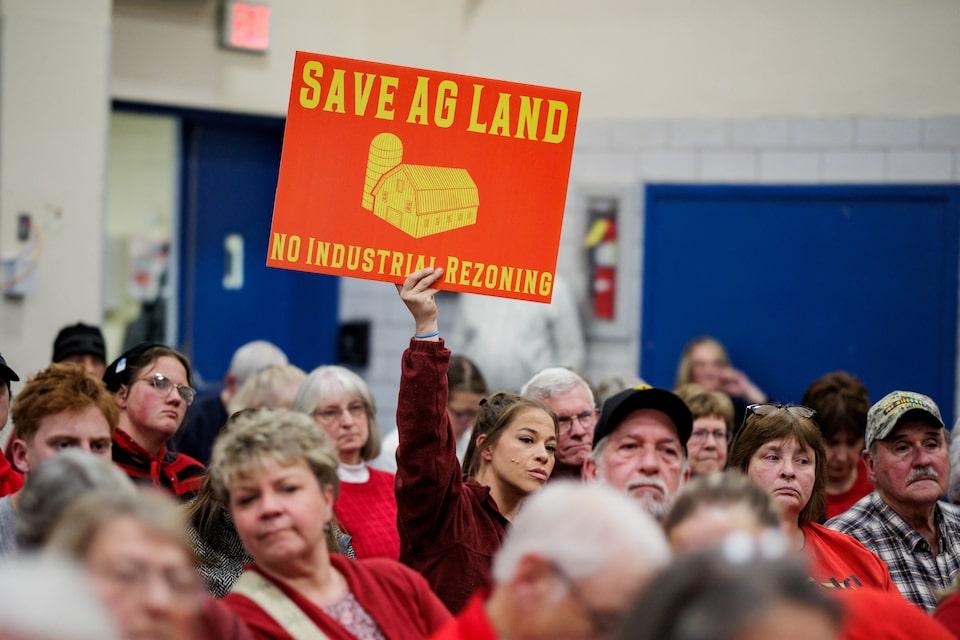
Residents fear data centers will raise utility bills and strain resources Local opposition unites farmers, environmentalists and homeowners across party lines Pennsylvania utilities project sharp rise in electricity demand from data centers by decade's end DANVILLE, Pennsylvania, Dec 1 (Reuters) - The residents came in camouflage hats and red shirts signaling unity, more than 300 of them packing into a rural Pennsylvania planning commission meeting to protest a proposed data center they feared would carve up their farmland and upend the quiet rhythms of their valley. Most were loyal supporters of President Donald Trump, who carried their home of Montour County by 20 percentage points in the 2024 election. But they bristled at Washington’s push to fast-track artificial intelligence infrastructure, which has driven data-center growth in rural areas around the U.S. where land is cheap. Sign up here. On a recent November evening, residents in this county of 18,000 people stepped to the microphone, questioning Talen Energy (TLN.O) , opens new tab officials about how their planned data center might raise residents' utility bills, reduce working farmland, and strain local water and natural resources. "Say no to rezoning, so water keeps flowing and crops keep growing," two women sang in a riff on Woody Guthrie's folk song "This Land Is Your Land." Political leaders across the U.S. are urging a rapid expansion of data-center capacity and new power production to keep the country competitive in AI. Trump, a Republican, is promoting the build-out as an economic and national security priority and has directed his administration to bypass environmental rules and permitting that give local communities a voice. In Pennsylvania, Democratic Governor Josh Shapiro and Republican Senator Dave McCormick are courting developers with incentives and infrastructure upgrades to attract investment in the fast-growing industry. Some communities welcome the economic boost. But the backlash in Montour County, nestled in central Pennsylvania, reflects a growing coalition of farmers, environmentalists and homeowners who have united across partisan lines to resist data-center expansion. A report by Data Center Watch earlier this year found that about $64 billion worth of data center projects have been blocked or delayed amid local pushback in states including Texas, Oregon and Tennessee. Critics in Pennsylvania worry that their region could turn into northern Virginia’s “data center alley,” with its vast, sprawling complexes. If successful, the pushback threatens to slow efforts by the administration and the tech industry to build AI infrastructure fast enough to keep pace with global rivals. Political strategists say anger over the projects also could add to the problems Republicans face as they grapple with affordability worries going into the 2026 midterm elections. “It’s an issue that can be exploited by whoever’s out of power,” said Chris Borick, a political science professor at Muhlenberg College in Allentown, Pennsylvania. The politics of AI infrastructure, he added, remain unsettled: “The industry’s still evolving, and politicians are figuring out where to stand. It’s like social media — everyone rushed in before understanding the consequences.” PRESERVING CULTURE Talen Energy is requesting to rezone roughly 1,300 acres in Montour County from agricultural to industrial use, the first step toward building a large data center that would include 12 to 15 buildings. The site would sit in the shadow of the company's 1,528-megawatt natural-gas-fired power plant, tucked among farmland and dirt roads used heavily by the region’s Amish community. Talen Energy has said the project would take 350 acres of farmland supporting soybeans, corn and livestock. Residents worry that losing this land would weaken the local farm economy, including a nearby plant that processes soybeans for regional food and feed. Montour County Commissioner Rebecca Dressler, a Republican, said the concerns are rooted less in ideology than in preserving the region’s character. “Small-town character defines our community,” Dressler said. “People aren’t anti-development - they just want growth that fits who we are.” At its recent November meeting, the county planning commission recommended against approving the rezoning by a 6-1 vote - a decision that drew thunderous applause. The issue now goes to Dressler and the other two county commissioners for a final decision in mid-December. Rather than blaming Trump, residents are pointing their fingers at the billion-dollar companies behind the data-center boom - firms they say have the money to snap up farmland, reshape rural landscapes and leave locals to absorb the higher utility costs. “I think it’s a society that has forgotten about the small person - the people who live here, the farmers who are struggling with the economy,” said Theresa McCollum, a 70-year-old Trump supporter. In a place that prides itself on local control, the shift in power to Washington does not sit well. “Stay out. We wouldn’t even be having this conversation without federal involvement,” said Craig High, 39, also a Trump supporter. “Both (political) parties are pushing data centers and giving regulatory relief — water permits, permitting, all of it.” PENNSYLVANIA BOOM Pennsylvania’s abundant, stable electricity has made it a hot spot for data centers, attracting tens of billions in investments from Amazon.com (AMZN.O) , opens new tab, Alphabet's (GOOGL.O) , opens new tab Google, and Microsoft (MSFT.O) , opens new tab, with Constellation Energy (CEG.O) , opens new tab even eying the old Three Mile Island nuclear power plant to power new server farms. But residents fear they may end up paying for it. Pennsylvania utilities project a sharp rise in electricity demand from data centers by the end of the decade - enough to power several million additional homes, according to data from PJM Interconnection, the region’s grid operator. Electricity prices in Pennsylvania increased by about 15% in the past year - roughly double the national average, according to federal data. That surge is already rippling through the regional grid. Capacity prices, which help determine what power plants are paid to ensure supply during peak demand, have spiked in recent auctions, and utilities have begun raising rates to cover growing infrastructure needs. Analysts warn that customers' bills could climb significantly in the years ahead. For many families, the strain is already visible. Overdue utility balances have risen far faster than inflation since 2022, and Pennsylvania ranks among the states with the highest levels of household energy debt, according to the Century Foundation, a progressive research organization. Those pocketbook pressures are starting to reshape politics in some parts of the United States. Earlier this year, Alicia Johnson became one of two Democrats elected to Georgia’s utility board since 2007 after her campaign highlighted frustration over rising power bills and unchecked growth of data centers. She said the issues in her campaign were a preview of what states like Pennsylvania may face in next year's U.S. midterm elections. Power prices have surged in Georgia in recent years, in large part because of massive cost overruns at the new Vogtle nuclear plant. “Data centers and utility costs were the top two issues on the ballot, and people are angry,” Johnson said. “They don’t want data centers without guardrails, and they don’t want to be the ones paying for them. This is going to be part of the national affordability debate in 2026." Ginny Marcille-Kerslake, an organizer with Food and Water Watch, an environmental nonprofit group, has spent months mobilizing opposition to data centers in places like Montour County. She predicted a political reckoning next year. "Communities - red, blue, and everything in between - are united in opposition," she said, referring to so-called red areas dominated by Republicans and blue areas controlled by Democrats. "At a time when we’re so divided, this issue is bringing people together." https://www.reuters.com/business/retail-consumer/trumps-push-more-ai-data-centers-faces-backlash-his-own-voters-2025-12-01/