2025-07-22 14:17
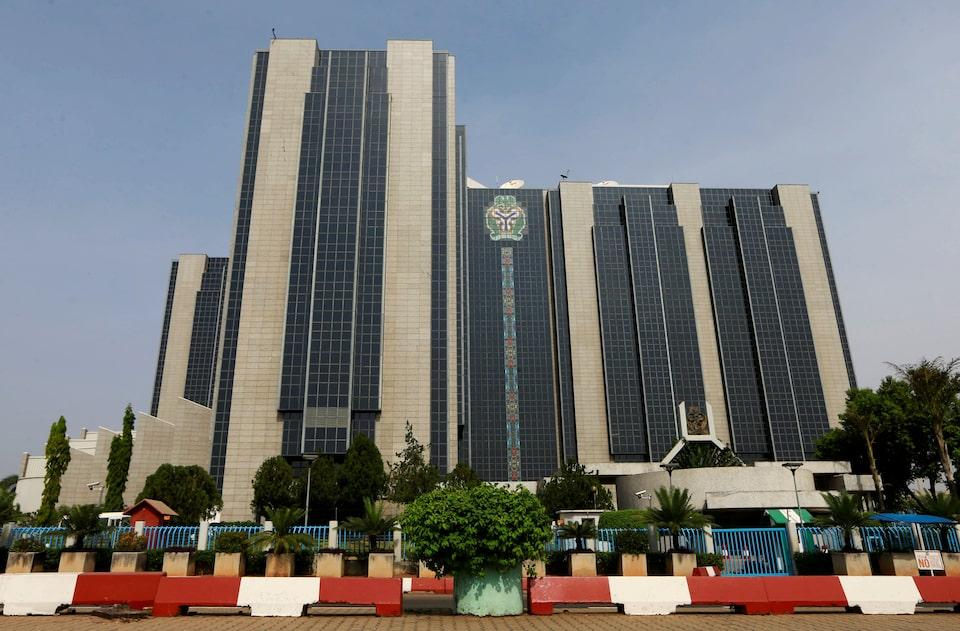
Central bank leaves monetary policy rate at 27.5% Rates held to address existing, emerging inflationary pressures Central bank governor says aiming for single digit inflation ABUJA, July 22 (Reuters) - Nigeria's central bank kept its monetary policy rate at 27.50% (NGCBIR=ECI) , opens new tab for the third consecutive time this year, pledging on Tuesday to maintain its current stance until inflation risks recede. Consumer inflation (NGCPIY=ECI) , opens new tab in the oil-producing West African nation fell for the third straight month in June to 22.22% year-on-year from 22.97% in May. Sign up here. Central Bank Governor Olayemi Cardoso acknowledged that inflation was easing. He said the rate-setting Monetary Policy Committee's decision was based on the need to sustain disinflation. "Maintaining the current monetary stance will continue to address the existing and emerging inflationary pressure," Cardoso said, adding the goal was to get inflation to single digits. Most economists polled by Reuters had predicted the central bank would keep the rate unchanged after hiking it six times in 2024 to fight soaring inflation, which repeatedly hit 28-year peaks last year. Price pressures have been spurred by President Bola Tinubu's reforms since coming to office in 2023, including ending costly subsidies and the devaluation of the naira currency . But inflation dropped sharply in January when the statistics agency updated the base year for its calculations and re-weighted the inflation basket, falling to 24.48% in annual terms from 34.80% in December. However, its decline has since slowed. Cardoso said the fall in inflation in June was largely driven by the moderation in energy prices and stability in the foreign exchange market. "Despite these positive developments, members (of the MPC) observed the uptick in month-on-month headline inflation, suggesting the persistence of underlying price pressures, the continued global uncertainties," he said, adding that tariff wars and geopolitical tensions could sustain price pressures. The World Bank has warned that persistently high inflation remains a challenge for Nigeria, urging it to stick to tight monetary and disciplined fiscal policies. https://www.reuters.com/world/africa/nigerias-central-bank-pledges-keep-policy-tight-it-holds-key-rate-again-2025-07-22/
2025-07-22 13:05
China, US and euro area had excessive balances IMF warns tariffs don't correct current account imbalances Tensions could lead to shifts in international monetary system, IMF says WASHINGTON, July 22 (Reuters) - Global current account balances widened sharply in 2024, reversing a narrowing under way since the global financial crisis of 2008-2009, the International Monetary Fund said on Tuesday, warning that tariffs were not the answer. In its annual External Sector Report, which assesses imbalances in the 30 largest economies, the IMF noted that external surpluses or deficits were not necessarily a problem, but could cause risks if they became excessive. Sign up here. It said prolonged domestic imbalances, continued fiscal policy uncertainty, and escalating trade tensions could deteriorate global risk sentiment and elevate financial stress, hurting both debtor and creditor nations. The report took aim at U.S. President Donald Trump's imposition of higher import tariffs against nearly every trading partner, which his administration says is aimed at increasing revenues and righting longstanding trade deficits. "A further escalation of the trade war would have significant macroeconomic effects," it said, noting that higher tariffs would reduce global demand in the short term and add to inflationary pressures through rising import prices. Rising geopolitical tensions could also trigger shifts in the international monetary system (IMS), which in turn could undermine financial stability, it said. This year's report, based on 2024 data, showed the widening of global current account balances was due largely to increased excess balances in the world's three largest economies - the United States, China and the euro area. The deficit in the United States widened by $228 billion to $1.13 trillion or 1% of global gross domestic product (GDP), while China's surplus increased by $161 billion to $424 billion and the euro surpluses expanded by $198 billion to $461 billion. DOMESTIC SOLUTIONS In an accompanying blog, IMF chief economist Pierre-Olivier Gourinchas said excessive surpluses or deficits stemmed from domestic distortions, such as overly loose fiscal policy in deficit countries and insufficient safety nets that caused excessive precautionary savings in surplus countries. Changes aimed these domestic drivers - not tariffs - were needed, he said. That meant China should focus on boosting consumption, Europe should spend more on infrastructure and the U.S. needed to reduce large public deficits and rein in fiscal spending, he said. The report was based on data collected before approval of a massive tax cut and spending bill, which the Congressional Budget Office on Monday said would add $3.4 trillion to the U.S. deficit over 10 years, causing further pressure. "Public deficits in the United States remain excessively large and the recent broad depreciation of the Chinese yuan - together with the U.S. dollar - runs the risk of widening current account surpluses in China," he wrote. Rising tariffs had little impact on global imbalances, Gourinchas said since they tended to reduce both investment and savings in the tariffing country, leaving current account balances little changed. 'SOFTENING' US ROLE AS WORLD BANKER Uncertainty about tariffs could also undermine consumer and business confidence, increase financial market volatility and lead to persistent appreciations of the U.S. dollar, the IMF report said. However, it noted the dollar had depreciated 8% since January, its largest half-year decline since 1973. It acknowledged the continued dominance of the U.S. dollar, but said growing geoeconomic fragmentation could pose risks in the future, and recent weaker demand for U.S. Treasuries could reflect concerns about the U.S. fiscal trajectory. Increased use of China's yuan in international trade and finance, a "softening in the United States' role as world banker and insurer" and the emergence of alternative payment systems and private digital assets could eventually lead to changes in the use of international currencies. "While the risks of serious dislocation in the IMS remain moderate, rapid and sizable increases in global imbalances can generate significant negative cross-border spillovers," Gourinchas wrote in the blog. "A major risk for the global economy is that countries will instead respond to rising imbalances by further raising trade barriers, leading to increased geoeconomic fragmentation. And while the impact on global imbalances will remain limited, the harm to the global economy will be long-lasting." https://www.reuters.com/business/imf-warns-tariffs-arent-answer-global-imbalances-2025-07-22/
2025-07-22 12:44
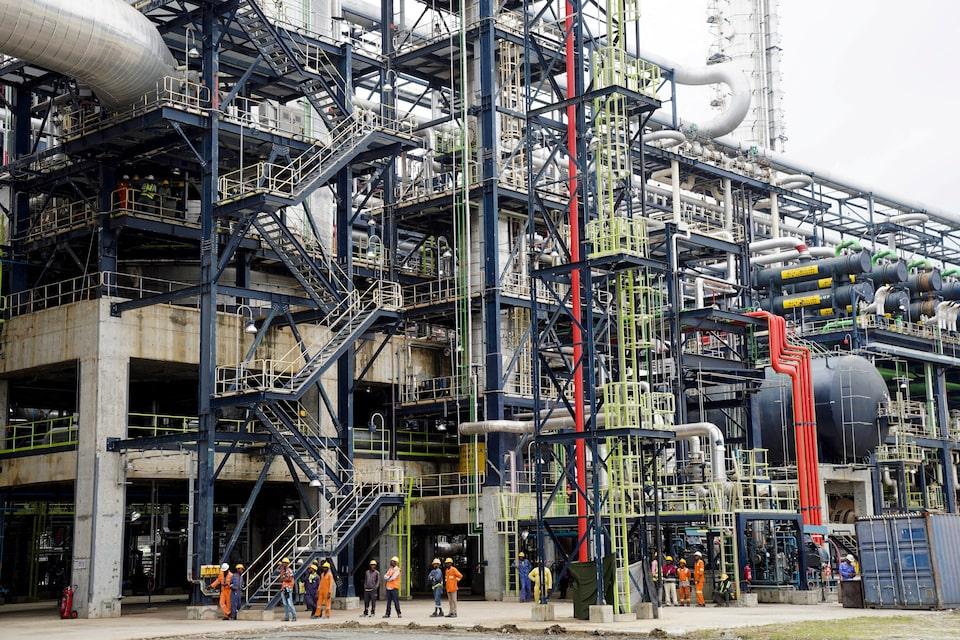
LAGOS, July 22 (Reuters) - Nigeria has partnered with S&P Global Commodity Insights to develop a regional pricing benchmark for refined petroleum products in West Africa, the country's downstream regulator said on Tuesday. The initiative, launched at the West African Refined Fuel Conference in Nigeria's capital Abuja, aims to create localised indices for products such as petrol, diesel, aviation fuel and liquefied petroleum gas. Sign up here. West Africa is a significant oil and gas producer as well as a growing refining hub. But it is currently dependent upon posted prices from global reference markets, said Farouk Ahmed, head of Nigeria's Midstream and Downstream Petroleum Regulatory Authority. "While these benchmarks are globally accepted, often they do not reflect the unique supply chain peculiarities, market dynamics and economic realities of the African continent," Ahmed said. The partnership will improve price transparency, support investment decisions and enhance energy security across the region, he added. OPEC member Nigeria, Africa's largest crude producer, is implementing reforms to liberalise its downstream sector as it positions itself as a regional trading hub. The Dangote petroleum refinery in the commercial capital Lagos, for example, with refining capacity of 650,000 barrels per day, started operations last year and has been ramping up production and seeking new markets. Nigeria currently produces some 31% of the refined fuel traded in West Africa, with that share expected to grow as new refining projects come online. https://www.reuters.com/sustainability/boards-policy-regulation/nigeria-partners-with-sp-global-west-african-petroleum-price-index-2025-07-22/
2025-07-22 12:38
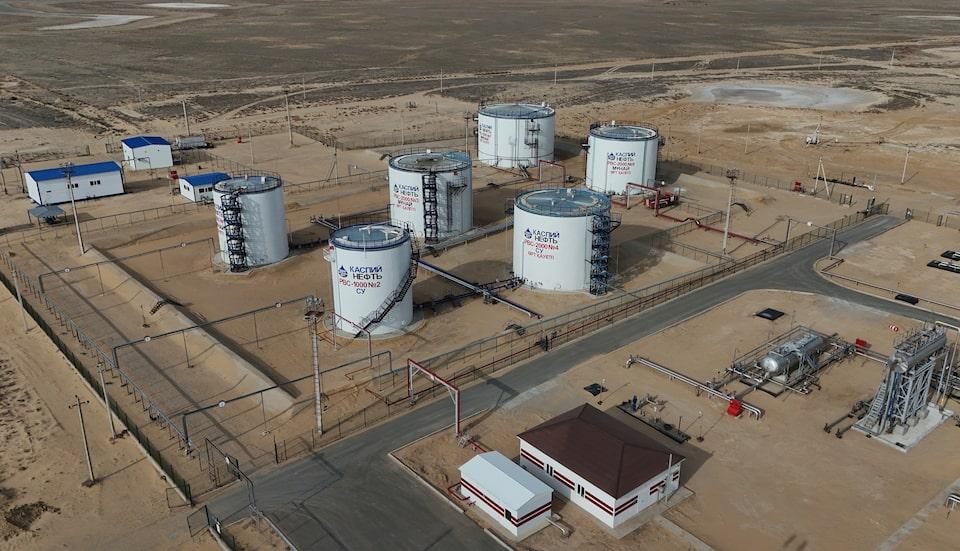
MOSCOW, July 22 (Reuters) - Kazakhstan, one of fastest-growing oil producers in the world, plans to boost its fuel exports to China, India and Central Asia, pinning its hopes on growing demand in the regions, the energy ministry said on Tuesday. It said the government approved long-term strategy of oil refining industry's development for 2025 - 2040. The country currently has restrictions on exports of gasoline and diesel. Sign up here. The country has three large oil producing plants, in Pavlodar in the north, Shymkent in the south and Atyrau in the west with combined annual production reaching 17 million metric tons (350,000 barrels per day) following modernisation. The ministry said it expected domestic fuel demand to grow by up to 2% each year thanks to urbanisation and industrial development. It said it sought to boost fuel exports, targeting markets in China, India and the countries in Central Asia with a view of raising the share of exports in total output to 30% by 2040. It added that it may raise foreign investments to fund the implementation of the strategy given Kazakhstan's crude oil reserves of 30 billion barrels. https://www.reuters.com/business/energy/kazakhstan-targets-china-india-long-tern-fuel-production-strategy-2025-07-22/
2025-07-22 12:28
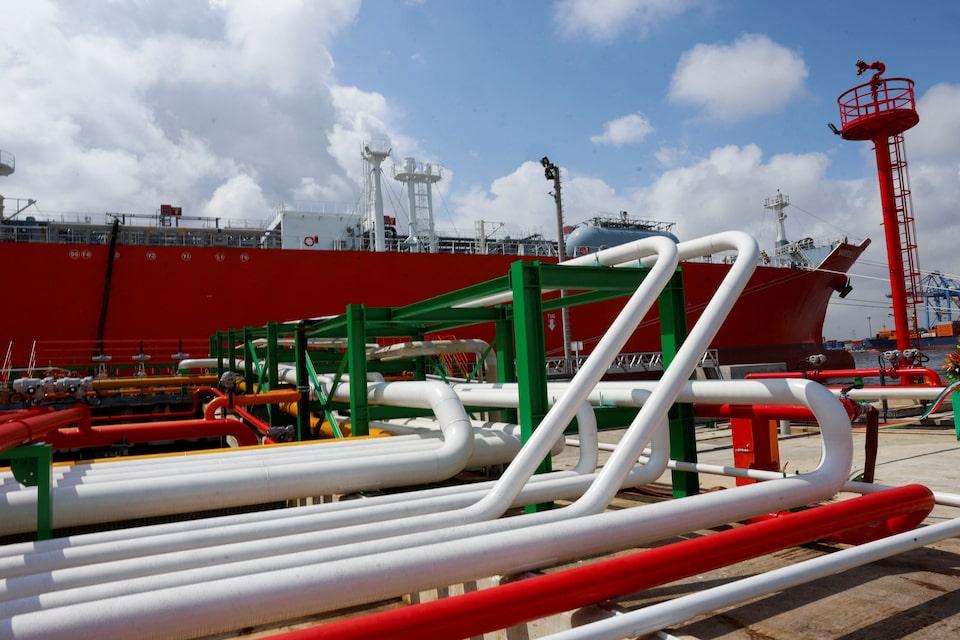
LONDON, July 22 (Reuters) - Oil prices declined for a third consecutive session on Tuesday on concerns the brewing trade war between major crude consumers the United States and the European Union will curb fuel demand growth by reducing economic activity. Brent crude futures were down 53 cents, or 0.8%, to $68.68 a barrel at 1219 GMT. U.S. West Texas Intermediate crude was at $66.57 a barrel, down 63 cents, or 0.9%. Sign up here. The August WTI contract expires on Tuesday and the more active September contract was down 52 cents, or 0.8%, to $65.43 a barrel. "Oil prices fell for a third straight session ... as urgency builds in trade negotiations between the U.S. and its partners," Soojin Kim, an analyst at bank MUFG, said in a note. The Trump administration has set an August 1 deadline for countries to secure trade deals or face steep tariffs. The EU is exploring a broader set of possible counter-measures against the United States as prospects for an acceptable trade agreement with Washington fade, according to EU diplomats. The U.S. has threatened to impose a 30% tariff on EU imports if a deal is not reached. A weaker dollar has limited some losses for crude as buyers using other currencies are paying relatively less. Prices have slipped "as trade war concerns offset the support by a softer (U.S. dollar)," IG market analyst Tony Sycamore wrote in a note. Stronger distillate profit margins due to low inventories are also supporting crude prices. "The move lower might have seen more momentum if it were not for the continued performance in distillates which continues to be aided by low stocks," PVM Oil analyst John Evans said in a note. Meanwhile, a Reuters poll of analysts showed U.S. crude oil inventories likely fell by about 600,000 barrels in the week to July 18. https://www.reuters.com/business/energy/oil-prices-fall-tariff-deadline-looms-2025-07-22/
2025-07-22 12:26
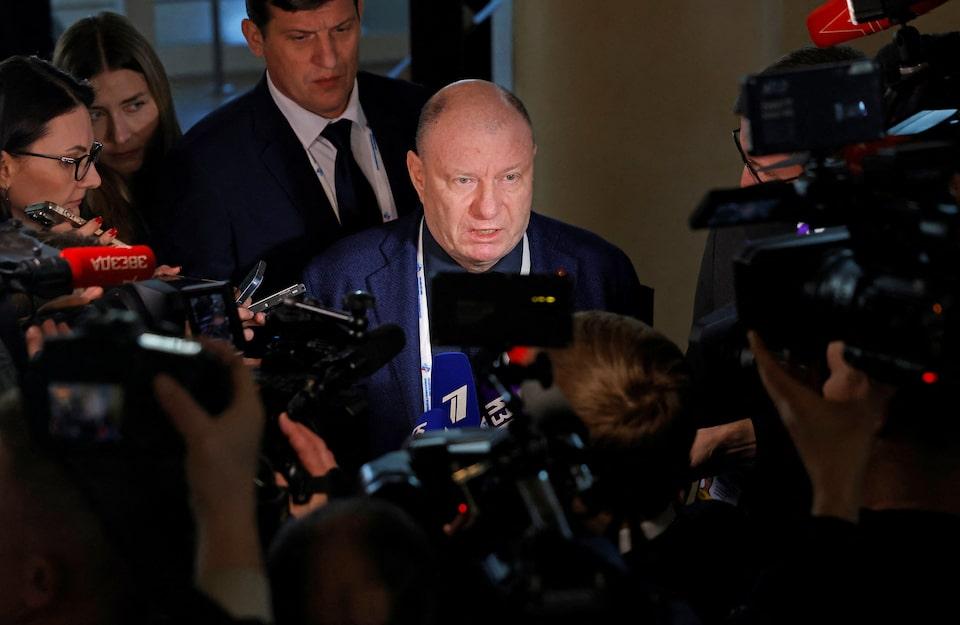
LONDON, July 22 (Reuters) - Russian oligarch Vladimir Potanin's ex-wife on Tuesday urged a London appeal court to let her pursue a multi-billion dollar share of his stake in Nornickel, in potentially one of the highest-value divorce cases ever brought. Potanin – CEO of Norilsk Nickel (GMKN.MM) , opens new tab, the world's largest palladium producer and a major producer of refined nickel – is facing the mammoth divorce claim from ex-wife Natalia Potanina. Sign up here. Potanina wants to bring a claim for financial relief following their formal divorce in 2014, which includes a claim for 50% of the value of her ex-husband's ultimate beneficial interest in shares in Nornickel. Potanin holds a roughly 39% stake in Nornickel through his Interros holding company, which is currently worth $9.4 billion, according to LSEG data. Potanina is also seeking 50% of any dividends paid to Potanin since 2014 and a high-end Russian property, on which the parties spent around $150 million. Her lawyers say she received only $41.5 million after their divorce, amounting to less than 1% of the couple's total assets, and is entitled to "a fair share of the assets built up during the marriage". Potanin, however, says his ex-wife received around $84 million and argues her claim should be rejected as the couple had no connection to Britain. His lawyer Edward Faulks said in court filings that Potanina's "first contact with England and Wales following the breakdown of her marriage was to contact English divorce lawyers". England and Wales has long been seen as a favourable jurisdiction by less wealthy partners, with courts regularly making awards running into the hundreds of millions of pounds. London's High Court rejected Potanina's bid to bring a claim in 2019, with a judge saying that if her claim was allowed to proceed "then there is effectively no limit to divorce tourism". The case has since been to the United Kingdom's Supreme Court, which sent it back to the Court of Appeal to decide whether Potanina's claim can proceed. https://www.reuters.com/markets/europe/russian-oligarch-potanins-ex-wife-asks-uk-court-clear-claim-nornickel-shares-2025-07-22/