2025-07-22 12:11
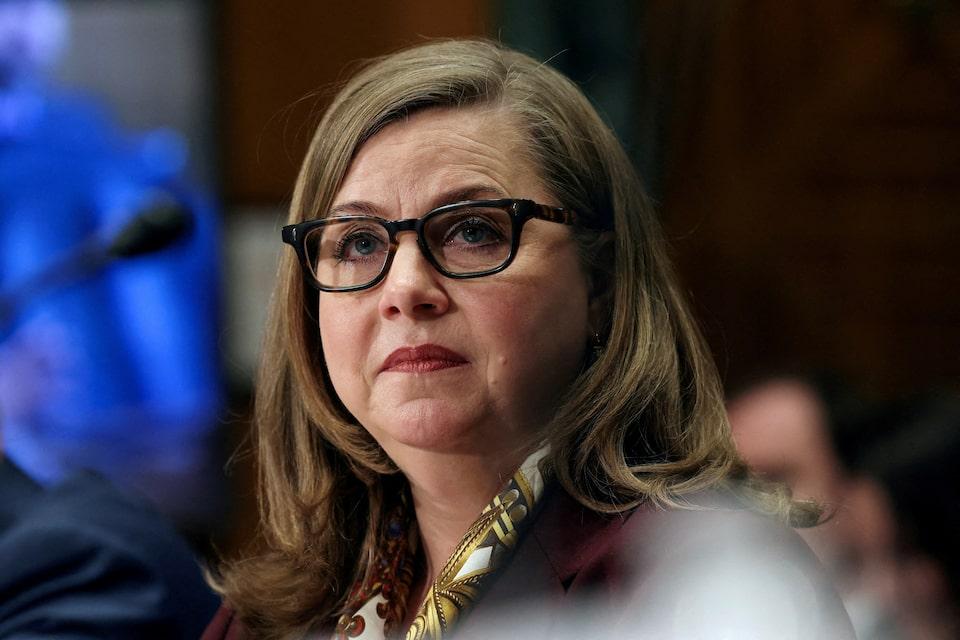
July 22 (Reuters) - Federal Reserve Vice Chair for Supervision Michelle Bowman on Tuesday said the central bank's ability to set monetary policy without political interference is "very important." "It's very important ... that we maintain our independence with respect to monetary policy," Bowman said in a CNBC interview ahead of a day-long conference she is hosting at the Fed on bank regulation. Sign up here. "But we also, as part of that independence, have an obligation for transparency and accountability as well. But we also have an obligation, in my view, as we have throughout my time on the board here since 2018, to listen to a broad range of voices to understand how others are viewing the economy and how that should influence our decisions in monetary policy making." The remarks from Bowman, appointed to the Fed Board of Governors by President Donald Trump in his first term and recently elevated by him to be the top banking regulator at the central bank, come as Trump has ramped up his criticism of the Fed and of its leader, Chair Jerome Powell, for not lowering interest rates as Trump wishes. https://www.reuters.com/sustainability/boards-policy-regulation/feds-bowman-fed-independence-is-very-important-with-respect-monetary-policy-cnbc-2025-07-22/
2025-07-22 12:03
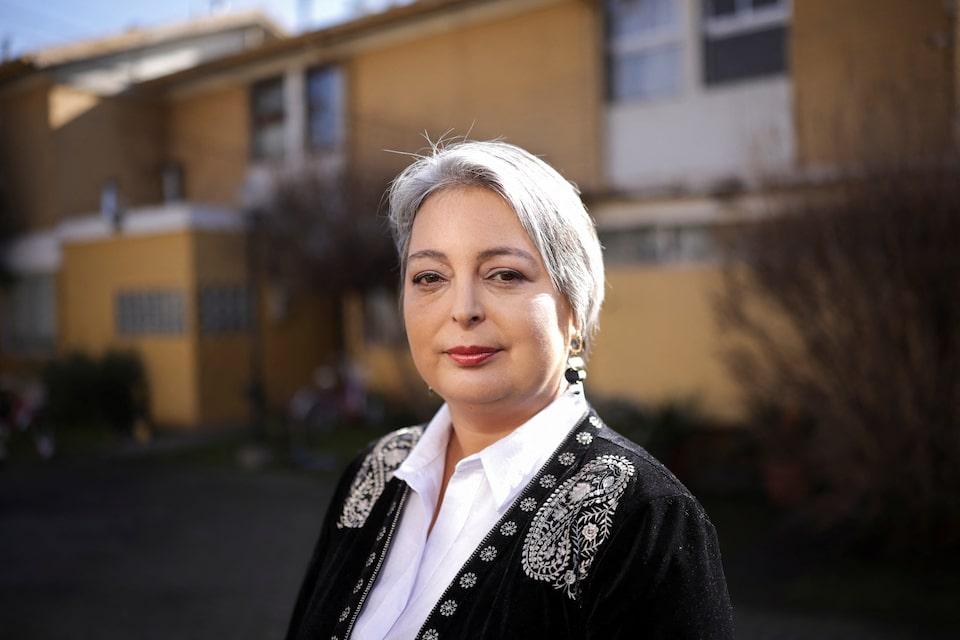
Jara has criticized right-wing policies on migration But she has taken a harder line on crime during campaign Polls indicate she will lose to far-right Jose Kast SANTIAGO, Dec 11 (Reuters) - Saddled with an unpopular incumbent president, Chile's left made a bold choice to contest a resurgent right in this year's presidential election - Jeannette Jara, a member of the Communist Party. Jara, the candidate for the ruling Unity for Chile coalition, has tried to win over skeptical voters by championing her track record of pushing through popular legislation on pensions and a reduced workweek under President Gabriel Boric. Sign up here. But Jara has faced an uphill battle. Although she narrowly won the November first round, opinion polls suggest her right-wing rival, Jose Antonio Kast, will triumph in Sunday's second round, picking up most of the votes from three other right-wing candidates who fell short. Jara has been encumbered by Boric's unpopularity and her own party affiliation in a country that remains haunted by the Augusto Pinochet dictatorship that followed the 1973 coup against democratically elected Marxist president Salvador Allende. "I think a lot of stories about the (Communist Party) stem from the Cold War and aren't representative of the current situation," Jara told Reuters in July. "In Chile we have a profound commitment to democracy and respect for institutional norms." Jara joined the party as a student leader in the 1990s and bounced between government and the private sector. Before serving as Boric's labor minister, Jara worked in several ministries under center-left former President Michelle Bachelet. CAMPAIGN FOCUS SHIFTS Jara's campaign kicked off by seeking to focus on her plans for stimulating sluggish economic growth and addressing long-running concerns over income inequality, which triggered widespread protests in 2019. "We can't keep having two Chiles in the same country, one for well-off sectors and the other for the vast majority," she said in July's interview. But, trying to gain ground on Kast, she has also increasingly said she would crack down on crime. While Chile remains one of the safest countries in Latin America, an influx of organized crime has led to a rising murder rate and hurt economic growth, with a recent spike in high-profile incidents like kidnappings and assassinations. "I will use all the tools that the rule of law gives us to safeguard public security," she said in the final televised debate with Kast on Tuesday evening, adding that she was prepared to declare a state of emergency if necessary. She has, however, criticized Kast and other right-wing candidates - who have blamed the rising crime on increasing numbers of migrants - for some of their more hardline policies, such as building a border wall. No matter Jara's policies, given the unpopularity of Boric, "even if she had been Bachelet in her prime" she would have struggled to win over voters, said Patricio Navia, a Chilean professor of liberal studies at New York University. "But furthermore, Jara is a communist, which makes it more difficult... Her campaign did not go well, she started off as very pacifist and then got really aggressive. So we never knew who Jara was." https://www.reuters.com/world/americas/jeannette-jara-is-coalition-communist-who-wants-be-chiles-next-president-2025-07-22/
2025-07-22 12:00
LAUNCESTON, Australia, July 22 (Reuters) - A key difference in crude oil demand forecasts between this year and 2024 is that both OPEC and the International Energy Agency (IEA) are being far more cautious in their growth expectations. While the Organization of the Petroleum Exporting Countries (OPEC) and the wider OPEC+ group publicly maintain that strong demand and a tight market justify increasing oil output, the numbers in their monthly report are more circumspect. Sign up here. It is largely the same for the IEA, which forecast in its July monthly report that global crude demand will grow by 700,000 barrels per day (bpd) in 2025, the slowest pace since 2009. OPEC's July report is slightly more bullish, forecasting oil demand will increase by 1.29 million bpd in 2025, with 1.16 million bpd coming from countries outside the developed economies of the Organisation for Economic Cooperation and Development (OECD). The forecasts from both the IEA and OPEC are now so cautious that they actually run the risk of being too pessimistic, especially in the top-importing region of Asia. This is in stark contrast to last year, when OPEC in particular was massively bullish in its demand forecasts even as Asia's crude oil imports were declining. There is, of course, a difference between demand forecasts and imports, but the level of seaborne imports is the key driver of crude prices, given it is this market, which accounts for about 40% of global daily oil demand, that sets the global prices. In its July 2024 monthly report OPEC forecast that Asia's non-OECD oil demand would rise by 1.34 million bpd in 2024, with China accounting for 760,000 bpd of this. However, Asia's crude imports actually declined in 2024, dropping by 370,000 bpd to 26.51 million bpd, according to data compiled by LSEG Oil Research. It was the first decline in Asia's oil imports since 2021, at a time when demand was hit by the lockdowns prompted by the COVID-19 pandemic. The gap between OPEC's bullish forecasts for much of 2024 and the reality of weak crude imports by Asia may have tempered the exporter group's forecasts for 2025. The question is whether they are now actually being too cautious. ASIA RECOVERY OPEC's July monthly report forecast that non-OECD Asia's oil demand will rise by 610,000 bpd in 2025, with China the main contributor at 210,000 and India, Asia's second-biggest crude importer, seeing an increase of 160,000 bpd. The IEA said in its July report that it expects China's total oil product demand to rise by 81,000 bpd in 2025, while India is expected to see a gain of 92,000 bpd. Total non-OECD Asia is forecast to see demand rise by 352,000 bpd. Both the OPEC and the IEA numbers seem modest, especially since Asia's crude imports actually saw relatively strong growth in the first half of 2025. Asia's imports in the first six months of the year were 27.25 million bpd, an increase of 510,000 bpd from the same period last year, according to calculations based on LSEG data. Imports increased in the second quarter, especially in China, as refiners took advantage of the weakening trend in oil prices that prevailed at the time cargoes were being arranged. It is likely that some of the increase in oil imports was used to build inventories, a process that may extend into the second half if oil prices remain soft as OPEC+ increases output amid the economic uncertainty created by U.S. President Donald Trump's ongoing global trade war. If there is one lesson to be learnt from the difference between this year's circumspect oil demand forecasts and last year's buoyant estimates, it is that price plays a far bigger role in demand, especially in Asia. Part of the reason Asia's crude imports fell short of forecasts in 2024 was because prices remained elevated for much of the year, reaching above $92 a barrel in April and only briefly dropping below $70 in September. This year, prices have been softer, with benchmark Brent futures peaking at just over $82 a barrel in January, and trading as low as $58.50 in May. Enjoying this column? Check out Reuters Open Interest (ROI), your essential new source for global financial commentary. ROI delivers thought-provoking, data-driven analysis of everything from swap rates to soybeans. Markets are moving faster than ever. ROI can help you keep up. Follow ROI on LinkedIn , opens new tab and X , opens new tab. The views expressed here are those of the author, a columnist for Reuters. https://www.reuters.com/markets/commodities/opec-iea-crude-oil-demand-forecasts-may-be-too-cautious-2025-07-22/
2025-07-22 11:59
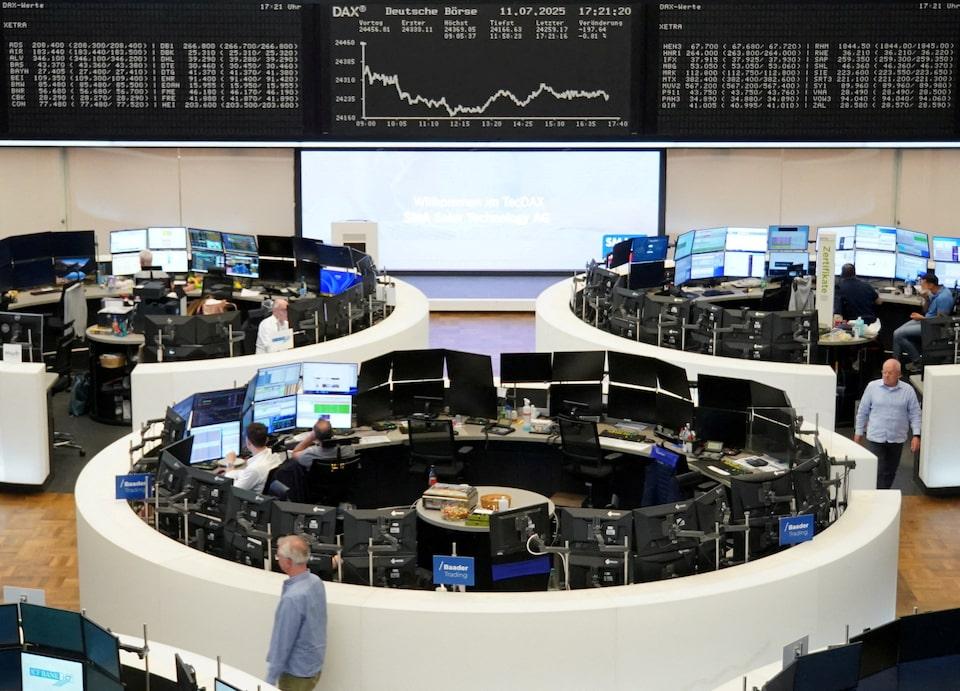
Euro STOXX extends losses, last down 0.6% Wall Street set to open flat Earnings season, tariffs in focus Japan's Nikkei rises in relief rally after priced-in election US dollar subdued as investors await tariff clarity LONDON, July 22 (Reuters) - European shares fell on Tuesday, hit by mixed corporate earnings and anxiety over tariff negotiations between the U.S. and its trading partners, while the euro held steady. The Euro STOXX 600 index (.STOXX) , opens new tab extended losses during morning trading and was last down 0.6%, with bourses in Germany (.GDAXI) , opens new tab and France (.FCHI) , opens new tab losing 1.1% and 0.8% respectively. Sign up here. Among the big decliners were chemical stocks (.SX4P) , opens new tab which shed 2% as Dulux paint maker Akzo Nobel (AKZO.AS) , opens new tab lost 5.4% after lowering its core profit outlook for 2025. Earnings from firms including SAP (SAPG.DE) , opens new tab and UniCredit (CRDI.MI) , opens new tab were also in focus. Investors were also following tariff talks ahead of Washington's August 1 deadline, with the European Union exploring a broader set of possible countermeasures against the U.S. as hopes for an acceptable agreement fade. The euro was steady at $1.1689 after rising 0.5% on Monday, though still away from the near four-year high hit at the start of the month. The single currency is up 13% this year as investors looked for alternatives to U.S. assets bruised by tariff uncertainties. Its performance is closely monitored for its impact on profits in the euro zone's export-reliant economy. "The euro's ability to maintain preference over the dollar amid tariff tensions will depend on the extent of any escalation and whether the EU emerges as a relative loser while other countries secure significant deals with the U.S.," ING analysts wrote in a note to clients. Wall Street futures were marginally down. The benchmark S&P 500 (.SPX) , opens new tab and the Nasdaq (.IXIC) , opens new tab closed at record highs on Monday. Investors await results this week from Wall Street giants Alphabet and Tesla (TSLA.O) , opens new tab, as well as European heavyweights LVMH (LVMH.PA) , opens new tab and Roche (ROG.S) , opens new tab, as uncertainty over tariffs clouds the outlook. Earlier, Asian share markets drifted lower after scaling a near four-year peak. MSCI's broadest index of Asia-Pacific shares outside Japan (.MIAPJ0000PUS) , opens new tab hit its highest since October 2021 but finished down 0.4%. The index is up nearly 16% this year. Japanese markets returned after a holiday on Monday following the weekend's election where the ruling coalition suffered a defeat in upper house elections, although Prime Minister Shigeru Ishiba vowed to remain in his post. The yen rallied 1% on Monday, recouping some of the losses from past weeks and was flat at 147.43 per dollar. FED INDEPENDENCE The dollar index , which gauges the unit against six other key currencies, was also flat at 97.849. Rumblings around the Federal Reserve's independence and whether U.S. President Donald Trump will fire Fed Chair Jerome Powell have kept investors on tenterhooks in recent weeks. U.S. Treasury Secretary Scott Bessent said on Monday the entire Federal Reserve needed to be examined as an institution and whether it had been successful. The Fed is widely expected to hold rates steady in its July meeting but might lower rates later in the year. Market focus will be squarely on Powell's impending speech on Tuesday for clues about when the Fed might ease policy. Brent crude futures fell 0.9% to $68.56 a barrel, while U.S. West Texas Intermediate crude slipped by the same amount to $66.59 per barrel. https://www.reuters.com/world/china/global-markets-wrapup-4-2025-07-22/
2025-07-22 11:58
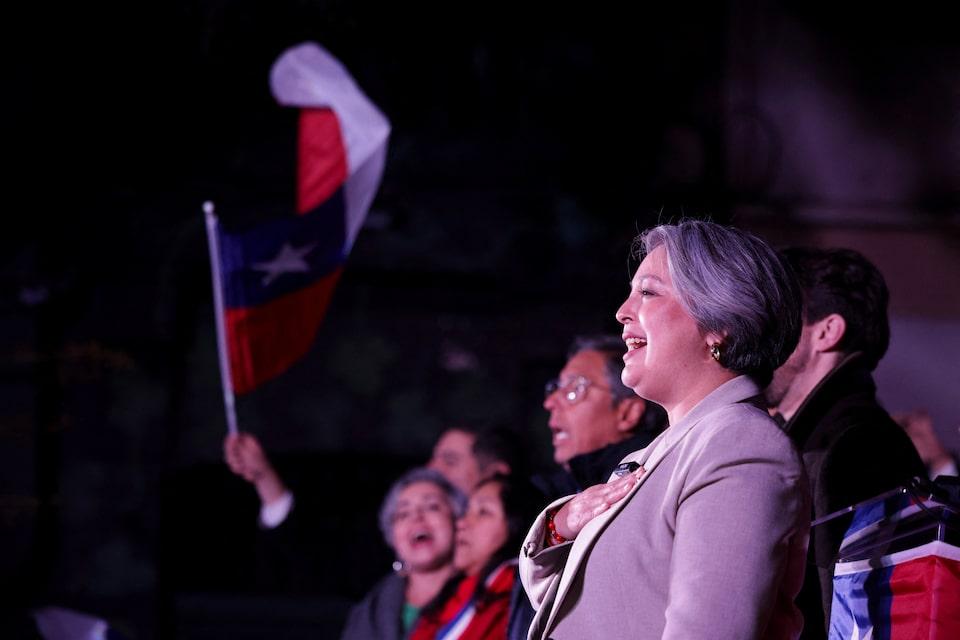
Campaign will focus on economic growth and inequality Jara criticizes right-wing policies on migration Advocates for separate public company for lithium SANTIAGO, July 22 (Reuters) - Saddled with an unpopular incumbent president, Chile's left has made a bold choice to contest a resurgent right in November's election - Jeannette Jara, a member of the Communist Party. Jara, who was chosen by voters last month to be the candidate for the ruling Unity for Chile coalition, told Reuters she plans to win over skeptical voters by championing her track record of pushing through popular legislation on pensions and a reduced workweek under President Gabriel Boric. Sign up here. But Jara still faces an uphill battle, encumbered by Boric's unpopularity and her own party affiliation in a country that remains haunted by the Augusto Pinochet dictatorship that followed the 1973 coup against democratically elected Marxist president Salvador Allende. "I think a lot of stories about the (Communist Party) stem from the Cold War and aren't representative of the current situation," Jara said in an interview. "In Chile we have a profound commitment to democracy and respect for institutional norms." Jara joined the party as a student leader in the 1990s and bounced between government and the private sector. Before serving as Boric's labor minister, Jara worked in several ministries under center-left former president Michelle Bachelet. In the primary vote, the charismatic 51-year-old Jara beat out three other candidates, including the presumptive favorite. She benefited from her popularity with younger voters and vows to build a broad coalition. "We were looking at a situation where there was no competition or representative leadership to build a broad view under a single candidate and I thought I could contribute that," Jara said. Speaking to Reuters outside her small, plant-filled, yellow-brick home in Santiago on Friday, Jara said she is seeking to emphasize her pragmatism and dealmaking, noting her leadership role in legislation that reduced the workweek to 40 hours and reformed pensions. "I didn't do it alone, I did it hand-in-hand with workers and Chilean business owners to come to an agreement," Jara said. "We have experience, we don't have all the answers - nobody is infallible. But we have an ability to govern the country with the reforms it needs." Opinion polls show that Jara is likely to make it to a run-off, but most scenarios have her losing to a right-wing candidate in the second round. Chile's presidential elections are slated for November 16 and will go to a run-off in December if no candidate receives a majority. CAMPAIGN FOCUS Jara said her campaign would have three pillars: economic growth, social issues and public safety. She said she wants to focus on matters that impact a majority of Chileans, such as job creation and recurring questions over income inequality, which triggered widespread protests in 2019. "We can't keep having two Chiles in the same country, one for well-off sectors and other for the vast majority," she said. She said she would also seek to address crime. While Chile remains one of the safest countries in Latin America, an influx of organized crime has led to a rising murder rate and hurt economic growth, with a recent spike in high-profile incidents like kidnappings and assassinations. But she blasted hardline proposals like building border walls or placing landmines along the border that have been suggested by some right-wing candidates, who have blamed the rising crime on increasing numbers of migrants. "While some shout louder or have ideas that aren't grounded in reality, I trust citizens' ability to evaluate proposals that could lead to solutions," Jara said, adding that she would seek to increase funding for the police and introduce biometric screening at the border. "None of this is an easy fix," she said. LITHIUM EXTRACTION As the world's largest copper producer and one of the largest lithium producers, Chile's economy relies heavily on mining. Boric has sought to boost lithium production with a joint venture between state-run copper giant Codelco and local lithium miner SQM. But the deal has faced opposition from right-wing candidates, Indigenous groups and Jara herself. "I don't agree with an agreement with (SQM) that would extend their lithium concession by 30 years," Jara said, citing a campaign finance scandal in 2015 and SQM's sale to Pinochet's son-in-law during the dictatorship. "If Boric closes the deal during his government I'll respect it. If not, I'll propose a national public company to operate alongside the private sector like Codelco with copper," she said. U.S. President Donald Trump has threatened heavy tariffs on copper and Jara said in response that she would focus on strengthening trade with Latin America, China and others. "We recently signed a trade agreement with India that I hope to expand and strengthen," Jara said. Relations with the United States would remain diplomatic and cordial under her government if she were elected, she said, adding: "We have to act prudently to safeguard our national interest." https://www.reuters.com/world/americas/jeanette-jara-is-coalition-communist-who-wants-be-chiles-next-president-2025-07-22/
2025-07-22 11:41
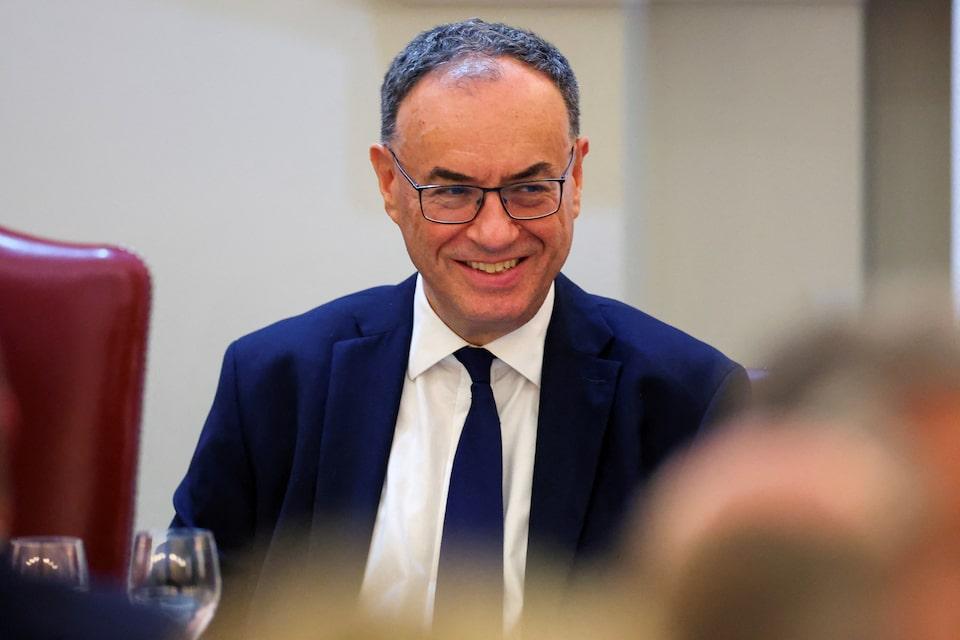
Bailey defends separation of banks' investment banking arms Comments come a week after finance minister's criticism BoE sees risks in mandating pension fund investment Rise in borrowing costs not just in UK, Bailey says LONDON, July 22 (Reuters) - Bank of England Governor Andrew Bailey said on Tuesday he did not agree with finance minister Rachel Reeves' description of regulation as a "boot on the neck of businesses" and he defended rules for the banking sector which are overseen by the BoE. Bailey told lawmakers that the central bank was open to making changes to the detail of post-financial crisis financial regulation - such as income thresholds for approving mortgages - to help the government's economic growth push. Sign up here. But he favoured keeping rules on banks in areas such as ring-fencing - which separates banks' consumer lending operations from their more volatile investment banking - and said Britain was not imposing tougher regulation than elsewhere. "I do think that the ring-fencing regime is an important part of the structure of the banking system," he said, noting the rules made it easier to deal with troubled banks. Reeves last week promised "meaningful reform" of the ring-fencing rules as she seeks to speed up Britain's sluggish economy, something sought by the leaders of several major banks who say the rules are a drag on credit. Asked by a lawmaker about Reeves' describing regulation as a "boot on the neck" of businesses, Bailey said: "I don't use those terms. Let me say that ... it's not a term I use" before adding: "We can't compromise on basic financial stability. That would be my overall message." Bailey was speaking to the House of Commons' Treasury Committee alongside two other members of the BoE's Financial Policy Committee, Randall Kroszner and Carolyn Wilkins. Kroszner, a former U.S. Federal Reserve official, said he saw no specific clash at this stage between financial stability and the relaxation of regulations planned by Reeves. "But always the devil is in the detail," Kroszner said. UNFORESEEN CONSEQUENCES Bailey also sounded worried about the possibility of the government forcing pension funds to make illiquid investments such as in infrastructure assets to help boost Britain's economy. "I do think that it's important that we let investment markets work. I do think that mandating could have unforeseen consequences, which do make me nervous," he said. "However ... if, as I hope, we go down this road of pension reform, and it doesn't happen, then I think there is a very strong 'moral suasion' point on industry to do this." Reeves said in her Mansion House speech last week that she was confident she would not need to use new powers to force funds to invest in a wider range of assets but she said the new pension bill reserved that right. Bailey also told the committee that a rise in British government borrowing costs - especially for long-dated bonds - was not out of line with increases in other countries. "We have seen steepening of yield curves going on now," Bailey told the Treasury Committee. "I think the important thing to say is that is a global phenomenon. It's not in any sense unique to this country. In fact, the pattern in this country is not in any sense out of line with what we've seen in other markets, and we've seen steeper increases in some other markets." Rising borrowing costs were being driven by concerns about the impact on global trade from tariff policy decisions and uncertainty about the scale of future public borrowing, he said. U.S. President Donald Trump has imposed tariffs on imports of many goods and has also won approval in Congress for tax cuts that are forecast to push up U.S. public debt. https://www.reuters.com/world/uk/bank-englands-bailey-defends-bank-rules-after-reeves-attack-2025-07-22/