2025-07-22 06:11
OSLO, July 22 (Reuters) - Norway's biggest utility, state-owned Statkraft, reported on Tuesday a deeper net loss for the second quarter, driven primarily by impairments due to lower expectations for future power prices. The net loss for the April-June period stood at 6.5 billion Norwegian crowns ($638.56 million), against a year-ago loss of 992 million crowns, its report showed. Sign up here. Statkraft, which has continued this year to scale back its growth ambitions amid rising costs, said on Tuesday it will concentrate on its core competitive advantages and prioritise investments in near-term profitable opportunities. "Given the current market situation and geopolitical realities, combined with Statkraft's recent high activity and investment level, we are adjusting our strategic ambitions," CEO Birgitte Ringstad Vartdal said in a statement. Ratings agency Fitch earlier this month cut Statkraft's credit rating by one notch to BBB+ from A-, citing weakening performance and financial metrics. ($1 = 10.1791 Norwegian crowns) https://www.reuters.com/sustainability/climate-energy/norwegian-utility-statkraft-books-640-mln-q2-loss-after-impairments-2025-07-22/

2025-07-22 06:10
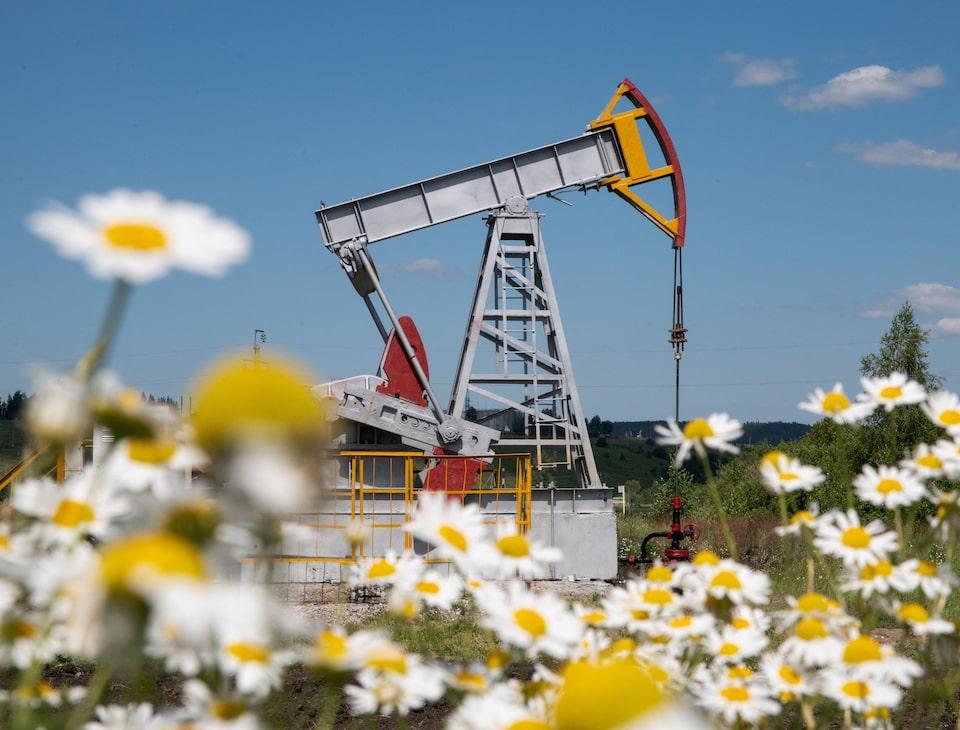
EU sanctions unlikely to impact Russia's oil revenue severely India and China may continue buying discounted Russian crude Trump's secondary sanctions could pressure Russia but risk global oil price surge LONDON, July 22 - The European Union's latest effort to restrict Russia's oil revenue is unlikely to hurt Moscow's war effort severely, leaving U.S. President Donald Trump's threat of secondary sanctions one of the few remaining economic levers to pressure the Kremlin. The EU on Friday agreed on the 18th package of sanctions against Russia, which foreign policy chief Kaja Kallas said was one of the strongest to date. Sign up here. The package lowers the price cap on Russian crude to $47.60 a barrel from $60, meaning shippers and insurance companies seeking to avoid sanctions can’t handle purchases made above this level. The new cap, which takes effect on September 3, also includes a mechanism to ensure it is always 15% below average Russian crude prices. A significant new addition is an import ban on refined oil products made from Russian crude. The ban, which would likely kick in next year, seeks to close a loophole created after the EU halted most imports of Russian crude and refined products in the wake of Moscow’s invasion of Ukraine in February 2022. This action led to sharp rises in European imports of fuels, particularly diesel and aviation fuel, from China, India and Turkey. The effectiveness of these initial measures was limited, however, as refiners in those three countries sharply increased imports of Russian feedstock due to the discounts created by the price cap. Ultimately, the biggest loser from the new ban would likely be India, which accounted for 16% of Europe's imports of diesel and jet fuel last year, according to Kpler data. Russian crude also accounted for 38% of India's crude imports in 2024. The new ban would exempt countries that are net exporters of crude, meaning the biggest beneficiaries of the new restriction will likely be Gulf producers with large refining operations such as Saudi Arabia, the United Arab Emirates and Kuwait that could pick up the slack from Indian refineries and export more fuel to Europe. PAIN AND GAIN The Western sanctions on Russia's oil sector since 2022 have been carefully crafted to avoid creating a severe energy price shock while still aiming to constrain the revenue of Moscow, the world's third-largest oil exporter. They haven’t been overly successful on the latter point. Russia's crude oil and oil products export revenues reached $192 billion in 2024, significantly more than its defence budget of $110 billion that year. That compared with oil export revenue of $225 billion in 2019. While Russia’s oil exports declined slightly in June to 7.23 million barrels per day, revenue rose by $800 million from May to $13.6 billion thanks to higher global oil prices, according to International Energy Agency estimates. This partly reflects the fact that Russia has found some workarounds, including developing a vast and opaque network of tankers, insurance and payment schemes that allow it to export its oil above the price cap. The EU’s latest package has also placed 105 additional tankers under sanctions for evading the original price cap, in addition to the 342 already sanctioned. But Moscow will likely find ways to evade the worst effects of the new sanctions, perhaps by expanding the shadow fleet or further obscuring the origin of its oil through measures such as mid-ocean ship-to-ship transfers. Moreover, India and China will likely continue buying discounted Russian crude to benefit their domestic markets, while re-routing fuel exports previously bound to the EU to new markets. So even though, on paper, the new price cap could collectively reduce Russia’s oil revenue, in reality, the new EU measures are unlikely to choke off Moscow's financial lifeblood. SECONDARY TRUMP TARIFFS One way to hit Moscow’s finances would be for President Trump to implement the "secondary sanctions" he threatened last week, whereby countries that buy oil from Moscow will be hit with 100% tariffs unless the Kremlin reaches a deal to end the war in Ukraine within 50 days. These secondary tariffs mean any country buying Russian oil would face severe restrictions on its ability to trade with the world's largest economy. Would Trump actually take this drastic step? Trump has expressed significant frustration with Russian President Vladimir Putin in recent weeks. And given that the multiple rounds of EU and U.S. sanctions on Russia have had a limited impact on Moscow’s war chest, secondary sanctions could be one of the few effective tools left. But in a global energy market, this effectiveness is precisely the problem. If this drastic escalation of the West's economic war on Moscow were to severely curtail Russia's oil exports, this would also likely lead to a sharp increase in global oil prices and higher inflation – two things the U.S. president certainly does not want. And that’s likely why – despite all these developments – Moscow and oil traders both appear relatively unfazed for now. Enjoying this column? Check out Reuters Open Interest (ROI) , opens new tab, your essential new source for global financial commentary. ROI delivers thought-provoking, data-driven analysis. Markets are moving faster than ever. ROI , opens new tab can help you keep up. Follow ROI on LinkedIn , opens new tab and X. , opens new tab https://www.reuters.com/markets/commodities/holes-eu-russia-sanctions-put-attention-back-trump-oil-threat-2025-07-22/
2025-07-22 05:58
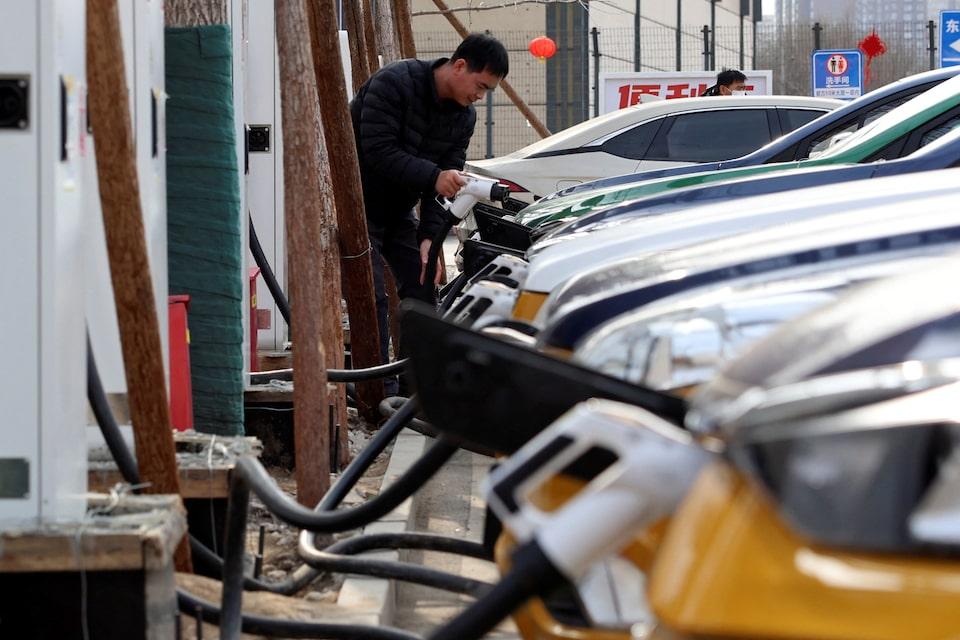
BEIJING, July 22 (Reuters) - A 2025 government subsidy scheme for electric vehicles and plug-in hybrid purchases ended last month in three districts in the city of Xian, the capital of China's Shaanxi province, local official media Shaanxi Daily reported on Tuesday. The three districts are set to stop accepting applications for the subsidies later in July, according to the report. It did not give a reason for the pause or disclose what might happen in other districts. Sign up here. Some Chinese cities, including Zhengzhou and Luoyang, suspended trade-in subsidies for car buyers because the first round of funding allocated by Beijing for the scheme was running out, Reuters reported in June. The state planner and finance ministry said last month that consumer trade-in subsidies for the remainder of the year would be issued in July and October respectively. https://www.reuters.com/markets/commodities/chinas-ev-buying-subsidies-2025-end-parts-xian-local-media-says-2025-07-22/
2025-07-22 05:52
July 22 (Reuters) - Norwegian aluminium producer Norsk Hydro (NHY.OL) , opens new tab cut its 2025 capital expenditure guidance by 1.5 billion crowns ($147.5 million) and froze external white-collar hiring on Tuesday, amid volatile input costs and uncertain demand. U.S. tariffs on aluminium have roiled trade flows and pushed physical market premiums to record highs, amplifying cost pressures for American buyers and redrawing global supply lines. Sign up here. Hydro plans to cut more than 100 jobs at its Hydro Extrusions division by 2025, prioritising operational efficiency and cost control. "We have so far not seen big changes to our operations from tariffs and potential trade wars. Our main concern is whether the uncertainty will lead to a global economic downturn," CEO Eivind Kallevik said in a statement. Hydro reported a 33.4% rise in second-quarter core profit, helped by higher aluminium and energy prices and internal gains, despite cost pressures from pricier raw materials, notably alumina, and negative currency effects. Order bookings for some business areas showed early signs of improvement, especially for domestic producers benefiting from lower imports, the company said. The U.S. remains heavily reliant on imports, with Canada alone supplying over two-thirds of its aluminium. The new 50% levies have made it costlier to bring in foreign metal into the world's largest economy. With Chinese smelters churning out record volumes of aluminium and looking to offload surplus abroad, barriers in the West have offered short-term relief to companies like Hydro by lifting regional premiums and curbing low-cost competition. Hydro's adjusted earnings before interest, taxes, depreciation and amortisation rose to 7.79 billion Norwegian crowns in April-June from 5.84 billion crowns a year earlier. Analysts on average had expected it to report a core profit of 7.30 billion crowns, according to a company-compiled consensus , opens new tab. ($1 = 10.1730 Norwegian crowns) https://www.reuters.com/markets/commodities/aluminium-producer-norsk-hydro-trims-2025-spending-despite-quarterly-profit-beat-2025-07-22/

2025-07-22 05:49
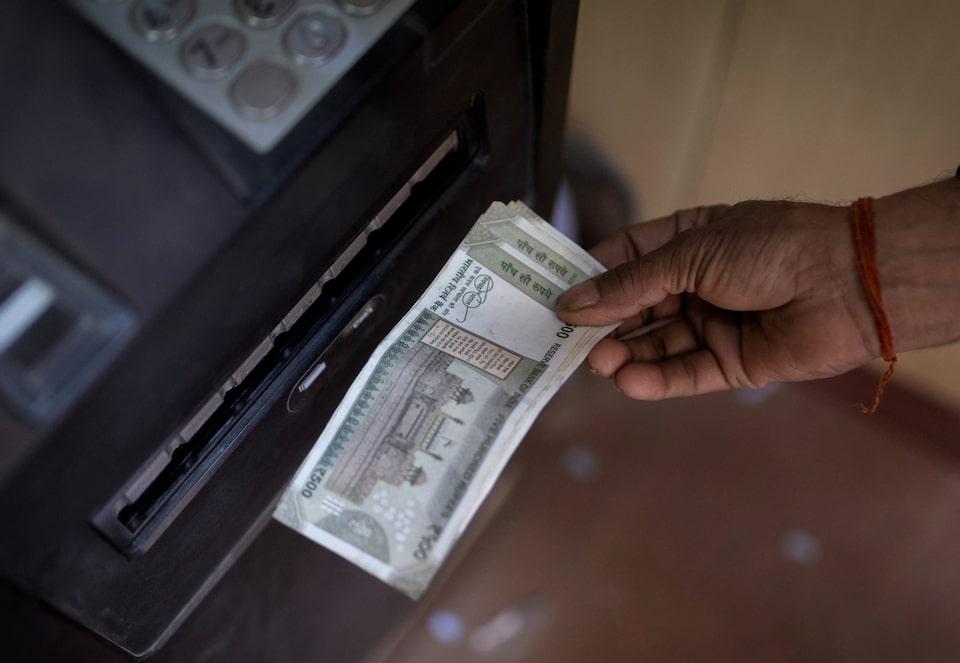
MUMBAI, July 22 (Reuters) - The Indian rupee was marginally stronger on Tuesday and dollar-rupee forward premiums ticked up as concerns over the economic fallout of U.S. President Donald Trump's trade war drove U.S. Treasury yields, the greenback and crude oil prices lower. The rupee ticked up to 86.2650 per U.S. dollar by 11:10 a.m. IST, slightly higher than its close at 86.2925 in the previous session. Sign up here. The dollar index was steady at 97.9 in Asia trading after falling 0.6% on Monday, tracking a decline in U.S. Treasury yields that saw the 10-year yield touch a near two-week low of about 4.35%. Short-term U.S. Treasury yields declined as well, which helped boost far-tenor dollar-rupee forward premiums. The 1-year dollar rupee implied yield rose to an over two-week high of 2.03%, while a fall in rupee liquidity in the banking system helped lift very near-tenor dollar-rupee swap rates. Indian assets largely sidestepped a media report that a trade deal between India and the U.S. is unlikely before August 1 with equities and the rupee clinging to slight gains while the yield on the benchmark 10-year bond was little changed. Steep reciprocal levies on exports to the U.S. are slated to go into effect next month with India likely to face a 26% charge in the absence of a deal. "The rupee’s trajectory remains tilted toward further weakness, with both the 86.00 and 86.20 levels now breached. This opens the door for a move toward 86.50–86.80," said Amit Pabari, managing director at FX advisory firm CR Forex. In addition to uncertainty on global trade dynamics, muted foreign portfolio flows have also been a sore point for the rupee. Overseas investors have net sold about half a billion dollars of local stocks in July so far while year-to-date outflows stand at nearly $9.5 billion. https://www.reuters.com/world/india/drop-us-treasury-yields-helps-indian-rupee-2025-07-22/
2025-07-22 05:39
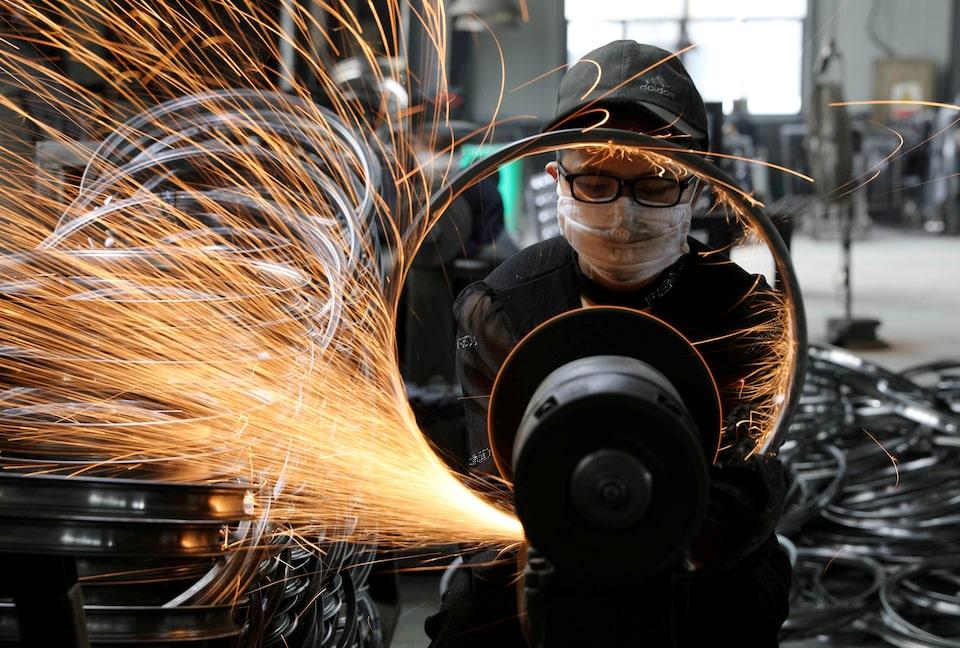
Beijing signals it will intervene in producer price wars Expectations grow for a new round of industrial capacity cuts Local government incentives may curb Beijing's efforts, analysts say Stimulating consumer demand still key to fight deflation BEIJING, July 22 (Reuters) - China's hardened rhetoric against price wars among producers is raising expectations Beijing may be about to kick off industrial capacity cuts in a long-awaited, but challenging, campaign against deflation that carries risks to economic growth. Communist Party leaders pledged this month to step up regulation of aggressive price-cutting, with state media running its harshest warnings yet against what it describes as a form of industrial competition that damages the economy. Sign up here. These signals echo Beijing's supply-side reforms a decade ago to reduce the production of steel, cement, glass and coal, which were crucial to ending a period of 54 consecutive months of falling factory gate prices. This time, however, the fight against deflation will be much more complicated and poses risks to employment and growth, economists say. The trade war with the U.S. meanwhile is intensifying price wars, squeezing factory profits. Challenges Beijing didn't face last decade include high private ownership, misaligned incentives at local and national level, and limited stimulus options in other economic sectors to absorb the job losses resulting from any capacity cuts. Beijing sees employment as key to social stability. Exporters and even the state sector are already shedding jobs and cutting wages, while youth unemployment runs at 14.5%. "This round of supply-side reform is far, far more difficult than the one in 2015," said He-Ling Shi, economics professor at Monash University in Melbourne. "The likelihood of failure is very high and if it does fail, it would mean that China’s overall economic growth rate will decline." Economists expect that any efforts by Beijing to reduce capacity will be undertaken in small, cautious, steps, with officials - keen to achieve annual economic growth of roughly 5% - keeping a close eye on spillover effects. An expected end-July meeting of the Politburo, a decision-making body of the Party, might issue more industry guidelines, although the conclave rarely delivers a detailed implementation roadmap. Analysts expect Beijing to first target the high-end industries that it once billed as the "new three" growth drivers, but which state media now singles out for fighting price wars: autos, batteries and solar panels. Their expansion accelerated in the 2020s as China redirected resources from the crisis-hit property sector to advanced manufacturing to move the world's No.2 economy up the value-chain. But China's industrial complex, a third of global manufacturing, looks bloated across the board. Most sectors have capacity utilisation rates below the 80% "healthy" level, Societe Generale analysts said, blaming weak domestic demand and an investment-driven growth model that favours producers over consumers. U.S. and EU officials have repeatedly complained that this model is flooding global markets with cheap goods made in China and endangers their domestic industries. A foreign chemicals company manager surnamed Jiang, who asked for partial anonymity to discuss the industry, said overcapacity in her sector was evident as early as 2023, yet firms continue to expand. "If money is cheap and abundant, any company thinks it won't go bankrupt and can crush competitors to death," Jiang said. LOCAL INCENTIVES For all the state support manufacturers receive, most are privately owned, unlike the raw material producers Beijing trimmed last decade, largely through blunt administrative orders. Reducing capacity now requires a less predictable process of curbing subsidies, cheap land supply, preferential loans or tax rebates, then letting markets pick winners and losers. But the local officials who would have to implement this have the opposite incentive: developing industry champions that draw supply chain investments and employment to their region. "Local governments, in their efforts to transform the local economy, encouraged firms to invest in these new sectors," like solar or batteries, a policy adviser said on condition of anonymity due to the topic's sensitivity. "There’s nothing inherently wrong with transformation and upgrading, but the problem is that everyone is targeting the same few sectors," said the adviser, adding that the U.S. trade war has exposed such industries as being "too big." Yan Se, deputy director of the Institute of Economic Policy at Peking University, said local government resistance would turn "important and necessary" capacity cuts into a long-term, gradual process that won't end deflationary pressure on its own. Stimulating demand would work better, Yan told a conference last week. FOREVER BLOWING BUBBLES Producer prices dropped for the 33rd month in June. China faces a painful trade-off between a deeper and shorter stretch of price falls as output cuts trigger job losses and a longer run of overcapacity and deflation that delays the blow to employment, economists say. Macquarie estimates last decade's reforms chopped tens of millions of jobs. But an ambitious project to redevelop shanty-towns across China, estimated by Morgan Stanley at 10 trillion yuan ($1.4 trillion), offered displaced workers new ones. Manufacturing is now much less labour intensive. Still, jobs will be lost, and "there's no way" other economic sectors, also facing weak consumer demand, can absorb the shock, said Monash University's Shi. In another echo from last decade, high-level talk of urban redevelopment re-emerged last week. But any new investment in that area would likely be too small to compensate for lost industrial activity and jobs. "I don't think we can expect real estate to digest job losses from supply-side reforms anymore," said John Lam, head of Greater China property research at UBS. "It was used for that in the past and it created overcapacity in our sector," said Lam. Authorities "don't seem to be going in that direction, which I think is correct." ($1 = 7.1772 Chinese yuan renminbi) https://www.reuters.com/business/autos-transportation/industrial-pruning-wont-pull-china-out-deflation-quickly-last-time-2025-07-22/