2025-07-22 05:34
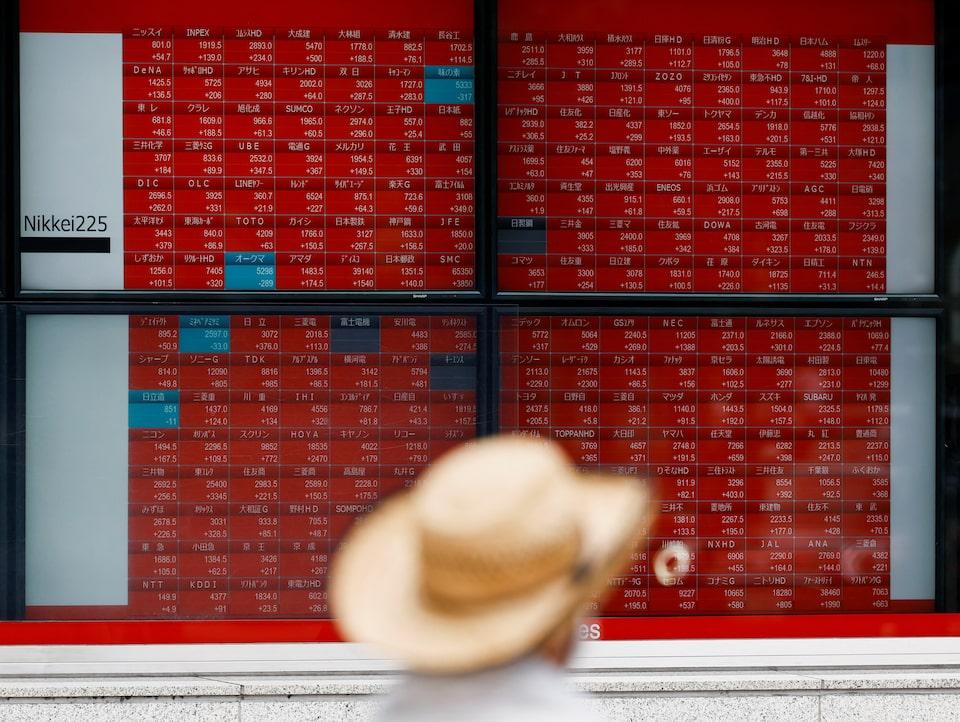
Japan's Nikkei rises in relief rally after priced-in election US dollar subdued as investors await tariff clarity Fed independence remains a worry for investors SINGAPORE, July 22 (Reuters) - Asian share markets drifted lower after scaling a near four-year peak on Tuesday ahead of a slate of corporate earnings, while investors took stock of tariff negotiations between the U.S. and its trading partners. The dithering mood is set to continue in Europe where the focus will be on earnings from firms including SAP (SAPG.DE) , opens new tab and UniCredit (CRDI.MI) , opens new tab. EUROSTOXX 50 futures and DAX futures both dipped 0.5%, while FTSE futures eased 0.3%. Sign up here. MSCI's broadest index of Asia-Pacific shares outside Japan (.MIAPJ0000PUS) , opens new tab hit its highest level since October 2021 in early Asian hours but was last down 0.4%. The index is up nearly 16% this year. The S&P 500 (.SPX) , opens new tab and the Nasdaq (.IXIC) , opens new tab notched record-high closes on Monday. The Japanese markets returned to action after a holiday on Monday following the weekend's election where the ruling coalition suffered a defeat in upper house elections, although Prime Minister Shigeru Ishiba vowed to remain in his post. Japanese shares (.N225) , opens new tab, (.TOPX) , opens new tab briefly jumped at the open but reversed course to trade lower by Tuesday afternoon, as the election results were largely priced in and were not as bad as investors had feared. The yen rallied 1% on Monday, recouping some of the losses from past weeks and was last slightly weaker at 147.73 per dollar. Kristina Clifton, an economist at the Commonwealth Bank of Australia, said the weakening of Ishiba's leadership will open the door to more fiscal expansion that is negative for Japanese assets, including the yen. "The bottom line is longer term Japanese government bond yields and JPY can fall if concerns about Japan’s fiscal spending deepen." Investor focus has been on tariff negotiations ahead of the August 1 deadline with the European Union exploring a broader set of possible countermeasures against the United States as prospects for an acceptable agreement with Washington fade. The most important deals for the global outlook are with the EU and Japan, CBA's Clifton said. "The USD reaction to the announcement of trade deals with these countries would depend on the details of the deals in our view," Clifton added, noting the dollar could turn down again against the euro and the British pound. The euro was steady at $1.1689, after rising 0.5% in the previous session but still away from the near four-year high it touched at the start of the month. The single currency is up 13% this year as investors look for alternatives to U.S. assets bruised by tariff uncertainties. The dollar index , a measure against six other key currencies, was at 97.905. Investors are awaiting results this week from Wall Street giants Alphabet and Tesla (TSLA.O) , opens new tab, as well as from European heavyweights LVMH (LVMH.PA) , opens new tab, and Roche (ROG.S) , opens new tab, as uncertainty over tariffs clouds the outlook. The rumblings around the Federal Reserve's independence and whether U.S. President Donald Trump will fire Fed Chair Jerome Powell have kept investors on tenterhooks in recent weeks. Trump appeared near the point of trying to fire Powell last week, but backed off with a nod to the market disruption that would likely follow. U.S. Treasury Secretary Scott Bessent said on Monday the entire Federal Reserve needed to be examined as an institution and whether it had been successful, further exacerbating concerns about the independence of the U.S. central bank. The Fed is widely expected to hold rates steady in its July meeting but might lower rates later in the year. Market focus will be squarely on Powell's speech later on Tuesday for clues about when the Fed might ease policy. Goldman Sachs strategists expect the Fed to deliver three consecutive 25-basis-point cuts starting in September, "provided inflation expectations remain in check amidst worries about Fed independence." In commodities, Brent crude futures fell nearly 1% to $68.56 a barrel, while U.S. West Texas Intermediate crude slipped 1% to $66.51 per barrel. https://www.reuters.com/world/china/global-markets-update-1-wrapup-1-2025-07-22/
2025-07-22 05:23
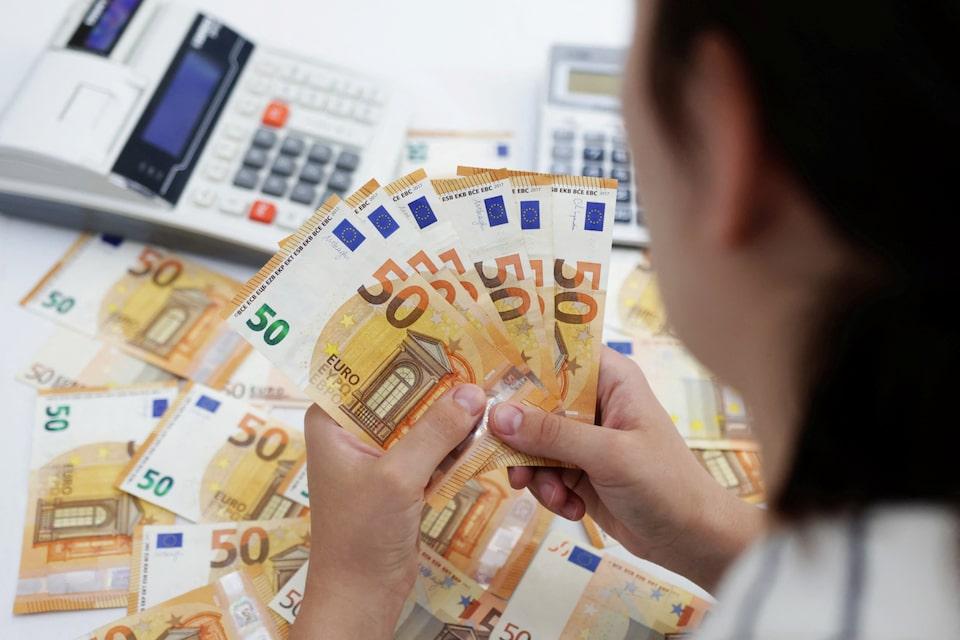
Currencies trade in tight range Yen holds on to gains after Japan's upper house election result Investors eyeing progress in more trade talks SINGAPORE, July 22 (Reuters) - The U.S. dollar traded in a tight range on Tuesday after a brief fall at the start of the week, as investors watched out for any progress on talks ahead of an August 1 deadline for countries to strike trade deals with the U.S. or face steep tariffs. The yen mostly held on to gains from the previous session following results from a weekend upper house election in Japan that proved no worse than what had already been priced in, with focus now on how quickly Tokyo can strike a trade deal with Washington and Prime Minister Shigeru Ishiba's future at the helm. Sign up here. The Japanese currency was last a touch weaker at 147.57 a dollar, after rising 1% on Monday in the wake of the election outcome. The bruising defeat suffered by Ishiba and his ruling coalition also drew just a modest response in the broader Japanese market, which returned from a holiday. "The initial relief for the yen that the ruling coalition did not lose even more seats and that Prime Minister Ishiba plans to hang on to power is likely to prove short-lived," said MUFG senior currency analyst Lee Hardman. "The pick-up in political uncertainty in Japan could complicate reaching a timely trade deal with the U.S., posing downside risks for Japan's economy and the yen." With just slightly more than a week to go before the August 1 deadline, U.S. Treasury Secretary Scott Bessent said on Monday that the administration is more concerned with the quality of trade agreements than their timing. Asked whether the deadline could be extended for countries engaged in productive talks with Washington, Bessent said President Donald Trump would make that decision. Uncertainty over the eventual state of tariffs globally has been a huge overhang for the foreign exchange market, leaving currencies trading in a tight range for the most part, even as stocks on Wall Street have scaled fresh highs. "Nothing that happens on August 1 is necessarily permanent, so long as the U.S. administration remains willing to talk, as was indicated in Trump's letters from two weeks ago," said Thierry Wizman, global FX and rates strategist at Macquarie Group. The dollar was last steady after slipping in the previous session due in part to the yen's rise and a dip in U.S. Treasury yields, leaving sterling trading 0.13% lower at $1.3474. The euro eased slightly to $1.1689, with focus also on a rate decision by the European Central Bank later this week, where expectations are for policymakers to stand pat on rates. The European Union is exploring a broader set of possible counter measures against the United States as prospects for an acceptable trade agreement with Washington fade, according to EU diplomats. Against a basket of currencies, the dollar rose slightly to 97.882, having fallen 0.6% on Monday. Also weighing on investors' minds were worries about the Federal Reserve's independence, given Trump has repeatedly railed against Chair Jerome Powell and urged him to resign because of the central bank's reluctance to cut interest rates. "Our base case remains that solid U.S. data and a tariff- driven rebound in inflation will keep the FOMC on hold into 2026, and that the resulting shift in interest rate differentials will drive a continued rebound in the dollar in the next few months," said Jonas Goltermann, deputy chief markets economist at Capital Economics. "But that view is clearly at the mercy of the White House's whims." Elsewhere, the Australian dollar eased to $0.65215, while the New Zealand dollar fell 0.09% to $0.5963. Minutes of the Reserve Bank of Australia's latest policy meeting out on Tuesday showed policymakers judged that lowering interest rates for a third time within four meetings was not consistent with the strategy of a cautious and gradual easing. https://www.reuters.com/world/africa/us-dollar-indecisive-investors-await-more-tariff-clarity-2025-07-22/
2025-07-22 05:21
ECB's policy decision due on Thursday Dollar hovers near over one-month low Palladium down more than 1% July 22 (Reuters) - Gold prices climbed on Tuesday to their highest level in more than a month, supported by a weaker U.S. dollar and lower Treasury yields, as investors looked for progress in trade talks ahead of an August 1 deadline. Spot gold was little changed at $3,389.98 per ounce, as of 0503 GMT. Earlier in the session, bullion hit its highest level since June 17. Sign up here. U.S. gold futures held their ground at $3,402.90. "Gold's move on the upside has been pretty much supported by positive technicals and as well as reinforced by a broad base of dollar weakness," OANDA senior market analyst Kelvin Wong said. The U.S. dollar index (.DXY) , opens new tab was hovering near a more than one-week low against its rivals, making greenback-priced gold less expensive for other currency holders. Benchmark 10-year U.S. Treasury yields hit a more than one-week low on Monday. USD/US/ The European Union is exploring a broader set of possible countermeasures against the United States as prospects for an acceptable trade agreement with Washington fade, according to EU diplomats. U.S. President Donald Trump has threatened 30% duties on imports from Europe if no agreement is signed before the August 1 deadline. "There could be a possibility that U.S. and the respective trading partners may not agree to the terms and condition and that potentially could see a bit of uncertainty and there could be some hedging activities by market participants going forward," Wong said. Also on radar, the European Central Bank is expected to hold interest rates steady at 2.0% following a string of cuts at the end of its policy meeting on July 24. The U.S. Federal Reserve's monetary policy is scheduled for next week. Traders are pricing about a 59% chance of a rate cut by the Fed in September, according to the CME FedWatch Tool. Gold tends to perform well in a low-interest-rate environment. Spot silver fell 0.5% to $38.71 per ounce, platinum added 0.3% to $1,442.55 and palladium fell 1.3% to $1,250.19. https://www.reuters.com/world/china/gold-over-one-month-high-weak-dollar-bond-yields-lift-appeal-2025-07-22/
2025-07-22 04:55
Prospects of big spending, weak yen could push up inflation Some in BOJ already wary of mounting inflationary pressure Japan may compile big spending package amid opposition calls Weak yen may be decisive nudge for further rate hikes TOKYO, July 22 (Reuters) - Japan's election outcome may put the central bank in a double bind as prospects of big spending could keep inflation elevated while potentially prolonged political paralysis and a global trade war provide compelling reasons to go slow on rate hikes. Lingering political uncertainty may also weaken the yen and push up import costs, some analysts say, adding to mounting price pressures that conflict with the Bank of Japan's current approach to stand pat until the political storm calms. Sign up here. The rising cost of living was among factors that led to the bruising defeat of Prime Minister Shigeru Ishiba's ruling coalition in upper house elections on Sunday. With inflation holding above the BOJ's 2% target for over three years now, some BOJ board members have already warned of growing price pressure. Junko Koeda recently argued for the need to monitor second-round effects from rising rice costs. Another board member, Hajime Takata, said this month the BOJ must resume rate hikes after a temporary pause as Japan was on the cusp of achieving the bank's 2% target. "If upward inflation risks heighten, the BOJ may need to act decisively as a guardian of price stability," its hawkish policymaker Naoki Tamura said late last month. Now a minority in both chambers of parliament, Ishiba's ruling camp must compromise with opposition parties, which have called for tax cuts and bigger spending, to pass legislation. In a nod to such calls, Ishiba said on Monday he would stay on as prime minister and work with other parties on measures to cushion the blow to households from rising inflation. While a cut to the consumption tax would leave a huge hole in Japan's worsening finances, doing so would require passing legislation through parliament and take time. More likely would be for Japan to compile an extra budget in autumn to fund payouts and tax breaks. The size could exceed last year's 14-trillion-yen ($95 billion) package given heightening opposition demands for bolder steps, analysts say. "A supplemental budget this fall to help firms cope with U.S. tariffs was expected even before the vote. Now, opposition parties may demand a larger package," said David Boling, a director at consulting firm Eurasia Group. YEN MOVES KEY To be sure, Japan's economy may need the fiscal boost after shrinking in the first quarter and seen taking a hit from U.S. tariffs that are already hurting its mainstay automobile sector. But market worries over Japan's huge debt and political instability could weaken the yen, and cast doubt on the BOJ's view cost-push pressure will ease later this year, analysts say. "With Ishiba signaling his resolve to stay on as premier, markets are now in a wait-and-see mood. But that doesn't mean the chance of yen declines has disappeared, as the election definitely weakened administration's standings," said Tsuyoshi Ueno, an economist at NLI Research Institute. Unlike other major economies, Japan's inflation-adjusted real interest rates remain deeply negative due to the slow pace at which the BOJ rolled back a decade-long, massive stimulus. After raising short-term interest rates to 0.5% in January, Governor Kazuo Ueda has signaled a pause in rate hikes until there is more clarity on the economic impact of U.S. tariffs. Given the risk from U.S. tariffs, many analysts now expect no rate hike for the rest of this year. But staff BOJ estimates suggest its policy rate must rise at least to 1% to reach levels that neither stimulates nor cools growth. In the end, a renewed yen decline could be the next decisive nudge towards further rate hikes, some analysts say. Although the BOJ is guaranteed by law independence from government interference, it has historically been sensitive to political developments. Its massive stimulus in 2013 was deployed after intense pressure from then premier Shinzo Abe to reverse a strong yen and beat deflation. The BOJ's exit from ultra-loose policy last year came after a flurry of calls from politicians to help stem sharp yen falls that were pushing up import costs. "For the BOJ, the biggest concern is how the election could change the government's focus on economic policy, and how markets could react," said a source familiar with its thinking. Veteran BOJ watcher Mari Iwashita sees the chance of a rate hike in October if the yen, now around 147 to the dollar, falls below 150 and puts upward pressure on prices. "Sustained yen weakness would push up underlying inflation, so could be a key trigger for policy action," said Iwashita, who is executive rates strategist at Nomura Securities. ($1 = 147.4300 yen) https://www.reuters.com/business/finance/how-japans-election-outcome-muddles-bojs-policy-path-2025-07-22/
2025-07-22 04:48
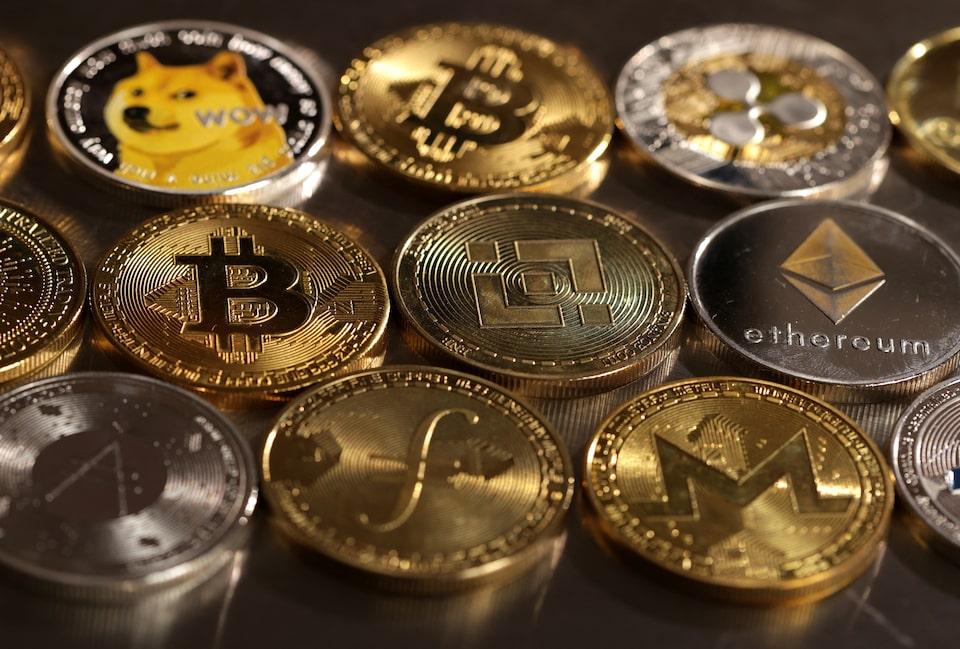
July 22 (Reuters) - JPMorgan Chase (JPM.N) , opens new tab is exploring plans to offer loans backed by clients' cryptocurrency holdings, including bitcoin and ethereum, as early as next year, the Financial Times reported on Tuesday, citing people familiar with the matter. The move comes as other major U.S. banks, including Bank of America (BAC.N) , opens new tab and Citibank (C.N) , opens new tab, are developing stablecoins amid a broader push for more crypto-friendly regulation in Washington. Sign up here. CEO Jamie Dimon, a longtime bitcoin skeptic, recently said that the bank will be involved in stablecoins. JPMorgan declined to comment to the FT. The bank did not immediately respond to a Reuters' request for comment outside regular business hours. In May, Dimon told investors that he is "not a fan" of the bitcoin universe citing concerns, including leverage, misuse, and money laundering issues in the system, ruling out getting into custody - storing crypto assets for clients - or expanding significantly even if regulations ease. "We're going to allow you to buy it, we're not going to custody it," he said, likening the approach to permitting behavior he personally disagrees with. https://www.reuters.com/business/finance/jpmorgan-considers-offering-loans-backed-by-clients-cryptocurrency-holdings-ft-2025-07-22/
2025-07-22 04:36
A look at the day ahead in European and global markets from Ankur Banerjee The incredible rise of the euro this year is sure to play a part in Europe Inc's performance as a steady but unspectacular start to the earnings season kicks up a notch with results due from the region's largest software maker SAP (SAPG.DE) , opens new tab. Sign up here. While tariff uncertainties linger ahead of an August 1 deadline, investors are pinning their hopes on resilient corporate earnings from Wall Street and European bellwethers to keep stocks and sentiment aloft. Investors will parse through quarterly results for any clues on the impact trade uncertainty has had on profitability and consumer demand, with the earnings so far described by RBC Capital Markets as "fine but not fabulous". SAP, which has been riding a boom in demand for its cloud-based offerings spurred by artificial intelligence, will report later on Tuesday as will UniCredit (CRDI.MI) , opens new tab and Julius Baer (BAER.S) , opens new tab. Focus will be on just how much the euro's rise has eaten into profits of the firms in the bloc's export-reliant economy after the single currency surged 9% in the April-June quarter. The euro is up 13% so far in the year as investors looked for alternatives to U.S. assets and to lower their dollar exposure in the wake of U.S. President Donald Trump's erratic trade policies. SAP had predicted back in April that for every 1 cent rise in the euro, its annual revenue could decline by around 30 million euros. The euro was last at $1.1688 compared to $1.1329 at the end of April. Earnings from luxury behemoth LVMH (LVMH.PA) , opens new tab and drugmaker Roche (ROG.S) , opens new tab this week will also be of interest. Tariffs and where they are headed remain on the agenda after diplomats said the EU is exploring wide-ranging "anti-coercion" measures which would let the bloc target U.S. services or curb access to public tenders in the absence of a deal. Trump has threatened 30% duties on imports from Europe if no agreement is signed before the August 1 deadline. Meanwhile, the 'will-he-won't-he' saga over Trump possibly firing Federal Reserve Chair Jerome Powell rumbles on. U.S. Treasury Secretary Scott Bessent said on Monday the entire Federal Reserve needed to be examined as an institution and whether it had been successful, further exacerbating worries about the independence of the U.S. central bank. Key developments that could influence markets on Tuesday: Earnings: SAP, UniCredit, Julius Baer Trying to keep up with the latest tariff news? Our new daily news digest offers a rundown of the top market-moving headlines impacting global trade. Sign up for Tariff Watch here. https://www.reuters.com/business/global-markets-view-europe-2025-07-22/