2025-07-21 21:03
ORLANDO, Florida, July 21 (Reuters) - TRADING DAY Making sense of the forces driving global markets Sign up here. By Jamie McGeever, Markets Columnist U.S. and world stocks posted solid gains on Monday as the dollar and bond yields fell, while encouraging corporate earnings and investor optimism that the economic damage from tariffs won't be too severe also boosted risk appetite. More on that below. In my column today I look at U.S. President Donald Trump's attacks on Fed Chair Jerome Powell in the broader context of U.S. and global central bank independence. If you have more time to read, here are a few articles I recommend to help you make sense of what happened in markets today. Today's Key Market Moves Equity optimism hard to quell Equity investors have the bit between their teeth. Despite huge uncertainty surrounding U.S. tariffs and trade deals, and unease about Trump's tirades against Powell, stocks continue to march higher. Monday's whoosh was supported by solid U.S. corporate earnings, a weaker dollar and lower Treasury yields. Investors also continue to bet that the economic damage from tariffs will be milder than feared. U.S. Commerce Secretary Howard Lutnick said on Sunday he was confident of securing a trade deal with the European Union, even as the EU explored possible counter-measures against the United States. Trump has threatened 30% tariffs on imports from Mexico and the EU, and sent letters to other trading partners, including Canada, Japan and Brazil, setting tariffs ranging from 20% to 50%. This has led experts to raise their running effective aggregate U.S. tariff rate estimates to near 20%. That would be the highest since 1933 and around eight times higher than they were at the end of last year, although sharply down from the April 2 Liberation Day extremes. Right now, investors are shrugging this off, and one can understand why. Trump quickly climbed down after the post-Liberation Day market volatility, the August 1 deadline may be pushed back, and the final tariff rates could be different from those announced. U.S. economic data and second-quarter earnings are generally beating forecasts too. Even if that is because consumers and businesses have, to varying degrees frontloaded purchases, sales or production ahead of the final tariffs, the incoming numbers are solid. Citi's U.S. economic surprises index has been rising steadily for the past month, albeit from deeply negative territory, while the equivalent European surprises index is flat-lining and China's has been falling. Meanwhile, Japan's markets reopen on Tuesday after Monday's holiday, giving stock and bond investors their first chance to react to Sunday's upper house election which saw the ruling coalition lose its majority. Prime Minister Shigeru Ishiba has vowed to stay in situ, citing the looming August 1 tariff deadline with the United States. Nikkei futures are currently pointing to a flat open on Tuesday. Trump's Fed attacks puncture veneer of central bank independence If U.S. President Donald Trump's public attacks on Federal Reserve Chair Jerome Powell have achieved one thing, it has been to thrust the issue of central bank independence firmly into the spotlight. But this raises the question, what does 'independence' really mean? Central bank independence is widely considered a bedrock of modern-day financial markets. Economists, investors and policymakers almost universally agree that monetary policy should be set for the long-term good and stability of the economy, free from short-term and capricious political influence. But maintaining that theoretical separation between policymakers and politicians is very challenging in practice. Ultimately, central banks are creations of – and, to varying degrees, extensions of – their national governments. The legislatures determine their statutes, parameters, goals, and key policymaking personnel. One need only look at the intertwined and often coordinated responses of countries' central banks and governments to the global financial crisis and pandemic for evidence that complete independence doesn't actually exist. DE FACTO OR DE JURE 'Independence' has two primary meanings in studies of monetary policy. Academic studies often refer to 'de jure' independence, essentially legal or institutional independence, and 'de facto' or operational independence. Importantly, de jure independence is no guarantee of de facto independence or vice versa. Perhaps surprisingly, the U.S. scores pretty low on a de jure basis, mainly because the Fed's statutes have barely changed since it was created over a century ago in 1913. Davide Romelli, associate professor at Trinity College Dublin, has updated a central bank independence index created by Alex Cukierman, Steven Webb, and Bilin Neyapti in the 1990s. The index, in which 0 is no independence and 1 is total independence, shows the US scoring 0.61. That suggests the Fed is a less institutionally independent body than the European Central Bank, which scored 0.90, and even the People's Bank of China, which scored 0.66. But on a de facto basis, the Fed would almost certainly rank as higher than the PBOC, given its design, transparency, and accountability mechanisms such as the chair's regular press conferences and appearances before Congress. And look at how the Fed resisted the clamor to raise interest rates when inflation first exploded after the pandemic as well as its patience in lowering them now given the uncertainty surrounding the U.S. trade agenda. You can argue the wisdom or folly of the Fed's actions in either case, but both episodes put its operational independence on full display. 'BANANA REPUBLIC' When experts talk about threats to central bank independence, they are usually referring to concerns about de facto independence. Indeed, this is why Fed-watchers have grown increasingly troubled by Trump's excoriating verbal attacks on Powell over the last six months for not cutting interest rates. If there is a line demarcating political interference, however amorphous, Trump has crossed it. "The words that Trump uttered are the ones one expects from the head of a banana republic that is about to start printing money to fund fiscal deficits," former Fed Chair and U.S. Treasury Secretary Janet Yellen told The New Yorker earlier this month. Of course, even if Trump were to replace Powell with a more amenable chair, this would not completely eliminate Fed independence. The Fed chair does not single-handedly set interest rates and represents only one of 12 votes at each policy meeting. But in many ways he or she is the first among equals, as University of Maryland's Thomas Drechsel shows in a recent working paper. Analyzing over 800 personal interactions between Fed officials and each U.S. president from Franklin D. Roosevelt to Barack Obama in 2016, Drechsel found that 92% were with the Fed chair. President Richard Nixon interacted with Fed officials 160 times, reflecting his infamous efforts to influence then chair Arthur Burns, while only six interactions took place during Bill Clinton's two terms. To be sure, not all meetings or telephone calls involve political pressure, and for purely logistical reasons, it makes sense that the president would prioritize speaking with the head of the monetary policy body as opposed to all its members. As such, appointing the governor is a key area where a central bank's independence can be damaged. In a 2022 academic paper titled "(In)dependent Central Banks" revised in February analyzing 317 governor appointments in 57 countries between January 1985 and January 2020, the authors noted that as central banks' powers – and perceived independence – have expanded, political incentives to control them have intensified, "especially in an era of growing global populism." Thus, in many cases, the more power a central bank has to ignore political pressure, the more motivated government leaders are to apply it. If that is a global trend, Trump appears to be at the vanguard. What could move markets tomorrow? Want to receive Trading Day in your inbox every weekday morning? Sign up for my newsletter here. Opinions expressed are those of the author. They do not reflect the views of Reuters News, which, under the Trust Principles , opens new tab, is committed to integrity, independence, and freedom from bias. https://www.reuters.com/world/china/global-markets-trading-day-2025-07-21/
2025-07-21 21:03
LONDON, July 22 (Reuters) - Britain's insolvent Lindsey oil refinery will close down after no buyers were found for the site, Energy Minister Michael Shanks said in a statement on Monday. The refinery was placed into the hands of an official receiver after its owner Prax fell into insolvency at the end of last month. Sign up here. "After a thorough process to determine whether a sale was possible, no credible offers have been made to purchase the entire refinery, and it will be winding down operations," Shanks said. Lindsey was one of five remaining oil refineries in Britain, and had a capacity of 113,000 barrels per day. According to FTI Consulting, the refinery's special manager through the insolvency process, it employs around 420 people. The refinery will process crude until the end of the month, and the official receiver will sell refined fuels for a "number of weeks" to allow customers time to manage their supply chains, Shanks said in a written statement to parliament on Tuesday. Shanks slammed the "untenable position in which the owners left Prax Lindsey Oil Refinery," and called on the owners of the refinery to "do the decent thing and publicly commit to making a voluntary financial contribution to support workers". Prax, led by Chairman and CEO Sanjeev Kumar Soosaipillai, could not immediately be reached for comment. All enquiries on the company administration have been directed to its administrator Teneo, which said it had no comment on the company and no contact information for Soosaipillai. Legal filings with the High Court showed that Prax's parent group State Oil Limited and other Prax companies filed a commercial claim against Soosaipillai on July 11 for a breach of fiduciary duty. The refinery had resumed fuel deliveries after insolvency was announced, having been able to secure some crude supplies to stave off immediate closure. The energy minister said all direct employees of the refinery are guaranteed jobs over the coming months. He added that the official receiver is continuing to pursue buyers for the individual assets under the Prax group. Prax Group has other interests in the UK energy sector, including the Lancaster oil field and fuel supplier Harvest Energy. https://www.reuters.com/business/energy/britains-lindsey-oil-refinery-close-after-no-buyer-found-2025-07-21/

2025-07-21 20:35
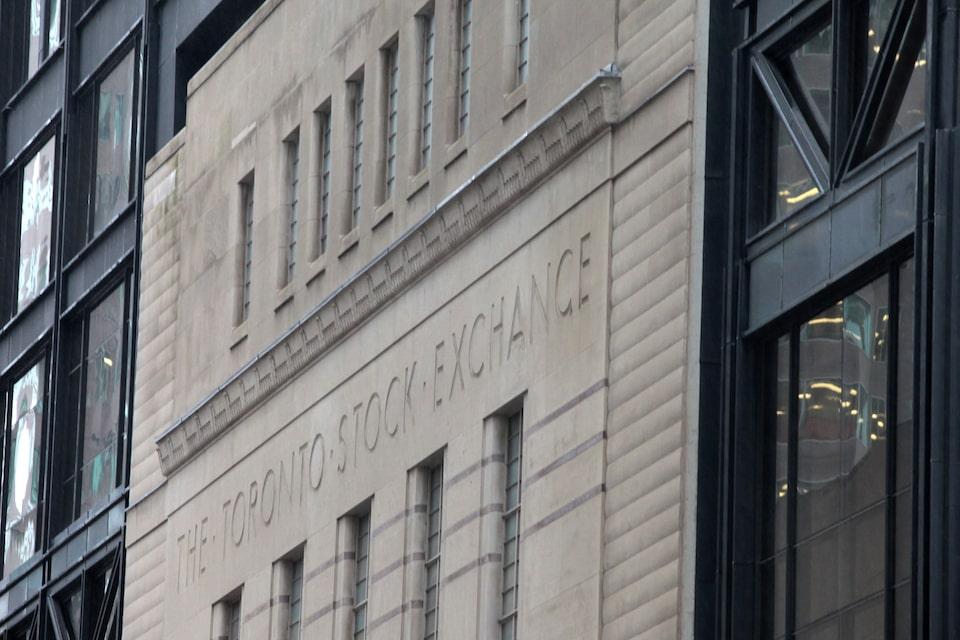
July 21 (Reuters) - Canada's commodity-heavy main stock index closed flat on Monday, as investors await earnings and look for potential trade deals between the U.S. and its key trading partners. The S&P/TSX composite index (.GSPTSE) , opens new tab closed up 2.99 points, or 0.01%, at 27,317.00 and touched a new record high of 27,448.51. Sign up here. In the latest trade development, U.S. Commerce Secretary Howard Lutnick said on Sunday he was confident that Washington could secure a trade deal with the EU, but August 1 is a hard deadline for tariffs to kick in. However, EU diplomats said the 27-member bloc is exploring a broader set of possible counter-measures against the U.S., as hopes for a breakthrough deal with Washington dwindled. Traders awaited clarity on U.S.-EU trade talks and looked for additional deals from major U.S. trading partners ahead of President Donald Trump's August 1 tariff deadline. "The market is now waiting for earnings and that's going to be the big thing... everyone is just curious to see just how they go," said Greg Taylor, chief investment officer at PenderFund Capital Management. In the U.S., several industrial and tech firms are set to report their earnings this week, with Alphabet (GOOGL.O) , opens new tab and Tesla (TSLA.O) , opens new tab kicking off the results season for the "Magnificent Seven" stocks. The S&P 500 and the Nasdaq notched record high closes ahead of quarterly results. Canadian miners including Teck Resources (TECKb.TO) , opens new tab and First Quantum Minerals will report quarterly results north of the border this week. Meanwhile, the Bank of Canada in its quarterly survey said Canadian businesses saw less chance of a worst-case tariffs scenario but remained cautious while keeping hiring and investment under check. On the TSX, materials stocks (.GSPTTMT) , opens new tab were among big gainers with a 2.2% rise, tracking gold prices. Energy subindex (.SPTTEN) , opens new tab fell 0.95% as oil prices slightly dipped. Among individual stocks, Osisko Development (OR.TO) , opens new tab rose 1.4% after the mineral exploration company announced a $450 million credit agreement with funds advised by Appian Capital Advisory. https://www.reuters.com/markets/europe/tsx-ends-flat-investors-await-trade-updates-key-earnings-2025-07-21/
2025-07-21 20:30
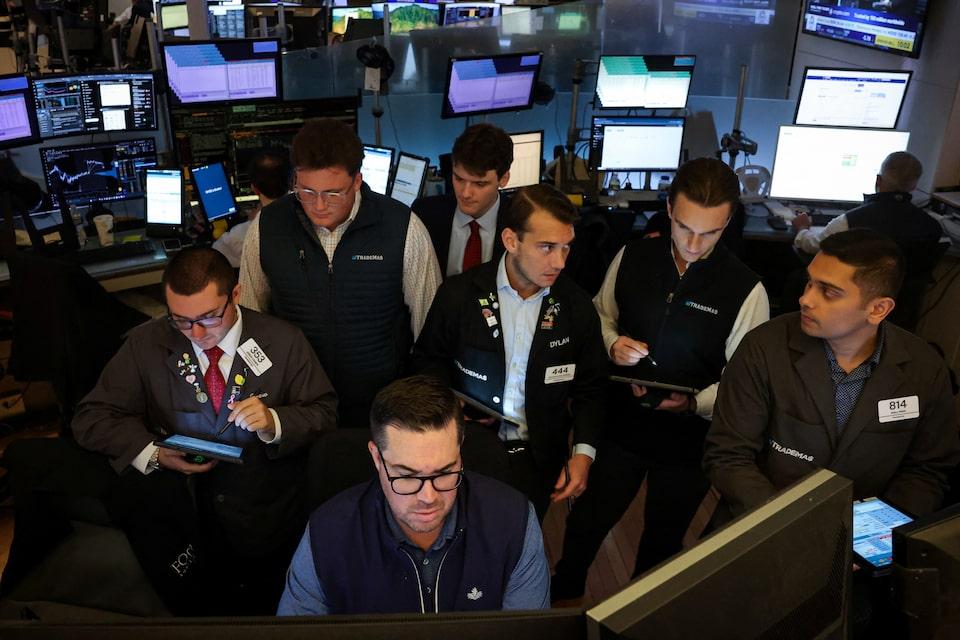
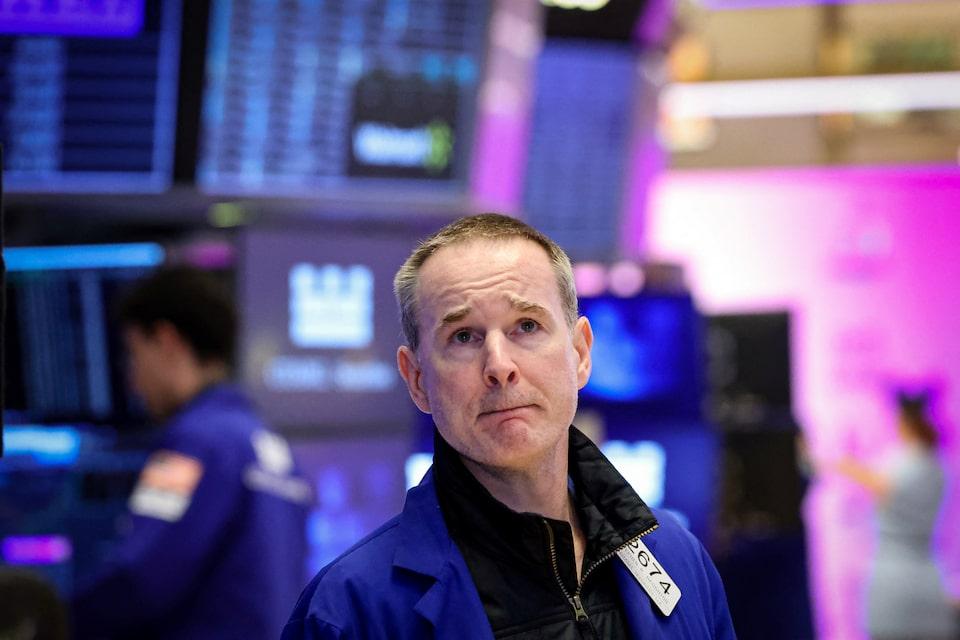
Wall Street rises at top of busy earnings week European stocks slip, EU mulls US tariff countermeasures Yen stronger after Japanese upper house elections Gold touches five-week high NEW YORK, July 21 (Reuters) - Wall Street stocks advanced on Monday, while Treasury yields softened at the top of a busy week of corporate earnings reports, as tariff negotiations between the U.S. and its trading partners ramped up in the face of a fast-approaching August 1 deadline. All three major U.S. stock indexes moved higher in opposition to their European counterparts, gold notched a five-week high and the dollar weakened against the yen in the wake of Japan's weekend elections. Sign up here. Communication services (.SPLRCL) , opens new tab and tech-adjacent momentum stocks (.NYFANG) , opens new tab were providing much of the upside muscle. Second-quarter earnings season shifts into high gear this week, and the roster includes Alphabet (GOOGL.O) , opens new tab and Tesla (TSLA.O) , opens new tab, two of the "Magnificent Seven" AI-associated megacap stocks. IBM (IBM.N) , opens new tab and Intel (INTC.O) , opens new tab are two high-profile tech names expected to report during a busy week that also includes a host of industrials, from General Motors (GM.N) , opens new tab to Union Pacific (UNP.N) , opens new tab. "We've had optimism around trade, and it's early days but we’ve had pretty good earnings so far," said Zachary Hill, head of portfolio management at Horizon Investments in Charlotte, North Carolina. "So it feels a little bit like a summertime, don't-fight-the-trend environment at the moment." Trade negotiations have yet to yield any meaningful deals as the clock ticks down on U.S. President Donald Trump's August 1 tariff deadline. "The market's view of who the tariffs hurt more or less has certainly waxed and waned over the last couple of months," Hill added. "It's been a pretty turbulent kind of news flow, I think a lot of U.S. investors have tuned it out." "That doesn't appear to be the case when you look overseas at other markets." U.S. Treasury Secretary Scott Bessent told CNBC, "I think that what we need to do is examine the entire Federal Reserve institution and whether they have been successful," further stoking concerns over the central bank's autonomy following reports Trump is considering firing Chairman Jerome Powell. "This is highly politically motivated and both Secretary Bessent, as well as President Trump, have a recognition and understanding of the enormous chaos that a non-independent Fed, or attempts to fire Chairman Powell would have on markets, and I don't believe that is their objective or desire," said Oliver Pursche, senior vice president at Wealthspire Advisors, in New York. The Dow Jones Industrial Average (.DJI) , opens new tab fell 18.66 points, or 0.04%, to 44,323.53, the S&P 500 (.SPX) , opens new tab rose 8.89 points, or 0.14%, to 6,305.68 and the Nasdaq Composite (.IXIC) , opens new tab rose 78.52 points, or 0.38%, to 20,974.18. European stocks ended a choppy session lower as investors weighed a mixed set of corporate earnings and looked for signs of progress in ongoing trade negotiations. MSCI's gauge of stocks across the globe (.MIWD00000PUS) , opens new tab rose 1.68 points, or 0.18%, to 929.67. The pan-European STOXX 600 (.STOXX) , opens new tab index fell 0.08%, while Europe's broad FTSEurofirst 300 index (.FTEU3) , opens new tab fell 2.82 points, or 0.13%. Emerging market stocks (.MSCIEF) , opens new tab rose 5.45 points, or 0.44%, to 1,254.83. MSCI's broadest index of Asia-Pacific shares outside Japan (.MIAPJ0000PUS) , opens new tab closed higher by 0.2%, to 659.24, while Japan's Nikkei (.N225) , opens new tab fell 82.08 points, or 0.21%, to 39,819.11. The dollar lost ground as the yen strengthened in the aftermath of Japan's weekend election, which saw its ruling coalition lose its majority in the upper house. The dollar index , which measures the greenback against a basket of currencies including the yen and the euro, fell 0.53% to 97.88, with the euro up 0.55% at $1.1689. Against the Japanese yen , the dollar weakened 0.97% to 147.37. Bitcoin reversed previous gains won after Trump signed the GENIUS Act into law late Friday, considered a huge win for the crypto industry. In cryptocurrencies, bitcoin fell 1.11% to $116,822.34. Ethereum declined 0.19% to $3,734.50. U.S. Treasuries rallied, pushing yields lower, as investors likely unwound short positions and followed a broader rally in European sovereign bonds driven by tariff uncertainties. The yield on benchmark U.S. 10-year notes fell 4.7 basis points to 4.384%, from 4.431% late on Friday. The 30-year bond yield fell 5 basis points to 4.9491% from 4.999% late on Friday. The 2-year note yield, which typically moves in step with interest rate expectations for the Federal Reserve, fell 1.4 basis points to 3.863%, from 3.875% late on Friday. Oil prices inched lower as investors shrugged off the latest European sanctions on Russian oil stocks, which are expected to have minimal supply impact. Concerns over dampening demand continued to simmer amid protracted trade negotiations. U.S. crude dipped 0.2% to end at $67.20 per barrel, while Brent settled at $69.21 per barrel, down 0.1% on the day. Gold prices hit a five-week high on the softening greenback and easing Treasury yields. Spot gold rose 1.47% to $3,398.43 an ounce. U.S. gold futures rose 1.47% to $3,402.30 an ounce. https://www.reuters.com/world/china/global-markets-update-8-graphics-2025-07-21/
2025-07-21 20:18
Yen firms as markets had priced in Japan election result Ruling coalition loses majority in upper house Tariffs, ECB & Fed meetings in focus Bessent says Fed needs to be examined as an organization NEW YORK, July 21 (Reuters) - The yen climbed across the board on Monday after beleaguered Japanese Prime Minister Shigeru Ishiba vowed to hang on as leader even though his ruling coalitionlost its majority in Sunday's upper house elections, an outcome that was not exactly a shock and has been mostly priced in. Investors braced for market disquiet ahead of a deadline on U.S. tariff negotiations. Sign up here. Japanese markets were closed for a public holiday, leaving the yen as the main indicator of possible investor angst. The dollar, on the other hand, fell against most currencies, in line with the decline in U.S. Treasury yields, analysts said. In afternoon trading, the Japanese currency gained 1% to 147.315 yen per dollar, although not far off from the 3-1/2-month low of 149.19 yen hit last week as investors fretted about Japan's political and fiscal outlook. The yen also nudged 0.4% higher against the euro to 172.27 and against sterling to 198.64, up 0.4%. Ishiba's Liberal Democratic Party returned 47 seats, short of the 50 it needed to ensure a majority in Japan's 248-seat upper chamber, where half the seats were up for grabs. He vowed to stay on in his role even as some of his own party discussed his future and the opposition weighed a no-confidence motion. "The elections were not as awful an outcome for the Prime Minister Shigeru Ishiba as analysts had predicted. The PM's party managed to minimize seat losses and Ishiba was not forced to resign his position," said Juan Perez, director of trading at Monex USA in Washington. "This overall plays as a welcome tune for Japanese yen developments since the reality is far more optimistic than anticipated with the PM promising to stay in power and work out differences in coming up with fiscal policy." The election result, while not entirely a shock to markets, also comes at a tricky time for a country trying to get a tariff deal with U.S. President Donald Trump before an August 1 deadline. TARIFF UNCERTAINTY Investor focus has also been firmly on Trump's global tariff salvos, with a Financial Times report last week indicating the U.S. president was pushing for steep new tariffs on European Union products. U.S. Commerce Secretary Howard Lutnick said on Sunday he was confident the United States can secure a trade deal with the EU, but said August 1 was a hard deadline for tariffs to kick in. EU diplomats said the bloc was exploring a broader set of counter measures against the U.S. as prospects for an acceptable trade agreement fade, even though a negotiated solution was still their preferred option. The euro was up 0.4% at $1.1681, while sterling last fetched $1.3488, up 0.6%. The European Central Bank is due to meet this week and is expected to hold rates steady after a string of cuts, while investor attention has been on whether the Federal Reserve succumbs to pressure from Trump to cut interest rates. In the United States, Trump appeared near the point of trying to dismiss Fed Chair Jerome Powell last week, but backed off with a nod to the market disruption that would likely follow. The U.S. central bank is widely expected to hold rates steady at its July meeting. U.S. Treasury Secretary Scott Bessent on Monday said the entire Fed needed to be examined as an institution and whether it had been successful. Speaking with CNBC, he cited what he called "fear-mongering over tariffs" despite the emergence thus far of little, if any, inflationary effect. "If this were the (Federal Aviation Administration) and we were having this many mistakes, we would go back and look at why. Why has this happened?" he said. "All these PhDs over there, I don't know what they do." Traders are fully pricing in a Fed rate cut by the October meeting with the odds of a second rate cut this year not fully priced in yet. The dollar index , which measures the U.S. currency against six others, was down 0.5% at 97.969. "I think the dollar topped out last week, while foreign currencies have bottomed, so foreign currencies have come back stronger here," said Marc Chandler, chief market strategist, at Bannockburn Forex in New York. "I think the dollar is very much connected to interest rates. The 10-year yield is off more than six basis points." In cryptocurrencies, bitcoin fell more than 1% to $116,788 , with investors profiting from recent gains in the run-up to the signing into law the GENIUS Act last Friday. https://www.reuters.com/business/yen-gains-broadly-japans-ishiba-stays-dollar-weakens-2025-07-21/
2025-07-21 19:26
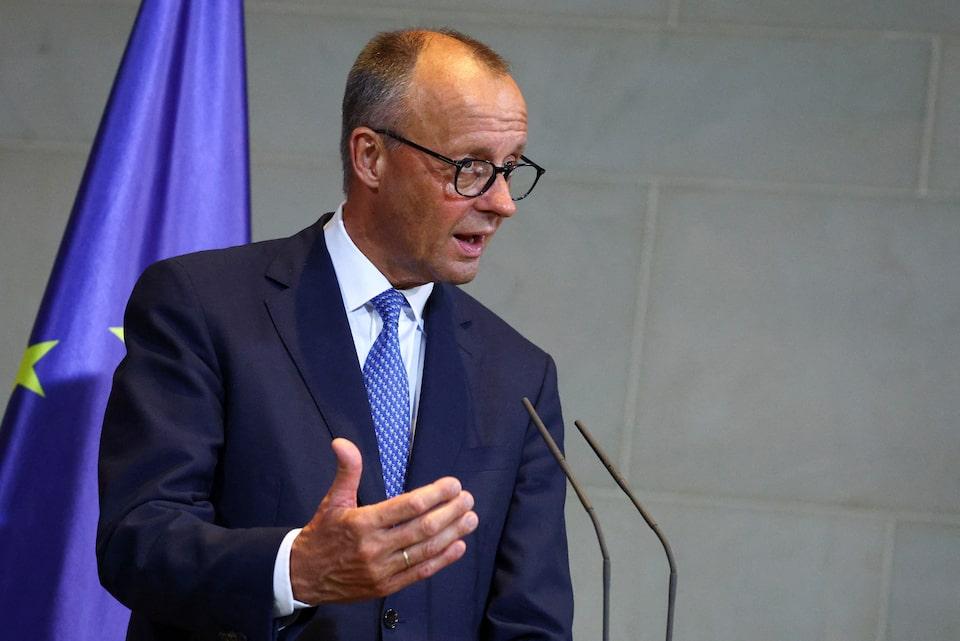
BERLIN, July 21 (Reuters) - German Chancellor Friedrich Merz said on Monday the government had not yet decided whether it would take a stake in the German division of state-owned Dutch power grid operator TenneT and was still in talks with the Netherlands. The Netherlands said last month it would announce in September whether it would sell a minority stake in TenneT Germany or pursue a partial IPO, in what could be one of Europe's biggest deals in 2025. Sign up here. The Dutch government embarked on a dual track process for TenneT Germany after a partial sale to German state lender KfW failed to materialise last June. “The discussion within the federal government is currently ongoing and has not yet been concluded,” Merz said in a joint news conference with Norwegian Prime Minister Jonas Gahr Store. Norway's vast sovereign wealth fund is considering a multi-billion dollar investment in TenneT Germany, German newspaper Handelsblatt wrote earlier this month, citing people familiar with the matter. Asked whether he would support this, Store said the fund had already made "significant" investments in German companies. "There are many opportunities in Germany to find companies to invest in", Store said. https://www.reuters.com/business/energy/merz-says-berlin-still-considering-stake-tennets-german-business-2025-07-21/