2025-07-21 10:47
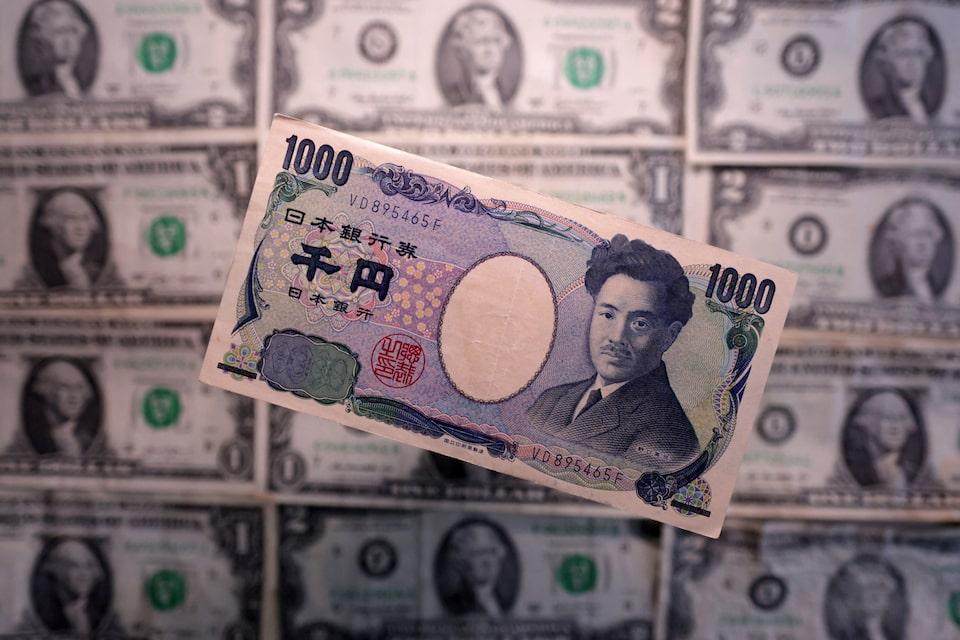
LONDON, July 21 (Reuters) - What matters in U.S. and global markets today By Mike Dolan , opens new tab, Editor-At-Large, Finance and Markets Sign up here. Japan's yen strengthened on Monday as embattled Prime Minister Shigeru Ishiba vowed to stay on as leader even after his ruling coalition lost its majority in Sunday's upper house elections. I'll dive into this and the rest of today's market news below. Make sure to check out today's column, where I discuss why a sudden shift in the euro and the threat of U.S. tariffs may give the European Central Bank a reason to pause rate cuts, even as deeper tensions may be quietly building. Today's Market Minute * Japan's ruling coalition lost control of the upper house in an election on Sunday, further weakening Prime Minister Shigeru Ishiba's grip on power even as he vowed to remain party leader, citing a looming tariff deadline with the United States. * The fringe far-right Sanseito party emerged as one of the biggest winners in Japan's upper house election on Sunday, gaining support with warnings of a "silent invasion" of immigrants, and pledges for tax cuts and welfare spending. * BP named Albert Manifold, the former boss of building materials producer CRH, as its new chairman on Monday, as it looks to address investor concerns about its strategy and weak share performance. * The high-stakes clash between Exxon Mobil and Chevron over a prized South American oilfield may be a sign of what’s to come in the oil and gas industry as competition for a shrinking pool of prime assets heats up, writes ROI energy columnist Ron Bousso. * Asia's run of subdued imports of liquefied natural gas is set to extend for another month in July, with the top-importing region on track for a tiny increase from June. Read the latest from ROI columnist Clyde Russell. Yen bounces as Japan PM hangs on With markets rushing to price 'worst case' scenarios earlier this month, including the chance of a leadership hiatus just as next week's August 1 tariff deadline hits, the outcome was seen as something of a relief. Even though pressure remains on Ishiba, his pledge to remain as PM offers at least some focus for any last minute trade negotiations. Japanese markets were closed for a holiday and global currency markets offered the only clear sign of a reaction. The yen , which had hit a three-month low of 149.18 per dollar last week, firmed to just under 147.7 after the results. That dragged the dollar (.DXY) , opens new tab down across the board. The other big movers first thing have been in global bond markets, where U.S. Treasury yields and European equivalents - perhaps in some read-across to Japanese investor flows - fell notably. Treasury yields fell across the curve to 10-day lows - after rallying last week on a combination of benign producer price and inflation expectations readings as well as comments from Federal Reserve board dove Christopher Waller that he's still in favor of resuming interest rate cuts as soon as this month. Waller said on Friday he would accept the job as head of the U.S. central bank if asked by President Donald Trump, but so far Trump had not contacted him about it. With the Fed outlook now confused by persistent White House pressure on Chair Jerome Powell and the outside chance that Trump attempts to fire him before his term expires next year, last week's incoming price data has offered some comfort. Fed futures reflect a near 70% chance of another Fed cut by September. But the Wall Street Journal reported on Monday that Treasury Secretary Scott Bessent had counseled Trump not to fire Powell, given the financial disruption that might cause. Trump, who sued the WSJ and its owners including Rupert Murdoch for at least $10 billion on Friday over the newspaper's report on a 2003 birthday greeting from Trump to sex offender Jeffrey Epstein, denied the latest WSJ report on Bessent too. Stock markets were steady to higher across the world, with Wall Street stock futures up ahead Monday's bell. Helping the mood, U.S. Commerce Secretary Howard Lutnick said on Sunday he was confident that Washington can secure a trade deal with the European Union, but August 1 is a hard deadline for tariffs to kick in. Lutnick said he had just gotten off the phone with European trade negotiators and there was "plenty of room" for agreement. Meantime, China's foreign ministry said European Commission President Ursula von der Leyen and European Council President Antonio Costa will meet with Chinese President Xi Jinping on Thursday. The corporate earnings season unfolds during the week, meantime, with Tesla and Alphabet - two underperforming megacaps this year - reporting on Wednesday. In Europe, Ryanair (RYA.I) , opens new tab surged more than 6% as Europe's largest low-cost carrier's net profit more than doubled in its April-June quarter. Chart of the day China's exports of rare earth magnets to the United States in June soared to more than seven times their May level, marking a sharp recovery in the flow of critical minerals used in electric vehicles, wind turbines and missiles after a Sino-U.S. trade deal. China, which provides more than 90% of the global supply of rare earth magnets, decided in early April to add several rare earth items to its export restriction list in retaliation for U.S. tariffs - creating major supply chain problems for many firms and industries. But the two countries hammered out an agreement last month to resolve the issue - one in which Washington allowed chipmaker Nvidia (NVDA.O) , opens new tab to resume sales of its H20 AI chips to China. Separately, China has quietly issued its first 2025 rare earth mining and smelting quotas without the typical public statement - another sign of Beijing tightening its control over the crucial sector. Today's events to watch * U.S. June leading indicator (8:30 AM EDT); Canada June producer price report * U.S. corporate earnings: Verizon, Domino's Pizza, Steel Dynamics, WR Berkley, NXP, Roper, Alexandria Real Estate Want to receive the Morning Bid in your inbox every weekday morning? Sign up for the newsletter here. You can find ROI on the Reuters website , opens new tab, and you can follow us on LinkedIn , opens new tab and X. , opens new tab Opinions expressed are those of the author. They do not reflect the views of Reuters News, which, under the Trust Principles , opens new tab, is committed to integrity, independence, and freedom from bias. https://www.reuters.com/business/finance/global-markets-view-usa-2025-07-21/
2025-07-21 10:43
MILAN, July 21 (Reuters) - U.S. tariffs of 30% on European Union goods could shave up to 0.8% off Italy's gross domestic product in 2027, the country's main business lobby said on Monday, as transatlantic trade negotiations continued. President Donald Trump has threatened 30% tariffs on EU imports starting August 1, but his trade chief Howard Lutnick said on Sunday there was "plenty of room" for an agreement with European counterparts. Sign up here. If 30% tariffs are confirmed, and assuming no countermeasures from the EU, Italy's GDP would take a 0.25% hit this year, rising to 0.59% in 2026 and 0.82% in 2027, Confindustria's research unit said. Italy's main exports to the U.S. include machinery, pharmaceuticals, cars and food products such as olive oil, pasta, cheese and wine. In a separate report, professional services group EY issued even bleaker forecasts, predicting 30% tariffs would shave 1.4% off Italy's GDP for 2025-2026, effectively cutting to zero expected growth for the period. Last month, national statistics agency Istat forecast GDP growth of 0.6% this year and 0.8% in 2026. Italy's business lobby last week said the only acceptable U.S tariff would be zero as EU exports are already penalised by a depreciating dollar. The U.S. currency has lost more than 12% against the euro since the start of the year. ($1 = 0.8593 euros) https://www.reuters.com/business/us-tariffs-could-cost-italy-up-08-gdp-business-lobby-says-2025-07-21/

2025-07-21 10:34
July 21 (Reuters) - Tech billionaire Jack Dorsey-led Block's (XYZ.N) , opens new tab shares rose nearly 10% before the bell on Monday after the payments firm was added to the benchmark S&P 500 (.SPX) , opens new tab, marking a milestone for the fintech sector. The inclusion cements Block's status as one of the most valuable and influential players in the fintech space, and shows how digital payments and financial apps have moved into the mainstream and disrupted traditional banking models in the U.S. Sign up here. Block -- with a market value of about $44.8 billion -- will replace Hess Corp, following its $55 billion merger with oil major Chevron. The change takes effect before trading begins on Wednesday, S&P Dow Jones Indices said. Shares of a company often rise after being added to the S&P 500 as index-tracking funds are required to add them to their portfolio, boosting demand for the stock. J.P. Morgan estimates that Block's inclusion should drive net indexer demand of 54.2 million shares of the company. "We believe XYZ (Block) deserves a higher multiple given recent momentum around product velocity and marketing efforts, and joining S&P 500 helps." The inclusion boosts Block's profile among institutional investors and signals its growing influence in the U.S. financial sector. Co-founded by Jack Dorsey in 2009 as Square, the company rebranded to Block in 2021 to reflect its broader focus on blockchain technology. Block sits at the intersection of traditional payments and digital assets, with products spanning from point-of-sale systems, peer-to-peer transfers and bitcoin services. Crypto payments have also gained momentum this year and are expected to grow further after U.S. President Donald Trump signed a law on Friday establishing a regulatory framework for dollar-pegged stablecoins, a milestone that could help make digital assets a routine way to pay and transfer money. Block's shares have fallen about 14% so far this year through the previous close, underperforming the S&P 500's roughly 7% gain. https://www.reuters.com/technology/block-jumps-after-sp-500-inclusion-new-milestone-fintech-2025-07-21/
2025-07-21 10:33
July 21 (Reuters) - The Ether Reserve, a new crypto venture backed by prominent crypto investors, will list on the Nasdaq through a merger with blank-check firm Dynamix Corporation (DYNX.O) , opens new tab and is expected to raise over $1.6 billion. The combined entity, to be named The Ether Machine, aims to launch with more than 400,000 Ether on its balance sheet, positioning it as the largest public vehicle for institutional exposure to the world's second-largest cryptocurrency. Sign up here. Shares of Dynamix rose nearly 28% in early trading. The deal highlights rising institutional interest in holding crypto on corporate balance sheets, with several projects announcing plans in recent months to publicly list their shares while aiming to wrap crypto assets into equity to attract traditional investors. While most corporate interest has focused on Bitcoin, Ether has surged in recent weeks, hitting a six-month high on Friday. Ether stands out for its yield-generating capability and its use in digitizing real-world assets, according to Andrew Keys, who will serve as Ether Machine’s chairman. Ether holders earn returns via staking, a process that supports the operation and security of the Ethereum network. “Bitcoin doesn’t have yield and Ether does,” Keys, who previously worked with Ethereum co-founder Joseph Lubin, told Reuters in an interview. Investors in the blank-check deal, including Blockchain.com, Kraken, and Pantera Capital, are contributing more than $800 million through an upsized common stock offering. ECOSYSTEM DOMINANCE Ethereum is growing in a way that is reminiscent of how Google dominated internet search, Keys said, adding that 90% of stablecoins and other real-world tokenizations are settled on the platform. The blockchain supporting Ether can have "infinite assets created on top of it and we can have infinite functionality through smart contract usage," he added. Smart contracts are self-executing digital agreements on blockchains, eliminating intermediaries. Ether has also benefited from increased regulatory clarity around U.S. dollar-pegged stablecoins. "The largest beneficiary of the Genius Act is Ethereum because the majority of stablecoins reside on top of Ethereum," Keys said. The company will trade on the Nasdaq under the symbol "ETHM" upon deal close, which is expected in the fourth quarter of 2025. https://www.reuters.com/technology/ether-machine-backed-by-crypto-giants-set-raise-over-16-billion-nasdaq-debut-2025-07-21/

2025-07-21 10:04
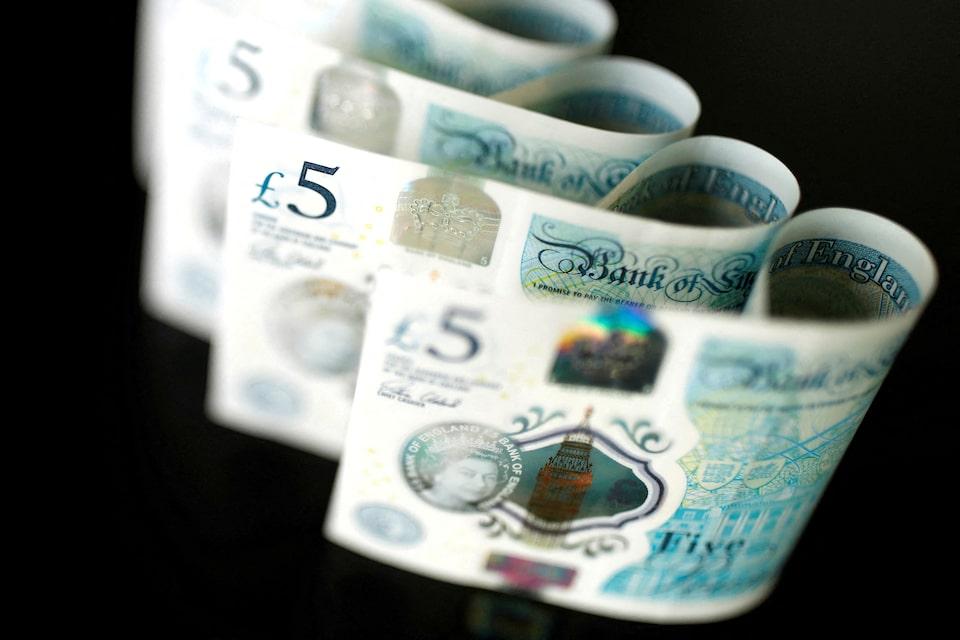
LONDON, July 21 (Reuters) - The British pound edged higher against the dollar and euro on Monday, but remained close to the multi-week lows it reached against both currencies last week as investor attention remains on Bank of England policy and the deteriorating fiscal picture. The pound was up 0.3% against the dollar at $1.3452, just above last week's eight-week low of $1.33655. Sign up here. Britain's economic data was mixed on balance last week - the labour market showed signs of a further cooling, while consumer price inflation unexpectedly rose to its highest in more than a year. A quarter-point rate cut from the Bank of England at its meeting on August 7 remained almost fully priced after the data, with about 50 basis points of easing priced in by the end of the year. The pound was also up about 0.2% at 86.575 pence per euro , having touched a 14-week low last week. "We think a rising fiscal risk premium is the main driver of the recent outperformance of EUR/GBP," said Goldman Sachs FX strategists in a note. Britain remains in a precarious fiscal position, exacerbated earlier this month after the government suffered a major rebellion against welfare reforms which fed doubts about its ability to cut spending. Many economists and analysts believe the government will have to raise billions of pounds in taxes later this year to meet its fiscal rules as growth remains elusive. "The pound's struggle to keep pace with the euro this year reflects a shift in market optimism in favour of Germany and the euro zone," said Rabobank senior FX strategist Jane Foley. "In view of the UK's fiscal concerns, we continue to favour buying EUR/GBP on dips," Foley added. Deloitte on Monday said its consumer confidence index dropped to its lowest since the first quarter of 2024, reflecting increased worries about job security and income growth. Retail sales data due on Friday could give a clearer picture on the state of the consumer, while a preliminary survey of purchasing managers on business activity is set for release on Thursday. https://www.reuters.com/world/uk/sterling-inches-up-against-euro-dollar-remains-near-multi-week-lows-2025-07-21/
2025-07-21 07:56
Investors unfazed by prospect of more fiscal largesse Japan's net creditor nation status is a plus for its debt Growth will also reduce focus on gross debt SINGAPORE, July 21 (Reuters) - A weekend election in Japan has made real the prospect of bigger government spending and deficits in the world's most indebted developed nation, although for now foreign investors and a growing economy could keep its bond yields from spiking sharply. Japan's upper house election on Sunday dealt a big blow to the ruling coalition and Prime Minister Shigeru Ishiba ahead of a looming tariff deadline with the United States. Sign up here. Investors are bracing for scenarios ranging from Ishiba continuing to run a minority government, a deal with a smaller opposition party or even his ouster, but one thing they are certain of is that Japan is heading for tax cuts and a wider fiscal deficit. Under normal circumstances, that should lead to a selloff in bonds and higher yields as investors demand to be compensated for risk to lend to a country with debt exceeding $8 trillion, or nearly 2-1/2 times the size of its economy. But while Japanese long-term bond yields have been rising, they are nowhere near levels reflecting such government profligacy. Thirty-year bonds fetch just 3%. A weak yen and a legacy of low interest rates, Japan's return to inflation, huge domestic savings and the Bank of Japan's policies have worked to anchor Japanese government bond (JGB) yields. Analysts expect some of that support for bonds will continue. "With some of the proposals at the margin, with the changed political dynamics, potentially you could see more clamour for fiscal support including consumption taxes," said Michael Wan, a senior currency analyst at MUFG. But Wan and other analysts point to Japan's economic growth and emergence from deflation in the past three years as reasons the debt burden is manageable and likely to decline in the coming years. Japan’s fiscal situation isn’t as dire as many think," Marcel Thieliant, Capital Economics’ head of Asia Pacific, said in a note. While Japan's gross debt to GDP is the highest of any major economy, net debt is much lower, he said. "Relative to other countries, Japan is a net creditor. So you do have, in theory, a lot of funds on the sidelines, from domestic institutions who have invested abroad, which could cap any sharp and dislocation in yield spikes over the medium term," MUFG's Wan said. FOREIGN BID Its role as one of the world's biggest creditors sets Japan apart from other G7 nations with debt and rising bond yields, such as Britain and the United States. Together with pension giant GPIF and life insurance firms, the country has about $3.6 trillion dollars invested overseas, of which half is in U.S. assets. While Japan can tap into its huge pool of domestic savings if needed, for now its low yields and weakening currency are luring foreign investors, who can switch dollars or euros for yen and earn a spread on the currency swap. Swapping dollars to yen to invest in one-year JGBs, for instance, yields about 30 basis points more than the 3.9% yield on one-year U.S. Treasuries. "Global managers or index guys actually look at the developed market as a relative value play, like whichever bounces up the most," said Rong Ren Goh, a portfolio manager in the fixed income team at Eastspring Investments. "Of course it makes more sense for me to rotate out and do my asset swapping to get the best swap-adjusted return." The steepness of the Japanese government curve has helped entice bond investors. Foreigners have poured more than 15 trillion yen ($101.17 billion) into Japanese bonds so far this year. Thirty-year yields are up 80 basis points (bps) at all-time highs this year and the yield curve is at its steepest in years, with the spread between 10-year and 30-year bonds above 150 bps. Thieliant still expects the 10-year JGB yield will rise to 2% by the end of 2026 from current levels around 1.5%, but that he said is based on a hawkish monetary policy view. ($1 = 148.2600 yen) https://www.reuters.com/business/growth-foreign-fervour-yield-give-japan-fiscal-wiggle-room-2025-07-21/