2025-07-21 06:50
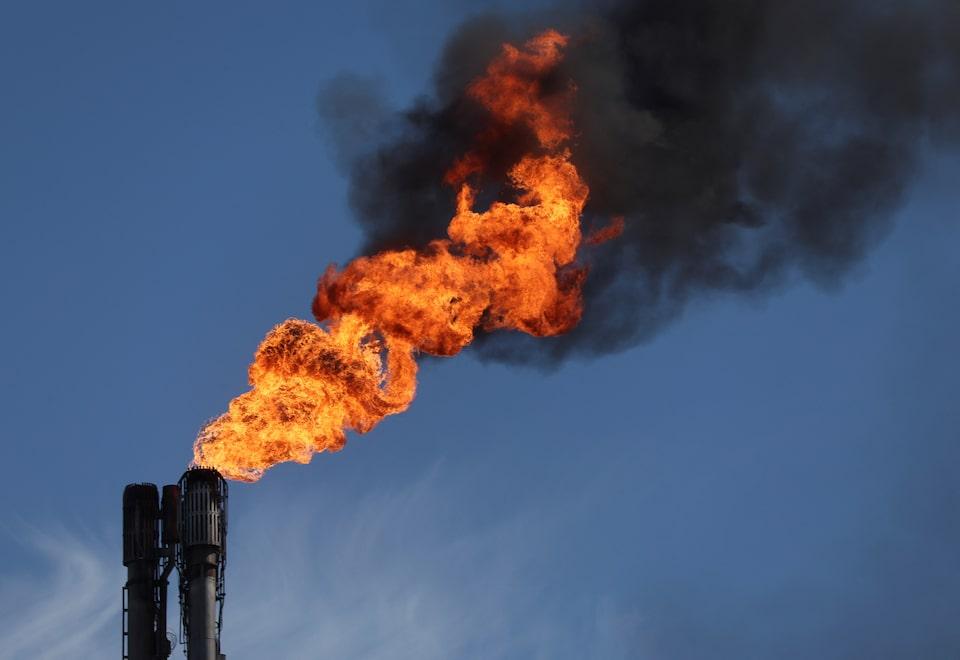
COPENHAGEN, July 21 (Reuters) - Vaar Energi (VAR.OL) , opens new tab has discovered oil and gas at the Vidsyn prospect in the Norwegian Sea, the Norwegian oil company said on Monday. Preliminary estimates indicate that the discovery holds recoverable reserves of between 25 million and 40 million barrels of oil equivalent, Vaar said in a statement. Sign up here. The company said it will evaluate the discovery and consider development as a tie-in to the existing Fenja oil and gas field. "Together with Vaar Energi, we will work hard to put it into production faster than is the norm in Norway," Bijan Mossavar-Rahmani, chairman of DNO (DNO.OL) , opens new tab, which owns a 7.5% stake in the field, said in a separate statement. Vaar Energi owns 75% of the exploration permit, while Sval Energi holds the remaining 17.5%. https://www.reuters.com/business/energy/norways-vaar-energi-makes-oil-gas-discovery-norwegian-sea-2025-07-21/

2025-07-21 06:43
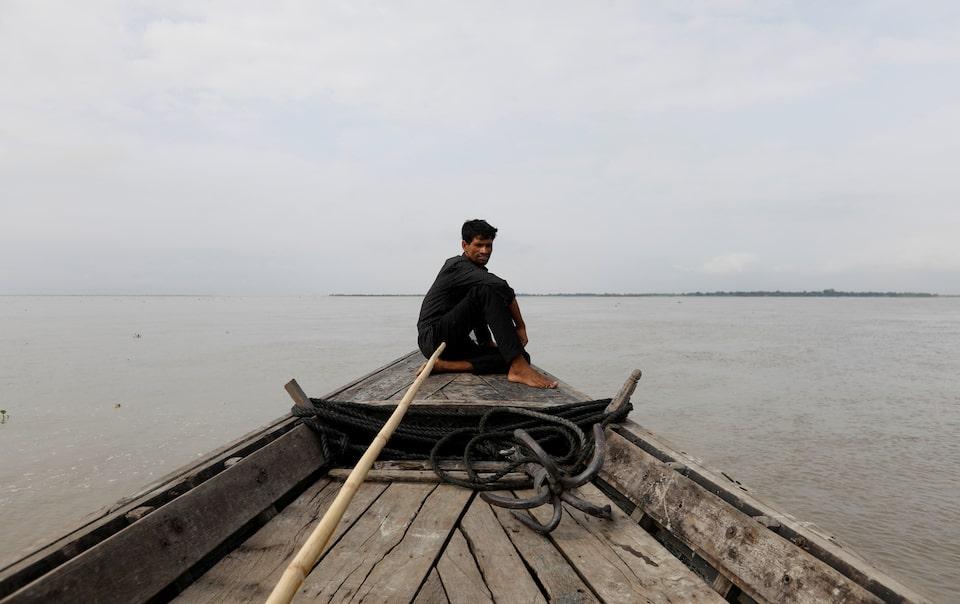
Hydro project located on Yarlung Zangbo in Tibet Project to dwarf Three Gorges Dam on Yangtze River Start of construction fuels surge in engineering, related shares in stock market India, Bangladesh have expressed concern about the dam's impact HONG KONG/SHANGHAI, July 21 (Reuters) - China's Premier Li Qiang announced construction had begun on what will be the world's largest hydropower dam, on the eastern rim of the Tibetan Plateau, at an estimated cost of at least $170 billion, the official Xinhua news agency said. Commencement of the hydropower project, China's most ambitious since the Three Gorges Dam on the Yangtze, was seized by Chinese markets as proof of economic stimulus, sending stock prices and bond yields higher on Monday. Sign up here. Made up of five cascade hydropower stations with the capacity to produce 300 billion kilowatt-hours of electricity annually, equal to the amount of electricity consumed by Britain last year, the dam will be located in the lower reaches of the Yarlung Zangbo. A section of the river tumbles 2,000 metres (6,561 feet) in a span of 50km (31 miles), offering huge hydropower potential. India and Bangladesh have already raised concerns about its possible impact on the millions of people downstream, while NGOs warned of the risk to one of the richest and most diverse environments on the plateau. Beijing has said the dam will help meet power demand in Tibet and the rest of China without having a major effect on downstream water supplies or the environment. Operations are expected sometime in the 2030s. China's CSI Construction & Engineering Index (.CSI399995) , opens new tab jumped as much as 4% to a seven-month high. Power Construction Corporation of China (601669.SS) , opens new tab and Arcplus Group PLC (600629.SS) , opens new tab surged by their 10% daily limit. "From an investment perspective, mature hydropower projects offer bond-like dividends," Wang Zhuo, partner of Shanghai Zhuozhu Investment Management said, while cautioning that speculative buying into related stocks would inflate valuations. The project will drive demand for construction and building materials such as cement and civil explosives, Huatai Securities said in a note to clients. Shares of Beijing-listed Hunan Wuxin Tunnel Intelligent Equipment Co (835174.BJE) , opens new tab, which sells tunnel construction equipment, surged 30%. So did shares of Geokang Technologies Co Ltd (830879.BJE) , opens new tab, which makes intelligent monitoring terminals. Cement maker Xizang Tianlu Co Ltd (600326.SS) , opens new tab and Tibet GaoZheng Explosive Co (002827.SZ) , opens new tab, producer of civil explosive materials, both jumped their maximum 10%. BROADER IMPACT The Chinese premier described the dam as a "project of the century" and said special emphasis "must be placed on ecological conservation to prevent environmental damage," Xinhua said on Saturday. Government bond yields rose across the board on Monday, with the most-traded 30-year treasury futures falling to five-week lows, as investors interpreted the news as part of China's economic stimulus. The project, overseen by the newly formed state-owned China Yajiang Group, marks a major boost in public investment to help bolster economic growth as current drivers show signs of faltering. "Assuming 10 years of construction, the investment/GDP boost could reach 120 billion yuan ($16.7 billion) for a single year," said Citi in a note. "The actual economic benefits could go beyond that." China has not given an estimate on the number of jobs the project could create. The Three Gorges, which took almost two decades to complete, generated nearly a million jobs, state media reported, though it displaced at least a similar number of people. Authorities have not indicated how many people would be displaced by the Yarlung Zangbo project. The Yarlung Zangbo becomes the Brahmaputra River as it leaves Tibet and flows south into India and finally into Bangladesh. NGOs say the dam will irreversibly harm the Tibetan Plateau and hit millions of people downstream. The chief minister of Arunachal Pradesh, Pema Khandu, said earlier this year that such a colossal dam barely 50km from the border could dry out 80% of the river passing through the Indian state while potentially inundating downstream areas in Arunachal and neighbouring Assam state. Some experts also express concerns for a project in a seismically active zone. ($1 = 7.1788 Chinese yuan) https://www.reuters.com/sustainability/climate-energy/china-embarks-worlds-largest-hydropower-dam-capital-markets-cheer-2025-07-21/
2025-07-21 06:38
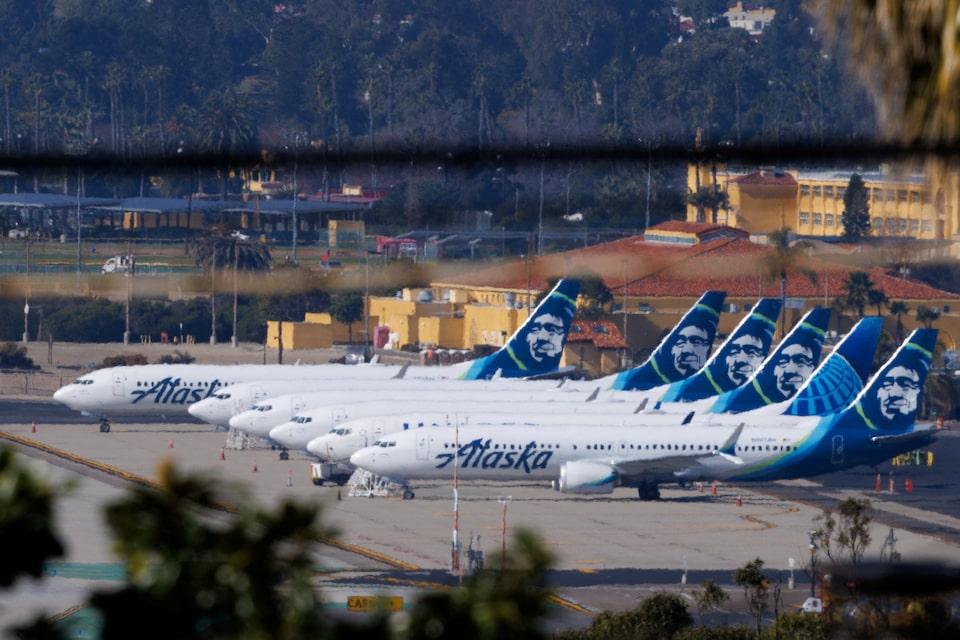
Ground stop lifted at 11 p.m. Pacific on Sunday Alaska expects residual impacts throughout the evening Cause of IT outage remains unclear July 20 (Reuters) - U.S. carrier Alaska Airlines (ALK.N) , opens new tab resumed operations late on Sunday after briefly grounding all of its flights for about three hours due to an IT outage, marking the second time it has halted its fleet in just over a year. The company requested a system-wide ground stop for Alaska and Horizon Air flights at around 8 p.m. Pacific on Sunday (0300 GMT on Monday) after it said that an outage impacted its systems, and lifted the ground stop by 11 p.m. Pacific, the carrier said. Sign up here. "As we reposition our aircraft and crews, there will most likely be residual impacts to our flights. It will take some time to get our overall operations back to normal," the Seattle-based company said. Alaska did not immediately specify the nature of the IT outage. In April 2024, Alaska grounded its entire fleet due to an issue with the system that calculates the weight and balance of its planes. Alaska Air Group maintains an operational fleet of 238 Boeing (BA.N) , opens new tab 737 aircraft, and 87 Embraer (EMBR3.SA) , opens new tab 175 aircraft, according to its website. In June, Alaska Air Group-owned Hawaiian Airlines said some of its IT systems were disrupted by a hack. Alaska Air Group said it was still determining the financial impact of that event. The news of Alaska's IT issues comes at a time when tech companies Google and Palo Alto Networks have warned of the "Scattered Spider" hacking group's interest in the aviation sector. Canada's WestJet Airlines was struck by an unspecified cyber incident in June, while Australia's Qantas (QAN.AX) , opens new tab experienced a data breach in July where a cyber hacker accessed the personal information of millions of customers. But those incidents did not affect flying operations. Separately, Microsoft said on Sunday that there were "active attacks" on its server software used by government agencies and businesses. Alaska did not immediately respond to a request seeking comment on whether the outage was related to the Microsoft announcement. https://www.reuters.com/world/us/alaska-airlines-resumes-operations-after-it-outage-2025-07-21/
2025-07-21 06:27
ANKARA, July 21 (Reuters) - Turkey wants to negotiate a new agreement with Iraq to revive operations at an oil pipeline between the two countries that were halted during a dispute over unauthorised Iraqi exports, a senior Turkish official told Reuters on Monday. In a decision published in its Official Gazette on Monday, Turkey said the existing deal dating back to the 1970s - the Turkey-Iraq Crude Oil Pipeline Agreement - and all subsequent protocols or memorandums would be halted from July 27, 2026. Sign up here. Iraq and Turkey have been working to resume oil flows from the pipeline running to Turkey's Ceyhan port following Turkey's move to halt them in March 2023 after the International Chamber of Commerce ordered Ankara to pay Baghdad $1.5 billion in damages for unauthorised exports between 2014 and 2018. Turkey has appealed against the ruling. Ankara has said it is ready to resume operations, but talks to do so hit a snag in March over payments and contracts. The official said the pipeline had the potential to become a "highly active and strategic pipeline for the region". The person added that Turkey had invested heavily in its maintenance, and noted its importance for regional projects like the Development Road - a planned trade route involving Turkey and Iraq. "A new and vibrant phase for the Iraq-Turkey pipeline will benefit both countries and the region as a whole," the official said, without giving details of what Ankara wanted the new agreement to include. There was no immediate comment from Iraq on the decision. https://www.reuters.com/business/energy/turkey-says-pipeline-agreement-with-iraq-expire-july-2026-2025-07-21/

2025-07-21 06:16
EU faces rising imports and dependency on foreign chemicals Around 40% of EU's ethylene capacity at risk of closure North America and Middle East benefit from cheaper raw materials Factbox giving details of plant closures in Europe MILAN/NEW DELHI/HOUSTON, July 21 (Reuters) - Europe's petrochemical industry is unravelling under a wave of plant closures after years of losses and a rapid expansion of global capacity led by China. High production costs and ageing plants have left European producers struggling, making the region increasingly dependent on imports of primary chemicals such as ethylene and propylene, the building blocks for plastics, pharmaceuticals and countless industrial goods. Sign up here. "While the rest of the world is building over 20 new crackers, Europe is sleepwalking into industrial decline," Jim Ratcliffe, founder of INEOS said during a recent event, referring to a unit in petrochemical plants. The billionaire made his money buying up petrochemical plants from BP (BP.L) , opens new tab and others, and along with other industry leaders has criticised a lack of political action. The European Commission responded this month with a pledge to support domestic production of chemicals deemed strategic for its industries, such as ethylene and propylene. It plans to expand state aid to modernise plants and require public tenders give preference to goods made in Europe - similar to the EU's 2023 legislation for metals and minerals. But the move may be too late to reverse the damage. "It's like being on the Titanic — you can't stay in denial. You must go and find a lifeboat," said Giuseppe Ricci, head of industrial transformation at Italian energy group Eni. Eni's (ENI.MI) , opens new tab chemical business Versalis accumulated over 3 billion euros ($3.5 billion) in losses in the last five years, Ricci said, as the firm shuts down Italy's last two steam crackers and invests 2 billion euros in bio-refineries and chemical recycling. Other global groups Dow (DOW.N) , opens new tab, ExxonMobil (XOM.N) , opens new tab, TotalEnergies (TTEF.PA) , opens new tab, and Shell (SHEL.L) , opens new tab are also closing or reviewing their European chemical assets. Most of the planned closures target crackers - a unit that turns hydrocarbons into ethylene, propylene or other primary chemical materials. A document issued by eight EU countries on petrochemicals in March said that 50,000 jobs could be at risk due to potential closures of more crackers in Europe by 2035. The EU's plants are mainly small and mid-sized and have been running at an average utilisation rate below 80% - a level considered uneconomical. Up to 40% of the EU's ethylene capacity — which totals 24.5 million metric tons — is at high or medium risk of closure, including shutdowns announced since late 2024, according to consultancy Wood Mackenzie. "The proportion of European crackers at risk is much higher than in other regions," said Robert Gilfillan, head of plastics and recycling markets at Wood Mackenzie. While older European plants use naphtha as a raw material, the United States and the Middle East use cheaper feedstocks like ethane — a by-product of shale gas. NEW DEPENDENCY North America's ethylene capacity will grow to 58 million metric tons by 2030 from 54 million currently, according to consulting firm ADI Analytics. China, meanwhile, will add 6.5% to its ethylene capacity every year between 2025 and 2030, when it will produce nearly 87 million metric tons of ethylene annually, China National Chemical Information Centre CEO Huang Yinguo said in May. That's more than triple the EU's current capacity. Chinese producers are also building outposts in Southeast Asia to export to Europe and North America to bypass carbon taxes and Western tariffs on China-made goods. Japanese and South Korean firms, unable to compete, have kept utilization rates low since 2023, the countries' petrochemical industry bodies said in reports in May. European policymakers now face a stark choice: intervene decisively or watch the continent's chemical backbone erode. In their March document, countries including France, Italy and Spain called for a "Critical Chemicals Act", as latest EU data shows the region was a net importer of ethylene and propylene each year in the period 2019-2023. EU Industry Commissioner Stéphane Séjourné said Brussels will identify strategic supplies and production sites. "First and foremost, this is about sovereignty — keeping our steam crackers," he told reporters this month. But sovereignty comes at a cost. Most European crackers are over 40 years old, compared to just 11 years in China, according to Citi analyst Sebastian Satz. And ethylene production in Europe using naphtha costs $800 a metric ton, versus less than $400 a metric ton in the U.S. if ethane is used, and around $200 a metric ton in the Middle East with ethane, Eni said in a presentation published in March. 'SLEEPWALKING INTO DECLINE' Some companies are betting big on survival. INEOS, which operates one of Europe's most advanced petrochemical facilities in Cologne, is building a 4 billion euro ethane cracker in Antwerp — the first new cracker in Europe in roughly 30 years, with production capacity of 1.45 million metric tons a year of ethylene. The plant, due online in 2026, aims to rival Chinese production and meet local demand with a lower carbon footprint. In the Middle East, consolidation is creating new global giants. A $60 billion merger between Abu Dhabi National Oil Company and Austria's OMV (OMVV.VI) , opens new tab will form Borouge Group, the world's fourth-largest polyolefins producer. The company plans to export polymers to Europe, competing directly with U.S. and Asian firms. Analysts say Europe's petrochemical production won't disappear entirely but will become the domain of a few dominant players. "Only major European companies with the market share to set competitive prices will continue to produce ethylene," said Enzo Baglieri, professor of operations and technology management at SDA Bocconi School of Management in Milan. ($1 = 0.8604 euros) https://www.reuters.com/business/energy/europes-chemical-industry-seeks-lifeboat-stay-business-2025-07-21/
2025-07-21 06:14
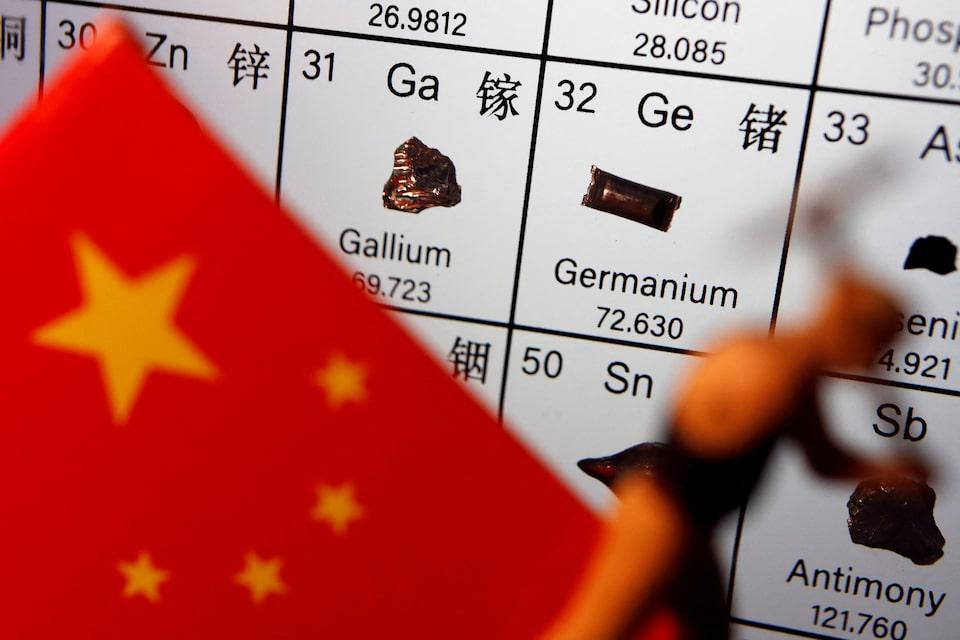
BEIJING, July 21 (Reuters) - China's exports of two critical minerals used in weapons, telecommunications and solar cells have plunged over the past three months amid a crackdown on smuggling and transshipment that has involved China's top spy agency. Exports of antimony and germanium in June were down 88% and 95%, respectively, versus January, according to customs data published on Sunday. Much as with rare earths, China is by far the largest miner and or refiner for both elements. Sign up here. Both were added to an export control list in 2023 and 2024, respectively. Exports to the U.S. were then banned in December as part of retaliation for chip restrictions. Rare earths were added to the same control list in April, precipitating a sharp collapse in export volumes that forced some carmakers in Europe and the U.S. to pause some production lines. But where rare earth export volumes rebounded sharply last month thanks to a deal struck between Washington and Beijing, exports of germanium and antimony fell to some of the lowest levels on record. The collapse in export volumes coincides with well-publicised crackdown on critical mineral export control evasion. China's spy agency said last week it had detected attempts to bypass controls via transshipment, where cargoes move through a third country before going on to their final destination. The week before Reuters reported that unusually large quantities of antimony were being exported to the United States from Thailand and Mexico in what appeared to be transshipment conducted by at least one Chinese company. China's exports of antimony to Thailand have collapsed by 90% after hitting a record in April. There have been no exports to Mexico since April. Spot market prices for high-purity germanium have more than doubled since China imposed export restrictions in July 2023. Antimony prices have nearly quadrupled from May last year. https://www.reuters.com/world/china/chinese-exports-two-critical-minerals-plunge-even-rare-earths-rebound-2025-07-21/