2025-07-21 06:09
MILAN/HOUSTON/NEW DELHI, July 21 (Reuters) - A wave of closures and disposals is reshaping the global petrochemical sector as companies around the world rethink their exposure to markets as they adjust to capacity build-up in China and higher costs in Europe. The European Union is being hit the hardest by the rationalisation, while the United States and the Middle East are considered relatively immune. Petrochemical makers in Asia are also reducing capacity but at a slower pace compared with the EU. Sign up here. Here is a list of some of the major closures, divestment and portfolio reviews: ** U.S.-based LyondellBasell (LYB.N) , opens new tab in June said it had started exclusive talks to sell four olefin and polyolefin plants in Europe to Munich-based investment firm AEQUITA. The sites to be sold are in France, Germany, Britain and Spain. The company has also said it is evaluating options for its factories in the Netherlands and Italy. ** U.S. chemical giant Dow Inc (DOW.N) , opens new tab said at the beginning of July it would shut down three upstream sites in Europe: an ethylene cracker in Böhlen, Germany and chlor-alkali & vinyl assets in Schkopau, Germany, and its siloxanes plant in Barry, Britain. The company also announced in January that it would idle a cracker in the Netherlands. ** U.S. oil major ExxonMobil (XOM.N) , opens new tab said last year it would shut down the steam cracker and close chemical production at Gravenchon in France, adding that the site had lost more than 500 million euros ($582.75 million) since 2018 and remains uncompetitive. ** British oil company Shell (SHEL.L) , opens new tab in April completed the sale of its energy and chemicals park in Singapore, which includes a refinery, an ethylene cracker and other petrochemical assets. The group's top executives told a post-results conference call in May that the group was undertaking a review of its chemical business, including in Europe. Shell hired Morgan Stanley to conduct the strategic review of its chemicals operations in Europe and the United States, the Wall Street Journal reported in March, citing sources. ** BP (BP.L) , opens new tab said in February it was looking for potential buyers for its Ruhr Oel refinery, cracker and downstream assets at Gelsenkirchen in Germany. ** French oil major TotalEnergies (TTEF.PA) , opens new tab said in April it would shut its oldest steam cracker in Antwerp, Belgium, by end-2027, citing a "significant surplus of ethylene expected in Europe". ** Eni (ENI.MI) , opens new tab will complete the closure of Italy's two last steam crackers by the end of this year. One is in Brindisi, Apulia, and the second in Priolo, Sicily. It also closed a polyethylene plant in Ragusa, Sicily. ** Poland's Orlen (PKN.WA) , opens new tab said at the end of 2024 it would scale back plans for its olefins petrochemical project, pushing back output until at least 2030 and aiming to cut its estimated cost by as much as a third. ** U.S. chemical group Huntsman Corp (HUN.N) , opens new tab announced the closure of its polyurethanes facility in Deggendorf, Germany, and the reduction of some of its other sites and facilities around Europe. The company will close a facility located in Moers, Germany. The closure is expected to be complete by the end of the current quarter. ** Japan's largest oil refiner, Eneos (5020.T) , opens new tab, said in February that it would consider partially halting an ethylene production facility at its Kawasaki refinery at the end of 2027 due to falling demand. It said in March that it would gradually halt production of lubricants and some petroleum products at its Yokohama plant near Tokyo by March 2028, but will consider relocating lubricants' output to other facilities. ** Saudi Petrochemical Group SABIC said last year it planned to permanently shut one of its two naphtha-fed crackers at its plant in Geleen, the Netherlands. ($1 = 0.8580 euros) https://www.reuters.com/business/energy/closures-disposals-reshaping-global-petrochemical-sector-2025-07-21/
2025-07-21 05:38
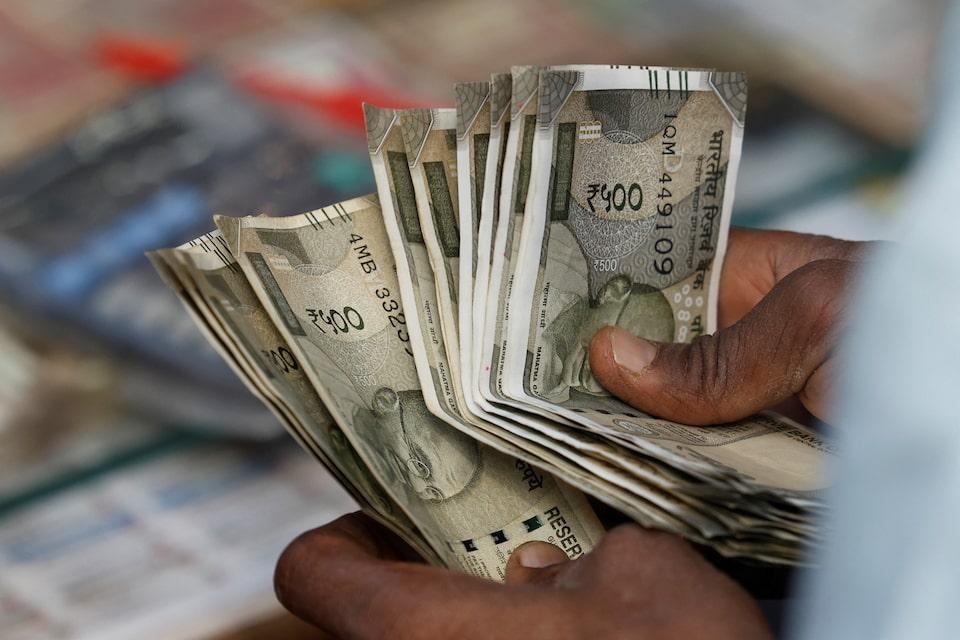
MUMBAI, July 21(Reuters) - The Indian rupee slipped on Monday to its weakest level in nearly one month, pressured by dollar demand from foreign and local private banks, and modest weakness in its regional peers. The rupee declined to 86.2725 per dollar by 11 a.m. IST, down 0.1% on the day. The currency hit its weakest level since June 23 at 86.35 in early trading. Sign up here. Most Asian currencies were trading lower, while the dollar index was little changed, with investors keeping an eye on trade negotiations ahead of an August 1 deadline to strike deals with Washington. "If the discussions fail or get delayed, Indian exporters could face fresh pressure, adding to the rupee's challenges. However, if a deal is reached, it could offer a much-needed breather," said Amit Pabari, managing director at FX advisory firm CR Forex. Meanwhile, a narrow arbitrage between non-deliverable and onshore rates helped nudge dollar-rupee forward premiums higher, with the one-month forward premium ticking up to 12.25 paisa, its highest level in three weeks. The one-year dollar-rupee implied yield was also a tad higher at 1.99%. The arbitrage isn't "too large," a swap trader at a state-run bank said. The trader said the dollar-rupee daily fix was last quoted at a 0.20/0.30 paisa premium, signalling heightened demand for dollars at the reference rate. On the day, India's benchmark equity indexes, the BSE Sensex (.BSESN) , opens new tab and Nifty 50 (.NSEI) , opens new tab, were trading higher, while the yield on the benchmark 10-year bond was little changed. https://www.reuters.com/world/india/rupee-dips-near-one-month-low-pressured-by-dollar-bids-foreign-banks-2025-07-21/
2025-07-21 05:35
Asian stock markets : Nikkei futures, yen steady after Japan elections Wall St futures firm before earnings blitz Euro underpinned as ECB seen on hold SYDNEY, July 21 (Reuters) - Asian shares and the yen held their ground on Monday as Japanese elections proved bad for the government but no worse than already priced in, while Wall Street futures braced for earnings from the first of the tech giants. Investors were also hoping for some progress in trade talks ahead of President Donald Trump's August 1 tariff deadline, with U.S. Commerce Secretary Howard Lutnick still confident a deal could be reached with the European Union. Sign up here. There were reports Trump and Chinese leader Xi Jinping were closer to arranging a meeting, though likely not until October at the earliest. European Commission President Ursula von der Leyen has stolen a march and will meet with Xi on Thursday. In Japan, the ruling coalition lost control of the upper house in an election on Sunday, further weakening Prime Minister Shigeru Ishiba's grip on power as a tariff deadline looms. Ishiba vowed to stay in the position, which along with a market holiday, limited the reaction and the yen was 0.4% firmer at 148.29 to the dollar. "The loss was within the range of expectations, and actually the outlook was even more pessimistic," said Nissay Research Institute chief economist Tsuyoshi Ueno. "In terms of negotiations with the U.S., it is easy to doubt whether a government with such a weak foundation is reliable as a negotiating partner," he added. "For the Bank of Japan, if there is political instability, it will be difficult to raise interest rates, and pressure on the yen will continue." The BOJ still has a bias to raise rates further but markets imply little chance of a move until late October. While the Nikkei (.N225) , opens new tab was shut, futures traded at 39,885 and up on the cash close of 39,819. MSCI's broadest index of Asia-Pacific shares outside Japan (.MIAPJ0000PUS) , opens new tab eased 0.1%, while South Korean stocks (.kS11) , opens new tab added 0.5%. Chinese blue chips (.CSI300) , opens new tab firmed 0.3%, led by rare earth and construction sectors, as Beijing kept interest rates unchanged as widely expected. MEGA CAPS KICK OFF EUROSTOXX 50 futures and DAX futures both dipped 0.3%, while FTSE futures were flat. S&P 500 futures and Nasdaq futures both edged up 0.2%, and are already around record highs in anticipation of more solid earnings reports. A host of companies reporting this week include Alphabet (GOOGL.O) , opens new tab and Tesla (TSLA.O) , opens new tab, along with IBM (IBM.N) , opens new tab. Investors also expect upbeat news for defence groups RTX (RTX.N) , opens new tab, Lockheed Martin (LMT.N) , opens new tab and General Dynamics (GD.N) , opens new tab. Ramped up government spending across the globe has seen the S&P 500 aerospace and defence sector rise 30% this year. Tech giant Microsoft (MSFT.O) , opens new tab issued an alert about "active attacks" on server software used by government agencies and businesses, urging customers to download security updates. In bond markets, U.S. Treasury futures held steady having dipped late last week after Federal Reserve Governor Christopher Waller repeated his call for a rate cut this month. Most of his colleagues, including Chair Jerome Powell, have argued a pause is warranted to judge the true inflationary impact of tariffs and markets imply almost no chance of a move in July. A September cut is put at 61%, rising to 80% for October. Powell's reticence on rates has drawn the ire of Trump who threatened to fire the Fed chief, before backing down. The spectre of a potential political appointee who would seek to ease policy sharply has investors on edge. The European Central Bank meets this week and is expected to hold its rates steady at 2.0% following a string of cuts. "The press conference will likely keep highlighting uncertainty and need to wait for tariff negotiations to conclude before deciding the next step," said analysts at TD Securities in a note. "Similarly, its 'meeting-by-meeting' language would be retained in the release." The euro was unchanged at $1.1630 in early trading, having dipped 0.5% last week and away from its recent near-four-year top of $1.1830. The dollar index was a fraction lower at 98.373 . In commodity markets, gold firmed 0.5% to $3,367 an ounce with all the recent action in platinum which last week hit its highest since August 2014. Oil prices were caught between the prospect of increased supply from OPEC+ and the risk European Union sanctions against Russia for its war in Ukraine could curb its exports. Brent edged up 0.1% to $69.38 a barrel, while U.S. crude added 0.2% to $67.50 per barrel. https://www.reuters.com/world/china/global-markets-wrapup-3-2025-07-21/
2025-07-21 05:28
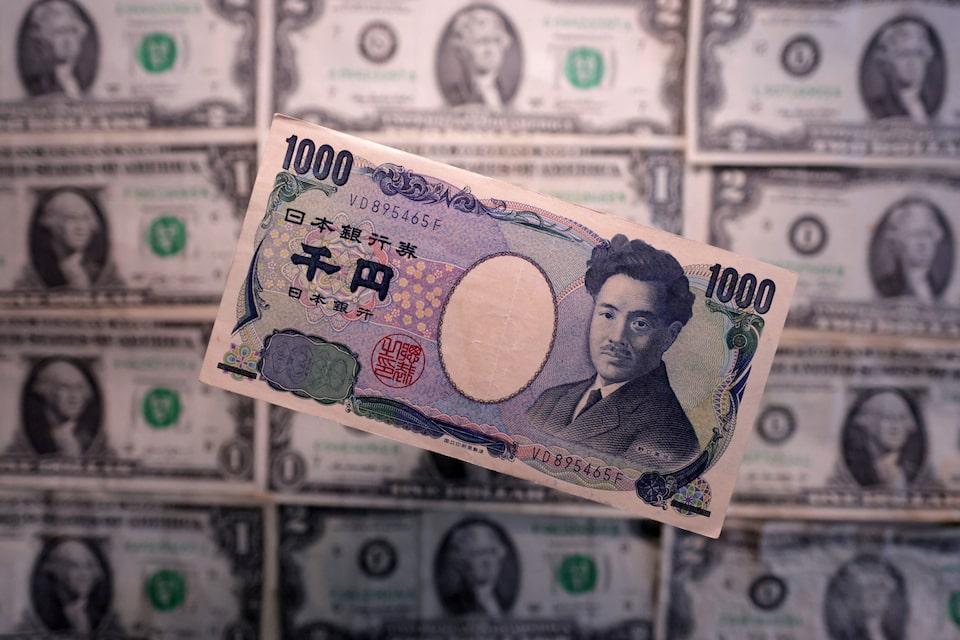
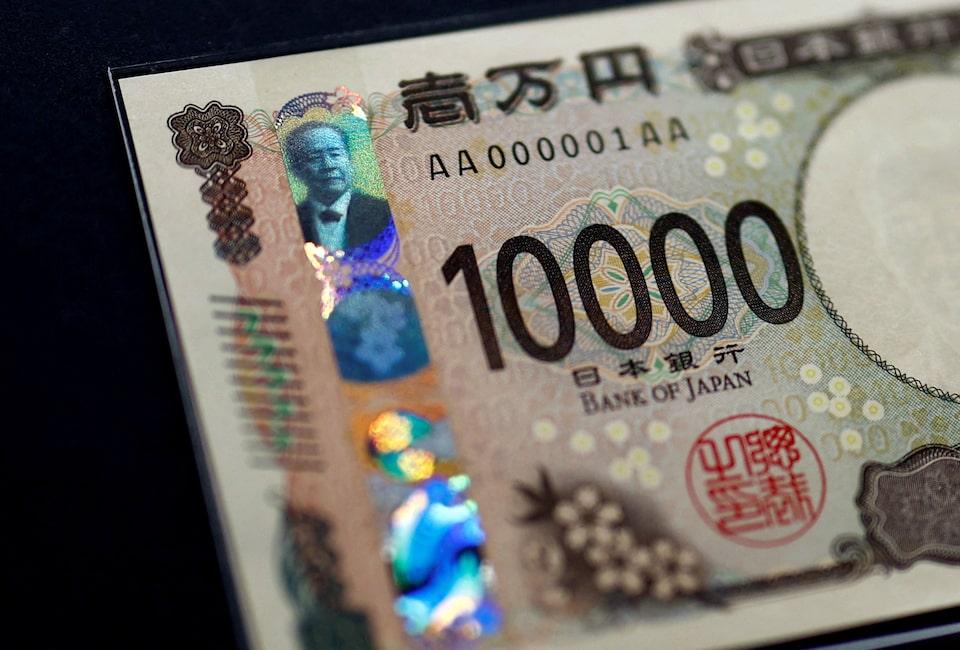
Yen holds ground as markets had priced in Japan election results Ruling coalition loses majority in upper house Investors brace for policy gridlock, fiscal worries Japanese markets closed on Monday SINGAPORE, July 21 (Reuters) - The yen firmed on Monday after Japan's ruling coalition lost its majority in the upper house as investors braced for a period of policy paralysis and market disquiet in the world's fourth-largest economy ahead of a deadline on U.S. tariff negotiations. The Japanese markets are closed for the day leaving the yen as an indicator of investor angst, with trading so far suggesting the results were mostly priced. Sign up here. The yen firmed to 148.44 per dollar, but stayed close to the 3-1/2-month low it hit last week as investors fretted about Japan's political and fiscal outlook. The yen nudged higher against the euro to 172.64 and against sterling to 199.03. Prime Minister Shigeru Ishiba's Liberal Democratic Party returned 47 seats, short of the 50 seats it needed to ensure a majority in the 248-seat upper chamber in an election where half the seats were up for grabs. While the ballot does not directly determine whether Ishiba's administration will fall, it heaps political pressure on the embattled leader who also lost control of the more powerful lower house in October. Carol Kong, currency strategist at Commonwealth Bank of Australia, said markets likely priced in a much worse outcome for the ruling coalition heading into the election and doubted that the yen could sustain its strength. "It remains unclear whether Ishiba can indeed survive as the prime minister... and what it means for Japan’s trade negotiations with the U.S. Prolonged political uncertainty will be negative for Japanese assets, including the yen." The election result, while not entirely a shock to markets, also comes at a tricky time for a country trying to get a tariff deal with U.S. President Donald Trump before an Aug. 1 deadline. Japanese government bonds plunged last week, sending yields on 30-year debt to an all-time high, while the yen slid to multi-month lows against the U.S. dollar and the euro. If Ishiba resigns, the political maelstrom could be a trigger for foreign investors to sell Japanese shares and the yen, analysts said. Ishiba though vowed to stay on in his role even as some of his own party discussed his future and the opposition weighed a no-confidence motion. The increased political fragility is likely to constrain the Bank of Japan’s ability to tighten monetary policy in the near term, said David Chao, global market strategist for Asia Pacific at Invesco. "It (BOJ) may be reluctant to add further pressure to an already volatile landscape." TARIFF UNCERTAINTY Investor focus has been firmly on Trump's global tariff salvos, with a Financial Times report last week indicating the U.S. president was pushing for steep new tariffs on European Union products. U.S. Commerce Secretary Howard Lutnick said on Sunday he was confident the U.S. can secure a trade deal with the European Union, but said August 1 was a hard deadline for tariffs to kick in. The euro was steady at $1.16317, while sterling last fetched $1.13417. The dollar index , which measures the U.S. currency against six others, was at 98.381. The European Central Bank is due to meet this week and is expected to hold its rates steady after a string of cuts, while investor attention has been on whether the Federal Reserve succumbs to pressure from Trump to cut interest rates. Trump appeared near the point of trying to fire Fed Chair Jerome Powell last week, but backed off with a nod to the market disruption that would likely follow. The U.S. central bank is widely expected to hold rates steady in its July meeting. Traders are pricing in a rate cut in October with the odds of a second rate cut this year not fully priced in yet. The New Zealand dollar eased 0.18% to $0.5951 after consumer inflation accelerated in the second quarter but stayed below economists' forecasts, leading markets to raise the chance of a rate cut next month given the broader economic weakness. In cryptocurrencies, bitcoin was 0.18% higher at $118,338, holding below a record $123,153 reached last week. https://www.reuters.com/business/yen-takes-japan-election-stride-even-uncertainty-beckons-2025-07-21/
2025-07-21 05:01
ECB set to hold rates at 2% 30% tariff threat bigger than ECB's worst case scenario Tariff uncertainty clouds growth, inflation outlook LONDON, July 21 (Reuters) - The European Central Bank is set to pause for breath on Thursday after eight consecutive interest rate cuts, with the prospect of steeper-than-expected U.S. tariffs looming. The threat tariffs pose to the euro zone is big but there's still little certainty about them, so the question is what happens next. Sign up here. "All the focus goes to September," said Societe Generale senior European economist Anatoli Annenkov. Here are five key questions for markets: 1/ What will the ECB do on Thursday? Hold its main rate at 2%. Data shows little to change the outlook since policymakers met in June, and there's no clarity on what final U.S. tariffs will look like. "The ECB will prefer to wait and see if anything actually pushes them out of the equilibrium they find themselves in," said Salomon Fiedler, economist at Berenberg. 2/ How will the ECB react to the latest tariff threats? Policymakers won't want to look like they're reacting to a threat. New forecasts are not due this week but the ECB will have to reassess its scenarios, sources have told Reuters, as the 30% tariff level U.S. President Donald Trump has threatened is steeper than the 20% the ECB anticipated in its most negative scenario outlined in June. "There is considerable uncertainty about the impact of tariffs on growth and inflation in Europe," said Jefferies chief Europe economist Mohit Kumar. "I expect a wait-and-watch tone from (ECB chief Christine) Lagarde." 3/ What happens after July? It's anyone's guess what level of U.S. tariffs materialise, so traders have held onto expectations for one more rate cut. Money markets price the move roughly as a coin toss between September and December. Jefferies' Kumar reckons an average 10-15% tariff rate wouldn't require the ECB to cut more than once, but a 30% rate would reduce euro zone growth by around 0.5% next year and require an additional cut. But AXA chief economist Gilles Moec said markets were too optimistic on trade and underestimating prospects for more ECB rate cuts. "The baseline is that we actually end up with fairly chunky tariffs, probably not 30%, but still chunky tariffs and we're going to face more deflationary pressure from China," said Moec, expecting two cuts this year. 4/ Should the ECB worry about disinflation? This is not a matter of if, but how much. Policymakers are already worried and cut rates in June to ensure inflation, which they see falling to 1.4% early next year, doesn't stay below the 2% target in the medium term. While the ECB expects it to rebound, that's not a pretty sight with the memory of below-target inflation still recent in policymakers' minds. Tariffs add to the risks. The ECB already thought a 20% tariff with EU retaliation would keep inflation below 2% in 2027 rather than reaching target as the bank currently expects. The prospect of China dumping discounted products on the EU could add to disinflation. But if EU countertariffs include services, the impact becomes more uncertain, Societe Generale's Annenkov said. And Germany's massive fiscal stimulus is an upside risk to inflation. Policymakers are split. Italy's Fabio Panetta, a dove, has said the ECB should continue loosening policy if trade tensions strengthen disinflation. For hawk Isabel Schnabel, the bar for another cut is "very high". 5/ What about further euro strength? Policymakers are worried as a strong euro hurts growth and inflation. Vice President Luis de Guindos has identified $1.20 as pain point. The euro surged nearly 17% from February to early July, hitting its highest since 2021 around $1.18 . It has since pulled back slightly, a relief as economists say it's the speed of the appreciation that's really worrying. Yet analysts reckon it will reach $1.20 in a year, much higher than the $1.13 the ECB assumed for the next two years in June. The euro is one reason why BNP Paribas expects a September rate cut, its head of developed markets Paul Hollingsworth said. Morgan Stanley sees a rally to $1.25 by 2027 and expects this would lower inflation by 0.3 percentage points to 1.7%, preventing it from rising to target. "We're almost paying too much attention to the tariffs themselves than on FX," said AXA's Moec. https://www.reuters.com/business/finance/pausing-breath-five-questions-ecb-2025-07-21/
2025-07-21 04:34
A look at the day ahead in European and global markets from Wayne Cole As far as investors are concerned, Japan's upper house election has been a sell on the rumour, buy (a little) on the fact. Sign up here. Japanese markets are closed for the Marine Day public holiday so liquidity has been lacking, but so far the yen is up a shade on the dollar and euro while Nikkei futures traded in Chicago are much in line with Friday's cash close. Wall Street futures are up a fraction and European futures down a touch. While the ruling coalition lost control of the upper house, by three seats, Prime Minister Shigeru Ishiba seems to be safe for now, though he will have to find support from minor parties to pass legislation. The government can also continue its fraught tariff negotiations with the U.S. administration. The talks still seem deadlocked, partly over agricultural imports which are politically and culturally very sensitive for Japan, as President Donald Trump's arbitrary August 1 deadline approaches fast. The European Union is in much the same situation. U.S. Commerce Secretary Howard Lutnick says he's confident a deal can be struck, but the EU side is preparing a list of U.S. products for retaliation levies. The EU is also trying to use China as leverage with Commission President Ursula von der Leyen and Council President Antonio Costa meeting with President Xi Jinping there on Thursday. Meanwhile, reports suggest Trump might meet Xi sometime in October or November, with the U.S. already having allowed the export of chips to China apparently in return for a resumption of rare earth shipments. Markets are assuming the worst will be avoided on tariffs, though analysts suspect the effective U.S. tariff rate could well be a bit above the 1930's levies that contributed so much to the Great Depression. Much of that optimism rests on earnings with the first of the mega caps reporting this week in the shape of Alphabet (GOOGL.O) , opens new tab and Tesla (TSLA.O) , opens new tab. Results from Lockheed Martin (LMT.N) , opens new tab and General Dynamics (GD.N) , opens new tab should also confirm the windfall from a ramp up in global defence spending. The diary for the rest of Monday is virtually blank, but there's always Trump to watch. Key developments that could influence markets on Monday: - No major data or central bank speakers https://www.reuters.com/world/china/global-markets-view-europe-2025-07-21/