2025-07-20 23:29
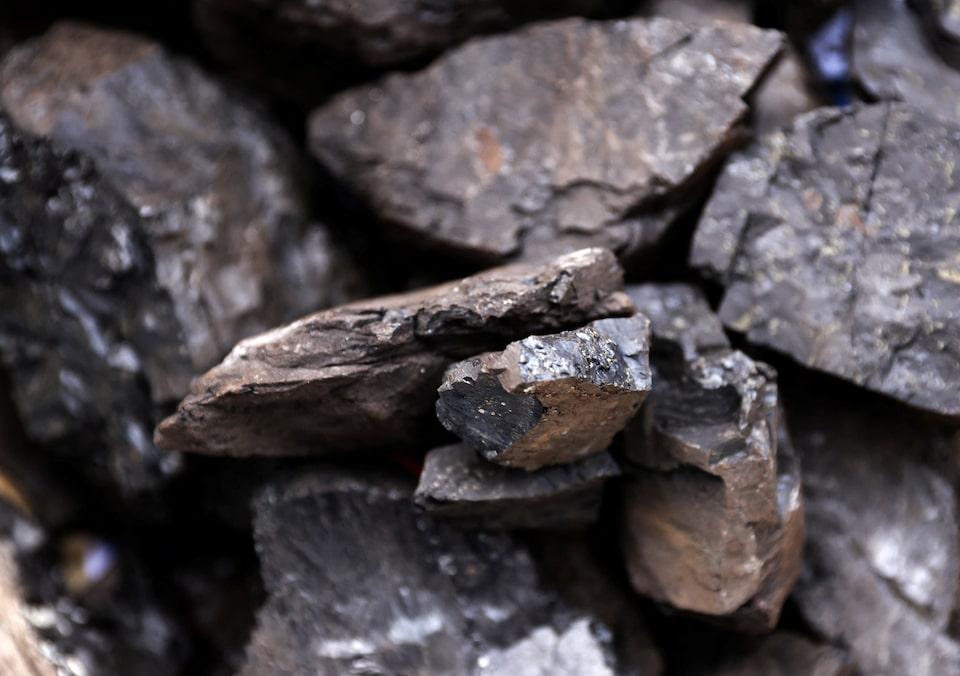
Coal's output share at 60% in H1, gas-fired output falls Malaysia imports record 20.9 million tons of coal in H1 Country has long-term plans to increase gas and renewables SINGAPORE/KUALA LUMPUR, July 18 (Reuters) - Malaysia is boosting coal-fired power output and importing the fuel at record levels, a Reuters analysis of data showed, taking advantage of low prices even as it pledges to increase use of gas-fuelled electricity generation in the longer term. The Southeast Asian nation is the fifth-largest exporter of liquefied natural gas but has said it could start importing the superchilled fuel due to rising demand and dwindling gas reserves. It has progressively ramped up coal-fired power output to address surging demand driven by data centres. Sign up here. Coal-fired power output in Peninsular Malaysia, which accounts for about 80% of power demand, rose nearly 9% in May and June. That was three times faster than power demand growth of 3%, data from Malaysia's Grid System Operator (GSO) showed. Output from coal-fired power plants rose 16.8% in the first half of July, the data showed, while power demand increased 5.2%. Rising demand has pushed Malaysia to import a record 20.9 million metric tons of coal in the first half of this year, data from analytics firm Kpler showed. "Low coal prices, coupled with regulated and capped power prices in Malaysia, have discouraged gas-fired generation this year," said Kesher Sumeet, LNG analyst at Energy Aspects. Coal's share of power generation rose to nearly 60% in the first half of 2025, the GSO data showed, putting it on track for the highest annual levels since the COVID-19 pandemic, while natural gas-fired power's share could slip to the lowest level since the pandemic's economic shutdown curbed demand. Gas-fired power output has fallen for ten straight months through June at an average of 11.3% every month, and fell 15.3% in the first half of July. Raksit Pattanapitoon, analyst at Rystad Energy, said Malaysia will continue to depend on coal in the short and medium-term as fuel costs are nearly 40% lower. "The tipping point will be when solar penetration into Malaysia's grid is sufficient to force inflexible, baseload coal to shut down during daytime, but Rystad Energy does not expect this to happen on a regular basis until the 2030s," he said. Malaysia plans to boost gas-fired capacity by 50% and more than double renewable capacity by 2030 to cut coal use and meet growing power demand from data centres - which are expected to rise to 52% of peninsular demand, from 2% now. Power demand fell during the first quarter due to tepid residential demand, but is expected to increase as much as 4.5% this year, according to state-run utility Tenaga Nasional Bhd. https://www.reuters.com/business/energy/malaysia-boosts-coal-power-output-imports-meet-rising-demand-2025-07-18/
2025-07-20 22:59
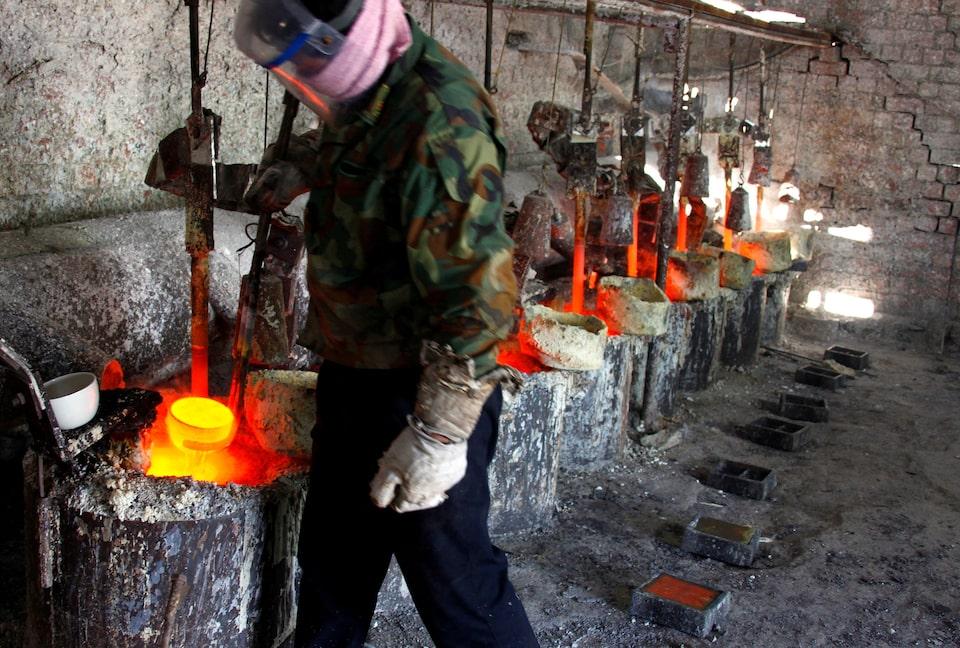
China tightens control over rare earth sector amid trade tensions Only two state-owned groups eligible for quotas last year China controls rare earth supply via quota system July 18 (Reuters) - China has quietly issued its first 2025 rare earth mining and smelting quotas without the typical public statement, sources with knowledge of the matter said this week, another sign of Beijing tightening its control over the crucial sector. The quotas are closely monitored as a barometer for the global supply of rare earths, a group of 17 elements used in electric vehicles, wind turbines, robots and missiles. China is the world's largest producer of the minerals and the government typically issues them twice a year to state-owned companies but they have been delayed this year. Sign up here. The government issued the first set of quotas for the year only last month, without the usual public statement, said the sources, with one of them saying the companies were told not to share the numbers for security reasons. These details are being reported here for the first time. The sources did not give the quota volumes. China is increasingly sensitive about rare earths and its control over the supply, which it has been willing to assert amid its trade discussions with the U.S. and European Union. Beijing added several of the elements and related magnets to its export restriction list in retaliation for U.S. tariff hikes, cutting off supply and forcing some automakers outside China to partially shutter production. In the previous four years, China's Ministry of Industry and Information Technology issued the first batch of quotas in the first quarter of the year in an announcement on its website. The Ministry did not immediately reply to a request sent by fax for a comment on why the information has not been publicly issued. Last year, China issued two batches of mining quotas for 270,000 metric tons, with annual supply growth slowing to 5.9% from 21.4% in 2023. The smelting and separation quota in 2024 was also in two batches, totalling 254,000 tons, up 4.2% from 2023. Beijing has used the quota system, first introduced in 2006, and corporate consolidation to tame the industry and give officials control over output. Beijing has narrowed access to the quotas, with only two state-owned groups - China Rare Earth Group and China Northern Rare Earth Group High-Tech - eligible last year, down from six previously. (600111.SS) , opens new tab The quotas were delayed this year partly because of a proposal in February to add imported ore into the quota system, which sparked opposition from companies that rely on imports and were concerned they could lose access to feedstock, according to the two sources and an additional source with knowledge of the matter. https://www.reuters.com/world/china/china-quietly-issues-2025-rare-earth-quotas-sources-say-2025-07-18/
2025-07-20 19:58
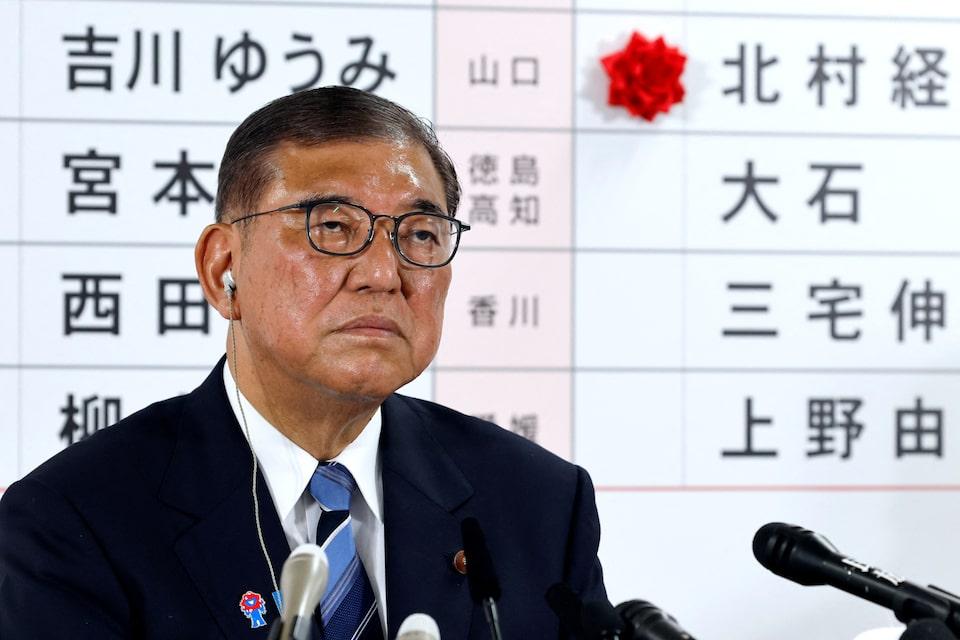
Ruling coalition now reduced to minority in both houses Opposition parties want looser monetary policy, tax cuts Yen, JGBs have sold off on expectation of fiscal largesse SINGAPORE, July 21 (Reuters) - Japan's upper house election on Sunday dealt a big blow to the ruling coalition and sets markets up for possible policy paralysis and a bigger fiscal deficit, much of which is already priced in, analysts said. The nation's ruling coalition lost control of the upper house, further weakening Prime Minister Shigeru Ishiba's grip on power even as he vowed to remain party leader, citing a looming tariff deadline with the United States. Sign up here. Japanese markets were closed on Monday for a holiday, but the rise in the yen and Nikkei futures showed investors had already priced in the election outcome. The Japanese currency has weakened considerably this year on expectations of changes to taxes and a bigger fiscal deficit. The election result, while not entirely a shock to markets, also comes at a tricky time for a country trying to get a tariff deal with U.S. President Donald Trump before an Aug. 1 deadline. Japanese government bonds (JGBs) plunged last week, sending yields on 30-year debt to an all-time high, while the yen slid to multi-month lows against the U.S. dollar and the euro. "I will not chase the coalition loss trades, and I suspect participants will spend some time analysing the implications of the loss, which could take time to materialize, and also refocus attention to the trade negotiations which is another major macro risk for Japan," said Rong Ren Goh, a portfolio manager in the fixed income team at Eastspring Investments. Investors expect it will be a while before it becomes clear whether the ruling coalition intends to continue as a minority government, or draw in a new partner. Among the most likely candidates is the Democratic Party for the People (DPP), which has urged the Bank of Japan to reverse course and again loosen monetary policy. Investors are bracing for the LDP to compromise heavily to accommodate opposition parties' desire for tax cuts. Ishiba's fate also remains an unknown, although he said on Sunday he intends to stay in his position. Within the Liberal Democratic Party (LDP), a leading candidate to replace Ishiba, should he step down, is Abenomics proponent Sanae Takaichi, who has advocated for a resumption of monetary easing by the BOJ. All three leading opposition parties back some form of consumption tax cuts, with the populist, right-wing Sanseito proposing a phase-out of VAT altogether. Those cuts would have to be paid for with increased Japanese government bond issuance. With debt about 2-1/2 times GDP, Japan is already the world's most indebted major country. Shoki Omori, chief desk strategist at Mizuho Securities in Japan, said in a note that he does not expect the LDP to force a leadership change, particularly while trade talks with the U.S. government are ongoing. "Against that political backdrop, prospects for an aggressive fiscal stimulus are limited....A meaningful supplementary budget, if one emerges, would not be debated until the autumn Diet session at the earliest," he wrote. If Ishiba resigns, the political uncertainty could be a trigger for foreign investors to sell Japanese shares and the yen, analysts said. Barclays analysts estimate a five percentage point cut to Japan's sales tax, currently at 10%, would lead to a 15-20 basis point increase in the 30-year yield. Japanese government 30-year yields are up 80 basis points (bps) this year and the yield curve is at its steepest in years, with the spread between 10-year and 30-year bonds above 150 bps. The yen has had a volatile first half of 2025 in a range of 140-160 per dollar. It rallied hard after the Bank of Japan's rate rise in January stoked expectations for a faster pace of monetary tightening, but has dithered since late April on political uncertainty, fractious tariff negotiations with the Donald Trump administration and the BOJ's dovishness. Long speculative positions in the yen are however still very large, making it likely that the currency will fall rapidly if Japan calls for a snap election or fiscal policy is loosened. The Nikkei 225 benchmark (.N225) , opens new tab, by contrast, is up more than 11% since April 2, when Trump unveiled his global tariffs. https://www.reuters.com/business/japan-ruling-partys-election-loss-is-price-investors-say-2025-07-20/
2025-07-20 16:15
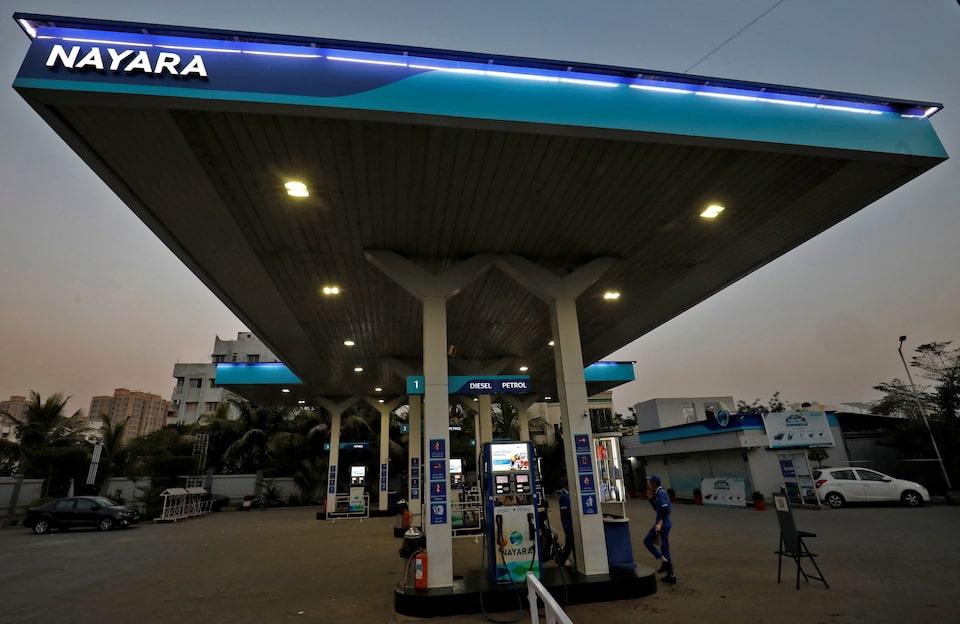
MOSCOW, July 20 (Reuters) - Rosneft (ROSN.MM) , opens new tab, Russia's biggest oil producer, on Sunday slammed European Union sanctions on India's Nayara Energy refinery as unjustified and illegal, saying the restrictions directly threatened India's energy security. The European Union's 18th package of sanctions against Russia over the conflict in Ukraine, was approved on Friday and is aimed at dealing further blows to Russia's oil and energy industry. Nayara Eenrgy was one of the targeted companies. Sign up here. "The Nayara Energy refinery is a strategically important asset for the Indian energy industry, providing a stable supply of petroleum products to the country's domestic market. The imposition of sanctions against the refinery directly threatens India's energy security and will have a negative impact on its economy," Rosneft said. Rosneft said it holds less than 50% in Nayara and does not control the enterprise, which is managed by an independent board. It described the EU's justification for the sanctions as "far-fetched and false in context." "Nayara Energy is an Indian legal entity whose operations support the development of its assets," Rosneft said, adding that the company is fully taxed in India, has never paid dividends to shareholders, and reinvests profits into refining, petrochemicals, and retail operations. The Russian oil giant accused the EU of disregarding international law and third-country sovereignty, calling the move part of a broader effort to destabilize global energy markets and engage in unfair competition. https://www.reuters.com/business/energy/russia-rosneft-slams-eu-sanctions-indias-nayara-refinery-2025-07-20/
2025-07-20 13:34
CAIRO, July 20 (Reuters) - Saudi Arabia's ACWA Power company signed several memoranda of understanding with European companies to export renewable energy and green hydrogen from the kingdom to Europe, the Saudi energy ministry said on Sunday. The European companies included France's TotalEnergies (TTEF.PA) , opens new tab, Italy's Edison (EDNn.MI) , opens new tab and Germany's EnBW (EBKG.DE) , opens new tab. Sign up here. The Saudi company also signed separate agreements with other companies including Germany's Siemens Energy (ENR1n.DE) , opens new tab to develop energy transmission corridors. https://www.reuters.com/business/energy/saudis-acwa-power-signs-agreements-with-european-companies-export-renewable-2025-07-20/
2025-07-20 13:16
SEOUL, July 20 (Reuters) - Two people have died and five were missing in the South Korean county of Gapyeong on Sunday, after a landslide engulfed houses and campsites and flooding swept away vehicles amid heavy rainfall. This brings the nationwide death toll to 17 with 11 people missing since the rain began on Wednesday, forcing more than 13,000 people to evacuate. Sign up here. A landslide hit a campsite in Gapyeong, leaving a man in his 40s dead, two family members missing and 24 other people stranded, fire authorities said. One person was rescued near the campsite by a zip-line across a raging river, according to footage released by fire officials. In another video, a helicopter is seen airlifting a person to safety. South Korean President Lee Jae Myung ordered a swift assessment of the damage and the prompt designation of special disaster zones to increase state support. The rainfall is likely to stop on Sunday and be followed by a heat wave, the government weather forecaster said on Sunday. The heavy rainfall, which had earlier lashed southern parts of South Korea, moved north overnight, it said. https://www.reuters.com/business/environment/death-toll-rises-17-south-korea-rains-cause-landslide-floods-2025-07-20/