2025-12-01 06:12
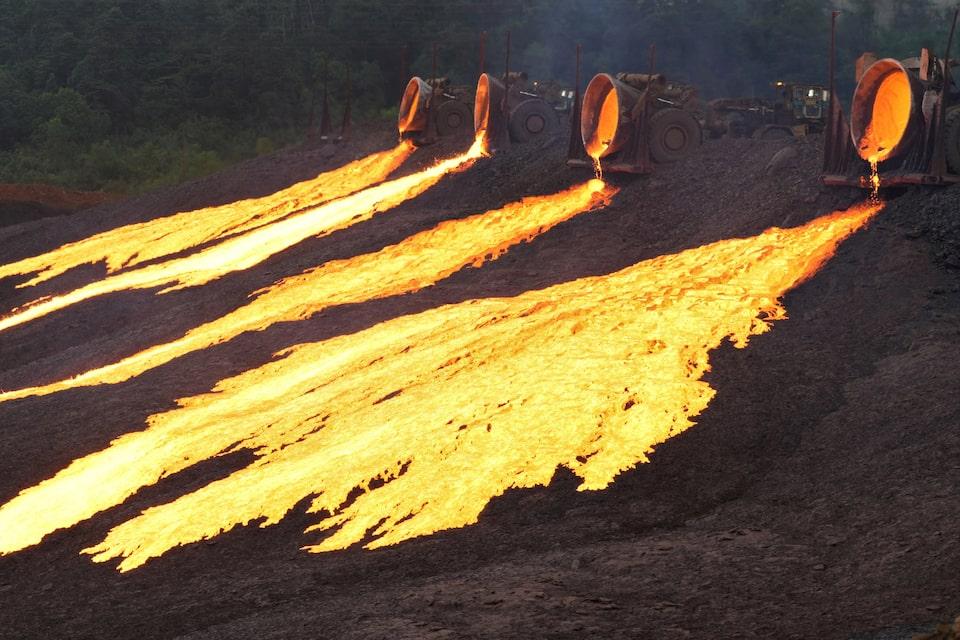
LONDON, Dec 1 (Reuters) - China financed and built Indonesia's nickel industry, transforming the country into the world's largest producer in the space of a decade. But now China is not so sure it needs all that nickel. Chinese electric vehicle manufacturers are pivoting away from nickel-chemistry batteries. Sign up here. Ever more of what Indonesia digs out of the ground is destined not for an EV battery plant but rather a London Metal Exchange warehouse. Global exchange inventories of refined nickel have ballooned from 54,000 metric tons in January 2023 to 366,000 tons, equivalent to around 10% of global usage last year. The weight of surplus has tamed nickel's wildness, which peaked with the suspension of LME trading in 2022. Prices have spent most of this year churning at rock-bottom levels. Indonesia's nickel sector is still growing as the country pursues its ambition of becoming an EV powerhouse, but there is a very real risk it has bet too much on a battery metal that its biggest customer is growing cold on. YOU WANT MORE NICKEL? "Please mine more nickel," was Elon Musk's rallying call to the mining industry back in 2020. The head of Tesla (TSLA.O) , opens new tab was concerned there wouldn't be enough of the stuff to meet what was expected to be explosive demand growth from the EV battery sector. Indonesia and its Chinese operators duly obliged. The country's mined production surged from 780,000 tons in 2020 to 2.3 million tons in 2024. Its share of global supply rose from 30% to 70% over the same period. The first wave of Chinese investment in Indonesia's giant nickel reserves was all about stainless steel, still the largest consuming sector for nickel. Huge amounts of ore were shipped to China and then, when Indonesia banned the export of unprocessed ore in 2020, the trade shifted to nickel pig iron. The second wave has been all about nickel as a battery metal. Spurred on by the Indonesian government to build downstream processing capacity, Indonesian operators now churn out a range of products such as matte, mixed hydroxide and even refined metal. Most of the intermediates are sent to China for further processing into nickel sulphate, a form that is used in EV batteries. BATTERY REVOLUTION Well, that was the plan anyway. The problem is that nickel has fallen out of favour with Chinese EV manufacturers, who are increasingly using batteries without any nickel or other high-price inputs such as cobalt. Lithium-iron-phosphate (LFP) batteries have been around for a long time, but the consensus until recently was that they could never deliver enough power for anything other than small run-around city vehicles. Chinese battery makers such as CATL (300750.SZ) , opens new tab have shattered that myth, developing ever more powerful LFP products. The company recently unveiled its latest Shenxing Pro , opens new tab battery, which boasts a 758-km driving range and super-fast charging. The LFP battery is cheaper and safer than other battery chemistries and has already grabbed a dominant share of the Chinese market, the world's largest. As Chinese EV makers ramp up exports, it is also taking a growing slice of the global market. Battery demand for nickel is still rising, but largely because the global EV market is still expanding so fast. In terms of the amount of nickel deployed per newly sold vehicle, usage was up just 1% year-on-year in September, compared with 7% for lithium, according to consultancy Adamas Intelligence. MARKETS OF LAST RESORT The result of this shift in battery chemistry is Chinese processors switching from producing nickel sulphate to churning out refined metal that can be delivered to the market of last resort. There was no Chinese-brand nickel in the LME storage system as recently as August 2023. The tally at the end of October was 173,000 tons, representing 70% of total warranted inventory. Indonesian metal has also been shipped straight to LME warehouses, with 11,300 tons registered with the exchange last month. It's not just the LME. Excess supply has been seeping into Shanghai Futures Exchange warehouses as well. Stocks of 40,782 tons are the highest they've been since 2018. Rising inventory is keeping prices pinned to the production-cost floor, calculated at around $15,000 per ton by Macquarie Bank. LME three-month metal has been struggling to hold even that level, with a November dip to $14,330 per ton, its lowest point since April. BIG BET The Indonesian government has shown signs of wanting to slow the breakneck expansion of its nickel sector. But no-one's told its miners or processors, still mostly Chinese. Macquarie calculates that another million tons of high-pressure acid-leaching refinery capacity could ramp up by 2030. Unless the brakes are applied more forcefully, the bank expects Indonesian overproduction to result in at least five more years of global oversupply. The International Energy Agency agrees, projecting the market will only move into a supply deficit from 2030 onwards. By which time, there could be a mountain of nickel sitting in LME warehouses. Indonesia is gambling that demand will eventually catch up and absorb any inventory overhang. But it's ultimately a bet that nickel will remain a core battery input. Even if it does, which is a big assumption given the rate of change in the battery industry, Indonesia's nickel buyers will be mainly European or American rather than Chinese. Nickel chemistries are still dominant in Western EV markets and China's recent restrictions on LFP technology exports have given nickel an unexpected booster. But Western buyers are likely to be much more fussy about environmental and carbon footprint than their Chinese peers, which is a problem for Indonesia's coal-powered nickel sector. Indonesia's nickel resource nationalism has inspired many other mineral-rich countries wanting to keep a greater value-added share of their assets. But Indonesia is now caught in a resource trap of a different kind, its fortunes inextricably tied to China and its waning appetite for nickel batteries. Andy Home is a Reuters columnist. The opinions expressed are his own Enjoying this column? Check out Reuters Open Interest (ROI) for thought-provoking, data-driven commentary on markets and finance. Follow ROI on LinkedIn , opens new tab, opens new tab and X , opens new tab, opens new tab. https://www.reuters.com/markets/commodities/china-built-indonesias-nickel-boom-could-yet-bust-it-2025-12-01/
2025-12-01 05:39
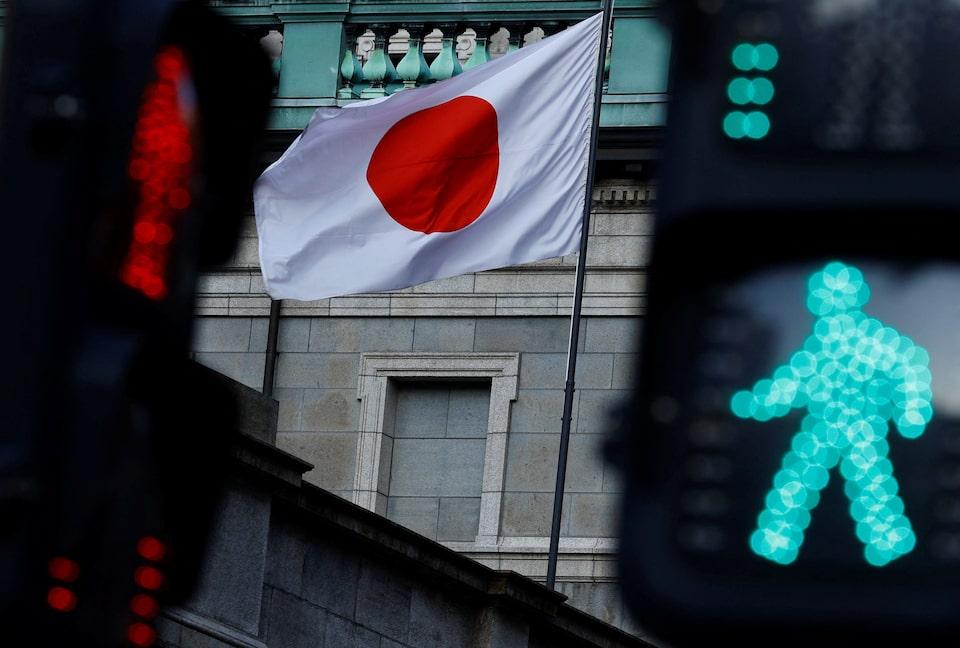
A look at the day ahead in European and global markets from Ankur Banerjee The year that started with a rate hike in Japan might just end with another after the clearest signal yet from Bank of Japan Governor Kazuo Ueda of a possible move soon, setting up the stage for a pivotal month for monetary policy divergence. Sign up here. Ueda said the BOJ will consider the "pros and cons" of raising interest rates at its next policy meeting in two weeks, helping strengthen the frail yen and pushing Japanese government bond yields to 17-year highs. It comes just as investors contend with the prospect of an interest rate cut from the U.S. Federal Reserve next week after dovish comments from a series of policymakers. Fed Chair Jerome Powell is due to speak later in the day and his comments will be picked apart by traders to gauge the near-term rates path. The contrasting moves from the BOJ and the Fed have provided some relief to the yen, which has been loitering near 10-month lows leading to intervention worries. The currency strengthened 0.5% to 155.41 per U.S. dollar on Monday. Analysts, though, are quick to point out that the yen weakness may not completely end soon as even with policy normalisation in Japan there will still be a wide gap between the U.S. and Japan rates. While the spread between U.S. and Japanese 10-year bond yields is tightest since April 2022 at 219 basis points, U.S. yields remain significantly higher than Japanese yields. Back in April 2022, though, the yen was trading around 123 to the dollar. Meanwhile, after a strong end to November, risk aversion has taken hold at the start of the month as investors look ahead to a slew of economic data across the globe, with European manufacturing data taking centre stage. European futures indicate a lower open in a tepid start to the month after the pan-European STOXX 600 (.STOXX) , opens new tab clocked its fifth straight month of gains in November. Markets will also be hoping to get a clearer picture of who will succeed Powell, whose term is set to end next year, with White House economic adviser Kevin Hassett emerging as a frontrunner, a move that may put the dollar under pressure. Key developments that could influence markets on Monday: Economic data: November PMI data for Germany, France, UK and euro zone https://www.reuters.com/world/china/global-markets-view-europe-2025-12-01/
2025-12-01 05:27
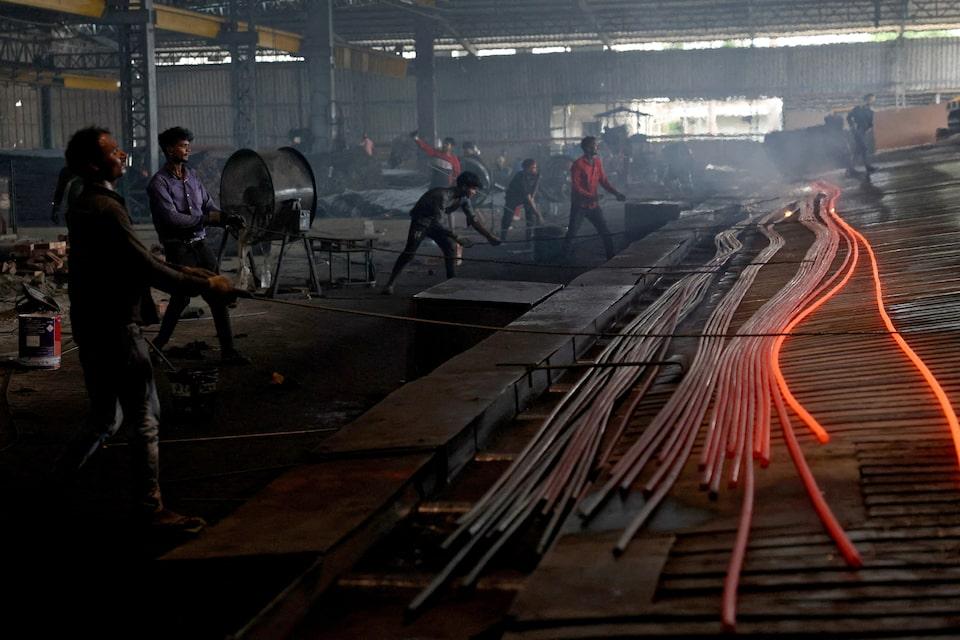
NEW DELHI, Dec 1 (Reuters) - India is assessing the viability of importing coking coal from Mongolia despite transport bottlenecks, a source with direct knowledge of the matter said, as New Delhi seeks to diversify supplies of the key steelmaking ingredient. India, the world's second-biggest crude steel producer, relies on imports for about 85% of its coking coal needs, with more than half sourced from Australia. Demand is expected to climb in coming years, prompting the government and steelmakers to look at tapping new suppliers, the source said. Sign up here. Landlocked Mongolia has two trade corridors for exports - a longer route via Russia and another through China. India does not expect the China route to be viable in the long term given Mongolia's strategic importance to Beijing as a coal supplier and the potential for Beijing to block access, the source said, declining to be identified as the information was not public. India's Ministry of Steel did not respond to an email seeking comment. New Delhi and Beijing are cautiously rebuilding economic ties after a deadly clash along their contested border in 2020 triggered a prolonged military standoff. Mongolian coking coal has been cited by industry officials as a potential source of high-grade coal at relatively lower prices. But logistics remain the biggest hurdle, the source said. India has yet to receive trial shipments of Mongolian coal that were planned earlier this year. State-run Steel Authority of India (SAIL) (SAIL.NS) , opens new tab had sought 1 metric ton of Mongolian coal, Reuters reported in May. "SAIL is in continuous engagement with Mongolian coking coal suppliers for ascertaining technical and logistical feasibility for sourcing from Mongolia," the steelmaker said in an emailed statement. The Mongolian Ministry of Mining and Heavy Industry did not respond to a request for comment. Separately, Russia and the United States each account for roughly 15% of India's coking coal imports, the source said. https://www.reuters.com/world/china/india-weighs-mongolian-coking-coal-imports-despite-transport-hurdles-source-says-2025-12-01/
2025-12-01 05:01
BERLIN, Dec 1 (Reuters) - Germany should give priority to consumers over wind and solar farms for future grid connections, the chief of Europe's largest energy network operator E.ON (EONGn.DE) , opens new tab said in an interview with German newspaper Sueddeutsche Zeitung, published on Sunday. “The renewables have won — they already deliver more than 60% of our electricity,” E.ON CEO Leonhard Birnbaum said in the interview. “At this stage it no longer makes sense to massively subsidize new capacity, especially when another wind turbine adds costs but hardly any benefit.” Sign up here. Giving preference to renewable energy facilities at the expense of businesses is no longer appropriate, Birnbaum said, urging the German government to change its policies. "First priority for grid connection should go to whoever creates jobs," Birnbaum said. Birnbaum also urged the government to eliminate what he considers unnecessary subsidies for solar installations. "The costs for the fixed feed-in tariff for new solar power may look harmless per year," Birnbaum said. "But the subsidy often runs for 20 years, and that adds up to billions." https://www.reuters.com/sustainability/climate-energy/eon-chief-urges-germany-deprioritize-wind-solar-grid-connections-2025-12-01/

2025-12-01 04:39
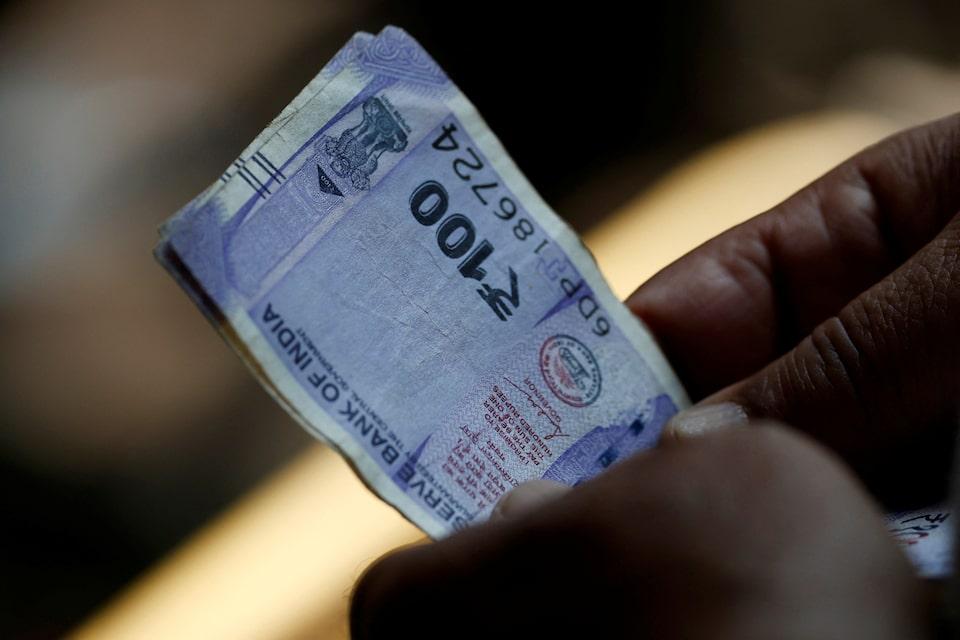
MUMBAI, Dec 1 (Reuters) - The Indian rupee slid to a record low on Monday, pressured by maturing non-deliverable forward positions alongside a persistent bearish pall on the currency as India remains the among the few major economies without a trade deal with U.S. The rupee hit a low of 89.7575 during the session before closing at 89.5475, down 0.1% on the day. Sign up here. Weakness in trade and investment flows has kept the rupee under pressure this year despite India's status as the fastest growing major economy in the world, which has helped local stock indexes rise to record highs in recent sessions. Traders said that maturity of large positions in the NDF market hurt the rupee on Monday. However, dollar-selling intervention by the central bank helped the currency hold above the psychologically important 90 level, they added. Data released post market hours on Friday had shown that the Reserve Bank of India's short forward dollar positions grew to $63.6 billion in October, underlining its heightened efforts to counter pressure on the rupee. "Goods export growth is already slowing, and if high tariffs remain, risk to India's growth, current account, and balance of payments will worsen, likely warranting a further weakening of the rupee," ANZ said in a note. The firm expects the local currency to weaken to 91.30 by the end of 2026, assuming a status quo on the up to 50% tariffs levied on Indian exports. A trade deal that lowers tariffs to 15-20%, meanwhile, could spark a rally to 88-88.50 but the RBI may counter the strength to replenish FX reserves, the note said. India's foreign exchange reserves (INFXR=ECI) , opens new tab stood at $688.1 billion as of November 21, per central bank data. Weakness in the rupee on Monday also pushed it to an all-time low of 12.69 against the offshore Chinese yuan . The dollar index was down slightly while Asian currencies were mixed. https://www.reuters.com/world/india/massive-economic-growth-beat-hands-struggling-indian-rupee-rare-lift-2025-12-01/
2025-12-01 04:31
Dec 1 (Reuters) - Australia's APA Group (APA.AX) , opens new tab agreed to build state-owned CS Energy's proposed 400-megawatt Brigalow peaking power station in Queensland, it said on Monday. This represents the first major GPG (gas-powered generation) investment by APA for some time, according to an RBC Capital Markets research note. Sign up here. The plant, slated to start operations in 2028 next to CS Energy’s Kogan Creek facility, is designed to provide firming supply during periods of high demand and intermittent renewable output. APA will provide early funding and is ultimately expected to acquire 80% of the project by mid-2026, while CS Energy will retain a 20% stake and operate the plant. RBC Capital Markets analyst Gordon Ramsay called the ownership split "somewhat unusual" given APA’s majority interest and expects project delivery risk to be low. APA CEO and Managing Director Adam Watson said, "This project builds on APA’s existing capabilities and assets in Queensland, driving momentum in our GPG growth strategy and complementing our separate agreement with CS Energy to deliver the project’s lateral pipeline." Gross project cost is expected at around A$1 billion ($654.40 million), with APA’s net share at roughly A$800 million, RBC Capital Markets estimated. The company intends to fund the investment from existing balance sheet capacity, forming part of its A$2.1 billion organic growth pipeline. APA did not give out a capital expenditure estimate. Final capital expenditure will be subject to detailed engineering design, which is expected to be completed in the first half of calendar year 2026, the company said. ($1 = 1.5281 Australian dollars) https://www.reuters.com/business/energy/australias-apa-partners-with-queensland-build-brigalow-power-station-2025-12-01/