2025-07-18 21:29
July 18 (Reuters) - Cryptocurrency firm Bullish on Friday filed for an initial public offering in the United States. Uncertainty surrounding President Donald Trump's tariff policies slowed down the IPO market amid heightened volatility, but sentiment is shifting as new listings gain traction. Sign up here. Bullish is expected to list on the NYSE under the symbol "BLSH". J.P Morgan, Jefferies and Citigroup are among the underwriters for the offering. https://www.reuters.com/business/cryptocurrency-firm-bullish-files-us-ipo-2025-07-18/
2025-07-18 21:15
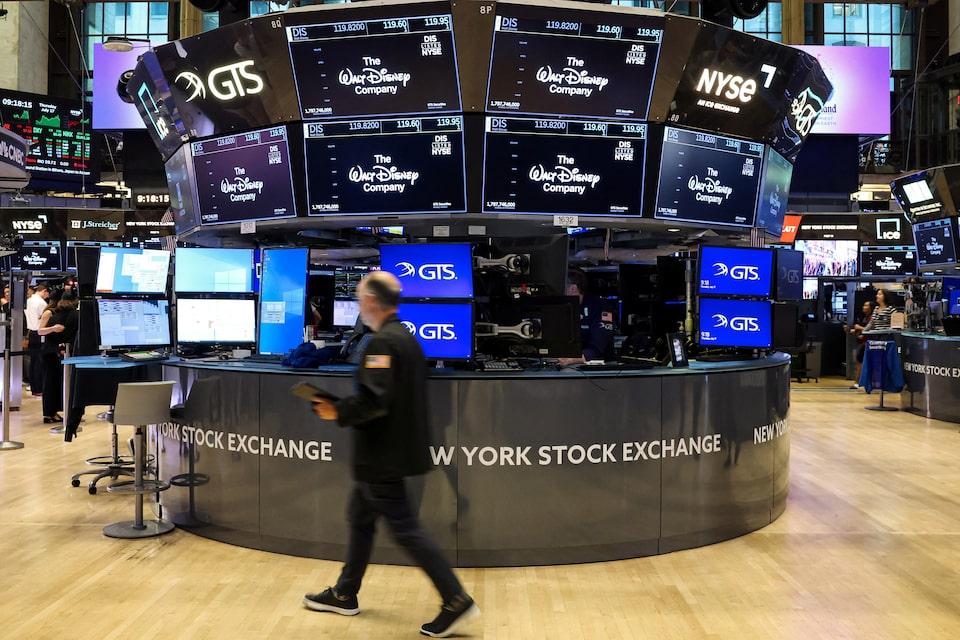
US stocks barely changed after mixed economic data, earnings Wall Street had hit records after solid data on Thursday Oil settles down as investors weigh impact of fresh EU sanctions on Russia NEW YORK/LONDON, July 18 (Reuters) - MSCI's global equity index advanced slightly while U.S. Treasury yields dipped and Wall Street equities were barely changed on Friday as investors waited for corporate earnings and monitored the latest U.S. tariff threats while they digested a mixed economic picture. U.S. consumer sentiment improved in July and inflation expectations declined, but households still saw substantial risk of price pressures increasing, the University of Michigan's Surveys of Consumers released on Friday showed. Sign up here. Another report showed U.S. single-family homebuilding dropped to an 11-month low in June as high mortgage rates and economic uncertainty hindered home purchases, suggesting residential investment contracted again in the second quarter. On Thursday, news of stronger-than-expected U.S. retail sales and a drop in jobless claims suggested modest improvements in economic activity and helped push the S&P 500 and Nasdaq to record closing highs. On Friday, the mood dimmed after the Financial Times reported that U.S. President Donald Trump is pushing for a minimum tariff of 15% to 20% on the European Union. The report said he was unmoved by the latest EU offer to reduce car tariffs and would keep those duties at 25% as planned. "Tariff headlines this afternoon reminded investors that volatility is likely to persist through the start of August." said Lindsey Bell, chief investment strategist at 248 Ventures. "Investors may be taking some money off the table going into the weekend given lingering tariff uncertainty and a market that has a premium valuation after reaching new highs." She noted that these concerns were on display in shares of American Express (AXP.N) , opens new tab and Netflix (NFLX.O) , opens new tab, which both fell on solid earnings reports and forecasts after reaching high valuations ahead of the results. Netflix ended down 5% while Amex fell 2.3%. Still, many investors had high hopes for upcoming earnings and made bullish bets ahead of July equity option expirations, said Bruce Zaro, managing director at Granite Wealth Management in Plymouth, Massachusetts. "Today's action is all about option expiration as investors make bets on the meat of earnings season, which comes in the next few weeks when all the growth and technology companies report," said Zaro, noting that beyond earnings, investors want to benefit from a strong performance trend in megacap names. "There's a fear of missing out." On Wall Street the Dow Jones Industrial Average (.DJI) , opens new tab fell 142.30 points, or 0.32%, to 44,342.19, the S&P 500 (.SPX) , opens new tab fell 0.57 points, or 0.01%, to 6,296.79 and the Nasdaq Composite (.IXIC) , opens new tab rose 10.01 points, or 0.05%, to 20,895.66. For the week, the S&P 500 gained 0.59%, the Nasdaq rose 1.51%, and the Dow fell 0.07%. MSCI's gauge of stocks across the globe (.MIWD00000PUS) , opens new tab rose 1.18 points, or 0.13%, to 927.47, hitting a record high earlier in the day. Earlier, Europe's STOXX 600 (.STOXX) , opens new tab index closed down 0.01%, and was off 0.06% for the week. In currencies, the U.S. dollar slipped against the euro but was showing a weekly gain, as investors weighed central bank policy amid signs that tariffs may be starting to fuel inflation pressures and as Trump continued to publicly criticize Fed Chair Jerome Powell. The euro pared some gains after a Financial Times report on a toughening U.S. stance on European import tariffs. The dollar index , which measures the greenback against a basket of currencies including the yen and the euro, fell 0.05% to 98.46. The euro was last up 0.27% at $1.1626. Against the Japanese yen , the dollar strengthened 0.09% to 148.73 as polls showed Japanese Prime Minister Shigeru Ishiba's coalition was in danger of losing its majority in an election on Sunday. In government bonds, U.S. Treasuries prices rose, dragging their yields lower, after comments from Federal Reserve Governor Christopher Waller pushed for a rate cut later this month, while technical buying also contributed to the move higher. In contrast, most officials who have spoken publicly have indicated a desire to hold rates steady and traders are betting on a 95.3% probability that rates will stay where they are after the month-end meeting, according to CME Group's FedWatch , opens new tab tool. The yield on benchmark U.S. 10-year notes fell 3.9 basis points to 4.424%, from 4.463% late on Thursday while the 30-year bond yield fell 1.8 basis points to 4.9958% from 5.014%. The 2-year note yield, which typically moves in step with interest rate expectations for the Federal Reserve, fell 4.4 basis points to 3.873%, from 3.917% late on Thursday. In commodities, crude oil futures held steady as mixed U.S. economic news offset worries the European Union's latest for its war in Ukraine could reduce oil supplies. U.S. crude settled down 0.3%, or 20 cents at $67.34 a barrel while Brent ended at $69.28 per barrel, down 0.35% or 24 cents on the day. Gold prices rose on Friday as a weaker U.S. dollar and ongoing geopolitical and economic uncertainty boosted demand for the safe-haven metal, while platinum prices eased after reaching their highest level since 2014. Spot gold rose 0.33% to $3,349.66 an ounce. https://www.reuters.com/world/china/global-markets-wrapup-7-2025-07-18/
2025-07-18 20:32
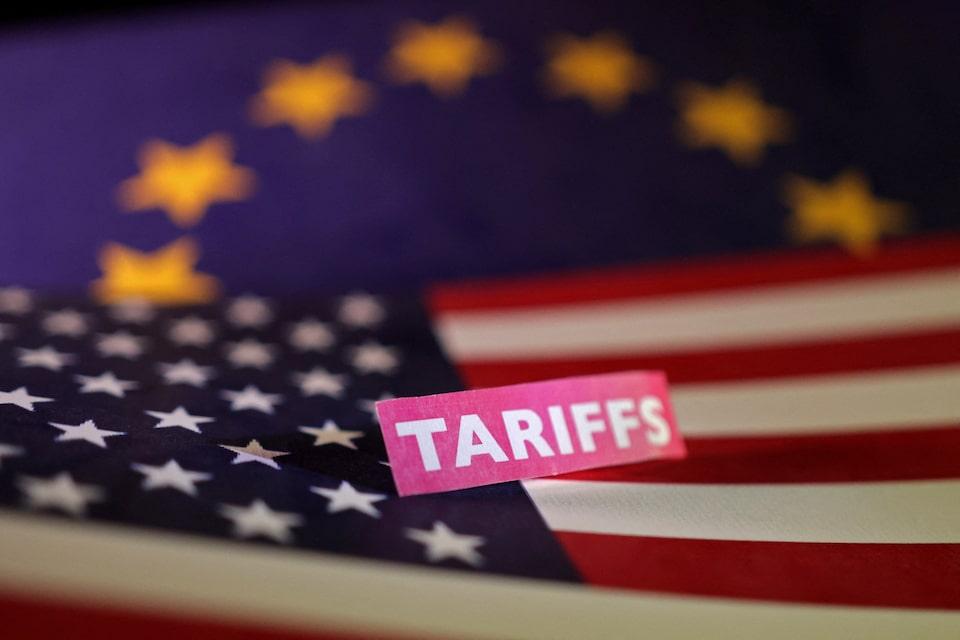
ORLANDO, Florida, July 18 (Reuters) - - TRADING DAY Making sense of the forces driving global markets Sign up here. By Jamie McGeever, Markets Columnist I'd love to hear from you, so please reach out to me with comments at [email protected] , opens new tab. You can also follow me at @ReutersJamie and @reutersjamie.bsky.social. The S&P 500 and Nasdaq touched new highs on Friday before cooling off following a report that U.S. President Donald Trump is pushing for a minimum 15-20% tariff on goods from Europe. But Wall Street and most global benchmark indices rose on the week, as upbeat U.S. economic data more than compensated for the heightened trade uncertainty and Trump ramping up his verbal attacks on Fed Chair Jerome Powell. This Week's Key Market Moves Yet another choppy and event-filled trading week ended on a more subdued note on Friday, with trade and the Trump administration's hefty tariffs on major trading partners again at the forefront of investors' minds. Trump's call for a minimum 15-20% tariff on imports from the European Union, as reported by the Financial Times, is a reminder that global trade tensions are still alive and could yet hit growth and fuel inflation. Elsewhere in the global trade war, Trump's deepening spat with Brazil will be worth monitoring next week, while Treasury Secretary Scott Bessent is in Japan this weekend. Economists at ratings agency Fitch on Friday raised their projected effective U.S. tariff rate to 19.4% from 14.1%. There's still a great deal of uncertainty over who will end up eating the tariffs, but levies of that magnitude will not be cost-free. As well as trade, investors' focus next week will turn to U.S. corporate earnings, with more than a fifth of the S&P 500 companies reporting, and the European Central Bank's policy decision. Chart of the Week Following Friday's latest Japanese inflation data and ahead of Sunday's potentially crucial upper house election, it's worth reminding ourselves of how much of an outlier Japanese interest rates are in real terms. The Bank of Japan's inflation-adjusted policy rate is almost -3%. The BOJ wants to continue raising rates, but it's not so simple. Sunday's election could pave the way for a wave of public spending and tax cuts, putting the developed world's worst public finances under even more strain and weakening the yen further. Yet long bond yields are already the highest on record. Raising rates and driving bond yields even higher could have a negative impact on growth. Maybe a very serious impact. Policymakers are in a bind. Here are some of the best things I read this week: What could move markets on Monday? Opinions expressed are those of the author. They do not reflect the views of Reuters News, which, under the Trust Principles , opens new tab, is committed to integrity, independence, and freedom from bias. Trading Day is also sent by email every weekday morning. Think your friend or colleague should know about us? Forward this newsletter to them. They can also sign up here. https://www.reuters.com/business/autos-transportation/global-markets-trading-day-graphic-2025-07-18/
2025-07-18 20:12
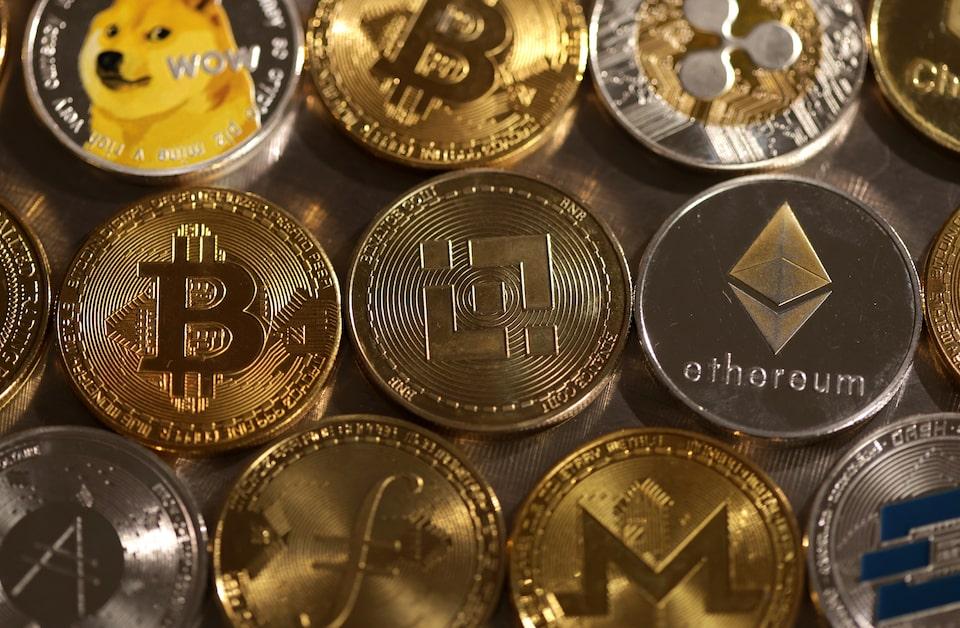
Industry reaches landmark valuation Bitcoin breached key $120,000 mark earlier this week Lawmakers advance broader crypto regulation Analysts forecast bitcoin at $200,000 by year-end July 18 (Reuters) - The crypto sector's market value hit $4 trillion on Friday, according to CoinGecko, marking a milestone that reflects its shift from a nascent asset class to a central part of the global investment landscape. A wave of renewed optimism, regulatory clarity in key markets and rising institutional flows have catapulted the crypto sector to a new valuation peak. Sign up here. The U.S. House of Representatives passed a bill on Thursday to create a regulatory framework for U.S.-dollar-pegged cryptocurrency tokens, known as stablecoins, sending the bill to President Donald Trump, who is expected to sign it into law. "The arrival of the Trump legislation signaled an about-turn in attitudes towards the crypto industry, but legislators are still exercising some caution," said Derren Nathan, head of equity research, Hargreaves Lansdown. House lawmakers also passed two other crypto bills, sending them next to the Senate for consideration. One lays out a regulatory framework for crypto, while the other seeks to ban the U.S. from issuing a central bank digital currency. The $4 trillion milestone underscores how far the crypto industry has come from its speculative, fringe origins. With growing interest from asset managers, new exchange-traded products and broader adoption among retail and corporate users, digital assets are increasingly shaping conversations in global finance. Stablecoins, a type of cryptocurrency designed to maintain a constant value, usually a 1:1 dollar peg, are commonly used by crypto traders to move funds between tokens. Their use has grown rapidly in recent years, and proponents say they could be used to send payments instantly. "The Genius Act will go down in history as a law that served as a foundational step in mainstreaming of crypto as an asset class," said Chris Perkins, president, CoinFund. Corporate treasury allocations to bitcoin are also gaining pace, with a growing number of public companies adding the token to their balance sheets as a long-term store of value. The sector was last trading at a combined market value of $3.92 trillion, as bitcoin — the world's largest cryptocurrency — fell 1.8%. Bitcoin crossed the $120,000 mark earlier this week, setting a record. Brokerage Bernstein forecast it could climb to $200,000 by end-2025. Ether, the second-biggest crypto token, was last up 4.5%. It has more than doubled over the past three months. The crypto rally also powered gains in linked equities, with Coinbase (COIN.O) , opens new tab and Robinhood (HOOD.O) , opens new tab climbing to all-time highs on Friday. Shares of the crypto exchange were last up 1%, while the retail trading platform, which also supports crypto trades, gained 3%. Ether-focused stocks also saw broad gains. https://www.reuters.com/business/crypto-sector-breaches-4-trillion-market-value-during-pivotal-week-2025-07-18/
2025-07-18 20:01
Exxon loses arbitration to block Chevron's $55 bln Hess deal Chevron wins prized Guyana asset but at a high integration, legal cost Hess deal key to Chevron's long-term growth strategy Arbitration overhang kept investors on sidelines, analysts say July 18 (Reuters) - Exxon Mobil (XOM.N) , opens new tab has lost its arbitration challenge to block Chevron's (CVX.N) , opens new tab $55 billion Hess (HES.N) , opens new tab acquisition deal, but the top U.S. oil producer managed to delay the tie-up by over a year, costing its rival billions in lost Guyana oil revenue and slowing integration. Chevron's deal, first announced in October 2023, closed on Friday after a drawn-out dispute over Hess's 30% stake in Guyana's Stabroek block, the most attractive asset in its portfolio. The offshore oilfield holds more than 11 billion barrels of oil and is one of the fastest-growing oil production regions in the world. Sign up here. The No. 2 U.S. oil producer had originally targeted a mid-2024 close for the deal. Exxon, which operates the Guyana project and holds a 45% stake along with Hess and CNOOC (600938.SS) , opens new tab , challenged the merger through arbitration, citing a right of first refusal on Hess's Guyana assets. "The delay kept roughly 180,000 barrels per day (bpd) of Hess oil, about $6-7 billion in gross sales and $3 billion in profit, just from Guyana's Stabroek Block sailing past Chevron's till in 2024, because those barrels kept flowing to Hess while the lawyers argued," said Michael Ashley Schulman, chief investment officer at Running Point Capital. Chevron's deal was part of the biggest wave of consolidation in the oil industry for over 20 years and was a strategic counter to Exxon's own blockbuster deal and growing position in the Permian. For Chevron CEO Michael Wirth, acquiring Hess and its stake in Guyana was central to his strategy for the company's future growth. That strategy had been in limbo during the arbitration, turning what was initially expected to be a clean, timely win for Chevron into a high-stakes challenge for Wirth, who had already lost one major deal. He abandoned his takeover bid for Anadarko Petroleum in 2019 after being outmanoeuvred by Occidental Petroleum's (OXY.N) , opens new tab higher offer. OVERHANG ON CHEVRON'S STOCK With the Hess deal now closed, Chevron said it expects to realize $1 billion in run-rate cost synergies by the end of 2025 and will cut jobs due to overlapping roles between the two companies. Chevron is in the midst of laying off up to 20% of its global workforce, has faced a rise in safety issues, and its operations in Venezuela have been caught in a geopolitical crossfire. "For Chevron, this favorable ruling helps the major avoid other time-consuming (and likely costly) approaches for inorganic growth," said Atul Raina, vice president at Rystad Energy. "Had the ruling gone in favor of Exxon Mobil and CNOOC, Chevron would then have had to look for growth opportunities elsewhere ... this would have most likely translated into Chevron paying large premiums for buying premier U.S. shale assets that move the needle for the major," Raina added. During the arbitration, Chevron had prepared for the integration of Hess business, purchasing $2.2 billion in Hess shares and issuing $5.5 billion in long-term debt, according to Jefferies analysts. The arbitration itself was also costly, Schulman said. "Add an estimated $50-100 million in arbitration fees and white-shoe billable hours, and you start to see why Mike Wirth's victory lap feels a bit like winning the Indy 500 on three tires," said Schulman. By contrast, Exxon's own $60 billion acquisition of Pioneer Natural Resources, announced the same month as Chevron's deal, closed by May 2024. That deal gave Exxon a bigger position as a shale producer in the top U.S. oilfield, the Permian basin. Since announcing the Hess deal, Chevron shares have declined about 9%. Exxon's stock is up just over 1% since unveiling its Pioneer acquisition, a divergence reflecting investor sentiment around timing and execution. Some of that gap was closed on Friday as Chevron stock fell nearly 1% while Exxon fell nearly 3%. RBC analyst Biraj Borkhataria said the arbitration had clearly been an overhang on Chevron's stock, with many investors choosing to stay on the sidelines during the drawn-out process. "Investor sentiment has shifted multiple times over the last eighteen months, usually based on either Exxon or Chevron commentary at industry conferences, both expressing how 'confident' they were of winning," Borkhataria said in a note. https://www.reuters.com/business/energy/chevron-wins-exxon-case-loses-time-oil-billions-2025-07-18/
2025-07-18 19:40
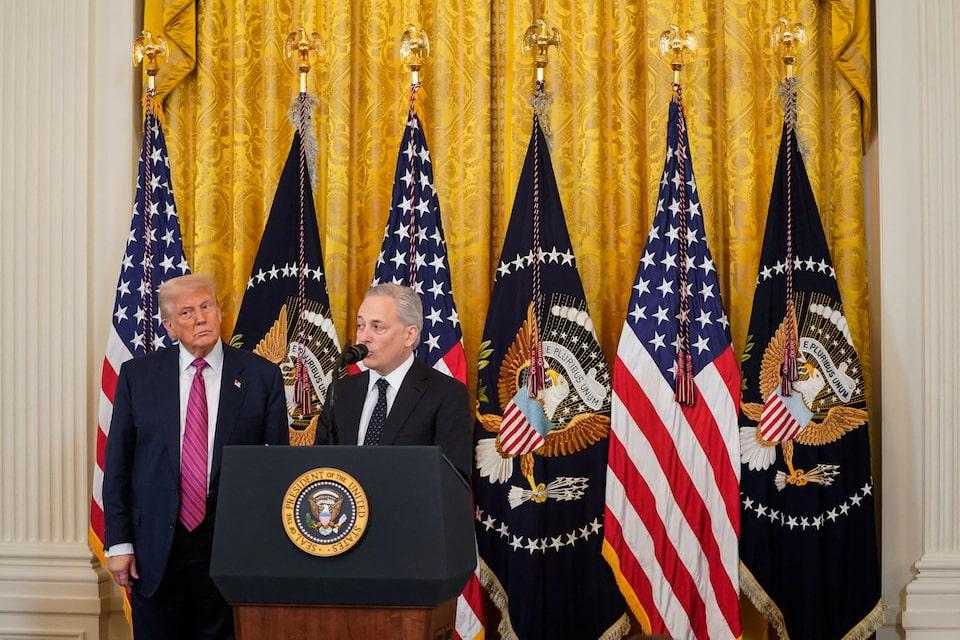
Law requires tokens to be backed by liquid assets Measure is first major crypto law enacted in US Some crypto firms look to gain bank licenses Critics say loopholes in law risk making US haven for criminals WASHINGTON, July 18 (Reuters) - U.S. President Donald Trump on Friday signed a law to create a regulatory regime for dollar-pegged cryptocurrencies known as stablecoins, a milestone that could pave the way for the digital assets to become an everyday way to make payments and move money. The bill, dubbed the GENIUS Act, passed in the House of Representatives by a vote of 308 to 122, with support from nearly half the Democratic members and most Republicans. It had earlier been approved by the Senate. Sign up here. The law is a huge win for crypto supporters, who have long lobbied for such a regulatory framework in a bid to gain greater legitimacy for an industry that began in 2009 as a digital Wild West famed for its innovation and speculative chaos. "This signing is a massive validation of your hard work and pioneering spirit," said Trump at a signing event that included dozens of government officials, crypto executives and lawmakers. "It's good for the dollar and it's good for the country." Treasury Secretary Scott Bessent, in a statement, said the new technology would buttress the dollar’s status as the global reserve currency, expand access to the dollar economy and boost demand for U.S. Treasuries, which back stablecoins. Stablecoins are designed to maintain a constant value, usually a 1:1 U.S. dollar peg, and their use has exploded, notably by crypto traders moving funds between tokens. The industry hopes they will enter mainstream use for sending and receiving payments instantly. The new law requires stablecoins to be backed by liquid assets - such as U.S. dollars and short-term Treasury bills - and for issuers to disclose publicly the composition of their reserves monthly. Crypto companies and executives argue such legislation will enhance stablecoins' credibility and make banks, retailers and consumers more willing to use them to transfer funds instantly. The stablecoin market, which crypto data provider CoinGecko said is valued at more than $260 billion, could grow to $2 trillion by 2028 under the new law, Standard Chartered bank estimated earlier this year. The law's passage culminates a long lobbying effort by the industry, which donated more than $245 million in last year's elections to aid pro-crypto candidates including Trump, according to Federal Election Commission data. The Republican president, who has launched his own coin, thanked executives for their support during the 2024 presidential campaign, saying, "I pledged that we would bring back American liberty and leadership and make the United States the crypto capital of the world, and that's what we've done." Democrats and critics have said the law should have blocked big tech companies from issuing their own stablecoins, which could increase the clout of an already powerful sector, contained stronger anti-money laundering protections and prohibited foreign stablecoin issuers. "By failing to close known loopholes and protect America’s digital dollar infrastructure, Congress has risked making the U.S. financial system a global haven for criminals and adversarial regimes to exploit," said Scott Greytak, deputy executive director of Transparency International U.S. COULD BOOST DEMAND FOR T-BILLS Big U.S. banks are internally debating an expansion into cryptocurrencies as regulators give stronger backing to digital assets, but banks' initial steps will focus on pilot programs, partnerships or limited crypto trading, Reuters reported in May. Several crypto firms including Circle (CRCL.N) , opens new tab and Ripple are seeking banking licenses, which would cut costs by bypassing intermediary banks. Backers of the bill have said it could potentially give rise to a new source of demand for short-term U.S. government debt, because stablecoin issuers will have to purchase more of the debt to back their assets. Trump has sought to broadly overhaul U.S. cryptocurrency policies, signing an executive order in March establishing a strategic bitcoin reserve. The president launched a meme coin called $TRUMP in January and partly owns crypto company World Liberty Financial. https://www.reuters.com/legal/government/trump-signs-stablecoin-law-crypto-industry-aims-mainstream-adoption-2025-07-18/