2025-07-18 19:37
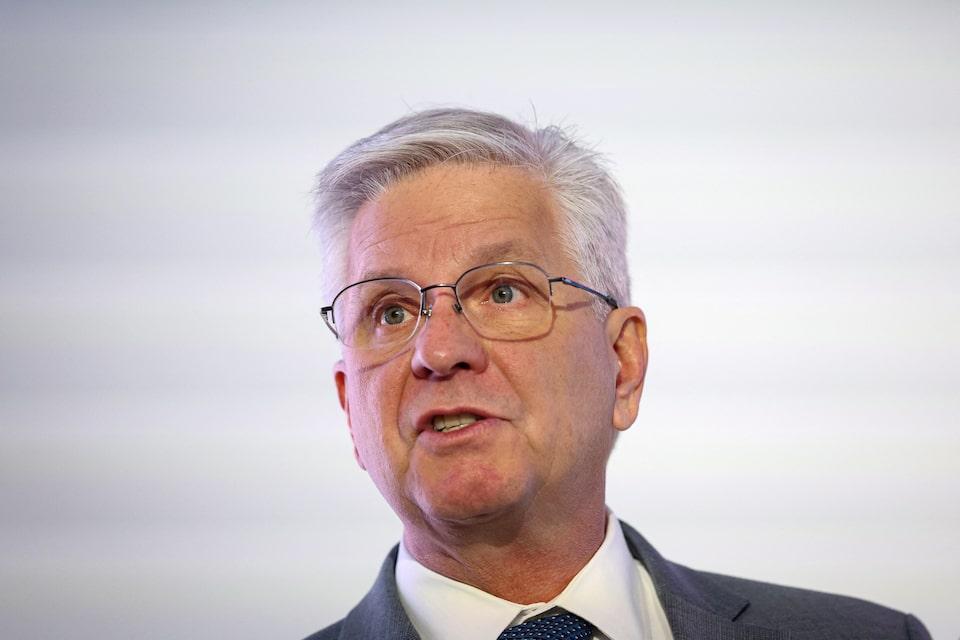
July 18 (Reuters) - Chicago Federal Reserve Bank President Austan Goolsbee on Friday said the constant "drip drip" of new tariff announcements undercuts the idea that tariffs have only a one-time impact on prices, and without clarity on where they will end up the central bank will need more time to decide if rate cuts are appropriate. "We need some resolution that we can count on before we can fully understand what the impact of this is," Goolsbee said in an interview with Yahoo Finance. "Anything that makes it harder to figure out if we are on a path back to 2% inflation, anything like that is extending the timetable of when the rate cuts can happen." Sign up here. https://www.reuters.com/business/feds-goolsbee-new-tariff-announcements-may-delay-rate-cuts-2025-07-18/
2025-07-18 19:24
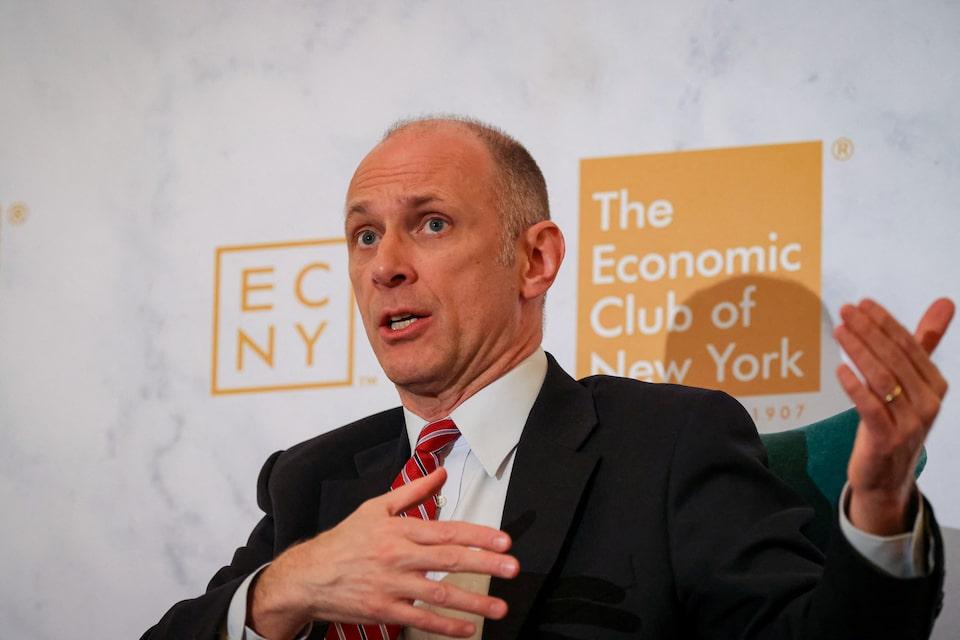
Dollar drops, but on track for weekly gain Focus on Fed policy as Trump attacks Powell Yen dips against dollar ahead of Japanese elections NEW YORK, July 18 (Reuters) - The U.S. dollar slipped against the euro on Friday but held on to weekly gains, as investors weighed expected Federal Reserve policy amid signs that tariffs may be starting to increase some inflation pressures and as U.S. President Donald Trumpcontinued to criticise Chair Jerome Powell. Data on Tuesday showed that consumer prices rose in June, though the increase was seen as moderate. Wednesday’s producer price inflation report showed that prices were steady last month. Sign up here. Powell has said he expects inflation to rise this summer as a result of Trump’s tariff policies. His comments have pushed out expectations of when the U.S. central bank is likely to cut interest rates. But the labor market is showing signs of weakness even as headline job gains and the unemployment rate remain relatively solid. “We're waiting on the tariffs to become real and not just a negotiating ploy and waiting on the labor market to reveal itself,” said Lou Brien, strategist at DRW Trading in Chicago. “Layoffs are at a lower level than they were pre-pandemic, but the hiring is terrible. And if, all of a sudden, the layoffs come up, we're going to get a significant increase in the unemployment rate very quickly,” Brien said. Fed governor Chris Waller said on Friday that he favors a rate cut at the July meeting because he feels tariffs are likely to have a limited impact on inflation. Waller added that underlying data "are not indicating a super healthy private sector labor market," and the Fed should "get ahead" of a possible hiring slowdown. Powell is facing almost daily criticism from Trump over the Fed's reluctance to cut rates. The dollar tumbled on Wednesday on reports that Trump was planning to fire the Fed Chair, but rebounded after Trump denied the reports. Powell's term will end in May. Chicago Fed President Austan Goolsbee said he is a "little wary" about signs in the June consumer price index that tariffs are pushing up goods inflation, but still believes the U.S. economy is in a good place and the Fed's policy rate can come down a "fair bit" over the next 12 months. Fed funds futures traders are pricing in 46 basis points of cuts by year-end, implying that two 25 basis point cuts are seen as most likely, with the first coming in September. The dollar index was roughly flat on the day at 98.49, and is on track for a 0.65% weekly gain. The euro was last up 0.22% at $1.1621 but is headed for a weekly drop of 0.59%. The euro pared gains after the Financial Times reported that Trump is pushing for a minimum tariff of 15% to 20% in any deal with the European Union. Sterling was flat at $1.3411 and is heading for a weekly decline of 0.64%. The Japanese yen was slightly lower against the greenback heading into Sunday's upper house election, in which Japan's ruling party looks vulnerable. The dollar gained 0.1% to 148.75 yen and is on track for a weekly gain of 0.93%. Polls suggest Japan's ruling coalition is at risk of losing its majority, which would stir policy uncertainty at home and complicate tariff negotiations with the United States. U.S. Treasury Secretary Scott Bessent told Japanese Prime Minister Shigeru Ishiba that their countries can reach a "good agreement" on tariffs, Ishiba said on Friday after meeting Bessent in Tokyo. In cryptocurrencies, bitcoin fell 1.51% to $117,680, holding below a record $123,153 reached on Monday. The U.S. House of Representatives on Thursday passed a bill to create a regulatory framework for U.S.-dollar-pegged cryptocurrency tokens known as stablecoins, sending the bill to Trump, who is expected to sign it into law. https://www.reuters.com/world/africa/dollar-slips-against-euro-maintains-weekly-gains-2025-07-18/
2025-07-18 19:19
US consumer sentiment up, but homebuilding drops US Trump seeking minimum tariffs on EU EU to stop importing fuels from Russia Chevron closes Hess acquisition after arbitration win NEW YORK, July 18 (Reuters) - Crude oil futures were little changed on Friday on mixed U.S. economic and tariff news and worries about oil supplies following the European Union's latest sanctions against Russia for its war in Ukraine. Brent crude futures fell 24 cents, or 0.3%, to settle at $69.28 a barrel, while U.S. West Texas Intermediate (WTI) crude futures fell 20 cents, or 0.3%, to end at $67.34. Sign up here. That put both crude benchmarks down about 2% for the week. In the United States, single-family homebuilding dropped to an 11-month low in June as high mortgage rates and economic uncertainty hampered home purchases, suggesting residential investment contracted again in the second quarter. In another report, however, U.S. consumer sentiment improved in July, while inflation expectations continued to decline. Lower inflation should make it easier for the U.S. Federal Reserve to reduce interest rates, which could cut consumers' borrowing costs and boost economic growth and oil demand. Separately, U.S. President Donald Trump is pushing for a minimum tariff of 15% to 20% in any deal with the European Union, the Financial Times reported on Friday, adding that the administration is now looking at a reciprocal tariff rate that exceeds 10%, even if a deal is reached. "Currently envisioned reciprocal tariffs, coupled with announced sectoral levies, could push the U.S. effective tariff rate above 25%, surpassing 1930s peaks ... In coming months, the tariffs should increasingly be manifest in inflation," analysts at U.S. bank Citigroup's Citi Research said in a note. Rising inflation can raise prices for consumers and weaken economic growth and oil demand. EU SANCTIONS In Europe, the EU reached an agreement on an 18th sanctions package against Russia over its war in Ukraine, which includes measures aimed at dealing further blows to Russia's oil and energy industries. "New sanctions on Russian oil from the U.S. and Europe this week were met by a muted market reaction," analysts at Capital Economics said in a note. "This is a reflection of investors doubting President Trump will follow through with his threats, and a belief that new European sanctions will be no more effective than previous attempts." The EU will also no longer import any petroleum products made from Russian crude, though the ban will not apply to imports from Norway, Britain, the U.S., Canada and Switzerland, EU diplomats said. EU foreign policy chief Kaja Kallas also said on X that the EU has designated the largest Rosneft (ROSN.MM) , opens new tab oil refinery in India as part of the measures. India is the biggest importer of Russian crude while Turkey is the third-biggest, Kpler data shows. "This shows the market fears the loss of diesel supply into Europe, as India had been a source of barrels," said Rystad Energy's vice president of oil markets, Janiv Shah. In other news, U.S. oil major Chevron (CVX.N) , opens new tab closed its $55 billion acquisition of U.S. energy firm Hess (HES.N) , opens new tab on Friday after winning a landmark legal battle against larger U.S. oil major rival Exxon Mobil (XOM.N) , opens new tab to gain access to the largest oil discovery in decades off Guyana. https://www.reuters.com/business/energy/oil-steadies-mixed-us-economic-tariff-news-offset-new-russia-sanctions-2025-07-18/
2025-07-18 19:18
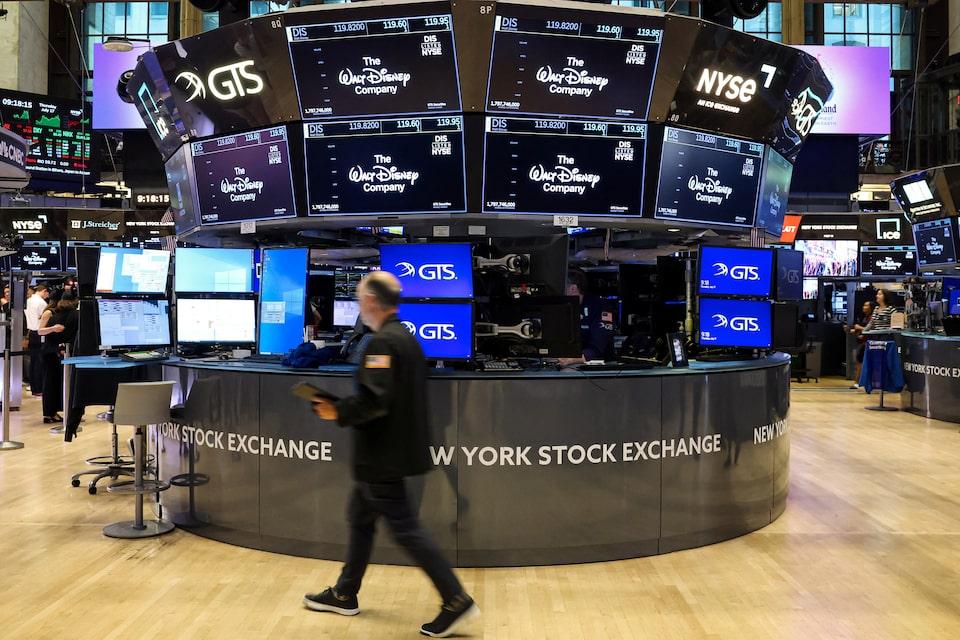
US stocks edge into the red after Friday's crop of US economic data Wall Street had hit records after solid data on Thursday Oil up as investors weigh impact of fresh EU sanction on Russia Alphabet, Tesla among companies to report earnings next week NEW YORK/LONDON, July 18 (Reuters) - U.S. equities were slightly lower on Friday, a day after the S&P 500 and the Nasdaq scored record closes, as investors looked ahead to corporate earnings and monitored the latest U.S. tariff threats as they digested economic data, while the dollar weakened and U.S. Treasury yields fell. U.S. consumer sentiment improved in July and inflation expectations declined, but households still saw substantial risk of price pressures increasing in the future, the University of Michigan's Surveys of Consumers released on Friday showed. Sign up here. Another report showed U.S. single-family homebuilding dropped to an 11-month low in June as high mortgage rates and economic uncertainty hampered home purchases, suggesting residential investment contracted again in the second quarter. On Thursday, news of stronger-than-expected U.S. retail sales and jobless claims data suggested modest improvements in economic activity, helping to push equities higher. On Friday, the mood dimmed after the Financial Times reported that U.S. President Donald Trump is pushing for a minimum tariff of 15% to 20% in any deal with the European Union, was unmoved by the latest EU offer to reduce car tariffs, and would keep duties there at 25% as planned. "Tariff headlines this afternoon reminded investors that volatility is likely to persist through the start of August." said Lindsey Bell, Chief Investment Strategist at 248 Ventures. "Investors may be taking some money off the table going into the weekend given lingering tariff uncertainty and a market that has a premium valuation after reaching new highs." She noted that these concerns were on display in shares of American Express (AXP.N) , opens new tab and Netflix (NFLX.O) , opens new tab, which both fell after solid earnings reports and forecasts as both companies had extended valuations ahead of the results. Still, many investors had high hopes for upcoming earnings and were making bullish bets ahead of July equity option expirations, said Bruce Zaro, managing director at Granite Wealth Management in Plymouth, Massachusetts. "Today's action is all about option expiration as investors make bets on the meat of earnings season, which comes in the next few weeks when all the growth and technology companies report," said Zaro, noting that beyond earnings, investors want to benefit from a strong performance trend in megacap names. "There's a fear of missing out." On Wall Street at 02:32 p.m. the Dow Jones Industrial Average (.DJI) , opens new tab fell 218.65 points, or 0.49%, to 44,265.84, the S&P 500 (.SPX) , opens new tab fell 5.42 points, or 0.09%, to 6,291.94 and the Nasdaq Composite (.IXIC) , opens new tab rose 1.58 points, or 0.01%, to 20,887.80. MSCI's gauge of stocks across the globe (.MIWD00000PUS) , opens new tab rose 0.74 points, or 0.08%, to 927.03. Earlier, Europe's STOXX 600 (.STOXX) , opens new tab index closed down 0.01%, and was off 0.06% for the week. In currencies, the U.S. dollar slipped on the day but was still angling for a weekly gain, as investors weighed signs that tariffs may be starting to fuel inflation pressures and monitored Federal Reserve policy as Trump increases pressure on Chair Jerome Powell. The euro pared some gains after the FT report on a toughening U.S. stance on European import tariffs. The dollar index , which measures the greenback against a basket of currencies including the yen and the euro, fell 0.04% to 98.47. The euro was up 0.24% at $1.1623 versus a $1.1671 high for the session so far. Against the Japanese yen , the dollar strengthened 0.1% to 148.75 as polls showed Japanese Prime Minister Shigeru Ishiba's coalition was in danger of losing its majority in an election on Sunday. U.S. Treasuries prices rose, dragging their yields lower, after comments from Federal Reserve Governor Christopher Waller pushed for a rate cut later this month, while technical buying also contributed to the move higher. In contrast, most officials who have spoken publicly have indicated a desire to hold rates steady and traders are betting on a 95.3% probability that rates will stay where they are after the month-end meeting, according to CME Group's FedWatch , opens new tab tool. The yield on benchmark U.S. 10-year notes fell 3.7 basis points to 4.426%, from 4.463% late on Thursday while the 30-year bond yield fell 1.9 basis points to 4.9947% from 5.014%. The 2-year note yield, which typically moves in step with interest rate expectations for the Federal Reserve, fell 4.6 basis points to 3.871%, from 3.917% late on Thursday. In commodities, crude oil futures held steady as mixed U.S. economic news offset worries the European Union's latest for its war in Ukraine could reduce oil supplies. U.S. crude settled down 0.3%, or 20 cents at $67.34 a barrel while Brent ended at $69.28 per barrel, down 0.35% or 24 cents on the day. Gold prices rose on Friday as a weaker U.S. dollar and ongoing geopolitical and economic uncertainty boosted demand for the safe-haven metal, while platinum prices eased after reaching their highest level since 2014. Spot gold rose 0.41% to $3,352.13 an ounce and spot. https://www.reuters.com/world/china/global-markets-wrapup-6-pix-2025-07-18/
2025-07-18 19:15
Argent LNG, Baker Hughes, Hunt Energy form coalition for Syria energy masterplan Masterplan includes oil, gas exploration and power generation Syria's energy infrastructure needs billions in investment Focus on areas west of Euphrates under Syrian government control DAMASCUS, July 18 (Reuters) - U.S.-based firms Baker Hughes (BKR.O) , opens new tab, Hunt Energy and Argent LNG will develop a masterplan for Syria's oil, gas and power sector, Argent LNG CEO Jonathan Bass said on Friday, in a partnership aimed at rebuilding energy infrastructure shattered by 14 years of civil war. The move marks a swift turnaround as U.S. companies enter a country previously under one of the world's tightest sanctions regimes that U.S. President Donald Trump lifted at the end of June. Sign up here. The companies plan to help explore and extract oil and gas and produce power to help get the economy running as the government seeks to put Syria back on the map. The plan comes after a dash by other companies, many from Gulf Arab states, to sign deals to bolster Syria's power generation and ports infrastructure. Details of the plan have not been previously reported. "We are initiating the development of a comprehensive masterplan for energy and power generation in Syria, based on a preliminary assessment of opportunities for near-term improvements in generation capacity and service delivery," Bass told Reuters via phone. "Our efforts aim to support the revitalization of the energy sector in coordination with relevant stakeholders,” he added. "This includes potential activities across the value chain—from exploration and production to electricity generation, including combined-cycle power plants," he said, declining to elaborate further. Argent LNG, which is developing a liquefied natural gas export facility in Louisiana, in January signed a non-binding agreement to supply Bangladesh up to 5 million metric tons of the fuel annually, the first major U.S. LNG supply deal since Trump began his second term. Reuters received no immediate response to emailed questions to global energy services provider Baker Hughes, while Texas-based oil and gas company Hunt Energy declined comment. The plan is to begin with areas west of the Euphrates River, under control of the Syrian government. Syria's east, where much of its oil is produced, remains controlled by the Syrian Democratic Forces, a U.S.-backed and Kurdish-led armed group that Washington has urged to integrate with the new authorities in Damascus following the ouster of former Syrian strongman Bashar al-Assad. After 14 years of war, Syria's electricity sector is severely damaged, generating only 1.6 gigawatts of electricity, down from 9.5 GW before 2011. Billions of dollars of investment are needed to fix the sector, so the cash-strapped state is looking at private investment or donors to foot the bill. In May, Syria signed a memorandum of understanding with Qatar's UCC Holding to develop $7 billion worth of power generation projects, including four combined-cycle gas turbine power plants and a 1,000-MW solar power plant in southern Syria. 'GROWING INTEREST' In a post on LinkedIn on Thursday, Syrian Finance Minister Yisr Barnieh said the three U.S.-based companies were forming a coalition to invest in Syria and develop the country's energy sector. "This visit signals a growing interest among American companies and investors in engaging with Syria," he said. Bass, Hunt Energy CEO Hunter L. Hunt, and a senior executive at Baker Hughes arrived in Syria on a private jet on Wednesday morning and were meeting with Barnieh when Israel conducted a series of airstrikes on Damascus that shook the city, Bass said. "It was big," said Bass, who has been working on the energy project since visiting Damascus and meeting with Syrian President Ahmed al-Sharaa in April. He was part of both state-led and informal efforts to lobby Trump to meet with Sharaa. The landmark meeting took place in mid-May with a big push from the leaders of Turkey and Saudi Arabia, and Trump announced the end of Syria sanctions. As they are slowly phased out, investor interest in Syria has grown. A week of violence in the southern province of Sweida, however, has darkened the mood in the country and left at least 321 people dead, according to the Syrian Network for Human Rights, a human rights group. "To work in Syria, there are potholes, there are ditches, it has craters," said Bass. "If you don't have the team that's willing to accept craters, don't come." https://www.reuters.com/sustainability/boards-policy-regulation/us-firms-develop-syria-energy-masterplan-after-trump-lifts-sanctions-2025-07-18/
2025-07-18 18:57
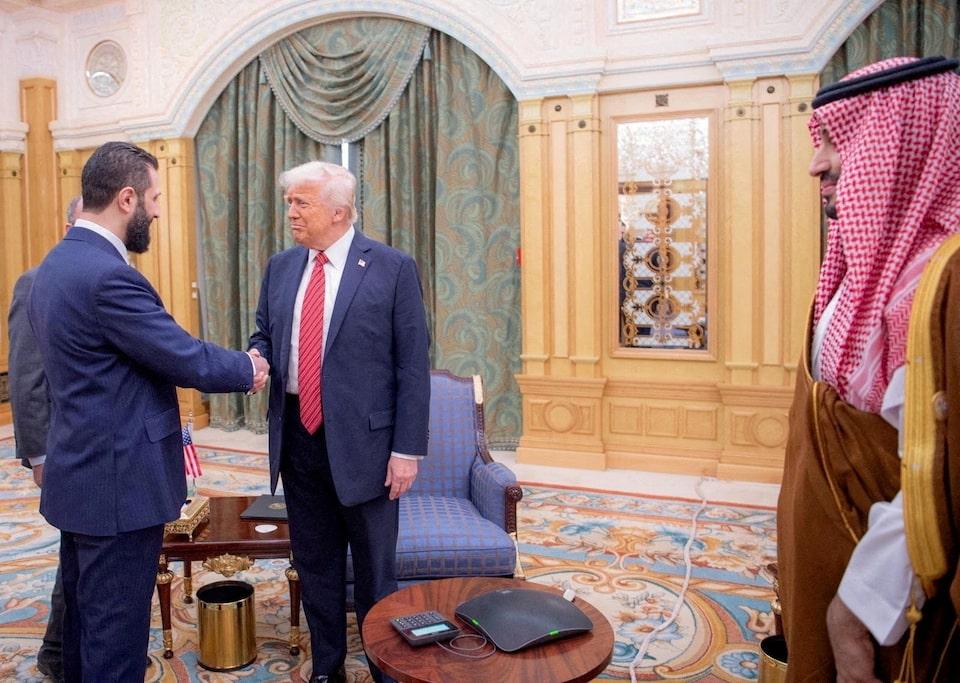
Waller in favor of immediate rate cut due to economic slowdown concerns Trump has demanded huge reduction in rates, criticized Fed chief Powell's leadership G20 finance leaders' communique emphasizes importance of central bank independence WASHINGTON, July 18 (Reuters) - Federal Reserve Governor Chris Waller, an advocate for an immediate interest rate cut, said on Friday he would accept the job as head of the U.S. central bank if asked by President Donald Trump, but so far Trump has not contacted him about it. "In 2019 the president contacted me and said, 'Would you serve?' And I said yes," Waller told Bloomberg Television, referring to Trump's appointment of him to the Fed's Board of Governors. "If the president contacted me and said, 'I want you to serve,' I would do it. But he has not contacted me." Sign up here. Trump has launched a barrage of nearly daily criticism at Fed Chair Jerome Powell over the central bank's reluctance to cut rates due to concern the administration's trade and tariff policies will increase inflation. Waller favors a rate cut at the Fed's upcoming July 29-30 meeting because he feels the tariffs are likely to have a limited impact on inflation, and he is concerned the economy and private-sector hiring are starting to slow. Though the unemployment rate is low, Waller said underlying data "are not indicating a super healthy private-sector labor market," and the Fed should "get ahead" of a possible hiring slowdown. The U.S. central bank is widely expected to keep its benchmark interest rate steady in the 4.25%-4.50% range at its upcoming meeting. Only Waller and another Trump appointee, Fed Vice Chair for Supervision Michelle Bowman, favor a cut that soon, though eight of their colleagues have indicated a reduction in the policy rate could happen in September. Waller, who has said explicitly that his rate stance is "not political," has been credited by economists for making a cogent case for lower rates, even as administration officials have tried to amplify pressure on Powell over cost overruns in a renovation of the Fed's headquarters in Washington. Trump, who feels rates should be slashed to levels more aligned with a recession, has repeatedly said Powell should resign. Powell has vowed to remain Fed chief until his term expires in May. Waller "is not talking about cost overruns on the Eccles Building or lowering the cost of government finance or 'regime change,' but he is talking about the shifting balance of risks in the economy," Neil Dutta, head of economics at Renaissance Macro Research, wrote in an analysis that argued appointing Waller to succeed Powell was "the most obvious way" for Trump to boost his impact at the Fed. CASTING CALL As a sitting Fed governor, Waller would have an immediate vote and voice on policy if tapped to succeed Powell. Others mentioned as possible nominees include Treasury Secretary Scott Bessent, White House economic adviser Kevin Hassett, and Kevin Warsh, a former Fed governor and perennial critic of the central bank since leaving its Board of Governors in 2011. In an extended television interview this week, Warsh said the Fed needed "regime change." As it stands, Bessent, Hassett or Warsh could not join the central bank's seven-member board until Fed Governor Adriana Kugler's seat expires in February. Bessent said this week a "formal process" was underway to choose a successor to Powell, who was elevated from governor to the Fed's top job by Trump in 2018 but quickly fell out with the president in a similar dispute over interest rates. While Waller, a former economics professor and research director at the St. Louis Fed, acknowledges that cutting rates in September rather than in two weeks wouldn't matter much to the economic outcome, the Fed's reluctance to reduce rates has stoked Trump's anger since he returned to office in January. The president seemed ready to try to fire Powell earlier this week. Though his ability to do so is legally doubtful, the lingering threat of a move against the Fed chief has made the economic logic for or against a rate cut seemingly secondary to the debate about the implications of Trump's actions for the Fed's independence in setting monetary policy. Central banks' ability to focus on inflation in setting rates and not, for example, to help finance government spending, as Trump says he wants, is widely accepted as a staple of sound economic management and the best way to keep inflation in check. Finance leaders from the Group of 20 countries, including a representative from the U.S. Treasury, issued on Friday a final communique stressing the importance of central bank independence following a two-day meeting in Durban, South Africa. "Central banks are strongly committed to ensuring price stability, consistent with their respective mandates, and will continue to adjust their policies in a data-dependent manner. Central bank independence is crucial to achieving this goal," the communique said. Key Republican members of the U.S. Senate Finance Committee, which would have to confirm a new Fed chief or governor, also emphasized the point this week. Powell has made building strong ties in Congress a key aspect of his tenure as Fed chief. "It really is best for the economic conditions in our country that the markets understand that the Fed really is independent. And I think that will pay dividends for the administration," Republican Senator Mike Rounds told reporters this week. "I personally have a good working relationship with the chairman. I'm going to continue to have that. And I respect the independence that he is trying to maintain." https://www.reuters.com/business/waller-says-hes-willing-to-lead-fed-if-trump-asks-no-contact-so-far-2025-07-18/