2025-07-18 12:46
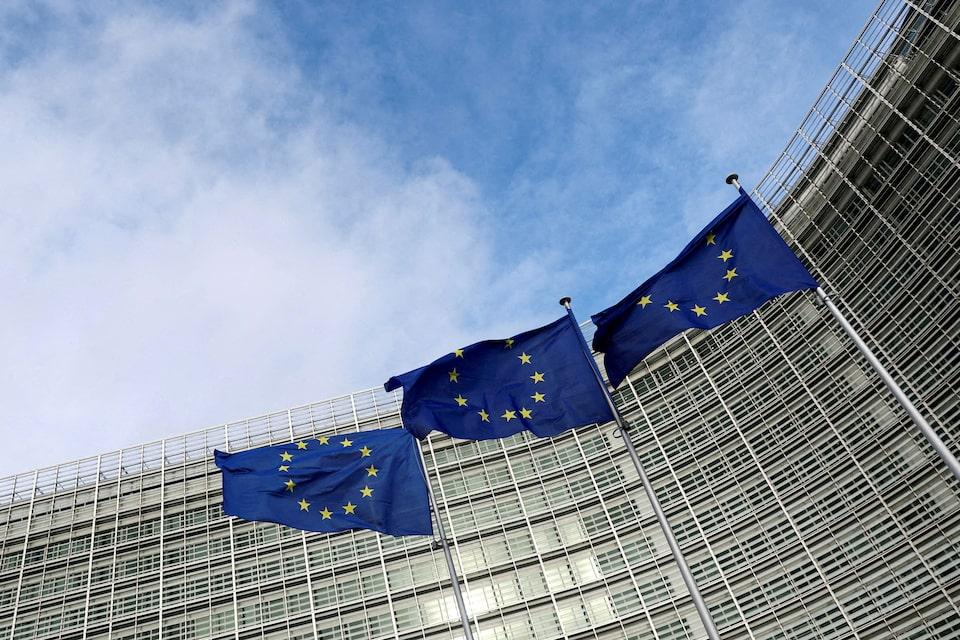
BRUSSELS, LONDON July 18 (Reuters) - Following are details of the European Union's 18th sanctions package against Russia over its war in Ukraine, approved on Friday and aimed at dealing further blows to Russia's oil and energy industry. OIL PRICE CAP Central to the package is a lower price cap on Russian oil - a move designed to shrink Moscow's energy revenues without disrupting global markets by severing Russian supply entirely. Sign up here. The EU will impose a moving price cap on Russian crude at 15% below its average market price, EU diplomats said. That means a cap of roughly $47.60 per barrel at present, well below the $60 maximum that the Group of Seven major economies have tried to impose since December 2022. The measure aims to ban trade in Russian crude bought at a higher price by prohibiting shipping, insurance and reinsurance companies from handling tankers carrying such crude. The European Union and Britain have been pushing the G7 to lower the cap since a fall in oil futures made the $60 cap largely irrelevant. However, the United States has resisted, leaving the EU to move forward on its own, with only limited power to enforce the measure because oil is largely traded in dollars, for which payment clearing is controlled by U.S. banks. SHADOW FLEET AND ENERGY TRADE The EU will no longer import any petroleum products made from Russian crude, although the ban will not apply to imports from Norway, Britain, the U.S., Canada and Switzerland, EU diplomats said. The EU sanctions also targeted India's Nayara oil refinery with Russia's largest oil producer Rosneft as its main shareholder. An additional 105 vessels are banned from accessing EU ports and locks, or undertaking ship-to-ship transfers of oil - an effort to shut down the so-called "shadow fleet" of older oil tankers used to transport Russian oil and circumvent sanctions. The EU also put sanctions on a private operator of an international flag registry and a captain of a shadow fleet vessel, according to a press release. In total, the EU has now imposed sanctions on more than 400 shadow fleet ships. NORD STREAM Transactions related to Russia's Nord Stream gas pipelines under the Baltic Sea will be banned, including any provision of goods or services to these projects. FINANCIAL SECTOR The EU will ban all transactions with Russian financial institutions - already excluded from the global financial messaging system SWIFT. The ban will include transactions with Russia’s sovereign wealth fund - the Russian Direct Investment Fund (RDIF) - as well as its investments. This aims to further restrict Russia's access to international financial markets and foreign currency. EU countries also agreed to lower the threshold for imposing further sanctions on foreign financial and credit institutions that undermine the sanctions or support Russia's war effort - for example, by circumventing the oil price cap. EXPORT BANS, NEW BLACKLIST ENTRIES The EU will blacklist 26 new entities for circumventing sanctions, including seven in China, three in Hong Kong and four in Turkey, diplomats said. A number of chemicals, plastics and items of machinery have been added to the list of goods EU countries cannot export to Russia. DELAYED APPROVAL The package of sanctions on Russia is the EU's 18th since Moscow's full-scale invasion of Ukraine in 2022. Approval was held up for weeks by repeated vetoes by Slovakia and Malta. Slovakia had demanded guarantees against potential losses from a separate EU plan to ban imports of Russian gas by 2028, and dropped its veto only once Prime Minister Robert Fico said it had achieved as much as it could at this point. https://www.reuters.com/sustainability/boards-policy-regulation/whats-eus-18th-sanctions-package-against-russia-2025-07-18/
2025-07-18 12:33
MOSCOW, July 18 (Reuters) - Rescuers ferried more than 100 people to safety this week, along with their farm animals and pets, after floodwaters caused by heavy rain engulfed villages in a sparsely-populated part of eastern Russia. Emergency crews piloted rubber dinghies down flooded streets in settlements in Russia's Sakha Republic, also known as Yakutia, a vast region larger than Argentina. Sign up here. Some villagers clambered out of windows and were taken on piggyback into waiting boats. Rescuers also took in cows, hens and at least one pet hamster, video released by the region's emergencies ministry showed. Yakutia, a swampy and forested region, has been hit by a string of floods and fires in recent years - extreme weather-related events that scientists say are exacerbated by climate change. Authorities have put out 169 forest fires in this fire season alone, which runs roughly from the beginning of May until the end of September. This week, aerial footage showed villages submerged in brackish floods, with just roofs showing among the water. Around a third of those rescued were children, the ministry said. In all, 93 residential buildings were flooded in eight villages, it added. https://www.reuters.com/sustainability/climate-energy/rescuers-save-families-farm-animals-one-pet-hamster-after-russian-floods-2025-07-18/

2025-07-18 12:33
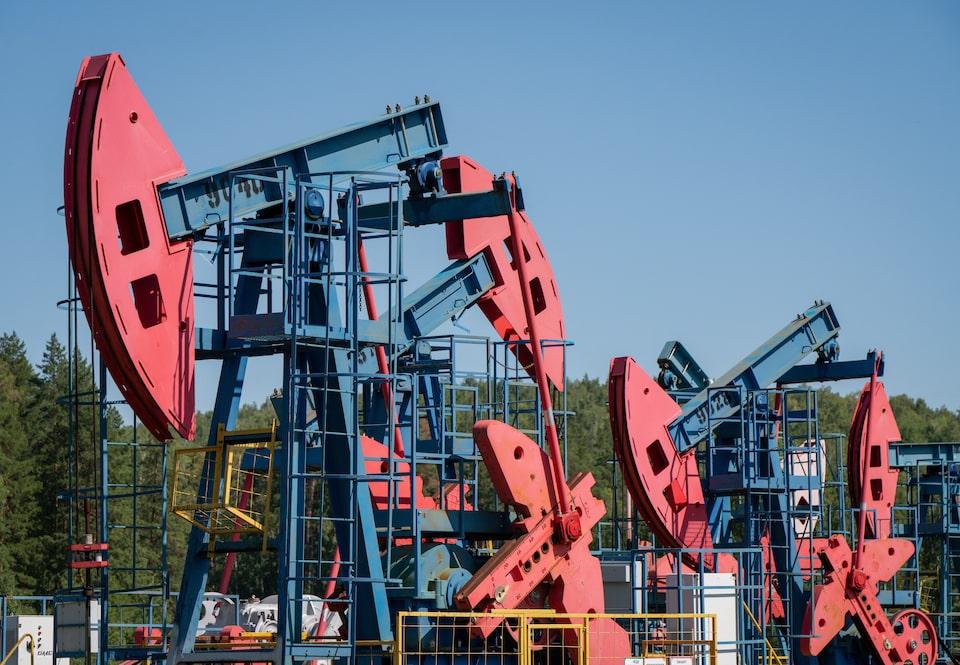
Brent and WTI rise 1% Gasoil futures at highest since February 2024 EU to stop importing fuels from Russia LONDON, July 18 (Reuters) - Crude oil futures rose on Friday while gasoil futures jumped to a 17-month high as investors weighed new European Union sanctions against Russia. Brent crude futures climbed 73 cents, or 1.05%, to $70.25 a barrel by 1151 GMT. U.S. West Texas Intermediate crude futures gained 83 cents, or 1.23%, to $68.37. Sign up here. The premium on low-sulphur gasoil futures to Brent crude was up $3.50 at $27.27, the almost 15% increase lifting the spread to its highest since February 2024. The EU reached an agreement on an 18th sanctions package against Russia over its war in Ukraine, which includes measures aimed at dealing further blows to Russia's oil and energy industries. Its latest sanctions package will lower the G7's price cap for buying Russian crude oil to $47.6 a barrel, diplomats told Reuters. The EU will also no longer import any petroleum products made from Russian crude, though the ban will not apply to imports from Norway, Britain, the U.S., Canada and Switzerland, EU diplomats said. EU foreign policy chief Kaja Kallas also said on X that the EU has designated the largest Rosneft (ROSN.MM) , opens new tab oil refinery in India as part of the measures. Higher gasoil futures could be driven by an EU ban on fuel imports derived from Russian crude, UBS analyst Giovanni Staunovo said, as well as low inventories in northwest Europe. The EU and UK have imported about 196,000 barrels per day of refined fuel from India so far this year, the majority of which was diesel, gasoil and jet fuel, according to data from analytics business Kpler. Europe produces less diesel and jet fuel than it consumes, making it reliant on imports from other regions. "This shows the market fears the loss of diesel supply into Europe, as India had been a source of barrels," said Rystad Energy's vice president of oil markets, Janiv Shah. Investors were considering the potential impact of the price cap change and vessel designations on crude markets. Investors are awaiting news from the U.S. on possible further sanctions after President Donald Trump this week threatened sanctions on buyers of Russian exports unless Moscow agrees a peace deal in 50 days. "Ultimately, it is now a matter of waiting for possible major changes in U.S. sanctions and tariff policy," Commerzbank analysts said in a note. The U.S. has not backed Europe on the latest sanctions package, leaving the EU with limited power to enforce the measures. "We expect limited impact from the lower price cap and tanker sanctions; landed prices for diesel in Europe could increase somewhat due to larger logistics issues to get products into Europe, but we think enforcement challenges limit the impact on flows,” said BNP Paribas analyst Aldo Spanjer. Prices could also have received support after Reuters reported that a restart of Iraq's Kurdish oil exports is not imminent despite Iraq's federal government saying on Thursday that shipments would resume immediately. https://www.reuters.com/business/energy/oil-prices-rise-after-eu-new-sanctions-russia-2025-07-18/
2025-07-18 12:20
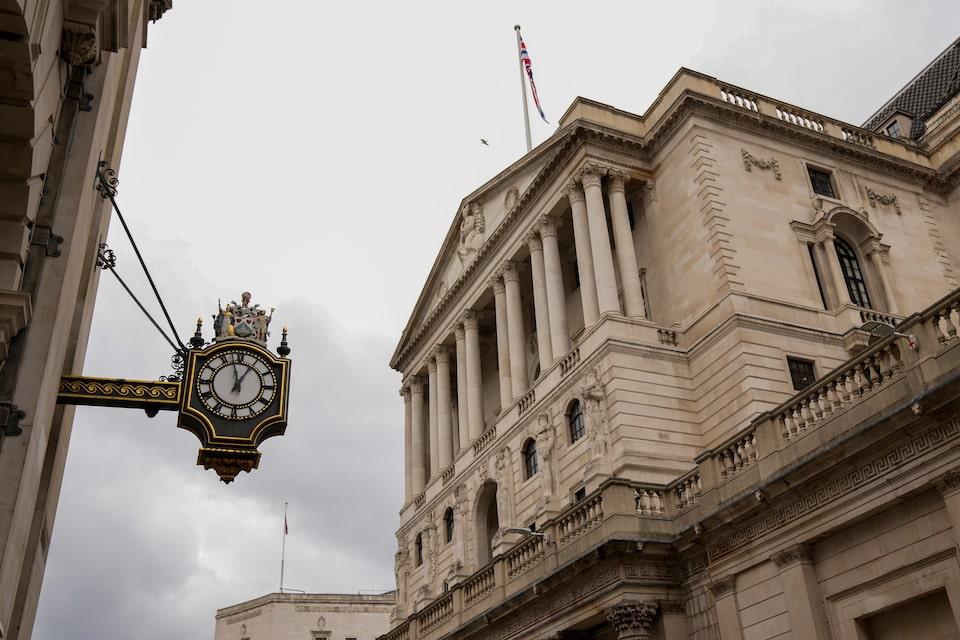
BoE joins European supervisors in warning about dollar risk UK banks with global presence under scrutiny - sources Banks run internal stress test for dollar funding shocks - sources Trump's criticism of Powell adds to worries on dollar, Fed White House says investors and markets remain confident LONDON, July 18 (Reuters) - The Bank of England has asked some lenders to test their resilience to potential U.S. dollar shocks, three sources said, the latest sign of how the Trump administration's policies are eroding trust in the U.S. as a bedrock of financial stability. As the leading currency for global trade and capital flows, the U.S. dollar is the lifeblood of global finance. Sign up here. However, President Donald Trump's break from long-standing U.S. policy in areas such as free trade and defence has forced policymakers to consider whether the emergency provision of dollars in times of financial stress can still be relied on. While the U.S. Federal Reserve has said that the central bank wants to continue to make dollars available in the financial system, Trump's policy shifts have prompted European allies to reexamine their dependence on Washington. Following similar demands from European supervisors, the Bank of England, which oversees banks in the City of London financial hub, has requested that some lenders assess their dollar funding plans and the degree to which they depend on the U.S. currency, including for short-term needs, one of the people with direct knowledge told Reuters. In one instance, a global bank based in Britain was asked in recent weeks to run stress tests internally, including scenarios where the U.S.-dollar swap market could dry up entirely, another of the sources said. "In a global dollar funding crisis, the Fed might hesitate to offer swaps for fear of strong Trump reaction – its priority is monetary policy independence, after all," said Richard Portes, professor of economics at London Business School and former Chair of the European Systemic Risk Board's Advisory Scientific Committee. "Foreign bank supervisors should urgently push their banks to limit dollar exposures severely," he said. The BoE's supervisory arm, the Prudential Regulation Authority, made the requests individually to some of the banks, the person with knowledge of the matter added. All of the people familiar with the supervisor's requests asked to remain anonymous because the discussions with the BoE are private. A spokesperson for the BoE declined to comment for this article. Representatives for the biggest UK banks with international businesses including Barclays (BARC.L) , opens new tab, HSBC (HSBA.L) , opens new tab and Standard Chartered (STAN.L) , opens new tab also declined to comment. “Stock and bond rallies as well as trillions in historic investment commitments since Election Day are all indicative of the fact that markets and investors have resoundingly reaffirmed their confidence in the U.S. dollar and U.S. economy under President Trump,” a White House spokesman told Reuters by email. A spokesperson for the Fed did not respond to a request for comment. No bank could withstand a major shock to dollar supply for more than a few days, according to one of the sources, given the dominance of the currency in the global financial system and lenders' dependence on it. Should dollar borrowing become harder to obtain and more expensive for banks, it could hamper their ability to carry on meeting demands for cash. Ultimately, a bank that struggles to gain access to dollars could fail to meet depositor requests, undermining confidence and triggering further outflows. While this scenario is seen as extreme and unlikely, regulators and banks are no longer taking dollar access for granted. DOLLAR FUNDING VULNERABILITY Global banks have significant dollar exposure in their balance sheets, making them vulnerable to potential funding shocks. Trump's repeated criticism of Fed chair Jerome Powell and reports the central bank chief may get fired are raising concerns of a loss of independence at the Fed and the repercussions on the dollar. The multi-trillion-dollar swap market is a critical part of the international financial system used by firms including banks to exchange other currencies for dollars to manage liquidity needs across their global networks. According to a study , opens new tab by the Bank for International Settlements, at the end of 2024 the notional value of currency derivatives globally was $130 trillion, 90% of which involved the U.S. dollar. A typical day sees almost $4 trillion in new FX swap contracts, according to BIS , opens new tab. Global banks can tap U.S. dollar deposits to withstand temporary shortfalls, one of the sources said. But regulators worry that international banks remain exposed to dollar risk, one of the people said. The 2008 financial crisis highlighted to British authorities the extent to which banks needed to roll over hundreds of billions of dollars of short-term financial obligations every week, said Robert McCauley, former senior adviser at the Bank of International Settlements and before that an official at the Federal Reserve Bank of New York. "UK and Continental banks have since shrunk their dollar footprints, but their vulnerability to a breakdown in dollar funding markets remains," he said. One of the sources told Reuters that bank leaders are particularly concerned about whether the Fed would support a mid-sized non-U.S. bank if it were to run into dollar shortage issues, where, in the past, such backing was assumed as guaranteed. "This reflects a new paradigm where trust in international cooperation appears to be breaking," John Cronin, analyst at SeaPoint Insights, said. The Fed has lending facilities with the European Central Bank, BoE and other major counterparts to alleviate shortages of the global reserve currency and to keep financial stress from spilling over into the United States. But European central banking and supervisory officials for months have been questioning whether they can still rely on the Fed, as Reuters has previously reported. ECB supervisors have since asked some of the region's lenders to assess their need for U.S. dollars in times of stress, while earlier in June, the Swiss National Bank warned about liquidity shortfalls in foreign currencies. The BoE has in the past asked banks how they would ensure a supply of dollars during times of stress, such as in a 2019 system-wide check on banks' liquidity during a crisis. Reuters couldn't establish whether dollar shocks would be part of the stress test for the industry which the BoE runs every other year and whose results are expected later in 2025. https://www.reuters.com/sustainability/boards-policy-regulation/bank-england-scrutinizes-lenders-dollar-risk-amid-trump-worries-sources-say-2025-07-18/
2025-07-18 12:19
Chevron wins legal dispute over Hess's stake in Guyana's Stabroek oil block Exxon-Chevron rivalry shapes U.S. energy sector, competing for dominance in shale oil Oil firms face dwindling reserves, limited options for building reserves amid cost control LONDON, July 18 - The high-stakes clash between Exxon Mobil and Chevron over a prized South American oilfield may be a sign of what’s to come in the oil and gas industry as competition for a shrinking pool of prime assets heats up. Chevron (CVX.N) , opens new tab is set to finalize its $53 billion acquisition of U.S. rival Hess (HES.N) , opens new tab after the companies prevailed in a legal dispute with Exxon (XOM.N) , opens new tab over Hess’ 30% stake in Guyana’s fast-growing Stabroek oil block. Sign up here. The ruling by the Paris-based International Chamber of Commerce marks a key win for Chevron CEO Mike Wirth, who targeted the Hess acquisition to grow the company’s production and keep pace with larger rival Exxon’s rapid expansion. The Hess deal, announced in October 2023, was delayed after Exxon, which holds a 45% stake in Stabroek, and the field's third partner CNOOC argued that they had a contractual right of first refusal to purchase Hess's stake in the block. In fact, the multi-billion-dollar dispute hinged on the interpretation of a single sentence in the joint operating agreement. Exxon's decision to file this arbitration was likely motivated by a desire to hamper the growth strategy of its key U.S. rival, the latest move in a decades-long rivalry that has helped shape the U.S. energy sector. Stabroek is a highly attractive asset, with 11 billion barrels of oil reserves and production costs of only around $20 a barrel, among the lowest in the world, according to consultancy Rystad Energy. The Guyanese field’s production has soared from zero in 2019 to 668,000 barrels per day by the end of March 2025, and is forecast to nearly double to 1.3 million bpd by the end of 2027. ARMS RACE Exxon and Chevron both trace their roots to Standard Oil, the conglomerate formed by John D. Rockefeller in 1870 that came to dominate the American oil industry before being broken up by the U.S. government in 1911. In the past decade, the two majors have competed fiercely for dominance in U.S. shale oil. Chevron had an early advantage given its ownership of large swathes of land in the Permian basin, the shale heartland. But Exxon regained ground in 2010 with its $41 billion acquisition of natural gas producer XTO. It then cemented its position as the largest U.S. producer in October 2023 with its acquisition of U.S. shale producer Pioneer Natural Resources for $60 billion. Chevron responded quickly, however, announcing that it had agreed to acquire Hess only 12 days after Exxon's Pioneer deal. The Hess deal should help Chevron keep pace with Exxon moving forward. Chevron’s production is now expected to exceed 4 million bpd by 2030 from 3.4 million bpd in the first quarter of 2025. By contrast, Exxon expects its output to grow from 4.5 million bpd in the first quarter to 5.4 million bpd by the end of the decade. DWINDLING RESERVES Oil and gas companies are facing a future with limited options for building reserves as the unexplored frontier shrinks and shareholders push for cost control. These firms replenish their reserves not only to grow output but also to offset existing fields’ natural decline. Depletion has been a major problem for Chevron, whose reserve replacement ratio slid to negative 4% last year, with reserves falling to their lowest point in at least a decade at 9.8 billion barrels, according to LSEG data. That’s the equivalent to 8 years of production, down from 10 years in 2023, and compared with Exxon’s 12 years in 2024. Reserves can be increased either through exploration, a high-risk, high-reward activity, or by acquiring assets and companies. Energy giants have invested billions in exploration over the decades, which has led to the discovery of resources in new basins such as the North Sea, Angola, Brazil and Indonesia. But this activity has slowed in recent years as companies have sought to cut spending to appease shareholders. Moreover, there are fewer accessible fields to tap. Although the world holds vast oil and gas reserves, sufficient to supply around 50 years of current oil consumption, not all resources are created equal. First, many resources are simply far too expensive to develop because of depth, complexity or remoteness. Additionally, over two-thirds of the world’s oil reserves are located in countries where Western companies have restricted access. This includes Iran, Venezuela and Russia as well as OPEC countries whose strict terms make operations less attractive for foreign investors. This all explains why the discovery of enormous, low-cost oil resources in Guyana a decade ago was considered such a boon for Western energy companies – and why the two biggest U.S. producers were willing to spend billions battling for access to a single field there. FIRST SHOT The latest high-profile clash between Exxon and Chevron may be an indication of what the industry can expect in the coming years as competition for low-cost resources intensifies amid the world’s transition away from fossil fuels. No one knows exactly when global oil demand will peak. While the International Energy Agency, the global energy watchdog, expects oil consumption to crest by the end of this decade, OPEC forecasts demand to grow into 2050. But, regardless, the industry appears to be going through a shift, and the Exxon-Chevron clash, one of the most expensive and consequential legal battles in the sector’s history, may be a harbinger of things to come. (The opinions expressed here are those of the author, a columnist for Reuters.) Enjoying this column? Check out Reuters Open Interest (ROI), , opens new tab your essential new source for global financial commentary. ROI delivers thought-provoking, data-driven analysis. Markets are moving faster than ever. ROI , opens new tab can help you keep up. Follow ROI on LinkedIn , opens new tab and X. , opens new tab https://www.reuters.com/markets/commodities/exxon-vs-chevron-battle-sets-stage-oil-industrys-race-prize-assets-2025-07-18/

2025-07-18 12:07
CIUDAD JUAREZ, Mexico, July 18 (Reuters) - Mexican truck drivers in the border city of Ciudad Juarez have begun studying English in efforts to comply with an executive order , opens new tab by President Donald Trump requiring commercial drivers in the U.S. to meet English-proficiency standards. Some 50 drivers who haul goods back and forth between Ciudad Juarez and El Paso, just across the border in Texas, are attending four to eight hours of English classes a week organized by their employer, Fletes Sotelo, in order to meet the U.S. standards. Sign up here. The company's owner, Manuel Sotelo, said the classes started some six weeks ago, and that the goal is for all the company's drivers to know basic English. Sotelo is also the president of the transport association of Ciudad Juarez. Jose Murguia, one of the drivers, said he thought the classes were a great opportunity, especially given the recent executive order. "It's important to know the language, at least in the ways that are necessary for our work, which is to transport goods into El Paso," he said. While the English-proficiency standard for truckers was already longstanding U.S. law, Trump's executive order in April reversed 2016 guidance that inspectors not place commercial drivers out of service if their only violation was lack of English. The order came on the heels of Trump's March executive order mandating English as the official language of the United States. That executive order has been criticized as discriminatory since millions of Americans speak languages other than, or in addition to, English. https://www.reuters.com/world/us/mexican-truck-drivers-study-english-comply-with-new-us-language-rules-2025-07-18/