2025-07-18 06:16
India dealers widen discount to $10/oz this week China premiums slip on lower demand India's June gold imports fall to two-year low July 18 (Reuters) - Gold demand in India remained subdued this week, as near record-high prices kept buyers at bay and prompted dealers to widen discounts to lure them, while elevated rates curtailed activity across other major Asian hubs as well. Indian dealers were offering a discount up to $10 an ounce over official domestic prices - inclusive of 6% import and 3% sales levies - up from the last week's discount of up to $8. Sign up here. "Jewellery stores all over the country are seeing fewer customers. People aren't ready to buy just yet... They're holding off, hoping prices will come down," said a Kolkata-based jeweller. Domestic gold prices were trading around 97,500 rupees per 10 grams on Friday after hitting an all-time peak of 101,078 rupees last month. Gold discounts could have risen sharply due to weak demand, but supplies are limited because of a sharp fall in imports, said a Mumbai-based bullion dealer with a private bank. India's gold imports in June fell 40% from a year ago to 21 tons, their lowest level in more than two years, amid sluggish demand. In China, the world's top gold consumer, dealers quoted discounts of $5 per ounce to $10 premium on spot rates , down from the premiums of $10-$25 charged last week. "In China, I don't see too much physical buying interest at this moment due to the summer holiday. Maybe from October, you can expect the demand to pick up," said Peter Fung, head of dealing at Wing Fung Precious Metals. In Hong Kong, gold was sold at $1-$2 premiums, while dealers in Singapore sold gold at par with the global benchmark to a premium of up to $2.20. In Japan, bullion traded between a $0.50 discount and a $1 premium. https://www.reuters.com/world/china/asia-gold-discounts-widen-india-elevated-prices-dull-activity-2025-07-18/

2025-07-18 06:11
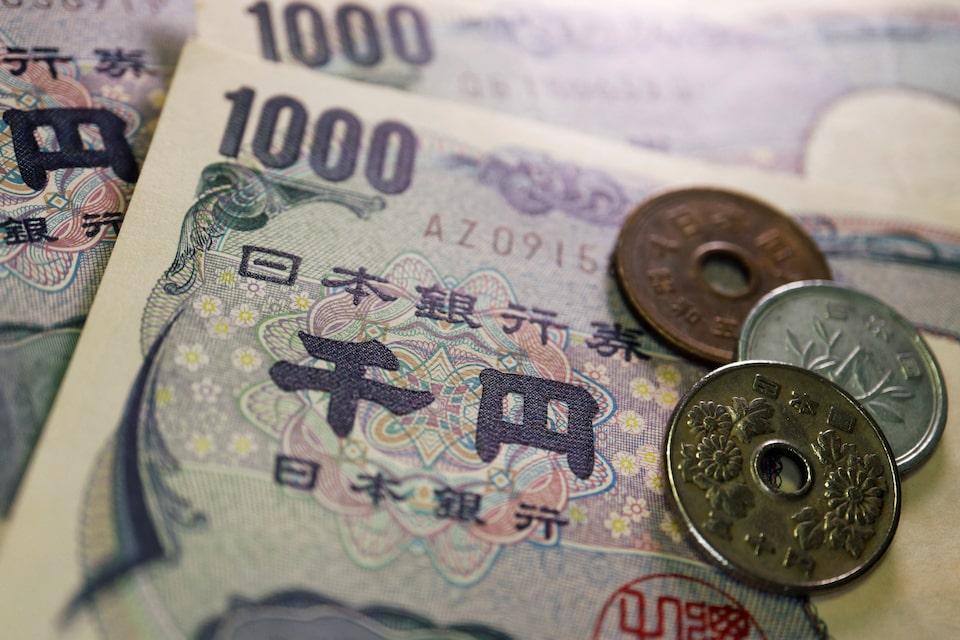
Dollar index heads for 0.72% rise after strong retail sales data US currency still faces pressure from Trump's attacks on Fed chief Yen pressured as Japan's coalition facing tough weekend election TOKYO, July 18 (Reuters) - The dollar headed for a second straight weekly gain against major peers, buoyed by some solid U.S. economic data that supported the view the Federal Reserve can afford to wait a while longer before cutting interest rates again. The yen remained on the back foot heading into upper house elections on Sunday in Japan, with polls suggesting the ruling coalition is at risk of losing its majority - a development that would stir policy uncertainty and complicate tariff negotiations with the U.S. Sign up here. Bitcoin hovered just above $120,000, after this week pushing to an all-time peak of $123,153.22, with the U.S. Congress passing a bill to create the framework for dollar-pegged stablecoins. The dollar index , which measures the currency against six leading counterparts, edged up to 98.57 as of 0534 GMT, putting it on track for a 0.72% weekly advance and building on the previous week's 0.91% rally. The dollar index climbed as high as 98.951 on Thursday for the first time since June 23 after U.S. data showed retail sales rebounded more than expected in June and first-time applications for unemployment benefits dropped to a three-month low last week. Earlier in the week, a report showed consumer prices increased by the most in five months in June, suggesting tariffs were starting to have an impact on inflation. Traders currently price about 45 basis points of U.S. rate cuts for the remainder of the year, down from closer to 50 basis points at the start of the week. At the same time, the dollar index remains 9.15% lower over the course of this year, following a steep selloff in March and April when President Donald Trump's erratic trade policies undermined confidence in U.S. assets, sending the currency, Treasury bonds and Wall Street stocks all lower. Clouds of uncertainty still hang over the dollar though, which has been shaken in recent days and weeks by fiscal worries from Trump's massive spending and tax cut bill, as well as the U.S. president's relentless criticism of Federal Reserve Chair Jerome Powell for not cutting rates. "The USD remains vulnerable to the downside if concerns about U.S. policymaking further undermine investor confidence in USD assets," Commonwealth Bank of Australia analysts wrote in a client note. The U.S. currency's drop earlier this week on speculation Trump was aiming to oust Powell "was a case in point," the analysts said. The dollar tumbled on Wednesday on a Bloomberg report that Trump was planning to fire Powell soon, before paring losses when Trump denied the news. Trump has said repeatedly that interest rates should be at 1% or lower, compared with the current 4.25%-4.5% range. The dollar gained 0.12% to 148.78 yen , inching closer to the 3-1/2-month high of 149.19 from Wednesday, as signs grew that Japan's coalition would fall short of retaining its majority. That would potentially give more sway to opposition parties that back consumption tax cuts to ease the burden on voters from rising prices. For the week, the dollar has gained 0.94% on the Japanese currency. "Our baseline scenario is one in which the ruling coalition fails to secure a majority," Yusuke Matsuo, senior market economist at Mizuho Securities, wrote in a note. "In this case, we think domestic markets would move into 'risk-off' mode, sending stocks, the yen, and short- and medium-term interest rates all lower." Japan, which initially was touted by the White House as likely to be among the first to reach a trade deal, has been deadlocked with Washington over politically sensitive issues of car and agriculture tariffs. Japan's top trade negotiator, Ryosei Akazawa, held talks with U.S. Commerce Secretary Howard Lutnick on Thursday, as Tokyo races to avert a damaging 25% levy that would become effective after an August 1 deadline. The euro rose 0.16% to $1.1617, clawing its way off Thursday's three-week low of $1.1556. For the week, the euro is down 0.65%. Sterling was flat at $1.3418, keeping it on course for a 0.53% weekly decline. Bitcoin edged up 0.82% to around $120,460 on the day. https://www.reuters.com/world/africa/dollar-set-weekly-gain-firm-us-data-tempers-fed-easing-bets-2025-07-18/
2025-07-18 06:04
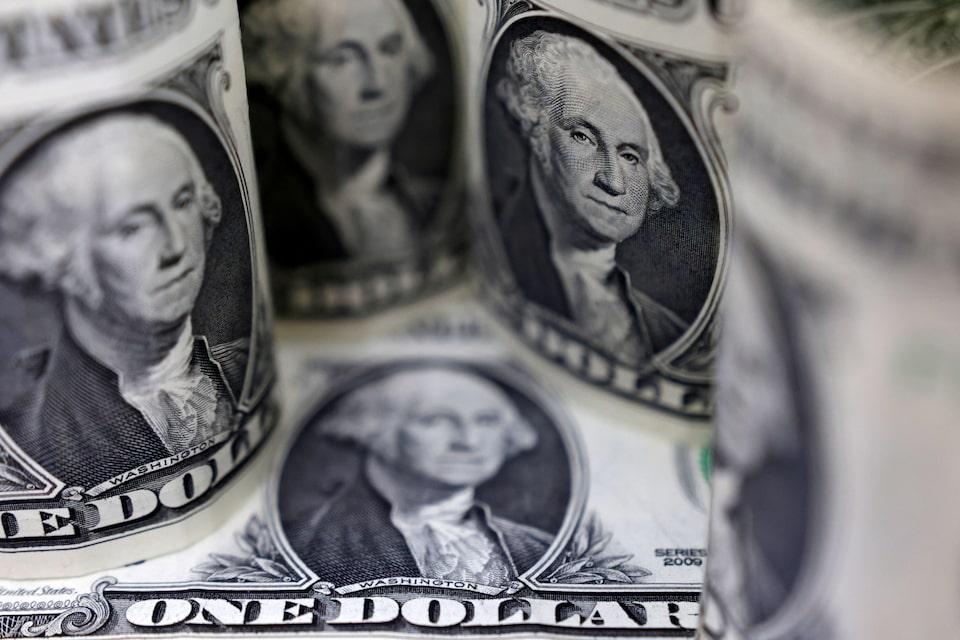
Asian stock markets: Yen down for second week ahead of Japan upper house election Wall St closes at record highs, Netflix beats street Dollar bounces for the week, Treasury yields slightly lower SYDNEY, July 18 (Reuters) - Asian shares tracked Wall Street higher on Friday as still-strong U.S. economic data and robust corporate earnings offset tariff worries, while the yen headed toward a second successive week of loss ahead of Japan's upper house election. Overnight, the S&P 500 and the Nasdaq again closed at record highs as U.S. data including retail sales and jobless claims beat forecasts, indicating a modest improvement in the economy that should give the Federal Reserve time to gauge the inflation impact from higher U.S. tariffs. Sign up here. Streaming giant Netflix (NFLX.O) , opens new tab beat Wall Street's lofty expectations for second-quarter earnings in part due to a weaker U.S. dollar. Its share price, however, fell 1.8% in after-hours trading, with analysts saying much of the growth had already been priced in. European share markets are set for a higher open, with EUROSTOXX 50 futures 0.4% higher. Wall Street futures , were up 0.2%. On Friday, MSCI's broadest index of Asia-Pacific shares outside Japan (.MIAPJ0000PUS) , opens new tab rose 0.7% to its highest since late 2021, bringing the weekly gain to 1.5%. Japan's Nikkei (.N225) , opens new tab, however, slipped 0.2%, and the yen slipped 0.1% to 148.77 per dollar and was down about 0.7% this week after polls showed Prime Minister Shigeru Ishiba's coalition was in danger of losing its majority in the election on Sunday. Data on Friday showed Japan's core inflation slowed in June due to temporary cuts in utility bills but stayed beyond the central bank's 2% target. The rising cost of living, including the soaring price of rice, is among the reasons for Ishiba's declining popularity. "If PM Ishiba decides to resign on an election loss, USDJPY could easily break above 149.7 as it would usher in an initial period of political turbulence," said Jayati Bharadwaj, head of FX strategy at TD Securities. "JPY could reverse the recent dramatic weakness if the ruling coalition wins and is able to make swift progress on a trade deal with Trump." Chinese blue-chips (.CSI300) , opens new tab rose 0.4% while Hong Kong's Hang Seng index (.HSI) , opens new tab gained 0.8%. The Tapei-listed shares of TSMC (2330.TW) , opens new tab, the world's main producer of advanced AI chips, rose 1.3% after posting record quarterly profit, though it said future income might be affected by U.S. tariffs. In the foreign exchange market, U.S. the dollar was on the back foot on Friday, having bounced 0.3% overnight against major peers on the strong economic data. For the week, it is headed for a second successive gain of 0.7%, bouncing further from a 3-1/2 year low hit over two weeks ago. Fed Governor Christopher Waller said on Thursday he continues to believe the central bank should cut interest rates at the end of this month, though most officials who have spoken publicly have signalled no desire to move. Fed funds futures imply next to no chance of a move on July 30, while a September rate cut is just about 62% priced in. Treasury yields were slightly lower in Asia. Benchmark 10-year U.S. Treasury yields slipped 3 basis points to 4.4375%, having moved little overnight. Two-year yields also edged 2 bps lower to 3.8944%. Oil prices extended gains on Friday, after drones strikes on Iraqi Kurdistan oil fields fuelled supply concerns. U.S. crude rose 0.4% to $67.79 per barrel and Brent also rose 0.4% to $69.77 a barrel. They, however, lost about 0.7% for the week. Spot gold prices were steady at $3,337 an ounce but were set for a 0.5% weekly loss. https://www.reuters.com/world/china/global-markets-wrapup-2-2025-07-18/
2025-07-18 05:44
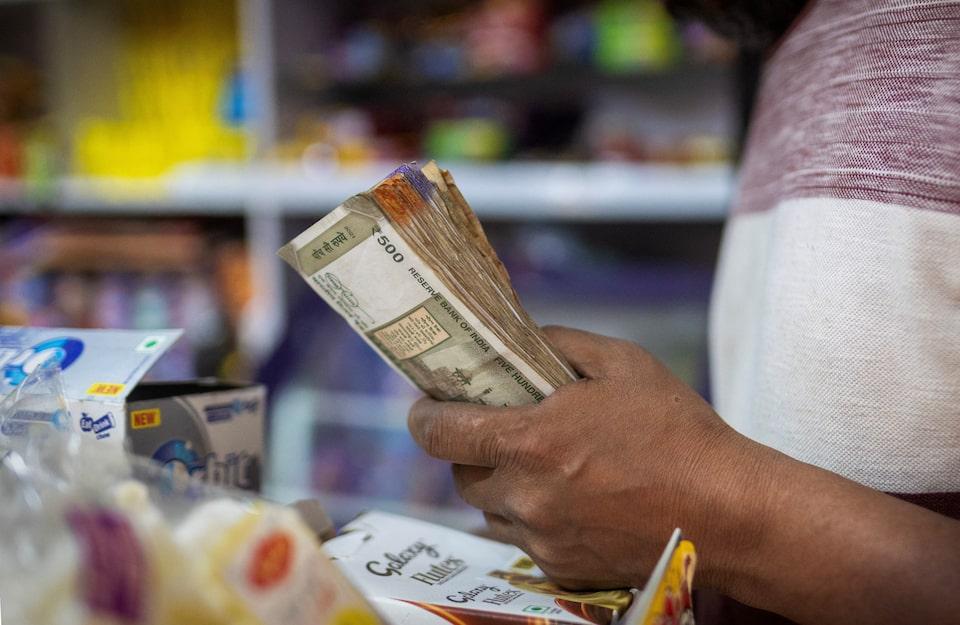
MUMBAI, July 18(Reuters) - The Indian rupee and local equities have been increasingly moving in sync over the past month as muted portfolio flows alongside lingering uncertainty over U.S. tariffs continue to cloud investor sentiment. The rupee's 30-day correlation with the benchmark Nifty 50 index has tightened to 0.66, the highest level since mid-May, pointing to the currency's increased sensitivity to moves in local stocks. Sign up here. On the day, the Nifty 50 (.NSEI) , opens new tab was down about 0.6%, while the rupee dipped to last quote at 86.2025 per U.S. dollar as of 10:50 a.m. IST, down 0.1%. Local equities diverged from regional peers, led by losses in financial stocks. Asian currencies, meanwhile, were trading mixed and the dollar index was little changed at 98.5. Amidst the largely rangebound moves, the rupee's 1-month implied volatility has eased to a near one-month low of 4.2%, while the stock volatility gauge, India VIX (.NIFVIX) , opens new tab, has retreated to 11.6 from around 14 a month earlier. Foreign portfolio flows, a key driver for both the rupee and local stocks, have also been muted, contributing to rangebound price action, a trader at a state-run bank pointed out. Both the local equity and FX markets are "lacking a clear direction right now," said Apurva Swarup, vice president at Shinhan Bank India, referring to the rangebound moves. News on the U.S.-India trade deal would be key to watch, as it could push stocks and the rupee to move out of their prevailing ranges, Swarup added. The United States is very close to a trade deal with India, U.S. President Donald Trump said earlier this week. Country-specific reciprocal tariff rates on exports to the U.S. are slated to go into effect starting August 1. On the day, dollar bids from foreign and local private banks weighed on the rupee, with traders also pointing to heightened demand to buy dollars at the daily reference rate. https://www.reuters.com/world/india/rangebound-patterns-tighten-rupees-correlation-with-indian-stocks-2025-07-18/
2025-07-18 05:34
July 18 (Reuters) - Swiss lift and escalator maker Schindler (SCHP.S) , opens new tab reported a 5.7% drop in its second-quarter sales on Friday due to negative currency exchange effects related to the strong Swiss franc. It posted quarterly revenue of 2.75 billion Swiss francs ($3.43 billion), down from 2.92 billion francs a year earlier, but beat analysts' average forecast of 2.65 billion francs, according to LSEG data. Sign up here. Currency exchange headwinds had a negative impact of 186 million francs on its sales in the first half of the year, the company said in a statement. U.S. President Donald Trump's tariff announcements have driven up the Swiss currency, seen as a safe haven amid global economic turmoil. The franc's value against the U.S. dollar has grown around 12% since the start of the year. As Schindler makes a vast majority of its sales in foreign currencies, this means their value suffers a negative impact when converted into francs. "Notably, our efforts in modernization are paying off, driving solid organic growth at a time of macro-economic uncertainty and severe currency headwinds," CEO Paolo Compagna said. Schindler has focused on digitalization in recent years, a move that it expects to drive growth through enhanced customer loyalty as services become more efficient. The group's modernization business grew strongly in the second quarter while the service unit continued to grow at a steady pace. Orders for new installations were stable overall despite market weakness in China, it said. Schindler's quarterly order intake amounted to 2.93 billion Swiss francs, compared to 2.99 billion francs a year earlier. The company confirmed its full-year guidance for 2025, expecting revenue to grow in a low single-digit percentage in local currencies, with an operating profit margin of around 12%. ($1 = 0.8027 Swiss francs) https://www.reuters.com/markets/europe/schindlers-revenue-falls-q2-beats-market-forecasts-2025-07-18/
2025-07-18 05:21
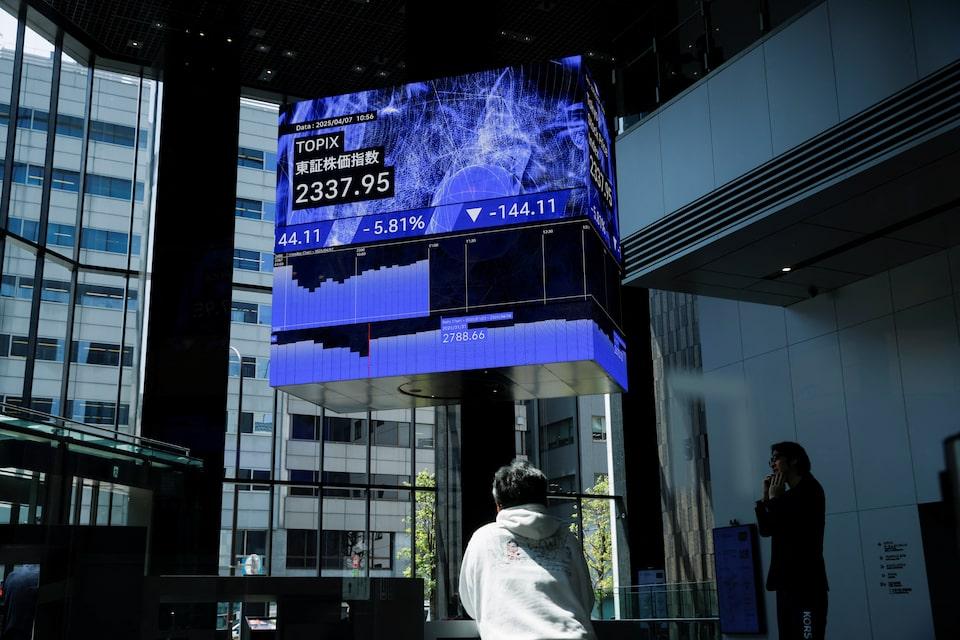
Ishiba's coalition faces potential loss of upper house majority Election outcome may shift BOJ policy and yen's trajectory, analysts suggest Opposition parties' tax cut plans could steepen JGB yield curve TOKYO, July 18 (Reuters) - Heading into the most consequential Japanese upper house election in memory and a possible defeat for the coalition of Prime Minister Shigeru Ishiba, investors are weighing whether a record sell-off in the nation's debt has further to run. Japanese government bonds (JGBs) plunged this week, sending yields on 30-year debt to an all-time high, while the yen slid to multi-month lows against the U.S. dollar and the euro. Sign up here. Polls have only gotten worse for Ishiba's ruling Liberal Democratic Party and junior coalition partner Komeito in the final run-up to Sunday's vote, where upstart parties campaigning on increased spending and tax cuts are likely to gain seats. These are the main scenarios investors and analysts are considering: The LDP coalition retains its majority Analysts generally say the most bullish case for the JGB market and the yen is if the government can hold on to a majority. The government's overall debt burden, while still the highest in the developed world at about 250% of gross domestic product, is on a declining trend. "It is difficult to conclude that Japan's fiscal condition is on a path of continuous deterioration," said Koichi Fujishiro, an economist at the Dai-ichi Life Research Institute. "Once the upper house election is over, upward pressure on interest rates stemming from expectations of increased fiscal spending may begin to ease." A victory for Ishiba's coalition would likely see a recovery for the JGB market, where an eight-day sell-off sent yields on 30-year debt up 35 basis points (bps) to a record 3.20% on Tuesday. "If this scenario plays out, some of the JGB shorts look vulnerable, as Ishiba is expected to resist talk of debt-financed tax cuts," Standard Chartered analysts said in a note. LDP coalition is weakened, and Ishiba steps aside An increasingly likely outcome is that Ishiba's coalition fails to win the 50 seats needed to retain its upper house majority, forcing it to seek additional partnerships. Among the most likely candidates is the Democratic Party for the People (DPP), which has urged the Bank of Japan to reverse course and again loosen monetary policy. The surge in JGB yields this week was the market pricing in such a scenario, said Takashi Fujiwara, chief fund manager at Resona Asset Management's fixed income investment division. Within the LDP, a leading candidate to replace Ishiba, should he be forced to step down, is Abenomics proponent Sanae Takaichi, who has advocated for a resumption of monetary easing by the BOJ. The resulting political uncertainty from an Ishiba resignation could be a trigger for foreign investors to sell Japanese shares and the yen, according to analysts, with TD predicting the dollar-yen rate could "easily break above" the 200-day moving average of 149.70. For Japanese stocks, though, a sell-off may be temporary, as the overall framework and policies of the LDP are likely to remain intact, said Yugo Tsuboi, the chief strategist at Daiwa Securities. On the contrary, "if Ishiba stays, that's negative for stocks, because political uncertainties will remain, which the market doesn't like," Tsuboi said. Outsider parties make major gains Analysts say that a strong showing by outsider parties on Sunday would be the most disruptive to Japan's markets. All three leading opposition parties back some form of consumption tax cuts, with the populist, right-wing Sanseito proposing a phase-out of VAT altogether. "If the DPP and Sanseito, which are calling for an increase in JGB issuance, fare even better than in the polls, we could see even further bear-steepening," Barclays analysts wrote in a note, referring to a sharper rise in longer-dated bond yields than shorter-dated ones. They estimate that a 5 percentage point cut to Japan's sales tax, currently at 10%, would lead to a 15-20 basis point increase in the 30-year yield. A coalition government of opposition parties would be expected to abolish the consumption tax and gasoline levies, paying for it with increased JGBs, Societe Generale's Jin Kenzaki said in a note. The chances of that outcome are only about 10%, Kenzaki wrote, but in such an event, "long-term interest rates will rise significantly from the beginning of the term and remain high." https://www.reuters.com/business/japans-markets-brace-election-impact-jgbs-yen-2025-07-18/