2025-07-18 05:21
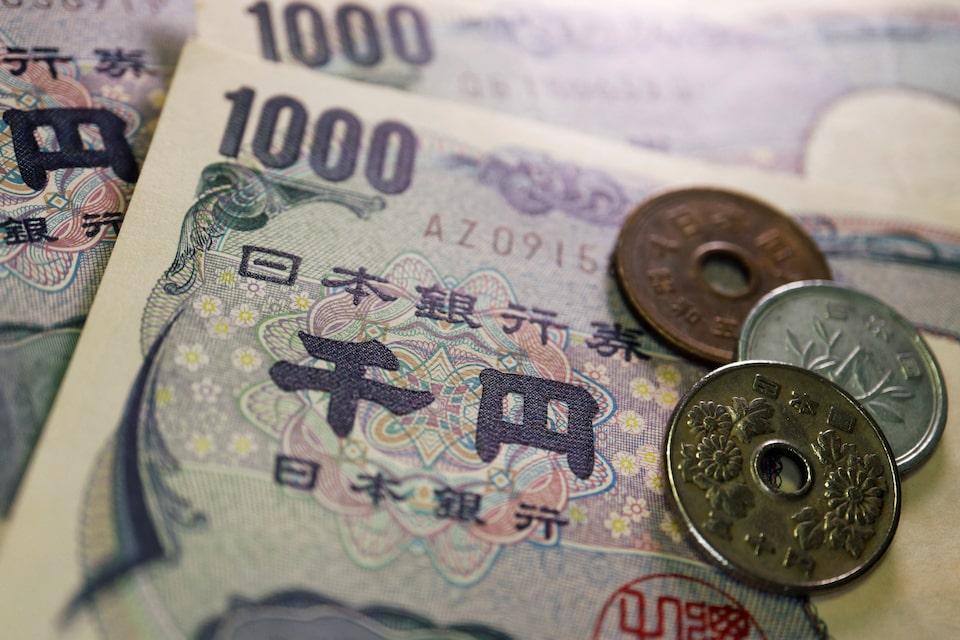
Ishiba's coalition faces potential loss of upper house majority Election outcome may shift BOJ policy and yen's trajectory, analysts suggest Opposition parties' tax cut plans could steepen JGB yield curve TOKYO, July 18 (Reuters) - Heading into the most consequential Japanese upper house election in memory and a possible defeat for the coalition of Prime Minister Shigeru Ishiba, investors are weighing whether a record sell-off in the nation's debt has further to run. Japanese government bonds (JGBs) plunged this week, sending yields on 30-year debt to an all-time high, while the yen slid to multi-month lows against the U.S. dollar and the euro. Sign up here. Polls have only gotten worse for Ishiba's ruling Liberal Democratic Party and junior coalition partner Komeito in the final run-up to Sunday's vote, where upstart parties campaigning on increased spending and tax cuts are likely to gain seats. These are the main scenarios investors and analysts are considering: The LDP coalition retains its majority Analysts generally say the most bullish case for the JGB market and the yen is if the government can hold on to a majority. The government's overall debt burden, while still the highest in the developed world at about 250% of gross domestic product, is on a declining trend. "It is difficult to conclude that Japan's fiscal condition is on a path of continuous deterioration," said Koichi Fujishiro, an economist at the Dai-ichi Life Research Institute. "Once the upper house election is over, upward pressure on interest rates stemming from expectations of increased fiscal spending may begin to ease." A victory for Ishiba's coalition would likely see a recovery for the JGB market, where an eight-day sell-off sent yields on 30-year debt up 35 basis points (bps) to a record 3.20% on Tuesday. "If this scenario plays out, some of the JGB shorts look vulnerable, as Ishiba is expected to resist talk of debt-financed tax cuts," Standard Chartered analysts said in a note. LDP coalition is weakened, and Ishiba steps aside An increasingly likely outcome is that Ishiba's coalition fails to win the 50 seats needed to retain its upper house majority, forcing it to seek additional partnerships. Among the most likely candidates is the Democratic Party for the People (DPP), which has urged the Bank of Japan to reverse course and again loosen monetary policy. The surge in JGB yields this week was the market pricing in such a scenario, said Takashi Fujiwara, chief fund manager at Resona Asset Management's fixed income investment division. Within the LDP, a leading candidate to replace Ishiba, should he be forced to step down, is Abenomics proponent Sanae Takaichi, who has advocated for a resumption of monetary easing by the BOJ. The resulting political uncertainty from an Ishiba resignation could be a trigger for foreign investors to sell Japanese shares and the yen, according to analysts, with TD predicting the dollar-yen rate could "easily break above" the 200-day moving average of 149.70. For Japanese stocks, though, a sell-off may be temporary, as the overall framework and policies of the LDP are likely to remain intact, said Yugo Tsuboi, the chief strategist at Daiwa Securities. On the contrary, "if Ishiba stays, that's negative for stocks, because political uncertainties will remain, which the market doesn't like," Tsuboi said. Outsider parties make major gains Analysts say that a strong showing by outsider parties on Sunday would be the most disruptive to Japan's markets. All three leading opposition parties back some form of consumption tax cuts, with the populist, right-wing Sanseito proposing a phase-out of VAT altogether. "If the DPP and Sanseito, which are calling for an increase in JGB issuance, fare even better than in the polls, we could see even further bear-steepening," Barclays analysts wrote in a note, referring to a sharper rise in longer-dated bond yields than shorter-dated ones. They estimate that a 5 percentage point cut to Japan's sales tax, currently at 10%, would lead to a 15-20 basis point increase in the 30-year yield. A coalition government of opposition parties would be expected to abolish the consumption tax and gasoline levies, paying for it with increased JGBs, Societe Generale's Jin Kenzaki said in a note. The chances of that outcome are only about 10%, Kenzaki wrote, but in such an event, "long-term interest rates will rise significantly from the beginning of the term and remain high." https://www.reuters.com/business/japans-markets-brace-election-impact-jgbs-yen-2025-07-18/
2025-07-18 05:15
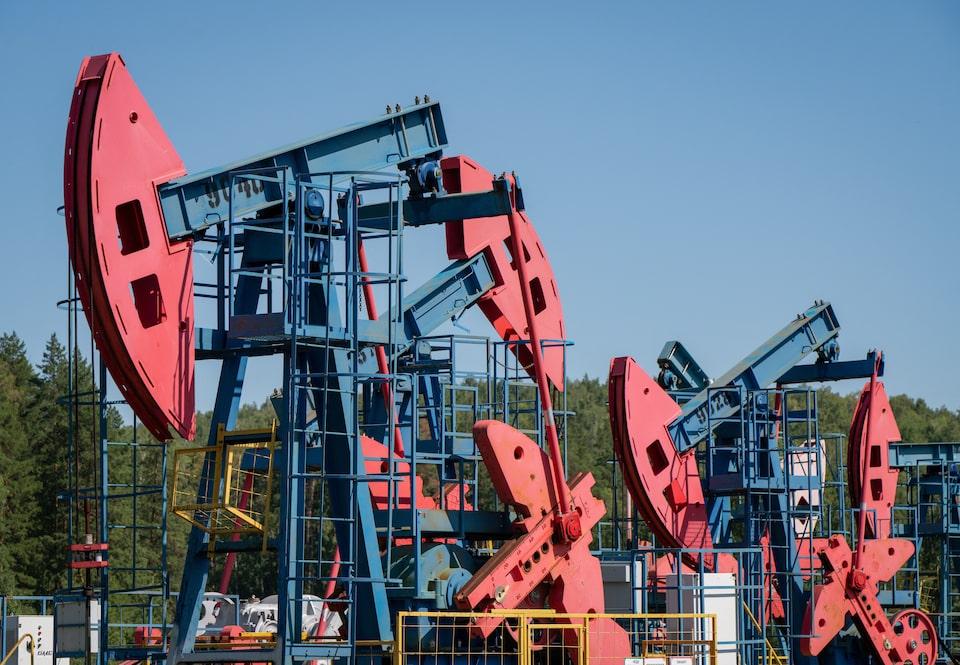
Brent, WTI up 0.4% after $1 gain on Thursday Both head for slight weekly decline Drone attacks cut Kurdistan oil output by half Market tightness to stay near-term as seasonal demand supports SINGAPORE, July 18 (Reuters) - Oil prices extended gains on Friday, underpinned by supply concerns following drone attacks on northern Iraqi oilfields and tight market fundamentals amid healthy summer demand. Brent crude futures climbed 29 cents, or 0.40%, to $69.81 a barrel as of 0451 GMT, U.S. West Texas Intermediate crude futures advanced 27 cents, or 0.42%, to $67.81 a barrel. Sign up here. Four days of drone attacks on oilfields in Iraqi Kurdistan that shut down half the region's output have supported prices, pushing both contracts up $1 on Thursday. Additionally, seasonal travel demand has propped up the market. In the first two weeks of July, global oil demand has averaged 105.2 million barrels per day (bpd), up by 600,000 bpd from a year earlier and largely in line with forecast, JPMorgan analysts said in a research note. "Crude prices have been broadly stable this week, with no significant moves as the impact of OPEC+ supply increases has been offset by strong seasonal demand in the U.S.," said LSEG's analyst Anh Pham. U.S. crude inventories fell a larger-than-expected last week as exports rose, government data on Wednesday showed. Demand in Asia also firmed as refineries came back from maintenance amid peak seasonal demand. Near-term oil fundamentals are likely to remain supportive, with the market set to remain fairly tight through this quarter, before becoming better supplied from the last three months of the year, ING analysts said in a note on Friday. Still, the uncertainty around U.S. tariff policy, which appears unlikely to be settled until after August 1, is weighing on the market. Plans by major oil producers to remove output cuts will also add to supply as the seasonal Northern Hemisphere summer demand ends. For this week, both Brent and WTI were down more than 1%. Oil output in the semi-autonomous Kurdistan region has been slashed from about 280,000 bpd to between 140,000 bpd and 150,000 bpd, two energy officials said. Officials pointed to Iran-backed militias as the likely source of attacks this week on the region's oilfields, although no group has claimed responsibility. Despite the attack, Iraq's federal government said on Thursday that Iraqi Kurdistan will resume oil exports through a pipeline to Turkey after a two-year halt. https://www.reuters.com/business/energy/oil-extends-gain-iraq-outages-tight-market-supports-2025-07-18/
2025-07-18 05:06
FTSE 100 outperforming European peers Sterling strength doesn't deter UK stocks Dollar-dominated returns biggest since 2009 LONDON, July 18 (Reuters) - Britain's stock market finally appears to be reversing years of underperformance against the rest of Europe, as a UK/U.S. trade deal, lighter regulation and cheap stocks deliver juicy returns that are starting to attract foreign investors. The FTSE 100 (.FTSE) , opens new tab has gained nearly 10% this year to hit record highs this week, beating the STOXX 600 (.STOXX) , opens new tab, which is up 7.5%. Sign up here. On a year-to-date basis, London's blue-chip index has performed better than its European counterpart for the last six weeks, its longest such stretch since late 2022, when a weak pound beefed up revenues for the export-focused FTSE. This week, the financial regulator said it will roll out new rules to boost Britain's capital markets, while Chancellor Rachel Reeves told the financial industry to paint a less negative picture of UK stocks for would-be retail investors, as she seeks new ways to revive a stagnating economy. For foreign investors, the blue-chip index is already looking appealing given sterling's rally this year, while asset managers say the narrative around the UK is shifting. "We are seeing signs of big asset allocators coming back to the UK," Justin Onuekwusi, chief investment officer at St. James's Place. "I am talking about non-UK endowments, pension funds, asset owners, wealth managers who were all very underweight the UK post-Brexit," he said. In dollar terms, the FTSE-100 is up nearly 18% so far this year, set for the biggest dollar-denominated returns since 2009, compared with a 6% year-to-date gain in the S&P 500 (.SPX) , opens new tab, which has also hit record highs. The pound , up 7% this year against the dollar as investors turn away from U.S. assets in response to heightened U.S. policy uncertainty under U.S. President Donald Trump, acts as a headwind for FTSE constituents, 80% of whom get their revenues from overseas. Yet the index's wealth of large defensive companies, including healthcare, utilities and food retailers, help insulate it against swings in the underlying economy, like drugmaker AstraZeneca (AZN.L) , opens new tab or supermarket chain Tesco (TSCO.L) , opens new tab It also has growth-sensitive resource stocks such as Anglo American (AAL.L) , opens new tab and BP (BP.L) , opens new tab to tap into strength in oil, copper and gold. Britain meanwhile is one of the few economies facing less trade uncertainty with a U.S. trade deal in place. In contrast, the European Union faces the threat of 30% tariffs if there is no agreement by August 1. 'TEA AND BISCUIT' "The UK stock market is the calming cup of tea and biscuit in an uncertain world. There’s nothing fancy on offer, just reliable names that do their job day in, day out," AJ Bell investment analyst Dan Coatsworth said. Valuations for FTSE-100 companies have lagged those elsewhere in Europe for years. The 2016 Brexit vote accelerated that trend, with fewer companies using London to list their shares and fewer cropping up as M&A targets, given the political and economic uncertainty that prevailed at the time. Now the UK market is catching up. The FTSE-100's 12-month forward price-to-earnings ratio of 12.5 is the highest for around five years, compared with 14.11 for the STOXX, the narrowest gap in around 18 months, LSEG data shows. The S&P trades at a ratio of 23, a near-10 point premium to the FTSE, compared with under 2 points 10 years ago. "The relatively poor performance we’ve seen in the UK versus particularly the U.S. over the past two years has begun to unwind. We’re in the foothills of that," Michael Stiasny, head of UK Equities, M&G Investments, said, adding that the UK market has traded at a "significant discount". The pound is close to a four-year high against the dollar, but has weakened against the euro this year , offering a tailwind to the FTSE's big exporters. The EU is Britain's largest trading partner, accounting for 41% of exports in 2024, followed by the United States, with 22%, according to official data. It isn't all rosy. The British economy is flagging, inflation is well above the Bank of England's target of 2% and business activity and employment are slowing. Barclays data shows UK equities have seen a net outflow of $20 billion in 2025, although outflows have almost dried up in the last month, compared with Europe's year-to-date inflow of $13 billion and rapidly slowing inflows. Sebastian Raedler, head of European equity strategy and Bank of America Merrill Lynch, said he felt the FTSE's strong run was a function of the currency and in line with the rest of Europe. "Net-net, the FTSE has mildly outperformed, but I would say in an environment where there are a lot of big stories ... a 2% (out)performance of the UK this year would rank further down the radar from my perspective," he said, referring to the percentage gain in the FTSE in 2025 versus that of the STOXX. https://www.reuters.com/business/finance/foreign-investors-are-warming-londons-unloved-stocks-2025-07-18/
2025-07-18 04:34
A look at the day ahead in European and global markets from Stella Qiu Share markets continue to defy gravity. Wall Street closed at yet another record high as investors latched onto positive economic signals, spurring a rally in most Asian markets that looks set to continue in Europe. Sign up here. But a new source of worry has cropped up in Japan, where an upper house election on Sunday threatens the majority of Prime Minister Shigeru Ishiba's ruling coalition. The heightened political risk is weighing down Japanese shares, bonds and the yen. MSCI's broadest index of Asia-Pacific shares outside Japan hit its highest since late 2021 but Tokyo's Nikkei (.N225) , opens new tab slipped 0.3%, while the yen was headed for a second straight week of losses, down about 0.7% to 148.45 per dollar and near a two-month low. Yields on 10-year JGBs slipped 1 basis point to 1.545% on Friday but have not strayed far from a 17-year high of 1.585% hit earlier in the week. European share markets are set for a higher open, with EUROSTOXX 50 futures up 0.3%. Japan's Sunday election could be its most consequential upper house election in years, potentially adding to political instability at a time of uncertainty over interest rates, mounting concerns about fiscal sustainability and little progress in trade talks with the U.S. Japan's core inflation slowed in June but stayed above the central bank's 2% target, highlighting the cost-of-living challenge that has been plaguing Ishiba. Apart from that, investors appear pretty happy with a still-resilient U.S. economy and robust corporate earnings. Wall Street futures are a tad firmer while results at Netflix (NFLX.O) , opens new tab exceeded forecasts, in part due to a weaker dollar, which could bode well for corporate America's export earnings. The economic and event calendars are mostly barren for the rest of the day. Fed Governor Christopher Waller reiterated his support for a rate cut at the end of this month, citing mounting risks to the economy. Fed funds futures, however, imply next to no chance of a move on July 30, while a September rate cut is just about 60% priced in. Total easing of 45 bps is expected this year. Key developments that could influence markets on Friday: -- Germany PPI for June -- German Finance Minister Lars Klingbeil and Bundesbank President Joachim Nagel speak on the sidelines of the G20 meeting in Durban -- U.S. University of Michigan Consumer Sentiment survey https://www.reuters.com/world/china/global-markets-view-europe-2025-07-18/
2025-07-18 03:03
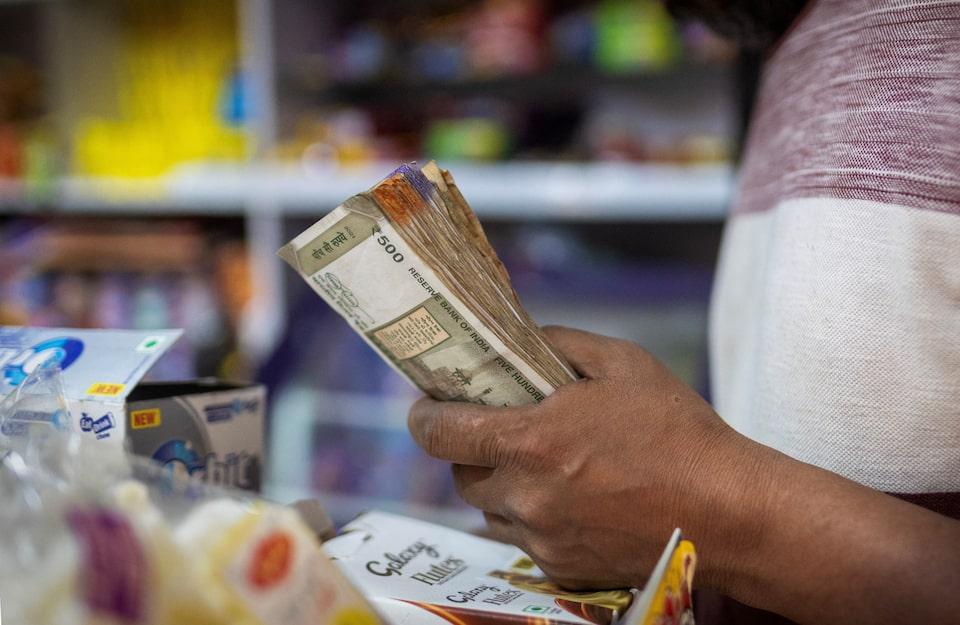
MUMBAI, July 18 (Reuters) - The Indian rupee is set to open higher on Friday, tracking a broader recovery in Asian peers and supported by a pause in the U.S. dollar index's near-term uptrend. The 1-month non-deliverable forward indicated an open in the 86.00-86.02 range versus 86.0750 on Thursday, marking the rupee's first sub-86 finish in nearly a month. Sign up here. "Asia will help (the rupee) at the open. However, I'd fade any downside (on USD/INR)," a currency trader at a bank said. "Positioning and risk-reward favour upside, and this looks (like a) buy-on-dips market right now." The dollar index fell about 0.2% in Asia to 98.40, helping most Asian currencies climb higher. The dollar index had rallied on Thursday, approaching the 99 mark, after robust U.S. data spurred expectations that the Federal Reserve will be in no rush to resume rate cuts. Upbeat U.S. retail sales in June pointed to a pickup in economic activity, while job claims fell to a three-month low, reinforcing signs of steady labour market strength. U.S. economic data released on Thursday "continues to signal resilience," MUFG Bank said, while noting the muted reaction in U.S. Treasury yields. Markets were largely unchanged about the Fed outlook, with no major shift in pricing for a September rate cut or the cumulative rate cuts expected in 2025. Despite the dip in the dollar index on Friday, the gauge is up 0.6% this week after last week's near 1% rally. Markets continue to hold net short positions on the U.S. dollar, and an unwinding of those short dollar positions could provide support for the U.S. currency, MUFG Bank noted. KEY INDICATORS: ** One-month non-deliverable rupee forward at 86.08; onshore one-month forward premium at 10 paise ** Dollar index down at 98.41 ** Brent crude futures down 0.1% at $69.5 per barrel ** Ten-year U.S. note yield at 4.44 ** As per NSDL data, foreign investors sold a net $121.3 million worth of Indian shares on July 16 ** NSDL data shows foreign investors bought a net $3.5 million worth of Indian bonds on July 16 https://www.reuters.com/world/india/pause-dollar-rally-offers-relief-rupee-after-86-breach-2025-07-18/
2025-07-18 01:56
US plans 50% tariff on Brazilian imports from August Brazil plans regulation and taxation of US tech firms Lula open to talks with Trump, minister says SAO PAULO, July 17 (Reuters) - Brazilian President Luiz Inacio Lula da Silva on Thursday said he would not take orders over tariffs from a foreigner, referring to U.S. President Donald Trump, and later called the United States' threatened duty "unacceptable blackmail." The comments, made during two separate events, mark a continuation of a spat between the two leaders that escalated when the U.S. announced a 50% tariff on Brazil last week. Sign up here. Trump attributed the tariff, set to start in August, to Brazil's treatment of former President Jair Bolsonaro and to trade practices against U.S. companies that he said are unfair. The tariff announcement came days after Lula called Trump an "emperor" the world does not want. Lula and members of his cabinet have rejected the reasoning behind the tariffs and insisted on Brazil's sovereignty, while calling for trade negotiations with the United States. "No foreigner is going to give orders to this president," Lula said in a speech, using the slang word 'gringo', which in Brazil is a common term for foreigners without the pejorative sense it carries in other parts of Latin America. He added that Brazil would go ahead with regulation and taxation of U.S. tech firms, telling a gathering of leftist student activists in the state of Goias that tech firms are conduits of violence and fake news disguised as freedom of expression. Later on Thursday, during an evening TV and radio address to the nation, Lula said the defense of Brazil's sovereignty extends to protecting itself against the actions of foreign digital platforms. During the near five-minute address, Lula said Brazil has been negotiating with the U.S. over tariffs, and repeated that the Latin America country had sent a proposal in May. "We expected a response, and what we received was unacceptable blackmail, in the form of threats to Brazilian institutions and false information about trade between Brazil and the United States," Lula said. Brasilia has been holding discussions with industry groups and companies that will be affected by the U.S. tariff, while also readying potential retaliatory measures if talks fall through. Foreign Minister Mauro Vieira told CNN Brasil separately on Thursday that Lula was open to talks with Trump, who had not yet met each other. "If the circumstances are given, they will speak," he added. Lula, who is in his third non-consecutive term as president of Latin America's largest economy, saw his approval ratings start to rebound after the trade spat with Trump last week. https://www.reuters.com/world/americas/lula-says-he-wont-take-orders-foreigner-trump-calls-tariffs-blackmail-2025-07-17/


