2025-07-17 23:18
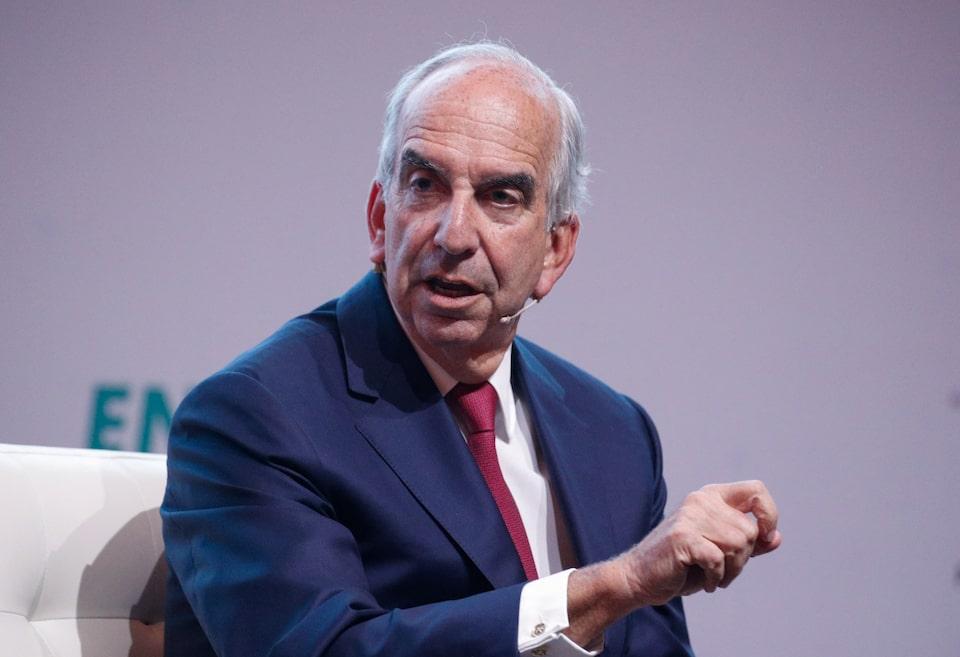
WASHINGTON, July 17 (Reuters) - The U.S. Federal Trade Commission on Thursday reversed bans on the CEOs of takeover targets joining the boards of Chevron (CVX.N) , opens new tab and Exxon Mobil (XOM.N) , opens new tab that the Biden administration made a condition of clearing the oil giants' deals to buy two oil producers. The FTC released Exxon, which acquired Pioneer Natural Resources last year, from an order barring former Pioneer CEO Scott Sheffield from its board. Chevron, which agreed to buy Hess (HES.N) , opens new tab in 2023 for $53 billion, was released from a similar order keeping that company's CEO, John Hess, off its board. Sign up here. The decisions are the latest move by FTC Chairman Andrew Ferguson to reverse actions by his Democratic predecessor, Lina Khan. Khan and her Democratic colleagues had raised concerned Hess and Sheffield would coordinate with members of the Organization of the Petroleum Exporting Countries. Ferguson and Republican Commissioner Melissa Holyoak dissented at the time, saying the orders exceeded the FTC's authority. "We are very pleased with the FTC's unanimous decision," a Chevron spokesperson told Reuters. "I appreciate the current commissioners for their willingness to review this case, and I’m obviously pleased that objectivity and fairness has carried the day in their decision to vacate the prior order," Sheffield said. Exxon and Hess did not immediately respond to Reuters requests for comments. While the FTC's three Republican commissioners voted unanimously to reverse the decisions, Commissioner Mark Meador said in a statement that OPEC and OPEC+ "operate as a de facto cartel," making oil markets highly concentrated. The FTC "should not hesitate to bring enforcement actions against actual collusion as well as invitations to collude," he said. Chevron struck a deal to acquire smaller U.S. oil producer Hess in October 2023, with an eye on the latter's 30% stake in the prolific Stabroek Block in Guyana that is operated by ExxonMobil with a 45% interest. ExxonMobil and Hess are locked in an arbitration case, with a ruling related to a major oilfield project in Guyana set to determine whether Chevron can move forward with its planned acquisition of Hess. https://www.reuters.com/legal/transactional/ftc-reverses-bans-two-executives-joining-chevron-exxon-boards-2025-07-17/
2025-07-17 23:15
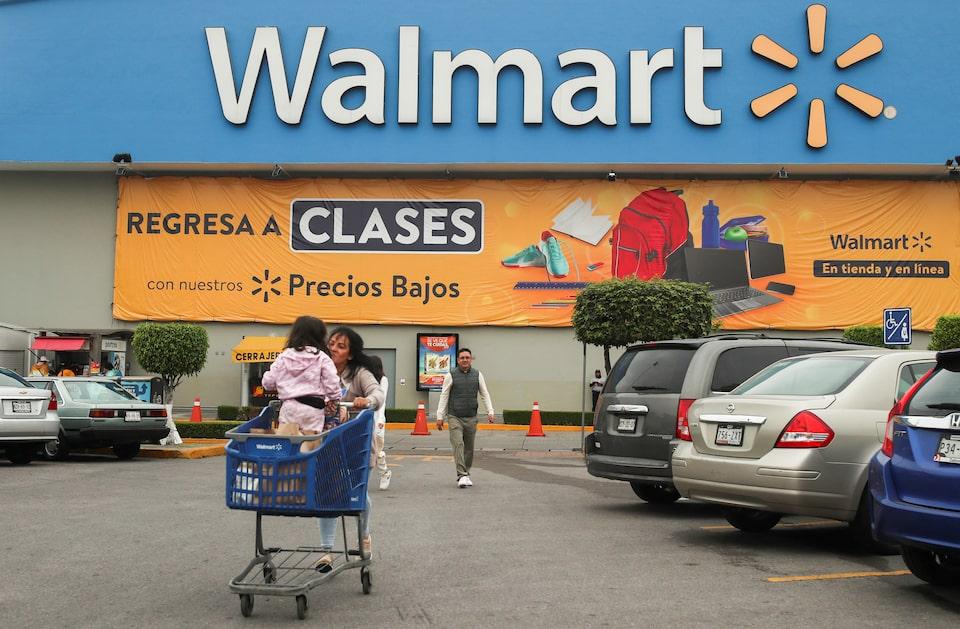
MEXICO CITY, July 17 (Reuters) - Walmart's Mexico and Central America unit, known as Walmex (WALMEX.MX) , opens new tab, saw some $3.7 billion wiped from its market value on Thursday after the retailer posted weaker-than-expected margins for its second quarter, although revenues grew. The stock tumbled 7.4% on Thursday, its steepest daily decline since 2020, decreasing Walmex's market capitalization by 68.6 billion Mexican pesos ($3.7 billion). Sign up here. Mexico's largest retailer, which operates Walmart, Sam's Club and Bodega Aurrera stores across six countries, on Wednesday posted a 10% drop in net profit, although sales were up 8%, as Walmex spent more than analysts expected. Net profit was 11.2 billion pesos ($598 million) in the quarter, below analysts' expectation of close to 13 billion pesos, while the core earnings margin hit 9.5%, the lowest level for that quarter since 2020. "The company faces a very important challenge: regaining profitability," analysts at financial group Banorte said. Actinver analyst Antonio Hernandez said in a note to clients that the margin pressure came from investments in tech, e-commerce, store openings and labor expenses. "The benefits of these investments will continue to translate into stronger growth and accelerated market share gains," Chief Financial Officer Paulo Garcia said in a call with analysts on Thursday. "We're prioritizing investments with the highest returns and dropping those with lower returns," he added. Walmex has made a push in recent years to consolidate its market share, particularly in online sales. CEO Ignacio Caride, who in a pre-recorded webcast on Wednesday said he was unhappy with the results, said he believed the group's overall strategy was on track and reiterated the company's guidance and share buyback plans. Caride took the job last year after more than a decade at e-commerce powerhouse MercadoLibre (MELI.O) , opens new tab. Executives noted that Walmex would continue to expand its store footprint, with 4,124 stores currently and 25 new openings over the quarter, and push on with a remodeling campaign for a wave of stores that opened more than a decade ago. Executives said on the call that unusually torrential rains in June in Mexico City - its wettest June in over 20 years - had "a big impact" on food and drinks sales. Built on a lake, Mexico City is prone to floods in and around its metropolitan area. ($1 = 18.7500 Mexican pesos) https://www.reuters.com/business/retail-consumer/walmart-mexicos-market-value-sheds-37-billion-after-q2-profit-dip-2025-07-17/
2025-07-17 23:01
Japan remains largest non-U.S. holder of Treasuries at $1.135 trillion China reduces holdings to $756.3 billion, lowest since February 2009 Net capital inflow to U.S. hits $311.1 billion in May NEW YORK, July 17 (Reuters) - Foreign holdings of U.S. Treasuries increased in May to top $9 trillion for a third straight month, data from the Treasury Department showed on Thursday, with buyers, other than China, flocking back in after tariff turmoil led to outflows in April. Holdings of U.S. Treasuries rose to $9.045 trillion, up from April's level of $9.013 trillion, and up 11.2% from a year earlier. In March, Treasuries held by foreigners hit a record $9.049 trillion. Sign up here. On a transaction basis, foreigners bought $146 billion worth of U.S. Treasuries in May, compared with an outflow of $40.8 billion in April as President Donald Trump's back-and-forth tariff policy roiled markets. Tariffs were announced on April 2, causing a tumble in equities and the dollar and massive volatility in U.S. Treasuries. Treasury debt buying by foreigners in May was the largest since August 2022. China, the third largest Treasuries holder, further reduced its holdings to $756.3 billion in May, the lowest since February 2009 when the country's stock of Treasuries dropped to $744.2 billion. Its holdings declined for a fourth straight month and were far below their peak of more than $1.3 trillion between 2012 and 2016. The world's second largest economy has been selling Treasuries to bolster its currency, the yuan. Analysts said a slowing Chinese economy, post-COVID industrial challenges, and trade barriers have reduced China's dollar inflows from exports. Japan remained the largest non-U.S. holder of Treasuries, with a record $1.135 trillion in May. UK investors, the second largest owner of U.S. government debt, raised their pool of Treasuries to an all-time peak of $809.4 billion, up from $807.7 billion in April. The UK overtook China as the second largest non-U.S. holder of Treasuries in March. The UK is typically viewed as a custody country, which is generally a proxy for hedge fund investments. Other countries used by hedge funds for custody services include the Cayman Islands and the Bahamas. In May, Canadians increased their Treasuries holdings to $430.1 billion from $368.4 billion. That was a turnaround from April when they were the biggest sellers of U.S. government debt as Trump hit Canada with tariffs on steel, aluminum and automobiles. Foreign investors also poured back into U.S. equities, with massive inflows of $114.3 billion in May, from an outflow of $18.8 billion in April. Data also showed the net capital inflow into the United States totaled $311.1 billion in May, compared with an outflow of $14.6 billion in April. The May inflow was the largest since September 2024. After including adjustments, such as estimated foreign portfolio acquisitions of U.S. stocks through stock swaps, overall net foreign inflows into long-term securities hit a record $259.4 billion in May. https://www.reuters.com/world/china/foreign-holdings-us-treasuries-rise-may-despite-china-drop-2025-07-17/
2025-07-17 22:40
SAO PAULO, July 17 (Reuters) - Brazilian fuel retailer Vibra (VBBR3.SA) , opens new tab began talks with Brazilian conglomerate Cosan (CSAN3.SA) , opens new tab to buy Cosan's lubricants arm, Moove, local news outlet Brazil Journal reported on Thursday, citing sources familiar with the matter. The talks were sparked as a minority shareholder, European private equity firm CVC Capital Partners (CVC.AS) , opens new tab, expressed interest in selling its stake, Brazil Journal said, adding that Vibra has also shown interest in buying 100% of the company. Sign up here. However talks stalled, it added, saying that according to a source, controlling shareholder and chairman Rubens Ometto has no interest in selling his stake. Last year, Cosan scrapped a planned initial public offering (IPO) for Moove in the United States. Cosan, Vibra, CVC and Moove did not immediately respond to requests for comment outside normal business hours. https://www.reuters.com/world/americas/brazils-vibra-started-talks-buy-cosans-lubricants-arm-media-reports-2025-07-17/
2025-07-17 22:09
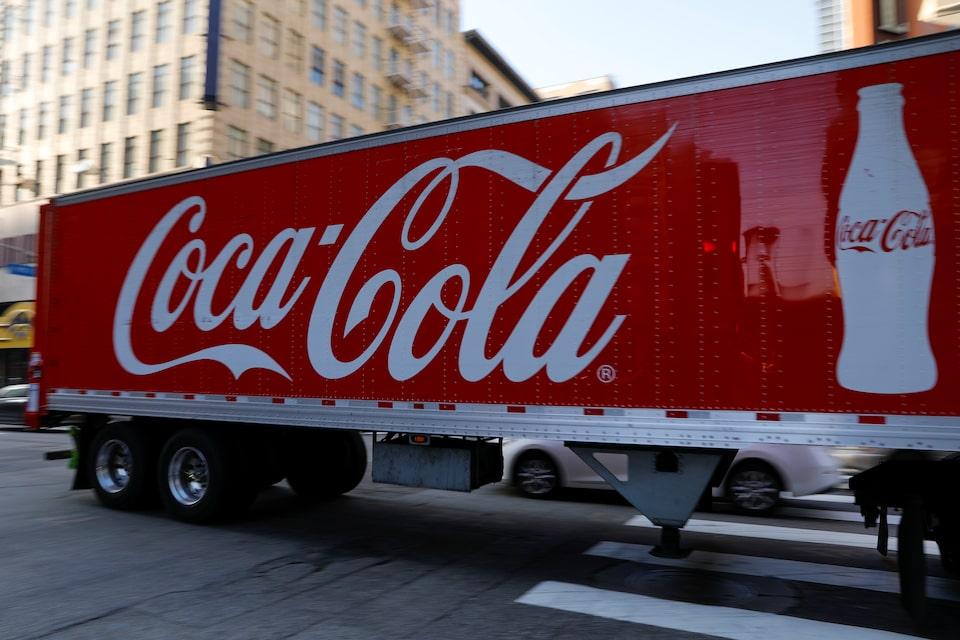
Shift to cane sugar would disrupt supply chains, increase costs Corn syrup cheaper than sugar, widely used in U.S. food industry Eliminating corn syrup to result in $5.1 bln loss in farm revenue -CRA Tariffs complicate potential cane sugar imports from Brazil NEW YORK, July 17 (Reuters) - A possible move by Coca-Cola (KO.N) , opens new tab , and other beverage and food industries, to use cane sugar instead of corn syrup as a sweetener would be difficult and expensive to implement, while mostly negative for farmers in the United States. U.S. President Donald Trump said on Wednesday that Coca-Cola had agreed to use cane sugar in its beverages in the country after his discussions with the maker of the top soda pop brand. Sign up here. Health Secretary Robert F. Kennedy Jr. and activists from his Make America Healthy Again (MAHA) campaign have been pushing for changes in ingredients used by the food and beverage industry, claiming the proposed substitutes are healthier. Kennedy has said the consumption of both sugar and high fructose corn syrup are unhealthy, and scientists say sugar presents some nutritional benefits over high fructose corn syrup. Coca-Cola already sells Coke made from cane sugar in other markets, including Mexico, and some U.S. grocery stores carry glass bottles with cane sugar labeled "Mexican" Coke. In response to Trump's comment, Coca-Cola said "more details on new innovative offerings within our Coca-Cola product range will be shared soon.” PepsiCo (PEP.O) , opens new tab also said on Thursday it would use sugar in its products like Pepsi beverages if consumers want it. Industry analysts, however, said changes in the formulation of the rest of the Coke sold in the U.S., and other beverages and candies, would involve significant adjustments to companies' supply chains, since corn syrup and sugar come from different producers. It would also involve changes to product labeling, and cost more. "Food and beverage industries started to use corn syrup in the U.S. in the past because of costs. It is cheaper than sugar," said Ron Sterk, a senior editor at SOSland Publishing, an information provider for the ingredients industry in the U.S. He said the beverage industry uses 55% High Fructose Corn Syrup, or 55HFCS, while bakers use 42% HFCS. The Corn Refiners Association said the complete elimination of high fructose corn syrup from the U.S. food and beverage supply would cut corn prices by up to 34 cents a bushel, resulting in a loss of $5.1 billion in farm revenue. "The resulting economic shockwave would lead to rural job losses and significant economic consequences to communities across the country," CRA said. Agricultural processors such as Archer-Daniels-Midland (ADM.N) , opens new tab and Ingredion (INGR.N) , opens new tab, two of the largest HFCS producers, grind corn at mills dotted around the Midwest farm belt to produce corn sweetener and other goods like ethanol biofuel. Shares of both companies fell on Thursday. ADM is estimated to ship 4 billion to 4.5 billion pounds of high fructose corn syrup every year, accounting for roughly 6% to 7% of projected 2026 earnings, said analyst Heather Jones of Heather Jones Research. "If Coke were to shift the entirety of its HF55 usage to cane, the cost increase would very likely exceed $1 billion given the current price gap between HF55 and cane sugar and the probability of very large price increases for the latter," Jones said in a research note. To produce one pound of HFCS, the industry uses around 2.5 pounds of corn, so a large shift in corn syrup use in the U.S. would hurt demand for the cereal, hurting corn growers, while probably boosting imports of cane sugar since there is not enough produced in the U.S. to satisfy American consumers' sweet tooth. SUGAR DEFICIT Around 400 million bushels of corn are used annually to make corn syrup for drinks and other food products, representing around 2.5% of U.S. corn production, according to U.S. government data. The U.S. produces around 3.6 million metric tons of cane sugar per year, half of that in Trump's home state of Florida, compared with around 7.3 million tons of corn syrup. Trump's ongoing trade wars, however, would make it difficult to cover the deficit, sugar analyst Michael McDougall said. "It will most likely come from Brazil," he said, referring to the world's top cane sugar producer, "but Trump just hit Brazil with a 50% import tariff." Not only does cane sugar cost more, but Coca-Cola has independent bottlers with hundreds of facilities already designed for use with high fructose corn syrup, said James McDonnell, partner at CIL Management Consultants. A reformulation would require additional investments, said McDonnell, and it is unlikely that bottlers would want to eat the cost. Consumers will also balk at the added cost, he said, "and you thought they were angry at the price of eggs!" https://www.reuters.com/world/us/cokes-shift-cane-sugar-would-be-expensive-hurt-us-farmers-2025-07-17/
2025-07-17 22:07
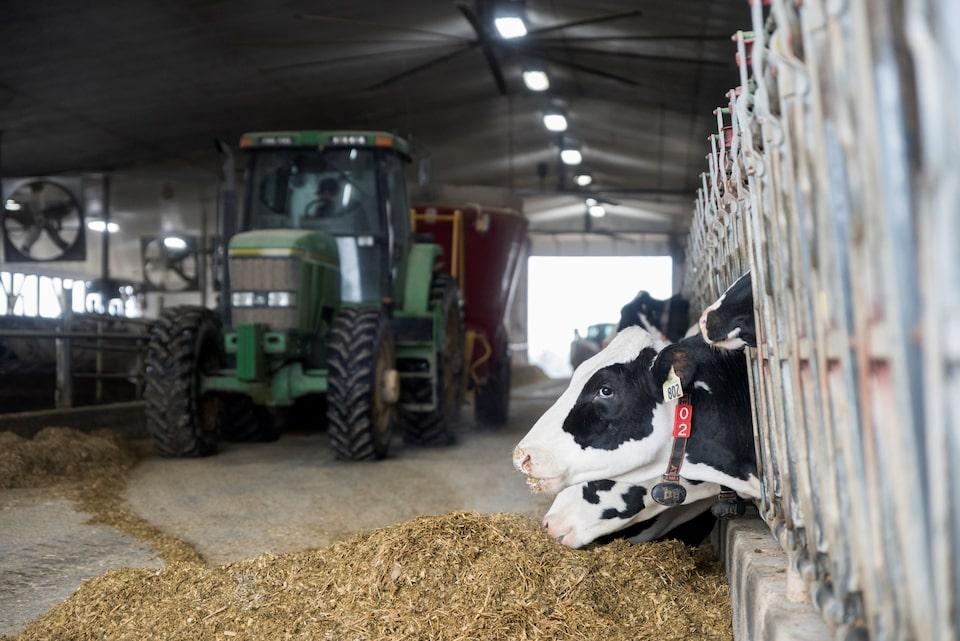
July 17 (Reuters) - Canada and New Zealand have reached a "mutually satisfactory" resolution to a long-running dispute over access for dairy products, the Canadian government said in a statement on Thursday. "This agreement, negotiated in close consultation with Canadian dairy stakeholders, will result in certain minor policy changes to Canada's TRQ (tariff rate quotas) administration, and does not amend Canada's market access commitments," International Trade Minister Maninder Sidhu and Agriculture Minister Heath MacDonald said in a statement. Sign up here. New Zealand Trade Minister Todd McClay added in a separate statement that the government was pleased the dispute has now been settled, and New Zealand exporters are guaranteed better access to the Canadian market. "Today's agreement reinforces support for the rules-based trading system," McClay said. New Zealand launched a claim against Canada in May 2022, arguing that Ottawa's implementation of dairy tariff rate quotas under the Comprehensive and Progressive Agreement for Trans-Pacific Partnership (CPTPP) trade agreement were against the its rules. Under the new agreement, Canada has committed to make commercially meaningful changes to the way it administers its dairy quotas under CPTPP, according to the New Zealand government. The Canadian government added that this means there are technical policy changes but these are limited to quotas administered under the terms of the CPTPP. Canada's supply management system, which since the 1970s has tightly controlled supplies of dairy, eggs and poultry by restricting production and limiting imports through onerous tariffs, has become a sticking pointing in its ongoing trade negotiations with the U.S. President Donald Trump has repeatedly criticized what he calls tremendously high Canadian tariffs on dairy products. https://www.reuters.com/markets/commodities/canada-new-zealand-resolve-dairy-trade-dispute-canada-says-2025-07-17/