2025-07-17 22:04
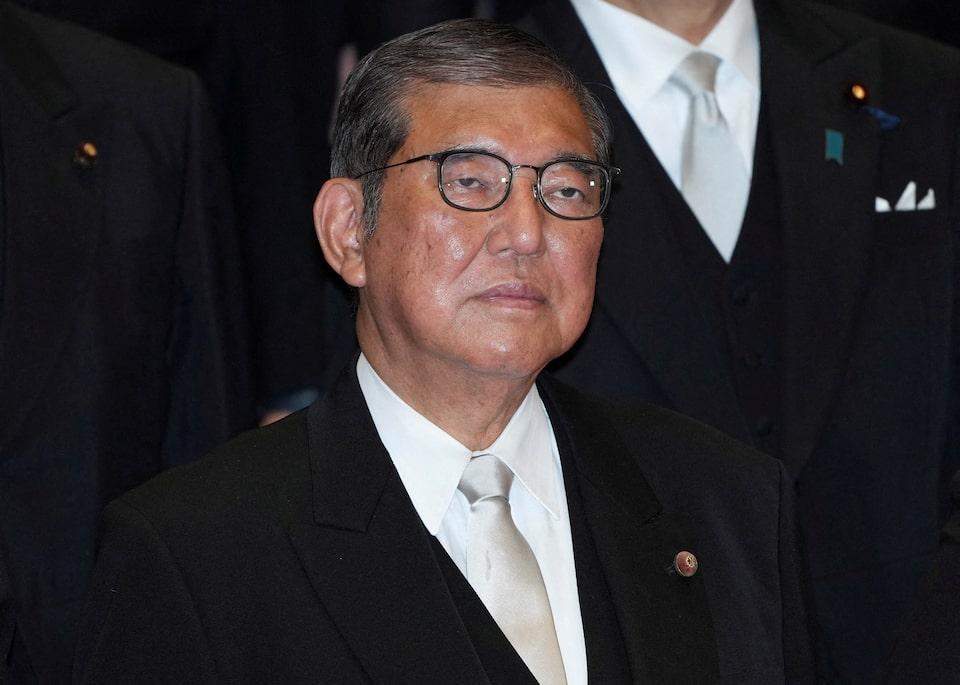
Japan's upper house elections set for Sunday Ruling coalition expected to lose majority, polls show Investors sell government bonds, fearing fiscal shift Far-right party could gain as populism takes root TOKYO, July 18 (Reuters) - Japan's shaky minority government is poised for another setback in an upper house vote on Sunday, an outcome that could jolt investor confidence in the world's fourth-largest economy and complicate tariff talks with the United States. Prime Minister Shigeru Ishiba's Liberal Democratic Party (LDP), which has ruled for most of the post-war period, and its partner Komeito, are forecast to lose their majority in a repeat of last year's election for the more-powerful lower house. Sign up here. The ruling coalition needs to win 50 seats of the 125 up for grabs in order to retain its majority. While the vote will not directly determine whether Ishiba's government falls, investors are nervous it will leave him beholden to opposition parties advocating fiscal largesse that could exacerbate mass selling of Japan's government bonds. In a worst case scenario, some analysts say Ishiba may have to resign, unleashing political drama as Tokyo heads for an August 1 deadline to win reprieve from punishing import levies set by its largest trading partner, the United States. "If he had an overwhelming loss, I think he would have to resign," said David Boling, director for Japan and Asian Trade at political risk consultancy Eurasia Group. "That then creates a lot of questions about who replaces him and what impact that has on the U.S.-Japan trade negotiations." Other financial and political analysts, such as Joseph Kraft of Rorschach Advisory in Tokyo, say the LDP is unlikely to opt for a leadership change at a pivotal moment in talks on tariffs hammering key industries such as automakers. In a sign of that urgency, Ishiba took a break from campaigning on Friday to ask Washington's chief tariff negotiator and Treasury Secretary Scott Bessent to continue tariff talks actively. Bessent, who is visiting Japan for the World Expo in Osaka, later said a deal with Tokyo was possible. 'BALANCING ACT' More likely is that Ishiba will seek to either broaden his coalition or strike informal deals with opposition parties to keep his government functioning after the election, Kraft said. That prospect has made investors nervous. Inflation has been a killer issue for Ishiba, as it recently has been for incumbents elsewhere. The price of rice, which has doubled since last year, has become a lightning rod for voter discontent. In response, opposition parties have promised tax cuts and welfare spending to soften the blow, while the LDP, with one eye on a very jittery government bond market, has been calling for fiscal restraint. Any opposition deals to weaken that restraint will only heighten investor nervousness about Japan's ability to refinance the world's largest debt pile and hamper the Bank of Japan's long-held goal of normalising monetary policy. But not only parties advocating for more spending have chipped away at LDP support. The far-right Sanseito, espousing anti-foreigner rhetoric once confined to the political fringe, has been the surprise performer of the campaign. Birthed on YouTube spreading anti-vax conspiracy theories five years ago, the party may win 10 to 15 seats, polls show. That would herald the arrival of a new force of populist politics that has yet to take root in Japan as it has in the United States and Europe. One reason the LDP has stayed so long in power, analysts say, is because it has served as a "broad church" for political views. But bringing into the fold the likes of Sanseito may trigger a deeper crisis of faith. "If the party (LDP) goes too far right, it loses the centrists," said Tsuneo Watanabe, a senior fellow at the Sasakawa Peace Foundation think tank in Tokyo. "But without the right wing, it has other problems. It's a balancing act and a tough one." https://www.reuters.com/markets/asia/japans-minority-government-faces-election-snub-economic-storm-brews-2025-07-17/
2025-07-17 21:45
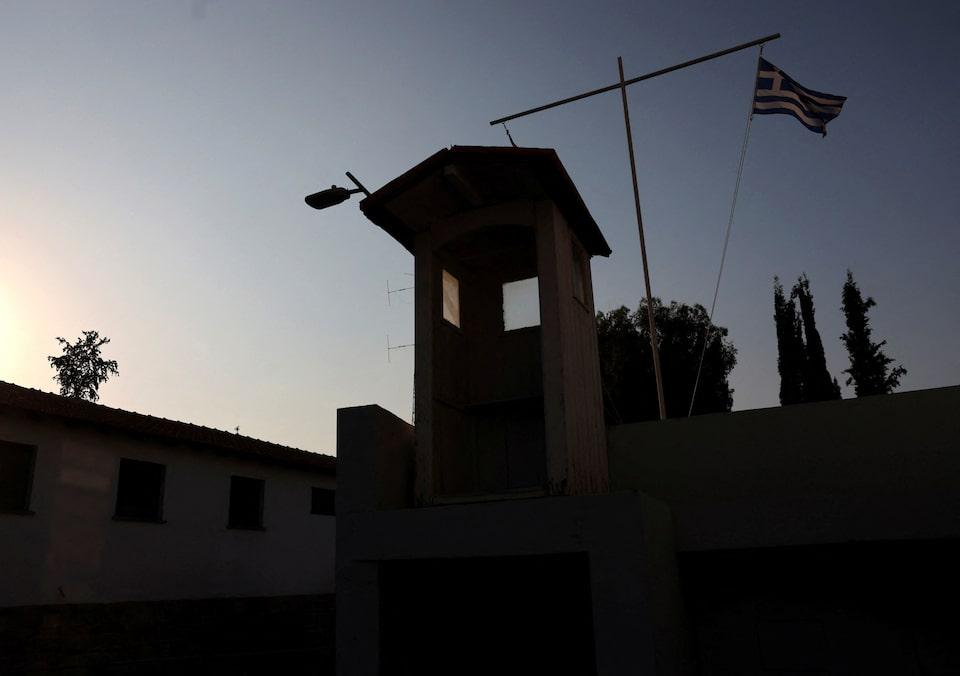
July 17 (Reuters) - Leaders of ethnically split Cyprus have agreed to continue discussions towards confidence building, U.N. Secretary General Antonio Guterres said on Thursday, in a dispute which has kept NATO partners Greece and Turkey at odds for decades. The Greek and Turkish Cypriot communities will press ahead with attempts to open new crossing points between the two sides and cooperating on solar energy initiatives, Guterres said after hosting the Cypriot leaders at U.N. headquarters in New York. Sign up here. "It is critical to implement all these initiatives as soon as possible, for the benefit of all Cypriots," Guterres said. The two sides had agreed in an encounter with Guterres earlier this year to open four additional crossing points, demine, establish a youth affairs committee, and launch environmental and solar energy projects. There are presently nine crossing points along a 180-km-long (116-mile-long) ceasefire line splitting the two sides. Guterres said there was a "question of itinerary" in relation to one of the new checkpoints opening but that there had been important progress on the issue. Cyprus was split more than 50 years ago in a Turkish invasion after a brief Greek-inspired coup, following years of sporadic violence between Greek and Turkish Cypriots. Reunification talks collapsed in mid-2017 and have been in a stalemate since. The Cyprus conflict is a key source of disagreement between NATO allies Greece and Turkey, fiercely defensive of their respective kin on the island. https://www.reuters.com/world/middle-east/cyprus-leaders-continue-discussions-confidence-building-says-un-2025-07-17/
2025-07-17 21:44
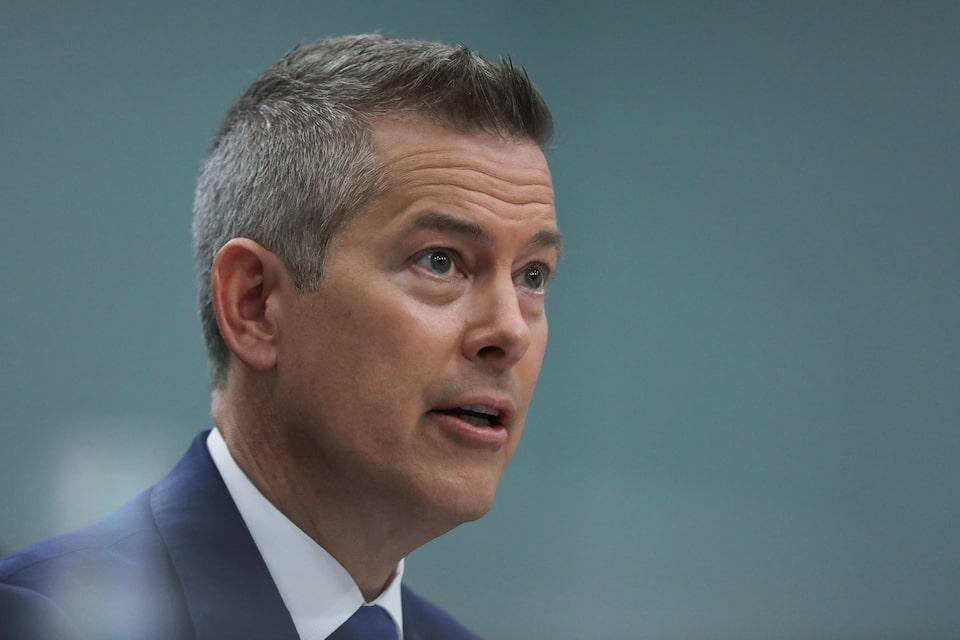
WASHINGTON, July 17 (Reuters) - California Governor Gavin Newsom on Thursday vowed to fight an "illegal" move by President Donald Trump's administration to cancel $4 billion in federal grants for the state's ambitious but much-delayed high-speed rail project. Trump’s announcement on Wednesday added yet another hurdle to the 16-year effort to link Los Angeles and San Francisco by a three-hour train ride, a project that would deliver the fastest passenger rail service in the United States. Sign up here. Newsom said the move by Trump's Transportation Department came as the high-speed rail project was on the verge of laying track, with "active construction" under way on the initial 171-mile segment between Bakersfield and Merced in California's politically conservative Central Valley. The rail system, whose first $10 billion bond issue was approved by California voters in 2008, has built more than 50 major railway structures, including bridges, overpasses and viaducts, and completed more than 60 miles (97 km) of guideway. State Attorney General Rob Bonta told reporters on Thursday he was "poised to take imminent action" on the issue, indicating the dispute would end up in court. "California is putting all options on the table to fight this illegal action," Newsom said in a statement. The funding cancellation marked the latest confrontation between the Republican president and a Democratic governor widely viewed as a leading contender for his party’s 2028 White House nomination. The two men have clashed over issues from transgender athletes and electric car rules to the use of National Guard troops during Los Angeles protests and even egg prices. 'LEGALLY BINDING AGREEMENTS' Ian Choudri, chief executive officer of the California High Speed Rail Authority, said that canceling the federal rail grants "without cause isn't just wrong, it's illegal." "These are legally binding agreements, and the authority has met every obligation, as confirmed by repeated federal reviews, as recently as February 2025," Choudri said, adding that the program has created some 15,500 jobs. The Federal Railroad Administration issued a 315-page report last month finding the project was plagued by missed deadlines, budget shortfalls and questionable ridership projections. Choudri's rail authority has called those conclusions "misguided," saying they failed to reflect "substantial progress made to deliver high-speed rail in California." Transportation Secretary Sean Duffy chided the project for having failed to lay a single mile of track after spending $15 billion over 16 years. But Choudri said installing track is a final step after land acquisition, environmental clearances and construction of supporting structures. Still, the project has faced its share of setbacks. The San Francisco-to-Los Angeles route was initially supposed to be completed by 2020 for $33 billion. But the projected cost has since risen to $89 billion to $128 billion, and the start of service is estimated no sooner than 2030. As designed, the system would feature electric locomotives traveling at up to 220 miles per hour (354 kph), powered entirely by renewable energy. Planners said it would eliminate 200 million miles driven by vehicles on highways. 'WE HAVE TO PULL THE PLUG' A second phase of the project called for extending the rail line north to Sacramento and south to San Diego. A separate project plans to link Los Angeles and Las Vegas with high-speed rail. Duffy said on Thursday that he was confident the Trump administration will defeat any lawsuit challenging the department's move. "We have to pull the plug," he told reporters outside the department's headquarters. In 2021, Democratic President Joe Biden restored a $929 million grant for the project that Trump revoked in 2019 during his first term in office after calling the project a "disaster." State Assembly member Corey Jackson, a Southern California Democrat who has questioned the project's soaring costs, said Newsom's call to fight the funding cut could galvanize support for Democrats from organized labor and voters in the area where the first railway jobs would be created despite its Republican leanings. "The people of San Joaquin Valley will now know that their economic engine is coming from the Democratic Party," Jackson said. "This is also a message to our labor friends. Democrats continue to deliver these high-paying jobs. Republicans continue to try to kill them." Rufus Jeffris, senior vice president of the Bay Area Council, a business-sponsored policy group in the San Francisco area, pointed to economic benefits associated with high-speed rail and called the funding cut unfortunate. https://www.reuters.com/world/us/california-governor-vows-fight-trumps-4-billion-high-speed-rail-rescission-2025-07-17/
2025-07-17 21:43
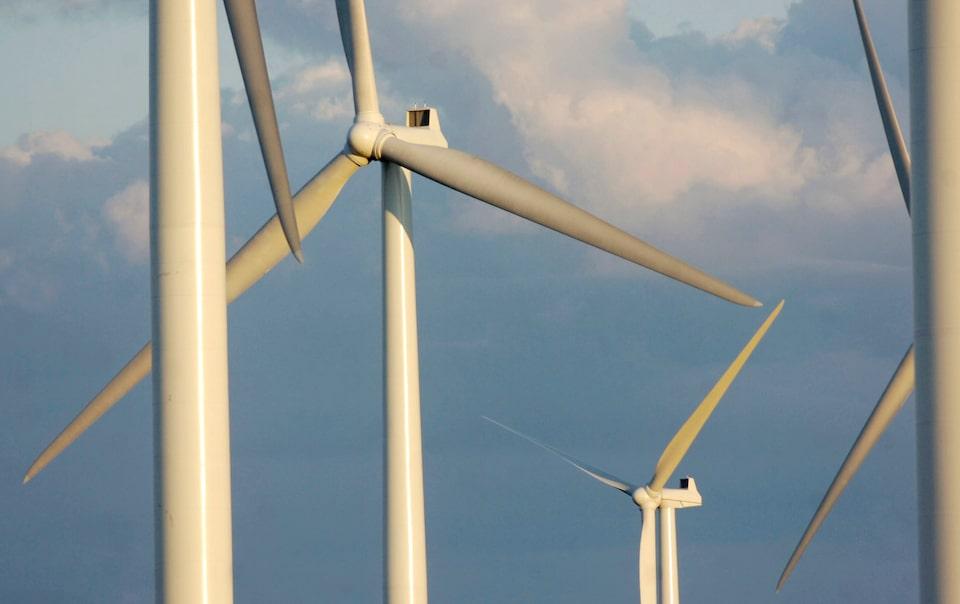
July 17 (Reuters) - The New York State Public Service Commission has terminated its offshore wind transmission planning process due to stalled federal permitting, to protect state ratepayers from premature infrastructure costs, it said on Thursday. This halts the Public Policy Transmission Need process of seeking proposals to deliver up to 8 gigawatts of offshore wind power into New York City by 2033. Sign up here. The commission cited recent federal actions halting new offshore wind leasing and permitting, which it said make short-term project execution unfeasible. "Given the uncertainty coming out of Washington, we must act to protect consumers," said Commission Chair Rory M. Christian. "This is not the end — we'll move forward once the federal government resumes permitting." New York's commitment to offshore wind remains strong, the commission noted. Existing projects like South Fork Wind, Empire Wind and Sunrise Wind are unaffected and continue to move forward. "Shovel-ready offshore wind projects are poised to add major capacity to the U.S. grid just when it’s needed most," said Hillary Bright, executive director at Turn Forward, a nonprofit organization aiming to advance offshore wind power. "Experts across the board are warning that the U.S. will soon face a shortfall in power supplies due to escalating demand from AI, cryptocurrency, and other digital economy drivers." The commission has directed its staff to apply lessons from the PPTN process to future planning, focusing on affordability, reliability and risk-reduction. Further guidance will be incorporated into the 2026 Clean Energy Standard Biennial Review. "Now is not the time for us to hold back the potential contribution of any energy source. For the U.S. to foster the energy resources it needs to stay competitive in the future, we must support continued development of all power resources," Bright added. https://www.reuters.com/business/energy/new-york-halts-offshore-wind-transmission-plan-amid-federal-uncertainty-2025-07-17/
2025-07-17 21:23
July 17 (Reuters) - Moody's on Thursday hiked its rating for the government of Argentina's long-term foreign currency and local currency issuer ratings to "Caa1" from "Caa3", up two notches though it remains in so-called junk, or non-investment grade, territory. The ratings agency also changed its outlook to stable from positive. Sign up here. "The upgrade reflects our view that the extensive liberalization of exchange and (to a lesser extent) capital controls, alongside a new International Monetary Fund (IMF) program, support the availability of hard currency liquidity and ease pressure on external finances," Moody's said in a statement. "This reduces the likelihood of a credit event." The outlook, it added, balances positive developments against continued credit challenges and a so far limited structural rebalancing of the external accounts, as well as less favorable trade terms that could narrow the trade surplus. Moody's had taken the rating up to "Caa3" in January of this year, its first upgrade for South America's No. 2 economy in more than five years, after a 2020 downgrade over disrupted debt restructuring talks as the global pandemic increased its risk of slipping into default. https://www.reuters.com/world/americas/moodys-hikes-argentina-ratings-up-two-notches-outlook-stable-2025-07-17/
2025-07-17 21:16
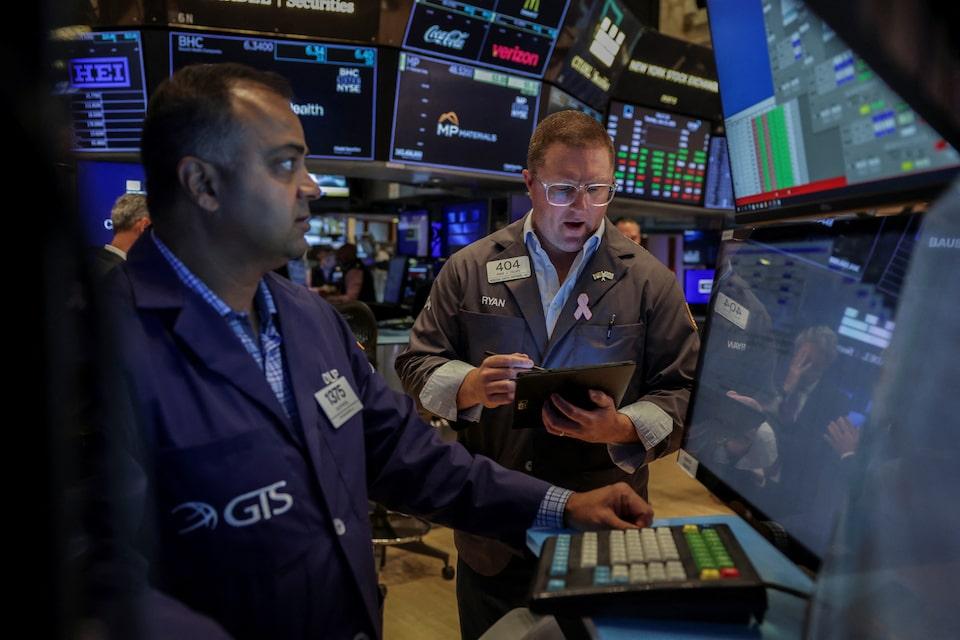
ORLANDO, Florida, July 17 (Reuters) - TRADING DAY Making sense of the forces driving global markets Sign up here. By Jamie McGeever, Markets Columnist Another batch of upbeat U.S. economic data including solid retail sales boosted risk appetite on Thursday, pushing to the back of investors' minds President Donald Trump's attacks on Fed Chair Jerome Powell and lifting the S&P 500 and Nasdaq to fresh record highs. More on that below. In my column today I pose the question: Would Powell's enforced departure, a monumental event in Fed history, crater markets or is such an eventuality actually largely priced in already? If you have more time to read, here are a few articles I recommend to help you make sense of what happened in markets today. Today's Key Market Moves Econ surprise, Wall Street's new highs Amid the frenzied Trump-Powell drama and heightened uncertainty around tariffs, U.S. economic data has quietly been coming in on the strong side. Thursday's figures reinforced that view, with the Philly Fed business index, producer price inflation, import prices and retail sales all pointing to an economy humming along at a solid clip with little sign of accelerating inflation. The Atlanta Fed GDPNow model estimate is signaling 2.4% growth in the second quarter, comfortably above blue chip consensus forecasts of 2.0%. Perhaps expectations were set so low following the post-Liberation Day chaos and market scare, but Citi's economic surprises index is now the highest since late May. Either way, the data broadly appears to be holding up, and the early indications from the earnings season getting under way are that U.S. corporate profits continue to beat expectations too. The highlights on Thursday were from United Airlines and PepsiCo. Friday's spotlight falls on American Express. That's the backdrop against which U.S. rates traders are pushing out the expected timing of the first rate cut to October from September. San Francisco Fed President Mary Daly on Thursday signaled two rate cuts this year are a reasonable projection. The global equity picture was also brightened on Thursday by Taiwan's TSMC, the world's main producer of advanced AI chips. It posted a record quarterly profit and said demand for artificial intelligence was getting stronger. TSMC's domestic shares hit a six-month peak, and its U.S.-listed shares leaped over 4% to a new high. On the trade front, Trump says a deal with India is "very close" and one with Europe is "possible", while Commerce Secretary Howard Lutnick held a 45-minute phone call with Japan's top trade negotiator Ryosei Akazawa on Thursday. Treasury Secretary Scott Bessent will travel to Tokyo to meet with Prime Minister Shigeru Ishiba on Friday for a separate event, but trade will surely be discussed, if not formally. Japan is very much on investors' minds ahead of Sunday's Upper House election which could see the Liberal Democratic Party ruling coalition lose its majority, heightening calls for the government to boost spending and cut taxes. The prospect of further fiscal slippage in the world's most indebted major economy and complications that would bring for the Bank of Japan have pushed the yen to a three-month low against the dollar and long Japanese Government Bond yields to record highs. The yen fell on Thursday, swept aside in the dollar's broad rebound, but bonds got a reprieve. The weakness in 20- and 30-year JGBs has added to the downward pressure on long-dated U.S. and European bonds. Sunday's vote will be key to whether the yen retests 150.00 per dollar and whether JGB yields make fresh highs next week. Trump has already crossed Fed independence Rubicon Whether Federal Reserve Chair Jerome Powell is fired next week, forced to resign in six months or allowed to muddle through to the end of his term next May, the supposedly sacrosanct notion of Fed independence has already been shattered. Yet what's nearly as remarkable as President Donald Trump's attacks on Powell for not cutting interest rates is financial markets' resilience in the face of this extraordinary degree of political interference in monetary policy, unprecedented in recent decades. Equity investors are known for being optimists, but today's Wall Street is veritably Teflon-coated. Of course, Trump's attacks on Powell have not been without consequence. The dollar has clocked its worst start to a year since the United States dropped the gold standard in the early 1970s. Long-dated Treasury yields are the highest in 20 years, and the "term premium" on U.S. debt is the highest in over a decade. Consumers' inflation expectations, by some measures, are also the highest in decades. Inflation has been above the Fed's 2% target for over four years, and the prospect of a dovish Fed under the stewardship of a new Trump-friendly Chair could keep it that way. But that's not solely down to Fed policy and credibility risks. The Trump administration's fiscal and trade policies, and unilateralist position on the world political stage, have also tempted some investors to trim their exposure to U.S. debt and the dollar. Still, Wall Street seems immune to all that, and it closed in the green on Wednesday after Trump played down a Bloomberg report that he will soon fire Powell, a step he says is "highly unlikely". Even at the point of maximum selling before that rebuttal, the big U.S. equity indices were down less than 1%. Given the magnitude of the news investors were reacting to, that's barely a ripple, especially when you remember that the S&P 500 and Nasdaq hit record highs only 24 hours earlier. Indeed, the S&P 500 is enjoying its third-fastest rebound from a 20% drawdown in history, according to Fidelity's Jurrien Timmer. Goldman Sachs analysts also note that the index's price-to-earnings ratio of 22 times forward earnings is in the 97th percentile since 1980. And the Nasdaq is up 40% in barely three months. Taking all this into account, there's plenty of space for a correction. What's needed is a catalyst. Threatening the foundation of the financial system would seem to qualify, but will it? BECOMING IMMUNE One might argue that investors are simply skeptical that Trump really will oust Powell, even were it "for cause", ostensibly the Trump administration's ire over the $2.4 billion cost of renovating the Fed's building in Washington. But Trump has made it clear for months that he wants Powell replaced by someone more malleable, so whether it happens in the coming weeks, months, or May next year, the new Fed Chair will almost certainly be someone strongly influenced by the president. Of course, the Fed Chair is only one of 19 members of the Federal Open Market Committee and just one of 12 voting members at any given rate-setting meeting. He or she does not decide policy unilaterally. Still, the negative reaction to Powell leaving before his term is up could be powerful, even though you would expect it to be priced in to some extent by now. All else being equal, a more dovish-leaning Fed will reasonably be expected to weigh on short-dated yields, steepen the yield curve, and weaken the dollar as bond investors price in more rate cuts, and keep inflation closer to 3% than 2%. In the short term, stocks could benefit from expectations of a lower policy rate, although higher long-dated yields would increase the discount rate, which could be particularly negative for Big Tech and other growth stocks. JP Morgan CEO Jamie Dimon on Tuesday warned of the dangers of political interference in Fed policymaking, telling reporters on a conference call: "The independence of the Fed is absolutely critical. Playing around with the Fed can often have adverse consequences, absolutely opposite of what you might be hoping for." That Rubicon has already been crossed, and for now at least, markets appear to have accepted that. What could move markets tomorrow? Want to receive Trading Day in your inbox every weekday morning? Sign up for my newsletter here. Opinions expressed are those of the author. They do not reflect the views of Reuters News, which, under the Trust Principles , opens new tab, is committed to integrity, independence, and freedom from bias. https://www.reuters.com/world/china/global-markets-trading-day-repeat-2025-07-17/