2025-07-17 20:51
PRAGUE, July 17 (Reuters) - Slovakia will stop blocking the approval of the 18th package of European Union sanctions against Russia on Friday, Prime Minister Robert Fico said. Fico said on Thursday Slovakia had achieved as much as it could at this point, after blocking the EU's approval of the sanctions multiple times to demand guarantees against damages it fears from a separate EU plan to end all gas imports from Russia from 2028. Sign up here. "At this point, it would be counterproductive to continue blocking the 18th sanctions package tomorrow," Fico said in a video message posted on Facebook. EU countries' ambassadors will meet on Friday morning to approve the new sanctions, EU diplomats told Reuters. The European Commission last month proposed the 18th package of sanctions against Russia for its 2022 invasion of Ukraine, aimed at Moscow's energy revenue, banks, and military industry. The proposed package included a floating price cap on Russian oil of 15% below the average market price of crude in the previous three months, EU diplomats have said. The proposal would also ban transactions with Russia's Nord Stream gas pipelines, as well as banks that engage in sanctions circumvention. Slovakia has vetoed the package several times to try to win concessions on the separate plan to phase out Russian oil and gas, which, unlike sanctions, does not need unanimous support from EU countries. Slovakia continues to import Russian energy, including gas under a contract running until 2034, and often takes pro-Russian views on Ukraine. Fico said on Tuesday that Slovakia had received guarantees from the Commission on assistance in case of potential gas shortages or jumps in prices and transit fees, and assistance in disputes over potential damage claims from Russian supplier Gazprom (GAZP.MM) , opens new tab. The Commission said in a letter to Slovakia on Tuesday it would intervene in potential litigation, and also clarify how an "emergency break" can be triggered if gas prices spike because of scarce supply during the Russian gas phase-out. Brussels will also develop a solution that aims to reduce the costs of cross-border tariffs on gas and oil for Slovakia, said the letter. Malta had also previously expressed reservations about the proposed Russian oil price cap, but the government said on Thursday evening it would also support the new sanctions on Friday, EU diplomats told Reuters. https://www.reuters.com/world/slovakia-allow-approval-new-eu-sanctions-russia-friday-pm-fico-says-2025-07-17/

2025-07-17 20:50
Bitcoin price hit new record this week Limited data, opaque wallets make it hard to pinpoint buyers Institutional interest growing but still small US policy embrace growing in pivotal 'crypto week' NEW YORK, July 17 (Reuters) - Bitcoin's surge to a record this week has reignited questions about the role institutional investors are playing in pushing it higher, with analysts suggesting their role is still in its infancy. The world's largest cryptocurrency earlier this week surged to a record above $123,000, receiving a boost on the expectation of pro-crypto policies from Washington. While buzz around digital assets has increased, there is room for demand from institutional investors to grow as pension funds and other long-term buyers add bitcoin to their portfolios, analysts say. Sign up here. On Thursday, the U.S. House of Representatives voted in favor of creating a regulatory framework for the U.S. dollar-pegged cryptocurrency tokens referred to as stablecoins. President Donald Trump is expected to sign that legislation into law on Friday. The House also passed two other key bills related to cryptocurrencies, both of which will now go to the U.S. Senate. "We're still in the early innings when it comes to institutional ownership," said Adrian Fritz, head of research at 21Shares, a digital assets investment firm, adding that retail investors still dominate crypto markets. Less than 5% of all spot bitcoin Exchange Traded Fund assets are held by long-term investors such as pension funds and endowments, with another 10% to 15% owned by hedge funds or wealth management firms, Fritz calculates. The latter group of wealth managers, however, often buy these funds on behalf of high-net worth retail clients, and the bulk of ETF ownership remains retail, he said. There is a correlation between soaring retail purchases of crypto ETFs and crypto-related stocks and a run-up in prices, according to estimates from Vanda, a financial research firm. The data shows retail buyers bought heavily in late 2024 when prices surged after Donald Trump - who has vowed to be a "crypto president" won the U.S. election - as well as during the recent rally. Crypto buyers have been aided by a series of bills U.S. lawmakers are expected to pass this week, the most consequential of which - known as the Genius Act - will define the rules around stablecoins, a fast-growing area of the crypto market. The passage of the crypto legislation on Thursday by the Republican-controlled U.S. House of Representatives paves the way for the first U.S. federal law for digital assets. Some large U.S. lenders, including Bank of America (BAC.N) , opens new tab and Citigroup (C.N) , opens new tab, are also working on launching stablecoins. Another bill will provide regulatory clarity by formally establishing definitions of digital commodities and spelling out the roles of agencies in overseeing digital assets. This could make it easier for institutions that have long avoided the sector to invest. Simon Forster, global co-head of digital assets at trading platform operator and data provider TP ICAP, predicts the number of institutions active in crypto will grow by 2026, including pensions and other buy-and-hold firms. "By definition, they will be the slowest (to enter crypto)," Fritz said. BITCOIN TREASURY BUYING Analysts say data, although patchy given how opaque crypto markets remain, points to the growing role of bitcoin treasury companies in boosting demand. These are listed companies such as Strategy (MSTR.O) , opens new tab and GameStop (GME.N) , opens new tab, that initially focused on software and videogame retailing respectively but now emphasize owning and making money on bitcoin positions held on their balance sheets in place of cash, gold or ultra-short Treasury securities. Strategy's shares have soared in the past year, far outpacing the rise in bitcoin, with many investors seeing the stock as a way to get exposure to crypto while investing in mainstream financial markets. Juan Leon, research analyst at Bitwise Asset Management, said these companies' ability to buy bitcoin suggests they represent a bigger source of recent demand than pension, endowment and hedge funds that are major players in stock and bond markets. Strategy and GameStop did not respond to requests for comment. Since July last year, public companies worldwide collectively have increased their bitcoin holdings by 120% and now hold just over 859,000, or 4%, of the total 21 million bitcoin that will ever be in existence, said Simon Peters, crypto analyst at investment platform eToro. Companies are also selling common stock, preferred shares and convertible securities to raise funds to spend on boosting their bitcoin holdings, in a bid to replicate Strategy's outsized stock gains. The new wave of U.S. legislation could also pave the way for more listed companies to allocate a portion of their cash reserves to crypto tokens, said Susannah Streeter, head of money and markets at Hargreaves Lansdown. Analysts warn, however, that a drop below $90,000 for bitcoin could put half of these corporate treasuries underwater. Demand for crypto ETFs has also been rising in recent months. Global net inflows into crypto exchange-traded products hit $4 billion last week, the highest so far this year, according to data from crypto firm Bitwise. Among the big institutional investors to have made public their investments in crypto ETFs in the past 18 months are the State of Wisconsin Investment Board, Abu Dhabi's Mubadala sovereign wealth fund and hedge fund Millennium Management, regulatory filings show. So far this year, bitcoin has gained around 25%, compared with the S&P 500 index's (.SPX) , opens new tab 6.5% gain. Ether , another cryptocurrency has climbed 2%, while XRP is up nearly 40%. The crypto sector's market capitalization now stands at $3.8 trillion, up nearly 66% since before the U.S. election in November, according to CoinMarketCap. https://www.reuters.com/sustainability/boards-policy-regulation/institutional-investors-warm-crypto-demand-still-nascent-2025-07-17/

2025-07-17 20:37
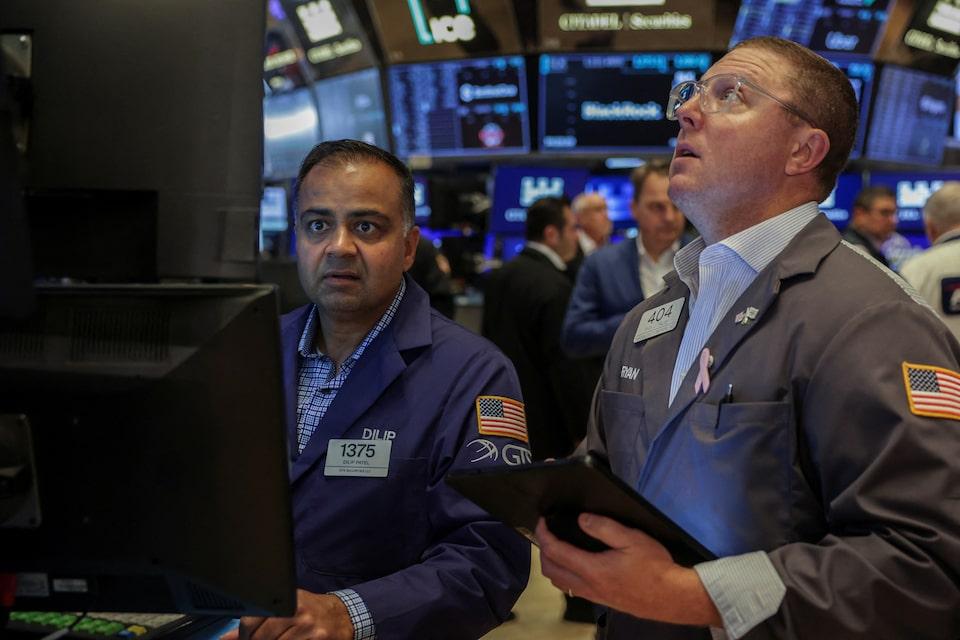
S&P 500 posts sixth record high since June 27 Nasdaq has six best finishes in last seven sessions Chip stocks jump after TSMC's record quarterly profit Consumer-facing PepsiCo, United Airlines rise on outlook Indexes up: Dow 0.52%, S&P 500 0.54%, Nasdaq 0.74% July 17 (Reuters) - The S&P 500 (.SPX) , opens new tab stock index and the Nasdaq Composite (.IXIC) , opens new tab both finished at record highs on Thursday, as investors embraced strong economic data and earnings reports that showed American consumers remained willing to spend. The Nasdaq has ended at a record high in six of the previous seven sessions, and the S&P 500 has had six best finishes since June 27. Sign up here. The Nasdaq Composite (.IXIC) , opens new tab gained 153.78 points, or 0.74%, to 20,884.27, and the S&P 500 (.SPX) , opens new tab increased 33.66 points, or 0.54%, to 6,297.36. The Dow Jones Industrial Average (.DJI) , opens new tab also ended up, rising 229.71 points, or 0.52%, to 44,484.49. Wall Street has had a strong run since tumbling after President Donald Trump's Liberation Day tariff announcements in early April and then recovering. This week was seen as a proving ground for these gains though, with a number of key economic reports and the start of second-quarter earnings season. Economic data and corporate earnings reports "are showing that the economic backdrop is still pretty solid, and so markets have been able to grind higher this week with some data to support where we are going," said Anthony Saglimbene, chief market strategist at Ameriprise Financial. U.S. retail sales bounced back sharply in June, data showed on Thursday. Investors saw renewed economic momentum and confidence among consumers, after mixed inflation data which showed stalled producer prices and a spike in consumer inflation in the same month. Investors have been watching for signs of whether Trump's tariff policies are starting to permeate the U.S. economy. The Federal Reserve has indicated it will hold off on interest rate cuts until it can see the inflationary impact of higher import taxes. This was reiterated on Thursday by Fed Governor Adriana Kugler, who said rate cuts are on hold for now, as Trump's tariffs begin to push up consumer prices. Traders now peg the odds of a September rate cut at around 54%, with a July move nearly ruled out, according to CME's FedWatch tool. Accompanying strong retail sales was upbeat commentary from consumer-facing American companies. PepsiCo (PEP.O) , opens new tab jumped 7.5% after forecasting upbeat results, fueled by demand for energy drinks and healthier sodas, helping offset concerns about a dip in annual core profit. United Airlines (UAL.O) , opens new tab gained 3.1% after the carrier projected stronger demand since early July, offering a rare bright spot for an industry strained by Trump's budget cuts and trade tensions. Rivals Delta (DAL.N) , opens new tab and American Airlines (AAL.O) , opens new tab also climbed more than 1.4%. Technology stocks were also buoyed, in particular U.S. chipmakers, after TSMC (2330.TW) , opens new tab, the world's main producer of advanced AI chips, posted a record quarterly profit, saying demand for artificial intelligence was getting stronger. U.S.-listed shares of TSMC gained 3.4%, as Marvell (MRVL.O) , opens new tab rose 1.6% and Nvidia (NVDA.O) , opens new tab increased 1%. Ameriprise's Saglimbene said the blowout TSMC earnings bode well for chipmakers and the wider technology sector. "Before we get all the Big Tech earnings in the next week or two, you're seeing the single source of production of those (AI) chips saying their demand is very strong. So the set-up for Big Tech is pretty positive, which is why technology is leading on the day today," he added. Both the technology (.SPLRCT) , opens new tab and industrials (.SPLRCI) , opens new tab indexes finished at record highs on Thursday, although the leading sector of the nine which ended in positive territory was financials (.SPSY) , opens new tab, with a 0.9% advance. Netflix climbed 1.9%. After the bell, it reported earnings above forecasts, aided by the final season of global phenomenon "Squid Game". https://www.reuters.com/business/sp-500-nasdaq-end-fresh-record-highs-data-earnings-point-consumer-strength-2025-07-17/
2025-07-17 20:23
July 17 (Reuters) - Japan and the European Union will consider joint public-private partnerships as they look to reduce their reliance on China in areas such as the procurement of rare earths, the Nikkei newspaper reported on Thursday. As China, the dominant supplier of rare earths, tightens export controls, global manufacturers are concerned that Beijing's decision to curb exports of rare-earth alloys, mixtures and magnets could slow production and disrupt supply chains. Sign up here. Globally, countries have been trying to secure rare earth supply chains to loosen China's grip on the materials used to build weapons, electric vehicles and many electronics. Japan and the EU will launch a new "economic two-plus-two" dialogue to bring together their foreign and economy ministers, expected to be announced at the Japan-EU leaders' summit scheduled for July 23, according to the report. The talks aim to identify specific areas of cooperation between the parties from this summer onwards, it said. The countries will jointly develop supply chains for critical minerals such as rare earths, after the two sides agreed to a new dialogue at the working level. They will focus on simplifying EU regulations and discuss how Japanese companies can take part in EU projects under the new framework, which seeks to deepen Japan-EU ties, Nikkei said. The framework will also add Stephane Sejourne, the European Commission's executive vice president for prosperity and industrial strategy, to the talks. Earlier this month, the U.S. Department of Defense signed a multibillion-dollar deal with MP Materials (MP.N) , opens new tab that will make the Pentagon its largest shareholder, to boost rare earths output. India is holding talks with Chile and Peru to source critical minerals under ongoing free trade pact negotiations, Reuters reported earlier this week, citing a trade ministry source. https://www.reuters.com/world/china/japan-eu-explore-joint-rare-earths-procurement-nikkei-reports-2025-07-17/

2025-07-17 20:23
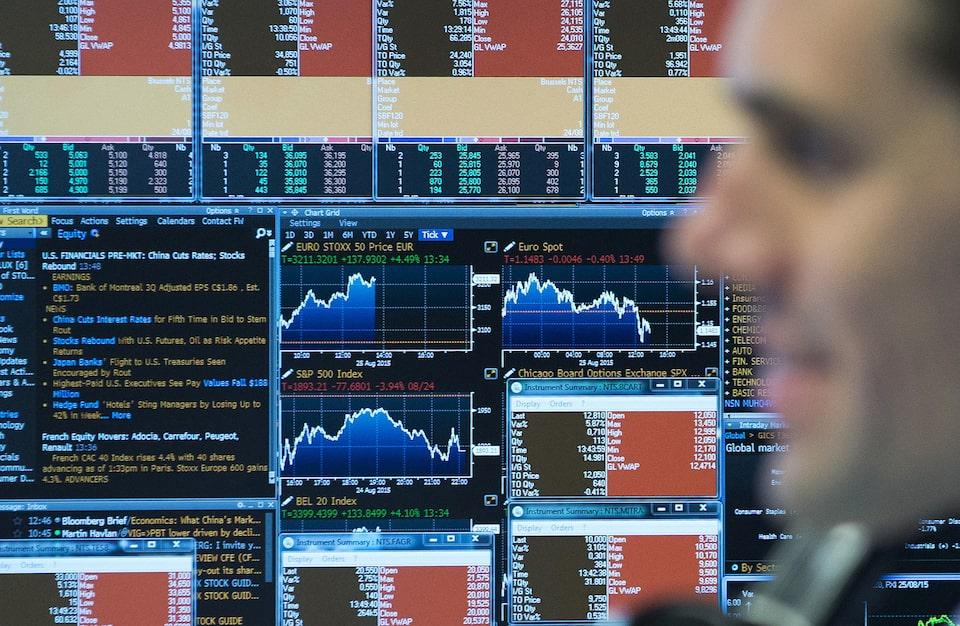
US companies are buying put options to hedge euro revenue FX options market shows mixed sentiment on euro's outlook Narrative of fading US exceptionalism not playing out Options market unwinding short dollar positions NEW YORK, July 17 (Reuters) - Some U.S. companies are taking advantage of more attractive pricing in euro options to protect the revenues they expect from Europe against losses, fearing the common currency may have strengthened a bit too far. The euro rose against the dollar after the U.S. rolled out larger-than-expected tariffs in April, knocking the buck to a three-year low and raising concerns about U.S. assets, its exceptionalism and economic growth. Sign up here. That rationale is being challenged with U.S. stocks (.SPX) , opens new tab staging a 26% recovery from their April lows to rise 6.4% for the year, aided by postponements to the implementation of import tariffs, better-than-feared first-quarter earnings and positive economic data. The options market reflects how investors and traders expect currencies to perform. Right now they are signaling less conviction in further dollar weakness, and some companies have been buying up euro put options that will appreciate if the euro weakens, to hedge their cash flow against euro weakness. A weak euro could dampen earnings for U.S. companies if profits made overseas are repatriated at unfavorable exchange rates. "Companies with euro revenues are saying, 'we got a great run, let's just make sure that we don't get hit hard on the downside'," said Eric Merlis, co-head of global markets, at Citizens in Boston, explaining some of his clients' thinking. "There is not as much conviction around a continued run in the euro, so a little bit of protection is helpful." Holders of put options have the right to sell the underlying currencies at a fixed price and date. They are typically bought to express a bearish view. With currencies quoted in pairs, a bearish position on the euro indicates a view of dollar strength. Conversely, a euro call would gain value if the euro rises and is the same as a dollar put. UNWINDING SHORT DOLLAR TRADES Euro/dollar options activity continued to surge in June, with $803 billion notional reported, but down from the previous high of $907 billion in April, according to data from Clarus, an ION company. Traders and advisors said over the past three weeks, U.S. corporates expressed more interest in euro puts to set up for future earnings, reversing some of the short dollar trades that populated the market since tariffs were announced. Traders said the market sees a lid on the euro between $1.18 and $1.20, compared to its current level around $1.16. "The options market is unwinding to a lot of the short dollar positioning," said Garth Appelt, head of foreign exchange trading at Mizuho Americas, whose desk sold off all those trades last week. "This whole theory of the U.S. exceptionalism not in play has not worked out since April," he added. "The dollar should weaken for many reasons, which are very centric to the U.S., but we don't have an alternative to growth pickup." COLLARS IN FASHION Data from CME Group showed the bulk of demand has switched to euro puts so far in July. Since March there had been more interest in euro call options on the exchange. Meanwhile, the over-the-counter market showed that euro calls made up 58.73% of euro/dollar options transactions in June, down from the high of 60% seen in April, according to Clarus data. Euro puts were 41.26% in June, up from 39.96% in April. Paula Comings, head of FX sales at U.S. Bank, said some of her healthcare clients started using zero-cost collars in late June to shield the revenues from Europe as persistent strength in the U.S. economy and robust employment numbers continue to defy earlier concerns about U.S. exceptionalism. In this case, the collars involve the sale of euro call options to finance the purchase of euro puts up to two years out. As Comings explained, a company wanting to sell euros for dollars a year from now can lock in a forward rate of $1.188, or use a zero-cost collar to cap the range between $1.2518 and a worst case $1.1338. In late February, it could have locked in a forward of $1.058, or used a collar between $1.0991 and $1.0049. "It's really blown up in recent weeks. The dynamics are some of the best we've seen in 20 years," said Comings. "We have several others that are noodling on this." Chris King, co-founder at advisory Dukes & King in London, is also seeing clients move to protect next year's budget with some of these strategies. "If you're an American business, you haven't previously had a favorable spot rate," King said. "Now you've got the benefit of that spot move, combined with that yield curve benefit. So, if you're a U.S. seller of euros you can get a very favorable profile, particularly if longer dated." The dollar has fallen 12% against the euro for the year. With U.S. President Donald Trump delaying reciprocal tariffs to August 1, and remaining on the offensive with the European Union and other trading partners, currency markets could see more gyrations in coming weeks. Conversely, Jackie Bowie, head of EMEA at Chatham Financial, a hedge adviser in the UK, said with the dollar historically low, U.S. companies could benefit the most from just buying in the forward market when converting cash flows back to dollars. Still, a head of corporate derivatives at a large U.S. bank said of the zero-cost collars: "You're at this very attractive point for corporates who haven't seen a rate like this in many years." https://www.reuters.com/business/us-companies-adopt-options-strategies-shield-euro-revenues-case-dollar-recovers-2025-07-17/
2025-07-17 20:17
Zelestra to invest at least $1 billion in Peru renewable energy Plans to power mining sector with 1 GW in new generation Peru's nascent renewable sector dominated by hydroelectric LIMA, July 17 (Reuters) - Spain's Zelestra plans to invest at least $1 billion in renewable energy plants over the next five years powering mines in copper-rich southern Peru, the company's CEO for Latin America told Reuters. Zelestra, owned by Swedish firm EQT (EQTAB.ST) , opens new tab, is aiming to produce 1 gigawatt (GW) of renewable energy in Peru as part of its expansion in Latin America, Jose Luis Garcia said in an interview on Tuesday. Sign up here. "I'm convinced that most, if not all, of the energy projects we build in Peru will be used to supply mining companies," Garcia said, adding that the estimated investment would be between $1 billion and $1.5 billion over the next five years. "The mining companies have very long-term contracts, and they're going to have to renew them in the next three years," he said, adding that lenders have shown strong interest in financing the projects. Peru is the world's third-largest copper producer and most of its mines are in the country's south, including Freeport-McMoRan's (FCX.N) , opens new tab Cerro Verde mine, the country's largest, as well as others operated by MMG Ltd (1208.HK) , opens new tab, Glencore (GLEN.L) , opens new tab, Anglo American (AAL.L) , opens new tab and Mexico Group (GMEXICOB.MX) , opens new tab. Renewable energy is still a nascent technology in Peru, with hydroelectric plants accounting for 45% of the sector's output, according to government data. In recent years, Chinese firms have made major acquisitions in the power industry raising concerns of business concentration. China Southern Power Grid International controls just over half of Lima's power distribution while China Three Gorges Corporation (CYTGP.UL) covers the other half and controls Peru's third-largest power generator. Zelestra on Thursday inaugurated its $177 million San Martin solar park in the Arequipa region, the largest solar plant in Peru, with approximately 300 megawatts. The next project is the 238-megawatt Babilonia solar plant, also in Arequipa, with an estimated investment of $140 million. Data from the Ministry of Energy and Mines shows Zelestra has at least three other renewable energy generation projects in the south, totaling approximately 450 megawatts. Garcia said there are already agreements with transmission companies such as Kallpa Energy to deliver energy to mining clients. Regionally, Garcia said Zelestra's goal is to have renewable energy plants - including solar, hybrid and battery-powered - generating about 3 gigawatts within five years. Half of that generation is planned in Chile, 30% in Peru and the rest in Colombia. https://www.reuters.com/sustainability/climate-energy/spains-zelestra-aims-power-peru-mines-with-1-billion-renewables-investment-2025-07-17/