2025-07-17 15:12
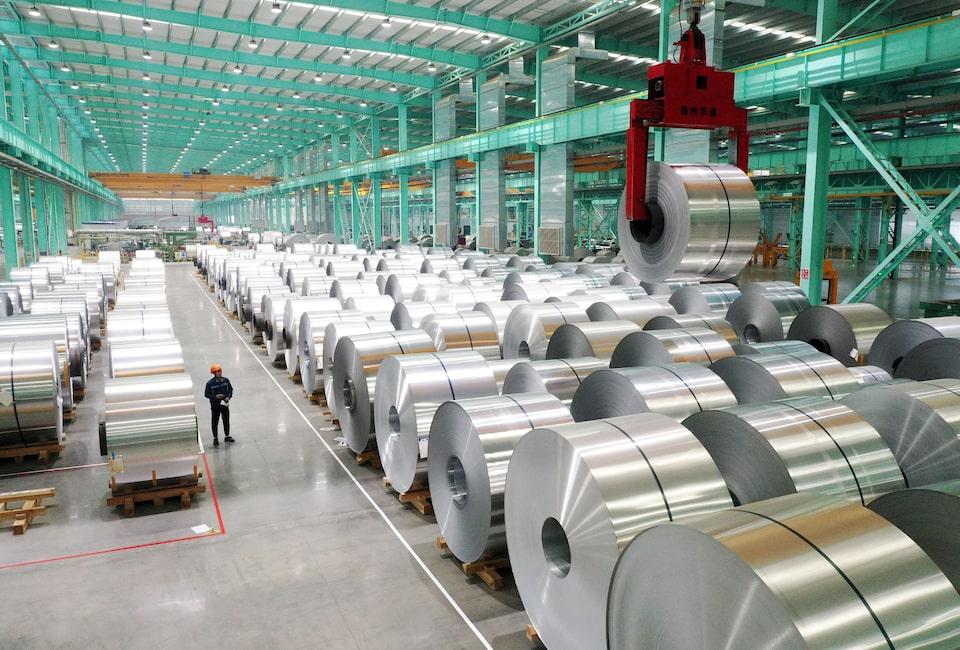
SANTIAGO, July 17 (Reuters) - Foreign direct investment (FDI) in Latin America grew by 7.1% in 2024 to $188.96 billion, but new investment interest has stagnated, the Economic Commission for Latin America and the Caribbean (ECLAC) said on Thursday. WHY IT'S IMPORTANT FDI is a key driver of economic growth in Latin America, but lack of new investment has raised concerns about the region’s long-term competitiveness and appeal to foreign investors. Sign up here. KEY QUOTE "It is expected that changes in tariff and trade policies in the United States will influence medium- and long-term investment decisions," ECLAC said in its report. BY THE NUMBERS FDI inflows in 2024 rose 7.1% from 2023, representing 13.7% of gross fixed capital formation and 2.8% of GDP. However, these figures remained below the 16.8% and 3.3%, respectively, recorded during the 2010s. Brazil received the largest share of FDI at 38%, followed by Mexico with 24%. Argentina saw a 44% increase in natural resource investments, while Guyana experienced a 43% rise due to more spending in its hydrocarbon sector. WHAT'S NEXT ECLAC urged Latin American governments to focus on strategies that sustain investor interest, particularly as manufacturing investment rises and services decline. The region may need to adapt to global tariff changes and reconfigure value chains to stay competitive. https://www.reuters.com/world/americas/latin-americas-foreign-direct-investment-rose-7-last-year-new-flows-stagnate-2025-07-17/

2025-07-17 14:32
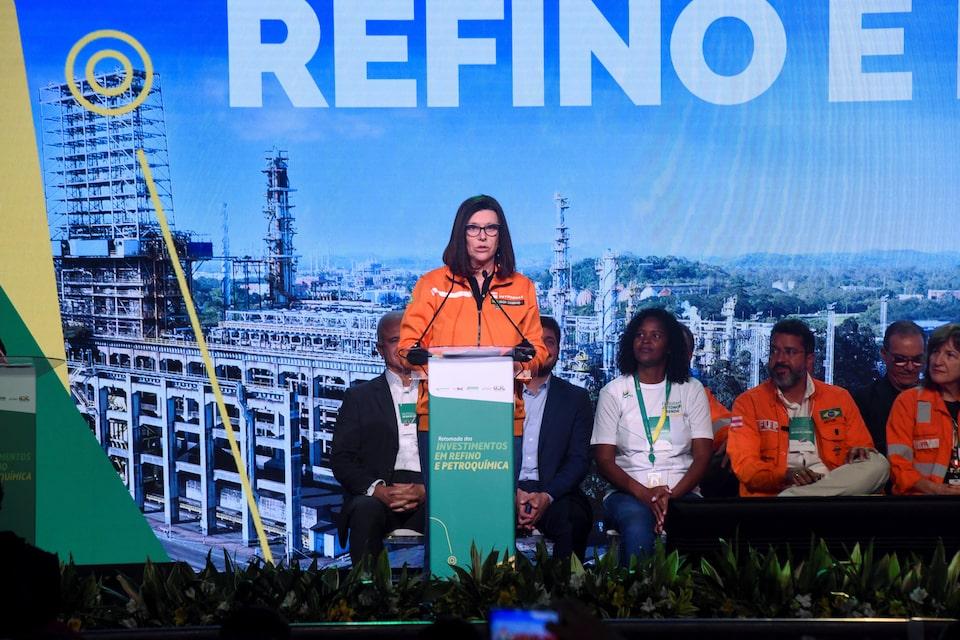
RIO DE JANEIRO, July 17 (Reuters) - Brazilian state-run oil firm Petrobras (PETR4.SA) , opens new tab may redirect the oil it sells to the United States, sending more to Asia and Pacific markets due to higher tariffs the U.S. announced on Brazil, its chief executive told Reuters on Thursday. Although oil and gas exports make up a hefty share of Brazil's exports to the United States, Petrobras CEO Magda Chambriard said it is not an essential market for the firm. Sign up here. "It is not much that we export (to the U.S.). In general, we are not very worried," she said in her first public comments about the 50% tariff U.S. President Donald Trump announced last week. Exports to the U.S. represented about 4% of Petrobras' total oil shipments in its first quarter. The U.S. is also unlikely to feel a major impact if Brazil ceases exports, as the South American country has supplied less than 3% of the oil the country has consumed so far in 2025, according to consultancy StoneX. Chambriard's remarks come amid uncertainty in Brazil over whether the new round of tariffs, due to take effect on August 1, would impact oil. The commodity had been exempt from Trump's previous 10% tariffs. In terms of oil products, Petrobras' exports to the U.S. accounted for 37% of a total of 209,000 barrels per day in the first quarter, but analysts told Reuters that the volume could also be redirected to other countries with ease. https://www.reuters.com/business/energy/petrobras-may-redirect-oil-asia-due-us-tariff-brazil-ceo-says-2025-07-17/
2025-07-17 12:46
WASHINGTON, July 17 (Reuters) - U.S. retail sales rebounded more than expected in June, but some of the increase likely reflected higher prices for some goods exposed to tariffs. Retail sales increased 0.6% last month after an unrevised 0.9% drop in May, the Commerce Department's Census Bureau said on Thursday. Economists polled by Reuters had forecast retail sales, which are mostly goods and are not adjusted for inflation, edging up 0.1%. Sign up here. Part of the rise in retail sales last month could be due to tariff-driven price increases rather than volumes. Inflation data this week showed solid increases in June in the prices of tariff-sensitive goods like household furnishings and supplies, appliances, sporting goods and toys. Retail sales excluding automobiles, gasoline, building materials and food services increased 0.5% last month after a downwardly revised 0.2% in May. These so-called core retail sales, which correspond most closely with the consumer spending component of gross domestic product, were previously reported to have increased 0.4% in May. "All told, the household sector still appears to be holding up, but a moderation in consumer spending appears under way," said Sam Bullard, a senior economist at Wells Fargo. https://www.reuters.com/business/retail-consumer/us-retail-sales-beat-expectations-june-2025-07-17/

2025-07-17 12:16
TBILISI, July 17 (Reuters) - Georgia's State Security Service said on Thursday that it had detained two people for handling and attempting to sell $3 million worth of uranium which could have been used to make a deadly bomb. Georgia's State Security Service said it had prevented a "transnational crime" involving "the illegal sale and purchase of nuclear material, in particular, the radioactive chemical element uranium." Sign up here. One Georgian citizen and one foreigner were arrested in the western city of Batumi on the Black Sea, the statement said. The pair, whom the statement did not name, could face up to 10 years in prison. The State Security Service said that the uranium could have been used to make a deadly bomb with mass fatalities. When contacted by Reuters, the State Security Service declined to give any further details on how enriched the uranium was. The Service published video on Thursday showing law enforcement agents using a radiation scanner to inspect a passenger vehicle as well as two small vials, one of which appeared to contain a white, powdery substance. Uranium-235 is an isotope that is fissile, meaning it can sustain the nuclear chain reaction used in nuclear reactors and nuclear bombs while Uranium-238 is not fissile. The security of nuclear materials was one of the biggest concerns after the 1991 fall of the Soviet Union, of which Georgia was a member. There have been several serious incidents involving the illicit trade in nuclear materials in Georgia over recent decades. In 2019, Georgia said it had detained two people for handling and trying to sell $2.8 million worth of Uranium-238. In 2016, authorities arrested twelve people, including Georgians and Armenians, in two separate sting operations within the same month and accused them of attempting to sell in total about $203 million worth of uranium-238 and uranium-235. In 2014, Georgia caught two Armenians trying to smuggle Cesium-137, a radioactive isotope of the metal cesium, into the country. Data from the U.N. nuclear watchdog's Incident and Trafficking Database (ITDB) showed that trafficking of nuclear and radioactive material remains very limited. https://www.reuters.com/world/europe/georgia-stops-sale-3-million-uranium-that-could-have-been-used-bomb-2025-07-17/

2025-07-17 12:15
Dollar firms against major peers Fed Chair Powell's future in focus Japan's political shift weighs on Yen, exports fall US retail data, TICs data awaited TOKYO/LONDON, July 17 (Reuters) - The dollar was broadly stronger against major peers on Thursday as investors assessed U.S. President Donald Trump's latest comments on Fed Chair Jerome Powell's future, while concerns over a pivotal election in Japan weighed on the yen. The dollar firmed 0.55% against the euro , bringing the currency pair largely back to where it had been before a drop in the dollar late on Wednesday due to concerns that removing the Fed chief before his term ends in May 2026 would undermine faith in the U.S. financial system. Sign up here. Trump said Wednesday he was not planning to fire Powell, but he kept the door open to the possibility and renewed his criticism of the central bank chief for not lowering interest rates. In other currencies, sterling edged 0.2% lower to $1.3395 , after data showed British pay growth slowing in May and employee numbers dropping further last month, though job losses were less alarming than some experts had feared. "... the labour market is still not in a good position, even with these revisions, in combination with what we saw yesterday with inflation it is not a good situation with the pound," said Michael Pfister, FX analyst at Commerzbank. UK inflation data on Wednesday showed prices rising to their highest since January 2024, renewing the focus on Bank of England rate cuts. Meanwhile, concerns mounted over a pivotal election in Japan and a still elusive trade deal with the U.S. to avoid a punishing rise in tariffs. Japan's currency was just off a one-year low against the euro touched on Wednesday, as polls showed Prime Minister Shigeru Ishiba's coalition was in danger of losing its majority in the upper house. The yen was down 0.6% to 148.73 to the dollar after touching its weakest level since April 3 in the previous session Japan's top trade negotiator held a phone call with U.S. Commerce Secretary Howard Lutnick on tariffs, as data showed the Asian nation's exports were starting to feel the impact of tariffs with shipments down for a second straight month. "With the elections, the tariffs, the overall relationship between Japan and the U.S., I do think there is some reason to sell the yen," said Bart Wakabayashi, Tokyo branch manager at State Street. "The election seems to be a key point in the foreign view of the currency at the moment." Investors remain focused on tariffs ahead of an August 1 deadline, when many trading partners face higher trade levies. Japan failed to clinch a deal with the U.S. before the July 9 expiration of the temporary pause on the country-specific tariffs. AUSTRALIA JOBS DATA Meanwhile the Australian dollar slid after jobs data badly missed forecasts and unemployment hit highs not seen since late 2021. The Aussie dollar fell 1.1% to a more than three-week low of $0.6456 while New Zealand's kiwi dollar lost 0.57% to $0.5912 . A more dovish Fed could lead to a return of inflation and negative real yields on Treasuries, said Mahjabeen Zaman, head of foreign exchange research at ANZ. "If that comes to fruition, you're going to see a much weaker dollar than we're already expecting," Zaman said in an ANZ podcast. "Such an event, if that even does happen, it will raise questions for Fed independence and credibility, so I think it's only going to be an increase in volatility." Trump has railed against Powell for months for not easing rates, which he says should be at 1% or lower. Bloomberg reported that the president is likely to fire Powell soon, and a source told Reuters that Trump polled some Republican lawmakers on firing Powell and received a positive response. Trump said that the reports were not true. Markets are awaiting U.S. retail sales data for June as well as TICs data for May due later. "We will see the extent to which tariffs and U.S. policies caused foreign investors to rotate away from U.S. Treasuries," Francesco Pesole, FX strategist at ING, said. https://www.reuters.com/world/middle-east/dollar-climbs-traders-mull-powells-future-yen-dips-ahead-japan-election-2025-07-17/

2025-07-17 12:00
LAUNCESTON, Australia, July 17 (Reuters) - China's industrial output and commodity import data for June has thrown up contrasting numbers that add to the challenge of getting an accurate reading on the state of the world's second-biggest economy. Steel production and iron ore imports appear to tell contrasting stories, with steel weakening in June but imports of the key raw material surging to the highest this year. Sign up here. Coal output has increased by 5% in the first six months of the year compared to the same period in 2024, but thermal power generation, which is mainly coal-fired, dropped 2.4% in the first half. Aluminium output rose 3.4% in June from a year earlier and by 3.3% in the first half, but construction materials such as cement and glass both dropped by 5% in June. Part of decoding the seemingly mixed signals from the data is working out whether the numbers are part of longer-term trends, or driven by short-term factors. China's crude steel output fell 3.9% in June from May and by 9.2% from the same month in 2024, which was the largest year-on-year drop since August. The world's largest steel producer manufactured 83.18 million metric tons of crude steel last month, which took first half output to 514.83 million tons, a decline of 3% from the same period last year. Softer steel output fits with the narrative of a still struggling residential construction sector, but it doesn't explain why iron ore imports have been robust. China, which buys about 75% of global seaborne iron ore, saw arrivals jump by 8% in June from May, with imports of 105.95 million tons, the strongest month so far in 2025. However, iron ore imports are down by 3% in the first half of 2025 to 592.21 million tons. Prices explain some of the recent strength in iron ore imports, with Singapore Exchange contracts showing a declining trend since reaching the highest so far in 2025 of $107.81 a ton on February 12. They dropped as low as $93.35 on July 1, but have since recovered to end at $97.95 on Wednesday amid optimism that Beijing's stimulus measures will boost second-half steel demand. However, if annual steel output is to remain around the informal 1 billion tons cap, this implies that second-half production will be weaker than the first half's 514.83 million tons. There is still scope to build iron ore inventories, with port stockpiles monitored by consultants SteelHome dropping to 131.9 million tons in the week to July 11, down from 150.02 million in the same week last year. COAL MINING Another seeming contradiction is coal production, which rose 5% in the first six months of 2025 to 2.4 billion tons. The main use for China's domestic coal is power generation, and thermal power, which is overwhelmingly coal-fired with only a small amount of natural gas, dropped by 2.4%. Total power generation rose 0.8% in the first half, and given that hydropower also dropped by 2.9% it's clear that the rapid deployment of renewables such as wind and solar increased their share. Why would China want to produce record volumes of coal at a time when consumption is falling? There are two main reasons, the first being that it ensures that domestic coal prices remain relatively low, which keeps downward pressure on electricity costs at a time when major power users such as manufacturers are facing uncertainty from the trade war with the United States. The price of thermal coal at Qinhuangdao dropped to a four-year low of 610 yuan ($84.96) in June and while it recovered to 625 yuan on Wednesday, it is still down almost 20% from its 2025 high of 775 yuan in early January. The second benefit from higher domestic coal output is that it cuts the needs for supplies from overseas, and because China is the world's largest importer this means that seaborne prices have been under pressure. Enjoying this column? Check out Reuters Open Interest (ROI), your essential new source for global financial commentary. ROI delivers thought-provoking, data-driven analysis of everything from swap rates to soybeans. Markets are moving faster than ever. ROI can help you keep up. Follow ROI on LinkedIn , opens new tab and X , opens new tab. The views expressed here are those of the author, a columnist for Reuters. https://www.reuters.com/markets/asia/chinas-mixed-commodity-data-sees-soft-steel-strong-iron-ore-2025-07-17/