2025-07-16 10:11
Investors assess the chance of more aggressive rate cuts Economists say jobs data holds more weight in shaping BoE policy Euro/Sterling within striking distance of 3-month high July 16 (Reuters) - The pound edged higher against a weakening dollar and fell versus the euro, as investors assessed whether the Bank of England might cut rates more aggressively than the currently expected pace of 25 basis points per quarter. Britain's annual rate of consumer price (CPI) inflation unexpectedly rose to its highest in over a year at 3.6% in June. Sign up here. "The bar to cutting rates faster still feels fairly high," said Francesco Pesole, a forex strategist at ING. "The risks associated with tomorrow's jobs numbers are probably preventing any larger hawkish repricing in the Sonia curve (after CPI data) and, by extension, keeping the British pound's gains contained," he added. Data showed last week Britain's economy contracted unexpectedly for a second month running in May. Sterling was last up 0.05% at $1.3390, after hitting $1.3397 on Tuesday, its lowest level since June 23. The dollar edged down against the euro and yen on Wednesday, after hitting multi-week highs the day before, as investors awaited producer price data later in the session for further clues about potential tariff-driven inflation. "Today's data won't give the Monetary Policy Committee (MPC) any sense of comfort on the inflation side," said Sanjay Raja, chief UK economist at Deutsche Bank, arguing that tomorrow's job figures "may hold more weight when it comes to shaping the monetary policy outlook." "The bar for a dovish surprise on tomorrow's labour market data will likely rise on the back of today's inflation reading." Markets priced in an 80% chance of a 25 bps rate cut in August, more than 50 bps by year-end and 75 bps by April 2026. Yields on 10-year gilts rose 1.5 bps to 4.65%. BoE Governor Andrew Bailey, on Tuesday, focused his speech on the International Monetary Fund's role in addressing the accumulation of risky imbalances in the global economy, many of which originate from the United States and China. Sterling dropped 0.1% versus the euro to 86.75 pence . It hit 86.96 per euro on Tuesday, its lowest level since April 11. https://www.reuters.com/world/uk/sterling-edges-higher-versus-dollar-investors-await-jobs-data-2025-07-16/
2025-07-16 10:07
MUMBAI, July 16(Reuters) - The Indian rupee fell on Wednesday as the latest U.S. inflation report showed that tariffs were beginning to feed into prices, weakening bets on rate cuts by the Federal Reserve, which lifted U.S. Treasury yields and the dollar. The rupee closed at 85.94 per U.S. dollar, down 0.1% from its close at 85.81 in the previous session. Sign up here. The dollar index was at 98.5, hovering close to a three-week high hit on Tuesday, while Asian currencies were flat-to-slightly lower. U.S. consumer prices rose by the most in five months in June, with higher prices for some goods suggesting that tariffs have started to bite. The odds of the Fed keeping rates unchanged in September have risen to nearly one-in-two, up from around 30% last week, per the CME's FedWatch tool. The shift comes at a time when U.S. President Donald Trump has repeatedly criticised Fed Chair Jerome Powell for not lowering benchmark rates. "Building evidence of the pick-up in inflation from tariffs supports the Fed’s caution over resuming rates cuts in the near-term despite the barrage of criticism from the Trump administration," MUFG said in a note. A broadly firmer dollar pushed the rupee below the 86 mark in early trading on Wednesday, but the local currency recovered due to "clustered" dollar selling interest around that level, a trader at a state-run bank said. Traders also pointed to dollar sales by large custodian banks, which usually signals foreign portfolio inflows, among the factors supporting the rupee. India's benchmark equity indexes, the BSE Sensex (.BSESN) , opens new tab and Nifty 50 (.NSEI) , opens new tab, closed a tad higher, dodging a decline in most regional peers. Market focus will be on U.S. wholesale inflation data later in the day alongside remarks from Fed policymakers for cues on the trajectory of benchmark U.S. interest rates. Developments on U.S. trade negotiations will also be on the radar, although market reactions have become much more subdued compared to earlier in the year. https://www.reuters.com/world/india/rupee-falls-us-inflation-jitters-dent-fed-rate-cut-bets-hoist-dollar-2025-07-16/
2025-07-16 09:12
Official institutions increase buying at euro zone bond sales Bloc offers more stability than US, bankers say Too early to conclude major shift in FX reserves - bankers LONDON, July 16 (Reuters) - Central banks have ramped up buying at euro zone bonds sales this year, data shows, in a positive sign for the euro as the bloc looks to benefit from diversification away from U.S. markets. U.S. President Donald Trump's confrontations with longstanding allies over trade and security, along with attacks on the Federal Reserve, have raised concerns around the safe- haven status of the U.S dollar, the world's No.1 reserve currency, which has tumbled 9% this year . Sign up here. The euro meanwhile has surged 12% and policymakers are keen to seize the moment to boost its role as a reserve currency. Higher demand from central banks, which manage trillions of dollars in currency reserves, is therefore notable. Official institutions, which include central banks and sovereign wealth funds, have bought a fifth of euro zone government debt sold at syndications year-to-date, up from 16% for the whole of last year, a Barclays (BARC.L) , opens new tab analysis showed, using debt management office data. Debt sales where official institutions were allocated large shares include 55% of a 30-year German bond sale a day after the country announced a historic shift to looser fiscal policy in March, and 27% of a 10-year Spanish bond sale in May. Syndications, through which governments hire banks to sell bonds directly to investors, allow for results to be closely tracked to monitor shifts in demand. Syndicated sales raised over 200 billion euros ($232.40 billion) last year for euro zone governments, and are a key source of funding. Allocations to official institutions did not increase in 2024, the data showed, after rising from 8% in 2021, following which euro zone interest rates turned positive after almost a decade of below-0% rates. ASIA DEMAND Bankers who run the debt sales said demand from Asian institutions stood out this year and was spread across the board. "Some Asian clients in particular are coming back into the euro zone government bond space," said Benjamin Moulle, global head of primary credit for sovereigns, supranationals and agencies at Credit Agricole CIB. "Large Asian central banks are very confident, more comfortable than previously when it comes to investing in EGBs." Political stability in Europe, relatively lower budget deficits and lower inflation which gives the European Central Bank more room to cut rates further if needed, made the region's debt attractive to central banks, Moulle said. Carla Diaz Alvarez de Toledo, director general for treasury and financial policy at Spain's economy ministry, told Reuters the country was seeing higher demand for its bond sales over the last two years from official institutions in the Nordics, Middle East and Asia. While rising demand for the bloc's debt is positive, bankers stressed it was too soon for central bank reserve managers to be shifting currency allocations meaningfully in response to developments this year. Central banks may be shifting their euro zone bond holdings into longer maturities as they had not really been buying long paper in recent years, said a second banker who arranges government debt sales. They remain U.S. dollar-focused and usually adjust their asset allocation models later in the year, so a major change will not have happened yet, the banker said, asking not to be identified. "What's actually happening on the ground, that is incredibly hard to say," said Rohan Khanna, head of euro rates strategy at Barclays. "I have had these conversations with sovereign wealth funds out of China, out of Europe. Their viewpoint has been that it's too early." While such investors are considering whether to invest incremental flows they received outside the U.S., they acknowledged that the U.S. Treasury market does not have a real alternative, Khanna said. ($1 = 0.8606 euros) https://www.reuters.com/business/finance/central-banks-ramp-up-buying-euro-zone-bond-sales-2025-07-16/
2025-07-16 08:48
Foreign investors divest $2.11 billion from Asian bonds in June US tariffs and Middle East tensions impact investor sentiment South Korean bonds see $2.68 billion foreign inflows, defying regional trend July 16 (Reuters) - Foreign investors pulled funds from Asian bonds in June for the first time in five months, as concerns over a U.S. tariff deadline and heightened tensions in the Middle East weighed on sentiment. They divested a net $2.11 billion worth of local bonds during the month, registering the first monthly net sales since January, data from regulatory authorities and bond market associations in India, Indonesia, Thailand, Malaysia and South Korea showed. Sign up here. Foreigners have, however, still pumped a net $31.97 billion into Asian bonds, so far this year, the biggest figure for the first six months since 2021. U.S. President Donald Trump last week, postponed his tariff deadline to August 1, but announced 25% tariffs for key regional trade partners Japan and South Korea. Last month, Indonesian bonds witnessed approximately $1.9 billion worth of foreign outflows, the largest amount since November 2024. President Donald Trump said on Tuesday, the U.S. would impose a 19% tariff on goods from Indonesia under a new agreement with the Southeast Asian country. Foreigners also shed $1.29 billion of Malaysian bonds, $883 million of Thai bonds and $717 million of Indian bonds last month. "Foreign investors sold debt assets from Indonesia, Malaysia and Thailand as elevated geopolitical tensions led investors to shift to safer assets in June," said Khoon Goh, head of Asia research at ANZ. Bucking the trend, South Korean bonds attracted a net $2.68 billion worth of foreign inflows, with net cross-border purchases extending into a fifth successive month. "We continue to believe that Asia’s local government bonds are well positioned for a decent performance, supported by accommodative central banks amid an environment of benign inflation and moderating growth," said Nikko Asset Management in a report last week. https://www.reuters.com/world/china/asian-bonds-see-first-monthly-foreign-outflow-five-months-2025-07-16/
2025-07-16 08:01
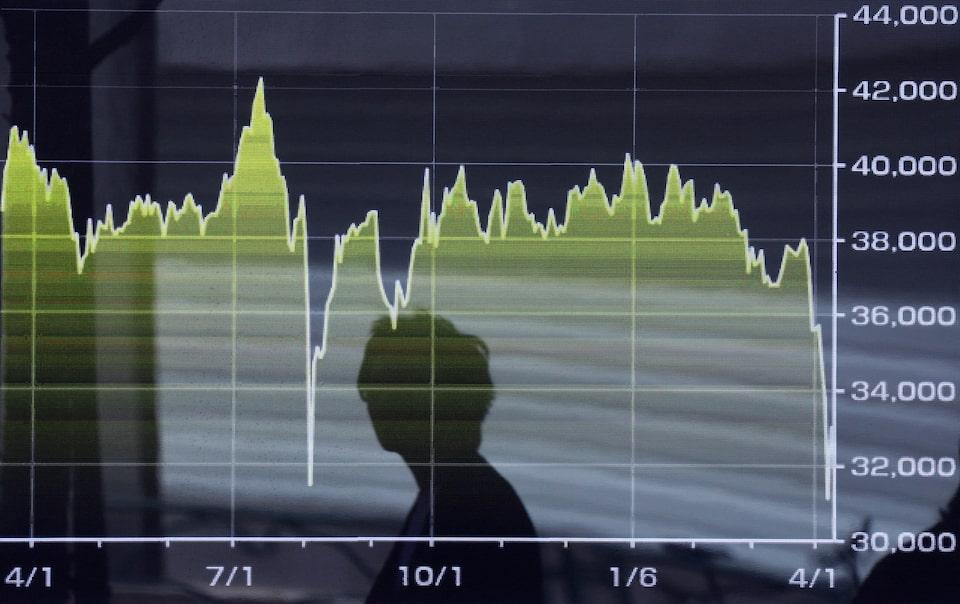
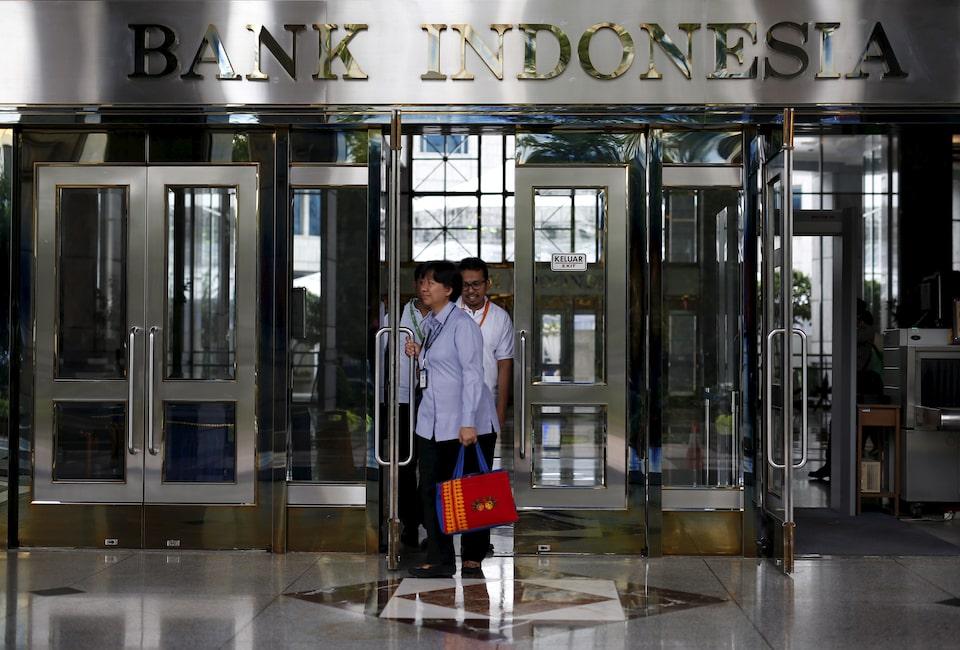
Key rate cut by 25 bps to 5.25% BI sees room to continue trimming policy rate Trade deal with U.S. positive for economy, governor says Economist sees 75-bp more rate cuts by 2026 JAKARTA, July 16 (Reuters) - Indonesia's central bank cut rates on Wednesday for the fourth time since September and said a revised tariff deal with the United States was positive for Southeast Asia's biggest economy amid weakening global trade and slowing domestic demand. Bank Indonesia (BI) cut the benchmark 7-day reverse repurchase rate (IDCBRR=ECI) , opens new tab by 25 basis points to 5.25%, as expected by a slim majority of economists polled by Reuters, and also cut two other key rates. Sign up here. Governor Perry Warjiyo said the central bank would continue to observe room for more rate cuts, citing an expectation of low inflation through to 2026, a stable rupiah and bleak global economic outlook. "BI is already all out in boosting economic growth, including in supporting loan growth," the governor told a press conference. President Donald Trump's announcement of a tariff deal on Tuesday gave BI another reason to ease monetary policy, some analysts said. "External caution was counterbalanced by the fresh news over the trade deal," DBS Bank senior economist Radhika Rao said. "Policymakers have been opportunistic this year, prudently tapping periods of market stability to lower rates, with the latest move also coming against the backdrop of the successful completion of a trade deal with the U.S." The central bank welcomed the trade deal, where Indonesian exports would incur a 19% tariff instead of the 32% rate initially proposed by Washington, Warjiyo said. The deal was a positive development that would support exports and broader economic prospects as the central bank maintained its GDP growth forecast for 2025 at a range of 4.6% to 5.4%, he said. Warjiyo expressed optimism about Indonesia's export outlook after the revised U.S. tariff deal. "This deal will of course increase imports, but in our view, these are imports for productive purposes, which will in turn increase economic growth going forward," he said, adding certainty from the decision will also help with business decision making and prospects for capital inflows. Sluggish household spending saw Indonesia's growth weaken in the first quarter, while the outlook for subsequent quarters has been clouded by the impact of U.S. tariffs on global trade. In its easing cycle since September, BI had taken pauses in between rate cuts to try to head off volatility in the rupiah triggered by Trump's trade policies and geopolitical tensions, even as Indonesia's inflation remained muted. The rupiah , which has been rangebound so far this month, barely moved after BI's announcement, while the main stock index (.JKSE) , opens new tab extended gains to trade almost 1% up. Brokerage Mandiri Sekuritas expects another 25-bp cut this year and 50-bp more in the first quarter of 2026 to counter weakening economic activity, its economist Rangga Cipta said. "BI maintained a dovish tone, emphasising the need to support economic growth," he said. https://www.reuters.com/world/asia-pacific/indonesia-cbank-cuts-lending-facility-rate-by-25-bps-6-2025-07-16/
2025-07-16 07:44
MUMBAI, July 16 (Reuters) - Cooling inflation in India and tariff-induced price pressures in the U.S. are cementing a downward bias on dollar-rupee forward premiums, according to analysts. India's retail inflation hit a six-year low in June, while U.S. consumer prices rose at their fastest pace since February, with higher goods costs hinting at tariff effects. Sign up here. This divergence is likely to persist. Economists project India's consumer price index inflation to touch a record low in July, while the tariff impact is seen becoming more pronounced in the U.S. inflation prints for July and August. Cooling domestic inflation is prompting calls for at least one more interest rate cut by the Reserve Bank of India, while analysts believe the rising U.S. price pressures due to tariffs may keep the Federal Reserve from cutting rates. BofA Global Research sees no Fed rate cuts in 2025 and urges investors to "fade" the 2025 easing priced in. Markets currently expect just under two cuts this year. Diverging rate outlooks for the two central banks, shaped largely by the contrasting inflation trajectories, would put the squeeze on dollar-rupee forward premiums, which reflect the U.S.-India interest rate differential. "The odds of another rate cut have increased in India and inflation will likely fall below 2% in July, so these bets will rise going into the August meeting. This could keep USD/INR forward premia under stress," ANZ forex and rate strategist Dhiraj Nim said. On Wednesday, dollar-rupee forward premiums were a tad lower, with the one-year implied yield down 2 basis points at 1.96%. The odds of U.S. rate cuts are "going lower, while India's rate cut chances are rising. This builds the case for 1-year to be squeezed lower to 1.90%," a swap trader at a mid-sized private bank said. The rupee , meanwhile, was modestly higher at 85.78 per dollar, comforted by broad-based interbank dollar sales. https://www.reuters.com/world/india/india-us-inflation-reports-reinforce-downward-bias-dollar-rupee-forward-premiums-2025-07-16/