2025-07-15 21:13
WASHINGTON, July 15 (Reuters) - The U.S. Department of Agriculture said on Tuesday it would cut funding for a national network of centers that have supported thousands of small- and mid-sized farm and food businesses. The cuts are another hit to farmers from President Donald Trump's effort to shrink the size and cost of the federal government. The administration has previously canceled programs for local foods and food banks and climate-friendly farming, among others. Sign up here. Agriculture Secretary Brooke Rollins said in a statement that the agency was terminating the Regional Food Business Centers program because they were not financially sustainable. Four of the 12 centers will close immediately, and the remaining eight have the option to continue managing existing grants through next May, Rollins said. "USDA will honor existing commitments for over 450 grants to farmers and food businesses to ensure planning decisions on the farm can continue as normal, however stakeholders should not plan on this program continuing," she said. The USDA under former President Joe Biden spent $400 million to open the centers as part of its effort to increase resilience and competition in the U.S. food supply chain. The centers have provided training or technical assistance to more than 5,500 farms and businesses, according to a 2024 progress report. "The USDA has made yet another decision to prematurely end multi-year agreements that are effectively serving the small family farms the administration claims to be the focus of their agenda," said Hannah Quigley, policy specialist at the National Sustainable Agriculture Coalition, a policy and advocacy group. https://www.reuters.com/world/us/us-farm-agency-ends-program-support-small-businesses-2025-07-15/
2025-07-15 20:58
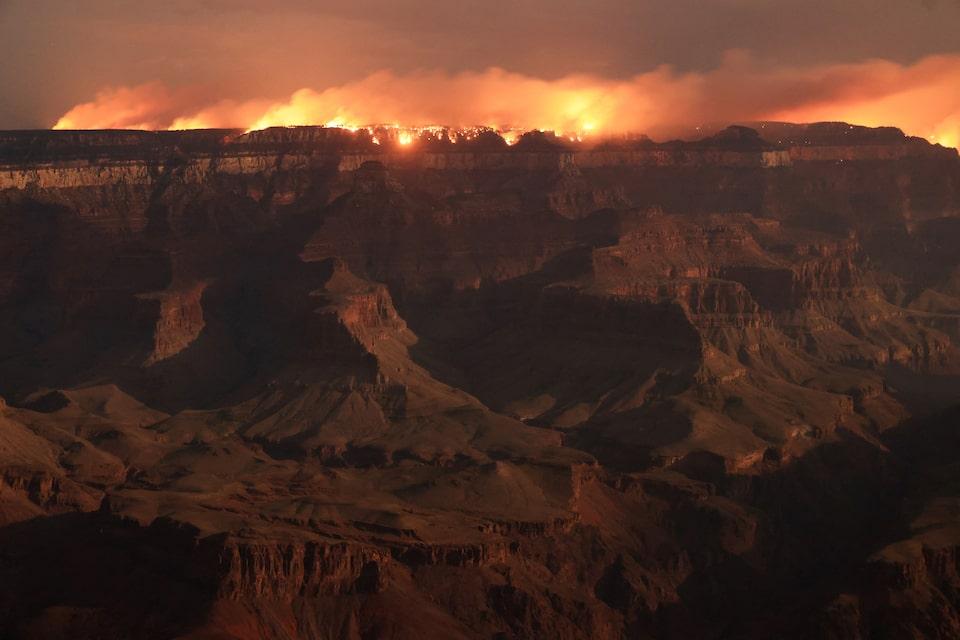
July 15 (Reuters) - A wildfire in tinder-dry forest on the North Rim of the Grand Canyon grew around 50% on Tuesday after it destroyed dozens of buildings, prompting public outrage that it was left to burn for a week before firefighters tried to fully extinguish it. The so-called Dragon Bravo Fire swelled to 8,570 acres (3,468 hectares) after burning the historic Grand Canyon Lodge and 70 other structures, including tourist cabins and park staff housing over the weekend, a spokesperson for the incident team said. Sign up here. Local media reported around 280 National Park Service workers lost their housing in the blaze sparked by lightning on July 4. "It's just like perfect tinder-dry for a fire," said spokesperson Stefan La-Sky of record-low tree moisture in ponderosa pine and fir forest on the North Rim. Arizona Governor Katie Hobbs has demanded an independent investigation into why National Park Service staff let the fire burn during the driest time of the summer in a botched attempt to reduce wildfire risks and improve forest health. The National Park Service said it initially treated the fire with a "confine and contain" strategy to allow for the natural role of fire to reduce fuel accumulations, stimulate new plant growth and help regulate insects and disease. It switched to an "aggressive full suppression strategy" after strong northwest winds on July 11, uncommon to the area, drove the fire towards park buildings on the edge of the canyon, according to the InciWeb U.S. government wildfire site. The blaze was the second so-called managed wildfire on the North Rim in as many decades to have raged out of control. The Warm Fire in 2006 was allowed to burn for weeks following a lightning strike before high winds sent it out of control, briefly trapping hundreds of tourists and park workers before they were evacuated. It went on to burn 59,000 acres (24,000 hectares), much of it severely. The North Rim of the park will remain closed for the rest of the 2025 season, which runs to October, and inner canyon trails and campgrounds are closed until further notice, the National Park Service said. The South Rim of the park, which attracts around 5 million visitors annually, remains open. https://www.reuters.com/business/environment/grand-canyon-fire-that-was-left-burn-swells-50-after-destroying-historic-lodge-2025-07-15/
2025-07-15 20:46
TORONTO, July 15 (Reuters) - A group of Canada's First Nations has launched a constitutional challenge to recently passed laws that would fast-track approval of infrastructure projects like mines and oil pipelines, arguing the measures violate the government's obligations to Indigenous people. The two new laws -- one in the province of Ontario and one at the federal level -- “represent a clear and present danger to the Applicant First Nations’ self-determination rights" and violate the government's obligation to reconcile with Indigenous peoples, according to a notice filed in Ontario Superior Court on Monday. Sign up here. The nine First Nations involved in the lawsuit are located across Ontario and comprise Alderville First Nation, Apitipi Anicinapek Nation, Aroland First Nation, Attawapiskat First Nation, Fort Albany First Nation, Ginoogaming First Nation, Kitchenuhmaykoosib Inninuwug, Oneida Nation of the Thames and Wabauskang First Nation. Parliament passed the federal legislation speedily late last month. It would let the government select infrastructure and resource projects in the "national interest” and then decide whether some laws apply to them. Liberal Prime Minister Mark Carney aims for the law to fulfill a campaign promise to speed up approvals of what he calls nation-building projects, including mines and oil pipelines. The Ontario law, passed in early June, allows the government to declare "special economic zones" that make some projects exempt from other provincial laws. Environmentalists oppose both laws, saying they sidestep legislation meant to mitigate ecological harms while Indigenous groups argue they run roughshod over their rights to self-determination and the government's duty to consult. The national law lets Canada “unilaterally ram through projects without meaningful engagement with First Nations,” the court filing reads. Canada is committed to upholding its commitments and obligations to Indigenous peoples, a spokesperson for Canada's Privy Council Office wrote in an email, adding that Carney will meet with First Nations, Inuit and Metis in coming weeks. "Canada's goal is to pursue projects in the national interest in partnership with Indigenous Peoples," the email said. "Indigenous equity participation in major projects is a central focus of this initiative." The Ontario government said it has begun talks with First Nations aligned with its economic development goals and will continue consultations this summer. https://www.reuters.com/world/americas/nine-canadian-first-nations-launch-constitutional-challenge-major-projects-2025-07-15/

2025-07-15 20:36
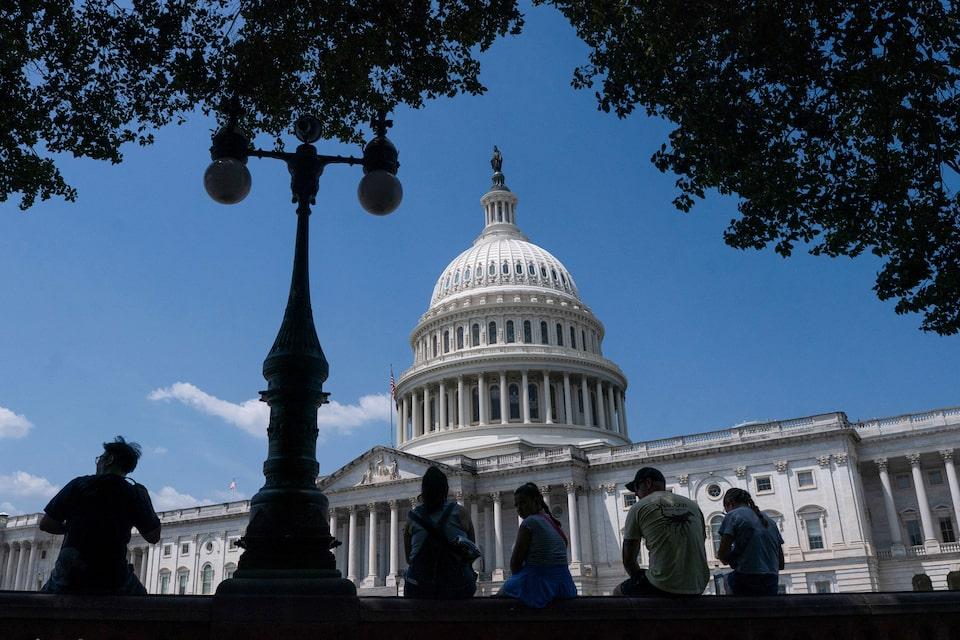
WASHINGTON, July 15 (Reuters) - U.S. President Donald Trump on Tuesday stepped in to broker an agreement among Republican lawmakers after a snag cast doubt on the fate of long-awaited cryptocurrency legislation that would mark a major victory for the digital assets sector. A failed procedural vote in the House of Representatives earlier on Tuesday sent shares of crypto firms lower. But the Republican president said in a statement late on Tuesday that he was meeting in the Oval Office with 11 of 12 members of Congress needed to pass the legislation. Sign up here. "After a short discussion, they have all agreed to vote tomorrow morning in favor of the Rule," Trump said , opens new tab on his social media platform. House Republicans had billed this week as "Crypto Week," and were keen to advance numerous pieces of legislation aimed at providing clarity to the digital asset industry and long-sought legitimacy to the sector. Several conservative Republicans on Tuesday earlier joined with Democrats in blocking a procedural vote to allow consideration of three crypto bills as part of a dispute over how the measures should be packaged and considered. Shortly after that vote, House Speaker Mike Johnson told reporters that he planned to continue discussing the matter with members and hoped to vote on it again shortly. Shares of crypto-related stocks including Circle Internet (CRCL.N) , opens new tab and Coinbase Global (COIN.O) , opens new tab fell on the news of the vote but then pared losses. The House is attempting to pass a series of crypto-related bills, most notably a bill that would establish a regulatory framework for stablecoins. Stablecoins, a type of cryptocurrency designed to maintain a constant value, usually a 1-to-1 dollar peg, are commonly used by crypto traders to move funds between tokens. Their use has grown rapidly in recent years, and proponents say they could be used to send payments instantly. That bill - and another the House is considering that would define when a crypto token is a commodity - would be a huge win for the crypto industry. The House also was set to consider a bill that would prohibit the U.S. from issuing a central bank digital currency. Republicans say there is a risk this could give the government too much control over Americans' personal finances. That bill has not been considered in the Senate and the Federal Reserve has not indicated a desire to develop a central bank digital currency. https://www.reuters.com/legal/government/crypto-bills-hit-procedural-snag-congress-2025-07-15/
2025-07-15 20:35
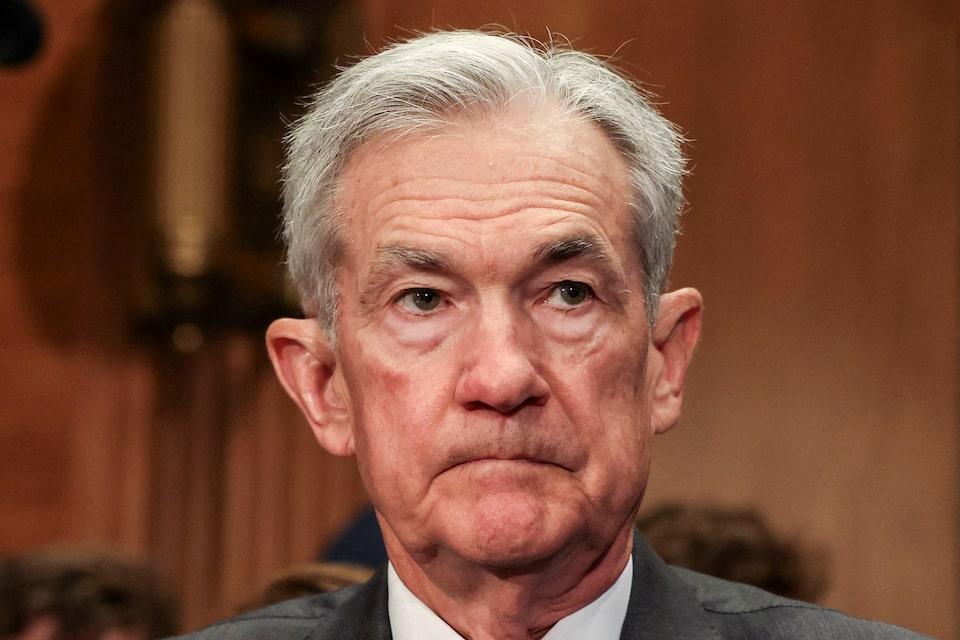
Trump has called for Powell's resignation, lower interest rates Erosion of Fed independence could make financial assets more volatile Investors diversify portfolios amid Fed leadership uncertainty NEW YORK, July 15 (Reuters) - President Donald Trump's renewed calls for Federal Reserve Chair Jerome Powell's resignation have prompted investors to protect portfolios against the risk of higher inflation, as a central bank more willing to lower interest rates could fuel price rises and make lenders demand higher compensation to hold bonds. While a Fed chief more friendly to cutting rates could be mixed for equities in the short term, it would translate into a weaker U.S. dollar, increased volatility in the Treasuries market and higher longer-term rates, meaning more expensive borrowing costs for mortgages and corporate bonds. Sign up here. Since returning to the White House in January, Trump has repeatedly railed against the Powell-led Fed for not cutting interest rates, feeding concerns that Trump aims to put the Fed under his thumb. Even JPMorgan (JPM.N) , opens new tab CEO Jamie Dimon on Tuesday warned of the unintended consequences of that, saying central bank independence was sacrosanct. If market participants perceive that Fed independence is eroding, moves in financial assets could be wild, some analysts say. One of the top risks is that investors will sell Treasury bonds, lifting interest rates on longer-term maturities in the U.S. debt market relative to short-term securities. "If markets believe that a politically-captured Fed will lower rates to stimulate growth regardless of economic consequences, long-term inflation expectations will rise, causing the curve to steepen," said Guy LeBas, chief fixed income strategist at asset manager Janney Capital Management. "It's impossible to be confident in the magnitude of the move, but my guess is it'll be large - possibly measured in percent increases in 30-year Treasury yields, not basis points." The minutes from the Fed's June 17-18 meeting, which were released last week, showed little support for a cut at the central bank's July 29-30 meeting, as most policymakers remain concerned about the inflationary risks that Trump's import tariffs could pose. Even so, Trump has said Powell's resignation "would be a great thing." The president, who cannot fire the Fed chief over a monetary policy dispute, and his administration have publicly called for Powell's exit or for rates to be cut on multiple occasions this month. "While short-dated yields could fall in this scenario based on a faster pace of Fed rate cuts moving forward, longer-dated yields would likely recalibrate higher for stickier inflation and rising term premia based on the erosion of institutional trust," said Chip Hughey, managing director of fixed income at Truist Advisory Services. Bond investors are pricing in increased price pressures in the inflation market over the next few years. Breakeven inflation as indicated in the U.S. five-year Treasury Inflation-Protected Securities hit 2.476% late on Monday, a three-month high. In a recent escalation of criticism of Powell, the White House is probing cost overruns in the renovation of the Fed's historic headquarters in Washington. The questioning has intensified concerns among market participants over risks that the Trump administration will try to fire Powell for cause, perhaps the only legal path for it to do so. U.S. Treasury 30-year yields on Tuesday topped 5% for the first time since late May, as investors fretted about the country's huge fiscal deficit and assessed the risk of Powell's exit from the central bank. A Fed spokesperson pointed to Powell's previous statements. The Fed chief, who was appointed by Trump during the president's first term in the White House, has repeatedly said he has no plans to leave his post as head of the U.S. central bank before his term expires on May 15, 2026. Powell's seat on the Fed's Board of Governors extends to January 31, 2028. The White House did not immediately respond to a Reuters request for comment. "I still see the risks as fairly minimal, but higher than they were a week or two ago," said Matt Orton, head of market strategy at Raymond James Investment Management. Orton still favors a diversification away from Treasuries and into gold, as well as both high-quality value and growth equities. "The risk-reward for me in Treasuries right now just isn't there." ON THE HUNT While the odds of Powell being ousted or resigning are viewed as low, analysts see some chance that Trump could nominate someone for the job early to influence monetary policy through a "shadow" Fed chief. U.S. Treasury Secretary Scott Bessent said earlier this month the Trump administration is focusing now on finding a replacement for Powell this fall. Morgan Stanley said in a note that the risk of a shadow Fed chief is a less relevant question at this point. "Until Powell's term is up, though, the bigger risk to our Fed forecast is our economic forecast ... where we remain quite humble," Seth Carpenter, Morgan Stanley's chief global economist, wrote. Although market participants see the risk of weakening the central bank's independence as low, many investors are increasingly incorporating this prospect into their portfolios. JPMorgan CEO Jamie Dimon pointed to those risks in an earnings call on Tuesday, saying: "The independence of the Fed is absolutely critical, and not just for the current Fed chairman, who I respect, Jay Powell, but for the next Fed chairman." "Playing around with the Fed can often have adverse consequences, absolutely opposite of what you might be hoping for," Dimon added. George Bory, chief investment strategist for fixed income at Allspring, said the asset manager has been positioning for steeper yield curves, in line with an environment of future rate cuts and growing budget deficits. "That strategy of positioning for a steeper yield curve over the coming months and quarters seems to make a lot of sense. It's justified economically, the technicals support it, and then the political landscape also," he said. If stocks could get a boost from lower rates initially, the pressure from higher long-term rates would cast a shadow over them, investors say. Jack Ablin, chief investment officer at Cresset Capital, said U.S. equities would "probably be OK, but I think that it would likely continue to accelerate the trend of global investors moving capital away from the U.S." "Once investors question the independence of the Fed, it just becomes a less stable monetary environment," Ablin said. https://www.reuters.com/business/finance/investors-seek-protection-risk-fed-chiefs-ouster-2025-07-15/
2025-07-15 20:33
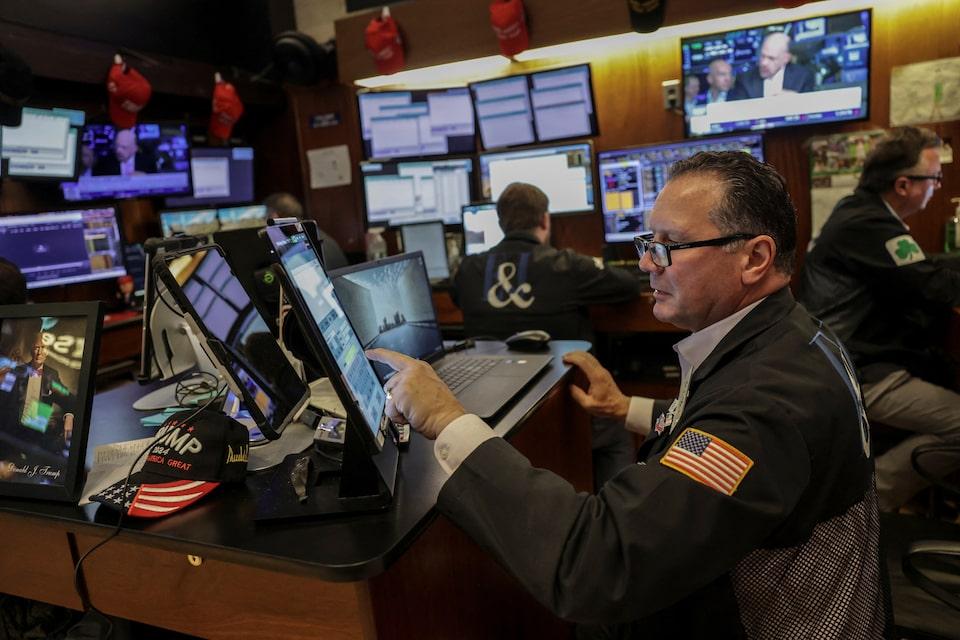
Nasdaq achieves fourth record-high close in last five sessions Nvidia surges as H20 chip sales to China set to resume Citigroup ends at highest since 2008 after Q2 profit beat JP Morgan, Wells Fargo, BlackRock all down after earnings Indexes: Dow down 0.98%, S&P 500 down 0.4%, Nasdaq up 0.18% July 15 (Reuters) - The Nasdaq Composite (.IXIC) , opens new tab posted its latest record finish on Tuesday, supported by a jump in shares of heavyweight Nvidia, but the other Wall Street benchmarks dropped as a key inflation report and a flurry of bank earnings failed to excite investors. It was the fourth session in five that the technology-heavy Nasdaq index has posted a record close, and the eighth time since June 27. Sign up here. Artificial-intelligence chip leader Nvidia (NVDA.O) , opens new tab was the primary factor behind the Nasdaq's increase, gaining 4% after it unveiled plans to resume sales of its H20 AI chip to China. The news buoyed other chipmakers, with Advanced Micro Devices (AMD.O) , opens new tab and Super Micro Computer (SMCI.O) , opens new tab both gaining more than 6.4%. The semiconductor index (.SOX) , opens new tab also advanced 1.3% to its highest point in a year, while the S&P technology index (.SPLRCT) , opens new tab climbed by the same percentage to hit a record high. Rob Swanke, senior investment research analyst at Commonwealth Financial Network, said the Nvidia news meant that some investors, who had moved into other stocks due to technology's high valuations, were rotating back. "I would probably say it's a one-day pop," he added, noting that investors would be waiting for sales to be reflected in its earnings. The Nasdaq Composite (.IXIC) , opens new tab gained 37.47 points, or 0.18%, to finish at 20,677.80. The Dow Jones Industrial Average (.DJI) , opens new tab fell 436.36 points, or 0.98%, to 44,023.29, and the S&P 500 (.SPX) , opens new tab lost 24.80 points, or 0.40%, to 6,243.76. Markets have been buoyant in recent weeks. Investor concerns that the U.S. economy would be tarnished by President Donald Trump's policies, including major tariff announcements, have started to abate, allowing Wall Street to move higher. This week was expected to be a significant test of that improving sentiment, with the start of second-quarter earnings season and inflation reports that were forecast to reflect sellers starting to pass on higher tariff-related costs. The first of these reports showed U.S. consumer prices posted their biggest jump in five months in June, hinting that tariffs may be starting to heat up inflation. Still, underlying inflation stayed moderate, offering some reassurance despite the headline spike. "The picture from inflation this morning, coming in a little bit higher than expected but pretty much in line, gives you some sense that the tariffs are starting to flow through into the economy," said Commonwealth's Swanke. "We'll get more concrete news, as we go through earnings, to see how companies are delivering the impact of higher tariffs." On the first day of second-quarter earnings season, banking stocks whipsawed in volatile trade. JPMorgan Chase (JPM.N) , opens new tab slipped 0.7% despite raising its 2025 net interest income outlook, while Wells Fargo (WFC.N) , opens new tab fell 5.5% even as its profit rose on reduced loan-loss reserves. BlackRock (BLK.N) , opens new tab notched a new milestone for assets under management, yet its shares slid 5.9%. Bucking the trend, Citigroup (C.N) , opens new tab climbed 3.7% to its highest finish since the global financial crisis, after its traders delivered a windfall that boosted second-quarter profit. The number of shares changing hands on U.S. exchanges on Tuesday was 16.82 billion, compared with the 17.55 billion average for the last 20 trading days. https://www.reuters.com/business/nasdaq-sp-500-futures-gain-ground-with-earnings-inflation-spotlight-2025-07-15/