2025-07-15 19:49
July 15 (Reuters) - Pennsylvania electric and gas utility PPL (PPL.N) , opens new tab and Blackstone Infrastructure have formed a joint venture to build natural gas generation stations to power data centers under long-term energy services agreements, the companies said on Tuesday. "We're excited to leverage the powerful expertise that PPL and Blackstone Infrastructure possess to bring much-needed new dispatchable generation online in Pennsylvania to match new data center load," said PPL President and CEO Vincent Sorgi in a statement. Sign up here. The announcement came during the Pennsylvania Energy and Innovation Summit in Pittsburgh, where government, technology, and energy officials announced roughly $90 billion in investments in advancing data centers and other aspects of the artificial intelligence boom. U.S. President Donald Trump was expected to be in attendance. The joint venture, of which PPL owns 51% and Blackstone Infrastructure owns the remaining 49%, will seek to sign long-term energy service agreements with large data center companies, the companies said. No such agreements have been reached yet. "The joint venture is actively engaged with landowners, natural gas pipeline companies and turbine manufacturers, and has secured multiple land parcels to enable this new generation buildout," according to the statement. https://www.reuters.com/business/energy/blackstone-us-utility-ppl-build-gas-power-plants-jv-partnership-2025-07-15/

2025-07-15 19:40
Fed chief Powell cited summer data as key in rates debate Some heavily imported categories showing price impacts Inflation gathered pace in June Trump says prices are low and Fed should cut WASHINGTON, July 15 (Reuters) - Rising prices across an array of goods from coffee to audio equipment to home furnishings pulled inflation higher in June in what economists see as evidence of the Trump administration's increasing import taxes passing through to consumers. Overall consumer prices rose 0.3% in June, a roughly 3.5% annual rate, after a 0.1% increase in May. Sign up here. Economists - and Fed officials - say they were expecting inflation to gather pace this summer as the lagged impact of tariffs gets passed along by businesses, and the June data suggest central bank policymakers in particular may remain reluctant to cut interest rates until more information is at hand. The tariff price shock could ultimately prove a temporary, one-time adjustment. But with the final tariff levels still being considered by President Donald Trump, and steeper levies threatened as of August 1, the inflation outlook remains unsettled. "Today's report showed that tariffs are beginning to bite," said Omair Sharif, head of Inflation Insights, "apparel prices rose, household furnishing prices jumped ... and recreation commodities increased." Those are heavily imported items and the increases were substantial. Prices for audio-video equipment rose 1.1% over the month and have risen 11.1% on a year over year basis, the largest jump ever in a category where globalization had generally meant steady or falling prices. It will likely strike a note of caution for the Fed, which has been facing almost daily criticism from Trump for not cutting interest rates, a step central bankers have been reluctant to take until it is clear where the tariffs will leave the U.S. economy. Yields on U.S. Treasury securities rose to their highest in about a month, and interest rate futures reflected growing uncertainty that the Fed would resume rate cuts in September, with a model from CME group showing that decision was seen a near toss-up after being the baseline expectation for the past month or so. In a speech in Washington Tuesday, Federal Reserve Bank of Boston President Susan Collins warned that she continues to expect the rise in import taxes to push up inflation while pushing down growth and employment. But she added strong balance sheets on both the business and household sides may help absorb the hit and lessen its impact. "The impact of tariffs may be lessened somewhat by an ability for firms to decrease profit margins and for consumers to continue spending, despite higher prices. As a result, the adverse impact of tariffs on labor market conditions and economic growth may be more limited," Collins said. Trump on social media said that consumer prices were "LOW" and repeated his call for the Fed to cut rates. The consumer price level was about 1.2% higher in June compared to December, the last full month before Trump started his second term. White House Press Secretary Karoline Leavitt said the fact that core inflation, which excludes food and energy prices, increased less than expected, "proves that President Trump is stabilizing inflation." Core inflation increased at a 2.9% annual rate in June, slightly below the 3% consensus forecast, but slightly faster than in May. Food and energy costs both increased, pushing headline inflation up to 2.7% from 2.4% the month before. "With increases in categories like household furnishings, recreation, and apparel, import levies are slowly filtering through," wrote Seema Shah, Chief Global Strategist at Principal Asset Management. "It would be wise for the Fed to remain on the sidelines for a few more months at least.” Investors still expect the Fed in September to cut a quarter of a percentage point from the current 4.25% to 4.5% benchmark interest rate maintained since December, but odds of a cut at the upcoming July 29-30 meeting are now below 5%. Powell had earlier pinpointed this summer as the time when the U.S. central bank will learn if inflation is responding to the tariffs applied on trading partners and various industrial sectors. So far the levies were having only a limited impact on inflation, but economists broadly have expected to see them eventually filter into retail prices. "We know there is a lag between implementation and the inflationary effect," said Gregory Daco, chief economist at EY-Parthenon. "Businesses manage imports using different processes ... We have not seen the full-blown effects of tariffs on CPI data ... I would expect to start to see more." CLAWING BACK TARIFF COSTS The June CPI data will likely leave the Personal Consumption Expenditures Price Index the Fed uses for its 2% inflation target well above that goal, with increased uncertainty now that Trump has threatened tariff levels of 30% or more on Mexico, Canada and the European Union, and more actions always possible. The PCE index outside food and energy rose at a 2.7% annual rate in May; recent Fed policymaker projections see it hitting 3.1% by the end of 2025; and the most recent round of tariffs threatened by Trump for August 1 could push it even higher. The new tariff rates "if fully passed through, would add about 0.4 percentage points to the PCE price level," Michael Feroli, chief U.S. economist at JP Morgan, estimated. "Given imperfect pass-through, margin compression, a more likely estimate is 0.2-0.3 points. We think this bolsters the case for the Fed to take a very cautious approach to rate cuts." Daco said there was already "divergence" beginning across a wide swath of goods where prices are rising faster than they did before Trump's initial rounds of tariffs. The price of household furnishings, for example, jumped a full percentage point in June. Prices of those products had been dropping, but reversed course in the spring. Other economists have pinpointed different items that could show where the new import taxes are starting to hit consumer prices. Sharif, the head of Inflation Insights, said the broad category referred to as "recreational commodities," which includes things like toys and audio and visual equipment that are often imported from China, bears watching -- and rose 0.8% in June, twice as fast as in the preceding two months. Outdoor equipment and tools are also items that are heavily imported, and while the pace of price increases had picked up in the spring it fell back in June to 0.2% versus 0.6% in May. Still, "tariff costs are strikingly visible in June’s CPI data," wrote Samuel Tombs, chief U.S. economist for Pantheon Macroeconomics. Excluding autos, prices for other non-food or energy goods rose at the fastest pace since June, 2022, when the Fed was still in a battle to lower pandemic-era inflation. "Prices rose especially sharply for goods which are primarily imported," with prices for appliances, sports equipment and toys all rising nearly 2% on the month, he said. https://www.reuters.com/world/us/feds-inflation-fears-may-start-be-realized-with-june-cpi-data-2025-07-15/
2025-07-15 19:09
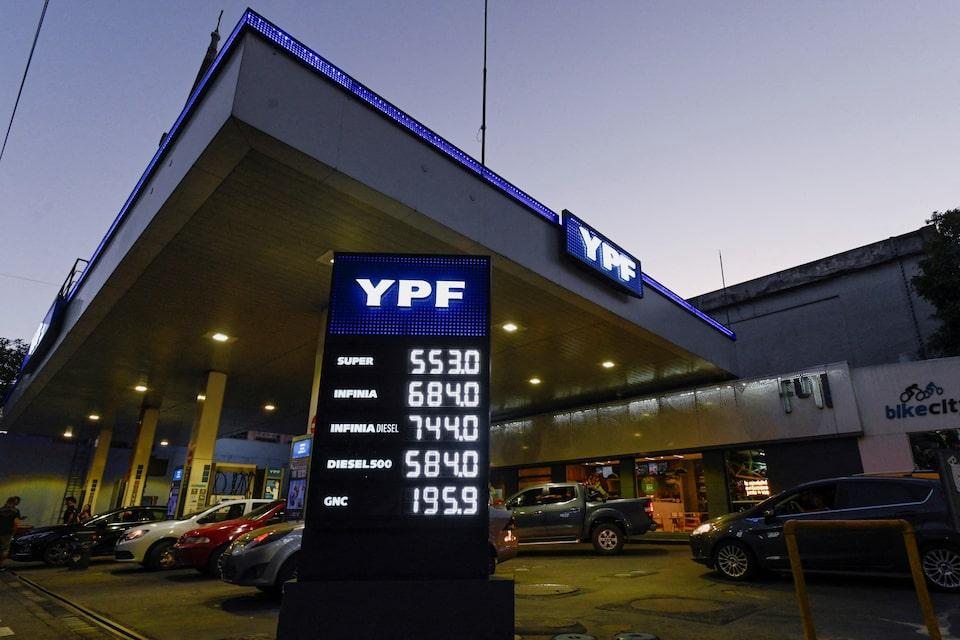
NEW YORK, July 15 (Reuters) - A U.S. appeals court on Tuesday put on temporary hold a judge's order that Argentina turn over its 51% stake in oil and gas company YPF (YPFDm.BA) , opens new tab to partially satisfy a $16.1 billion judgment. The 2nd U.S. Circuit Court of Appeals in Manhattan gave Petersen Energia Inversora and Eton Park Capital Management, which won the judgment, until July 17 to oppose Argentina's bid for a longer stay while the country appeals the turnover. Sign up here. Argentina has until July 22 to reply, and the matter will be reviewed by "the next available" three-judge panel, the appeals court said. The dispute stemmed from Argentina's 2012 seizure of the YPF stake from Spain's Repsol (REP.MC) , opens new tab without making a tender offer to Petersen and Eton Park, which had been minority shareholders. Those shareholders are represented by litigation funder Burford Capital (BURF.L) , opens new tab, which has said it expected to receive 35% and 73% of Petersen's and Eton Park's respective damages. Argentina has warned its economy could be destabilized if it gave up its controlling stake in YPF, the country's largest energy company. The country had faced a July 14 deadline for the turnover, but U.S. District Judge Loretta Preska in Manhattan agreed to delay enforcement so Argentina could seek relief from the appeals court. https://www.reuters.com/business/energy/us-appeals-court-puts-argentinas-51-ypf-stake-turnover-temporary-hold-2025-07-15/
2025-07-15 19:03
Canadian dollar falls 0.1% against the greenback Decline than for other G10 currencies Annual inflation rate increases to 1.9% 10-year yield rises to one-year high TORONTO, July 15 (Reuters) - The Canadian dollar edged lower against its U.S. counterpart on Tuesday, but the loonie declined less than the other Group of 10 currencies as domestic inflation data reduced expectations for Bank of Canada interest rate cuts. The loonie was trading 0.1% lower at 1.3715 per U.S. dollar, or 72.91 U.S. cents, after trading in a range of 1.3672 to 1.3729. Sign up here. Canada's annual inflation rate rose to 1.9% in June from 1.7% in May, meeting analysts' expectations, while CPI-median, one of the core measures of inflation closely tracked by the BoC, rose to 3.1% from 3%. "Today's uptick in core inflation coupled with the upside surprise in June's labor report means the BoC is highly unlikely to cut in July," analysts at BofA Global Research, including Carlos Capistran, said in a note. Investors see a 5% chance the BoC cuts its benchmark interest rate from the current setting of 2.75% at the next policy announcement on July 30, down from a 14% chance before the consumer price index report, overnight index swap data showed. Chances of a cut had been seen at 27% before data on Friday that showed Canada's economy adding 83,100 jobs in June. U.S. consumer prices increased by the most in five months in June amid higher costs for some goods, suggesting tariffs were starting to have an impact on inflation and potentially keeping the Federal Reserve on the sidelines until September. The U.S. dollar (.DXY) , opens new tab rose for a seventh straight day against a basket of major currencies, while the price of oil was trading 0.7% lower at $66.54 a barrel as concerns eased about an immediate supply disruption. Oil is one of Canada's major exports. The Canadian 10-year yield rose 9.6 basis points to 3.615%, its highest level since July last year. The gap between the 10-year yield and its U.S. equivalent narrowed by 3.6 basis points to about 87 basis points in favor of the U.S. note, which is the smallest gap in nine months. https://www.reuters.com/world/americas/canadian-dollar-falls-slightly-cpi-data-crimps-rate-cut-bets-2025-07-15/
2025-07-15 18:41
NEW YORK, July 15 (Reuters) - Citigroup (C.N) , opens new tab may issue its own stablecoin in an effort to facilitate digital payments, the bank's CEO, Jane Fraser, told analysts on a post-earnings conference call on Tuesday. "We are looking at the issuance of a Citi stablecoin, but probably most importantly is the tokenized deposit space, where we're very active," she said. "This is a good opportunity for us." Sign up here. The third largest U.S. lender is also exploring reserve management for stablecoins and providing custody solutions for crypto assets, Fraser said. Citigroup's shares briefly touched their highest level since the 2008 financial crisis after the bank reported second-quarter results that beat Wall Street estimates and said it plans to buy back at least $4 billion in stock. https://www.reuters.com/business/finance/citigroup-considers-issuing-its-own-stablecoin-ceo-says-2025-07-15/

2025-07-15 17:33
July 15 (Reuters) - The outlook for European corporate health has deteriorated, the latest earnings forecasts showed on Tuesday, as U.S. President Donald Trump's most recent tariff statements created further uncertainty for businesses. European companies are expected to report a drop of 0.7% year-on-year in second-quarter earnings, on average, according to LSEG I/B/E/S data, below the 0.2% decrease analysts had expected a week ago. Sign up here. This earnings season is the first to expose the impact of U.S. President Trump's tariff-fueled trade war on corporate health. Trump's tariff policies have changed frequently since April, the most common start of the second fiscal quarter. Some were imposed while others were proposed and then delayed. From last week, consensus for revenue forecasts meanwhile remained the same, with analysts expecting a 3.0% decrease, compared with a 3.0% drop expected before. Last week, after weeks of negotiations, President Donald Trump threatened to impose a 30% tariff on imports from the European Union starting on August 1, though EU ministers have voiced their confidence in still closing a deal before the deadline. The latest estimates compare with a 3.0% increase in earnings and a 0.8% drop in revenues a year ago, the data showed. This would be the worst quarterly performance in more than a year. Second-quarter results from Novartis (NOVN.S) , opens new tab and Volvo Cars (VOLCARb.ST) , opens new tab expected later this week, might shed more light on how European companies are faring at the start of this reporting quarter. The biggest second-quarter earnings winners are expected to be the Irish and Polish companies in the Europe-wide STOXX 600 stock index, with average growth of 88.6% and 67.3%, respectively. Norwegian and Austrian companies, meanwhile, are expected to see earnings fall 19.4% and 8.2%, respectively. As of Tuesday's close, the STOXX 600 was up about 7.4% year to date. https://www.reuters.com/business/media-telecom/european-second-quarter-corporate-profits-expected-fall-07-2025-07-15/