2025-07-15 16:22
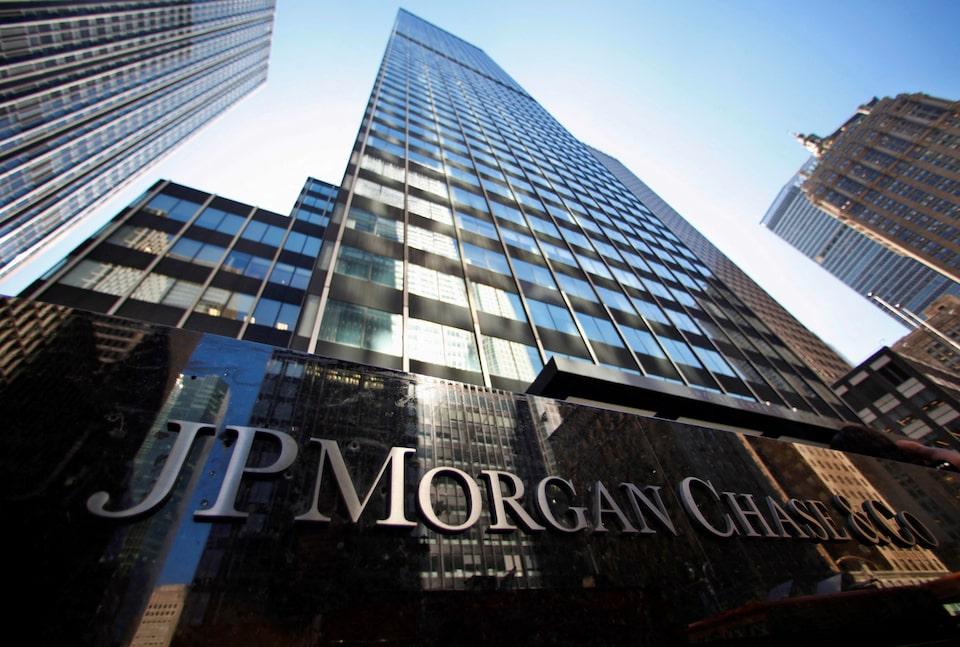
JPMorgan raises 2025 net interest income forecast to $95.5 billion Trading revenue up 15%, investment banking fees rise 7% IPO pipeline improving but concerns remain, CFO says Acquisitions have a high bar, CFO says Headcount drops by more than 1,300 employees July 15 (Reuters) - JPMorgan Chase (JPM.N) , opens new tab raised its net interest income forecast for 2025 after strong results in investment banking and trading helped it surpass profit expectations for the second quarter. "The U.S. economy remained resilient," CEO Jamie Dimon said. "The finalization of tax reform and potential deregulation are positive for the economic outlook." Sign up here. Still, he expressed caution about "significant risks" from tariffs and trade uncertainty, worsening geopolitical conditions, high fiscal deficits, and elevated asset prices. Dimon, 69, who has run the largest U.S. lender for more than 19 years, is one of the most prominent voices on Wall Street. In contrast to rival bank CEOs who have given rosier assessments of the economy, Dimon has been more downbeat and cautious. The bank now expects about $95.5 billion of NII, or the difference between what it earns on loans and pays on deposits, compared with an earlier estimate of nearly $94.5 billion. Market activity surged as investors seized opportunities and hedged risks in response to shifting U.S. tariff policies. The turmoil propelled JPMorgan's trading revenue 15% higher to $8.9 billion, driven by gains in both fixed income and equities. Investment banking fees also rose 7% to $2.5 billion, underpinned by a rise in mergers and acquisitions and debt underwriting. Both trading and investment banking performed better than management's earlier guidance. While concerns remain, the pipeline for initial public offerings was picking up, CFO Jeremy Barnum said. A well-capitalized balance sheet helped JPMorgan grow revenue in multiple segments, said Brian Mulberry, senior client portfolio manager at Zacks Investment Management, adding that the higher NII forecast was an "impressive flex." CONSUMER STRENGTH Despite worries about tariff-related pressure on households, JPMorgan noted continued signs of consumer resilience. "The consumer basically seems to be fine," Barnum said. "You see a little bit more stress in the lower income bands. But that's always true. Nothing there is out of line with our expectations." The bank set aside $2.85 billion in provision for credit losses, compared with $3.05 billion a year earlier. Excluding one-off costs, the lender earned $4.96 per share, compared with the $4.48 per share that analysts were expecting, according to estimates compiled by LSEG. Shares were down 0.6%. POLICY CLOUDS OUTLOOK Investors are closely scrutinizing banks' results and their executives' commentary this quarter to assess the impact of tariffs and the tax and spending bill signed into law by President Donald Trump this month. The bill is estimated to add more than $3 trillion to U.S. debt over the next decade, sparking backlash from some Republicans and onetime Trump allies such as Elon Musk, who have raised concerns about fiscal irresponsibility. However, while uncertainty has clouded the outlook, there were bright spots for lenders during the second quarter. JPMorgan was among 22 large banks that aced the Federal Reserve's stress tests, enabling it to boost its quarterly dividend and announce $50 billion in stock buybacks. The Fed also advanced a proposal to overhaul the "enhanced supplementary leverage ratio," which could lower the capital large global banks such as JPMorgan must hold against relatively low-risk assets. INORGANIC GROWTH OPPORTUNITIES JPMorgan's strong capital base leaves room for mergers and acquisitions, and management once again flagged inorganic growth opportunities, but also warned the bar is high and it is not looking to buy into hot sectors such as private credit or large language models. "Acquisitions have a high bar, both financially, strategically, and in some cases, culturally," Barnum said. "But we wouldn't be doing our jobs if we weren't thinking about it." While JPMorgan does not necessarily need M&A in any particular sector to boost growth, the bank could still be on the lookout in areas such as technology. "If there are areas in the technology side that would further their lead in terms of the efficiency of the business or capabilities that they could offer, from a trading perspective to their corporate clientele, it would be expected that they would pursue those," said Matt Stucky, chief portfolio manager of equities at Northwestern Mutual Wealth Management, which owns JPMorgan stock. Meanwhile, Dimon said the private credit market may have peaked after its dramatic growth in the last few years. The CEO, who has been a vocal skeptic of bitcoin, said the bank is going to be involved in stablecoins, without giving details. Stablecoins, a type of cryptocurrency designed to maintain a constant value, usually pegged to a fiat currency such as the U.S. dollar, are commonly used by crypto traders to move funds between tokens. Trump has promised to be the "crypto president," popularizing its mainstream use in the U.S. JPMorgan's headcount fell by more than 1,300 employees to 317,160, but the bank's workforce remains the largest among its peers after a rapid expansion in recent quarters. JPMorgan has said it expects it to be flat in 2025. Overall profit dropped 17% in the second quarter, but the comparison was skewed because of a nearly $8-billion one-off gain it had recorded on a share exchange agreement with Visa (V.N) , opens new tab last year. https://www.reuters.com/business/finance/jpmorgans-profit-slips-prior-year-accounting-gain-skews-comparison-2025-07-15/
2025-07-15 13:45
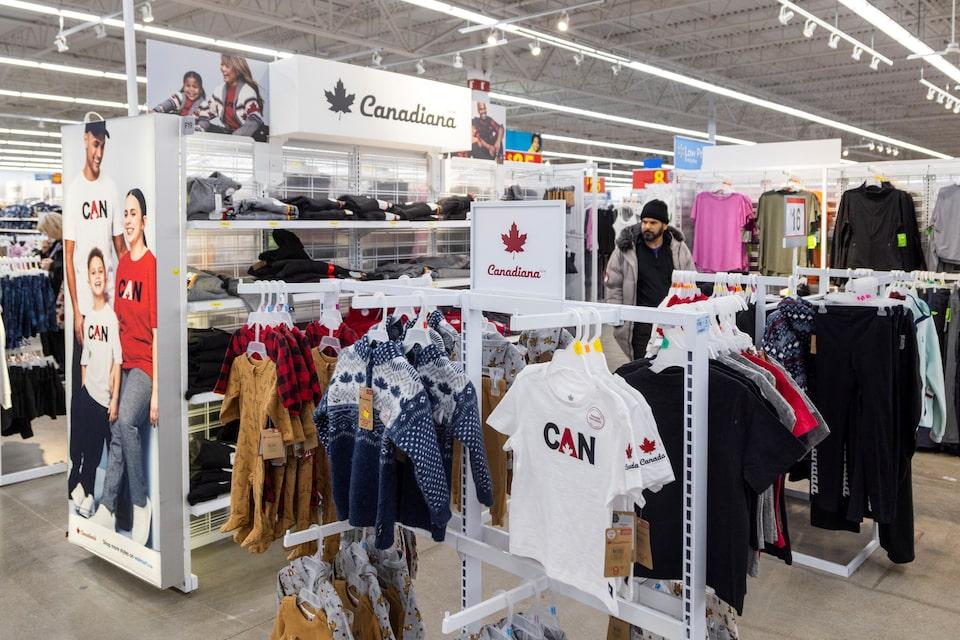
June consumer price index up by 0.1% on month-on-month basis Rise in prices led by durable goods, clothing, footwear Core measures of inflation continue to stay at or above 3% Shelter prices rise by below 3% for first time in four years OTTAWA, July 15 (Reuters) - Canada's annual inflation rate rose to 1.9% in June, meeting analysts' expectations, as increases in the price of automobiles, clothing and footwear pushed the index higher, data showed on Tuesday. The consumer price index was at 1.7% in the prior month. Sign up here. Statistics Canada said on a monthly basis the CPI increased 0.1%, matching analysts' forecasts. CPI has been under 2%, or the mid-point of the Bank of Canada's inflation target range, for three consecutive months. This is the last major economic indicator to be released before the Bank of Canada's rates decision later this month. The slight rise in prices across many segments, along with a strong jobs number last week, is likely to take away any incentive to cut interest rates, economists said. Money markets were betting on the odds for a rate cut at just over 10% after the data was released . The central bank will announce its monetary policy decision on July 30. "It's just the latest piece of evidence to keep the Bank of Canada on hold after 83,000 jobs (added in June) and no clarity on how fiscal policy and trade policy will evolve," said Derek Holt, vice president of Capital Market Economics at ScotiabankC. The Canadian dollar was trading stronger by 0.19% to 1.3677 against the U.S. dollar, or 73.12 U.S. cents. Yields on the government's two-year bonds were down 0.6 basis points to 2.761%. The rise in prices in June was primarily led by a 2.7% jump in durable goods such as automobiles and furniture, following a 2% rise in May on a year-on-year basis, StatsCan said. Passenger vehicle prices rose 4.1% on an annual basis in June following a 3.2% increase in May, the agency added. Inflation was further boosted by a rise in the price of clothing and footwear, which accelerated 2% annually in June after a modest 0.5% rise in May, due in part to uncertainty surrounding international trade, Statistics Canada said. U.S. consumer prices also picked up in June, likely marking the start of a long-anticipated tariff-induced increase in inflation. Canadian gasoline prices are expected to be depressed for the next 10 months after the government scrapped the consumer carbon levy on gasoline in April. On a year-over-year basis gasoline prices fell by 13.4% in June from 15.5% in May. Economists and the central bank have focused on the core measures of inflation, which excludes the impact of tax measures, to gauge price trends. One of the core measures of inflation, the CPI-median, or the centermost component of the CPI basket, edged up to 3.1% in June from 3% in the prior month. The other core measure CPI-trim, which excludes the most extreme price changes, was unchanged in June at 3% from May, StatsCan said. "The fact that core inflation is pretty much locked in at around 3% is a bit of an issue for Bank of Canada rate cut prospects," said Doug Porter, chief economist at BMO Capital Markets. Shelter prices, which account for up to 30% of the CPI basket weight and comprises mortgage and rent, rose by 2.9%, the first drop below 3% in more than four years. https://www.reuters.com/world/americas/canadas-annual-inflation-rate-june-slightly-up-19-2025-07-15/
2025-07-15 12:50
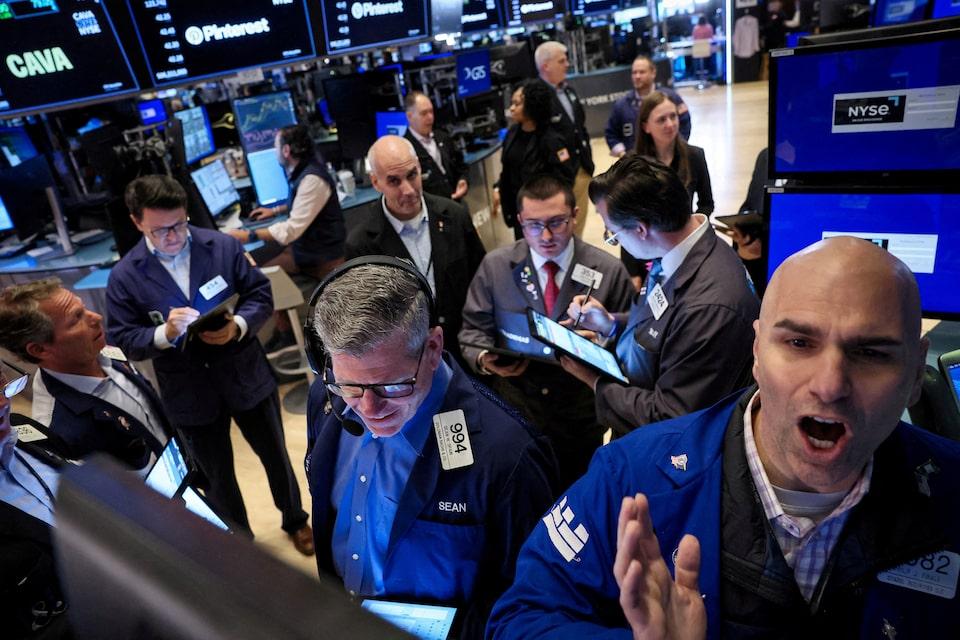
July 15 (Reuters) - The Federal Reserve will likely be able to start cutting short-term borrowing costs by September, traders continued to bet on Tuesday, after a government report showed a widely expected increase in consumer prices last month. The market-priced probability of a Fed interest-rate cut by September remained around 60% after the Bureau of Labor Statistics reported that the consumer price index rose 2.7% in June from a year earlier, and underlying inflation was up 2.9%. Sign up here. Traders continue to see just a 5% chance of a rate cut this month, with Fed policymakers mostly saying they want to see more data before reducing rates. https://www.reuters.com/business/traders-stick-bets-september-fed-rate-cut-after-inflation-report-2025-07-15/
2025-07-15 12:47
Demand growth forecasts left unchanged Says Kazakhstan output still above OPEC+ quota Says refinery intake to stay elevated to meet summer fuel demand LONDON, July 15 (Reuters) - OPEC said the global economy may perform better than expected in the second half of the year despite trade conflicts and refineries' crude intake would remain elevated to meet the uptick in summer travel, helping to support the demand outlook. In a monthly report on Tuesday, the Organization of the Petroleum Exporting Countries left its forecasts for global oil demand growth unchanged in 2025 and 2026 after reductions in April, saying the economic outlook was robust. Sign up here. "India, China, and Brazil are outperforming expectations so far, while the United States and the Eurozone are experiencing a continued rebound from last year," OPEC said in the report. "With this, the second-half 2025 economic growth may turn out better than currently expected." A solid economy shrugging off trade conflicts would make it easier for OPEC+, which groups OPEC plus Russia and other allies, to proceed with its plan to pump more barrels to regain market share after years of cuts aimed at supporting the market. OPEC+ agreed on July 5 to raise production by 548,000 barrels per day in August, further accelerating output increases at its first meeting since oil prices jumped, then retreated, following Israeli and U.S. attacks on Iran. Oil prices have not significantly fallen despite the larger than expected OPEC+ hike and U.S. President Donald Trump's 50-day deadline for Russia to end the Ukraine war, finding support from rising seasonal demand. Global refinery crude intake posted a sharp increase of 2.1 million bpd in June from May as refiners returned from maintenance, a sign of a stronger oil market, OPEC said in the report, adding that throughput was likely to stay high. "Refinery intakes globally, and particularly in the U.S., are expected to keep throughputs elevated to meet the seasonal uptick in transport fuel demand, especially that of gasoline, jet/kerosene and residual fuel," OPEC said. OPEC's demand forecasts are at the higher end of the industry range, as the agency expects a slower energy transition than some other forecasters. The International Energy Agency last week trimmed its demand forecasts but said the market may be tighter than it appears as refineries ramp up processing to meet summer travel demand. Brent crude was steady after OPEC published the report, trading close to $69 a barrel. OUTPUT RISING OPEC's report also showed that in June OPEC+ pumped 41.56 million bpd, up 349,000 bpd from May. This is slightly less than the 411,000 bpd hike called for by the group's increase in its June quotas. The actual hike was smaller than the headline increase in quotas partly because some nations, such as Iraq, cut output as part of a pledge to make further reductions for earlier pumping above targets. Still, output in Kazakhstan, which is under pressure to comply with OPEC+ quotas, rose last month after slightly falling in May and remained above the country's quota. According to OPEC, Kazakhstan's oil production rose by 64,000 bpd in June to 1.847 million bpd. https://www.reuters.com/business/energy/opec-says-world-economy-may-do-better-second-half-year-2025-07-15/
2025-07-15 12:25
HARARE, July 15 (Reuters) - Namib Minerals (NAMM.O) , opens new tab plans to spend $300 million to restart operations at two of its mothballed gold mines in Zimbabwe and lift production, its chief executive Ibrahima Tall told Reuters on Tuesday. Namib Minerals owns three gold mines in Zimbabwe, including the How mine, which is currently in operation. Sign up here. Tall said the funds would restart the group's Mazowe and Redwing mines, where production was halted in 2018 and 2019 respectively due to adverse economic conditions. Namib Minerals, which debuted on the Nasdaq in June, was created through the merger of assets previously owned by Metallon Corporation and U.S. firm Red Rock Acquisition Corporation, formerly known as Hennessy Capital Investment Corp. VI. Production at the two suspended mines could resume within 18 to 24 months of Namib Minerals securing financing for their relaunch, said Tall, who added that the company was exploring various options of raising the required capital. "Interest from investors on Nasdaq has been very good," he said in an interview in Zimbabwe's capital, Harare. Mazowe, located north of Harare, holds 1.2 million ounces of gold at an average grade of 8.4 grams per metric ton while Redwing, near the border with Mozambique, contains 2.5 million ounces at a grade of 3.07 grams per ton. Namib Minerals' How Mine near Bulawayo produced 37,000 ounces of gold in 2024, a 9% increase on the previous year's output. Zimbabwe's gold mines, which have for years struggled as a result of currency and policy volatility, are starting to expand output in response to record-high gold prices and relatively stable political and economic conditions. Caledonia Mining Corp (CALq.L) , opens new tab, which owns the Blanket Mine, is exploring options to raise around $250 million to build what could be Zimbabwe's biggest gold mine. https://www.reuters.com/world/africa/namib-minerals-plans-spend-300-million-restart-zimbabwe-mines-2025-07-15/

2025-07-15 12:21
BRUSSELS/PRAGUE, July 15 (Reuters) - The European Commission will work to address Slovakia's concerns over the EU's plan to phase out Russian gas imports, a letter seen by Reuters showed, as Brussels attempts to unlock a deal on new EU sanctions against Russia. Slovakia has been blocking the EU's latest sanctions package against Russia for its invasion of Ukraine until its concerns are addressed over the separate EU proposal to phase out imports of Russian gas by January 1, 2028. Sign up here. Slovakia argues that quitting Russian gas could cause shortages, a rise in prices and transit fees, and lead to damage claims from Russian supplier Gazprom (GAZP.MM) , opens new tab. The Commission has pledged to work with Bratislava to address those concerns, the letter seen by Reuters showed. The Commission will clarify how an "emergency break" can be triggered if gas prices spike because of scarce supply during the Russian gas phase-out, said the letter, addressed to Slovak Prime Minister Robert Fico and signed by Commission President Ursula von der Leyen. "We have been working closely with Member States most directly concerned, notably Slovakia, to ensure that the EU-wide phase-out of Russian energy imports will be gradual and well-coordinated," it said. Brussels will also develop a solution that aims to reduce the costs of cross-border tariffs on gas and oil for Slovakia, said the letter, which was dated Tuesday. It said the EU was also ready to intervene during potential litigation resulting from the Russian gas exit. The EU aims to reach a deal on the sanctions package on Tuesday, at a meeting of EU foreign affairs ministers in Brussels. New sanctions require approval from all 27 EU member countries. The EU's proposals to ban Russian gas by 1 January 2028 - with a gradual phase out beginning next year - need support from a reinforced majority of countries to pass, meaning Slovakia alone cannot veto them. https://www.reuters.com/sustainability/climate-energy/eu-offers-slovakia-reassurances-russian-gas-exit-letter-shows-2025-07-15/