2025-07-15 12:47
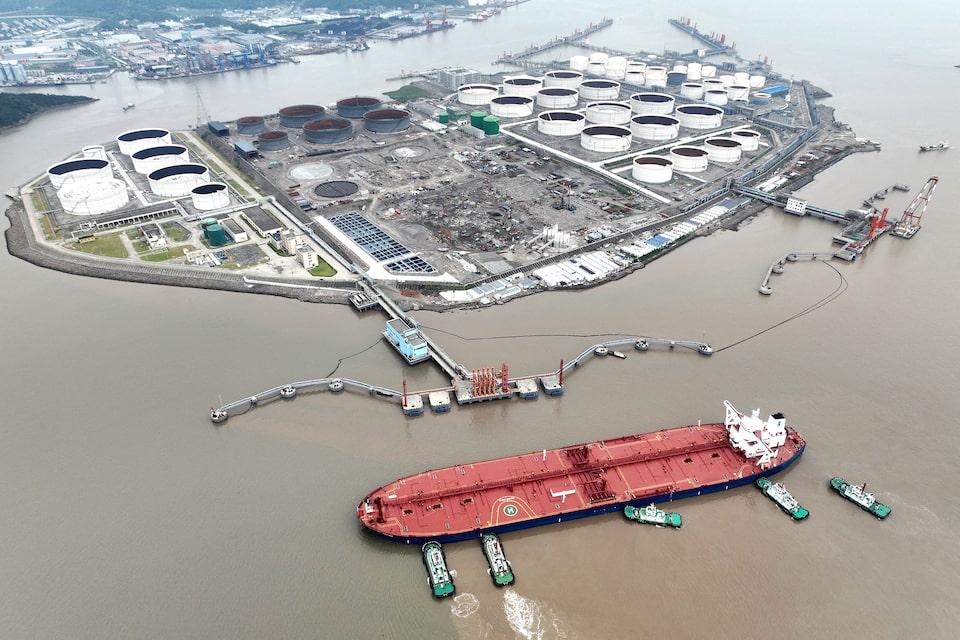
Demand growth forecasts left unchanged Says Kazakhstan output still above OPEC+ quota Says refinery intake to stay elevated to meet summer fuel demand LONDON, July 15 (Reuters) - OPEC said the global economy may perform better than expected in the second half of the year despite trade conflicts and refineries' crude intake would remain elevated to meet the uptick in summer travel, helping to support the demand outlook. In a monthly report on Tuesday, the Organization of the Petroleum Exporting Countries left its forecasts for global oil demand growth unchanged in 2025 and 2026 after reductions in April, saying the economic outlook was robust. Sign up here. "India, China, and Brazil are outperforming expectations so far, while the United States and the Eurozone are experiencing a continued rebound from last year," OPEC said in the report. "With this, the second-half 2025 economic growth may turn out better than currently expected." A solid economy shrugging off trade conflicts would make it easier for OPEC+, which groups OPEC plus Russia and other allies, to proceed with its plan to pump more barrels to regain market share after years of cuts aimed at supporting the market. OPEC+ agreed on July 5 to raise production by 548,000 barrels per day in August, further accelerating output increases at its first meeting since oil prices jumped, then retreated, following Israeli and U.S. attacks on Iran. Oil prices have not significantly fallen despite the larger than expected OPEC+ hike and U.S. President Donald Trump's 50-day deadline for Russia to end the Ukraine war, finding support from rising seasonal demand. Global refinery crude intake posted a sharp increase of 2.1 million bpd in June from May as refiners returned from maintenance, a sign of a stronger oil market, OPEC said in the report, adding that throughput was likely to stay high. "Refinery intakes globally, and particularly in the U.S., are expected to keep throughputs elevated to meet the seasonal uptick in transport fuel demand, especially that of gasoline, jet/kerosene and residual fuel," OPEC said. OPEC's demand forecasts are at the higher end of the industry range, as the agency expects a slower energy transition than some other forecasters. The International Energy Agency last week trimmed its demand forecasts but said the market may be tighter than it appears as refineries ramp up processing to meet summer travel demand. Brent crude was steady after OPEC published the report, trading close to $69 a barrel. OUTPUT RISING OPEC's report also showed that in June OPEC+ pumped 41.56 million bpd, up 349,000 bpd from May. This is slightly less than the 411,000 bpd hike called for by the group's increase in its June quotas. The actual hike was smaller than the headline increase in quotas partly because some nations, such as Iraq, cut output as part of a pledge to make further reductions for earlier pumping above targets. Still, output in Kazakhstan, which is under pressure to comply with OPEC+ quotas, rose last month after slightly falling in May and remained above the country's quota. According to OPEC, Kazakhstan's oil production rose by 64,000 bpd in June to 1.847 million bpd. https://www.reuters.com/business/energy/opec-says-world-economy-may-do-better-second-half-year-2025-07-15/

2025-07-15 12:25
HARARE, July 15 (Reuters) - Namib Minerals (NAMM.O) , opens new tab plans to spend $300 million to restart operations at two of its mothballed gold mines in Zimbabwe and lift production, its chief executive Ibrahima Tall told Reuters on Tuesday. Namib Minerals owns three gold mines in Zimbabwe, including the How mine, which is currently in operation. Sign up here. Tall said the funds would restart the group's Mazowe and Redwing mines, where production was halted in 2018 and 2019 respectively due to adverse economic conditions. Namib Minerals, which debuted on the Nasdaq in June, was created through the merger of assets previously owned by Metallon Corporation and U.S. firm Red Rock Acquisition Corporation, formerly known as Hennessy Capital Investment Corp. VI. Production at the two suspended mines could resume within 18 to 24 months of Namib Minerals securing financing for their relaunch, said Tall, who added that the company was exploring various options of raising the required capital. "Interest from investors on Nasdaq has been very good," he said in an interview in Zimbabwe's capital, Harare. Mazowe, located north of Harare, holds 1.2 million ounces of gold at an average grade of 8.4 grams per metric ton while Redwing, near the border with Mozambique, contains 2.5 million ounces at a grade of 3.07 grams per ton. Namib Minerals' How Mine near Bulawayo produced 37,000 ounces of gold in 2024, a 9% increase on the previous year's output. Zimbabwe's gold mines, which have for years struggled as a result of currency and policy volatility, are starting to expand output in response to record-high gold prices and relatively stable political and economic conditions. Caledonia Mining Corp (CALq.L) , opens new tab, which owns the Blanket Mine, is exploring options to raise around $250 million to build what could be Zimbabwe's biggest gold mine. https://www.reuters.com/world/africa/namib-minerals-plans-spend-300-million-restart-zimbabwe-mines-2025-07-15/

2025-07-15 12:21
BRUSSELS/PRAGUE, July 15 (Reuters) - The European Commission will work to address Slovakia's concerns over the EU's plan to phase out Russian gas imports, a letter seen by Reuters showed, as Brussels attempts to unlock a deal on new EU sanctions against Russia. Slovakia has been blocking the EU's latest sanctions package against Russia for its invasion of Ukraine until its concerns are addressed over the separate EU proposal to phase out imports of Russian gas by January 1, 2028. Sign up here. Slovakia argues that quitting Russian gas could cause shortages, a rise in prices and transit fees, and lead to damage claims from Russian supplier Gazprom (GAZP.MM) , opens new tab. The Commission has pledged to work with Bratislava to address those concerns, the letter seen by Reuters showed. The Commission will clarify how an "emergency break" can be triggered if gas prices spike because of scarce supply during the Russian gas phase-out, said the letter, addressed to Slovak Prime Minister Robert Fico and signed by Commission President Ursula von der Leyen. "We have been working closely with Member States most directly concerned, notably Slovakia, to ensure that the EU-wide phase-out of Russian energy imports will be gradual and well-coordinated," it said. Brussels will also develop a solution that aims to reduce the costs of cross-border tariffs on gas and oil for Slovakia, said the letter, which was dated Tuesday. It said the EU was also ready to intervene during potential litigation resulting from the Russian gas exit. The EU aims to reach a deal on the sanctions package on Tuesday, at a meeting of EU foreign affairs ministers in Brussels. New sanctions require approval from all 27 EU member countries. The EU's proposals to ban Russian gas by 1 January 2028 - with a gradual phase out beginning next year - need support from a reinforced majority of countries to pass, meaning Slovakia alone cannot veto them. https://www.reuters.com/sustainability/climate-energy/eu-offers-slovakia-reassurances-russian-gas-exit-letter-shows-2025-07-15/

2025-07-15 12:08
July 15 (Reuters) - Apple (AAPL.O) , opens new tab said on Tuesday it would invest $500 million into rare earths mine operator MP Materials (MP.N) , opens new tab, as the iPhone maker seeks to localize its mineral supply chain. Sign up here. https://www.reuters.com/business/apple-invests-500-million-rare-earths-mine-operator-mp-materials-2025-07-15/

2025-07-15 12:01
Apple to pre-pay $200 mln for MP's rare earth magnets Deliveries slated to start in 2027 Analysts say move boosts Apple's image in Washington MP's shares jump to all-time high July 15 (Reuters) - Apple (AAPL.O) , opens new tab has signed a $500-million deal with Pentagon-backed MP Materials (MP.N) , opens new tab for a supply of rare earth magnets, becoming one of the first tech companies to ink a U.S. supply agreement after China curbed exports earlier this year. The move reflects strong backing for Las Vegas-backed MP by one of the world's most-valuable companies, coming just days after the U.S. government said it would become MP's largest shareholder. Both mark an amazing about-face for MP after it contemplated merging , opens new tab with an Australian rival last year just to survive. Sign up here. MP shares jumped 21% in Tuesday trading to a record high, while Apple's stock gained under 1%. The deal, announced on Tuesday, guarantees Apple a steady flow of rare earths and magnets free from China - the world's largest producer. For Apple, the cost to support U.S. magnet production paled in comparison to the long-term risk that it could lose access entirely to the critical components, analysts said. MP last week agreed to a multibillion-dollar deal with the U.S. Department of Defense that will see the Pentagon become MP's largest shareholder and financial backstop. "Any time you have government ownership, that's a huge vote of confidence," said Gracelin Baskaran, director of the critical minerals security program at the Center for Strategic and International Studies. "We're in an era where executives are willing to pay a significant premium for a reliable supply chain. They don't want stoppage." Neither the precise length of the deal nor the specific volumes of magnets to be supplied was provided, although the agreement does call for magnets produced from recycled material, in keeping with Apple's long-standing goal of ending its reliance on the mining industry. Rare earths are a group of 17 metals used to make magnets that turn power into motion, including the devices that make cell phones vibrate. They are also used to make weapons, electric vehicles, and many other electronics. China halted exports in March following a trade spat with U.S. President Donald Trump that showed some signs of easing late last month, even as broader tensions underscored demand for non-Chinese supply. As part of the agreement, Apple will prepay MP Materials $200 million for a supply of magnets slated to begin in 2027. The magnets will be produced at MP's Fort Worth, Texas, facility using magnets recycled at MP's Mountain Pass, California, mining complex, the companies said. "Rare earth materials are essential for making advanced technology, and this partnership will help strengthen the supply of these vital materials here in the United States," Apple CEO Tim Cook said in a statement. Bob O'Donnell, president at market research firm TECHnalysis Research, said Tuesday's move "makes complete sense" given that Apple requires significant amounts of rare earth magnets for its devices. "Plus, by focusing on a U.S.-based supplier, it does help position Apple more positively in Washington," he said. Apple, which said the deal is part of its $500 billion four-year investment commitment to the U.S., has faced threats from Trump over iPhones not made in the U.S. But many analysts have said making the iPhone in the U.S. is not possible, given labor costs and the existing smartphone supply chain. Apple, which sold about 232 million iPhones last year, according to data from IDC, did not disclose which devices in which it will use the magnets. MP said the deal will supply magnets for hundreds of millions of devices, which would constitute a significant share of any of Apple’s product lines, which also include wearable devices such as watches and earbuds. MP already produces mined and processed rare earths and has said it expects to start commercial magnet production in its Texas facility by the end of this year. The company already has a magnet supply deal with General Motors (GM.N) , opens new tab and Germany's Vacuumschmelze. Last week's deal between MP and the U.S. government includes a price floor for rare earths designed to spur investment in domestic mines and processing plants, which has been lagging partly due to low prices set in China. https://www.reuters.com/business/apple-invest-500-million-rare-earths-mine-operator-mp-materials-fox-business-2025-07-15/

2025-07-15 12:00
LAUNCESTON, Australia, July 15 (Reuters) - China's imports of major commodities presented a mixed picture in the first half, but if there is a clear trend it is that the world's top buyer of natural resources is increasingly sensitive to prices. Crude oil imports were barely higher over the first six months from the same period last year, liquefied natural gas (LNG) arrivals were weak, as were coal imports. Sign up here. Copper was mixed, with lower arrivals of refined metal, but higher shipments of ores and concentrates, while iron ore imports were slightly softer, according to official data released on Monday. The traditional market view in commodities is that demand and supply fundamentals lead prices, but China is increasingly a case where its level of imports react more to prevailing prices. Crude oil is a good example of this. For the first quarter of 2025 China, the world's largest importer, saw declining arrivals, with imports dropping 1.5% from the same period in 2024. However, the second quarter saw increasing crude imports, culminating in arrivals of 12.14 million barrels per day (bpd) in June, the strongest month since August 2023. The increase in second quarter imports was enough to turn the first half total positive, with arrivals up 1.4% from the first six months of 2024. The main driver of the change in imports in the second quarter was prices. Global benchmark Brent futures were on a declining trend during the period when second quarter-arriving cargoes would have been arranged. The price dropped from a high of $75.47 a barrel on April 2 to a four-year low of $58.50 on May 5. Conversely, the soft imports from the first quarter came against a backdrop of rising prices during the window when those cargoes would have been bought. Brent went from a low of $70.85 a barrel on December 6 to a six-month high of $82.63 on January 15, meaning China's refiners were facing rising import costs for cargoes arriving in the first quarter. The same price dynamic was at work with LNG, with spot prices for delivery to North Asia reaching a 15-month high of $16.10 per million British thermal units (mmBtu) in the week to February 14. Strong European demand for LNG has kept Asian spot prices elevated, with the usual seasonal decline after the winter peak being far less pronounced in 2025. This in turn has led to a sharp drop in LNG imports, with commodity analysts Kpler estimating a 22% drop over the first half to 30.24 million metric tons. The weaker LNG imports were enough to drag China's total natural gas imports of both the super-chilled fuel and from pipelines down by 7.8% in the first half, according to official data. TARIFFS DRIVE COPPER Copper is another example of price effects on China's imports, albeit in a somewhat different form. China's imports of unwrought copper dropped 4.6% in the first half to 2.633 million tons. This was largely because copper imports by the United States surged as traders anticipated the imposition of tariffs by President Donald Trump, with a 50% duty being announced last week. In effect, copper cargoes destined for China were diverted to the United States, netting a profit for both the Chinese buyers, who received a premium, and for the traders as they were able to get cargoes into the United States prior to the tariff, and now can take advantage of massive premium that now exists for the industrial metal. But while imports of refined copper were lower, arrivals of ores and concentrates rose 6.4% in the first half to 14.75 million tons, a sign that demand from smelters remained robust. Iron ore also shows the impact of prices, although this is largely a picture of modestly lower imports amid largely steady prices. Iron ore imports dropped 3.0% in the first half to 592.21 million tons amid slightly lower steel output and declining port inventories. Singapore-traded iron ore contracts ended at $97.70 a ton on Monday, and have traded in a $15 range so far in 2025 with a midpoint around $99. This stability has contrasted with the far wider ranges seen in other commodities such as crude oil and copper. Perhaps the only major commodity imported by China that isn't showing price sensitivity is coal, where both import volumes and prices have been declining. China's coal imports dropped 11.1% in the first half to 221.7 million tons, while the main Indonesian and Australian grades supplied to China fell to four-year lows, according to assessments by commodity price reporting agency Argus. China's domestic coal output rose a solid 6% in the first five months of 2025 compared to the same period in 2024, cutting the need for imports. But the overall message from China's commodity imports is that for commodities that it doesn't control the supply chains or dominate buying, China is becoming far more responsive to changes in prices and will adjust import volumes accordingly. Enjoying this column? Check out Reuters Open Interest (ROI), your essential new source for global financial commentary. ROI delivers thought-provoking, data-driven analysis of everything from swap rates to soybeans. Markets are moving faster than ever. ROI can help you keep up. Follow ROI on LinkedIn , opens new tab and X , opens new tab. The views expressed here are those of the author, a columnist for Reuters. https://www.reuters.com/markets/commodities/chinas-imports-major-commodities-show-rising-price-sensitivity-2025-07-15/