2025-07-15 11:53
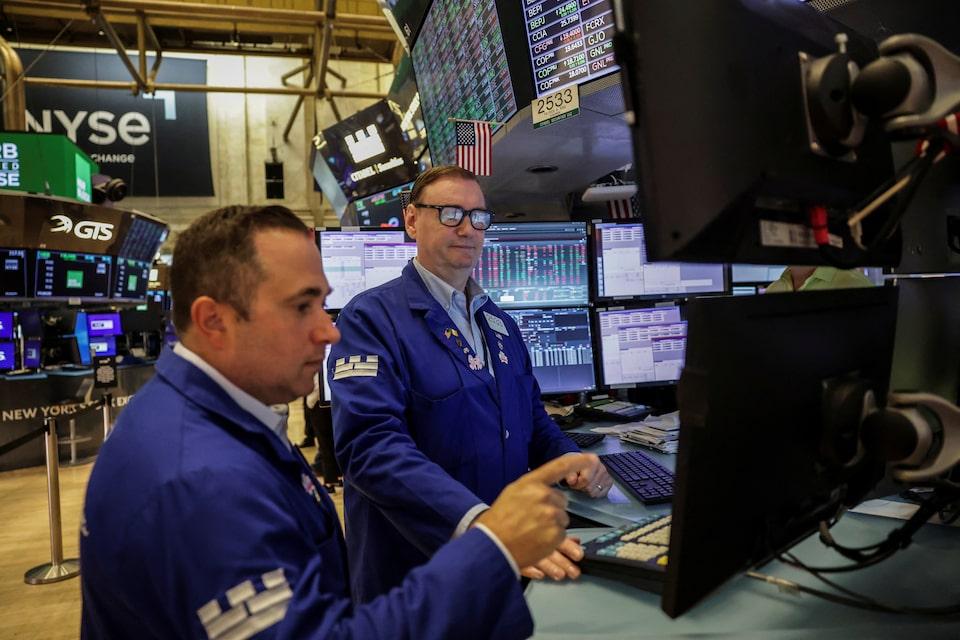
BENGALURU, July 15 (Reuters) - U.S. Treasury yields will trade in a tight range over the coming months, with a strong majority of bond strategists surveyed by Reuters predicting demand for Treasuries lagging an expected deluge of new supply. President Donald Trump's sweeping tax-cut and spending bill, which cleared its final hurdle in the U.S. Congress earlier this month, is expected to add $3.4 trillion to the nation's $36.2 trillion debt pile, according to the nonpartisan Congressional Budget Office. Sign up here. Inflation risks from a renewed U.S.-led trade war, which includes Trump threatening a 30% tariff on imports from Mexico and the European Union starting August 1, has also pushed the U.S. "term premium" - the compensation investors demand for holding longer-term bonds - higher. With net Treasury issuance expected to approach nearly half a trillion dollars this quarter a rising risk premium makes it considerably harder to finance those expenses at higher interest rates. Nearly 77% of bond strategists, 23 of 30, responding to a July 10-15 Reuters survey said demand for U.S. Treasuries would lag supply slightly both this quarter and the next. Those respondents generally held a higher yield view than the wider monthly panel of 71 bond yield forecasters. Most bond strategists in Reuters surveys over the past year have repeatedly overestimated declining yields. "I think rates will over time structurally drift higher until either they're too restrictive in the real economy or the administration...has to rein in spending in order to right-size the budget," said Connor Fitzgerald, fixed income portfolio manager at Wellington Management. "While the government will be fine financing all the supply they need it will, over time, come at a slightly higher risk premium or cost." Sustained expectations the U.S. Federal Reserve will cut interest rates is one main reason strategists expect the benchmark 10-year Treasury yield , currently 4.42%, to roughly hold that level in coming months, falling a bit to 4.40% by end-September and 4.30% by year-end. "We think we're going to be in a range-trade for the next few months, maybe a marginal drop by year-end - not a huge move. There's a limit to the sell-off in the long end, but then there's a limit to a rally and lower yields too," said Jason Williams, director of U.S. rates research at Citi. "There are certainly risks the unemployment rate can go higher and though we haven't seen much tariff-led inflation yet there are definitely risks tariffs will cause a one-time price shift and that really complicates the Fed's reaction function." U.S. consumer prices likely rose sharply in June, potentially signaling the start of a long-anticipated tariff-driven rise that could limit how much the Fed can cut rates. That would further strain the already-tense relationship between Trump and Fed Chair Jerome Powell. "A key risk is the impact inflation will have on consumer spending and the extent to which firms will pass that on. If firms are unable to absorb the cost pressures and pass them off to consumers...that would be a major factor in driving an economic slowdown," said Matthew Vegari, head of research at Clearwater Analytics. The interest-rate-sensitive 2-year Treasury yield , currently 3.90%, will decline 27 basis points to 3.63% at year-end, survey medians showed. If realized, that would steepen the yield curve, widening the spread with the 10-year yield to 67bps from around 50bps. https://www.reuters.com/business/us-treasury-yield-forecasts-anchored-despite-rising-debt-load-inflation-concerns-2025-07-15/
2025-07-15 11:43
FRANKFURT, July 15 (Reuters) - Renewable energy accounted for 54.5% of Germany's power consumption in the first six months of the year, down 2.7 percentage points from a year earlier, as slow wind speeds curbed generation, data showed on Tuesday. Germany has boosted its green power capacity as it seeks to shift towards a low-carbon economy and hit a political goal for renewables to account for 80% of consumption by 2030. Sign up here. It also needs renewable generation to fill the gap after it halted its imports of Russian gas in response to the Ukraine war. But Tuesday's data from utility association BDEW underlines the need for back-up power when weather conditions are unfavourable. For now Germany still relies on coal and some gas to supplement renewables. Between January and June 2024, the renewables share was 57.2%, according to the data from BDEW and the Centre for Solar Energy and Hydrogen Research, or ZSW. "The decline in electricity generation from wind energy in the first half of the year was primarily due to the historically exceptionally weak wind conditions in the first quarter of 2025," said a joint statement. The preliminary figures showed onshore wind production by volume fell 18.3% and offshore volumes by 17.0% year-on-year in the first six months. Hydropower volumes fell by 29% due to declines in precipitation and too little snow melt left to fill rivers after a warm winter. However, photovoltaic generation increased by 23.0%. National electricity usage fell 0.7% to 258.6 terawatt hours in the period under review, while domestic production edged down 0.2% to 251.2 TWh, with the balance accounted for by imports. https://www.reuters.com/sustainability/boards-policy-regulation/slow-wind-speeds-reduce-renewable-share-german-power-2025-07-15/

2025-07-15 11:40
BAGHDAD, July 15 (Reuters) - A drone attack halted production at the Sarsang oilfield in Iraq’s Kurdistan region on Tuesday only hours before its U.S. operator signed a deal to develop another field. The Sarsang field is operated by HKN Energy, a privately held U.S. oil and gas company active in Iraq’s Kurdistan region and owned by Hillwood Energy, part of the Hillwood group founded by Ross Perot Jr. Sign up here. Two hours after the morning attack, HKN Vice President Matthew Zais was in Baghdad with Oil Minister Hayan Abdel-Ghani to sign a preliminary agreement to develop the Himreen oilfield in northern Iraq, the oil ministry said. The signing ceremony was also attended by U.S. Ambassador Steven Fagin, whose embassy condemned the drone attacks on oil infrastructure in the Kurdistan region and urged the Iraqi government to investigate and hold those responsible accountable. Washington said such attacks undermine Iraq’s sovereignty and efforts to attract foreign investment. Production at the Sarsang field was halted as a precautionary measure after an explosion, two engineers told Reuters. Kurdistan regional authorities confirmed that the blast was from a drone attack. No group has claimed responsibility for the attack, but Iraqi Kurdistan security sources said that initial investigations suggested that the drone came from areas under the control of Iran-backed militias. Heavy plumes of smoke were seen rising from the Sarsang field in the Dohuk region of northern Iraq, said one oil engineer at the field. Field operator HKN said that the halt to production was to allow firefighters to extinguish the fire, later adding that emergency response teams contained the damage. There were no casualties, Iraqi Kurdistan's ministry of natural resources and HKN said. The incident is under investigation and a full assessment of the damage has been initiated, the company said without providing further detail on the cause of the explosion. On Monday two drones fell on the Khurmala oilfield near Erbil in Iraqi Kurdistan, damaging the water pipes at the field. https://www.reuters.com/business/energy/drone-attack-halts-sarsang-oil-output-iraqi-kurdistan-ministry-says-2025-07-15/

2025-07-15 11:35
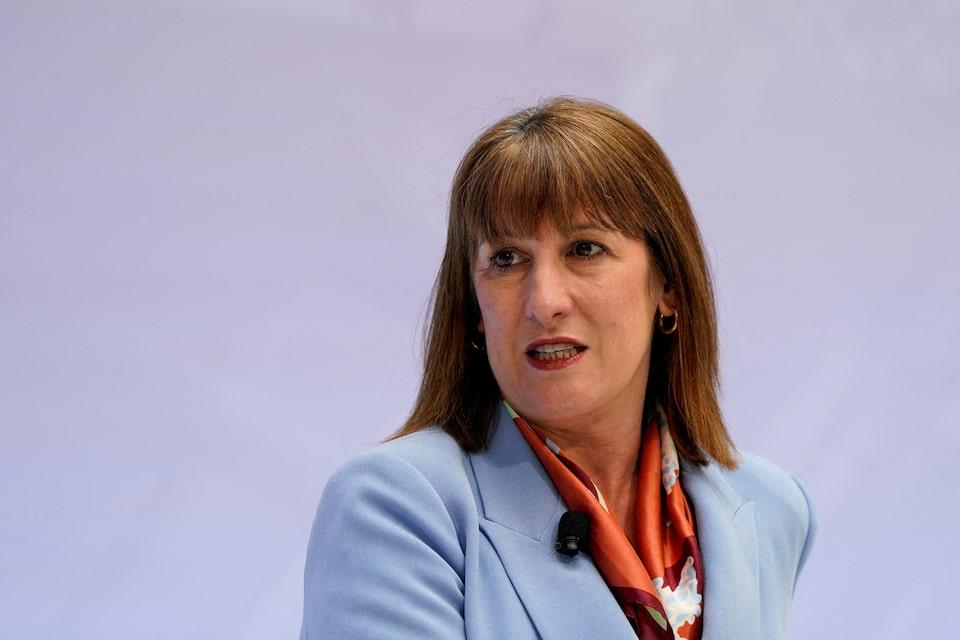
UK finance minister gives annual Mansion House speech Reeves widens her message to scrap regulation Plans include encouraging people to invest in stocks Latest bid by government to get elusive growth going LONDON, July 15 (Reuters) - British finance minister Rachel Reeves pledged on Tuesday to ease regulation further and announced measures to boost the finance sector, including reforming requirements for banks to separate retail and investment banking activities and a plan to get more savers investing in stocks. Under pressure to get lacklustre economic growth going, Reeves doubled down on her message since Labour came to power last year: that post-financial crisis regulation is stifling growth and needs to be pared back. Sign up here. She promised "meaningful reform" of bank ring-fencing - rules designed to shield depositors from volatile investment banking. She also pledged simpler regulatory approvals for smaller financial companies and confirmed an easing of access to mortgages. "In too many areas, regulation still acts as a boot on the neck of businesses choking off the enterprise and innovation that is the lifeblood of growth," she told an audience of financial executives at the City of London's annual "Mansion House" dinner. She described her package of reforms as the most wide-ranging in a decade for financial services, and said she wanted to slash red tape much more widely too. "Regulators in other sectors must take up the call I make this evening not to bend to the temptation of excessive caution," she said. Financial executives have welcomed Reeves' promises - including at her last Mansion House speech - to reduce red tape and encourage risk-taking. But her pitch to the City comes with the industry worried about a stuttering economy and about rival financial centres stealing market share. While the FTSE 100 (.FTSE) , opens new tab index hit a record high on Tuesday, fundraising from companies listing on the London Stock Exchange has sunk to its lowest in decades. With Reeves and Prime Minister Keir Starmer's promise to speed up Britain's economy largely elusive, fears are mounting that taxes will rise further to balance public finances. The government last month announced a 10-year industrial strategy that included the financial services sector. On Tuesday, Reeves backed changes announced by the Bank of England to help banks free up capital, including a delay to the implementation of part of the Basel banking reforms, and an easing in capital requirements for mid-sized lenders. Barclays (BARC.L) , opens new tab CEO, C.S. Venkatakrishnan, who was at the Mansion House dinner with Reeves, said the regulatory changes would support UK financial sector competitiveness. "We applaud the underlying ambition and initiative, even as we wish greater change in some areas, like bank capitalisation, in order to boost support for the real economy, and much less in others, like UK ring-fencing, which is a core of depositor protection," he said in an emailed statement. Karim Haji, KPMG's global and UK head of financial services, said the critical test for reforms "will be in their execution and how quickly these proposals can translate into real, measurable benefits for firms, investors, and consumers." ALERTING CUSTOMERS Britain has the lowest level of retail investment among the Group of Seven rich countries, the finance ministry said, and the government has been looking for levers to get more money into stocks. From April 2026, the Financial Conduct Authority - a regulator - will allow banks to alert customers about specific investment opportunities so they can consider shifting money from low-return current accounts. Before then, banks will run an advertising campaign to promote share investments. Regulators will review the risk warnings given for different financial investments. The government stopped short of reducing tax incentives for savers using cash-only Individual Savings Accounts to aid investment in shares, but Reeves said she would consider further changes. As well as consumers, the finance minister has targeted British pension funds. Reeves said she was "confident" she would not need to use new powers to force funds to invest in a wider range of assets, although the new pension bill reserves that right. As well as long-term reform, greater "near-term incentives" were needed to unlock more pension fund money, Anne Glover, CEO of venture capital investor Amadeus Capital Partners, said following Reeves' speech. Other changes announced on Tuesday included reforming how the Financial Ombudsman Service resolves consumer complaints and for the FCA to review the impact of its consumer duty policy. The Senior Managers and Certification Regime - set up after the 2008 financial crisis - will be streamlined, Reeves said. Prospectus requirements for listing companies issuing new shares will be scrapped. New rules to support a more competitive captive insurance sector were proposed while the FCA said it would accelerate the process for authorising new companies. https://www.reuters.com/sustainability/boards-policy-regulation/uk-finance-minister-launches-retail-investment-push-2025-07-15/
2025-07-15 11:15
LONDON, July 15 (Reuters) - After a relatively quiet start to the week, markets on Tuesday will have to navigate a torrent of new information on U.S. inflation, bank earnings and Chinese growth, with a fresh jump from chip giant Nvidia thrown into the mix. I'll dig into all of this below. Make sure to check out today's column, where I discuss how markets are reacting to the renewed pressure President Trump is putting on Fed Chair Jerome Powell. Sign up here. Today's Market Minute * China’s economy slowed less than expected in the second quarter in a show of resilience against U.S. tariffs, though analysts warn that weak demand at home and rising global trade risks will ramp up pressure on Beijing to roll out more stimulus. * The 30% tariff on European goods threatened by U.S. President Donald Trump would, if implemented, be a game-changer for Europe, wiping out whole chunks of transatlantic commerce and forcing a rethink of its export-led economic model. * Tesla launched its Model Y at about $70,000 in India, the highest price among major markets, as the U.S. automaker grappling with slowing sales bets on prospects in a country CEO Elon Musk has long criticised for its high import tariffs. * China's imports of major commodities presented a mixed picture in the first half, writes ROI columnist Clyde Russell, but if there is a clear trend it is that the world's top buyer of natural resources is increasingly sensitive to prices. * While the United States appears well on its way to a record corn crop, the top exporter is not completely immune to yield barriers moving forward. Read the latest from ROI agriculture columnist Karen Braun. CPI, banks and Nvidia, oh my! The artificial intelligence bellwether (.NVDA) , opens new tab, already up more than 20% for the year and the first company to top a $4 trillion valuation, rose another 4% out of hours overnight after it said it plans to resume sales of the H2O AI chips to mainland China just days after its CEO met U.S. President Donald Trump. "The U.S. government has assured Nvidia that licenses will be granted, and Nvidia hopes to start deliveries soon," said the company, whose chief executive, Jensen Huang, is in Beijing. The move is controversial in the geopolitical context and the White House, which has previously expressed concern that the Chinese military could use AI chips to develop weapons, did not respond to a request for comment. After Wall Street stock indexes ended in positive territory on Monday, stock futures were higher again first thing today. Earlier, Chinese stocks eked out modest gains after economic updates showed GDP growth there slowed down by less than expected in the second quarter despite the global tariff turmoil - registering a 5.2% year-on-year expansion of the economy. June numbers were more of a mixed bag, with an acceleration of Chinese industrial production offset by a miss in retail sales growth and another monthly decline in house prices. The yuan was largely unmoved by the sweep of data. Part of the stasis is due to the day's big releases stateside. The June update on U.S. consumer prices is clearly critical to Federal Reserve thinking on whether tariff rises are aggravating the inflation picture enough to keep interest rates on hold - despite an almost daily insistence by Trump that rates should be cut by more than 3 percentage points. Trump once again on Monday said Fed rates - now held in a 4.25-4.50% range - should be 1% or less. Adding a new line of pressure on the central bank, White House officials stepped up pressure on Chair Jerome Powell over what they claim were serious cost overruns in the bank's renovation of its headquarters. The CPI release is expected to show the core annual inflation rate picking up pace last month to 3.0% - well above the Fed's 2% target. Edgy U.S. Treasury yields slipped back a touch ahead of the report, with 30-year bond yields retreating from the 5% mark. The dollar index (.DXY) , opens new tab also slipped back slightly. Japanese debt concerns alarmed in the background, however. The 30-year JGB yield jumped to a record 3.20%, while 20-year yields soared to their highest since November 1999 at 2.65% and 10-year yields scaled the highest since October 2008. Investors in Japanese bonds are bracing for a potential power shift in upper house elections this weekend that could strain the country's already frail finances. Before we see the U.S. inflation update today, the U.S. second-quarter earnings season kicks into gear with the big U.S. banks reporting - likely flattered by the burst of financial market trading revenues during the turbulent three months despite still subdued investment banking activity. Elsewhere, crude oil prices fell back further after Trump's lengthy 50-day deadline for Russia to end the Ukraine war and avoid sanctions eased immediate supply concerns. Oil prices had climbed in anticipation of sanctions both on Russia and countries buying oil from Moscow, but gave up gains as traders doubted the U.S. would actually impose steep tariffs on third countries. European stocks pushed higher, meantime, even after the weekend's 30% U.S. tariff threat on imports from the region. Aircraft, machinery, cars, chemicals and medical devices are the leading big-ticket items on the latest list of U.S. goods the European Commission has proposed to impose tariffs on if talks with Washington do not yield an agreement on trade. But European ministers meeting in Brussels on Monday remained convinced they can bring Trump back from the brink before his Aug. 1 deadline and reach a deal that would keep the $1.7 trillion two-way trading relationship broadly intact. And German investor morale rose more than expected this month, the ZEW institute said, reporting an increase in its sentiment index to 52.7 points from 47.5 points in June. In Britain, set piece speeches from finance minister Rachel Reeves and Bank of England boss Andrew Bailey are awaited later. Reeves announced a push on Tuesday to get more savers to invest in company shares as part of a wide-ranging set of initiatives to boost Britain's financial services sector. Britain's blue chip FTSE 100 (.FTSE) , opens new tab briefly topped 9,000 points for the first time earlier and the pound steadied. Bitcoin recoiled back below $120,000 on Tuesday after a roaring start to the week saw it hit a new record of $123,153 the day earlier. Chart of the day Major U.S. banks are expected to report stronger profits later on Tuesday, driven by buoyant trading and a modest rebound in hobbled investment banking activity. JPMorgan Chase (JPM.N) , opens new tab, Citigroup (C.N) , opens new tab and Wells Fargo (WFC.N) , opens new tab kick off second-quarter earnings on Tuesday with a focus on their outlooks at a time when economic uncertainty over U.S. tariff policies remains high. While there has been some stirring in investment banking in the second quarter, global banks, including top U.S. lenders, are expected to report a 10% gain in markets revenue due to the volatility around shifting U.S. tariff policies. Citigroup's stock leads the pack after a rollercoaster start to 2025. Today's events to watch * U.S. June consumer price report (8:30 AM EDT); Canada June consumer prices (8:30 AM EDT) * U.S. corporate earnings: BlackRock, JPMorgan, Citigroup, Bank of New York Mellon, Wells Fargo, State Street, Omnicom, JBHunt * Federal Reserve Vice Chair for Supervision Michelle Bowman, Fed Board Governor Michael Barr, Dallas Fed President Lorie Logan, Boston Fed President Susan Collins and Richmond President Thomas Barkin all speak * Bank of England Governor Andrew Bailey and finance minister Rachel Reeves address City of London at annual Mansion House dinner Opinions expressed are those of the author. They do not reflect the views of Reuters News, which, under the Trust Principles , opens new tab, is committed to integrity, independence, and freedom from bias. Want to receive the Morning Bid in your inbox every weekday morning? Sign up for the newsletter here. You can find ROI on the Reuters website , opens new tab, and you can follow us on LinkedIn , opens new tab and X. , opens new tab https://www.reuters.com/business/finance/global-markets-view-usa-2025-07-15/
2025-07-15 11:02
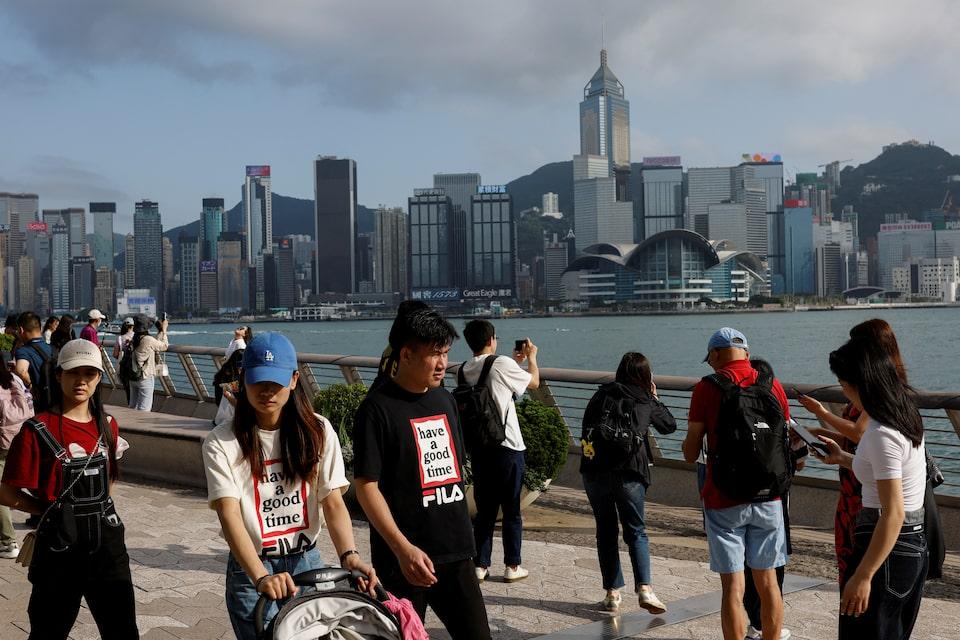
Government aims to complete legislative process this year Uber welcomes regulation but says concerned about cap on number of vehicles Operating without a licence could mean imprisonment and fines HONG KONG, July 15 (Reuters) - The Hong Kong government laid out proposals on Tuesday to regulate ride-hailing platforms, such as Uber (UBER.N) , opens new tab, following years of talks and complaints from the city's licensed taxi drivers that they face unfair competition. Uber in 2014 became the first ride-hailing platform in Hong Kong and has operated without formal regulation. Sign up here. Police raided its office in 2015 and have arrested Uber drivers for operating without licences. The city's taxi industry, which has been struggling with declining income, has said the lack of regulation gives ride-hailing services an unfair advantage. In a paper submitted to the legislature, the Transport and Logistics Bureau said all platforms providing ride-hailing services must obtain a licence and comply with specific conditions. Anyone who provides ride-hailing platform services without a valid licence may be subject to imprisonment and fines. In a statement to Reuters, a spokesperson for Uber HK said the regulation was an "important milestone". "We are encouraged to see safety and service standards - such as mandatory insurance, driver examinations, and regular vehicle inspections - placed at the centre of the proposed regime," the spokesperson said. But the statement also said Uber was concerned about a proposed cap on the number of ride-sharing vehicles. "Artificial limits risk increasing wait times, raising prices for riders, and restricting earning opportunities for drivers," it said, adding Uber looked forward to continued talks with the government and other stakeholders. According to a survey carried out by Uber of more than 4,800 Hong Kong drivers, nearly 80% fear that strict quotas and high licensing fees could threaten their livelihoods. The city's leader, John Lee, told a news conference on Tuesday there was a consensus in society that ride-hailing services must be regulated to protect the safety of passengers. "I agree that the issue is complex, but I think the issue should not be delayed any further and the government must come up with a solution," Lee said. He also said it was necessary to create an environment in which the ride-hailing services and traditional taxis can co-exist. The Transport and Logistics Bureau said quota arrangements would be proposed in the first half of 2026. Prior to that, the proposals allow for the legal amendments to be submitted to Hong Kong's Legislative Council for approval in the third quarter of this year. Under the new law, anyone seeking a ride-hailing drivers' licence must be at least 21 years old, have held a private car licence for at least one year, have no serious traffic convictions in the last five years, and pass mandatory assessments and training. https://www.reuters.com/markets/commodities/hong-kong-government-proposes-first-ride-hailing-regulation-2025-07-15/