2025-07-14 21:32
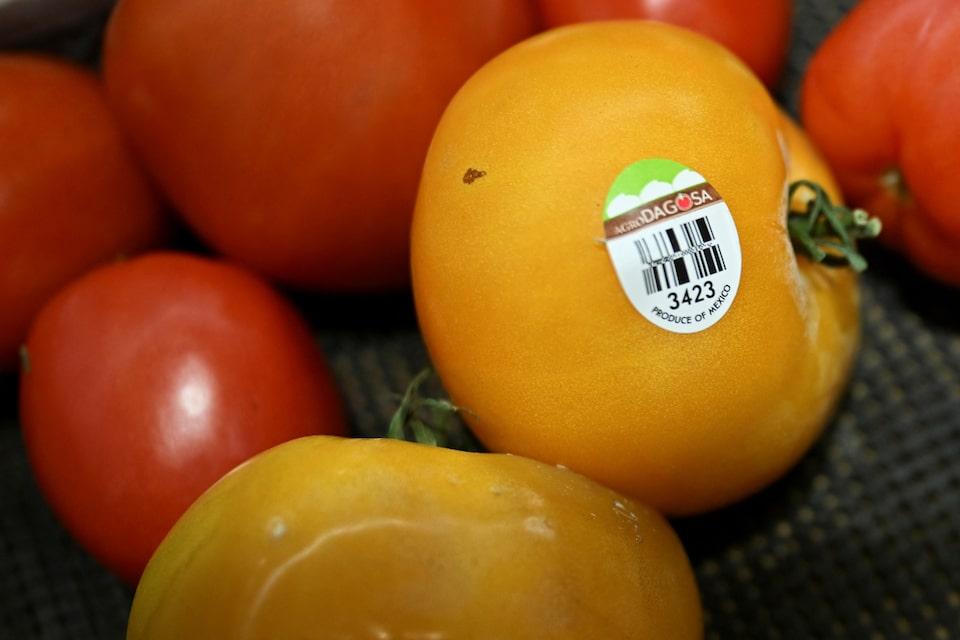
US had announced plans to withdraw from long-term tomato trade agreement Mexican producers say their produce cannot be replaced, seeking solutions, Experts and opponents warn of rising prices due to duties WASHINGTON, July 14 (Reuters) - The U.S. Commerce Department said on Monday it will impose duties of 17.09% on fresh tomatoes from top supplier Mexico, after withdrawing from a 2019 deal suspending an antidumping duty investigation. The U.S. and Mexico first struck an agreement in 1996 to regulate Mexican tomato exports and allow U.S. producers to compete fairly. The agreement was last renewed six years ago to avert an antidumping investigation and end a tariff dispute on the trade, which is worth more than $3 billion a year, according to official figures. Sign up here. Mexico said in April it was confident that it could renew the tomato agreement after Washington said it intended to withdraw from the deal. Antidumping duties are calculated to measure the percentage by which Mexican tomatoes have been sold in the United States at "unfair prices," the Commerce Department said in its statement. U.S. Commerce Secretary Howard Lutnick said on Monday that "for far too long our farmers have been crushed by unfair trade practices that undercut pricing on produce like tomatoes." Mexico's agriculture ministry and economy ministry did not immediately respond to a request for comment. A group of five Mexican agriculture associations, including from Baja California and Sinaloa states, said they were committed to working with the Mexican government to find solutions. Of the 6.5 billion pounds of fresh tomatoes consumed in the United States, about 4.3 billion are supplied by Mexico, the associations said. "In the short or medium term, there are no countries in the world that can replace Mexican tomatoes in a market we have built through innovation and effort over the past 120 years," they said in a statement. HIGHER PRICES EXPECTED In the build-up to Monday's expected announcement, some experts, as well as Trump's opponents from the Democratic Party, had warned that prices of products will rise as a result of the duties. "Salsa will be pricier, shelves emptier, and groceries more expensive," U.S. Representative Sylvia Garcia said on X on Friday. President Donald Trump on Saturday had separately threatened to impose a 30% tariff on imports from Mexico starting on August 1, after weeks of negotiations with the major U.S. trading partner failed to reach a comprehensive trade deal. U.S. growers have long sought protections from Mexican competitors who can often grow the fruits year round. The 2019 agreement was supposed to set a floor on pricing and provided for U.S. border inspections of crops but U.S. growers have long argued that the arrangement had too many loopholes that allowed for dumping of Mexican fruits. The Florida Tomato Exchange, which represents growers in the major tomato-producing state, applauded the action to end what it called a "failed" tomato trade agreement. "This decision will protect hardworking American tomato growers from unfair Mexican trading practices and send a strong signal that the Trump Administration is committed to ensuring fair markets for American agriculture," Robert Guenther, the group's executive vice president, said in a statement. https://www.reuters.com/world/americas/us-withdraws-tomatoes-agreement-with-mexico-2025-07-14/
2025-07-14 21:25
Pledge accounts for 90% of ice cream sold in US, dairy group says Several major food companies already plan to remove artificial colors IDFA cites state efforts to phase out dyes as a reason for removal WASHINGTON, July 14 - Dozens of U.S. ice cream producers are planning to remove artificial colors from their products by 2028, a dairy industry group and government officials said on Monday. The producers, which together represent more than 90% of ice cream sold in the U.S., are the latest food companies to take voluntary steps to remove dyes since Health Secretary Robert F. Kennedy Jr. in April said the U.S. aimed to phase out many synthetic dyes from the country's food supply. Sign up here. Several major food manufacturers - including General Mills (GIS.N), Kraft Heinz, J.M. Smucker (SJM.N), Hershey (HSY.N) and Nestle USA (NESN.S) - have previously announced their plans to phase out synthetic food coloring. The 40 ice cream companies will remove Red 3, Red 40, Green 3, Blue 1, Blue 2, Yellow 5, and Yellow 6 from their retail products, excluding non-dairy products, according to the International Dairy Foods Association. The IDFA announced the plan at an event at the U.S. Department of Agriculture headquarters on Monday with Kennedy, FDA Commissioner Marty Makary and Agriculture Secretary Brooke Rollins. "We know that our current health outcomes, especially for our children, are unsustainable and that American agriculture is at the heart of the solution to make America healthy again," Rollins said at the event, referencing a slogan aligned with Kennedy. Rollins and Kennedy have worked closely together on food sector efforts like encouraging states to ban soda from the nation's largest food aid program. Kennedy has blamed food dyes for rising rates of ADHD and cancer, an area many scientists say requires more research. The IDFA said artificial dyes are safe, but that ice cream makers are taking the step in part to avoid disruption to sales from state efforts to phase out dyes from school foods and West Virginia's recent food dye ban. https://www.reuters.com/business/healthcare-pharmaceuticals/many-us-ice-cream-producers-phase-out-artificial-food-dyes-by-2028-2025-07-14/

2025-07-14 21:04
ORLANDO, Florida, July 14 (Reuters) - TRADING DAY Making sense of the forces driving global markets Sign up here. By Jamie McGeever, Markets Columnist World markets were, on the whole, pretty buoyant on Monday as investors shrugged off U.S. President Donald Trump's latest tariff threats over the weekend and braced for a deluge of top-tier economic data from the U.S. and China on Tuesday. While European and Mexican stocks did wobble on Trump's latest trade salvo, the hits were minor. Risk appetite held firm - world equity benchmarks inched up, the Nasdaq and bitcoin hit new highs, and silver reached a fresh 14-year peak. If you have more time to read, here are a few articles I recommend to help you make sense of what happened in markets today. Today's Key Market Moves Resisting renewed tariff tensions Markets started a busy week on a solid footing on Monday, as investors withstood the latest escalation in Trump's tariff war with two of America's largest trading partners, and dug in ahead of key market-sensitive economic and corporate events in the coming days. After Trump on Saturday said he would impose a 30% tariff on most imports from the EU and Mexico from August 1, the EU on Sunday said it would extend its suspension of countermeasures until early August and continue to press for a negotiated settlement. The euro and European stocks fell - the single currency hitting a three-week low - but the declines were small. Investors still appear to be optimistic that talks will ultimately be fruitful and a palatable deal will be reached. Trade figures from China earlier in the day were certainly better than expected, although they were boosted by exporters rushing to beat a fragile tariff truce between Beijing and Washington ahead of a looming August deadline. Exports rose 5.8% year-on-year and imports rebounded 1.1%. The next couple of weeks will see bilateral U.S.-EU and U.S.-China trade talks intensify as the early August deadlines approach, and investors can expect a blizzard of headlines to hit their screens. If Monday is any guide, investors are well poised to weather the incoming storm. Trade may have been the main narrative for stock markets on Monday, but less so bonds, which also had the shadows of Federal Reserve independence, Chair Jerome Powell's future, and renewed weakness in Japanese government bonds hanging over them. The U.S. Treasury market was mostly stable although the 30-year yield did flirt with 5.00% and hit a one-month high. Government bond prices elsewhere came under heavier pressure, particularly at the long end of the German and Japanese curves. The 10-year Bund yield rose to its highest since early April and the 30-year Bund yield climbed to highs not seen in almost two years. Yields on Japanese government bonds surged back toward the historic highs from May, on concern that an upcoming election could pave the way for increased fiscal spending. Investors' attention on Tuesday will turn to the monthly economic 'data dump' from China, which also includes second quarter GDP figures. Economists polled by Reuters expect the annual growth rate to have slowed slightly to 5.1% from 5.4% in the January-March period. After that, U.S. CPI inflation figures for June will set the tone for the U.S. trading day. Economists expect inflation to rise moderately across all measures - core, headline, monthly and annual - with the annual core rate regaining a 3% handle. What could move markets tomorrow? Want to receive Trading Day in your inbox every weekday morning? Sign up for my newsletter here. Opinions expressed are those of the author. They do not reflect the views of Reuters News, which, under the Trust Principles , opens new tab, is committed to integrity, independence, and freedom from bias. https://www.reuters.com/world/china/global-markets-trading-day-graphics-2025-07-14/
2025-07-14 20:59
Tuesday starts run of key economic data, earnings season Nasdaq posts seventh record close since June 27 Crypto stocks jump as Bitcoin hits $120,000 mark Waters to merge with Becton's diagnostics arm, shares fall Indexes up: Dow 0.2%, S&P 500 0.14%, Nasdaq 0.27% July 14 (Reuters) - Wall Street stocks closed marginally up on Monday as investors sidestepped any meaningful moves following U.S. President Donald Trump's latest tariff threats, and held steady ahead of a busy week of economic data and the start of earnings season. Trump ramped up trade tensions over the weekend, vowing to slap a 30% tariff on most imports from the European Union and Mexico starting August 1 - leaving the clock ticking for last-minute trade deals. Sign up here. The EU extended its pause on retaliatory measures until early August, holding out hope for a negotiated truce. The White House said talks with the EU, Canada and Mexico are still underway. Despite the headlines, investor reaction was muted, having grown numb to Trump's barrage of tariff threats and his frequent last-minute U-turns. The Dow Jones Industrial Average (.DJI) , opens new tab rose 88.14 points, or 0.20%, to 44,459.65, the S&P 500 (.SPX) , opens new tab gained 8.81 points, or 0.14%, at 6,268.56 and the Nasdaq Composite (.IXIC) , opens new tab advanced 54.80 points, or 0.27%, to 20,640.33. Trading volume was also subdued, with 15.43 billion shares changing hands, compared with the 17.62 billion average for the last 20 trading days. Markets have been buoyant in recent weeks even as Trump has rattled his tariff saber. The Nasdaq Composite (.IXIC) , opens new tab ended at a record high, its seventh such achievement since June 27. The S&P 500 (.SPX) , opens new tab, which finished a dozen points below last Thursday's best ever close, has had five records in the same timeframe. "If anything is holding the market back, it's the fact we've had a pretty good run since April," said Jason Pride, chief of investment strategy & research at Glenmede. He noted that despite initial fears that Trump's tariff policy would hurt the U.S. economy, the levies unveiled so far and the passage of his signature economic legislation last week will broadly offset each other, meaning investors are starting to be more confident about the economy's growth prospects. Signs of how Trump's policies are playing out will come this week, with a raft of new reports on the state of the U.S. economy due up. Second-quarter earnings season kicks off on Tuesday, when several Wall Street banking heavyweights are set to report. Tuesday is also the scheduled release of the latest consumer price data, which is expected to reveal an inflation uptick in June as sellers started passing on the cost of sweeping tariffs. Wednesday's producer and import price reports will offer fresh insight into how supply chain pressures are shaping up. One place where Trump's tariff rhetoric still moved markets was crude prices, with U.S. benchmark oil dropping 2.2% after he threatened levies on buyers of Russian exports, which may have knock-on effects on global energy supplies. This pushed the energy index (.SPNY) , opens new tab down 1.2%, the biggest decliner among the 11 S&P sectors. A majority of the sectors closed in positive territory though, led by the 0.7% advance by communication services (.SPLRCL) , opens new tab. It was helped by gains in Netflix (NFLX.O) , opens new tab, which reports earnings on Thursday, and Warner Bros. Discovery (WBD.O) , opens new tab, whose latest Superman caper had a strong opening weekend at the box office. Crypto stocks ticked up after Bitcoin topped $120,000 for the first time. Coinbase (COIN.O) , opens new tab rose 1.8%, and MicroStrategy (MSTR.O) , opens new tab gained 3.8%. Waters Corp (WAT.N) , opens new tab dropped 13.8% after the lab equipment maker agreed to merge with rival Becton, Dickinson and Company's (BDX.N) , opens new tab Biosciences & Diagnostic Solutions unit in a $17.5 billion deal. https://www.reuters.com/business/wall-st-futures-wobble-fresh-tariff-threats-ahead-data-earnings-deluge-2025-07-14/
2025-07-14 20:59
BAGHDAD, July 14 (Reuters) - Two drones fell in the Khurmala oilfield in Iraqi Kurdistan, Iraqi Kurdistan's counter-terrorism service said in a statement on Monday. Khurmala oilfield is located near the Iraqi Kurdish city of Erbil. Sign up here. The Iraqi Security Media Cell, an official body responsible for disseminating security information, said in a statement that no casualties were reported and only material damage was recorded. An investigation into the incident was launched in coordination with security forces in Kurdistan, it added. The Kurdish region's Ministry of Natural Resources said in a statement that the attack only resulted in damage to the oilfield's water pipes. It did not elaborate whether production from the field was affected by the attack. https://www.reuters.com/world/middle-east/two-drones-fell-khurmala-oilfield-iraqi-kurdistan-counter-terrorism-service-says-2025-07-14/

2025-07-14 20:24
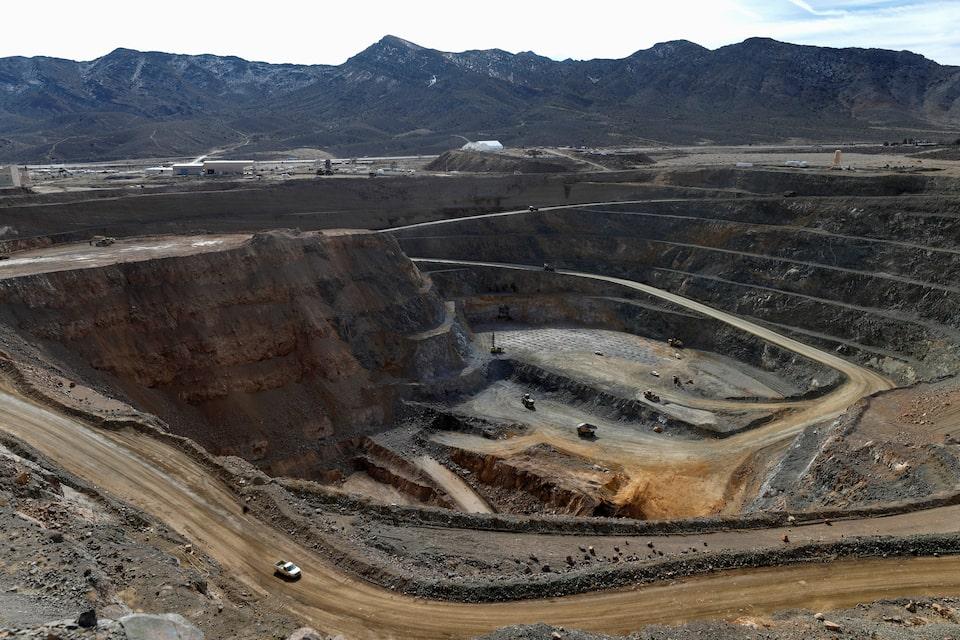
Chinese low prices thwarted efforts to shake its dominance Industry elsewhere has long campaigned for alternative pricing Sole domestic US rare earth miner aims for commercial magnet production late this year LONDON, July 14 (Reuters) - U.S. efforts to break China's dominance of the rare earths market and to drive investment in its own industry have moved up a gear with a Washington-backed plan to create a separate, higher pricing system. The West has struggled to weaken China's grip on 90% of the supply of rare earths, in part because low prices set in China have removed the incentive for investment elsewhere. Sign up here. Miners in the West have long called for a separate pricing system to help them compete in supplying the rare earths group of 17 metals needed to make super-strong magnets of strategic importance. They are used in military applications such as drone and fighter jets, as well as to power motors in EVs and wind turbines. Under a deal made public last week, the U.S. Department of Defense will guarantee a minimum price for its sole domestic rare earth miner MP Materials (MP.N) , opens new tab, at nearly twice the current market level. Las Vegas-based MP already produces mined and processed rare earths and said it expects to start commercial magnet production at its Texas facility around the end of this year. Analysts say the pricing deal, which takes effect immediately, should have global implications - positive for producers, but may increase costs for consumers, such as automakers and in turn their customers. "This benchmark is now a new centre of gravity in the industry that will pull prices up," said Ryan Castilloux, managing director of consultancy Adamas Intelligence. The DoD will pay MP the difference between $110 per kilogram for the two most-popular rare earths and the market price, currently set by China, but if the price rises above $110, the DoD will get 30% of additional profits. Castilloux said other indirect beneficiaries of the pricing system may include companies, such as Belgian chemicals group Solvay (SOLB.BR) , opens new tab, which launched an expansion in April. "It will give Solvay and others the impetus to command a similar price level. It will give them a floor to stand on, you could say," Castilloux added. While Solvay declined to comment, other rare earth miners, developers and their shareholders welcomed the news. Aclara Resources (ARA.TO) , opens new tab is developing rare earths mines in Chile and Brazil, as well as planning a separation plant in the United States. Alvaro Castellon, the company's strategy and development manager, told Reuters the deal added "new strategic paths" for the company. MP'S GRADUAL OUTPUT INCREASE MP Materials, which suffered a net loss of $65.4 million last year largely because of China's low pricing, will build up magnet production at its Texas plant initially to 1,000 metric tons a year, later expanding to 3,000 tons a year. Under last Thursday's deal, the DoD will become its largest shareholder with a 15% stake and MP will construct a second rare earth magnet manufacturing facility in the U.S., eventually adding 7,000 tons per year. In total, production would be 10,000 tons a year - equalling U.S. consumption of magnets in 2024. That does not include, however, the 30,000 tons imported by the United States already installed in assembled products, Adamas consultancy said. It predicts global demand for rare earth permanent magnets will more than double over the next decade to about 607,000 tons, with the U.S. seeing the strongest percentage annual growth rate in coming years at 17%. The world's reliance upon China for much of this demand was brought into focus by China's curbs on its exports as trade negotiations continue between the United States and China. So far Western governments have had little success in trying to help their own industries to compete. Attempts to agree stronger pricing have been confined to piecemeal deals that set premiums for magnets. Dominic Raab, a former deputy prime minister and former foreign secretary for the United Kingdom, said he was not surprised the Trump administration had concluded that tax breaks alone would not create the level of investment required. "The next step is, can they scale it up?" asked Raab, now head of global affairs at Appian Capital Advisory, a private equity firm that invests in mining projects. The $110 level for neodymium and praseodymium, or NdPr, guaranteed by the DoD is slightly above a $75-to-$105 per kg range that consultancy Project Blue reckons would be needed to support enough production to meet demand in coming years. It compares to a current level of about $63. David Merriman of Project Blue said it was unclear how commercial industrial consumers would respond to higher prices and whether it would make them invest in rare earths as they have more diverse supply sources. "Major non-government backed consumers are less likely to follow this same investment pattern, however, as they are not so clearly aligned to a particular regional supply route," he said. A spokesperson for German auto giant Volkswagen (VOWG.DE) , opens new tab declined to comment on pricing when asked about the DoD floor level but said: "We welcome all efforts to strengthen long-term stability and diversification in global supply chains for critical materials." https://www.reuters.com/sustainability/climate-energy/us-rare-earth-pricing-system-is-poised-challenge-chinas-dominance-2025-07-14/