2025-07-14 11:17
June CPI at 2.10% vs estimates of 2.5% June food inflation fell 1.06% vs a 0.99% rise in May CPI lowest since January 2019 NEW DELHI, July 14 (Reuters) - India's annual retail inflation (INCPIY=ECI) , opens new tab slowed to a more than six-year low of 2.10% in June, near the lower range of the central bank's tolerance band, as food prices continued to ease, making a case for further interest rate cuts. This was lower than the 2.5% estimated by economists in a Reuters poll. Retail inflation was at 2.82% in May. Sign up here. Food prices have been the main driver for slowing inflation this year as adequate rainfall boosted output of agricultural goods. Inflation in food items - which account for nearly half of the retail inflation index - fell 1.06% in June from a 0.99% rise in the previous month. Vegetable prices fell 19% year-on-year, compared to an 13.7% fall in May. "CPI inflation edged further down in June on the back of lower food prices," said Sakshi Gupta, an economist at HDFC Bank. The headline and food inflation in June was the lowest since January, 2019, the government's statistical department said in its release. The Reserve Bank of India is mandated to not let inflation fall below 2% or rise above 6% for three consecutive quarters. Prices of cereals rose 3.73% on-year against a 4.77% increase in May, while those of pulses declined 11.76% compared to a 8.22% fall in May. Easing inflation has given room to the RBI to focus on growth. In June, the central bank cut its repo rate by a larger-than-expected 50 basis points. It also trimmed its fiscal 2026 projection for retail inflation to 3.7% from 4% earlier, citing a strong harvest and the early arrival of monsoon rains. "Given this print and ongoing momentum in food inflation, the annual average inflation for FY26 is likely to be lower than 3.7%," Gupta said. RBI governor Sanjay Malhotra said in an interview to a national daily that inflation below the central bank's current projection could open up policy space and that the RBI will strike the right growth-inflation balance. "While comfortable inflation opens room for further monetary easing, we expect the RBI to maintain a pause in the coming one-two meetings and remain watchful of the transmission ahead along with global uncertainties," said Upasna Bhardwaj, economist at Kotak Mahidra Bank. Core inflation, which excludes volatile items such as food and energy and is an indicator of domestic demand, was at 4.4%-4.5% in June from 4.17%-4.20% in the previous month, according to three economists. India's official statistics agency does not publish core inflation data. https://www.reuters.com/world/india/indias-retail-inflation-slows-210-june-2025-07-14/

2025-07-14 11:16
$TRUMP was listed in an average of 4 days by exchanges, vs 129 days for other big coins Three crypto exchanges say they moved to list $TRUMP fast because of customer demand Exchanges say no corners were cut in vetting the coin for listing White House says Trump coin poses 'no conflicts of interest' NEW YORK, July 14 (Reuters) - Crypto exchange Coinbase assures users on its website that it puts any new digital coin through "rigorous" vetting before allowing it to trade. It's an at-times lengthy process meant to protect customers by examining the people connected to the project and the risk of market manipulation or other scams. With President Donald Trump's crypto token, $TRUMP, Coinbase made up its mind in just one day. Sign up here. The $TRUMP token, which launched three days before his inauguration in January, is a meme coin. Based on cultural fads or celebrities, these coins have no intrinsic value and – past experience has shown – are prone to large price swings that can leave investors with losses. A Reuters analysis of crypto market data and industry announcements found that, compared to other recent large meme coins, the biggest crypto exchanges took Trump's to market with unusual speed, despite stating they vet risky coins thoroughly to protect small investors. Some also approved the listing in spite of the high share of coins concentrated in the hands of Trump and his partners, which would normally represent a red flag because of the risk that dumping of tokens by insiders could collapse the price and hurt other investors, some executives said. After reaching an all-time high of $75.35 on April 19, just two days after its launch, $TRUMP crashed to the $7 range by early April, leaving many holders nursing losses. It was trading around $9.55 Thursday. "When the president of the United States launches a meme coin, I thought I might as well put some money inside," said Carl “Moon” Runefelt, a Dubai-based crypto investor who runs a bitcoin trading channel on YouTube called the "Moon Show." Runefelt said he bought $300,000 worth of the meme coin in tranches at between $50 and $60: "It's probably one of my worst trades, unfortunately." The Reuters analysis showed that eight of the 10 largest crypto exchanges by market share listed the coin within 48 hours of its release. The ninth, Coinbase, added $TRUMP to its listings roadmap on January 18 – indicating it had decided to accept it - and listed the coin three days later. The tenth, Upbit, listed $TRUMP on February 13. That was much faster than they've done on average with the biggest meme coins. Reuters examined how long it took the same 10 exchanges - Binance, Gate.io, Bitget, MEXC, OKX, Coinbase, Bybit, Upbit, Crypto.com and HTX - to list the four other largest meme coins launched since 2022. These, measured by market cap on May 29, are Pepe, Bonk, Fartcoin and dogwifhat. All 10 exchanges listed Pepe and Bonk. Nine listed dogwifhat, and seven listed Fartcoin. On average, the 10 exchanges took 129 days to list those coins. For $TRUMP, they took an average of four. Asked for comment about why they listed $TRUMP so quickly, Bitget, MEXC, OKX, Coinbase and Upbit all said they had not cut any corners with their vetting process. The other five exchanges did not respond to Reuters' questions. Three – Bitget, Coinbase, MEXC – said they moved fast to respond to overwhelming demand for the $TRUMP coin. "The crypto space was buzzing with the hype and, as any other token with a growing craze, it was imperative to add TRUMP," Gracy Chen, Bitget’s CEO, said in a statement. Chen said the fact that Trump himself announced the coin on his social media accounts "should kind of solve the compliance issue," citing the fact that "he's the president of the United States." ‘NO CONFLICTS OF INTEREST’ Reuters found no suggestion that Trump or anyone related to his businesses exerted pressure on the exchanges. In response to a request for comment, a White House press official told Reuters the president's assets had been placed in a family trust: "There are no conflicts of interest because the president isn't managing the assets. Any insinuation that there is a conflict of interest is irresponsible." The official referred specific questions about the meme coin to the Trump Organization, which did not respond to Reuters. Coinbase said the $TRUMP token got no special exceptions and the exchange followed its normal process when listing the coin. Paul Grewal, Coinbase's chief legal officer, said many people had to work over the weekend to get the listing done quickly, but no steps were skipped. "Given the information that was shared publicly, we were confident that users could engage with the token positively and safely," Grewal told Reuters. Coinbase listed $TRUMP as an "experimental" token to indicate it comes with "certain risks, including price swings," according to the company's website. The vetting of coins often focuses on how well-known the issuer is, how likely they are to remain in the public eye and how much they engage with the online community to sustain interest in the coin, metrics that $TRUMP would score highly on, according to Santa Clara University finance professor Seoyoung Kim, who specializes in crypto analytics. She cautioned that focusing on vetting speed alone could provide an incomplete picture of investor protection. A more holistic analysis, Kim said, would also involve factors such as the average market cap at which a coin is listed, for how long it has sustained that level before its listing, and its daily trading volumes. With $TRUMP listed so soon after launch, there was little such data for exchanges to parse. $TRUMP's market cap has since fallen to around $1.9 billion, down sharply from its peak above $15 billion on January 19. But that still ranks it amongst the largest meme coins launched since 2022. Reuters ran its listing-speed analysis past five academics with crypto expertise, including Kim, who all said its methodology was sound. David Krause, Emeritus Professor of Finance at Marquette University, who has studied Trump's crypto ventures, said the quickness of the $TRUMP listing "suggests either a dramatic acceleration of due diligence or corners being cut." "Either scenario has significant implications for investor protection and market integrity," he said. YOU DON'T SAY NO TO THE PRESIDENT The president's rush of business ventures in a lightly-regulated sector that his government is responsible for overseeing has drawn criticism from Democrats, consumer advocacy groups and former financial enforcement officials. "You don't say no to hosting the president's new meme coin," said Corey Frayer, a former senior crypto advisor at the U.S. Securities and Exchange Commission. Frayer is now director of a non-profit advocacy group, the Consumer Federation of America. "The president controls who oversees your business and how they enforce the law." Under former President Joe Biden, the SEC maintained that most crypto tokens, including meme coins, should be regulated as securities, making exchanges cautious about listing them. That began to change, quickly, after Trump was elected last November. The Republican has styled himself as the "crypto president," pledging to overhaul regulation of the sector. Following Trump’s election, Coinbase – the largest publicly traded crypto exchange in the United States – and several of its rivals began listing more meme coins. In Trump's second term, the SEC has paused or withdrawn high-profile enforcement actions against crypto operators, including a major investor in a Trump family crypto project, and issued a staff statement concluding that meme coins do not constitute securities. An SEC spokesperson declined to comment on the agency's crypto policy and Trump's coin. Trump's family has launched multiple crypto ventures, raking in hundreds of millions of dollars. The $TRUMP token quickly earned an estimated $320 million in fees, though it's not publicly known how that amount has been divided between a Trump-controlled entity and its partners. OVERLOOKED CONCERNS Exchanges have been major beneficiaries of Trump's embrace of the industry. $TRUMP has generated significant revenue for the 10 exchanges in Reuters' review: more than $172 million in trading fees, according to estimates based on standard fees compiled for the news agency by CoinDesk Data, a crypto industry data provider. Trade in the coin, meanwhile, has favored a small group of investors. At the top, 45 crypto wallets cleared about $1.2 billion in profits overall, while another 712,777 wallets have collectively lost $4.3 billion, according to trading data analyzed by crypto analysis firm Bubblemaps as of June 18. In the middle, more than half a million wallets made an average of $5,656 profit each. In listing $TRUMP, some exchanges proceeded despite a factor they'd previously labelled as a red flag: 80% of the coin's supply was held by the Trump family and its partners. Such a high concentration of ownership can allow the team behind a coin to sell large amounts of it at once, collapsing the price for retail investors. The terms of the $TRUMP coin specified that its total supply would be gradually unlocked over three years after initial release. On January 16, the day before $TRUMP was released, the New York State Department of Financial Services issued an alert to consumers about the risks of meme coins. Such coins, the notice said, are carried by platforms not licensed by the state and the supply of the digital tokens is often controlled by a small number of people. That opens the door to "pump-and-dump schemes," the regulator noted, in which public hype by their issuers leads to a jump in price – with big, early investors exiting and smaller retail buyers left holding the losses that follow. The NYDFS declined to comment beyond the guidance. Coinbase, which is subject to New York regulations, blocked state residents from accessing the token, but allowed U.S. customers elsewhere to trade. To list $TRUMP in New York, the exchange would have faced a long list of risk assessment and governance requirements. Some other exchanges acknowledged they looked past concerns about the concentration in a bid to serve customer demand. MEXC's chief operating officer, Tracy Jin, told Reuters that, because of the concentration of tokens, $TRUMP did not meet its usual standards for a full listing on its main board, but the exchange pushed ahead anyway due to strong demand. In a follow-up written statement, an MEXC spokesperson said that a "faster-than-usual" listing was possible because the coin had clear market momentum and it met "our listing standards early." Commenting on the Reuters listing-speed analysis, the spokesperson said market conditions and demand for political meme tokens had changed since 2022, "making direct comparisons less relevant." Bitget also had concerns about the 80% figure, CEO Chen told Reuters. "Eighty percent held by the team, even though there's a little bit of a lock-up period, is in my opinion very risky," said Chen. "Ultimately, user trading volume, demand … overrode the so-called risky factor here." Like some exchanges, Bitget, based in the Seychelles, does not have a business presence in the U.S. or serve clients who reside there, Chen said. "Globally," she added, "people are generally aware of the risks associated with trading meme coins." Upbit, which operates in South Korea, said it does not comment on specific coin listings but that it has "a rigorous and comprehensive evaluation process." Erald Ghoos, CEO for Europe of OKX, said the exchange’s legal and compliance teams stayed up all night over different time zones to work on the listing. Seychelles-registered OKX says its diligence process requires "meticulous preparation." It decided to list $TRUMP within 26 hours. https://www.reuters.com/sustainability/boards-policy-regulation/crypto-exchanges-rushed-list-trumps-coin-leaving-many-losers-some-big-winners-2025-07-14/
2025-07-14 11:15
MILAN, July 14 (Reuters) - Producers of Italy's renowned Chianti wine have demanded a new export strategy backed by the EU targeting markets such as South America, Asia and Africa following U.S. President Donald Trump's threat of additional tariffs on European imports. Italy currently exports more wine to the U.S. than any other country, but producers are increasingly looking to diversify amid the trade uncertainty. Sign up here. "There is no point in feeling sorry for ourselves. It should be seen as an opportunity to accelerate a new export strategy, focusing on alternative and more stable markets," said Giovanni Busi, the president of Consorzio Vino Chianti, an association gathering the Chianti wine producers in the Tuscany region. Trump on Saturday threatened to impose a 30% tariff on imports from Mexico and the European Union starting on August 1, adding pressure on Italy, which exported 2 billion euros ($2.3 billion) worth of wines, spirits, and vinegars to the U.S. last year, accounting for a quarter of its global sales, according to industry group Federvini. Busi identified South America, Asia, and Africa as pivotal markets for Italian wine, citing Brazil, Argentina, Uruguay, and Paraguay as regions with significant growth potential. He also noted increased demand in Asian markets, including China, Japan, Vietnam, and Taiwan, emphasizing the need for targeted promotion and distribution strategies. "Africa and India are also areas where the wine consumption is beginning to spread," he added, encouraging structured efforts to penetrate these markets. Matteo Lunelli, CEO of spumante sparkling wine producer Gruppo Lunelli, shared Busi's worries, highlighting opportunities in Japan, China, Korea, Vietnam, Thailand, and the Middle East, while also identifying Canada as a growing market. "The United States were our first country, now we need to pay more attention to other areas," Lunelli told daily la Repubblica on Monday. Producers of Prosecco, the wine made in the northeastern Veneto and Friuli regions, are deeply concerned about the prospect of new tariffs. They sell around 130 million bottles every year to the United States - around 30% of their total export - worth almost 500 million euros. "Prolonged uncertainty weighs on the strategic choices of companies, we hope for a final and reasonable decision," Consorzio Prosecco president Giancarlo Guidolin said in a statement. ($1 = 0.8553 euros) https://www.reuters.com/world/africa/italys-chianti-wine-makers-eye-south-america-asia-amid-trump-tariff-threat-2025-07-14/

2025-07-14 11:14
House of Representatives to consider GENIUS, CLARITY Acts Trump expected to sign bill to create new rules for stablecoins Crypto industry spent $119 million in last election July 14 (Reuters) - The crypto industry will take a step closer to going mainstream this week as a series of industry-friendly bills progress through Congress, paving the way for digital assets to potentially be further integrated into traditional finance. The House of Representatives is set to pass a series of crypto-related bills in a week which the Republican majority has dubbed "crypto week." The most notable is a bill that would establish a regulatory framework for stablecoins and is likely to advance to President Donald Trump's desk. Sign up here. That bill -- and another the House is considering that would define when a crypto token is a commodity -- is a huge win for the crypto industry, which has been pushing for federal legislation for years and poured money into last year's elections in order to promote pro-crypto candidates. "Historically, when lawmakers advance industry-backed frameworks, institutional sentiment strengthens. We expect capital that was previously sidelined due to regulatory uncertainty to re-enter," said Jag Kooner, head of derivatives at crypto exchange Bitfinex. "Crypto week" also comes as bitcoin has scaled record highs in recent days as investors dive back into risk assets on the back of tariff-related news, as well as expectations that legislation could potentially unlock capital in the crypto space. The big ticket item the House is set to vote on this week is a bill that would create a set of federal requirements for stablecoins. Stablecoins, a type of cryptocurrency designed to maintain a constant value, usually a 1:1 dollar peg, are commonly used by crypto traders to move funds between tokens. Their use has grown rapidly in recent years, and proponents say they could be used to send payments instantly. The bill, dubbed the GENIUS Act, received bipartisan support in the Senate, with several Democrats joining most Republicans to back the proposed federal rules. It is expected to pass the House and would then head to Trump, who has said he will sign it into law. The bill would require tokens to be backed by liquid assets - such as U.S. dollars and short-term Treasury bills - and for issuers to disclose publicly the composition of their reserves on a monthly basis. Crypto proponents say those rules could legitimize stablecoins, making banks, retailers and consumers more comfortable with using them to transfer funds. Ahead of the bill's final passage, many companies across sectors are already considering how they might incorporate stablecoins into their business, said Julia Demidova, head of digital currencies product and strategy at FIS, a financial technology solutions provider. "I think everyone is realizing, look, this is moving forward and they need to have a stablecoin strategy," she said. "They need to think how banks themselves will position against some of these novel, new, emerging fintech-issued stablecoins as well." Still, many Democrats have argued that the GENIUS Act would not prevent big tech companies from issuing their own private stablecoins, and have called for stronger anti-money laundering protections and prohibitions on foreign stablecoin issuers. Many Democrats fiercely oppose both the GENIUS Act and the CLARITY Act, arguing that they have too few consumer protections and would be a giveaway to Trump's own personal crypto ventures by enabling softer-touch regulation. Democratic members are expected to offer several amendments to both the GENIUS Act and the CLARITY Act on the House floor next week, according to a source familiar with the matter, but it is unclear whether any of them will be considered. The House will also vote next week on a bill that would prohibit the U.S. from issuing a central bank digital currency, which Republicans say violate Americans' privacy. The bill has not been considered in the Senate and the Federal Reserve has not indicated a desire to develop a central bank digital currency. MARKET STRUCTURE The House this week is also expected to pass a bill that aims to develop a regulatory regime for cryptocurrencies and would expand the Commodity Futures Trading Commission's oversight of the digital asset industry and is backed by the industry. If signed into law, the bill would define when a cryptocurrency is a security or a commodity and clarify the Securities and Exchange Commission's jurisdiction over the sector, something crypto companies heavily disputed during the Biden administration. That could help crypto companies avoid the oversight of the SEC, which under the Biden administration sued a number of crypto exchanges for flouting its rules. Crypto companies have argued that most crypto tokens should be classified as commodities, rather than securities, which would enable platforms to more easily offer those tokens to their customers. That bill, called the CLARITY Act, has yet to be considered in the Senate, where it would need to pass before heading to Trump for final approval. Trump has sought to overhaul U.S. cryptocurrency policies after courting cash from the industry during his presidential campaign. The sector spent more than $119 million backing pro-crypto congressional candidates in last year's elections. Trump's crypto ventures include a meme coin called $TRUMP, launched in January, and a business called World Liberty Financial, a crypto company owned partly by the president. The White House has said there are no conflicts of interest and that Trump's assets are in a trust managed by his children. https://www.reuters.com/sustainability/boards-policy-regulation/crypto-bills-set-advance-this-week-take-industry-closer-mainstream-2025-07-14/
2025-07-14 11:13
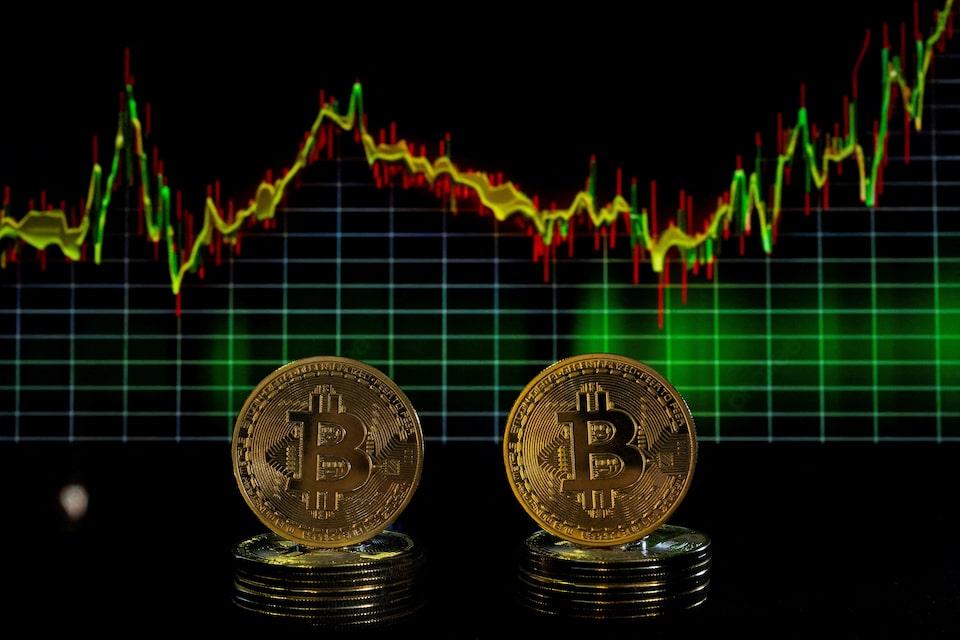
LONDON, July 14 (Reuters) - What matters in U.S. and global markets today By Mike Dolan , opens new tab, Editor-At-Large, Finance and Markets Sign up here. European markets have given something of a gallic shrug to Donald Trump's tariff threat against the region over the weekend, with investor concern instead appearing to build about the intensifying White House attack on Federal Reserve chair Jerome Powell . I'll discuss this and the rest of today's market news below. Be sure to check out my column, where I explain why U.S. investors may have a serious case of dollar-driven FOMO. Today's Market Minute * The EU has already prepared a list of tariffs worth 21 billion euros ($24.52 billion) on U.S. goods if they fail to reach a trade deal, Italy's Foreign Minister Antonio Tajani said on Monday. * Japan's central bank may face political pressure to keep interest rates low for longer than it wants, as opposition parties favouring tax cuts and loose monetary policy are expected to gain influence after a July 20 election. * Oil markets have remained remarkably resilient so far this year, despite concerns over U.S. trade policies and rising OPEC+ production quotas. But as ROI energy columnist Ron Bousso writes, that strength will now be tested, as Saudi output is starting to surge just as demand appears to be slowing. * Investors may be fixated on Donald Trump’s attacks on the Federal Reserve, but Mike Peacock, a former head of communications at the Bank of England, claims the BoE also faces increasing political scrutiny, raising alarm bells about the future of central bank independence. * The United States, the world’s top corn supplier, is set to export a record volume of corn in the waning 2024-25 marketing year, slightly edging out 2020-21’s high. But ROI agriculture columnist Karen Braun says there’s a catch. Euro shrugs at tariffs, but bonds balk Maybe it's partly to do with the Bastille Day holiday in France and also a delayed start to the week's heavy events calendar, but Trump's weekend plan to hit European Union and Mexican imports with a 30% tariff from next month saw the euro and euro zone stocks tick only modestly lower on Monday. As with the sweep of other August 1 tariff plans that Trump detailed in letters sent last week, investors suspect much may change between now and then and are reluctant to take the standing numbers at face value just yet. What's more, there's still no real consensus on whether the U.S. trade war damages the American economy more or less than any of the countries it's targetting. And in currency markets, the dollar has been the one unequivocal loser from the whole policy piece this year so far. The EU said on Sunday it would extend its suspension of countermeasures to U.S. tariffs until early August and continue to press for a negotiated settlement. But the bloc refuses to roll over and Italy's Foreign Minister, Antonio Tajani, said the EU has already prepared a list of tariffs worth more than 21 billion euros on U.S. goods, if the sides fail to reach a deal. EU trade commissioner Maros Sefcovic said that even though the EU wants a favorable agreement, it was preparing possible countermeasures. Commission President Ursula von der Leyen said on Sunday that the bloc's more draconian retaliatory tool, the so-called "Anti Coercion Instrument" was created for extraordinary situations and "we are not there yet." European stocks (.STOXXE) , opens new tab slipped about 0.5% on Monday, with the euro virtually unchanged from Friday's close just under $1.17. Even euro auto sector stocks (.SXAP) , opens new tab, in the frontline of a U.S. tariff squeeze, were only down just over 1%. There were bigger reactions in long-dated government bonds, however. German benchmark yields pushed to their highest since April 1 and 30-year yields hit their highest since October 2023. The move in debt yields was hard to pin on the trade situation, even if the heightened fears of a tit-for-tat trade war may prove inflationary - and even stagflationary - for all. Despite the holiday, traders eyed French President Emmanuel Macron's announced plans to push forward defence spending with an already strapped budget - pledging to double the military budget by 2027, three years earlier than originally planned. But the fresh backup in long-dated debt yields was more global, with Japan's 10 and 30 year government borrowing rates hitting their highest since May on Monday on a mix of domestic political and fiscal nerves ahead of upper house elections on July 20. More broadly, the widening bond selloff may owe as much to worries about the mounting attacks from the Trump administration on the Fed and its chair, Powell. Even though Trump has previously said he won't fire Powell before his term expires early next year, his attacks on the Fed boss are now almost daily and have shifted in tone toward accusations of mismanagement as much as distaste for the monetary policy stance. White House economic adviser Kevin Hassett, seen by some as one possible contender to replace Powell, said Trump had the authority to fire Powell "if there's cause", and the Fed "has a lot to answer for" on renovation cost overruns at its Washington headquarters. Hassett told ABC's "This Week" program that any decision by Trump to try to fire Powell over what the Trump administration calls a $700 million cost overrun "is going to depend a lot on the answers that we get to the questions that (budget director)Russ Vought sent to the Fed." Investors fear for Fed independence given Trump is seeking rate cuts of up to three percentage points even with inflation and inflation expectations well above the central bank's target. With the immigration crackdown potentially upping risks of another worker shortage and higher wages, the tension on that score is unnerving bond markets. Thirty-year Treasury yields hit their highest in more than a month - within 2 basis points of the 5% threshold. Wall Street stock futures were in the red again after a down day for the main indexes on Friday. The dollar index (.DXY) , opens new tab was a shade firmer. Tuesday sees the release of June U.S. consumer price inflation data that will give some indication of whether the limited amounts of tariffs that have hit to date are starting feeding household cost of living more broadly. Crude oil prices rose on Monday and reached their highest level in three weeks as investors eyed further U.S. sanctions on Russia that may affect global supplies. What's clear is that tariffs are flattering Federal budget revenues already, with a surprise surplus seen in June. The second-quarter corporate earnings season also kicks into gear on Tuesday, with updates from the big banks. Elsewhere, Chinese stocks and the yuan were firmer as China's exports regained momentum in June, with firms rushing orders to capitalise on a fragile tariff truce between Beijing and Washington ahead of this month's latest deadlines. Chart of the day: Bitcoin crossed the $120,000 level for the first time on Monday, marking a milestone for the world's largest cryptocurrency as investors bet on long-sought policy wins for the industry this week. Later today, the U.S. House of Representatives will debate a series of bills to provide the digital asset industry with the regulatory framework it has long demanded. Today's events to watch * European Central Bank board member Piero Cipollone speaks * US corporate earnings: Fastenal Opinions expressed are those of the author. They do not reflect the views of Reuters News, which, under the Trust Principles , opens new tab, is committed to integrity, independence, and freedom from bias. https://www.reuters.com/business/finance/global-markets-view-usa-2025-07-14/
2025-07-14 11:03
Money market funds ready to absorb increased T-bill supply Treasury to issue $900 billion to $1.6 trillion in T-bills Fed's reverse repos decline, could change money fund strategies NEW YORK, July 14 (Reuters) - More than $1 trillion in U.S. short-term bills are expected to flood the market over the next 1-1/2 years following the increase in the debt ceiling, as the Treasury replenishes its diminished cash balance while funding the country's huge fiscal deficit. There is, however, no shortage of buyers, with money market funds leading the way. Armed with a record $7.4 trillion in assets as of July 1, money funds, which invest in short-term, low-risk securities such as Treasury bills and repurchase agreements, or repos, are ready to take on more supply. Sign up here. The debt ceiling increased by $5 trillion to $41.1 trillion two weeks ago following the signing into law of the "One Big Beautiful Bill." The Treasury's operating balance had dropped to $313 billion on July 3, data from money market research firm Wrightson ICAP showed, the day before President Donald Trump's tax and spending bill was enacted. Treasury bills are critical to financial markets and the broader economy, given their role as safe and liquid assets, and are a key tool for funding government spending. In turning to short-term debt to fill its coffers, U.S. Treasury Secretary Scott Bessent had said it does not make sense to increase long-term bond sales at current interest rates. The Federal Reserve has kept the benchmark federal funds rate in the 4.25%-4.50% range since December. J.P. Morgan, Barclays, and TD Securities have estimated new issuance of Treasury bills alone over the next 18 months of between $900 billion and $1.6 trillion, higher than their initial projections before the debt ceiling resolution. "It sounds like a large amount of issuance coming from the Treasury, but we welcome it and feel that we will have no trouble accommodating it," said Susan Hill, senior portfolio manager and head of the government liquidity group at Federated Hermes, with assets under management of $631.1 billion. The firm has a suite of government and prime money market funds. Bank estimates on short-term supply over the next 1-1/2 years, however, paled in comparison to Treasury bills issued following the last debt ceiling saga two years ago. The Treasury had issued $1.1 trillion in three months from June 2023, as it reloaded its cash account that had dwindled to just $23 billion. Lou Crandall, Wrightson's chief economist, said the Treasury is in a much stronger position now than in 2023. "The debt ceiling impasse didn't go down to the wire this time, so they're starting out with $300 billion more in cash," said Crandall, providing ample cushion for the Treasury. Still, this year's projected T-bill supply exceeds that of past debt ceiling events. In 2011, the Treasury issued about $300 billion in T-bills in the months following the debt limit increase in August 2011. In 2013, the Treasury issued roughly $400 billion in bills by the end of that year. Fast forward to 2025, and bank estimates of additional T-bill supply for the next five months ranged from $650 billion to $830 billion. RAMPING UP; REVERSE REPO DECLINE With the spending bill's approval, the Treasury last Tuesday raised the size of last week's four-week and eight-week bill auctions by a larger-than-expected $25 billion each to $150 billion for both offerings. It also announced another $225 billion in three T-bill auctions scheduled this week. Those increases are likely to represent the bulk of adjustments for bill auction sizes for July, although the Treasury might not be quite done yet. "There's plenty of money market funds that had been avoiding maturities like those on August bills (due to the debt ceiling restrictions), so that part of the curve is going to be pretty well subscribed," said Jan Nevruzi, U.S. rates strategist, at TD Securities. There is just one hitch. The Fed's overnight reverse repo (RRP) facility, where money market funds park their excess cash, has fallen sharply to $182 billion as of July 11, from a peak of $2.5 trillion in December 2022. Without that excess cash sitting in RRPs, market participants wondered how money funds would absorb more Treasuries if they are fully invested. In 2023, money funds used that buffer sitting in RRPs to buy a deluge of T-bills in the market. In a reverse repo, investors lend overnight cash to the Fed at a 4.25% interest rate in exchange for Treasuries or other government securities, with a pledge to buy them back. The Fed's ongoing quantitative tightening, a process that shrinks its balance, allowed Treasuries and mortgage-backed securities to mature without reinvestment. That drained liquidity from the financial system and reduced excess cash that previously flowed into RRPs. Analysts, however, said money market funds will likely reallocate out of regular repos into T-bills. Repos have grown to 37% of money funds' assets, J.P. Morgan said in a research note. "The overall portion of money fund investments in the repo market is still quite large, so it becomes more of a decision of going out of that normal repo transaction into Treasury bills if the value is there," said Hill of Federated Hermes. Currently, three-month T-bills are yielding 4.353% , higher than the Secured Overnight Financing Rate, a repo rate, of 4.31%. Analysts also pointed to money market funds' continued appeal to investors that should further propel the growth in their assets, which means more cash for T-bills. Money market yields are 170 basis points higher than bank deposits, a historically wide spread, wrote Samuel Earl, U.S. rates strategist at Barclays. Households, which have $10 trillion in time deposits and savings accounts, are likely to continue to move deposits at banks into money funds, he added. https://www.reuters.com/business/finance/slew-t-bills-coming-money-market-funds-say-bring-em-on-2025-07-14/