2025-07-14 11:02
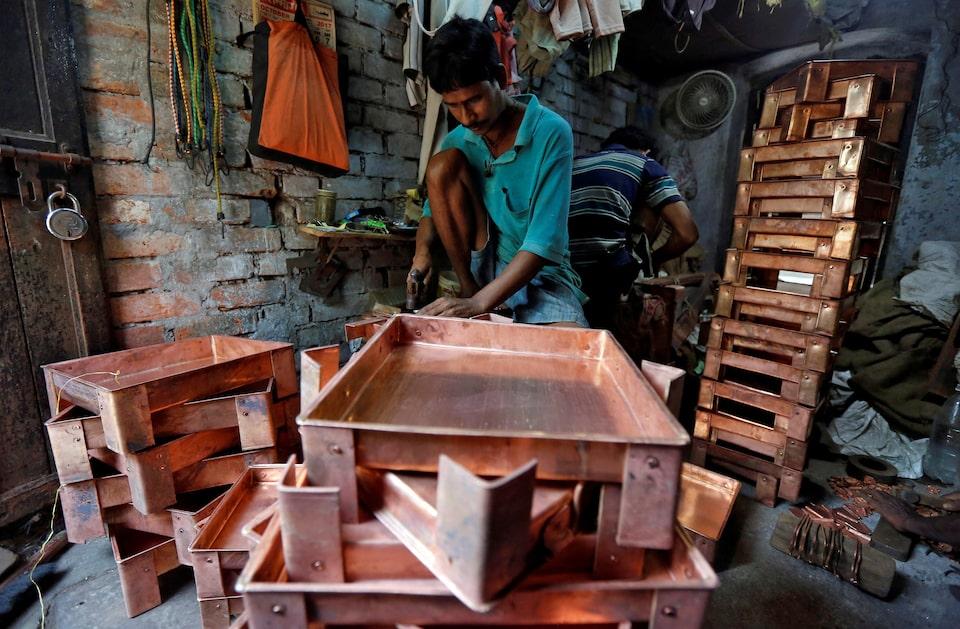
NEW DELHI/TOKYO, July 14 (Reuters) - India's quality control order on copper cathodes is likely to reduce domestic availability due to "costly and unnecessary compliance burdens" on foreign suppliers, the Bombay Metal Exchange said. India, the world's second-largest importer of refined copper, imposed quality controls on copper cathode imports in December, requiring all suppliers, foreign and domestic, to ensure there were checks on substandard products in the country. Sign up here. The quality control curbs have led to a decline in imports, the Bombay Metal Exchange (BME) said - a claim rejected by the government. "With domestic licensees unable or unwilling to supply the market and unreliable foreign alternatives, the downstream sector faces real and immediate shortages," the BME said. India's federal Ministry of Mines did not immediately respond to an email seeking comment. To meet the quality control rules, suppliers have to get a licence from the Bureau of Indian Standards, which oversees quality control in India. The quality controls have faced a legal challenge from trade bodies in India, including the BME and the Bombay Non-Ferrous Metals Association. The government has defended the quality control order in court against claims that it would lead to supply shortages and create a supply monopoly. The BME said all five domestic licensees use copper cathodes entirely for their own consumption. "As for foreign ... licensees, four of the 10 do not supply copper cathodes at all, offering only ingots or semi-finished forms," the BME said in a statement to Reuters. Among the 10 foreign suppliers who have secured certification under the new rules, seven are from Japan, two from Malaysia, and one from Austria, the Indian government said last month. Japan accounts for about two-thirds of India's refined copper imports, followed by Tanzania and Mozambique. The BME said there are growing indications the Japanese licensees will withdraw from the Indian market due to costly and unnecessary compliance burdens. Japanese trading house Marubeni, which was involved in the licensing process for six Japanese smelters, said: "No particular issues have arisen concerning supply to India." Copper is one of 30 minerals identified as critical by India in 2023, with domestic demand expected to double by 2030. Major domestic suppliers include Hindalco Industries (HALC.NS) , opens new tab and state-owned Hindustan Copper (HCPR.NS) , opens new tab. https://www.reuters.com/world/india/indias-new-copper-cathode-rule-risks-supply-shortages-trade-body-says-2025-07-14/
2025-07-14 10:20
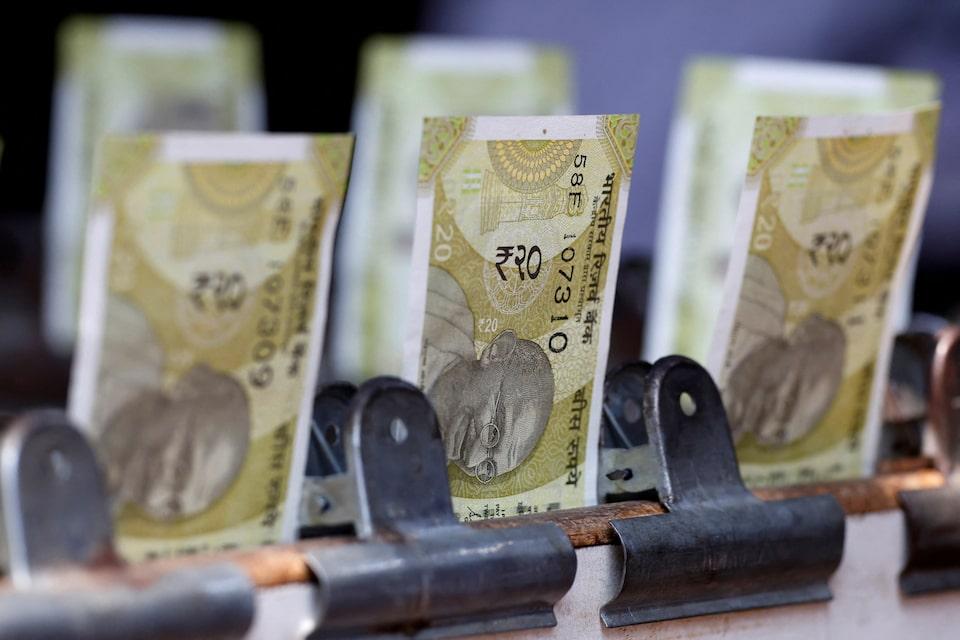
MUMBAI, July 14(Reuters) - The Indian rupee weakened past the 86 per U.S. dollar mark on Monday to its lowest level in more than two weeks, weighed by corporate dollar demand and equity-related outflows, traders said, amid uncertainty over U.S. trade policies. The rupee closed at 85.9850 against the U.S. dollar, down 0.2% from its close at 85.80 on Friday. The currency hit a low of 86.0475 earlier in the day, its weakest level since June 25. Sign up here. Dollar demand from a large Indian conglomerate and other companies pressured the rupee alongside likely outflows from Indian equities, traders said. India's benchmark equity indexes, the BSE Sensex (.BSESN) , opens new tab and Nifty 50 (.NSEI) , opens new tab, declined 0.3%, even as most regional peers ticked higher. Stocks in Europe fell and the common currency weakened marginally against the dollar after U.S. President Donald Trump threatened a 30% levy on the region's imports over the weekend, deepening his ongoing trade war. U.S. equity futures were in the red as well, with the S&P 500 futures down 0.3%. "The moves have not been larger since investors see these threats as a Washington negotiating tactic to push the other side over the line into a deal," ING said in a note. India is among the few large U.S. trade partners that have not yet received a tariff letter. Indian negotiators are expected to head back to the U.S. soon for another round of talks, centred on disagreements over auto components, steel and farm goods. "All things considered, chances of the rupee gaining ground remain limited," said Amit Pabari, managing director at FX advisory firm CR Forex. Pabari expects the rupee to face resistance around the 85.40-85.50 level. Focus is now on India's consumer inflation data due later in the day. Benign food prices and a high base likely helped Indian inflation slow to a more than six-year low at 2.50% in June, according to a Reuters poll of 50 economists. (This story has been corrected to fix the rupee close to 85.9850, from 86.9850, in paragraph 2) https://www.reuters.com/world/india/rupee-falls-over-two-week-low-corporate-dollar-bids-outflows-2025-07-14/
2025-07-14 07:59
MOSCOW, July 14 (Reuters) - OPEC, which along with its allies is ramping up oil output, expects "very strong" oil demand in the third quarter and a tight supply-demand balance in the following months, its secretary general said, according to a Russian media report. The eight members of the OPEC+ producer group, comprising the Organization of the Petroleum Exporting Countries and allies including Russia, are unwinding years of cuts that had been aimed at supporting the market. Sign up here. Five sources told Reuters that OPEC+ oil producers are set to approve another big output boost for September. Russia's RIA news agency quoted Haitham Al Ghais on Monday as telling journalists on the sidelines of last week's OPEC seminar in Vienna that the organisation expected demand growth of 1.3 million barrels per day year on year in 2025 due to a strong global economy. "And that means we are seeing, especially in the third quarter, very strong demand growth," he said, according to the report. "In the fourth quarter also we're seeing good demand growth, and the balances will be tight. And this is one of the main fundamental factors that is leading for the group of eight countries to bring barrels back to the market," he added. Al Ghais' comments come as OPEC trimmed its global oil demand forecasts for the next four years last week on slowing Chinese growth, even as it lifted its longer-term view based on rising consumption in the developing world. Global demand will average 105 million barrels per day this year, OPEC said in its 2025 World Oil Outlook published on Thursday. It expects demand to grow to average 106.3 million bpd in 2026 and then climb to 111.6 million bpd in 2029. https://www.reuters.com/business/energy/opec-projects-very-strong-third-quarter-oil-demand-followed-by-tight-balance-ria-2025-07-14/

2025-07-14 07:21
Ola Electric expects gross margins to reach 35%-40% Shares rise over 14% after results Rare earth-free motors to be deployed from December quarter July 14 (Reuters) - India's Ola Electric (OLAE.NS) , opens new tab on Monday forecast improved gross margins for fiscal 2026 after posting a narrower sequential loss for the first quarter, helped by stronger sales of its newer, more cost-efficient scooter models. Shares of the company, which listed in August last year, jumped over 14% after the results and were on track to snap a five-session losing streak. Sign up here. The Bengaluru-based firm's June quarter loss of 4.28 billion rupees ($49.80 million) was narrower than the 8.7 billion rupees in the previous quarter. The SoftBank-backed (9984.T) , opens new tab firm said it expects gross margins to rise to 35% to 40% in the current fiscal year, up from 20.5% last year, and projected revenue between 42 billion and 47 billion rupees, compared to 46.65 billion rupees in fiscal 2025. The company added that it has developed rare earth-free motors, which are set to be deployed starting the December quarter. Ola said it accelerated the program in April following global rare earth supply cuts. China's curbs on rare-earth exports have disrupted the global auto industry, with companies warning of a severe supply crunch. Rare-earth magnets are used are used in the motors that power electric scooters. Ola Electric said its automotive unit posted positive earnings before interest, taxes, depreciation and amortization (EBITDA) in the month of June and expects the segment to turn positive in the second quarter. Quarterly sales volumes came in at 68,192 units, just higher than the 65,000 units it forecast in May. The auto segment's gross margin rose to 25.6% from 13.8% in the last quarter. ($1 = 85.9400 Indian rupees) https://www.reuters.com/world/india/indian-electric-two-wheeler-maker-ola-electric-reports-wider-first-quarter-loss-2025-07-14/

2025-07-14 07:01
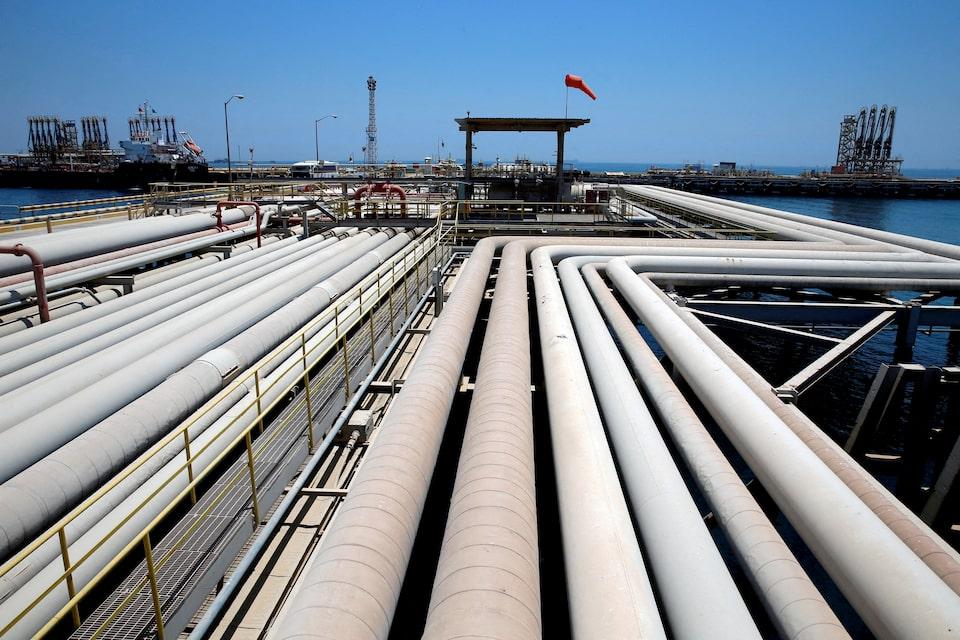
Oil demand growth slows sharply in second quarter Saudi oil exports set to surge to 7.5 mln bpd in July amid higher production Saudi power generation crude burn limits exports during summer LONDON, July 14 - Oil markets have remained remarkably resilient so far this year, despite concerns over U.S. President Donald Trump's trade policies and rising OPEC+ production quotas. But that strength will now be tested, as Saudi output is starting to surge just as demand appears to be slowing. Benchmark oil prices are currently near $70 a barrel, down from a 2025 high of $82 in mid-January, but above the four-year low of $62 set in May. That followed Trump's "Liberation Day" tariffflip-flop, which sparked confusion about the policy direction and fears of a severe disruption to global economic activity and oil consumption. Sign up here. Investor jitters were compounded by a significant OPEC+ policy shift. Under the leadership of Saudi Arabia, the group including the Organization of the Petroleum Exporting Countries and Russia, started to aggressively ramp up production quotas in April for the first time in over three years. The group is set to add 2.5 million barrels per day of production between April and September. Given this backdrop, why has crude remained so resilient? It’s likely in large part because most of these fears have yet to materialize. Crucially, Trump not only delayed his ‘reciprocal tariffs’, but he also held positive talks with Beijing, which managed to defuse some of the market’s worst fears about trade tensions between the world's two biggest economies. To be sure, economic activity has slowed in recent months, but not nearly as badly as the initial drop in oil prices implied. Global GDP is forecast to slow to 2.3% in 2025, according to a recent World Bank report , opens new tab, nearly half a percentage point lower than expected at the start of the year. The OPEC+ supply hikes were also initially more talk than action. The decision by OPEC+ to unwind 2.2 million bpd of supply cuts, as well as to raise the United Arab Emirates baseline production by 300,000 bpd starting in April, initially had little impact on global supplies, mostly because several members had already been producing above their assigned quotas. While Saudi Arabia’s production did rise significantly in June by 700,000 bpd to 9.8 million bpd, a large share of the increase was consumed domestically by its refineries as well as in power plants that use crude to generate electricity during summer's peak demand, limiting exports. Saudi "crude burn" is set to reach 695,000 bpd in July and is expected to remain elevated in August, according to consultancy Wood Mackenzie. SHIFTING TIDES The tide may be turning, however. As we move into the second half of the year, the negative trends that spooked investors in April now appear to be building. Trade tensions have come back to the fore in recent days after Trump outlined new tariffs for a number of countries, including allies Japan and South Korea, along with a 50% tariff on copper, and a 35% levy on many Canadian goods. Crude consumption already started to falter in recent months. While demand rose by a robust 1.1 million barrels per day in the first quarter of 2025, growth is set to halve in the second quarter, according to the International Energy Agency. Importantly, demand in countries that are heavily dependent on trade with the United States seems to have taken a hit. Demand in China dropped in the second quarter from a year earlier by 160,000 bpd, Japan’s by 80,000 bpd, Mexico’s by 40,000 bpd and South Korea’s by 70,000 bpd. U.S. demand over the same period also contracted by 60,000 bpd, according to the IEA. These trends could accelerate if the trade wars kick in in earnest. SAUDI SURGE Meanwhile, oil production is expected to start rising significantly in the coming months, particularly from Saudi Arabia, the world’s top oil exporter, as it ramps up production and as its domestic crude burn eases as summer ebbs. Saudi’s increase in domestic consumption initially meant its oil exports only rose from 5.9 million bpd in April to 6.4 million bpd in June, according to Kpler data. Saudi shipments are, however, set to surge to 7.5 million bpd in July, the highest since April 2023. Saudi production and exports are likely to increase further in August as Riyadh seeks to regain market share. Its slice of the global market declined to 11% last year from a 13% average in the previous three decades. The Kingdom’s exports to China are set to rise to the highest in more than two years in August, Reuters reported. The increases in OPEC+ output, together with large increases in production outside the group, are set to increase global supply by 2.1 million bpd to 105.1 million bpd in 2025, according to the IEA. The energy watchdog forecasts global demand to reach 103.7 million bpd this year, which implies a significant oversupply of 1.4 million bpd in 2025. Oil prices will therefore likely come under heavy downward pressure in the coming months, particularly once demand ebbs in the fourth quarter. And this downward push will only get stronger if Trump’s renewed trade threats turn out to have real bite. Enjoying this column? Check out Reuters Open Interest (ROI), , opens new tabyour essential new source for global financial commentary. ROI delivers thought-provoking, data-driven analysis. Markets are moving faster than ever. ROI , opens new tab can help you keep up. Follow ROI on LinkedIn , opens new tab and X. , opens new tab (This story has been refiled to remove the links in paragraph 11) https://www.reuters.com/markets/europe/soaring-saudi-exports-trade-tensions-will-test-oil-price-resilience-2025-07-14/
2025-07-14 06:54
MILAN, July 14 (Reuters) - The European Union has already prepared a list of tariffs worth 21 billion euros ($24.52 billion) on U.S. goods if the two sides fail to reach a trade deal, Italy's Foreign Minister Antonio Tajani said in a newspaper interview on Monday. President Donald Trump on Saturday threatened to impose a 30% tariff on imports from Mexico and the EU starting on Aug. 1, after weeks of negotiations with major U.S. trading partners failed to reach a comprehensive deal. Sign up here. Tajani also told daily Il Messaggero that to help the euro zone economy the European Central Bank should consider a new "quantitative easing" bond-buying-programme, and more interest rate cuts. The European Union said on Sunday it would extend its suspension of countermeasures to U.S. tariffs until early August and continue to press for a negotiated settlement. Tajani said the 21-billion-euro package of tariffs the EU has already prepared could be followed by a second set if a deal with the U.S proves impossible. He added, however, that he was confident that progress could be made in negotiations. "Tariffs hurt every one, starting with the United States," he said. "If stock markets fall that puts at risk the pensions and the savings of the Americans." He said the goal should be "zero tariffs" and an open market among Canada, the United States, Mexico and Europe. German Chancellor Friedrich Merz said on Sunday he would work intensively with French President Emmanuel Macron and European Commission President Ursula von der Leyen to resolve the escalating trade war with the United States. European Trade Commissioner Maros Sefcovic said on Monday that Washington and Brussels were approaching a positive outcome for both sides, and warned that a 30% tariff would practically eliminate trade. ($1 = 0.8565 euros) https://www.reuters.com/business/eu-ready-hit-us-with-21-bln-euro-tariff-list-italy-foreign-minister-says-2025-07-14/