2025-07-14 06:53
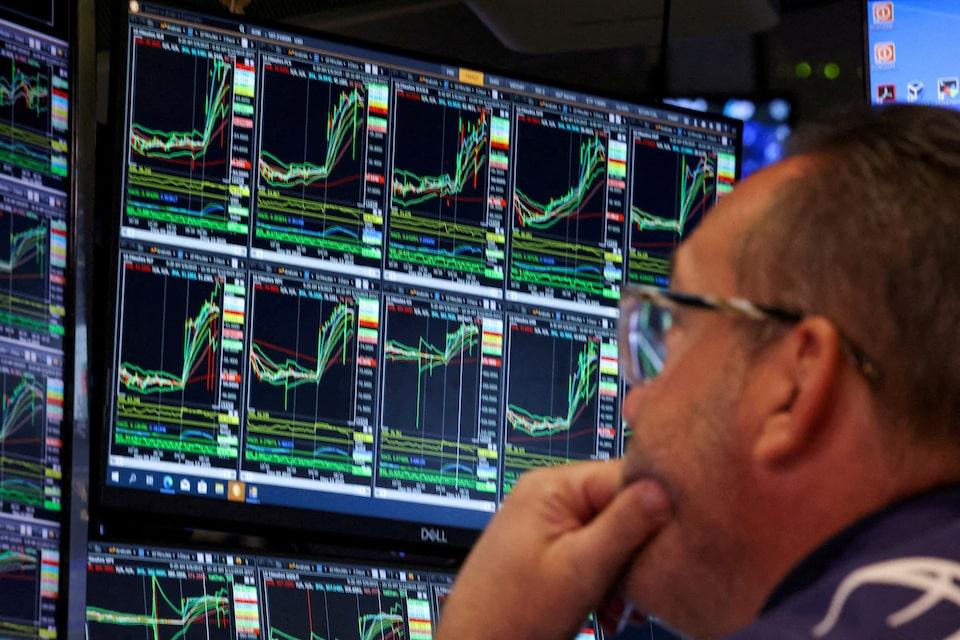
July 11 (Reuters) - Tariff curve balls lobbed at economies and markets around the world by U.S. President Donald Trump will punctuate a week of inflation data from the U.S. and Britain as well as growth and retail sales numbers from China. Meanwhile, earnings season is getting under way on both sides of the Atlantic and G20 finance officials are preparing to meet in South Africa. Sign up here. Here's a look at the week ahead from Colleen Goko in Johannesburg, Kevin Buckland in Singapore, Lewis Krauskopf in New York and Lucy Raitano and Amanda Cooper in London. 1/TARIFF TEST FOR U.S. INC A crucial U.S. inflation reading will offer Wall Street clues on when the Federal Reserve may next cut interest rates, as second-quarter earnings roll in. June's consumer price index, due Tuesday, is expected to show a monthly rise of 0.3%, according to a Reuters poll . Recent minutes from the Fed's June meeting showed only "a couple" of officials said they felt interest rates could be reduced as soon as this month, with most remaining worried about inflationary pressure they expect from Trump's tariffs. Fed fund futures indicate a slim chance of a rate cut at the end-July meeting, but suggest easing in September is likely. The impact from Trump's trade tantrums will share the stage with corporate reports - the first earnings quarter under these tariff wars. Major banks also report in the coming week, including JPMorgan Chase (JPM.N) , opens new tab, Bank of America (BAC.N) , opens new tab and Wells Fargo (WFC.N) , opens new tab while results are due from Netflix (NFLX.O) , opens new tab, Johnson & Johnson (JNJ.N) , opens new tab and 3M (MMM.N) , opens new tab. 2/AND IN EUROPE Second-quarter earnings also kick off in Europe, and paint a glum picture. In the U.S., it is already not looking pretty: earnings are expected to post their weakest growth in two years. Corporate profits at S&P 500 (.SPX) , opens new tab companies are seen increasing 5.8% year-on-year, according to LSEG I/B/E/S - a marked slowdown from the first quarter's near-14% rate. In Europe, STOXX 600 earnings are expected to fall 0.2% after last quarter's 2.2% growth. Forward guidance will be key to understanding the fallout from this era of tariffs and fears of more levies. It's not obvious in the market's performance though, where the S&P 500 is scaling new record highs, while bourses in Europe including Frankfurt (.GDAXI) , opens new tab and London (.FTSE) , opens new tab are hovering near previous peaks, shrugging off high uncertainty and moderating earnings growth rates. 3/STIMULATING SPENDING Trump's rekindled fragile bromance with Chinese leader Xi Jinping must have come as a great relief to Beijing policymakers, allowing them to focus on tackling deep-rooted economic problems at home. GDP figures due on Tuesday are tipped to show the economy still chugging along above the government's soft target of 5%-ish growth. But same-day retail sales numbers should reinforce that consumers are still saving instead of spending, frustrating government efforts to gear the economy towards consumption. On Wednesday, Beijing unveiled new measures to stabilise employment, including more social insurance subsidies, special loans and targeted support for young job seekers. With the politburo due to meet around the end of the month, hopes are high - as evidenced by soaring stocks - for more stimulus to come. Any data weakness is only likely to fan that speculation. 4/ A STICKY SITUATION At 3.4%, Britain has the highest inflation among the G7 - and CPI numbers due on Wednesday will spell out just how sticky price pressures are. A deal on U.S. tariffs that was less grim than feared, and a stronger pound, may help the UK to absorb any inflationary impact. In terms of the British consumer, regular pay growth has run above 5% for the better part of five years. So far, so good. But the tax burden is the highest since the 1940s and growth in real wages - adjusted for inflation - is slowing, having risen just 1.5%, their lowest rate in almost two years. Friday's data showed the economy shrank for a second straight month in May - not great news for finance minister Rachel Reeves, who delivers her annual Mansion House speech along with Bank of England governor Andrew Bailey on July 15, or for UK households and businesses. 5/A TEST OF RELEVANCE G20 finance ministers and central bankers gather in Durban from Thursday under South Africa's presidency amid growing questions over the group's effectiveness on stalled progress on debt relief, climate finance and access to capital for developing nations. South Africa’s priority areas have seen glacial progress. The Cost of Capital Commission lacks formal support and the Just Energy Transition Partnership - a collaboration between richer nations to help developing countries transition to cleaner energy - is limping along. U.S. Treasury Secretary Scott Bessent will skip the meeting altogether - the second time he has opted out of a South Africa G20 event - to attend Japan's World Expo 2025 instead. The BRICS group of developing nations, along with other alternative forums, is trying to fill some of the void, though the U.S. has criticised its initiatives involving local currency payments as being "anti-American." https://www.reuters.com/business/take-five/global-markets-themes-graphic-2025-07-11/
2025-07-14 06:47
Trump threatens 30% tariffs on EU, Mexico Silver rally driven by speculative flows, analyst says US CPI, PPI data due later this week July 14 (Reuters) - Gold rose to a three-week high on Monday, boosted by safe-haven demand after U.S. President Donald Trump threatened tariffs on the European Union and Mexico, while silver hit a near 14-year peak. Spot gold was up 0.4% at $3,369.89 per ounce, as of 1123 GMT, after hitting its highest level since June 23 earlier in the session. Sign up here. U.S. gold futures rose 0.5% to $3,381.10. Trump said on Saturday he would impose a 30% tariff on most imports from the EU and Mexico from August 1, adding to similar warnings for other countries. Both the European Union and Mexico described the tariffs as unfair and disruptive, while the EU said it would extend its suspension of countermeasures to U.S. tariffs until early August and continue to press for a negotiated settlement. "Trump tariffs threats are supporting demand for safe-haven assets, and gold is a main beneficiary of that," said UBS commodity analyst Giovanni Staunovo. On the data front, traders await U.S. consumer price index data and the producer price index this week for cues on the Federal Reserve's interest rate path. Investors are currently anticipating 50 basis points worth of Fed rate cuts by the end of this year, starting in October. Gold tends to thrive in a low-rate environment. Meanwhile, Indian investors, traditionally obsessed with stockpiling gold, are increasingly turning to silver, as its returns this year outpaced those of gold. Spot silver was up 1.6% at $38.96 per ounce after hitting its highest level since September 2011 earlier in the session. The silver rally "is driven by speculative flows, with the metal moving above technical resistance levels," Staunovo said. ANZ in a note said silver breaking the $35–$37 range could potentially trigger new technical buying and drive prices toward $40. Platinum was down 1.4% at $1,379.53. Palladium gained 1.3% to $1,230.32, the highest since late October 2024. https://www.reuters.com/world/china/gold-prices-scale-three-week-peak-trump-widens-trade-war-2025-07-14/

2025-07-14 06:42
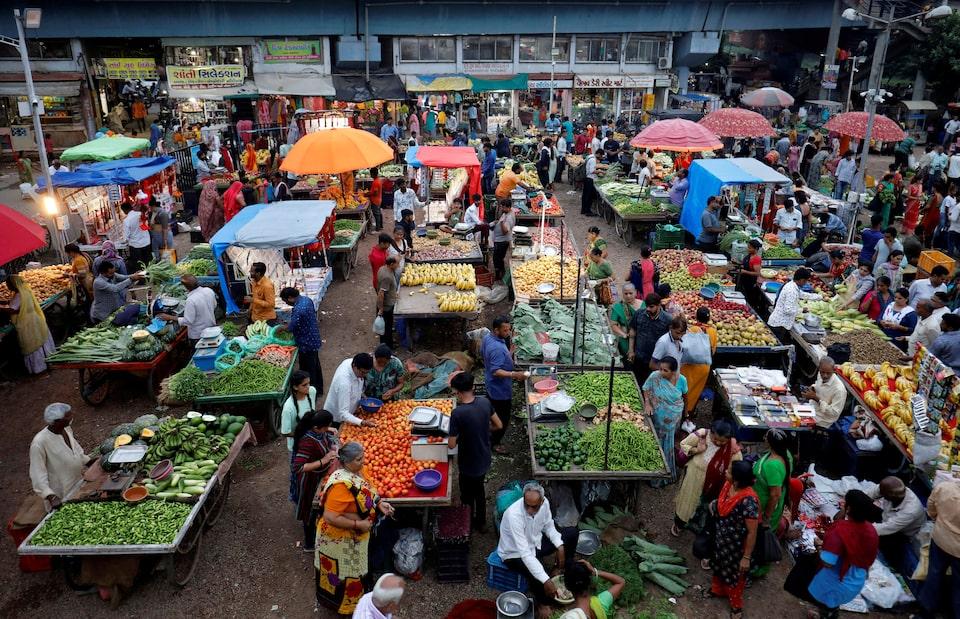
NEW DELHI, July 14 (Reuters) - India's wholesale price index (INWPI=ECI) , opens new tab fell 0.13% year-on-year in June, its first fall in 19 months, primarily due to the decline in prices of food items, basic metals, mineral oils and energy, government data showed on Monday. Wholesale prices had risen 0.39% in May from a year earlier. Sign up here. Economists polled by Reuters had projected wholesale price index to rise 0.52%. "The WPI surprisingly reverted to a year-on-year deflation in June after a gap of 19 months ... This was largely led by prices of food items," said Rahul Agrawal, economist, ICRA. Agrawal expects the print to remain in the deflationary territory in July. KEY NUMBERS * Wholesale food prices fell 0.26% year-on-year, compared with a 1.72% increase in May. * Vegetable prices in June fell 22.65% year-on-year from a 21.62% fall in May. * Prices of manufactured products edged down 0.07% year-on-year, compared with a flat annual reading in May. * Fuel and power prices fell 2.52% year-on-year, as against an increase of 0.69% in May. https://www.reuters.com/world/india/indias-june-wholesale-prices-fall-013-yy-2025-07-14/
2025-07-14 06:37
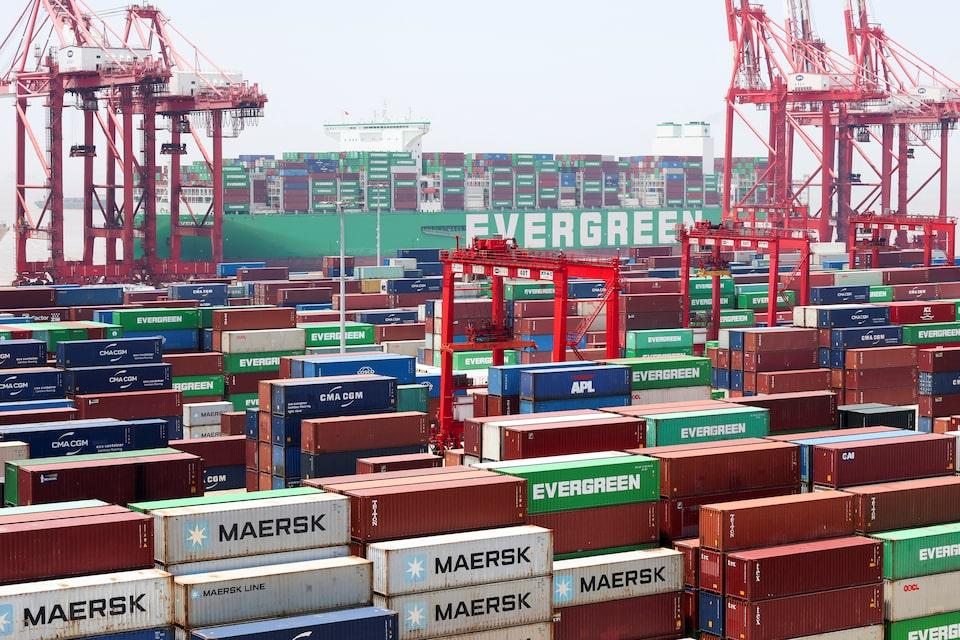
China's export growth quickened in June, imports rebound Exporters making most of U.S.-China tariff truce, analysts say China's trade surplus grew to $114.7 billion last month BEIJING, July 14 (Reuters) - China's exports regained momentum in June as firms rushed out orders to capitalise on a fragile tariff truce between Beijing and Washington ahead of a looming deadline next month, with shipments to Southeast Asian transit hubs particularly strong. Businesses on both sides of the Pacific are waiting to see whether the world's two largest economies can agree on a more durable deal or if global supply chains will again be upended by the reimposition of duties exceeding 100%. Sign up here. Chinese producers, facing weak demand at home and harsher conditions in the United States, where they sell more than $400 billion worth of goods annually, are also hedging their bets and racing to grab market share in economies closer to home. Customs data on Monday showed outbound shipments from China rose 5.8% year-on-year in June, beating a forecast 5.0% increase in a Reuters poll and May's 4.8% growth. "There are some signs that frontloading demand is beginning to wane gradually," said Chim Lee, senior analyst at the Economist Intelligence Unit. "While frontloading ahead of the August tariff pause deadline is likely to continue, freight rates for China-bound shipments to the U.S. have started to decline." "Trade diversion and rerouting appear to be continuing, which will attract the attention of policymakers in the U.S. and other markets," he added. Imports rebounded 1.1%, following a 3.4% decline in May. Economists had predicted a 1.3% rise. The upbeat set of data helped lift market sentiment with the blue-chip CSI300 (.CSI300) , opens new tab up 0.2% at the midday trading break, while the Shanghai Composite Index (.SSEC) , opens new tab gained 0.4%, nearing its highest level since October. Analysts and exporters are watching to see whether a deal agreed in June between U.S. and Chinese negotiators will hold, after an earlier agreement reached in May was strained by a series of export controls that disrupted global supply chains for key industries. Exports to the U.S. grew 32.4% month-on-month, with June the first full month of Chinese goods benefitting from reduced U.S. tariffs, although year-on-year growth remained negative. Meanwhile, outbound shipments to the 10-member Association of Southeast Asian Nations jumped 16.8%. China's June trade surplus came in at $114.7 billion, up from $103.22 billion in May. China's rare earths exports rose 32% in June from the month before, the customs data showed, in a sign that agreements struck last month to free up the flow of the metals were possibly bearing fruit. But Chinese negotiators will struggle to talk the U.S. into bringing tariffs down to levels that enable producers to turn a profit, analysts say, warning additional duties that exceed 35% will wipe out margins. "Tariffs are likely to remain high and Chinese manufacturers face growing constraints on their ability to rapidly expand global market share by slashing prices," said Zichun Huang, China economist at Capital Economics. "We therefore expect export growth to slow over the coming quarters, weighing on economic growth," she added. GLOBAL TRADE WAR Beijing faces an August 12 deadline to reach a durable deal with the White House. In the meantime, Trump continues to broaden his global trade offensive with new tariffs on other partners. Analysts warn those measures could indirectly hurt Beijing by pressuring third countries used heavily for transshipments of Chinese goods. Trump recently unveiled a 40% tariff on U.S.-bound transshipments through Vietnam, a move that could undermine Chinese manufacturers looking to reroute shipments and avoid higher duties. The U.S. president has also threatened a 10% charge on imports from BRICS countries, in which China is a founding member, raising further risks for Beijing. Backing its fellow BRICS member, China's soybean imports in June hit a same-month record high, buoyed by a surge in purchases from top supplier Brazil to 9.73 million tons, which Trump has slapped with 50% tariffs. Imports of U.S. soybeans, meanwhile, were just 724,000 tons. China's crude oil imports rebounded last month and reached the highest daily rate since August 2023, after refineries from Saudi Arabia and Iran increased operations. Iron ore imports climbed 8% from May. https://www.reuters.com/world/china/chinas-exports-imports-pick-up-trump-tariff-deadline-looms-2025-07-14/
2025-07-14 06:31
MELBOURNE, July 14 (Reuters) - The world's biggest listed miner BHP (BHP.AX) , opens new tab said on Monday it has signed preliminary deals with China battery giants CATL (300750.SZ) , opens new tab and BYD (002594.SZ) , opens new tab to explore battery opportunities for mining equipment and transport across its global operations. The companies will jointly research and develop battery solutions for heavy mining equipment and railway locomotives, which in BHP's Western Australian operations haul millions of tons of iron ore long distances from mine sites to the coast. Sign up here. Studies with both companies will also include the potential use of fast-charging infrastructure and battery recycling. As well as the potential to cut BHP's direct emissions, and potentially its power costs, the new products may provide a template to cut emissions across the mining industry. “This strategic relationship marks further progress in BHP’s work to reduce greenhouse gas emissions (GHG) from our operations and enable support for further developments within the global resources sector," Chief Procurement Officer Rashpal Bhatti said in a statement. Bhatti moved into the top procurement role based at BHP's copper operations in South Australia last year, after having moved to curb emissions in the company's maritime arm by using ships fuelled by liquefied natural gas to transport iron ore. With BYD unit FinDreams Battery, BHP will also explore options to develop electric vehicles for use at mine sites as it seeks to cut down its diesel use. High power costs for metals producers like BHP have become an increasingly urgent issue in recent years. Some, including Trafigura and Glencore (GLEN.L) , opens new tab, are reviewing the viability of their Australian operations. BHP's medium-term target is to cut its operational emissions by at least 30% by 2030 from 2020 levels as well as to support the development of technology capable of reducing emissions intensity by 30% by the end of the decade. Still, of the mining majors, its goals are the least aggressive. Rio Tinto (RIO.AX) , opens new tab(RIO.L) , opens new tab has committed to halving its operational emissions by 2030, while Australian iron ore miner Fortescue (FMG.AX) , opens new tab is targeting net zero emissions, without using offsets, by then. https://www.reuters.com/sustainability/climate-energy/bhp-signs-deals-with-catl-byd-use-batteries-mines-vehicles-2025-07-14/
2025-07-14 06:22
July 14 (Reuters) - RBC Capital Markets on Sunday raised its S&P 500 index (.SPX) , opens new tab year-end target to 6,250 from 5,730, its second hike this year, citing stronger investor sentiment and growing focus on 2026 economic prospects. The S&P 500 eased from a record high on Friday as caution prevailed after President Donald Trump imposed 50% tariffs on Brazil and the EU braced for possible new U.S. tariffs, though the index remains up about 6.4% so far in 2025. Sign up here. "Both RBC economics and consensus anticipate another year like this in 2026," said the RBC strategist, adding that their analysis now factors in how stocks perform leading up to periods of moderate GDP growth, specifically between 1.1% and 2%. Last month, RBC raised its S&P targets to 5,730 from 5,500 points, while earlier this month, BofA Global Research and Goldman Sachs also raised their year-end targets for the S&P 500 index. RBC maintained its 2025 S&P 500 EPS forecast at $258, slightly below consensus, and noted it is still too early to dismiss concerns about the impact of tariffs based on early earnings reports. https://www.reuters.com/business/finance/rbc-lifts-sp-500-year-end-price-target-6250-2025-07-14/