2025-07-14 06:16
Bitcoin hits record, buoyed by potential US regulatory framework US to debate bills, Trump supports industry-friendly policies Crypto market value hits $3.8 trillion; digital assets rally NEW YORK, July 14 (Reuters) - Bitcoin vaulted past $120,000 for the first time on Monday, the latest milestone for the world's largest cryptocurrency as investors bet on long-sought policy wins for the industry this week, which has been dubbed "crypto week" by U.S. Republicans. Bitcoin rose more than 3% to register a record high of $123,153.22 before easing, and was last up 0.5% at $119,750.86. The cryptocurrency is now up more than 27% on the year. Sign up here. The U.S. House of Representatives is set to debate and likely pass a series of crypto-related bills this week. The bills could provide the digital asset industry with the nation's regulatory framework it has long sought. Those demands have resonated with U.S. President Donald Trump, a Republican who has called himself the "crypto president" and urged policymakers to revamp rules in favour of the industry. "It's riding a number of tailwinds at the moment," said IG market analyst Tony Sycamore, citing institutional demand, expectations of further gains and support from Trump as reasons for the bullishness. "It's been a very, very, strong move over the past six or seven days and it's hard to see where it stops now. It looks like it can easily have a look at the $125,000 level," he said. Trump and his family have made a series of forays into cryptocurrencies in the past year, including a new crypto project, World Liberty Financial, and the launch in January of his own meme coin. Last week, crypto entrepreneur Justin Sun, who was already a major investor in the $TRUMP coin, announced that he was buying another $100 million. The White House did not immediately respond to a request for comment on Sun’s investment in the president’s meme coin. The coin, which hit a high of around $75 in the days after its January launch, fell 3.4% on Monday to $9.45, CoinMarketCap data showed. The surge in bitcoin has sparked a broader rally across other cryptocurrencies over the past few sessions even as Trump's chaotic tariff policies have knocked sentiment in other markets. Ether , the second-largest token, reached a high of $3,081.94, its highest level since February 2, but is still down more than 10% on the year. XRP advanced 2.7% after climbing as much as 6.4% on the day. The sector's total market value has swelled to about $3.8 trillion, according to data from CoinMarketCap. Simon Peters, analyst at eToro, noted that bitcoin's price had not hit a record high in other currencies such as the euro, suggesting that dollar weakness was behind some of the rise to a new record on Monday. CRYPTO WEEK U.S. Republicans have declared the week of July 14 "crypto week," during which members of Congress are set to vote on the Genius Act, the Clarity Act, and the Anti-CBDC Surveillance State Act. The most significant bill is the Genius Act, which would create federal rules for stablecoins. "Developments around these pieces of crypto legislation could provide a further tailwind to the current rally. We wait to see," eToro's Peters said. Elsewhere, prices of crypto stocks and exchange-traded funds advanced. Shares of crypto exchange Coinbase (COIN.O) , opens new tab were up 1.8%, while bitcoin holder Strategy (MSTR.O) , opens new tab climbed 3.5%. Crypto miner Mara Holdings (MARA.O) , opens new tab was up 0.1% in U.S. trading. Analysts at Oppenheimer said they are cautious on Coinbase ahead of its quarterly results scheduled for July 31, but believe a more attractive entry point could happen after the earnings, and increased their price target on the stock to $417 from $395 per share. Hong Kong-listed spot bitcoin ETFs launched by China AMC (3042.HK) , opens new tab, Harvest (3439.HK) , opens new tab and Bosera (3008.HK) , opens new tab all hit record highs. https://www.reuters.com/business/bitcoin-crosses-120000-record-high-2025-07-14/

2025-07-14 05:59
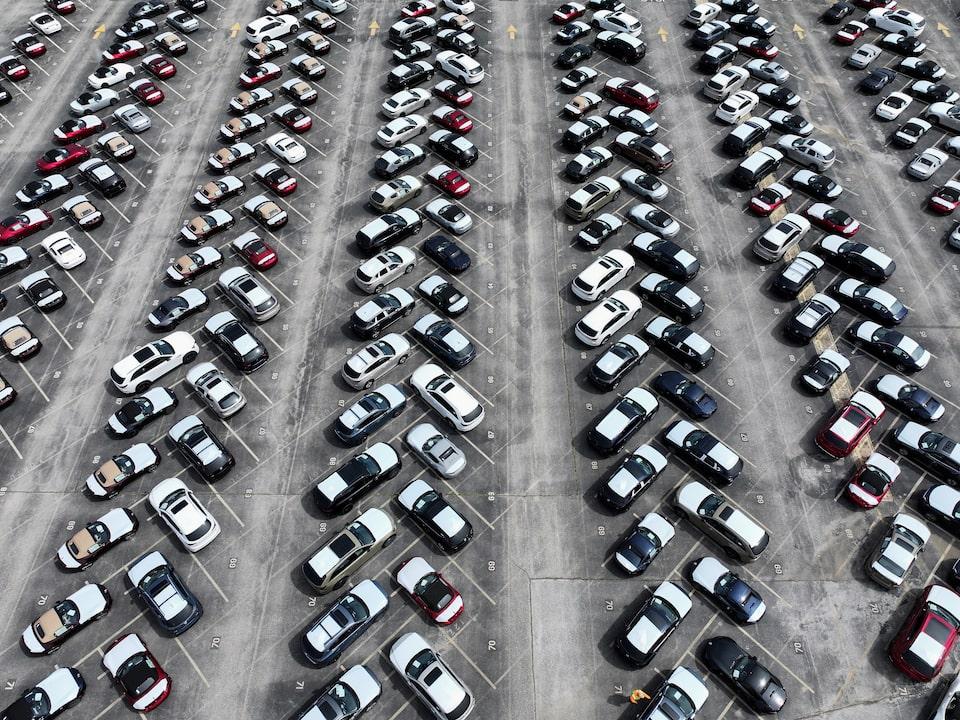
Planned copper tariff seen raising costs for US auto industry Carmakers may pass import tax costs to consumers US metals prices have soared; US heavily reliant on imports Copper tariff could be short-lived due to inflation concerns, some analysts say LONDON/DETROIT, July 11 (Reuters) - U.S. President Donald Trump's threat of a 50% tariff on copper imports is raising alarm in the U.S. auto sector, as it could make it even harder for carmakers and suppliers to absorb border taxes and rising costs, executives and industry experts say. The duties on their own may be manageable, but prices of the red metal vital for making cars, in particular in wire harnesses and in motors for electric vehicles, have soared to record highs. Sign up here. The U.S. market is heavily reliant on imported copper, aluminium and steel, and developing new capacity could take years, so users are scrambling to buy metal from a limited number of suppliers, spurring price rises. Added to import tariffs on those metals, as well as higher prices in the United States, the extra costs are compounding the financial strain on carmakers and parts suppliers, interviews with a dozen executives, industry analysts and experts show. Carmakers have so far been relying on inventories to avoid raising prices, but could be forced to pass on mounting import tax costs to consumers. Some like Ford (F.N) , opens new tab and Toyota (7203.T) , opens new tab have already announced hikes to mitigate other Trump-induced tariffs, while Porsche (P911_p.DE) , opens new tab expects a 300-million euro ($351 million) hit to results from tariffs for April and May alone. "This (a copper tariff) complicates an already difficult situation" for the auto industry, said Daan de Jonge, lead analyst for copper demand and prices at Benchmark Mineral Intelligence. Trump's announcement of the tariff this week propelled prices on U.S. platform COMEX to a record $5.6820 a pound or $12,526 a metric ton, a premium of more than $2,920 a ton over the price on the London Metal Exchange, currently around $9,600 a ton, which the market uses as the global benchmark. The rate is effective August 1. The U.S. Midwest duty-paid aluminium premium paid on top of the benchmark LME price for physical delivery has tripled to 60 U.S. cents a pound since Trump was inaugurated. In the same period, the LME price has slipped 3% to $2,604 a metric ton. U.S. top carmakers GM (GM.N) , opens new tab, Ford and Jeep maker Stellantis (STLAM.MI) , opens new tab declined to comment for this story. SUPPLIERS PASS ON SOME COSTS After a chaotic week in the copper market, suppliers to carmakers have already asked their customers this week to pay more for their product because they cannot afford the additional costs, experts say. A source at a major auto supplier in the U.S. market said the company had seen "meaningful" impact from elevated copper, aluminum and steel prices. This creates both commercial friction and structural cost gaps, said the source, who spoke on condition of anonymity because they were not authorised to discuss the issue publicly. Even before any tariff takes effect, users are paying more for their U.S. copper. Takashi Imamura, an executive officer at Japanese trading house Marubeni (8002.T) , opens new tab said on Wednesday a copper tariff would mean higher costs for U.S. consumers. "When they (the U.S. government) reconsider the damage, my final expectation is that they will reduce or eliminate the tariffs," Imamura said. Parts suppliers are feeling the squeeze. Melanie White, president of suspension parts maker Hellwig Products, said steel prices have quadrupled since 2018. Steel tariffs have caused a rush to source from U.S. providers, making it harder to secure supplies. White said the roughly 50-person business has cut costs by putting off equipment purchases or not rehiring for certain vacant positions. "It has affected a lot of things," she said. COSTS Benchmark's de Jonge said that at pre-tariff rates, steel, aluminium and copper accounted for around 5% of a vehicle's production costs in the United States. With tariffs, that rises to up to 9%, he said. Based on estimates from Cox Automotive and Benchmark Mineral Intelligence on tariffs already in place combined with the planned copper rates, the U.S. auto industry would pay on average minimum duty of $1,700 for every car made in the U.S. and $3,500 per car imported from Canada and Mexico that complies with the USMCA trade deal. It would be as much as $5,700 for every car imported from elsewhere. Those numbers add up fast in a low-margin industry where the average U.S. new vehicle selling price in June hit $46,233, according to consultancy J.D. Power. Consultancy CRU Group estimates the average combustion-engine or hybrid car requires about 24 kg (53 pounds) of copper, while the average fully-electric car needs around 59 kg. Dan Hearsch, global co-leader for automotive and industrials at consultancy AlixPartners, said supplier agreements tend to be indexed to copper prices and revised every few months. But the spike in copper prices this week has forced auto suppliers to go to customers and "say, 'Hey, we need to talk about this on top of all our other tariff conversations,'" Hearsch said. Some in the industry remain skeptical that the copper tariff will actually be implemented. Trump has a history of delaying or walking back tariff threats. Andy Leyland, co-founder of supply chain specialist SC Insights, said that a copper tariff would likely be short-lived because higher inflation caused by border taxes will collide with the reality of the U.S. political calendar - where midterm elections will be held in November 2026. "Most Americans don't really give a damn about foreign policy," Leyland. "Inflation is the only concern that people really have." ($1 = 0.8556 euros) https://www.reuters.com/world/europe/trumps-copper-tariffs-pile-more-metal-misery-us-auto-industry-2025-07-11/
2025-07-14 05:21
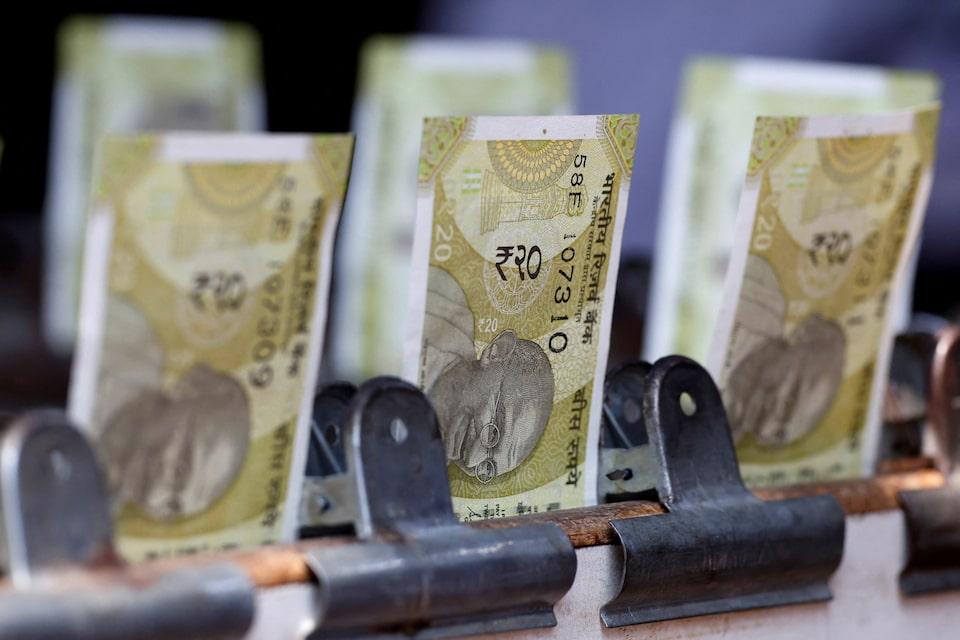
MUMBAI, July 14(Reuters) - Dollar demand from foreign banks and a large local corporation, alongside tepid risk appetite amid lingering uncertainty on U.S. trade policies, drove the rupee lower to a closely watched support level on Monday. The South Asian currency fleetingly weakened past the 86 level in early trading and before paring losses to last quote at 85.97 as of 10:45 a.m., down 0.2% on the day. Sign up here. Asian currencies were mostly weaker, while the dollar index was hovering just shy of the 98 mark. President Donald Trump on Saturday threatened to impose a 30% tariff on imports from Mexico and the European Union starting on August 1, adding them to a list of countries that have received letters from the U.S. declaring country-specific levies. India and Taiwan are among the large U.S. trading partners that have not yet received letters declaring the tariff rate. A constant barrage of tariff-related headlines, along with the expectations that these are merely negotiating tactics, has dampened market reactions, such as the euro, which slipped just 0.1% on Monday. "The game between Trump and the market is subject to multiple equilibria," BofA Global Research said in a note. The note added that it would be key to watch how much renewed tension risky assets can withstand before correcting lower, and how much pain Trump would tolerate before de-escalation occurs. Asian equities were mostly in the green on Monday, while futures for the euro-area and U.S. stock gauge were in the red. India's benchmark equity indexes, the BSE Sensex (.BSESN) , opens new tab and Nifty 50 (.NSEI) , opens new tab, each was down about 0.3% on the day. Dollar bids from foreign banks, likely on behalf of custodial clients, also exerted pressure on the rupee, a trader at a private bank said. India's consumer inflation data for June is due after FX market hours on Monday. https://www.reuters.com/world/india/rupee-pinned-near-key-support-corporate-dollar-demand-cloudy-tariff-outlook-2025-07-14/
2025-07-14 05:09
Sept 11 (Reuters) - Ukrainian drones attacked a training centre at the Zaporizhzhia Nuclear Power Plant on Thursday, the Moscow-installed administration of the Russia-held plant in Ukraine said. There were no casualties and information on potential damage was being clarified, the plant administration said. Sign up here. Reuters could not independently verify the report. The plant's communications director, Yevgeniya Yashina, told the state news agency RIA that such attacks create "a direct risk of violating nuclear safety. The training centre is only 300 metres (1,000 feet) from the reactors and an attack on them could lead to irreparable consequences." The plant's Russian administration reported a similar incident last Saturday. It said Ukrainian drones hit the roof of the training centre but caused no major damage and no increase in radiation levels. Russian forces seized the Zaporizhzhia plant in the first weeks of Russia's February 2022 invasion of Ukraine. Each side regularly accuses the other of shelling or taking other actions that could trigger a nuclear accident. https://www.reuters.com/world/europe/russia-says-ukrainian-drones-attacked-training-centre-zaporizhzhia-nuclear-plant-2025-09-11/

2025-07-14 04:34
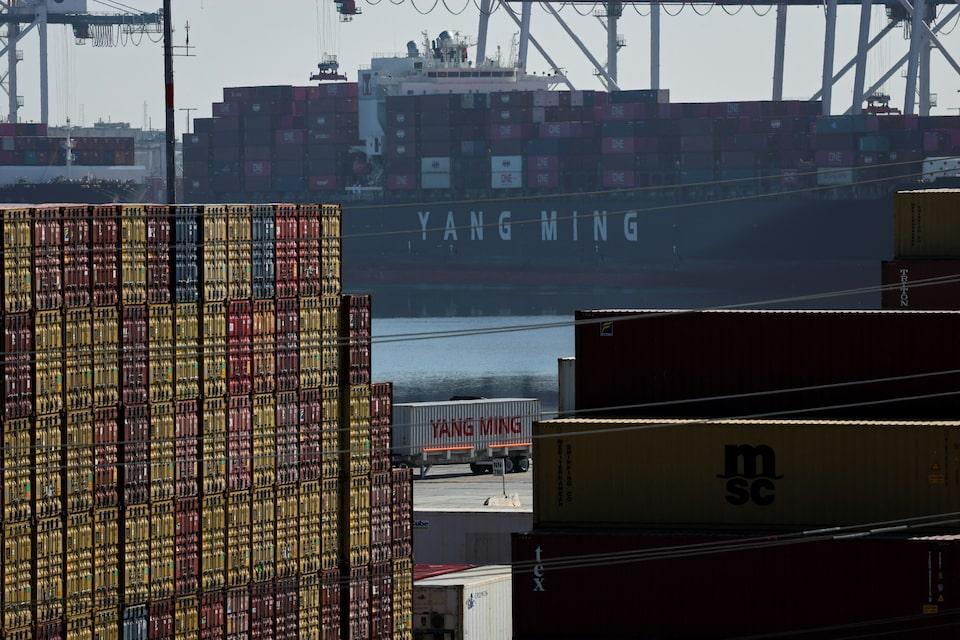
July 14 (Reuters) - A look at the day ahead in European and global markets from Wayne Cole. It looks increasingly clear that for President Trump, tariffs are mainly a convenient means of dominating the news cycle and staying in the headlines. Not for him are months of tortuous, complex trade talks aimed at a win-win outcome. Why do that when you can tweet a 30% tariff threat on a Saturday morning and own the news for an entire weekend? Sign up here. Figuring this is mostly a negotiation tactic, markets have eased only modestly in Asia. S&P 500 futures are off 0.4% or so while most regional indices are down only slightly. The euro is down a fraction, but European futures have lost a larger 0.7% as it's hard to see how Brussels could ever satisfy Trump's demands, in part because it's not clear what he wants. EU tariffs on U.S. goods are already so minor there is little to cut, while granting exemption to domestic taxes and regulations is politically fraught. It's also possible the market's stoic reaction will prove to be too clever by half. Investors figure Trump really, really wants to avoid another market melt-down, so will ease up on tariffs when the crunch comes. But with U.S. stocks hitting record highs and bond yields well off their peaks, Trump could be forgiven for thinking markets are now on his side and realise how "beautiful" tariffs really are. At any rate, it seems certain that the effective U.S. tariff rate will be akin to the Smoot-Hawley levies that contributed so much to the Great Depression and we'll get to see if Trump is right and the vast majority of professional economists are wrong. They don't yet look to have magically solved the U.S. trade deficit. China today reported its surplus with the U.S. rose 48% in June to almost $27 billion, while its overall exports beat forecasts. Trump also found time to stoke his feud with Fed Chair Jerome Powell, saying it would be "a great thing" if he stepped down - eight years after he nominated Powell to the role. Worryingly, White House economic adviser Kevin Hassett over the weekend warned Trump might have grounds to fire Powell because of renovation cost overruns at the Fed's Washington headquarters. Analysts assume a Trump pick for Fed chief would do his bidding by trying to cut interest rates aggressively, though whether the rest of FOMC voters would agree is in doubt. This could push short-term market rates lower, but longer-term yields would likely rise as investors demand compensation for the risk of faster inflation, much as happened in Turkey. Key developments that could influence markets on Monday: - ECB board member Piero Cipollone appears at the Committee on Economic and Monetary Affairs of the European Parliament https://www.reuters.com/world/china/global-markets-view-europe-2025-07-14/
2025-07-14 03:09
MUMBAI, July 14 (Reuters) - The Indian rupee is likely to open weaker on Monday after fresh tariff threats from U.S. President Donald Trump intensified concerns over trade tensions, sparking risk aversion and weighing on Asian currencies. The 1-month non-deliverable forward indicated an open in the 85.90-85.94 range versus 85.80 on Friday. Most Asian currencies and shares dropped while U.S. equity futures extended Friday's losses. Sign up here. The 86-86.10 level remains a "clearly" defined support for the rupee, a currency trader at a Mumbai-based bank said. While the risk of a breach is real, the currency has previously managed to avoid it even when a break seemed imminent, he said. On Saturday, Trump capped a week of tariff-heavy rhetoric by announcing a 30% levy on most imports from the European Union and Mexico starting August 1. The announcement followed a series of tariff moves, including a 35% tariff on Canadian imports, a proposed 15%–20% blanket levy on other partners, and a 50% tariff threat along with notices to seven smaller countries. U.S. tariff threats have been "coming thick and fast" over the last few days, ANZ Bank said. Amid the tariff headlines, the focus will be on the June U.S. consumer inflation data due on Tuesday. If the data comes in weaker than expected with not much evidence of an impact of tariffs, it is possible the Federal Reserve will debate cutting rates at this month's meeting, ANZ Bank said. The market impact of Trump's tariff threats appears to be diminishing, with the S&P 500 index shedding just 0.3% last week and the 10-year U.S. Treasury yield dipping about 7 basis points. While the dollar index rallied near 1% last week, it came after a sustained drop in the first half of the year. KEY INDICATORS: ** One-month non-deliverable rupee forward at 86.01; onshore one-month forward premium at 10.25 paise ** Dollar index up at 97.96 ** Brent crude futures up 0.1% at $70.4 per barrel ** Ten-year U.S. note yield at 4.41% ** Foreign investors bought a net $98.1 million worth of Indian shares on July 10, as per NSDL data ** NSDL data shows foreign investors bought a net $39.3 million worth of Indian bonds on July 10 https://www.reuters.com/world/india/rupee-set-decline-open-trump-keeps-tariff-headlines-rolling-2025-07-14/