2025-07-14 02:18
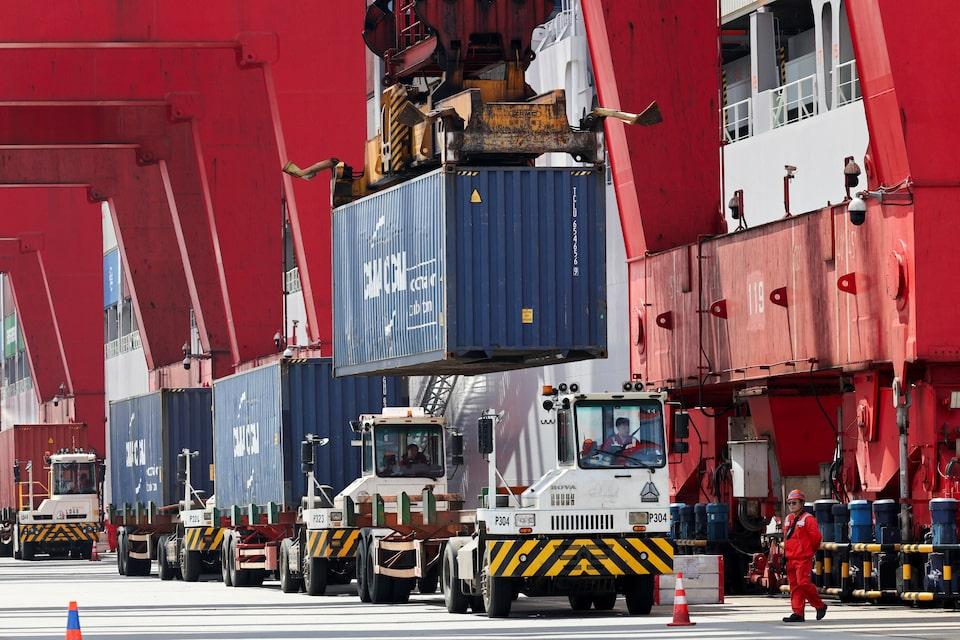
BEIJING, July 14 (Reuters) - China's yuan-denominated exports rose 7.2% year-on-year in June, while imports grew 2.3%, customs data showed on Monday. Sign up here. https://www.reuters.com/markets/asia/chinas-yuan-denominated-exports-june-rise-72-yy-imports-grow-23-2025-07-14/
2025-07-14 00:36
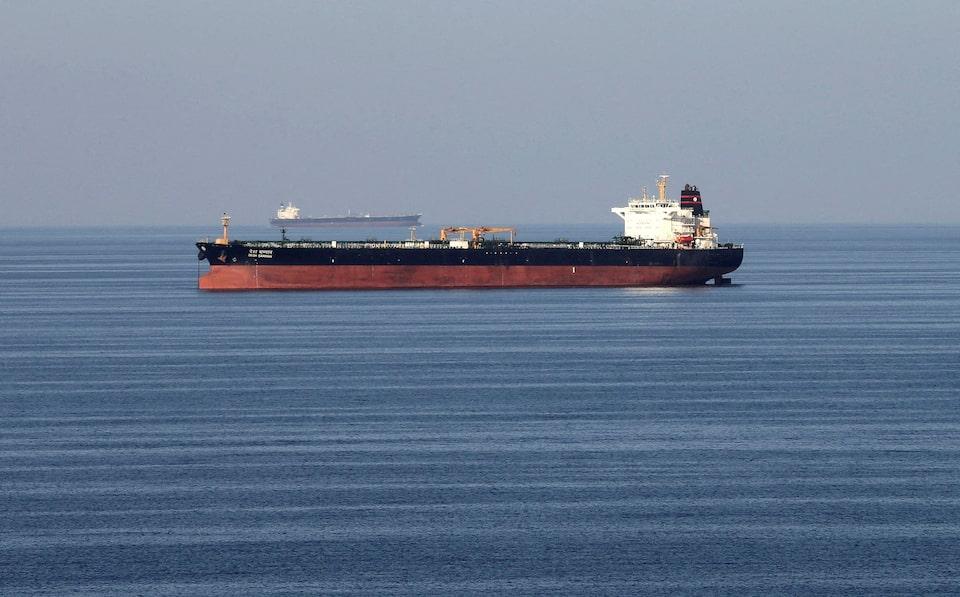
US threatens to hit buyers of Russian exports with sanctions China's crude imports at highest level since August 2023 EU set to lower Russian oil price cap, sources say NEW YORK, July 14 (Reuters) - Oil prices settled down on Monday by more than $1, as investors weighed new threats from U.S. President Donald Trump for sanctions on buyers of Russian oil that may affect global supplies, while still worried about Trump's tariffs. Brent crude futures settled $1.15, or 1.63%, lower to $69.21 a barrel. U.S. West Texas Intermediate crude futures lost $1.47, also 2.15%, to $66.98. Sign up here. Trump announced new weapons for Ukraine and threatened to slap new sanctions on buyers of Russian exports unless Moscow agrees to a peace deal in 50 days. Oil prices rallied early, on expectations that Washington would impose steeper sanctions. But prices retreated as traders weighed whether the U.S. would actually impose steep tariffs on countries that continue to trade with Russia. "The market took it as a negative because there seemed to be a lot of time to negotiate," said Phil Flynn, senior analyst with Price Futures Group. "The fear of immediate sanctions on Russian oil is further off in the future than the market thought this morning." China and India are among the top destinations for Russian crude oil exports. "The chance of U.S. imposing 100% tariffs on China are slim to none... It would force inflation to go through the moon," said Bob Yawger, director of energy futures at Mizuho. Last week, Trump said he was due to make a "major statement" on Russia on Monday, having expressed his frustration with Russian President Vladimir Putin due to the lack of progress in ending the war in Ukraine. Russia's seaborne oil product exports in June were down 3.4% from May at 8.98 million metric tons, data from industry sources and Reuters calculations showed. A bipartisan U.S. bill that would hit Russia with sanctions gained momentum last week in Congress. European Union envoys, meanwhile, are on the verge of agreeing an 18th package of sanctions against Russia that would include a lower oil price cap. Investors were also eyeing the outcome of U.S. tariff talks with key trading partners. The European Union and South Korea said on Monday they were working on trade deals with the U.S. that would soften the blow from looming tariffs as Washington threatens to impose hefty duties from August 1. EU member states find Trump's tariff threat "absolutely unacceptable", Danish Foreign Minister Lars Lokke Rasmussen said on Monday during a joint press conference with EU's Trade Chief Maros Sefcovic in Brussels. Providing some support, China's June oil imports increased 7.4% on the year to 12.14 million barrels per day, the highest since August 2023, according to customs data released on Monday. "There is still a perceived tightness in the market, with most of the inventory build in China and on ships, and not in key locations," UBS analyst Giovanni Staunovo said. The International Energy Agency said last week the global oil market may be tighter than it appears in the short term. However, the agency boosted its forecast for supply growth this year, while trimming its outlook for growth in demand, implying a market in surplus. https://www.reuters.com/business/energy/oil-edges-up-investors-eye-trump-statement-russia-2025-07-14/
2025-07-14 00:28
SINGAPORE, July 14 (Reuters) - Singapore's economy grew a faster-than-expected 4.3% in the second quarter year-on-year, preliminary government data showed on Monday, despite a dimming outlook due to global economic uncertainty. The trade ministry's advance estimate for gross domestic product in the April to June period compared to an expected expansion of 3.5% according to economists polled by Reuters. Sign up here. On a quarter-on-quarter seasonally adjusted basis, GDP gew 1.4% in the April to June period, the advance estimates showed, avoiding a technical recession after the first quarter's revised 0.5% contraction. "The economy is holding up despite tariff and geopolitical shocks. The de-escalation in the U.S.-China tariff war and front-loading of exports during the 90-day reprieve has cushioned the tariff shocks," said Maybank economist Chua Hak Bin. On Thursday, Trade Minister Gan Kim Yong said the economy likely held up well in the first half of 2025 as businesses took advantage of the pause in tariffs to front-load exports to the U.S., but warned that growth could slow in the next six to 12 months. The trade ministry in April downgraded the city-state's GDP forecast for 2025 to a range of 0% to 2% from 1% to 3%. Maybank's Chua said his team's forecast for Singapore's GDP for 2025 is 2.4%. He expects the central bank to maintain its monetary policy settings at the upcoming review this month given the strength of the economy. U.S. President Donald Trump notified more than 20 countries last week of tariffs of 20% to 50% that will kick in from August 1, warning that any reprisals would draw a like-for-like response. Singapore has not yet received a letter from the Trump administration this round and its exports are still subject to the 10% baseline tariff announced in April. The tariff was levied on Singapore despite a free trade agreement in place with the island nation since 2004. Gan has said he will travel to the U.S. for trade talks at the end of July with the aim of securing pharmaceutical concessions. Trump said he would impose a 50% tariff on copper and soon introduce long-threatened levies on semiconductors and pharmaceuticals, broadening a trade war that has rattled markets worldwide. https://www.reuters.com/world/asia-pacific/singapore-economy-grows-43-q2-advance-estimate-shows-2025-07-14/

2025-07-14 00:22
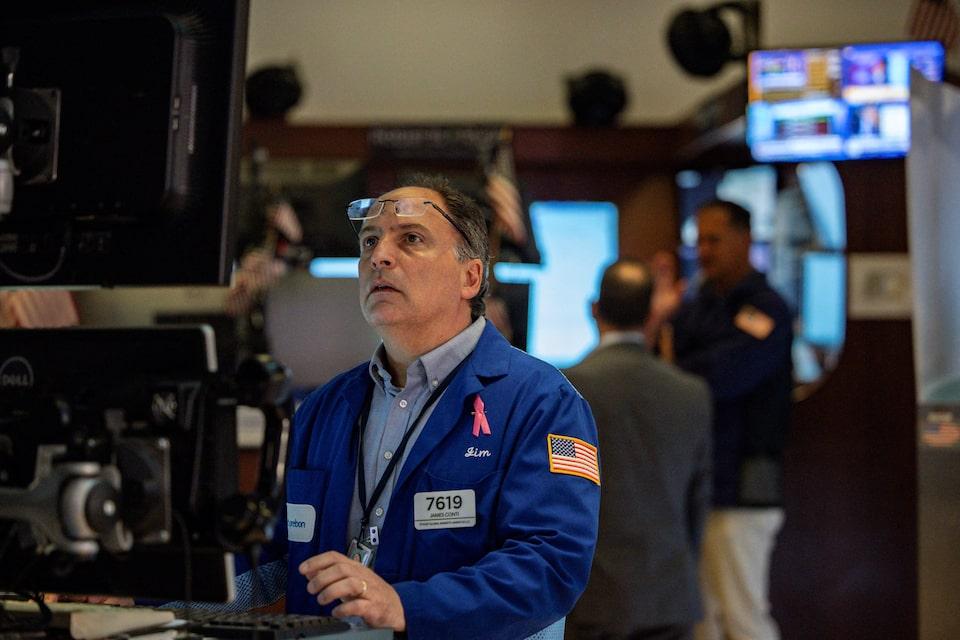
US stocks rise, European index ends lower Euro weakens, Mexican peso falls after Trump tariff threats Oil ends lower on uncertainty around tariffs, Russian sanctions Investors await US inflation data, Q2 earnings season NEW YORK/LONDON, July 14 (Reuters) - MSCI's global equity index edged up on Monday and longer U.S. Treasury yields ticked higher as the latest U.S. tariff threats kept investors on edge while they waited for inflation readings and the start of earnings season later in the week. The euro briefly hit an almost three-week low while the dollar index held steady after U.S. President Donald Trump's weekend threat to impose a 30% tariff on imports from the European Union and Mexico from August 1. Sign up here. Trump said he was open to discussions, while the European Union accused the U.S. of resisting efforts to strike a trade deal and warned of countermeasures if no agreement is reached. Meanwhile, the U.S. earnings season is set to begin on Tuesday, with second-quarter reports from major banks. S&P 500 profits are expected to rise 5.8% year-over-year, according to LSEG data. The outlook has dimmed sharply since the early April forecast of 10.2% growth, before Trump launched his trade war. "It's all about earnings season now. People are not sure what it's going to hold. They want to be optimistic. Usually earnings season pans out better than expected," said Robert Pavlik, senior portfolio manager at Dakota Wealth in Fairfield, Connecticut, while noting that valuations are "a bit expensive relative to the five-year average." "That, on top of the most recent tariff announcements, has people sort of just waiting on the sidelines," said Pavlik. On Wall Street, the Dow Jones Industrial Average (.DJI) , opens new tab rose 88.14 points, or 0.20%, to 44,459.65, the S&P 500 (.SPX) , opens new tab rose 8.81 points, or 0.14%, to 6,268.56 and the Nasdaq Composite (.IXIC) , opens new tab rose 54.80 points, or 0.27%, to 20,640.33. MSCI's gauge of stocks across the globe (.MIWD00000PUS) , opens new tab rose 0.90 points, or 0.10%, to 923.46. Earlier, the pan-European STOXX 600 (.STOXX) , opens new tab index ended off 0.06%, above its session lows. PRESSURING POWELL Trading in long-dated U.S. Treasuries was choppy, with yields touching multiweek peaks as investors weighed the prospect of an exit by Federal Reserve Chairman Jerome Powell. While Powell has indicated a patient stance on interest rate policy until the impact of tariffs is clearer, Trump has been pushing for aggressive easing. Trump said on Sunday that it would be great if Powell stepped down. White House economic adviser Kevin Hassett warned that Trump might have grounds to fire Powell because of renovation cost overruns at the Fed's Washington headquarters. The yield on benchmark U.S. 10-year notes rose 1.2 basis points to 4.435% while the 30-year bond yield rose 2.1 basis points to 4.9781%. The 2-year note yield, which typically moves in step with interest rate expectations for the Federal Reserve, fell 1.2 basis points to 3.902%, from 3.914% late on Friday. Besides earnings season, investors are also waiting for U.S. consumer price data for June, due on Tuesday, and will monitor for any upward pressure on prices from tariffs. They will also watch for any tariff impact to supply-chain costs in producer price and import price figures also due this week, along with a view of consumer health in retail sales data. Bitcoin gained 0.71% to $119,970.25 after earlier crossing the $120,000 level for the first time. The largest cryptocurrency extended its gains this year to about 30% on optimism over upcoming U.S. House discussions on digital asset regulation. In currencies, traders largely shrugged off new tariffs ahead of the inflation data. "It's something that's happened before and the shock value is gone," Joseph Trevisani, senior analyst at FX Street, said regarding tariffs. At the same time, "the negative predictions haven't come to pass so I don't think you're going to get too much more emphasis for the markets out of tariffs." The euro was down 0.19% against the dollar at $1.1667 while against the Japanese yen , the dollar strengthened 0.23% to 147.74. The Mexican peso weakened 0.44% versus the dollar, with Mexican President Claudia Sheinbaum on Monday hitting back at U.S. criticism that her government was not doing enough to combat fentanyl trafficking. She called for the U.S. to do more to arrest drug traffickers on its own turf and stop the flow of weapons south across the border. Sterling weakened 0.55% to $1.3425 after Bank of England Governor Andrew Bailey said uncertainty is weighing on growth expectations, in a letter to G20 finance ministers and central bank governors, urging vigilance against the risk of disruptive market moves. Oil prices settled down more than $1 as investors worried about U.S. trade policy and weighed Trump's threat that buyers of Russian oil would face sanctions unless Russia agrees to a peace deal. However, the threat came with a 50-day grace period. U.S. crude settled down 2.15% or $1.47 at $66.98 a barrel and Brent finished at $69.21 per barrel, down 1.63%, or $1.15. Gold prices eased after hitting a three-week peak on Monday with attention on trade talks and upcoming U.S. economic data, while silver pared gains after hitting its highest level since 2011. Spot gold fell 0.34% to $3,344.09 an ounce. U.S. gold futures fell 0.15% to $3,351.00 an ounce. (This story has been refiled to say 'threat,' not 'treat,' in paragraph 23) https://www.reuters.com/world/china/global-markets-wrapup-1-2025-07-14/
2025-07-14 00:03
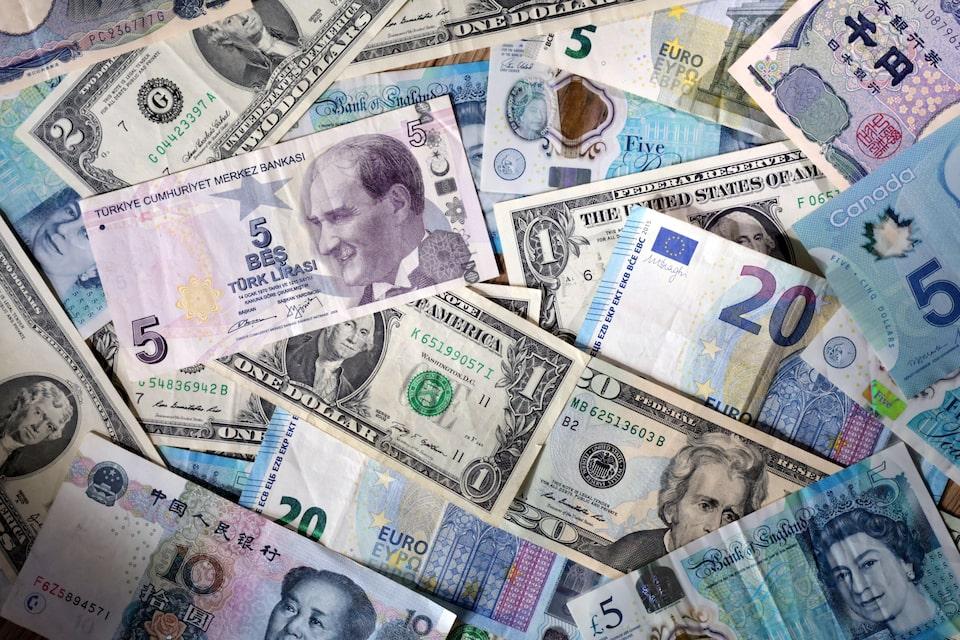
Overall currency reaction to tariffs muted Bitcoin surpasses $120,000 level for first time Consumer price inflation data on Tuesday in focus NEW YORK, July 14 (Reuters) - The euro dipped on Monday and the dollar gained against a basket of currencies, as traders largely shrugged off new tariffs ahead of key U.S. inflation data on Tuesday. U.S. President Donald Trump threatened on Saturday to impose a 30% tariff on imports from Mexico and the European Union starting on August 1, after weeks of negotiations with the major trading partners failed to reach a comprehensive trade deal. Sign up here. But markets have become increasingly immune to tariff headlines since Trump in April first announced larger than expected trade levies, then delayed their implementation. "It's something that's happened before and the shock value is gone," Joseph Trevisani, senior analyst at FX Street, said. At the same time, "the negative predictions haven't come to pass so I don't think you're going to get too much more emphasis for the markets out of tariffs." The European Union on Monday accused the U.S. of resisting efforts to strike a trade deal and warned of countermeasures if no agreement is reached to avoid the punishing tariffs. Federal Reserve Chair Jerome Powell has said that he expects inflation to increase this summer as a result of tariffs, which is seen keeping the U.S. central bank on hold until later in the year. Investors will be watching consumer price inflation data for June on Tuesday for any signs that price pressures are accelerating again. Economists polled by Reuters expect headline inflation to increase to 2.7% on an annual basis, up from 2.4% the prior month. Core inflation is expected to rise to 3.0%, from 2.8%. Fed funds futures traders are pricing in 50 basis points of interest rate cuts by year-end, with the first reduction expected in September. Markets are also focused on the U.S. fiscal and debt outlook and whether Trump will replace Powell as he criticizes him for delaying interest rate cuts and for renovation costs at the Fed's headquarters. Trump on Monday renewed his attacks on Powell, saying interest rates should be at 1% or lower. The greenback also got a boost after Trump announced new weapons for Ukraine on Monday, and threatened to slap buyers of Russian exports with sanctions unless Russia agrees to a peace deal in 50 days, a major shift in policy brought on by frustration with Moscow. The euro was last down 0.16% at $1.167 and earlier reached a three-week low of $1.1649. The dollar index rose 0.19% to 98.07. Trump's tariff threats are complicating the European Central Bank's decision-making but is unlikely to derail plans for a pause in rate cuts next week, five ECB policymakers told Reuters. The greenback has been supported by higher Treasury yields this month, following a selloff that has left the index down almost 10% year to date. But many analysts expect the U.S. currency to face further weakness. BCA Research says the euro is in a multi-year bull market against the dollar, with the single currency on track to eventually reach $1.40. "The US current account deficit is becoming increasingly difficult to finance," strategists at the firm said in a report. "Europe, by contrast, is emerging from stagflation into a low-inflation recovery, aided by lower energy prices and the end of fiscal austerity." "Structural reforms, deeper integration, and improved capital markets are strengthening the euro’s long-term appeal," they added. Against the Japanese yen , the dollar strengthened 0.22% to 147.72, the highest since June 23. The Mexican peso weakened 0.39% versus the dollar to 18.719. The British pound fell 0.52% to $1.3429, the lowest since June 23. Bank of England Governor Andrew Bailey said on Monday that uncertainty continues to weigh on growth expectations, in a letter to G20 finance ministers and central bank governors, urging vigilance against the risk of disruptive market moves. Bitcoin surpassed $120,000 for the first time on Monday, marking a milestone for the world's largest cryptocurrency as investors bet on long-sought policy wins for the industry this week. It was last up 0.42% to $119,633 and earlier reached $123,153. https://www.reuters.com/world/middle-east/euro-eases-after-trump-threatens-30-tariffs-eu-2025-07-14/
2025-07-14 00:00
BOGOTA, July 13 (Reuters) - Colombia's Cano Limon-Covenas Oil Pipeline was bombed by unknown actors, operator Cenit said on Sunday, prompting the suspension of pumping between oil fields in the country's northeast and the Caribbean coast, where the oil is exported. The attack occurred in a rural area of Saravena, in the region of Arauca, according to Cenit, a subsidiary of majority-state-owned oil company Ecopetrol (ECO.CN) , opens new tab. Sign up here. There were no injuries or deaths reported. The bombing triggered the activation of a contingency plan to control spills and environmental contamination, said Cenit, which owns the pipeline. Cenit did not attribute the attack to any particular group. According to the military, guerrillas of the National Liberation Army (ELN) and FARC dissidents who rejected a 2016 peace deal with the government operate in the area. The Cano Limon-Covenas pipeline, which can transport up to 210,000 barrels of oil per day and runs along Colombia's northern border with Venezuela, is frequently the target of attacks, some of which cause fires and the contamination of rivers and streams, according to Cenit. https://www.reuters.com/business/energy/bomb-attack-suspends-pumping-colombias-cano-limon-covenas-pipeline-2025-07-14/