2025-07-13 23:28
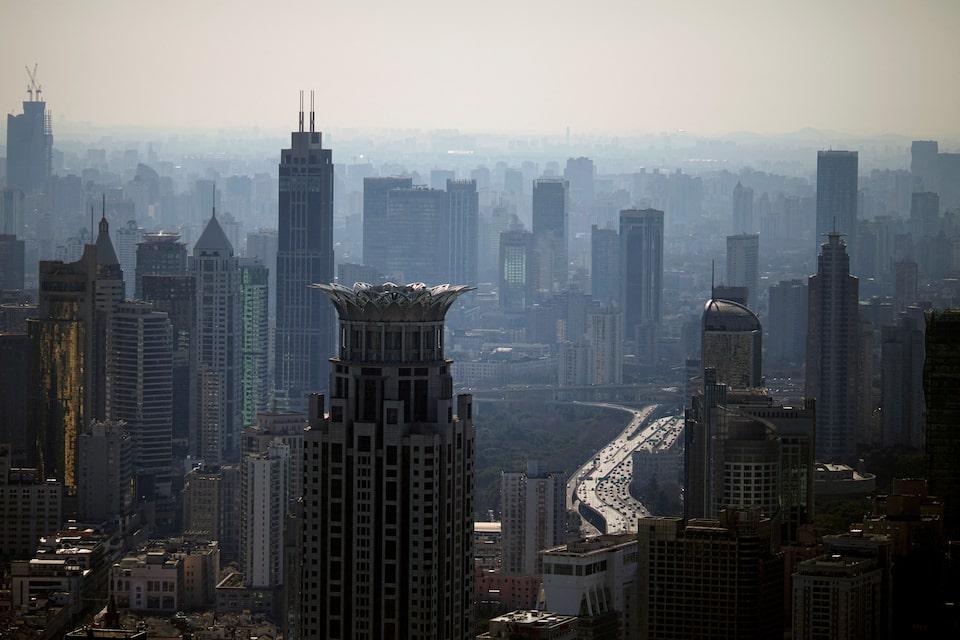
Wealth funds approach China tech with "strategic urgency" 79% of cenbanks say it would take decades for dollar alternative Only 11% of cenbanks see euro as gaining as reserve currency LONDON, July 14 (Reuters) - The world's sovereign wealth funds are turning to active fund management and investments in China, while central banks are diversifying reserves to weather a volatile global environment, an Invesco survey of sovereign funds and central banks managing $27 trillion in assets showed. Still, the dollar reigns supreme, with the bulk of central banks saying it would take two decades to dethrone it - if ever - as the top reserve currency despite growing concerns. Sign up here. "Institutions with greater than $100 billion - so the pretty large institutions - those are the ones that were most interested in moving more to active management," said Rod Ringrow, Invesco's head of official institutions. Whereas funds liked passive management in predictable market conditions, predictable was "no longer the case," he added. "I think that frames the whole approach... in this move to active management." On average, wealth funds made returns of 9.4% last year, the joint second-best performance in the survey's history. Nevertheless, market volatility and de-globalisation concerns have spiked - and over the 10-year horizon, big worries centre around climate change and rising sovereign debt levels. Over 70% of the 58 central banks polled said rising U.S. debt is negatively impacting the dollar’s long-term outlook. Two thirds said they are looking to build larger, more diversified reserves to manage volatility. Nevertheless, 78% think it will take more than two decades for a credible alternative to the greenback to emerge. That is a jump from 58% last year while just 11% of central banks now view the euro as gaining ground compared to 20% last year. CHINA FOMO The survey was carried out between January and March - before U.S. President Donald Trump's "Liberation Day" tariff announcements and at the peak of excitement around DeepSeek AI's emergence in China. Wealth funds are seeing a major resurgence in interest in Chinese assets with nearly 60% intending to increase allocations there in the coming five years, specifically the tech sector. That number jumps to 73% in North America despite the worsening U.S.-Sino tensions, whereas in Europe it sits at just 13%. Wealth funds, the survey said, were now approaching China's innovation-driven sectors with the "strategic urgency they once directed toward Silicon Valley." "There's a little bit of a FOMO," Ringrow explained, a view that "I need to be in China now" as it shapes up to be a global leader in semiconductors, cloud computing, artificial intelligence, electric vehicles and renewable energy. Private credit has also emerged as a key focus for funds seeking alternative sources of income and resilience. It is now adopted by 73% of wealth funds, up from 65% last year, and with half actively increasing allocations. "This represents one of the most decisive trends in sovereign asset allocation," the report said. There is also growing interest, especially among emerging market wealth funds, in stablecoins - a type of cryptocurrency that is most commonly pegged 1:1 to the dollar. Almost half of funds said stablecoins were the type of digital assets they were inclined to invest in, although that was still behind the likes of bitcoin, where the share was 75%. https://www.reuters.com/business/finance/wealth-funds-warm-active-management-china-weather-volatility-report-shows-2025-07-13/
2025-07-13 22:13
BRUSSELS, July 13 (Reuters) - European Union envoys are on the verge of agreeing an 18th package of sanctions against Russia for its full-scale invasion of Ukraine that would include a lower price cap on Russian oil, four EU sources said after a Sunday meeting. The sources said all the elements of the package had been agreed, although one member state still has a technical reservation on the new cap. Sign up here. The sources - speaking on condition of anonymity to discuss confidential talks - said they expect to reach a full agreement on Monday, ahead of a foreign ministers' meeting in Brussels the following day that could formally approve the package. The sources said they had also agreed to a dynamic price mechanism for the price cap. On Friday, the European Commission proposed a floating price cap on Russian oil of 15% below the average market price of crude in the previous three months. One of the sources said the initial price would be around $47 a barrel based on the average price of Russian crude for the last 22 weeks minus 15%. Further, the price would be revised based on the average oil price every six months instead of the proposed three months. Slovakia - which has held up the proposed package - is still seeking reassurances from the European Commission on its concerns about plans to phase out Russian gas supply but it has agreed to the new measures, the sources said. Sanctions require unanimity among the EU's member countries to be adopted. The Group of Seven (G7) price cap, aimed at curbing Russia's ability to finance the war in Ukraine, was originally agreed in December 2022. The European Union and Britain have been pushing the G7 to lower the cap for the last two months after a fall in oil futures made the current $60 a barrel level largely irrelevant. The cap bans trade in Russian crude oil transported by tankers if the price paid was above $60 per barrel and prohibits shipping, insurance and re-insurance companies from handling cargoes of Russian crude around the globe, unless it is sold for less than the price cap. The Commission proposed the package in early June, aimed at further cutting Moscow's energy revenues, including a ban on transactions with Russia's Nord Stream gas pipelines, and financial network that helps it circumvent sanctions. Another one of the sources said the new package will list a Russian-owned refinery in India, two Chinese banks, and a flag registry. Russia has used flags of convenience for its shadow fleet of ships and oil tankers. https://www.reuters.com/business/energy/eu-envoys-near-agreement-lower-russian-oil-price-cap-2025-07-13/

2025-07-13 22:03
Ishiba coalition may lose upper house majority in July 20 vote Big LDP loss could boost clout of easy-money opposition groups Big spending, tax cuts could lift yields, complicate BOJ policy Prolonged political uncertainty may keep BOJ on hold TOKYO, July 14 (Reuters) - Japan's central bank may face political pressure to keep interest rates low for longer than it wants, as opposition parties favouring tax cuts and loose monetary policy are expected to gain influence after a July 20 election. Opinion surveys suggest Prime Minister Shigeru Ishiba's coalition may lose its majority in the upper house of parliament, forcing it to court an array of smaller parties pushing for easier fiscal and monetary policy. Sign up here. The governing bloc led by Ishiba's Liberal Democratic Party is already a minority in the more powerful lower house, so a stalemate in both chambers could give opposition parties outsized influence in policy decisions. Ishiba has supported the Bank of Japan's policy of gradually lifting interest rates from near zero as inflation picks up in the world's fourth-biggest economy, while trying to curb the biggest government debt burden in the industrial world. But if opposition groups gain traction with their pressure on the BOJ to avoid rate hikes and for the government to cut the sales tax, that could boost bond yields and complicate the bank's efforts to normalise monetary policy, some analysts say. The BOJ declined to comment on the potential impact of the election on monetary policy. "There's a 50% chance the ruling coalition could lose its majority in the upper house, which could lead to increased debate about cutting Japan's consumption tax rate," said Daiju Aoki, chief Japan economist at UBS SuMi Trust Wealth Management. "That would push up Japan's long-term interest rates by stoking concern over the country's finances," he said. DEBT SET TO RISE Sohei Kamiya, head of the upstart right-wing party Sanseito, has criticised the BOJ for slowing its bond buying when the economy remains weak. "The Ministry of Finance and BOJ should work hand in hand in taking aggressive steps for a few years to boost domestic demand," Kamiya told a press conference this month. Another small group, the Japan Innovation Party, wants the BOJ to go slow in raising rates to restrain the cost of interest on the government's debt. Yuichiro Tamaki, head of the Democratic Party for the People, a party seen as a strong candidate to join Ishiba's coalition, has urged the BOJ to loosen, not tighten, monetary policy to keep the yen from rising and hurting the export-reliant economy. Even if the coalition keeps its majority, Ishiba may need to ditch his hawkish fiscal tilt and boost spending to cushion the economic blow from threatened U.S. tariffs and rising costs of living. "There's a good chance the government will compile an extra budget to fund another spending package to the tune of 5 to 10 trillion yen ($35 billion-$70 billion). That would push up bond yields further," said former BOJ board member Makoto Sakurai, who expects the central bank to avoid raising rates at least until March. Japan's public debt is equal to 250% of gross domestic product, far above that of Greece at 165%. The government spends nearly a quarter of its budget to finance a 1,164-trillion-yen ($7.9-trillion) debt pile, with the cost expected to rise steadily as the BOJ exits zero-interest rates. 'NEED TO BRACE' To be sure, inflation - above the BOJ's 2% target for three years - boosts nominal tax revenues, which can help the government avoid ramping up bond issuance to fund further spending. But cutting the sales tax rate, an idea Ishiba has ruled out for now, would leave a bigger hole in Japan's finances. Once a fringe idea, cutting the 10% sales tax is now among Japan's most popular economic policy proposals. In a recent poll by the Asahi newspaper 68% of voters thought a sales tax cut was the best way to cushion the blow from rising living costs, compared with 18% who preferred cash payouts. If the sales tax is on the chopping block after the election, it is the kind of vital issue that could prod Ishiba to dissolve the lower house and call a snap election - a move that would prolong political uncertainty. If Ishiba were to step down, an LDP race to replace him could revive market attention to candidates like Sanae Takaichi, an advocate of aggressive monetary easing whom Ishiba narrowly beat in the party's leadership race last year. Unlike Ishiba, who gave a quiet nod to BOJ policy normalisation, Takaichi has said it would be "stupid" for the central bank to raise rates. All this would mean the BOJ's rate hikes, already on pause due to uncertainty over U.S. tariffs, could be put on hold even longer. "We may need to brace for a long period of political uncertainty and market volatility," said Naomi Muguruma, chief bond strategist at Mitsubishi UFJ Morgan Stanley Securities. "That would just give the BOJ another reason to sit on the sidelines and wait for the dust to settle." ($1 = 146.8800 yen) https://www.reuters.com/markets/asia/japan-election-could-further-hamper-bojs-drive-raise-rates-2025-07-13/

2025-07-13 21:55
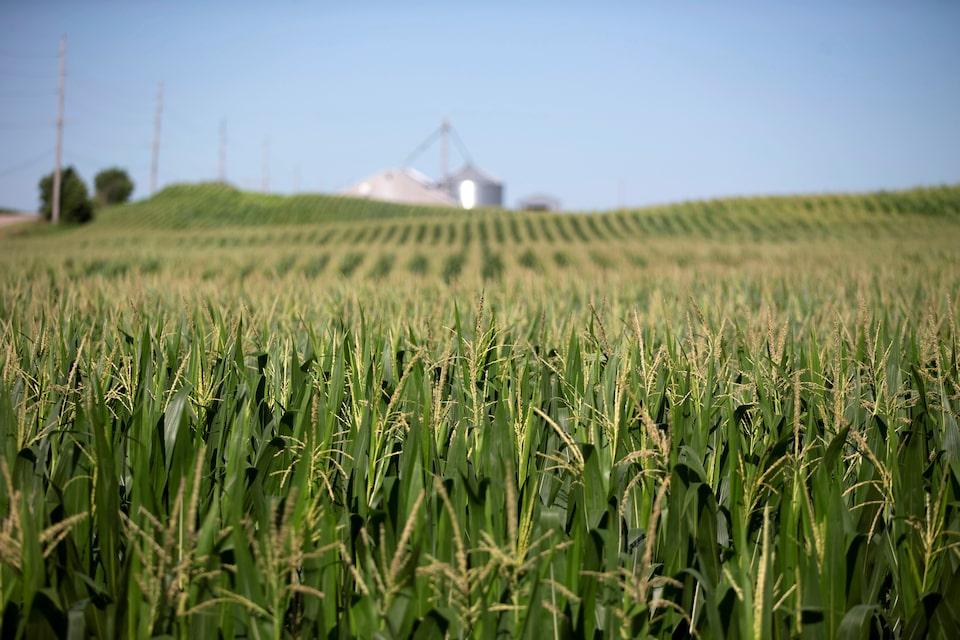
NAPERVILLE, Illinois, July 13 (Reuters) - The United States, the world’s top corn supplier, is set to export a record volume of corn in the waning 2024-25 marketing year, slightly edging out 2020-21’s high. The catch? This year’s efforts included virtually zero involvement from China, whereas 31% of U.S. exports went to China in 2020-21, which was easily a record share. Sign up here. China had struck up a trade relationship with No. 2 corn exporter Brazil a couple of years ago. But those purchases have dried up, too, reflecting China’s sharp drop-off as a global grain importer. The U.S. Department of Agriculture in its monthly supply and demand report on Friday reduced its estimate for 2024-25 Chinese corn imports to 5 million metric tons from 7 million a month prior. That is a staggering 79% lower than in the previous year. China’s absence has not stopped U.S. corn exporters from a blockbuster season in 2024-25, which ends on August 31. USDA on Friday increased its 2024-25 U.S. corn export estimate to 2.75 billion bushels, up from 2.65 billion last month. Recent sales data suggests the new target is fair, if not slightly conservative. U.S. exporters through July 3 had sold 99% of the 2.75 billion bushels, the largest coverage by the date in 12 years. Any further success for U.S. corn exports could be challenged by Brazil. USDA increased Brazil’s 2024-25 corn crop to 132 million tons from 130 million last month. That matches Conab’s Thursday number, the first agreement among the agencies on Brazil’s corn crop in four years. It would also be 11% more corn than Brazil produced a year ago, per USDA figures. OILSEEDS AND BIOFUELS USDA on Friday made some major changes to its U.S. soybean oil demand assumptions for 2025-26, which starts October 1. The agency cited recent blending mandates as well as tax credits and curbs on foreign feedstock imports. U.S. soybean oil use for biofuels is predicted to reach a record 15.5 billion pounds in 2025-26, up 23% on the three-year average and up 12% from USDA’s June estimate. The agency slashed 2025-26 exports to accommodate the boost in domestic demand. The new figures show biofuels in the upcoming year accounting for more than half of all U.S. soybean oil use for the first time in history, near 53% worth. As such, U.S. soybean processing in 2025-26 is set for a new record of 2.54 billion bushels. That would represent 58% of total domestic disappearance, the largest share in 18 years, further displacing exports. USDA bumped up 2024-25 U.S. soybean exports on Friday, but it cut 2025-26 exports by 4%. New-crop soybean exports are now estimated at 1.745 billion bushels, USDA’s lowest July print in 11 years. New-crop sales covered just 3.9% of that new target as of July 3, the date’s second-worst in 25 years and only slightly better than a year ago. China has yet to make any 2025-26 bookings, its latest start in the U.S. soybean market since 2005. FUNDS STAY BEARISH The soybean market sluggishness has caught the attention of speculators, who in the week ended July 8 established their first net short in CBOT soybean futures and options in three months. The net short is slight, just 6,216 contracts. Money managers trimmed their net short in CBOT corn futures and options, which remained around 200,000 contracts as of July 8. That marked only their fourth week as net buyers within the last 20. Funds’ moves in the week ended July 8 were very mild all across U.S. grains and oilseeds. But it is noteworthy that they have whittled their net short in CBOT wheat to an eight-month low of 55,594 futures and options contracts, half what it was two months ago. Speculators still remain heavily bearish as a whole across grains and oilseeds, but much less so than a year ago. They have also held those bets relatively steady over the last few weeks, a very, very small potential shred of hope for bulls given that the market may already be factoring in a gigantic U.S. corn yield. Karen Braun is a market analyst for Reuters. Views expressed above are her own. Enjoying this column? Check out Reuters Open Interest (ROI) , opens new tab, your essential new source for global financial commentary. ROI delivers thought-provoking, data-driven analysis of everything from swap rates to soybeans. Markets are moving faster than ever. ROI , opens new tab can help you keep up. Follow ROI on LinkedIn , opens new tab and X. , opens new tab https://www.reuters.com/markets/commodities/usda-rundown-record-us-corn-exports-us-biofuel-boom-2025-07-13/
2025-07-13 21:40
WELLINGTON, July 14 (Reuters) - Some schools and roads remained shut on Monday as New Zealand’s Tasman and Nelson regions started cleaning up after heavy rain over the weekend caused flooding, landslides and forced evacuations. The regions in the north of New Zealand’s South Island were hit by significant rainfall for the second time in as many weeks. Sign up here. Tasman Mayor Tim King told Radio New Zealand that about 40 people stayed in emergency accommodation overnight but many more were staying with friends because of damage. "I'm picking there are several hundreds of properties where at the very least it's very difficult to get in and out, if not impossible to stay in the house,” King said. Local emergency authorities said teams had assessed 417 properties in flood affected areas on Sunday and planned to visit a further 413 properties on Monday. Several schools were shut because of the floods and 51 roads were closed, authorities said. https://www.reuters.com/business/environment/heavy-rain-triggers-flooding-landslides-parts-new-zealand-2025-07-13/

2025-07-13 17:07
Noem denies FEMA spending cap slowed response Trump administration considers rebranding FEMA amid scrutiny Texas floods highlight FEMA staffing and response challenges WASHINGTON, July 13 (Reuters) - Homeland Security Secretary Kristi Noem on Sunday defended FEMA's response to deadly floods in Texas last week, saying her agency acted swiftly and that Texas officials had praised the administration's actions. During an interview on NBC News' "Meet the Press," Noem denied that a memo she issued in June requiring her to approve FEMA expenditures over $100,000 had caused the agency to move more slowly. Sign up here. "Those claims are absolutely false," Noem said. "Within just an hour or two after the flooding, we had resources from the Department of Homeland Security there." President Donald Trump suggested after taking office in January that his administration would abolish FEMA, formally called the Federal Emergency Management Agency. The Republican president said the agency had bungled past disasters and that federal aid could go directly to states. But in the midst of U.S. hurricane season and the aftermath of the Texas floods, Trump and his top officials have taken a softer tone, indicating the agency could be rebranded. "I think he wants it to be remade," Noem said on Sunday. Flash floods swept through parts of Texas Hill Country on July 4, killing at least 120 people and leaving another 160 still missing. The disaster put a renewed focus on Trump administration moves to deemphasize FEMA. As of mid-May, the agency had lost 2,000 full-time employees - a third of its staff - due to terminations and buyouts. Noem issued a memo on June 11 that called for U.S. Department of Homeland Security agencies, including FEMA, to submit for her review any contract for more than $100,000. The memo, reviewed by Reuters, said agencies should allow at least five days for her office to review the funding requests. Reuters spoke with several current and former FEMA officials who worried the spending cap could slow down the agency's response to disasters. The deployment of national search and rescue teams managed by FEMA did not appear in the agency’s daily briefing until July 8 and four current and former officials said the spending cap had slowed it down. Following the Texas floods, one former FEMA official said Noem needed to approve resources that previously would have been deployed more quickly, including law enforcement officers used for security and crews with saws to clear debris from roads. “FEMA’s never been quick," the former official said. "This is slowing down the speed which they had before." Noem on Sunday denied a New York Times report , opens new tab that thousands of calls to FEMA from victims of the Texas floods went unanswered because Noem had not renewed the contracts. "Those contracts were in place, no employees were off of work," Noem said. "Every one of them was answering calls." An internal FEMA briefing document reviewed by Reuters said Noem had approved contracts for call center support as of July 10, but did not provide further details. New flash flood warnings were in place on Sunday across central Texas, including in Texas Hill Country, a FEMA bulletin said. U.S. Representative Tony Gonzales, a Republican whose district included flood-hit areas, warned on CNN's 'State of the Union' that the region could face a lengthy recovery. "We're not out of the woods yet," he said. https://www.reuters.com/sustainability/climate-energy/noem-defends-fema-response-texas-floods-amid-scrutiny-2025-07-13/