2025-07-11 20:10
Visit comes as government response faces scrutiny Texas flooding is deadliest disaster of second Trump term Dozens of people still unaccounted for KERRVILLE, Texas, July 11 (Reuters) - President Donald Trump defended the state and federal response to deadly flash flooding in Texas on Friday as he visited the stricken Hill Country region, where at least 120 people, including dozens of children, perished a week ago. During a roundtable discussion after touring Kerr County, the epicenter of the disaster, Trump praised both Texas Governor Greg Abbott and Homeland Security Secretary Kristi Noem for their response, saying they both did an "incredible job." Sign up here. The Trump administration, as well as local and state officials, has faced mounting questions over whether more could have been done to protect and warn residents ahead of the flooding, which struck with astonishing speed in the pre-dawn hours on July 4, the U.S. Independence Day holiday. Trump reacted with anger when a reporter said some families affected by the floods had expressed frustration that warnings did not go out sooner. "I think everyone did an incredible job under the circumstances," he said. "I don't know who you are, but only a very evil person would ask a question like that." Some critics have questioned whether the administration's spending cuts at the National Weather Service and the Federal Emergency Management Agency, which coordinates the U.S. government's disaster response efforts, might have exacerbated the calamity. Trump officials have said that cuts had no impact on the NWS's ability to forecast the storms, despite some vacancies in local offices. But the president has largely sidestepped questions about his plans to shrink or abolish FEMA and reassign many of its key functions to state and local governments. "I'll tell you some other time," Trump said on Tuesday, when asked by a reporter about FEMA. Before the most recent flooding, Kerr County declined to install an early-warning system after failing to secure state money to cover the cost. Lawrence Walker, 67, and a nearly three-decade veteran resident of Kerrville, said the county and state had not spent enough on disaster prevention, including an early-warning system. Asked about the quality of the government response, he said, "It's been fine since the water was at 8 feet." The Texas state legislature will convene in a special session later this month to investigate the flooding and provide disaster relief funding. Abbott has dismissed questions about whether anyone was to blame, calling that the "word choice of losers." DOZENS STILL UNACCOUNTED FOR Search teams on Friday were still combing through muddy debris littering parts of the Hill Country in central Texas, looking for the dozens still listed as missing, but no survivors have been found since the day of the floods. Heavy rains sent a wall of water raging down the Guadalupe River early on July 4, causing the deadliest disaster of the Republican president's nearly six-month term in office. As sun poked through dark clouds on Friday morning, search crews in hard hats painstakingly walked inch-by-inch along the ruined banks of the river, marking damage and looking through wreckage. After the president arrived in Kerr County in the early afternoon, Trump, first lady Melania Trump and Texas Governor Greg Abbott drove to an area near the river, where Trump received a briefing from first responders amid debris left in the wake of the flood. The county is located in what is known as "flash flood alley," a region that has seen some of the country's deadliest floods. More than a foot of rain fell in less than an hour on July 4. Flood gauges showed the river's height rose from about a foot to 34 feet (10.4 meters) in a matter of hours, cascading over its banks and sweeping away trees and structures in its path. Kerr County officials say more than 160 people remain unaccounted for, although experts say that the number of people reported missing in the wake of disasters is often inflated. The dead in the county include 67 adults and at least 36 children, many of whom were campers at the nearly century-old Camp Mystic, an all-girls Christian summer retreat on the banks of the river. Jon Moreno, 71, a longtime Kerrville resident whose property on high ground was spared, praised the government response - local and federal. He has heard the debate about what more could have been done - including sirens - but said he did not think it would have made much difference, given people's desire to build along the flood-prone riverbanks. "It's unavoidable," he said. "All those people along the river - I wouldn't want to live there ... It's too dangerous." At Stripes, a gas station in Kerrville, the building was tagged in large white letters, accusing "Trump's Big Beautiful Bill" of cutting "our emergency funding." The president's massive legislative package, which cut taxes and spending, won approval from the Republican-controlled Congress last week and was signed into law by Trump on the same day that the flooding hit Texas. https://www.reuters.com/sustainability/climate-energy/trump-visit-texas-flood-site-amid-questions-about-disaster-response-2025-07-11/

2025-07-11 20:09
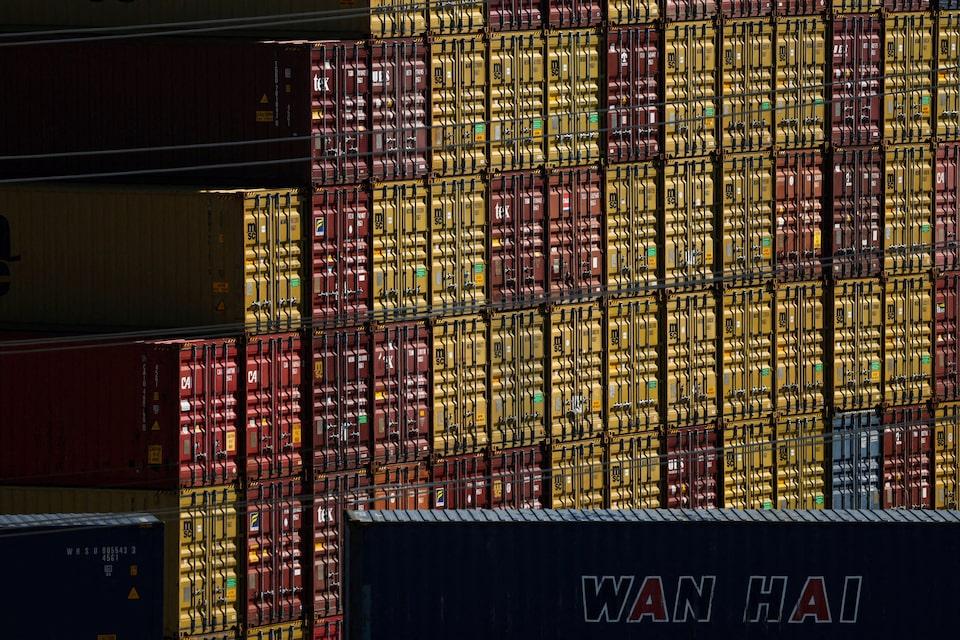
US Treasury reports small budget surplus for June Gross customs duties reach $27 billion in June Bessent says US 'reaping the rewards' of Trump's tariff agenda Treasury chief says US tariff revenue could reach $300 billion in 2025 WASHINGTON, July 11 (Reuters) - U.S. customs duty collections surged again in June as President Donald Trump's tariffs gained steam, topping $100 billion for the first time during a fiscal year and helping to produce a surprise $27 billion budget surplus for the month, the Treasury Department reported on Friday. The budget data showed that tariffs are starting to build into a significant revenue contributor for the federal government, with customs duties in June hitting new records, quadrupling to $27.2 billion on a gross basis and $26.6 billion on a net basis after refunds. Sign up here. The budget results are likely to reinforce Trump's view of tariffs as a lucrative revenue source and as a hammer to enforce non-trade foreign policy. He said on Tuesday that "the big money" would start to flow in after he imposes higher "reciprocal" tariffs on U.S. trading partners on August 1. U.S. Treasury Secretary Scott Bessent said on X that the results show the U.S. "reaping the rewards" from Trump's tariff agenda. "As President Trump works hard to take back our nation’s economic sovereignty, today’s Monthly Treasury Statement is demonstrating record customs duties – and with no inflation!" Bessent said. For the first nine months of fiscal 2025, the customs take reached records of $113.3 billion on a gross basis and $108 billion on a net basis, nearly double the prior-year collections. The government's fiscal year ends on Sept. 30. Based on those results, tariffs have now grown into the fourth-largest revenue source for the federal government, behind individual withheld receipts at $2.683 trillion for the fiscal year, non-withheld individual receipts at $965 billion and corporate taxes at $392 billion. In the space of roughly four months, tariffs as a share of federal revenue have more than doubled to around 5% from about 2% historically. The June budget surplus represented a turnaround from the $71 billion deficit in June 2024. The new tariff-related revenue helped boost total budget receipts last month by 13%, or $60 billion, to $526 billion, a record for that month, the Treasury said. Outlays in June fell 7%, or $38 billion, to $499 billion. But adjusting for calendar shifts of some revenue and benefit payments, it said there would have been a budget deficit of $70 billion in June along with a year-ago adjusted deficit of $143 billion. The overall year-to-date deficit, however, increased 5%, or $64 billion, to $1.337 trillion, as outlays rose for health care programs, Social Security retirement benefits, defense spending, debt interest and the Department of Homeland Security, the Treasury said. Receipts for the first nine months of the fiscal year rose 7%, or $254 billion, to a record $4.008 trillion, driven in part by withheld taxes from higher employment and wages, while outlays grew 6%, or $318 billion, to a record $5.346 trillion. The Treasury's interest costs on the national debt continued to grow, exceeding all other individual outlays at $921 billion for the first nine months of the fiscal year, up 6%, or $53 billion, from the year-ago period. But the Treasury's weighted average interest rate largely had stabilized at 3.3% at the end of June, up two basis points from a year ago, a Treasury official said. BIGGER FLOW Bessent earlier this week suggested a steeper ramp-up in tariff collections, telling a cabinet meeting that calendar-year 2025 collections could grow to $300 billion by the end of December. At the June run rate, gross customs collections would hit $276.5 billion in six months' time, which means reaching Bessent's target would require some increases. Ernie Tedeschi, economics director of the Budget Lab at Yale University, said it may take more time for the tariff revenue to fully ramp up because businesses and consumers have sought to front run the duties by buying ahead. Once that effect fades and Trump implements higher "reciprocal tariff" rates after an August 1 deadline, the Treasury may collect an extra $10 billion in tariffs per month, bringing the total to $37 billion, he said. "I think there's a significant risk...that we get addicted to tariff revenue," said Tedeschi, who served as a White House economic adviser during the Biden administration. He added that tariff income could fade over time as businesses and consumers adjust their behavior. But Trump this week has ratcheted up his tariff actions, announcing 50% levies on copper imports and goods from Brazil and a 35% tariff on Canadian goods, all due to start on August 1. The Trump administration is preparing more sector-based tariffs on semiconductors and pharmaceuticals. https://www.reuters.com/business/trumps-tariff-collections-expected-grow-june-us-budget-data-2025-07-11/
2025-07-11 19:56
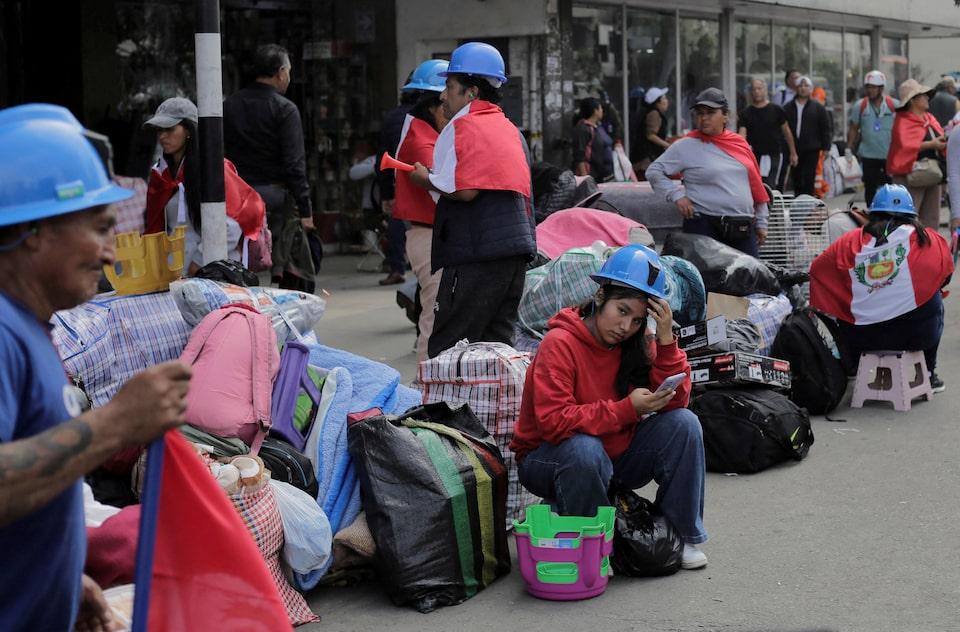
Protests by informal miners block key transit route MMG and Hudbay copper mines face potential production impact Peru's government maintains deadline to end informal mining program Peru's central bank expects July GDP to dip 0.2% due to roadblocks LIMA, July 11 (Reuters) - MMG (1208.HK) , opens new tab and Hudbay Minerals (HBM.TO) , opens new tab executives met with Peru's cabinet chief this week to warn that production at their copper mines could be affected if a two-week protest by informal miners along a major transit route continues, two sources told Reuters on Friday. The Las Bambas mine of Chinese firm MMG and the Constancia mine of Canadian company Hudbay in the Cusco region are among Peru's top ten copper producers. Sign up here. The companies did not immediately reply to requests for comment. A person familiar with Las Bambas said the site's production remained normal for now. Protests in other parts of the country have also affected logistics, including in the gold mining stronghold of Pataz in northern Peru. July's gross domestic product (GDP) is expected to fall 0.2% due to the road impacts, Peru's central bank said on Friday. One of the sources, who attended the meeting with MMG and Hudbay, but was not authorized to comment, said concern at Las Bambas and Constancia was mounting over the impediments to copper-loaded trucks to transit freely. The blockades along a road that connects mines to the coast began in late June as hundreds of informal miners around the country pressed Peru's government to extend a deadline to regularize their operations. "Large vehicles that supply and transport the mineral cannot pass," the person said. "Both companies are still operating, but they mentioned that if the situation continues for much longer, it could become complicated." Las Bambas produced more than 320,000 metric tons of copper last year, making it Peru's fourth-biggest miner. Constancia ranked ninth, with about 99,000 tons of copper. Glencore's (GLEN.L) , opens new tab Antapaccay copper mine, which uses the same transit route, has not yet reported production impacts. Peru is the world's third-largest copper producer, and it exports most of the red metal to China. Peru's cabinet chief, Eduardo Arana, in a statement on Thursday evening said he met with Hudbay and MMG, and emphasized the government's commitment to fostering dialogue between companies and communities. The statement did not provide further details about the protests, or address their potential impact on copper output. In Pataz, gold miner Poderosa said the blockades have hit its operations, particularly over the past week. "The mining companies in Pataz are severely affected. We're now almost without food and basic supplies to operate," said Poderosa's corporate affairs head, Pablo de la Flor. The region supplies almost 40% of the country's gold, its biggest mineral export after copper. Despite the protests, Peruvian officials aim to end a temporary program that allowed informal mining, called REINFO, by year's end. Informal miners have protested numerous times to extend REINFO. It began in 2012 as a short-term scheme to formalize miners operating outside the law, but has been criticized for enabling illegal mining that harms the environment. https://www.reuters.com/markets/commodities/miners-mmg-hudbay-warn-peru-production-risk-amid-wildcat-protests-sources-2025-07-11/
2025-07-11 19:31
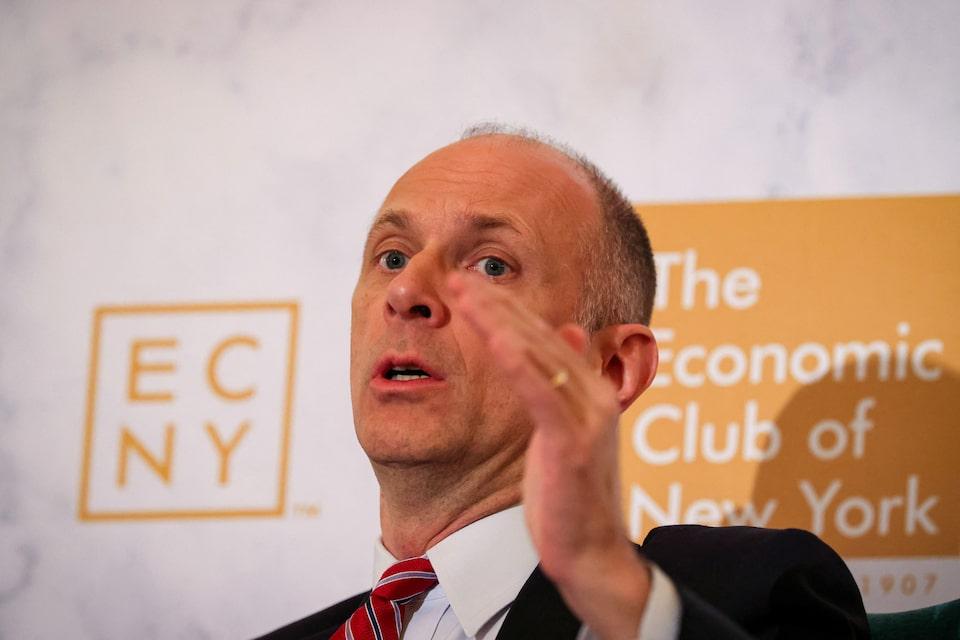
July 11 (Reuters) - U.S. President Donald Trump's fresh tariff announcements make it "messy" to interpret the state of the economy, Chicago Federal Reserve Bank President Austan Goolsbee said, adding that he is hearing a lot of anxiety from business contacts about coming inflation that is not yet obvious in the data. "I've got to wait until that noise kind of dies down, that anxiety dies down, before I'm gonna be comfortable that we are back on the old golden path, as I called it, to a stable soft landing," Goolsbee said in a "Moody's Talks: Inside Economics" podcast taped on Thursday and released on Friday. "If we, every six weeks, have to revisit whether we're about to have some big supply shock, that's messy at the least." Sign up here. https://www.reuters.com/business/feds-goolsbee-need-wait-until-anxiety-recedes-feel-comfortable-about-outlook-2025-07-11/
2025-07-11 19:04
Forecast in line with bank's 2025 growth estimate Central bank sees 2026 growth moderation, tariff risks US' 50% copper tariff could push up prices, economist says Mexican avocados gain edge over Peru's thanks to US tariff exemption LIMA, July 11 (Reuters) - Peru's economy is projected to have expanded just under 3% in the second quarter of 2025, central bank chief economist Adrian Armas said on Friday, adding that this remained in line with the bank's forecasts of 3.1% growth by the end of the year. Peru's gross domestic product (GDP) likely grew some 2.4% to 2.6% in May and more than 4% in June, Armas said in a call, though the July figure is estimated to have taken a 0.2% hit due to protests by informal miners blocking a key copper corridor. Sign up here. The central bank expects GDP growth to ease to 2.9% in 2026. Informal miners are protesting to extend the term of a formalization program, but the government's recent decision to kick more than half those registered - over 50,000 miners - off the scheme led organizers to double down on the road blockades. The measure is intended to crack down on illegal mining operations. Sources told Reuters on Friday that the two-week protest could start to impact production at major mining firms. Peru is the world's third-largest copper producer and a major exporter of metals and agricultural commodities into the United States. Asked on the impacts of U.S. President Donald Trump's announcement of a 50% tariff on copper imports set to take effect on August 1, Armas said if the U.S. did not have much capacity to substitute its copper imports, the cost of the tax could be passed on - leading to higher prices in the U.S. Peru ships most of its copper to China, but Armas estimated that last year the Andean nation exported around $900 million in copper and derivatives to the U.S. The red metal had been excluded from a prior so-called reciprocal tariff of 10%. Chile and Mexico, other major copper exporters, have said they will look to ship their production to new markets. "Clearly our products, like other products, become more expensive when they reach the U.S. market," Armas said, noting that companies with high exposure to the U.S. that are not able to push up their prices may well be negatively hit. Avocado producers in particular, he said, face a disadvantage compared to counterparts in Mexico that are able to export the popular fruit tariff-free to the United States thanks to a free trade pact. Peru is among the world's top avocado exporters. https://www.reuters.com/world/americas/peru-central-bank-holds-growth-forecasts-steady-trump-readies-copper-tariffs-2025-07-11/

2025-07-11 18:59
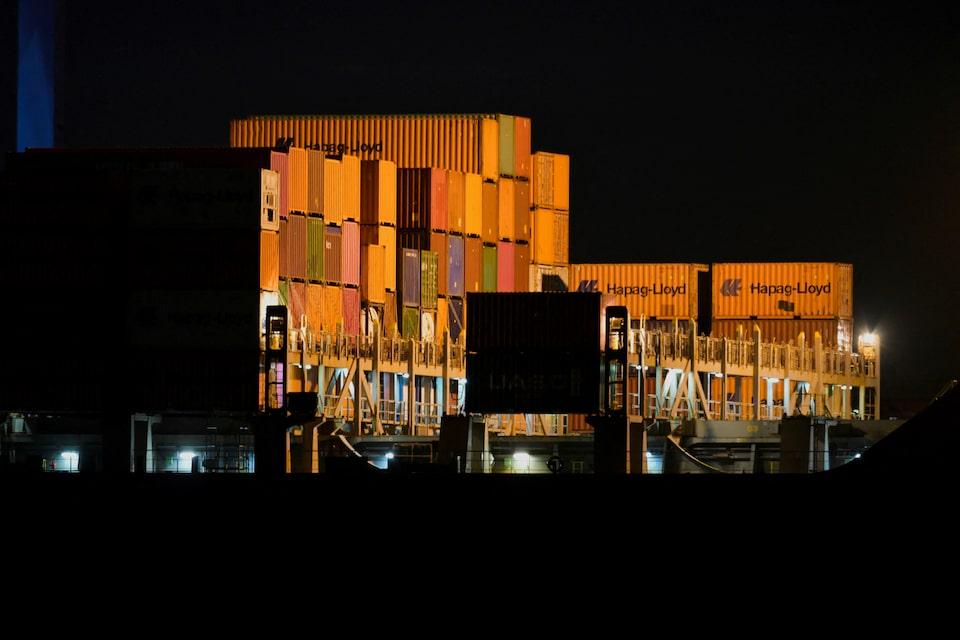
EU could receive tariff letter on Friday Hard to predict situation, EU source says European shares, Wall Street futures down Canada PM says will protect businesses and workers Rubio meets China's Wang Yi BRUSSELS, July 11 (Reuters) - The European Union braced on Friday for a possible letter from U.S. President Donald Trump outlining planned duties on the United States' largest trade and investment partner after a broadening of his tariff war in recent days. The EU initially hoped to strike a comprehensive trade agreement, including zero-for-zero tariffs on industrial goods, but months of difficult talks have led to the realization it will probably have to settle for an interim agreement and hope something better can still be negotiated. Sign up here. The 27-country bloc is under conflicting pressures as powerhouse Germany urged a quick deal to safeguard its industry, while other EU members, such as France, have said EU negotiators should not cave into a one-sided deal on U.S. terms. After keeping much of the world guessing, Trump has outlined new tariffs for U.S. imports of goods from a number of countries, including allies Japan and South Korea, along with a 50% tariff on U.S. imports of copper, and a hike to 35% on Canadian goods. His cascade of tariff orders since returning to the White House has begun generating tens of billions of dollars a month in new revenue for the U.S. government. U.S. customs duties revenue shot past $100 billion in the federal fiscal year through to June, according to U.S. Treasury data on Friday – exceeding the largest annual take ever from customs duties. U.S. consumers face an effective U.S. tariff rate of more than 20%, the highest since the early 1900s, the International Chamber of Commerce estimated this week after Trump's latest announcements. Rates are already around 16%, their highest since the 1930s. Economists expect much of that to be passed along as higher consumer prices for imported goods, although there is only limited evidence of that occurring so far. "So at some point, the new tariffs will start to bite, or if companies decide they can't trade under those conditions, shelves will start to look decidedly sparse," ICC Deputy Secretary General Andrew Wilson said. A person with knowledge of the U.S.-EU negotiations said an agreement was close, but that it was hard to predict if the EU might still get a letter announcing more tariffs or when any agreement might be finalised. European winemakers, who rely in part on American drinkers of their products, are among the industries who have worried about not being included in tariff exemptions in any deal. European shares dipped on Friday as investors awaited word on tariffs for the EU, while U.S. stocks dipped in response to the upsized tariff rate Trump announced for Canada late on Thursday. Gold prices, meanwhile, rose for a third straight session on higher demand for the safe-haven asset. Investors appear increasingly inured to Trump's tariff announcements after having near-panic reactions to the first announcements back in winter. However, businesses are increasingly altering supply chains, reducing imports and in some cases holding off on orders due to the uncertainty surrounding tariffs. Suppliers of Walmart have delayed some orders of Bangladesh-made clothing. Levi's and other retailers are limiting shipments of goods that don't sell as well to avoid tariffs on products destined for discounts. Auto suppliers are asking customers to pay more for cars because of additional levies on metals. The jacked-up rates Trump unveiled out of the blue this week on U.S. imports from Brazil and Canada are emblematic of his unpredictable approach. The 35% tariff on Canadian goods is an increase from the current 25% rate he had assigned and is a blow to Canadian Prime Minister Mark Carney, who was seeking a trade pact with Washington. Trumps says the new rate will take effect on Aug. 1 and could go up further if Canada retaliates. "Throughout the current trade negotiations with the United States, the Canadian government has steadfastly defended our workers and businesses," Carney said in a statement. "We will continue to do so as we work towards the revised deadline of August 1." The EU has drawn up countermeasures against Trump's tariffs, but has not imposed them. An initial 21 billion euros ($24.5 billion) of levies on U.S. imports due in April was suspended before taking effect. Another package, on some 72 billion euros of U.S. imports, could also be applied. "Basically, if a political decision is made to extend the suspension, then we'll extend the suspension," EU spokesperson Olof Gill told reporters. "If we need to unsuspend it, we can do that, you know, at the drop of a hat." CONSTRUCTIVE Elsewhere, U.S. Secretary of State Marco Rubio met with Chinese Foreign Minister Wang Yi in Kuala Lumpur on Friday. Both sides described the meeting as constructive. China warned the U.S. this week against reinstating hefty levies on its goods next month and Beijing has also threatened to retaliate against nations that strike deals with the U.S. to cut China out of supply chains. Trump has periodically railed against the EU, saying in February that it was "formed to screw the United States" and asking why Europe exports so many cars but buys so few from the U.S. in return. His biggest grievance is the U.S. merchandise trade deficit with the EU, which in 2024 amounted to $235 billion, according to U.S. Census Bureau data. The EU has repeatedly pointed to the U.S. surplus in services that in part redresses the balance. https://www.reuters.com/world/china/eu-waits-trump-letter-markets-digest-latest-tariff-salvo-2025-07-11/