2025-07-11 19:04
Forecast in line with bank's 2025 growth estimate Central bank sees 2026 growth moderation, tariff risks US' 50% copper tariff could push up prices, economist says Mexican avocados gain edge over Peru's thanks to US tariff exemption LIMA, July 11 (Reuters) - Peru's economy is projected to have expanded just under 3% in the second quarter of 2025, central bank chief economist Adrian Armas said on Friday, adding that this remained in line with the bank's forecasts of 3.1% growth by the end of the year. Peru's gross domestic product (GDP) likely grew some 2.4% to 2.6% in May and more than 4% in June, Armas said in a call, though the July figure is estimated to have taken a 0.2% hit due to protests by informal miners blocking a key copper corridor. Sign up here. The central bank expects GDP growth to ease to 2.9% in 2026. Informal miners are protesting to extend the term of a formalization program, but the government's recent decision to kick more than half those registered - over 50,000 miners - off the scheme led organizers to double down on the road blockades. The measure is intended to crack down on illegal mining operations. Sources told Reuters on Friday that the two-week protest could start to impact production at major mining firms. Peru is the world's third-largest copper producer and a major exporter of metals and agricultural commodities into the United States. Asked on the impacts of U.S. President Donald Trump's announcement of a 50% tariff on copper imports set to take effect on August 1, Armas said if the U.S. did not have much capacity to substitute its copper imports, the cost of the tax could be passed on - leading to higher prices in the U.S. Peru ships most of its copper to China, but Armas estimated that last year the Andean nation exported around $900 million in copper and derivatives to the U.S. The red metal had been excluded from a prior so-called reciprocal tariff of 10%. Chile and Mexico, other major copper exporters, have said they will look to ship their production to new markets. "Clearly our products, like other products, become more expensive when they reach the U.S. market," Armas said, noting that companies with high exposure to the U.S. that are not able to push up their prices may well be negatively hit. Avocado producers in particular, he said, face a disadvantage compared to counterparts in Mexico that are able to export the popular fruit tariff-free to the United States thanks to a free trade pact. Peru is among the world's top avocado exporters. https://www.reuters.com/world/americas/peru-central-bank-holds-growth-forecasts-steady-trump-readies-copper-tariffs-2025-07-11/
2025-07-11 18:59
EU could receive tariff letter on Friday Hard to predict situation, EU source says European shares, Wall Street futures down Canada PM says will protect businesses and workers Rubio meets China's Wang Yi BRUSSELS, July 11 (Reuters) - The European Union braced on Friday for a possible letter from U.S. President Donald Trump outlining planned duties on the United States' largest trade and investment partner after a broadening of his tariff war in recent days. The EU initially hoped to strike a comprehensive trade agreement, including zero-for-zero tariffs on industrial goods, but months of difficult talks have led to the realization it will probably have to settle for an interim agreement and hope something better can still be negotiated. Sign up here. The 27-country bloc is under conflicting pressures as powerhouse Germany urged a quick deal to safeguard its industry, while other EU members, such as France, have said EU negotiators should not cave into a one-sided deal on U.S. terms. After keeping much of the world guessing, Trump has outlined new tariffs for U.S. imports of goods from a number of countries, including allies Japan and South Korea, along with a 50% tariff on U.S. imports of copper, and a hike to 35% on Canadian goods. His cascade of tariff orders since returning to the White House has begun generating tens of billions of dollars a month in new revenue for the U.S. government. U.S. customs duties revenue shot past $100 billion in the federal fiscal year through to June, according to U.S. Treasury data on Friday – exceeding the largest annual take ever from customs duties. U.S. consumers face an effective U.S. tariff rate of more than 20%, the highest since the early 1900s, the International Chamber of Commerce estimated this week after Trump's latest announcements. Rates are already around 16%, their highest since the 1930s. Economists expect much of that to be passed along as higher consumer prices for imported goods, although there is only limited evidence of that occurring so far. "So at some point, the new tariffs will start to bite, or if companies decide they can't trade under those conditions, shelves will start to look decidedly sparse," ICC Deputy Secretary General Andrew Wilson said. A person with knowledge of the U.S.-EU negotiations said an agreement was close, but that it was hard to predict if the EU might still get a letter announcing more tariffs or when any agreement might be finalised. European winemakers, who rely in part on American drinkers of their products, are among the industries who have worried about not being included in tariff exemptions in any deal. European shares dipped on Friday as investors awaited word on tariffs for the EU, while U.S. stocks dipped in response to the upsized tariff rate Trump announced for Canada late on Thursday. Gold prices, meanwhile, rose for a third straight session on higher demand for the safe-haven asset. Investors appear increasingly inured to Trump's tariff announcements after having near-panic reactions to the first announcements back in winter. However, businesses are increasingly altering supply chains, reducing imports and in some cases holding off on orders due to the uncertainty surrounding tariffs. Suppliers of Walmart have delayed some orders of Bangladesh-made clothing. Levi's and other retailers are limiting shipments of goods that don't sell as well to avoid tariffs on products destined for discounts. Auto suppliers are asking customers to pay more for cars because of additional levies on metals. The jacked-up rates Trump unveiled out of the blue this week on U.S. imports from Brazil and Canada are emblematic of his unpredictable approach. The 35% tariff on Canadian goods is an increase from the current 25% rate he had assigned and is a blow to Canadian Prime Minister Mark Carney, who was seeking a trade pact with Washington. Trumps says the new rate will take effect on Aug. 1 and could go up further if Canada retaliates. "Throughout the current trade negotiations with the United States, the Canadian government has steadfastly defended our workers and businesses," Carney said in a statement. "We will continue to do so as we work towards the revised deadline of August 1." The EU has drawn up countermeasures against Trump's tariffs, but has not imposed them. An initial 21 billion euros ($24.5 billion) of levies on U.S. imports due in April was suspended before taking effect. Another package, on some 72 billion euros of U.S. imports, could also be applied. "Basically, if a political decision is made to extend the suspension, then we'll extend the suspension," EU spokesperson Olof Gill told reporters. "If we need to unsuspend it, we can do that, you know, at the drop of a hat." CONSTRUCTIVE Elsewhere, U.S. Secretary of State Marco Rubio met with Chinese Foreign Minister Wang Yi in Kuala Lumpur on Friday. Both sides described the meeting as constructive. China warned the U.S. this week against reinstating hefty levies on its goods next month and Beijing has also threatened to retaliate against nations that strike deals with the U.S. to cut China out of supply chains. Trump has periodically railed against the EU, saying in February that it was "formed to screw the United States" and asking why Europe exports so many cars but buys so few from the U.S. in return. His biggest grievance is the U.S. merchandise trade deficit with the EU, which in 2024 amounted to $235 billion, according to U.S. Census Bureau data. The EU has repeatedly pointed to the U.S. surplus in services that in part redresses the balance. https://www.reuters.com/world/china/eu-waits-trump-letter-markets-digest-latest-tariff-salvo-2025-07-11/
2025-07-11 17:27
July 11 (Reuters) - Venezuelan state-run PDVSA's oil sales abroad in 2024 stood at $17.52 billion, according to a results document seen by Reuters on Friday, as exports jumped due to U.S. licenses allowing foreign partners to operate in the sanctioned OPEC member. There are no comparative figures from previous years because PDVSA has not published its results since 2016, and it did not immediately respond to a request for comment. Sign up here. Venezuela has some of the world's largest reserves of oil, but its crude output remains at a fraction of what it was a decade ago after a lack of investment, mismanagement at PDVSA and U.S. sanctions on Venezuela's energy industry since 2019. The licenses to U.S. oil major Chevron (CVX.N) , opens new tab and other foreign firms in Venezuela have allowed a slight recovery in oil output and exports since 2023. In late May, however, Washington revoked those licenses to take Venezuelan crude bound for U.S. and European refineries. PDVSA's crude oil and fuel exports averaged 805,500 barrels per day (bpd) last year, according to preliminary data from its 2024 financial and operational results. That would be an over 15% hike from almost 700,000 bpd in 2023, according to data and documents viewed by Reuters. According to PDVSA's results, the OPEC member produced an average of 952,000 bpd in 2024, compared with 783,000 bpd in 2023 reported by OPEC. President Nicolas Maduro and his government have always rejected sanctions by the United States and others, saying they are illegitimate measures that amount to an "economic war" designed to cripple Venezuela. Maduro and his allies have cheered what they say is the country's resilience despite the measures, though they have historically blamed some economic hardships and shortages on sanctions. Crude production was above 1 million bpd in the first quarter of 2025, according to the results documents, and authorities have said that exports continue to perform normally. In June, crude and fuel exports were 844,000 bpd, and were directed to China, according to shipping data and documents. https://www.reuters.com/business/energy/venezuelas-pdvsa-oil-sales-abroad-hit-175-billion-2024-exports-jump-2025-07-11/
2025-07-11 17:00
BUENOS AIRES, July 11 (Reuters) - Argentina's monthly inflation likely ticked up to 1.9% in June, according to the median forecast of a Reuters poll, after May's rise marked the lowest monthly increase since 2020. The month of May had marked the smallest monthly increase in five years for South America's No. 2 economy, with consumer prices rising just 1.5%, data from the official INDEC statistics agency showed, as the government of President Javier Milei works to tame painful price hikes. Sign up here. For June, estimates from 15 local and foreign analysts ranged from 1.4% to 2.0%. Consulting firm C&T Economic Advisors said their survey showed a 2% rise in June, slightly above their May estimate of 1.8% and the official 1.5% figure, but still one of the lowest monthly rates since 2020. May's unusually low inflation was driven by factors that did not recur in June, they added. "No disinflation process is linear, so it is natural to observe some months with slightly higher inflation than the previous one," said Eugenio Mari, chief economist at Fundacion Libertad y Progreso(LyP). This is especially relevant "when we consider that these are the first months after the exchange rate unification and several relative prices are still seeking equilibrium," he added. For July, early analyst estimates predict a lower inflation rate than that projected for June. "The rate of depreciation of our currency has been very slow," said Aldo Abram, economist and executive director at LyP, saying this contributed to his estimates that July inflation would be lower than in June, at around 1.7%, even though July typically experiences seasonal price increases. INDEC is scheduled to publish data for June on Monday at 1900 GMT. https://www.reuters.com/world/americas/argentina-inflation-seen-accelerating-june-after-may-slowdown-2025-07-11/
2025-07-11 14:07
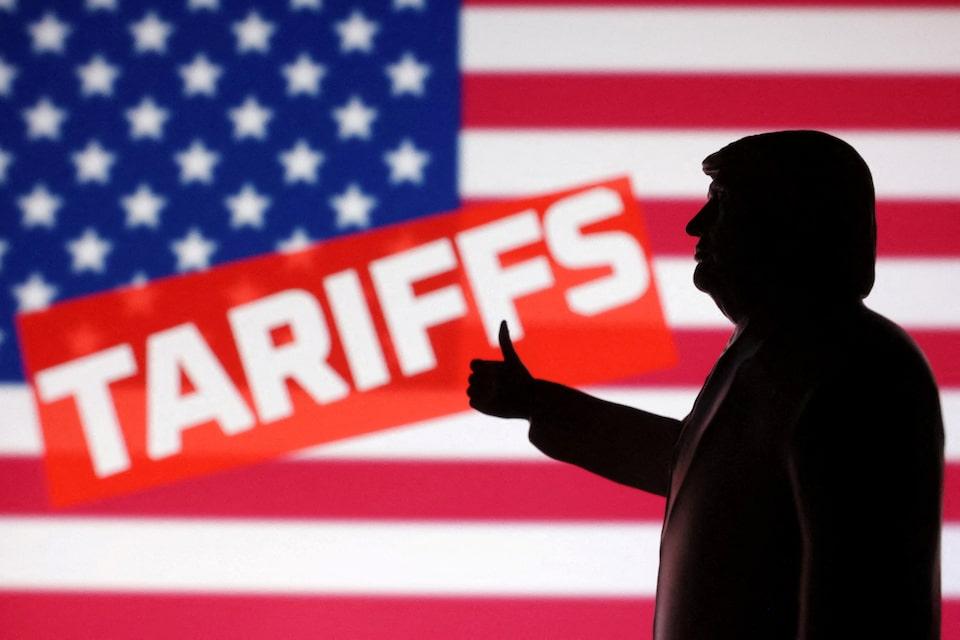
US consumers face highest tariff rate since early 1900s Rate is currently 16%, the highest since the 1930s Companies 'acutely concerned' about tariffs, business group says LONDON, July 11 (Reuters) - U.S. consumers face an effective U.S. tariff rate of more than 20%, the highest since the early 1900s, the International Chamber of Commerce has estimated following President Donald Trump's import levy announcements this week. Rates are already around 16%, their highest since the 1930s. Sign up here. The calculation is based on the tariffs included in letters sent by Trump's administration this week to trading partners, 50% copper tariffs, and the threat of duties as high as 200% on pharmaceutical tariffs, Andrew Wilson, ICC deputy secretary general told Reuters on Friday. The ICC represents 45 million companies in more than 170 countries. Wilson said it was notable that financial markets were "pretty sanguine" even after the raft of tariff threats this week. "I think what's particularly interesting this week is the disconnect between the reaction of the financial markets (...) and the reaction of companies, who I think remain acutely concerned about the direction of tariffs, U.S. trade policy, the inherent risks of that," he told Reuters. The relative market calm this week was in contrast to the selloff across equities and Treasuries in April after Trump announced sweeping tariffs and then hit pause for 90 days until July 9. This week he extended the deadline for trade deals until August 1. Investors seem to have accepted a 10% baseline tariff, Wilson said, although Trump floated the idea late on Thursday that it could go up to 20% for some countries. The ICC sees the latest moves as a way for the administration to test "in real time" the financial market's sensitivity to hefty tariffs. "Our view right now, based on what we've seen over the past few days, is the Administration is very much set on achieving the highest possible effective tariff rate for the U.S.," said Wilson. "There's no doubt they're sensitive to the equities market and the performance of US Treasuries. But basically, how high can they get the number without freaking out the financial markets?" he said. Wilson noted that the administration has been touting tariffs as a significant revenue source. Treasury Secretary Scott Bessent said Washington had taken in about $100 billion so far and could collect $300 billion by the end of the year. https://www.reuters.com/world/china/us-tariff-rate-may-be-more-than-20-after-latest-round-global-business-group-says-2025-07-11/
2025-07-11 12:32
PARIS, July 11 (Reuters) - Europe's securities regulator warned crypto companies on Friday not to mislead customers about the extent to which their products are regulated - the latest sign of European authorities trying to limit crypto-related risks. The European Union's crypto regulation, MiCA, includes various measures to protect investors, such as rules around how client assets are safeguarded and requirements for handling complaints, the European Securities and Markets Authority (ESMA) said in a statement. Sign up here. But the practice of crypto asset service providers (CASPs) offering both regulated and unregulated products through the same platform "gives rise to investor protection risks", ESMA said, because customers might not be aware which products do not come with MiCA's protections. "Some CASPs may even use their regulated status under MiCA as a marketing argument and encourage confusion between regulated and unregulated products and services," ESMA said. ESMA said that crypto companies should not use their regulatory status as a "promotional tool" or imply that crypto products and services are regulated if they actually fall outside the scope of the EU's rules. Products and services not regulated by MiCA include direct investment in commodities, such as gold, and crypto-asset lending. Regulators around the world have long been concerned about the risks faced by crypto investors. The collapse of various crypto platforms, including FTX, in 2022, left millions of investors out of pocket. Under the EU's new crypto rules, companies offering crypto services must obtain a CASP licence from a national regulator, which can then be used as a passport to operate across the bloc. ESMA also on Friday issued guidelines about the level of knowledge and competence staff need to have in order to assess crypto companies. ESMA's statements come a day after it published a peer review into Malta's licence-granting process, which found that Malta's Financial Services Authority was not thorough enough in assessing the risk of one particular unidentified crypto company. The review found that while the Maltese regulator had enough expertise and resources to authorise and supervise crypto companies, its authorisation process only "partially" met expectations. The Maltese regulator said in a statement on Thursday that it was proud of its role as an "early adopter" of digital asset regulation and did not directly address ESMA's criticisms. Some regulators had raised concerns in closed-door meetings about the speed with which crypto licences were being granted by some EU member states, Reuters has previously reported. https://www.reuters.com/sustainability/boards-policy-regulation/european-securities-regulator-warns-about-crypto-firms-misleading-customers-2025-07-11/