2025-07-11 11:29
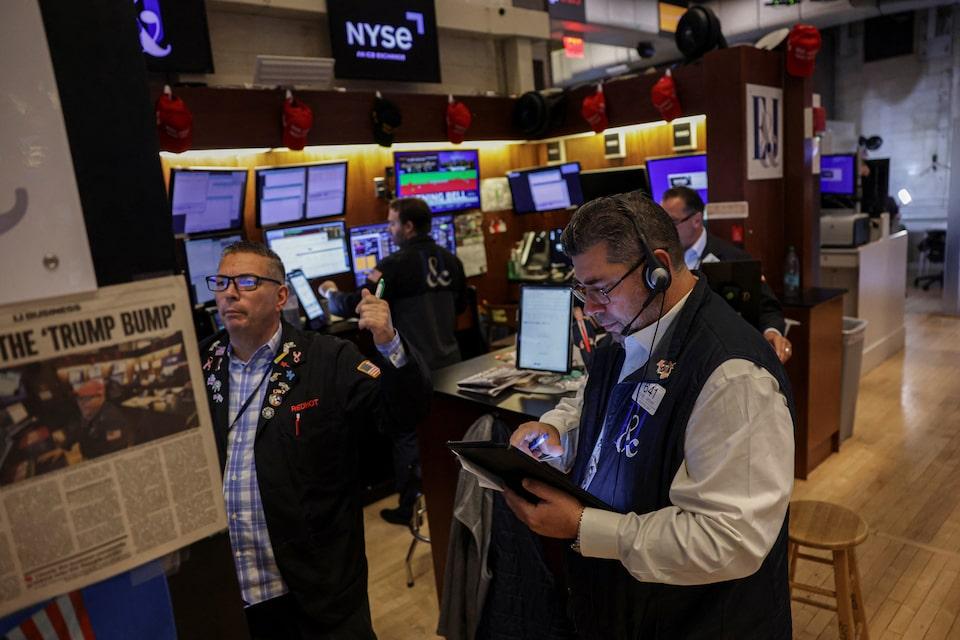
Levi Strauss gains after hiking forecasts Trump hits Canada with 35% tariff Investors await quarterly earnings S&P 500 -0.33%, Nasdaq -0.22%, Dow -0.63% July 11 (Reuters) - Wall Street ended lower on Friday, with Meta Platforms (META.O) , opens new tab weighing on the S&P 500 after President Donald Trump intensified his tariff offensive against Canada, amplifying the uncertainty swirling around U.S. trade policy. Trump late on Thursday ramped up his tariff assault on Canada, saying the U.S. would impose a 35% tariff on imports next month and planned to impose blanket tariffs of 15% or 20% on most other trading partners. Sign up here. The S&P 500 eased from a record high the day before, with caution prevailing after Trump on Thursday imposed 50% tariffs on Brazil and as the European Union braced for a possible letter from Trump with details on fresh tariffs. "The increased rhetoric around tariffs, what we've seen this week regarding Brazil and Canada, is certainly elevating the anxiety level," said Michael James, an equity sales trader at Rosenblatt Securities. "People had become a little more accustomed to the lack of negative tariff headlines, and we've kind of been reminded that the tariff picture is still there." Shares of Nvidia (NVDA.O) , opens new tab rose 0.5% to a record high, lifting its stock market value to $4.02 trillion. Drone makers AeroVironment (AVAV.O) , opens new tab and Kratos Defense & Security Solutions (KTOS.O) , opens new tab jumped about 11% after U.S. Defense Secretary Pete Hegseth ordered a surge in drone production and deployment. The S&P 500 declined 0.33% to end the session at 6,259.75 points. The Nasdaq declined 0.22% to 20,585.53 points, while the Dow Jones Industrial Average fell 0.63% to 44,371.51 points. Volume on U.S. exchanges was relatively light, with 15.4 billion shares traded, compared with an average of 18.3 billion shares over the previous 20 sessions. For the week, the S&P 500 dipped 0.3%, the Dow lost about 1% and the Nasdaq slipped 0.1%. The S&P 500 is up about 6% so far in 2025. Investors will soon turn their attention to second-quarter reporting season, with a focus on how Trump's on-again off-again tariffs are affecting major U.S. companies. Among the big names reporting results next week are JPMorgan (JPM.N) , opens new tab, Netflix (NFLX.O) , opens new tab and Johnson & Johnson (JNJ.N) , opens new tab. Analysts on average expect S&P 500 companies to increase their second-quarter earnings by 5.7%, year over year, with big gains from tech companies and declining profits in energy, consumer staples and consumer discretionary, according to LSEG I/B/E/S. "We believe expectations are a bit low for S&P 500 earnings. Much of the second quarter was marked with tariff and trade issues and that may have caused some dislocations in earnings," said Michael Landsberg, chief investment officer, Landsberg Bennett Private Wealth Management. Levi Strauss & Co (LEVI.N) , opens new tab jumped 11% after the apparel seller raised its annual revenue and profit forecasts and beat quarterly estimates. Meta Platforms shares closed 1.3% lower after Reuters reported that the company is very unlikely to offer more changes to its pay-or-consent model, increasing the risk of fresh EU antitrust charges and hefty daily fines. Kraft Heinz (KHC.O) , opens new tab closed 2.5% higher after the Wall Street Journal reported the company is preparing to break itself up as the packaged food maker grapples with persistent weakness in demand for its higher-priced brands. Across the U.S. stock market (.AD.US) , opens new tab, declining stocks outnumbered rising ones by a 2.8-to-one ratio. The S&P 500 posted 12 new highs and 4 new lows; the Nasdaq recorded 58 new highs and 43 new lows. https://www.reuters.com/business/finance/trumps-tariff-barrage-knocks-wall-st-futures-lower-2025-07-11/
2025-07-11 11:25
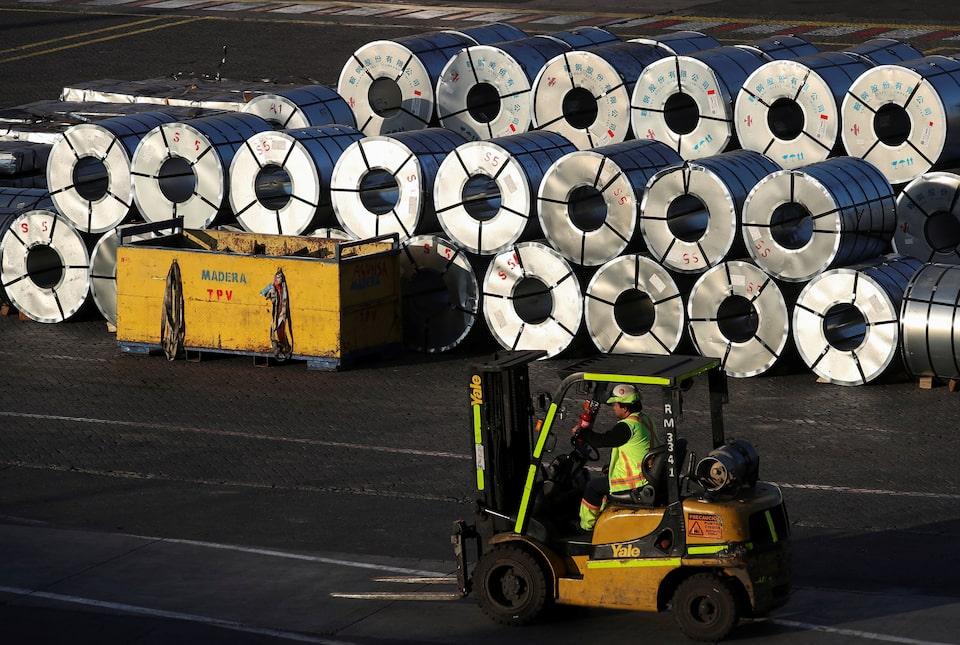
BEIJING, July 11 (Reuters) - China has for the first time set renewable energy mandates for the steel, cement, and polysilicon industries, as well as for some data centres, according to a National Development and Reform Commission notice on Friday. Beijing's renewable portfolio standards, or RPS, set out targets for the percentage of power consumption that the various industries must obtain from renewables in each province. Sign up here. Previously the RPS only affected companies involved in power trading and the electrolytical aluminium industry, said David Fishman, principal at the Lantau Group, an energy-focused consultancy in an online post. "Simply put: heavy industry must buy green," Fishman wrote of the new regulations. Newly built data centres in so-called national hub nodes must use at least 80% green electricity, while targets for the other industries vary by province. The RPS targets are closely watched by market participants, said Yan Qin, principal analyst at ClearBlue markets in an online post, because they are used to calculate the amount of renewable power generation that will be incorporated into China's new contract for difference mechanism, which represents a move toward market-based pricing for renewables. Under that mechanism, the government pays back generators if market prices fall below a set level. The non-data centre targets are further divided into hydro renewables and non-hydro renewables. For 2025, the total renewable target is as high as 70% for hydropower-rich Yunnan province, for example, and as low as 24.2% for Fujian. The non-hydro targets cap out at 30% in wind and solar heavy provinces like Inner Mongolia, Gansu, and Qinghai, while mountainous Chongqing has a target of just 10.8%. Targets for 2026 were also released as part of the plan; the targets typically rise a few percentage points each year. https://www.reuters.com/sustainability/boards-policy-regulation/china-sets-its-first-renewable-standards-steel-cement-polysilicon-2025-07-11/
2025-07-11 11:18
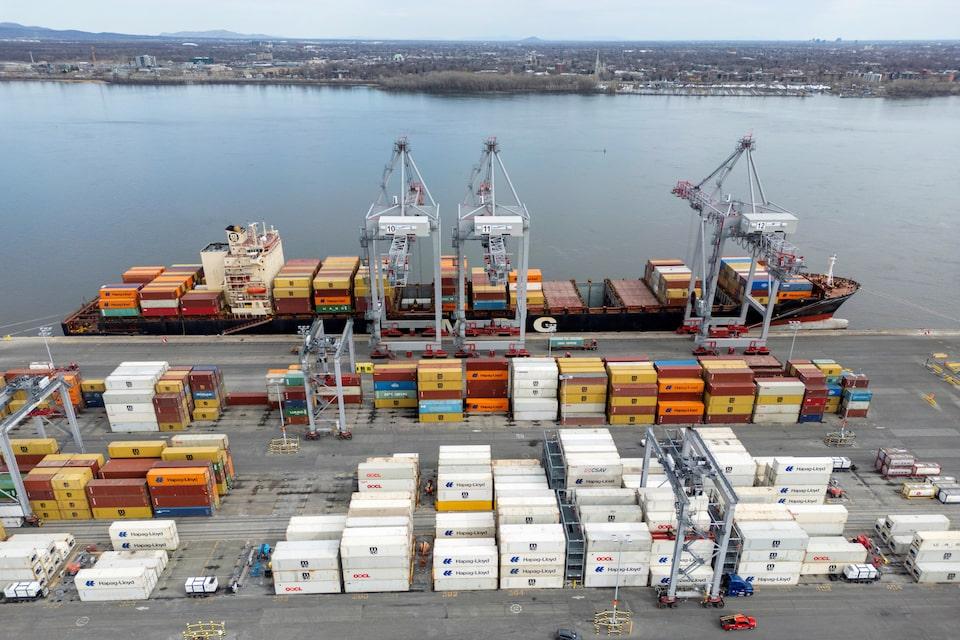
LONDON, July 11 (Reuters) - Although markets are trying to shrug off the week's U.S. tariff threats as yet another negotiation tactic, there's growing unease at the daily barrage, the latest being a 35% tariff on Canadian goods and higher levies on other countries. It's Friday, so today I'll provide a quick overview of what's happening in global markets and then offer you some weekend reading suggestions away from the headlines. Sign up here. Today's Market Minute * U.S. President Donald Trump ramped up his tariff assault on Canada on Thursday, saying the U.S. would impose a 35% tariff on imports next month and planned to impose blanket tariffs of 15% or 20% on most other trading partners. * The 50% tariff that the Trump administration has slapped on Brazilian imports has rattled the global coffee market and could make the price of a cup of coffee in the U.S. jump beyond recent highs, and will likely raise prices for beef used in American hamburgers * Bitcoin rallied to an all-time high on Friday, powered by demand from institutional investors and crypto-friendly policies from Trump's administration. * U.S. corn exports and export sales are still on fire despite the imminent ramp-up of Brazil’s corn shipping season, meaning the U.S. government might need to up its export target yet again. Read the latest from ROI agriculture columnist Karen Braun. * Utilities across the European Union cranked output from natural gas and coal-fired power plants during the opening half of 2025, boosting power sector emissions and reversing recent energy transition momentum, says ROI columnist Gavin Maguire. Canada back in tariff crosshairs President Donald Trump said the U.S. would impose the 35% tariff next month on Canadian imports not covered by the United States-Canada-Mexico pact and planned to impose blanket tariffs of 15% or 20% on most other trading partners. That comes on top of 50% tariff pledges on copper and Brazilian imports, which are set to lift the U.S. price of the metal and coffee, among other goods. It also adds to the planned 25% tariffs on Japan and South Korea, and doused optimism of a more favorable deal with the European Union as investors awaited word on what levies Trump would assign the EU later on Friday. After Wall Street stock indexes hit record closing highs on Thursday, S&P 500 and Nasdaq futures fell back ahead of today's bell. European and Japanese shares were in the red and the Canadian dollar slipped to two-week lows. Somewhat weary of the seemingly endless back-and-forth on tariffs and attempting to look beyond the short-term headlines, investors are wary of overreacting as they brace for almost three weeks of 'ifs' and 'buts' ahead of the new August 1 deadline. The effect on economic activity and prices may take months to materialize. In a thin week for data, the weekly jobless update remained robust. The inflation impact is perhaps most immediate, but Thursday's long-bond auction matched decent demand for the 10-year note sale earlier in the week. Federal Reserve easing expectations slipped back a touch, however, and both ten- and thirty-year yields ticked higher. Alongside gains against the Canadian dollar, the greenback's index (.DXY) , opens new tab firmed more broadly. Fed officials struck a relatively benign tone. Arch dove Christopher Waller restated his preference for cutting rates again later this month, while saying the Fed's balance sheet run-off had some way to go. "We're just too tight and we could consider cutting the policy rate in July," he said. San Francisco Fed boss Mary Daly said she still sees two rate cuts over the remainder of the year. The White House, meanwhile, upped its attack on Fed Chair Jerome Powell - this time over the Fed's accounts and spending on its HQ renovations. But tech and the artificial intelligence theme continued to enthuse stock investors, with Taiwan chip giant TSMC beating forecasts on its AI chip demand and Nvidia closing above a $4 trillion valuation for the first time on Thursday. The second-quarter earnings season kicks into gear next week, with Delta Air Lines (DAL.N) , opens new tab shares rallying 12% on Thursday after the carrier forecast third-quarter and full-year profit above Wall Street estimates. That lifted the broader airline sector. The other big market gainer was Bitcoin , which rallied to an all-time high on Friday - powered by demand from institutional investors and Trump's crypto-friendly policies. The world's largest cryptocurrency rose to a peak of $116,781.10 in the Asian session, taking its gains for the year so far to more than 24%. Gold XAU= was firmer too on the tariff jitters. In China, a Shanghai regulator said it held a meeting this week for local government officials to consider strategic responses to stablecoins and digital currencies - a marked shift in tone for China where crypto trading is banned. Bracing for GDP updates next week, Chinese shares bucked the downbeat global stock mood on Friday and pushed higher. Elsewhere, sterling ebbed on a surprising monthly contraction in UK GDP, with jitters about Britain's public finances nudging gilt yields higher as finance minister Rachel Reeves prepares for the set-piece Mansion House speech next week. In company news, BP's BP.L second-quarter results are expected to be affected by lower prices received for gas and oil, while its upstream output is set to be higher than previously forecast, the company said in a trading update on Friday ahead of results due on August 5. In the euro zone, European Central Bank hawk Isabel Schnabel said the hurdle for another ECB interest rate cut is "very high" as the euro zone economy is holding up better than expected despite uncertainty over trade. Weekend reads * RETURN TO ZERO: The prospect of the Federal Reserve once again setting interest rates near zero , opens new tab in coming years remains real despite today's relatively high short-term borrowing costs, according to a paper published jointly between the New York and San Francisco Feds this week. The paper, which counted New York Fed chief John Williams as a co-author, extracted measures of risk of hitting the so-called "zero lower bound" from financial derivatives, and found a near one-in-ten chance of a return to zero from seven years and beyond - similar to levels in 2018. While expected rates are higher than back then, the level of uncertainty around the outlook is also much higher, it said. * 'OFFSHORING' MIGRANTS: The Trump administration's approach to offshoring asylum seekers and migrants is unprecedented , opens new tab, but there is a "sordid history" of extraterritorial detention centers both in the United States and around the world, writes Professor David Scott Fitzgerald in Foreign Affairs magazine. Describing offshore immigration processing and detention as "forms of disappearance", he said the major question globally is how domestic and international law pushes back against a "race to the bottom" after last month's U.S. Supreme Court ruling on deportations to South Sudan. "Rich countries around the world are watching one another for policy models." * POLITICAL ECONOMY RETHINK: The phasing out of green investment subsidies in Trump's successful fiscal bill challenges basic theories of political economy , opens new tab as many Republican lawmakers voted against their constituents' economic interests, writes Harvard economist Dani Rodrik in Project Syndicate. "It was ideas about what is important and how the world works, rather than economic lobbies or vested interests, that prevailed," he wrote, adding there's a broader lesson here about political economy. Narratives can be as important as interest-group politics in gaining traction for a party's agenda, he concludes, and Democrats may have to learn this too. * COMMUNICATING SCENARIOS: Threats to central bank independence have mounted since the inflation spikes of recent years and amid losses on expanded balance sheets, but the inflation-targeting process should still best illustrate , opens new tab the benefits of keeping political interference at arm's length. So concludes a piece on CEPR's VoxEU site by Fed economist Michael Kiley and Columbia University professor Frederic Mishkin. Regular public communication is needed to explain the process and retain political support, with greater use of scenario analysis likely to be helpful in this regard. * CHINA AUTO DEVELOPMENT SPEED: Over just one weekend, engineers at Chinese automaker Chery planned an overhaul of the suspension and steering on their Omoda 5 SUV for use on bumpier and more winding European roads. In a Reuters Special Report, Nick Carey and Norihiko Shirouzu show how this makeover exemplifies the disruptive speed and flexibility of Chinese automakers, which have seized control of their home market, the world's largest, from once-dominant foreign competitors. Now, China's auto giants are racing to expand globally, with Chery as the leading exporter and China's largest automaker BYD posing an even bigger long-term competitive threat, industry executives say. Chart of the day The 50% tariff that the Trump administration has slapped on Brazilian goods has rattled the global coffee market and could make the price of a cup of coffee in the U.S. jump beyond recent highs. Brazil is the world's largest grower and exporter of coffee, while the U.S. is its biggest client and the world's largest drinker of the beverage, with nearly 200 million Americans having a cup every day. Today's events to watch * U.S. June Federal Budget (1400 EDT) * Canada June employment report (0830 EDT) Opinions expressed are those of the author. They do not reflect the views of Reuters News, which, under the Trust Principles , opens new tab, is committed to integrity, independence, and freedom from bias. Want to receive the Morning Bid in your inbox every weekday morning? Sign up for the newsletter here. You can find ROI on the Reuters website , opens new tab, and you can follow us on LinkedIn , opens new tab and X. , opens new tab https://www.reuters.com/business/finance/global-markets-view-usa-2025-07-11/
2025-07-11 11:04
Shelter dogs trained to sniff screwworms help protect livestock Dogs part of Mexico's response as US closes border to cattle trade Mexico working to open sterile fly plant in 2026 TECAMAC, Mexico, July 11 (Reuters) - With tail wagging, tongue out and ears perked, Hummer - a young mixed breed dog with a slick black coat - sits down in front of a sample of screwworm scent, promptly accepting praise and treats from his handler. Trained to detect the smell of screwworm, a flesh-eating pest that has infected Mexico's cattle herd and disrupted livestock trade with the United States, Hummer and his canine colleagues offer a glimmer of hope in controlling the worm. Sign up here. At a government-run training center about an hour outside Mexico City, officials from a special unit of the country's health safety agency Senasica run a three-month intensive training program for a select group of dogs to sniff out screwworm and other pests or diseases in live animals or agricultural products. Most of the dogs are rescued from shelters, allowing animals that may have been abandoned for being too difficult to find a new life. Feisty pups that steal food from the table, never calm down and have a relentless desire to play are the perfect candidates. "Sometimes what people don't want is the ideal for us," said Cesar Dangu, head of the canine training center Ceacan. "We also have to look for other qualities: that they don't get angry, they are affectionate, they can live with people and with other animals." Not all dogs respond to the aroma of screwworm, a pest that infests livestock and wildlife and carries maggots that burrow into the skin of living animals, causing serious and often fatal damage. Some dogs will refuse to approach the aroma, Dangu said, making those that take to it even more valuable in their task. After cases started emerging in Mexico, the U.S. closed its southern border to imports of certain livestock, including cattle, in May before a gradual reopening began this week. On Wednesday, however, the U.S. government once again closed the border to cattle after a new case of screwworm was detected in Veracruz state, about 370 miles (595 km) south of the U.S. border, a decision Mexican President Claudia Sheinbaum called "exaggerated." On a sunny afternoon at Ceacan, just hours after the border closure announcement, the work of the dogs took on new urgency. There are only six screwworm-sniffing dogs working at a livestock border passage in the southern state of Chiapas, which borders Guatemala, the heart of Mexico's screwworm infestation. Havana, a two-year-old Shepherd mix, practices detecting screwworm on cow-sized equipment inside a greenhouse, a training exercise meant to mimic the sweltering heat the dogs must tolerate in Chiapas, said instructor Mayte Tontle. "We want our dogs to adapt as much as possible to the real-life conditions," Tontle said. With at least 47 new cases of screwworm detected daily in Mexico, according to government data, the handful of highly trained canines are a small element of Mexico's response, which also includes a $51 million facility in Chiapas to produce sterile flies to reduce the reproducing population of the wild flies. The plant, with a hefty $21 million investment from the U.S., is expected to be ready in the first half of 2026. The dogs trained at Ceacan will work until they complete eight years on the job or turn 10 years old, whichever comes first. After that, they retire. "I would say 99% of the dogs are adopted by their handler. There is an unbreakable link because of the love between the handler and the dog," Dangu said. https://www.reuters.com/world/americas/sniffer-dogs-help-mexico-fight-flesh-eating-screwworm-2025-07-11/

2025-07-11 10:55
Shares on Wall Street have hit record highs Bond markets price in slower growth Clearer picture will emerge in second half, say investors Either stocks or bonds could see steep correction, they say LONDON, July 11 (Reuters) - Global markets are telling conflicting stories about the possible longer-term impact of U.S. tariffs on growth, a schism that investors say means either stocks or bonds could see a steep correction once it's clear which is right. U.S. President Donald Trump's erratic approach to trade policy that generated so much volatility earlier this year seems to have left markets wary of reacting to his near-daily announcements on who, or what, might get hit with tariffs. Sign up here. The latest target is Canada, which on Thursday Trump said will face a 35% duty, while most other trading partners will get blanket tariffs of 15% or 20%, eliciting barely a flutter in the broader markets. An announcement on Europe is imminent. Investors say this apparent composure is less about confidence in an ultimately benign longer-term outlook, and more typical of a late-stage bull market, where the optimists scramble to catch the rally before it fizzles out, while the pessimists quietly prepare for trickier times ahead. In one corner are riskier assets like stocks and cryptocurrencies. Shares on Wall Street have hit record highs, powered by enthusiasm around artificial intelligence and the prospect of a string of interest-rate cuts from the Federal Reserve as the economy gradually slows and the hit to inflation from tariffs proves mild so far. Bitcoin is near a record $112,000. In the other corner are government bonds, gold and even crude oil , all of which are reflecting a belief that tariffs could derail the U.S. economy and growth everywhere will falter. Premier Miton chief investment officer Neil Birrell said the second half of this year will be when the impact of Trump's tariffs becomes obvious. "It's difficult for me to look at all this with any form of confidence or certainty," he said, referring to the unpredictability of Trump's policymaking and the possible impact of his "One Big Beautiful Bill". His main concern about stocks was U.S. households' high participation in Wall Street, where a decline could quickly spread globally. "Any stress in the U.S. economy that impacts the consumer and then impacts equity markets becomes a rather brutal and bloody downward spiral." 'THIS CAN'T CONTINUE' Trump's 90-day pause after April 2's "Liberation Day" tariff announcement has been replaced by a scattergun application of levies on trading partners large and small, right ahead of the second-quarter earnings season which may yield the first clues about how severe the hit to corporate profits could be. "Things have settled down but not in a positive way," Amundi's head of global macro Mahmood Pradhan said. "The effective tariff rate for all imports coming into the U.S., if you calculated an average across the board, would be about 15%," he said. "This is broadly negative for growth in every country that is involved in world trade." The World Bank last month cut its global growth forecast for 2025 by four-tenths of a percentage point to 2.3%, saying that higher tariffs and heightened uncertainty posed a "significant headwind" for nearly all economies. With so much uncertainty hanging over U.S. assets, investors' cash has flowed elsewhere for much of this year, into the likes of European stocks and bonds, gold, Chinese tech stocks or emerging market currencies. Greasing the wheels of the stock market rally has been anticipation that Fed Chair Jerome Powell will cave to pressure from Trump to deliver a rapid string of rate cuts. Yet the data has been too strong to justify an aggressive loosening of monetary policy and too soft to argue that tariffs are having no effect. U.S. employment figures show the economy is still creating jobs at a firm clip, while business activity surveys show factories and services are flagging. In the meantime, Trump's landmark tax cut and spending bill will add an extra $3.3 trillion to the national deficit. Benchmark 10-year U.S. Treasury yields have retreated from January's 15-month peaks at 4.8% to 4.35%. "Bonds are much more focused on growth (falling) than on inflation so when you see an upturn in trade war announcements bond yields tilt towards lower growth and rate cuts. But equities are emboldened because tariffs haven't shown up in the inflation numbers yet," Joost van Leenders, senior investment strategist at Dutch asset manager Van Lanschot Kempen, said. "We don't think this can continue," he said, adding he remains neutral on equities, with a small overweight position in government bonds. Gold has staged a blistering 26% rally this year, topping $3,300 an ounce, serving as a hedge against macro and geopolitical uncertainty, as well as an alternative to the dollar, the biggest tariff casualty, which has lost over 10% in value this year against a basket of currencies . Kevin Thozet, investment committee member at French asset manager Carmignac, said he is hedging against a fall in the U.S. stock market, but believes this is unlikely right now because retail traders are diving in to buy market dips. Further out, he said Trump's tax cut bill might offset some of the impact of tariffs, but the extra debt it could take to fund those cuts could drive the 10-year Treasury yield to 5% in the coming three months, a level that policymakers worry about given its impact on households, companies and the government. "We see significant cracks in U.S. markets, even though the Fed has ample room to cut," he said. https://www.reuters.com/world/china/high-priced-stocks-bonds-raise-tariff-threat-markets-2025-07-11/
2025-07-11 10:31
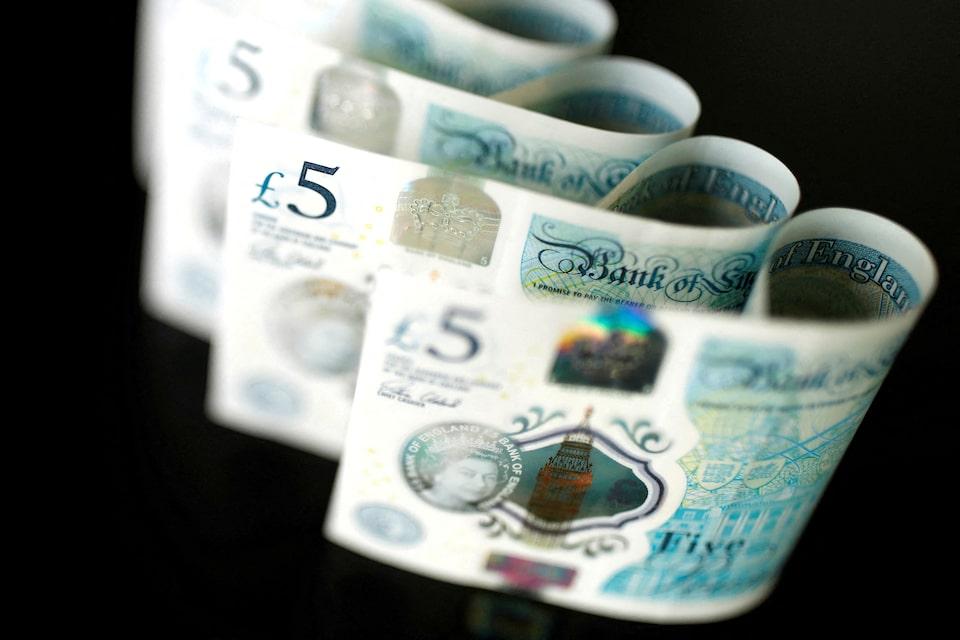
July 11 (Reuters) - Sterling slipped on Friday and was trading close to a more than two-week low after data showed the UK economy contracted for the second month, boosting expectations that the Bank of England could lower borrowing costs next month. Gross domestic product shrank by 0.1% after a 0.3% drop in April, the Office for National Statistics said, primarily dragged by weakness in industrial and construction output. Sign up here. "Though it would be wrong to conclude from the GDP data alone that the economy is coming under greater pressure, there are genuine questions emanating from the jobs market and whether it is beginning to fall apart more quickly," said James Smith, an economist at ING. "For the (BoE), it would likely force a rethink on the pace of rate cuts. Until now, officials have appeared highly reluctant to move beyond their recent, gradual once-per-quarter cutting pace." The pound weakened 0.26% to $1.354, while against the euro it slipped 0.2% to 86.35 pence. Yields on short-term gilts , , often a reflection of interest rate expectations, were steady after easing about two basis points earlier in the day. Traders are now pricing in a 78.3% chance the BoE could deliver a 25-basis-point interest rate cut in August, versus the 64% probability they were pricing in two weeks ago, data compiled by LSEG showed. Friday's data adds to worries for finance minister Rachel Reeves, with economists saying it looks likely she will need to raise taxes again in the upcoming Autumn budget as the government strives to balance its public accounts. UK markets took a beating last week after the Labour government was forced to pass a highly contested welfare bill that did little to make good on the spending cuts initially hoped for and heightened the uncertainty regarding the sustainability of government finances. Globally, investors were rattled by U.S. President Donald Trump's latest tariff escalation as he said he would impose a 35% rate on Canadian imports next month, while other trading partners are likely to face blanket levies of 15% or 20%. The pound firmed 0.5% against the Canadian dollar and last fetched C$1.855. Analysts have said that Britain's deal with the U.S. has made it less exposed to uncertainty on the trade front, which was also reflected in the pound's 8% rise against the U.S. dollar so far this year. https://www.reuters.com/world/uk/sterling-slips-weak-growth-data-fuels-rate-cut-expectations-2025-07-11/