2025-07-11 11:43
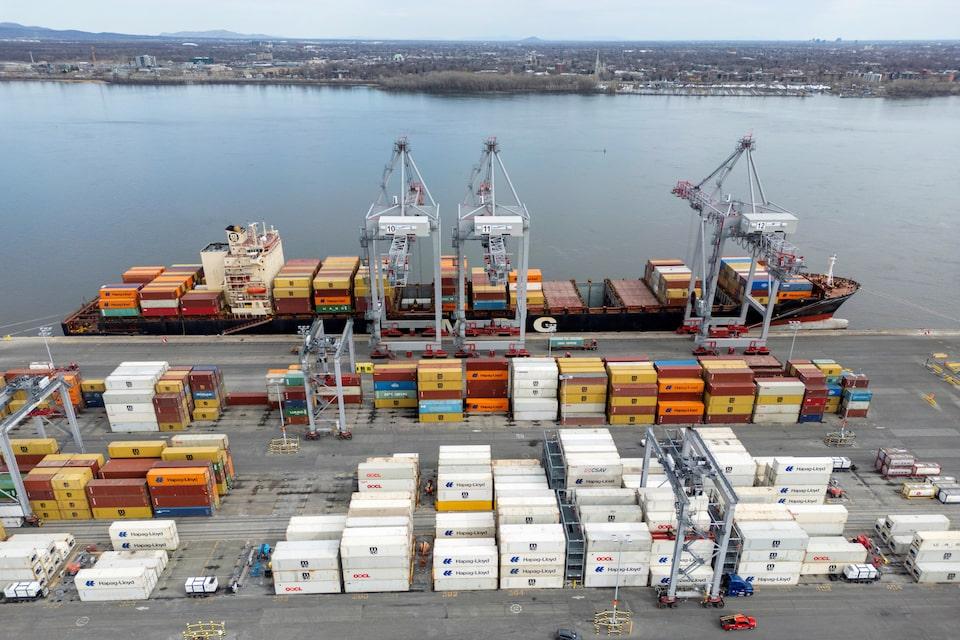
MOSCOW, July 11 (Reuters) - The price of Russia's Urals crude oil remained $2 per barrel below the $60 per barrel limit imposed by Western nations amid weak Brent prices, Reuters calculations based on traders' data showed on Friday. Oil prices edged up on Friday, as investors weighed a tight prompt market against a potential large surplus this year, according to the International Energy Agency, while U.S. tariffs and possible further sanctions on Russia were also in focus. Sign up here. Urals oil cargo loadings from Russia's Baltic and Black Sea ports were priced around $58 per barrel on Thursday on a free-on-board basis, which excludes charter costs and insurance, according to Reuters calculations. Reuters calculates Urals oil prices based on the previous business day's data. Oil prices fell on Thursday as investors weighed the potential impact of U.S. President Donald Trump's tariffs on global economic growth, but prices steadied on Friday. The United States, other Group of Seven countries and Australia imposed the price cap in late 2022, seeking to reduce Russia's revenue from seaborne oil exports as part of wide-ranging sanctions imposed over Moscow's invasion of Ukraine. Under the terms of the cap, suppliers of Russian oil are only able to use Western services such as shipping and insurance when Russian crude trades below $60 per barrel. The European Commission is expected to propose a floating Russian oil price cap as part of a new draft sanctions package, in an attempt to overcome opposition from some member states, four EU diplomats told Reuters this week. The plan to lower the price cap was prompted by a fall in global oil prices, which made the current cap largely irrelevant. The Commission proposed lowering the Group of Seven (G7) nations' price cap from $60 a barrel to $45 a barrel in June in its 18th package of sanctions. Russian Urals oil has been priced below $60 per barrel since April 2, except for a short jump above the price cap level in June on a rally in Brent. The Urals oil price is linked to the Brent price, making it dependent on changes in the benchmark's value. https://www.reuters.com/business/energy/russian-urals-oil-prices-hold-below-price-cap-weaker-brent-reuters-calculations-2025-07-11/

2025-07-11 11:39
BRASILIA, July 11 (Reuters) - The Brazilian government secured 10.2 billion reais ($1.8 billion) in revenue from the first round of tax debt renegotiations with major companies this year, the Treasury's attorney general and the Federal Revenue Service said. As part of the initiative, which is included in a broader effort to reduce Brazil's fiscal deficit to zero by 2025, the government is finalizing technical details to launch another three public notices to renegotiate tax debts, Treasury Attorney General Anelize Almeida told Reuters. Sign up here. The first-round agreements include an immediate collection of 7.6 billion reais and future payments of 2.6 billion reais. These kinds of tax debt transactions were originally created to grant discounts on debt renegotiation for companies in serious financial situations. They were made more flexible by a 2024 regulation that allowed the government to seek agreement with large companies to avoid costly and potentially unsuccessful court actions. "We're moving to a new focus of the transaction, which is the legal criteria and the litigation involved, how much it costs to maintain the litigation," Almeida said. "The economic cost of this litigation is very significant for the government and for the company." The first round primarily involved large banks. Companies agreed to drop judicial and administrative challenges, concluding 188 lawsuits. https://www.reuters.com/world/americas/brazil-collect-18-billion-debt-renegotiation-with-big-companies-2025-07-11/

2025-07-11 11:31
US Congress to debate key legislation next week Bitcoin hits record high on crypto optimism Skeptics cite likely volatility ahead to warn of hype July 11 (Reuters) - Crypto investors are betting that a slew of long-sought policy wins for the industry, expected next week, could invite new investment in the asset class. Those hopes helped propel bitcoin to another high on Friday and gave a boost to U.S.-listed crypto stocks. Sign up here. Starting on Monday, the House of Representatives will debate a series of crypto bills to provide the digital asset industry with the U.S. regulatory framework it has long demanded. Those demands have resonated with U.S. President Donald Trump, who has called himself the "crypto president" and urged policymakers to revamp rules in favor of the industry. Trump himself is involved in several crypto ventures, including World Liberty Financial, a platform that his sons Eric and Don Jr. run. Members of Congress are set to vote on the Genius Act, the Clarity Act, and the Anti-CBDC Surveillance State Act during "crypto week," as the industry's strained ties with Washington continue to thaw. The most significant bill is the Genius Act, which would create federal rules for stablecoins. "Even if final passage stalls, the optics of legislative engagement are bullish," said Jag Kooner, head of derivatives at crypto exchange Bitfinex. Bitcoin's surge has triggered a broader rally in the crypto market, with strong and sustained inflows into the related spot exchange-traded funds driving prices higher, said Nicolai Sondergaard, research analyst at Nansen. The world's largest cryptocurrency was last up 3.3% at $117,333.32, taking its gains for the year to 26%. The digital asset has surged nearly 41% in the last three months. Bitcoin buyer and holder Strategy (MSTR.O) , opens new tab rose 1.9%, while crypto miners Riot Platforms (RIOT.O) , opens new tab, Hut 8 (HUT.O) , opens new tab, and Mara Holdings (MARA.O) , opens new tab gained between 0.7% and 1.6%. "Investors are racing to take positions ahead of the extra publicity this event could attract," said Dan Coatsworth, investment analyst at AJ Bell, referring to "crypto week." Rising confidence in bitcoin is resulting in investors chasing higher returns in smaller tokens. Ether , the second-largest token, was last up 5.13%, while XRP and solana gained 9.7% and 0.8%, respectively. The sector's total market value has swelled to about $3.67 trillion, according to data from CoinMarketCap. 'CRYPTO WEEK' The House of Representatives is set to pass a series of crypto-related bills next week, including a bill that would establish a regulatory framework for stablecoins after Trump subsequently approves it. Stablecoins, a type of cryptocurrency designed to maintain a constant value, usually a 1:1 dollar peg, are commonly used by crypto traders to move funds between tokens. Their use has grown rapidly in recent years, and proponents say they could be used to send payments instantly. The bill, dubbed the Genius Act, received bipartisan support in the Senate, with several Democrats joining most Republicans to back the proposed federal rules. It is expected to pass the House and would then head to Trump, who has said he will sign the bill into law. The bill would require tokens to be backed by liquid assets - such as U.S. dollars and short-term Treasury bills - and for issuers to publicly disclose the composition of their reserves on a monthly basis. Crypto proponents say those rules could legitimize stablecoins, making banks, retailers, and consumers more comfortable with using them to transfer funds. The House next week is also expected to pass a bill that aims to develop a regulatory regime for cryptocurrencies and would expand the Commodity Futures Trading Commission's oversight of the digital asset industry. That bill, called the Clarity Act, has yet to be considered in the Senate, where it would need to pass before heading to Trump for final approval. If signed into law, the bill would define when a cryptocurrency is a security or a commodity and clarify the Securities and Exchange Commission's jurisdiction over the sector, something crypto companies disputed during the Biden administration. Crypto companies have argued that most crypto tokens should be classified as commodities instead of securities, which would enable platforms to more easily offer those tokens to their customers. SKEPTICS RAISE RED FLAGS Bitcoin's sharp rally has drawn caution from some corners of the market. As crypto gets embedded in the traditional financial system, some analysts warned the hype may be outpacing reality. "The (regulatory) backdrop has supported prices, and attention has turned to bitcoin's role in portfolios, with some likening the crypto-asset to 'digital gold.' This moniker is likely premature," said Dirk Willer, Citi's global head of macro, asset allocation, and emerging market strategy. With likely volatility ahead, some analysts have cautioned investors to pause and weigh their time horizons before jumping in. "It's hard not to be optimistic about bitcoin at this moment in time, but the risk of a fall in price or short-term pullback still exists," said Simon Peters, crypto analyst at online brokerage eToro. Critics have argued the Trump administration is conceding too much to the crypto industry at the expense of protecting consumers and retail investors. "I'm concerned that what my Republican colleagues are aiming for is another industry handout that gives the crypto lobby exactly its wish list," Democratic Senator Elizabeth Warren said this week. Trump has faced criticism from political rivals and ethics experts over the potential for conflicts of interest regarding his family's crypto ventures. The White House has said there are no conflicts of interest present for Trump and that his assets are in a trust managed by his children. https://www.reuters.com/business/bitcoins-record-high-lifts-crypto-stocks-renewed-regulatory-optimism-2025-07-11/

2025-07-11 11:29
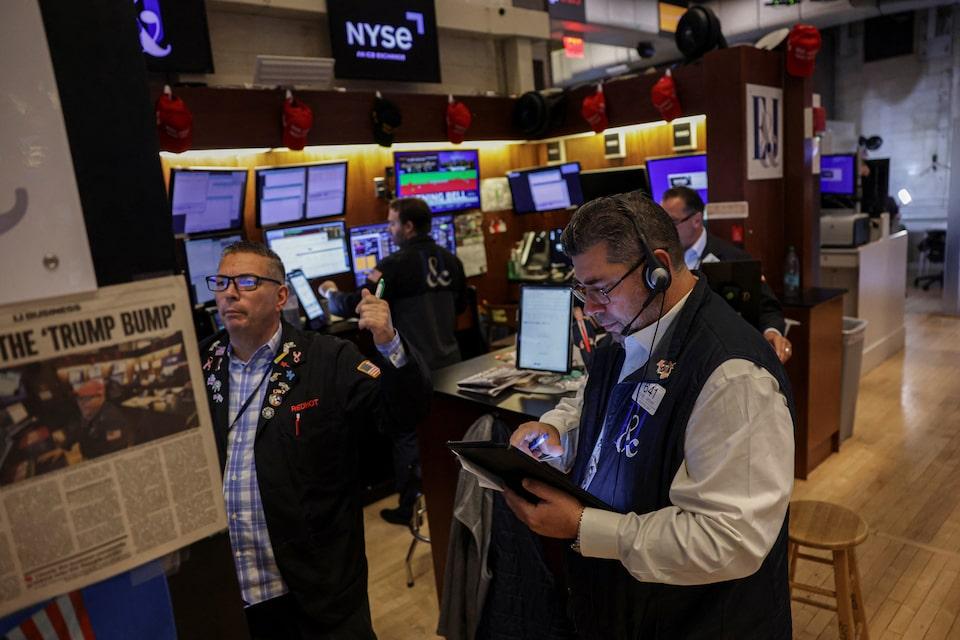
Levi Strauss gains after hiking forecasts Trump hits Canada with 35% tariff Investors await quarterly earnings S&P 500 -0.33%, Nasdaq -0.22%, Dow -0.63% July 11 (Reuters) - Wall Street ended lower on Friday, with Meta Platforms (META.O) , opens new tab weighing on the S&P 500 after President Donald Trump intensified his tariff offensive against Canada, amplifying the uncertainty swirling around U.S. trade policy. Trump late on Thursday ramped up his tariff assault on Canada, saying the U.S. would impose a 35% tariff on imports next month and planned to impose blanket tariffs of 15% or 20% on most other trading partners. Sign up here. The S&P 500 eased from a record high the day before, with caution prevailing after Trump on Thursday imposed 50% tariffs on Brazil and as the European Union braced for a possible letter from Trump with details on fresh tariffs. "The increased rhetoric around tariffs, what we've seen this week regarding Brazil and Canada, is certainly elevating the anxiety level," said Michael James, an equity sales trader at Rosenblatt Securities. "People had become a little more accustomed to the lack of negative tariff headlines, and we've kind of been reminded that the tariff picture is still there." Shares of Nvidia (NVDA.O) , opens new tab rose 0.5% to a record high, lifting its stock market value to $4.02 trillion. Drone makers AeroVironment (AVAV.O) , opens new tab and Kratos Defense & Security Solutions (KTOS.O) , opens new tab jumped about 11% after U.S. Defense Secretary Pete Hegseth ordered a surge in drone production and deployment. The S&P 500 declined 0.33% to end the session at 6,259.75 points. The Nasdaq declined 0.22% to 20,585.53 points, while the Dow Jones Industrial Average fell 0.63% to 44,371.51 points. Volume on U.S. exchanges was relatively light, with 15.4 billion shares traded, compared with an average of 18.3 billion shares over the previous 20 sessions. For the week, the S&P 500 dipped 0.3%, the Dow lost about 1% and the Nasdaq slipped 0.1%. The S&P 500 is up about 6% so far in 2025. Investors will soon turn their attention to second-quarter reporting season, with a focus on how Trump's on-again off-again tariffs are affecting major U.S. companies. Among the big names reporting results next week are JPMorgan (JPM.N) , opens new tab, Netflix (NFLX.O) , opens new tab and Johnson & Johnson (JNJ.N) , opens new tab. Analysts on average expect S&P 500 companies to increase their second-quarter earnings by 5.7%, year over year, with big gains from tech companies and declining profits in energy, consumer staples and consumer discretionary, according to LSEG I/B/E/S. "We believe expectations are a bit low for S&P 500 earnings. Much of the second quarter was marked with tariff and trade issues and that may have caused some dislocations in earnings," said Michael Landsberg, chief investment officer, Landsberg Bennett Private Wealth Management. Levi Strauss & Co (LEVI.N) , opens new tab jumped 11% after the apparel seller raised its annual revenue and profit forecasts and beat quarterly estimates. Meta Platforms shares closed 1.3% lower after Reuters reported that the company is very unlikely to offer more changes to its pay-or-consent model, increasing the risk of fresh EU antitrust charges and hefty daily fines. Kraft Heinz (KHC.O) , opens new tab closed 2.5% higher after the Wall Street Journal reported the company is preparing to break itself up as the packaged food maker grapples with persistent weakness in demand for its higher-priced brands. Across the U.S. stock market (.AD.US) , opens new tab, declining stocks outnumbered rising ones by a 2.8-to-one ratio. The S&P 500 posted 12 new highs and 4 new lows; the Nasdaq recorded 58 new highs and 43 new lows. https://www.reuters.com/business/finance/trumps-tariff-barrage-knocks-wall-st-futures-lower-2025-07-11/
2025-07-11 11:25
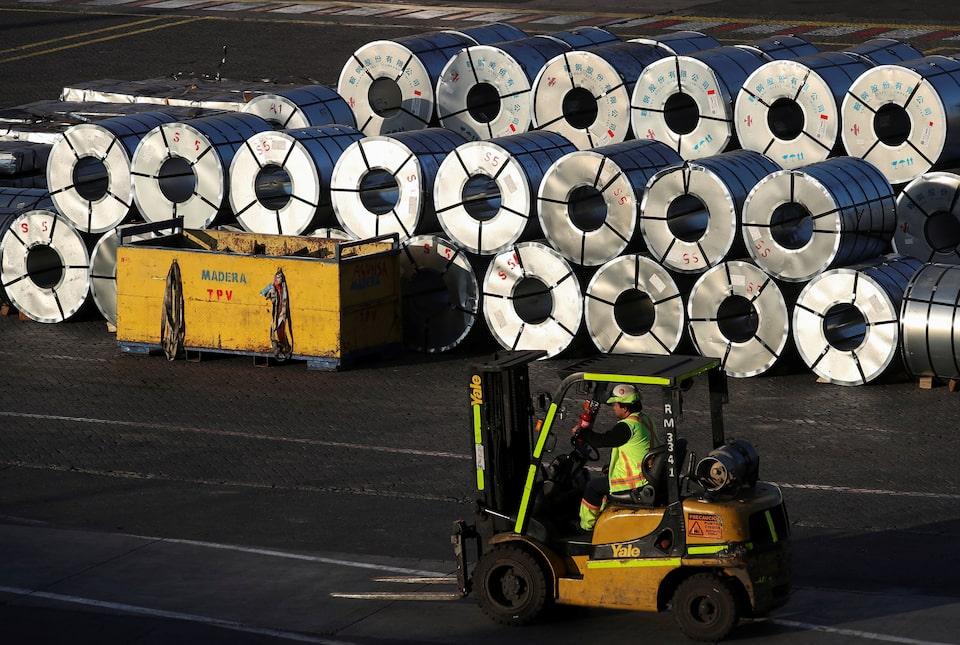
BEIJING, July 11 (Reuters) - China has for the first time set renewable energy mandates for the steel, cement, and polysilicon industries, as well as for some data centres, according to a National Development and Reform Commission notice on Friday. Beijing's renewable portfolio standards, or RPS, set out targets for the percentage of power consumption that the various industries must obtain from renewables in each province. Sign up here. Previously the RPS only affected companies involved in power trading and the electrolytical aluminium industry, said David Fishman, principal at the Lantau Group, an energy-focused consultancy in an online post. "Simply put: heavy industry must buy green," Fishman wrote of the new regulations. Newly built data centres in so-called national hub nodes must use at least 80% green electricity, while targets for the other industries vary by province. The RPS targets are closely watched by market participants, said Yan Qin, principal analyst at ClearBlue markets in an online post, because they are used to calculate the amount of renewable power generation that will be incorporated into China's new contract for difference mechanism, which represents a move toward market-based pricing for renewables. Under that mechanism, the government pays back generators if market prices fall below a set level. The non-data centre targets are further divided into hydro renewables and non-hydro renewables. For 2025, the total renewable target is as high as 70% for hydropower-rich Yunnan province, for example, and as low as 24.2% for Fujian. The non-hydro targets cap out at 30% in wind and solar heavy provinces like Inner Mongolia, Gansu, and Qinghai, while mountainous Chongqing has a target of just 10.8%. Targets for 2026 were also released as part of the plan; the targets typically rise a few percentage points each year. https://www.reuters.com/sustainability/boards-policy-regulation/china-sets-its-first-renewable-standards-steel-cement-polysilicon-2025-07-11/
2025-07-11 11:18
LONDON, July 11 (Reuters) - Although markets are trying to shrug off the week's U.S. tariff threats as yet another negotiation tactic, there's growing unease at the daily barrage, the latest being a 35% tariff on Canadian goods and higher levies on other countries. It's Friday, so today I'll provide a quick overview of what's happening in global markets and then offer you some weekend reading suggestions away from the headlines. Sign up here. Today's Market Minute * U.S. President Donald Trump ramped up his tariff assault on Canada on Thursday, saying the U.S. would impose a 35% tariff on imports next month and planned to impose blanket tariffs of 15% or 20% on most other trading partners. * The 50% tariff that the Trump administration has slapped on Brazilian imports has rattled the global coffee market and could make the price of a cup of coffee in the U.S. jump beyond recent highs, and will likely raise prices for beef used in American hamburgers * Bitcoin rallied to an all-time high on Friday, powered by demand from institutional investors and crypto-friendly policies from Trump's administration. * U.S. corn exports and export sales are still on fire despite the imminent ramp-up of Brazil’s corn shipping season, meaning the U.S. government might need to up its export target yet again. Read the latest from ROI agriculture columnist Karen Braun. * Utilities across the European Union cranked output from natural gas and coal-fired power plants during the opening half of 2025, boosting power sector emissions and reversing recent energy transition momentum, says ROI columnist Gavin Maguire. Canada back in tariff crosshairs President Donald Trump said the U.S. would impose the 35% tariff next month on Canadian imports not covered by the United States-Canada-Mexico pact and planned to impose blanket tariffs of 15% or 20% on most other trading partners. That comes on top of 50% tariff pledges on copper and Brazilian imports, which are set to lift the U.S. price of the metal and coffee, among other goods. It also adds to the planned 25% tariffs on Japan and South Korea, and doused optimism of a more favorable deal with the European Union as investors awaited word on what levies Trump would assign the EU later on Friday. After Wall Street stock indexes hit record closing highs on Thursday, S&P 500 and Nasdaq futures fell back ahead of today's bell. European and Japanese shares were in the red and the Canadian dollar slipped to two-week lows. Somewhat weary of the seemingly endless back-and-forth on tariffs and attempting to look beyond the short-term headlines, investors are wary of overreacting as they brace for almost three weeks of 'ifs' and 'buts' ahead of the new August 1 deadline. The effect on economic activity and prices may take months to materialize. In a thin week for data, the weekly jobless update remained robust. The inflation impact is perhaps most immediate, but Thursday's long-bond auction matched decent demand for the 10-year note sale earlier in the week. Federal Reserve easing expectations slipped back a touch, however, and both ten- and thirty-year yields ticked higher. Alongside gains against the Canadian dollar, the greenback's index (.DXY) , opens new tab firmed more broadly. Fed officials struck a relatively benign tone. Arch dove Christopher Waller restated his preference for cutting rates again later this month, while saying the Fed's balance sheet run-off had some way to go. "We're just too tight and we could consider cutting the policy rate in July," he said. San Francisco Fed boss Mary Daly said she still sees two rate cuts over the remainder of the year. The White House, meanwhile, upped its attack on Fed Chair Jerome Powell - this time over the Fed's accounts and spending on its HQ renovations. But tech and the artificial intelligence theme continued to enthuse stock investors, with Taiwan chip giant TSMC beating forecasts on its AI chip demand and Nvidia closing above a $4 trillion valuation for the first time on Thursday. The second-quarter earnings season kicks into gear next week, with Delta Air Lines (DAL.N) , opens new tab shares rallying 12% on Thursday after the carrier forecast third-quarter and full-year profit above Wall Street estimates. That lifted the broader airline sector. The other big market gainer was Bitcoin , which rallied to an all-time high on Friday - powered by demand from institutional investors and Trump's crypto-friendly policies. The world's largest cryptocurrency rose to a peak of $116,781.10 in the Asian session, taking its gains for the year so far to more than 24%. Gold XAU= was firmer too on the tariff jitters. In China, a Shanghai regulator said it held a meeting this week for local government officials to consider strategic responses to stablecoins and digital currencies - a marked shift in tone for China where crypto trading is banned. Bracing for GDP updates next week, Chinese shares bucked the downbeat global stock mood on Friday and pushed higher. Elsewhere, sterling ebbed on a surprising monthly contraction in UK GDP, with jitters about Britain's public finances nudging gilt yields higher as finance minister Rachel Reeves prepares for the set-piece Mansion House speech next week. In company news, BP's BP.L second-quarter results are expected to be affected by lower prices received for gas and oil, while its upstream output is set to be higher than previously forecast, the company said in a trading update on Friday ahead of results due on August 5. In the euro zone, European Central Bank hawk Isabel Schnabel said the hurdle for another ECB interest rate cut is "very high" as the euro zone economy is holding up better than expected despite uncertainty over trade. Weekend reads * RETURN TO ZERO: The prospect of the Federal Reserve once again setting interest rates near zero , opens new tab in coming years remains real despite today's relatively high short-term borrowing costs, according to a paper published jointly between the New York and San Francisco Feds this week. The paper, which counted New York Fed chief John Williams as a co-author, extracted measures of risk of hitting the so-called "zero lower bound" from financial derivatives, and found a near one-in-ten chance of a return to zero from seven years and beyond - similar to levels in 2018. While expected rates are higher than back then, the level of uncertainty around the outlook is also much higher, it said. * 'OFFSHORING' MIGRANTS: The Trump administration's approach to offshoring asylum seekers and migrants is unprecedented , opens new tab, but there is a "sordid history" of extraterritorial detention centers both in the United States and around the world, writes Professor David Scott Fitzgerald in Foreign Affairs magazine. Describing offshore immigration processing and detention as "forms of disappearance", he said the major question globally is how domestic and international law pushes back against a "race to the bottom" after last month's U.S. Supreme Court ruling on deportations to South Sudan. "Rich countries around the world are watching one another for policy models." * POLITICAL ECONOMY RETHINK: The phasing out of green investment subsidies in Trump's successful fiscal bill challenges basic theories of political economy , opens new tab as many Republican lawmakers voted against their constituents' economic interests, writes Harvard economist Dani Rodrik in Project Syndicate. "It was ideas about what is important and how the world works, rather than economic lobbies or vested interests, that prevailed," he wrote, adding there's a broader lesson here about political economy. Narratives can be as important as interest-group politics in gaining traction for a party's agenda, he concludes, and Democrats may have to learn this too. * COMMUNICATING SCENARIOS: Threats to central bank independence have mounted since the inflation spikes of recent years and amid losses on expanded balance sheets, but the inflation-targeting process should still best illustrate , opens new tab the benefits of keeping political interference at arm's length. So concludes a piece on CEPR's VoxEU site by Fed economist Michael Kiley and Columbia University professor Frederic Mishkin. Regular public communication is needed to explain the process and retain political support, with greater use of scenario analysis likely to be helpful in this regard. * CHINA AUTO DEVELOPMENT SPEED: Over just one weekend, engineers at Chinese automaker Chery planned an overhaul of the suspension and steering on their Omoda 5 SUV for use on bumpier and more winding European roads. In a Reuters Special Report, Nick Carey and Norihiko Shirouzu show how this makeover exemplifies the disruptive speed and flexibility of Chinese automakers, which have seized control of their home market, the world's largest, from once-dominant foreign competitors. Now, China's auto giants are racing to expand globally, with Chery as the leading exporter and China's largest automaker BYD posing an even bigger long-term competitive threat, industry executives say. Chart of the day The 50% tariff that the Trump administration has slapped on Brazilian goods has rattled the global coffee market and could make the price of a cup of coffee in the U.S. jump beyond recent highs. Brazil is the world's largest grower and exporter of coffee, while the U.S. is its biggest client and the world's largest drinker of the beverage, with nearly 200 million Americans having a cup every day. Today's events to watch * U.S. June Federal Budget (1400 EDT) * Canada June employment report (0830 EDT) Opinions expressed are those of the author. They do not reflect the views of Reuters News, which, under the Trust Principles , opens new tab, is committed to integrity, independence, and freedom from bias. Want to receive the Morning Bid in your inbox every weekday morning? Sign up for the newsletter here. You can find ROI on the Reuters website , opens new tab, and you can follow us on LinkedIn , opens new tab and X. , opens new tab https://www.reuters.com/business/finance/global-markets-view-usa-2025-07-11/